Poetry reading in Squaw

The Squaw Valley Community of Writers’ annual poetry reading featuring poets Robert Hass, Kazim Ali, Sharon Olds, and CD Wright at the Olympic Village Lodge, 1907 Chamonix Place (off Squaw Valley Road) is June 28 at 8pm.

This reading is an opportunity to hear these renowned poets read their work. Often they will read new work that has been composed over this past week during the Poetry Conference, giving some insight into their process of writing.

Cost is $15/$10 students (no one will be turned away for lack of funds).

Books by the poets will be available for purchase and signing.


Private land near Markleeville bought by Wilderness Land Trust

The Wilderness Land Trust has acquired the last remaining 160-acre private acres that could have blocked access to the Thornburg Canyon Trail near Markleeville.

It covers more than eight miles point-to-point from Blue Lakes Road at 9,000 feet to the quaint mountain town of Markleeville at 5,500 feet.

Pleasant Valley from the Markleeville side. Photo/LTN file

The purchase of this property builds on another Wilderness Land Trust purchase in 2009 and protects one of the last private inholdings in the 99,000 acre Mokelumne Wilderness. It helps protect the headwaters of the Carson River, a lifeline for resident wildlife and people.

“The land is one of only two properties within the Humboldt-Toiyabe Forest area of the Mokelumne Wilderness to remain in private ownership,”Aimee Rutledge, the land trust’s California program manager, said in a statement. “Private uses inconsistent with wilderness would have despoiled an unbroken expanse of wilderness and could have blocked public access to the Thornburg Canyon trail.”

The area includes many miles of popular trails including a segment of the Pacific Crest Trail, and offers hiking, horseback riding, backpacking, fishing, birding, snowshoeing and cross country skiing.


PeopleSoft founder Duffield not content to be retired in Tahoe

By Ashlee Vance, Bloomberg Businessweek

At 71, Dave Duffield ought to be retired. He’s spent a half-century starting technology companies and is worth billions. He has a $35 million Dassault Falcon 900EX jet, homes in the Bay Area and Palm Springs, and a seven-building vacation compound on Lake Tahoe with plenty of space for his wife of 28 years and their 10 children, the youngest of whom is an adopted daughter, age 2. On a sizzling June afternoon, Duffield stands in his hangar at an airfield east of San Francisco before a flight to Reno-Tahoe International Airport. “I just bought this Chevy Camaro,” Duffield says, gesturing to the black car parked next to his jet. “It’s probably the only one around with a baby seat in the back.”

Duffield did take a break from the tech game, briefly. After his most successful company, PeopleSoft, was acquired in 2004 for $10.3 billion, he unofficially retired. With his thin frame and rich head of silver hair, he’d sit in a rocking chair on his porch in Tahoe overlooking the lake. The relaxing, family-filled glide into his golden years lasted about three months. “I was rocking away and getting bored,” Duffield says. When he told his wife, Cheryl, that he was starting another business software company, later named Workday, she cried, but didn’t try to stop him. “She understood the higher calling,” Duffield says.

One of the first things Duffield and his Workday co-founder Aneel Bhusri will tell you is that their company is not a revenge plot against Larry Ellison, the founder and chief executive of Oracle (ORCL). It was Ellison who bought PeopleSoft eight years ago—a hostile takeover by the most hostile guy in tech. Ellison lowballed PeopleSoft’s shareholders, threatened to fire thousands of the company’s employees, and insulted Craig Conway, then PeopleSoft’s CEO. “It’s normal for Larry to do that kind of thing,” Duffield says, sitting back in one of his plane’s beige leather seats. “He threatened to shoot Craig’s dog at one point.” Bhusri, 46, sitting next to Duffield, cuts him off. “We don’t think about Larry or have any animosity,” he says, which will be a refrain over the next few hours. Back on message, Duffield adds, “You have to bless Larry’s heart for giving us this opportunity. I would never have been part of this Workday thing without Larry.”

The “Workday thing” threatens to upend the business—or enterprise—software market. It sells software that corporations use to keep track of their employees and finances. Normally such applications are expensive, a pain to use, and, because they become so entwined in a company’s operations, rely on a kind of monopoly of inertia. Workday’s software for filing expenses or approving a hire, on the other hand, is about as easy to use as Facebook (FB). It’s an example of cloud computing, selling software as a Web-based service rather than a product customers install in their own computing centers.

Workday now has 310 corporate customers, from Sallie Mae to Chiquita (CQB). The company won’t disclose its revenue, though people familiar with Workday’s financial performance say its bookings (a reflection of the value of multiyear deals) should reach $500 million this year. Investors, including Michael Dell, founder and CEO of Dell (DELL), and Jeff Bezos, founder and CEO of Amazon.com (AMZN), have backed it with $250 million in funding, valuing the company at more than $2 billion. Their reward could come soon: Workday is expected to file for an initial public offering this month.

What does Ellison think of all this? He declined to comment for this story, but said, “I won’t mention Workday by name,” during a June 6 press conference at Oracle’s Redwood Shores (Calif.) headquarters. Oracle used the event to, at long last, unveil its competitor to Workday, called Oracle Cloud, and Ellison did in fact mention the company often by name in order to dismiss it.

Together, Duffield and Bhusri own a little more than 50 percent of Workday, and they see the company as their chance to fulfill a grand vision. Business software should not be arcane and ugly. It should have spit and polish and be tuned for the cloud-computing and mobile revolutions. Make the software good enough and mortals—rather than HR and accounting specialists—will be able to use it and learn more about their business and their co-workers. Duffield says Workday could be bigger than PeopleSoft. “You don’t know this when you’re young, but over time you see that great companies are usually built at a special point in time,” he says. That time, it goes without saying, is now.

Enterprise software makes the corporate world tick. Oracle and SAP (SAP) sell applications that track everything from inventory to insurance policies to health-care plans. It’s a huge business. Bhusri figures the market for HR software alone is about $10 billion a year, while financial application sales run about $30 billion per year. As it happens, the purveyors of such software aren’t known for their warm relations with customers. “Just picking the right mix of stuff is complex and fraught with issues,” says David Smoley, chief information officer of Flextronics International (FLEX), the giant electronics manufacturer and Workday customer. “Oh, and by the way, the motivation of an Oracle or SAP is to sell you a huge pile of software.”

It’s not uncommon for a buyer to spend years installing a new version of Oracle or SAP software. The process requires the purchase of an expensive, long-term license and a ton of computer hardware. Then you need a team of experts to make the components work together and another team of experts to configure and customize the system for every peculiarity of a company. Year after year, Oracle and SAP levy maintenance fees to keep these customized machines humming. Call it a “thanks for being our customer” tax. For years, software makers would offer discounts to customers if they bought long-term licenses for, say, 40,000 expected employees instead of the 20,000 current employees. “You spend $25 million instead of $20 million for what’s billed as this super, smoking deal that will give you room to grow,” Smoley says.

Read the whole story


40 years later, Title IX still shapes female athletes

By Tom Goldman, NPR

Title IX, which turns 40 on Saturday, has helped reverse years of bias, banning sex discrimination in federally funded schools and colleges.

Its guarantee of equal access to sports was a small part of the original legislation. But it’s become the most recognizable part of Title IX. That guarantee has not always played out, and the law has its critics. For four decades, however, it’s played a huge part in shaping lives.

Even today, when Bernice Sandler beams with pride, watching women athletes walk, as she describes, “with their heads up and feeling like, yeah, I can handle this world,” there’s part of her that laughs, too.

Back in the late 1960s, when Sandler, a career educator, and other Title IX pioneers said enough with sex discrimination in education, she really wasn’t thinking about a sea change in sports.

“I remember saying, ‘Isn’t this great news? On field day [when schools cancel classes and students participate in athletic relays and other outdoor games] … there’s going to be more activities for girls,'” Sandler recalls.

It was a time when sports was still a man’s world, and it was difficult to even imagine the iconic moment of women’s sports that would take place three decades later.

Banning sex discrimination in sports may be one of Title IX’s most notable achievements, but the original federal legislation that President Nixon signed into law as part of the Education Amendments of 1972 actually doesn’t mention sports or athletes.

The first part of the law reads, “No person in the United States shall, on the basis of sex, be excluded from participation in, be denied the benefits of, or be subjected to discrimination under any education program or activity receiving Federal financial assistance.”

In addition to unequal opportunity in student sports, discrimination covered under Title IX includes sexual harassment of students, unequal pay for female teachers, and discrimination against pregnant students. Title IX does not apply to fraternities or sororities, voluntary youth service organizations like the Girl Scouts and Boy Scouts, and “educational institutions of religious organizations with contrary religious tenets.”

On July 10, 1999, as Brandi Chastain prepared to take the last penalty kick of the 1999 Women’s World Cup soccer final, she was not thinking about the moment as a watershed in women’s sports or about the record 90,185 fans at the Rose Bowl in Pasadena, Calif. Like any good athlete, Chastain was focused on the task at hand — make good contact with the ball, don’t let the goalkeeper for China stare you down and psych you out.

“The only thing I could hear, because those 90,000-plus people were so dead silent, was, ‘Don’t look at the goalkeeper. Don’t look at the goalkeeper. Don’t look at the goalkeeper,'” Chastain says.

She didn’t. And the picture of a celebrating Chastain — shirt ripped off, fists clenched, muscles flexed — has become a Title IX touchstone for women and girls — and at least one 6-year-old boy. Chastain’s son Jaden sees the photo every day, hanging in his house.

“He used to sing cute little songs,” Chastain recalls. “You know, ‘Jaden is the silliest’ or ‘Nana is the happiest.’ And I would say, ‘Daddy is the strongiest,’ and he goes, ‘No, Mom. You’re the strongiest.’ ”

It was anything but a straight line from Sandler’s hopes for field day to Chastain’s “strongiest” moment. Along the way, and to the present, there’s been a kaleidoscope of characters and events weaving a Title IX tapestry.

In 1976, four years after Title IX became law, Ginny Gilder and her rowing teammates at Yale University were getting sick. There were no shower facilities available right after practice, and they’d have to get on a bus, cold and wet.

The men had showers. So Gilder and her teammates staged a naked protest in a school administrator’s office. “We all turned around, took off our clothes and stood there naked, with ‘Title IX’ on our backs,” Gilder remembers.

Team Captain Chris Ernst read a statement, as recounted in the documentary film A Hero for Daisy: “These are the bodies Yale is exploiting. On a day like today, the ice freezes on this skin.”

The words and protest were persuasive. The women got their showers, and schools that ignored Title IX got a reminder: don’t. And Gilder got something personal.

“You know, it’s a certain outing of oneself to take a stand,” she says. “And there’s no going back once you do something like that. There’s no place to hide.”

Read the whole story


Title IX didn’t erase stigma of girls taking shop classes

By Claudio Sanchez, NPR

Forty years ago, former President Richard Nixon signed Title IX, which said no person shall, on the basis of sex, be excluded from any education program or activity. Vocational education courses that barred girls — such as auto mechanics, carpentry and plumbing — became available for everyone. But it’s still hard to find girls in classes once viewed as “for boys only.”

Zoe Shipley, 15, has a passion for cars and tinkering with engines.

“It’s just kind of cool to learn how to fix a car or learn about it,” she says.

Zoe is also the only girl in her automotive technology course, so she’s been teased a lot.

“They would call me grease monkey,” she says. “I’m like, so what? At least I have the option to choose what I want to do, you know what I mean?”

That’s what Title IX did. The law removed the policies and practices that kept female students from courses and programs once reserved for male students.

“All our electives here are totally open to all of our kids. We don’t force any boys or girls to do anything,” says Tom Evans, the principal at Eastern Technical High, a magnet school in Essex, Md.

Students can choose from 12 career majors, including construction, information technology, engineering and Zoe’s choice: automotive technology.

Evans unlocks the big double doors that open up to a cavernous garage. Six- and eight-cylinder car engines sit in the middle of the room next to several cars and a row of computers that have been stored for the summer.

If you think about it, Evans says, this school is proof that Title IX accomplished what it set out to do in education. And yet, he says, Zoe is the exception, not the rule.

“I’ve seen Zoe in action in her automotive class. She’s not going to let anybody push her around academically or intimidate her in any way,” he says.

The same is true of the four girls in the school’s construction management program that offers electrical and plumbing classes. That’s it. In a school that’s over half female, a total of five girls are in two traditionally male courses.

“I think in some of the fields, just the nature of the work that kids see going on in those fields, isn’t going to attract that many women. Automotive technology isn’t a field that you see women in,” Evans says.

That would quickly change if there was a demand for more female mechanics and plumbers, Evans says, like there is now for female engineers.

“We make a serious attempt at getting girls into engineering. We recruit girls from all over the county, and that’s paid off a little bit,” he says, “but engineering by itself is a field where I think women are starting to see female engineers.”

Zoe says that’s why her family tried and failed to get her to switch from automotive technology to the engineering program.

“But I think it would be cool if I owned my own shop, like a car shop,” Zoe says.

Read the whole story


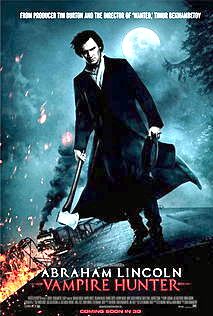
Abe Lincoln as vampire hunter makes for good entertainment

‘Abraham Lincoln: Vampire Hunter (or What Really Caused The Civil War?)’

Rated R

4 bagels out of 5

By Howie Nave

There’s something very cool about taking a historical event in time and then using that as the backdrop for a movie that leaves you thinking, “Hmmmm. Maybe that really did happen after all.”

I think that’s why I loved watching “Raiders of The Lost Ark” a gazillion times because it was set during World War II and maybe Hitler really did have a thing for antiquities. We do know he liked collecting priceless pieces of art, so who’s to say he didn’t know about the ark of the covenant and having possession of it could take over the world?

First off, let me say from the start: when you do see this movie, let your mind just pretend that what you’re seeing on the big screen is true and that maybe it could have happened. After that you’ll settle into a groove of sorts believing that our 16th president was probably our greatest president not just for freeing the slaves, but also that as a vampire slayer too.

And if you’re also a real fan of history (or Abe Lincoln), you’ll probably laugh even louder because of the historical context that this flick has been placed into. I mean, look at “Air Force One” having Harrison Ford playing a kick-ass (literally) president who was above scandal and very ethical, which is more than I can say about some of our current politicians, eh?

I watched “Abraham Lincoln: Vampire Hunter” with comedian Bob Zany, who is also a student of history, so we both laughed when we were introduced to historical figures throughout the movie who entered young Abe’s life and wondered if they had any inclination that Honest Abe was deadly battling the dead? We also cracked up at how good Abe was with an axe and apparently all those years splitting rails when he was younger would pay off handsomely later.

By the way, newcomer Benjamin Walker makes for a perfect young Lincoln, as he is both tall and lanky with a spot-on likeness resembling the real thing. The movie is directed by Timur Bekmambetov (best known for also directing “Wanted” and “Night Watch, Day Watch”) who does a nice job adapting Seth Grahame-Smith’s novel (he’s also the screenwriter) from the page to the visual without making it look corny. Speaking of visual, cinematographer Caleb Deschanel adds a lot realism to visual by giving the movie a vintage, almost black and white look to it but still maintaining some color almost as if the movie were shot in the early and mid-1800s if they had the cameras to do so. I might add that Tim Burton is also one of the producers of this movie.

Without giving away too much, there’s a reason Abraham Lincoln sought out to be a vampire hunter at a very early age but had to wait until he was a young man in order to actually kill one. You see it takes training. He does come across such a man who, as it turns out is also a vampire hunter. His name is Henry (played very seriously by Dominic Cooper) who teaches him the tricks of the trade. It’s also worth noting that unlike the vampires I grew up with (Eric Roberts from “Fright Night” and the all time classic vampire, Bela Lugosi were personal favs) these creatures of the night work (and kill) during daylight hours which means one has to really be on their guard at all times. Darn those “Twilight” movies and their young daylight-oriented vampires.

The cast is pretty good too with Mary Elizabeth Winstead playing the young Mary Todd Lincoln with special kudos going to Rufus Sewell and Erin Wasson who play the sinister vampire pair that will make you want to wear a Plaster of Paris turtleneck sweater just to keep your neck protected no matter how hot it is outside.

Is it a good movie? I think so, especially with the recent splattering of remakes, sequels, prequels and animated characters trying to be too hip for the room you know what I mean? Plus, there’s the added advantage of not having to see this in 3-D but trust me, you’ll be blown away (literally) if you do elect to see it in that format. And for you Abe Lincoln history buffs out there you’ll particularly like the scene when Mary Todd yells to her husband from outside, “Hurry up Abe! We’re going to be late for the theater!”

“Abraham Lincoln: Vampire Hunter” is rated R for violence throughout and brief sexuality with a running time of 105 minutes.

Howie Nave is host/emcee/manager of The Improv at Harveys. You can hear him Monday-Friday 6 to 10am on KRLT FM-93.9.


Final installment of Angora Fire series coming Sunday

The fourth and final day of Lake Tahoe News’ four-part series on Angora Fire — 5 years later will run June 24.

Angora Fire -- 5 years later

Sunday’s stories will be about life in dispatch that fateful day, words from Lahontan water board, former South Lake Tahoe Mayor Kathay Lovell’s perspective and the pet cemetery.

If you missed the June 17 installment, here are links to those stories:

Snippets about Angora.

University study explores Tahoe’s devastating fire.

South Tahoe PUD keeps water flowing.

Personal and professional angst at TRPA.

Landscape a challenge for survivors.

If you missed the June 10 installment, here are links to those stories:

Dealing with insurance companies.

Annual garden show focuses on Angora properties.

Cutbacks would challenge future wildland firefighting resources.

Importance of defensible space.

Supervisor Norma Santiago talks about El Dorado County.

If you missed the June 3 installment, here are links to those stories:

Susan Wood was the first reporter on the scene.

Forest Supervisor Nancy Gibson looks forward.

A garden grows from the ashes.

No arrests made.

State senator to host Angora forum.


Study: Medical marijuana does not increase teen drug use

By Katherine Bindley, Huffington Post

Marijuana use among teens has been on the rise for some time–it’s become more popular than smoking cigarettes in recent years–but a provocative new study shows that legalizing pot for medical purposes doesn’t increase the chance that teens will abuse it or certain other drugs.

“There is anecdotal evidence that medical marijuana is finding its way into the hands of teenagers, but there’s no statistical evidence that legalization increases the probability of use,” Daniel I. Rees, an economics professor at the University of Colorado Denver who worked on the study, said in a written statement.

Rees and his team looked at nationally representative data from high school students from 1993 through 2009–medical marijuana was legal in 13 states during that time–and found that legalization didn’t affect marijuana use at school. According to study co-author Benjamine Hansen, assistant professor of economics at the University of Oregon, the data showed the opposite: There was often an inverse relationship between legalization and marijuana use.

What’s more, the researchers found no evidence that medical marijuana legalization led to an increase alcohol or cocaine use.

“This result is important given that the federal government has recently intensified its efforts to close medical marijuana dispensaries,” Hansen said in the statement.

Read the whole story


Opinion: Lessons from Angora not forgotten, more work to do

By Ted Gaines

Five years ago Sunday, the terrible Angora Fire swept through the Lake Tahoe Basin, destroying 254 homes, buildings, and changing lives and landscapes forever. While we will never be able to tame nature completely, public safety is government’s highest priority and government leaders must always be improving their response to emergencies and natural disasters.

As a result of the fire, the governors of California and Nevada convened a Blue Ribbon Fire Commission to analyze the efforts to fight the Angora Fire and issued a set of recommendations to strengthen the region’s ability to prevent and respond to these catastrophes.

Ted Gaines

It does not take a cynic to assume that many blue ribbon reports and commissions come to life as a result of politicians needing to “do something” in response to a crisis and then accomplish very little. As the event fades from public consciousness, the reports gather dust and the recommendations quietly fade away.

That absolutely cannot be the case when it comes to the Lake Tahoe region and fire safety. Tahoe’s conditions – steep canyons, ample fuel, dry years such as in 2007, when the area received only 29 percent of normal precipitation, high winds – are a recipe for forest fire disaster. This year’s conditions are similar and the community, rightfully, is nervous heading into fire season.

For all these reasons, I initiated a non-partisan Senate Office of Research review of the Blue Ribbon Fire Commission recommendations to check their status. I am disappointed to issue a C-minus grade, but inspired to keep working for greater safety for the region.

Things are better than they were five years ago. Thanks to the successful implementation of report recommendations by the governors of California and Nevada, Tahoe Regional Planning Agency, Lahontan Regional Water Quality Control Board, U.S. Forest Service Lake Tahoe Basin Management Unit, CalFire and other stakeholders, we now have more effective forest management, better education, and better cooperation and communication among regional fire protection agencies, all of which should lessen the chance of catastrophic forest fires.

But there is still work to do and the area is still a tinderbox. Many of the recommendations have not been implemented or their status is unclear. We cannot leave them undone, and must continue to effectively implement the recommendations in progress, both for public safety and for the continued health of the Tahoe regional economy.

Lake Tahoe is Northern California’s crown jewel and its economy is heavily dependent on tourism. The barren moonscape left behind after the fire is no match for the rich forest lands destroyed in the fire. Charred trees and driveways leading to empty lots where homes have not been rebuilt still dot the landscape. Changes in erosion threaten the Lake’s legendary clarity that draws people from around the world. Tahoe has to be safe and beautiful to remain a first-class destination.

While we are all thankful for the protection firefighters provide, each of us must also take personal responsibility for fire safety. It is critical that we exercise extreme caution with cigarettes, campfires, tools, engines or anything else that could possibly spark or otherwise cause a fire – which is how the Angora Fire began. When fires inevitably start, homeowners will always be the first line of defense. There is no substitute for defensible space around a home. Be vigilant and clear out brush at least 100 feet around your house, if possible. It is my hope that effective execution of the recommendations and smart individual actions mean we can observe an anniversary this year, and not a reenactment.

On this fifth anniversary, I also want to recognize the fantastic performance of the firefighters who ultimately controlled the Angora Fire. They are a battle tested group whose bravery and excellence is unmatched around the country. By implementing the recommendations of the Blue Ribbon Fire Commission, governments are helping to ensure that their lives are not needlessly put at risk.

Ted Gaines represents the 1st Senate District, which includes all or parts of El Dorado, Placer, Alpine, Amador, Calaveras, Lassen, Modoc, Mono, Nevada, Plumas, Sacramento and Sierra counties.

—-

Note: State Sen. Ted Gaines is hosting a forum about the Angora Fire on June 25, 6-8pm at South Tahoe High School.


Trout Creek transports paddlers to oasis by Tahoe

By Kathryn Reed

It’s easy not to want to paddle in Trout Creek. Listening and watching are the preferred activities. If only the binoculars were in the canoe.

A cackle of chirping birds makes it seem like we’ve entered an aviary. Unfamiliar calls fill the air. Flitting about are species we don’t recognize.

Later, Tom Millham from Lake Tahoe Wildlife Care identifies the yellow-headed blackbird.

“We have had them in the past, but not for a very long time. You will see a lot more of them in the Carson Valley,” Millham enlightens me.

Sandy paddles in a field of lilies in Trout Creek. Photos/Kathryn Reed

On this Sunday in June the lilies are starting to bloom a vibrant yellow. The balls on the end of the green stem are like round lemons. Green and red lily pads dot the surface; at times making it so there is more plant life than water visible.

Instead of being in the middle of South Lake Tahoe, not far from a busy neighborhood and state highway, it feels like we are paddling in a remote nature preserve. This feeling, in part, has to do with the dog ban in the Upper Truckee Marsh – allowing for more birds to make their home here.

Five of us started the day at Baldwin Beach after having left a car in the homeowners’ association parking lot at Tahoe Keys. (It costs $7 per vehicle to park at Baldwin.) [Editors update: The Tahoe Keys Property Owners Association’s parking lot is private and not open to the public, according to Greg Feet, general manager of the association.]

Trish, Sandy and Pat are in kayaks, while Sue and I are in a canoe.

We opt to begin by going up Taylor Creek. Several inlets have us guessing which way to head. U-turns in a 17-foot canoe can be interesting.

Up another arm we think will lead to where the salmon spawn in the fall and people see the creek from the Rainbow Trail. We don’t make it. A substantial beaver dam blocks our route.

Knowing our ultimate destination is more than four miles away we choose to make another 180-degree turn.

Back onto Lake Tahoe we head toward Camp Richardson. Wakeboarders are to our left, jumping the boat’s wake in the otherwise tranquil waters. Too early to stop for a Rum Runner at the Beacon.

It’s nice to be on the lake early before the boaters and personal watercraft are creating obnoxious noise pollution and making it a bit scary for human powered watercraft.

We take our time, chatting along the way. Then we hit the Keys and it’s time to gawk at the opulence and varied architecture of the gated Lighthouse Shores area that seldom seems to have people occupying these mini-mansions.

On we go.

Entering Trout Creek we have several choices. The water has a mind of its own and no longer is a single body of water through the Upper Truckee Marsh. We head right, away from the houses.

Mount Tallac is like the alter of the outdoors with the snow cross still visible. We are blessed to live and play in this oasis of Mother Nature’s.

To get there:

From South Lake Tahoe, head north on Highway 89. Go past Camp Richardson. On the right will be a sign for Baldwin Beach. Beyond the payment kiosk park to the left where the road makes a Y.

To leave a vehicle at the Keys, go down Tahoe Keys Boulevard (of Highway 50). Follow this until you see the lake; parking on the left.

Paddling – from the beach, go right. At the Keys, you will pass the channel for the houses, then the channel for the marina. Next right is the Upper Truckee River. Keep going on Lake Tahoe. The next inlet is Trout Creek. The creek goes under Highway 50 and to Lake Tahoe Community College. We stayed in the marsh area.

ngg_shortcode_0_placeholder (Click on photos to enlarge.)