El Dorado County: Fire proved what the area is capable of

By Norma Santiago

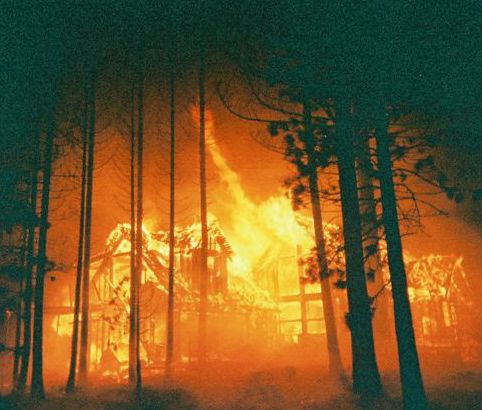
Memories of the Angora Fire and its aftermath can renew feelings of pain, despair and loss. There are some of us who, with each anniversary, take time to reflect on the events of that day. Some look at the rebuilt homes, neighbors settled in, and new landscape with gratitude, but long for those special things that can never be replaced; a gift from a child, a family portrait, a treasured knick-knack. Each year, as we meditate or pray in gratitude, we also reflect with reverence.
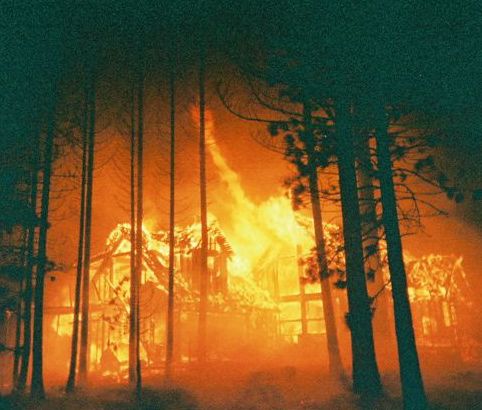
Angora Fire -- 5 years later

In the five years since the fire, some of us feel “healed”. With the exception of physical scars in the surrounding forests, we look very healthy. Some of the burned out lots have been replaced with neighborhood gardens or places of meditation created by property owners. Beautiful homes have been rebuilt a little larger than before and in record time (80 percent were rebuilt one and a half years after the fire – unprecedented in the state of California). Empty lots were sold to new families who wanted to build a new home in this area. There are aspen groves along creeks once hidden in a thick forest that are now visible. Wildlife has returned with even certain species not seen for a while. And, the forest, thanks to many, is being replanted with not only the Jeffery pine, but also, cedar, and sugar pine so that over the course of many, many years the forest will be more diversified.

I think back to a few weeks before the fire, the Tahoe Resource Conservation District had an outdoor community workshop on Boulder Mountain as an educational opportunity for the surrounding area to learn about best management practices, invasive weeds, and even defensible space. Kim Carr, then working for EDAW (a private environmental consulting firm), put together a poster showing the integration of BMPs, defensible space and water conservation. Attendees asked about their decks, pine needles, BMPs, and a host of other concerns and issues.

Another tragic irony is that just two weeks before the fire, I walked along Mt. Shasta with Jessica Mahnken, then with Lake Valley Fire Protection District, distributing “Living with Fire” information. It was painfully incongruent that this effort and the enthusiasm we shared in reducing the risk of wildland fire be followed so closely by the events of the Angora Fire.

Like any catastrophic event, I think we all remember where we were in those early moments when the fire began. It was almost disbelief as the fire grew so rapidly. The response from emergency services was nothing less than heroic. To evacuate homeowners, visitors, families, animals and organize an attack on the fire, to manage resources, and to do it without loss of life was a remarkable accomplishment. I was in the midst of true professionals who knew how to create, control and command a multi-jurisdictional arena. The fire was on county land with Lake Valley Fire Protection District first on the scene, and contingency crews rapidly joining in from the city, state, federal, and outside districts and metropolitan areas. It was a war zone managed by professionals knowing exactly when, how and with what to proceed as components and elements constantly shifted. I will never forget being inside that circle as it developed into a sophisticated command center and communications operations. Everyone had a job and nothing was done outside of the information organizational chart. These professionals worked nonstop, slept little, ate only after hours of duty, were responsive, dedicated and put their lives on the front line to save people, homes, property, an industrial area, the high school and natural resources. I cannot provide praise enough for our emergency services personnel for what proved to be life saving measures for our community.

The community also deserves great praise. During the fire, what was created seemingly from chaos, was a community response to serve those who were immediately displaced and in shock. It was a beautiful collection of concerned service providers and city staff who immediately coordinated a shelter with food, supplies and support. The Lake Tahoe South Shore Chamber of Commerce jumped into action to set up a fund, nonprofits joined together to provide services and the South Shore community came to action to help one another. It was a truly spiritual moment in the history of our community. I have never experienced such gracious giving as when we tooled up to assist our neighbors. And, I will never forget it. This is what I know to be the real caring capacity of our community. That is a threshold that will never need redefining.

And, after the fire, when the smoke settled, what next? What happened was nothing less than historic. Never before have state, federal, county and private forces come together in such a way that allowed an immediate solution to the massive cleanup of the toxic remains of the Angora Fire. Ravaged homes, vehicles and furnishings now potentially impacted a watershed that could have devastated Lake Tahoe. Because the state and county elected officials and departments worked together so closely on an immediate solution to clean up the sites and have it paid through the Office of Emergency Services and insurance companies, and by fast-tracking building plans and waiving fees, homeowners could settle with their insurance companies quickly and begin the rebuilding process. Recovery from the Angora Fire was an incredible display of possibilities with government facilitating a solution and then getting out of the way. The Angora Protocols, as they have been coined, were so proactive and responsive that other communities affected by devastating wildfires have had trouble organizing components of its success.
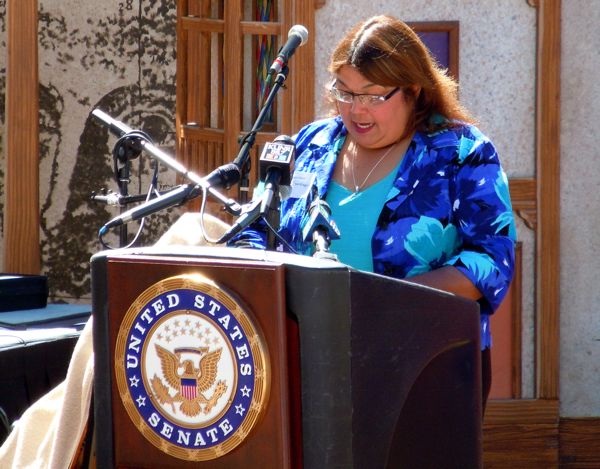
El Dorado County Supervisor Norma Santiago talks at the 2010 Environmental Summit. Photo/LTN file

And, in the last five years, county, state and federal crews have worked tirelessly to minimize the impacts of watershed damage by clearing devastated vegetation, replanting, and building stream restoration and erosion control projects to reduce the sediment flow into the lake. These efforts combined with best management practices and a new consciousness in our community will surely improve our chances to prevent and withstand another event such as the Angora Fire.

What I take away from this event in these five years is how immense our love is in this community, for each other and for our environment. If indeed the Chinese symbol for crisis includes both danger and opportunity, I contend that our community grew together, faced danger and built opportunity from the ashes. I am incredibly honored to be your representative.

Norma Santiago is on the El Dorado County Board of Supervisors representing the Lake Tahoe Basin.
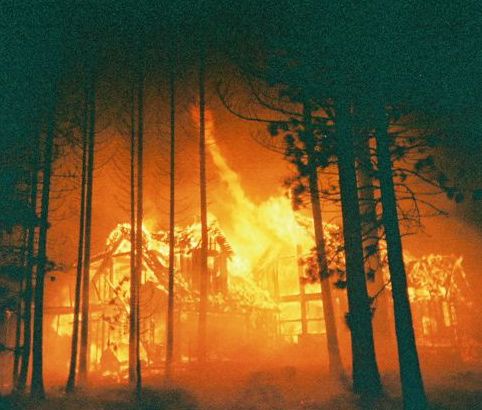


Defensible space can save a house during a fire

By Jessie Marchesseau

Could you throw a smoldering ember the size of a softball anywhere in your yard and walk away feeling confident that it will not start a fire? If not, then it may be time to work on your defensible space.

Angora Fire -- 5 years later

Practically an everyday term now, defensible space was not mentioned much in the Lake Tahoe Basin before the Angora Fire ravaged the South Shore in 2007.

Coined in the 1980s, the term defensible space refers to the area of vegetation and landscape management between a house and a potential oncoming wildfire. And not only is it a good idea, it’s the law.

California Public Resources Code Section 4291 states:

“A person who owns, leases, controls, operates, or maintains a building or structure in, upon, or adjoining a mountainous area, forest-covered lands, brush-covered lands, grass-covered lands, or land that is covered with flammable material, shall at all times do all of the following: (1) Maintain defensible space of 100 feet from each side and from the front and rear of the structure…”

Even though your property may not back to open forest land, the law still applies. Nearly all of the Lake Tahoe Basin is located within what is known as a wildland urban isnterface, or an area where civilization meets and intermingles with the wilderness.

Nevadans are not off the hook, either. Legislation and building codes require Nevada properties to have defensible space as well.

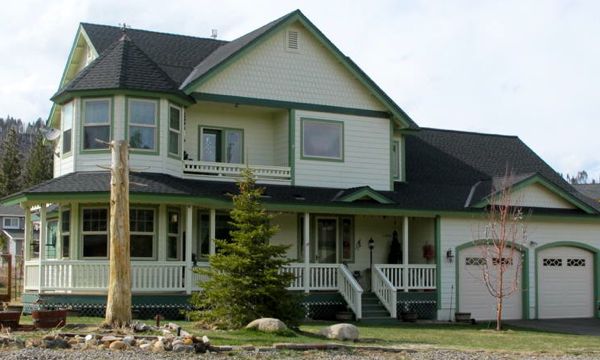
Proper defensible space spared this house in the Angora area. Photo/Lake Valley Fire

Some of the regulations have been altered since the Angora Fire, but they are far from new. Lake Valley Fire Protection District was enforcing defensible space requirements before signing occupancy permits for years prior to the fire.

Defensible space is not just for new and remodeled homes, either. It applies to all structures, residential or commercial, within the WUI zone. Owners can even be fined for non-compliance.

Fire Chief Gareth Harris of LVFPD said that all of the homes in the Angora burn zone had been contacted by defensible space technicians at least twice prior to the fire. Of those that did complete their defensible space, 75 percent survived.

So why were some owners reluctant to comply? Well, for a variety of reasons, including financial ones and difficulties with the TRPA. But after losing 254 houses to the Angora blaze, area fire districts and the Tahoe Regional Planning Agency agreed things had to change.

Together, the groups streamlined the defensible space process, and the TRPA loosened its grip a little on tree removal and erosion standards. Now defensible space inspectors from the fire districts can authorize tree cutting for fire safety, and property owners can remove pine needles from within 30 feet of structures once a year.

“I don’t think it’s a choice of a clear lake or a safe community,” said Peter Brumis, public outreach specialist for the Tahoe Resource Conservation District.

The group focuses on erosion control and protecting lake clarity, forests and wildlife. Brumis admits there is a delicate balance when it comes to the issues of erosion control and defensible space, but maintains that one is no more important than the other. In most cases, he said, both can be done effectively and simultaneously.

The financial burden of defensible space was also addressed. The Nevada Fire Safe Council was able to secure grants and offered up a rebate program starting in 2008. Property owners could recoup half of their costs to install defensible space up to $1,000. Unfortunately, the entity lost its grant funding for 2012 and closed its doors at the end of April.

Making the permitting and financial aspects less burdensome may have contributed to the sharp spike in defensible space compliance immediately after the Angora Fire, but Forest Schafer, forester for the North Lake Tahoe Fire Protection District, thinks it was more than that.

The NLTFPD did 163 defensible space evaluations in 2006. In 2008, the year after the Angora blaze, that number jumped to 410, but has been steadily declining ever since.

“I think the Angora Fire was a very stark reminder of how important it is to do that,” he said. “It’s not in the front of everyone’s mind when smoke’s not in the air.”

NLTFPD, like LVFPD, the South Lake Tahoe Fire Department, and other fire districts around the lake, offers free defensible space inspections and evaluations. Experts will visit the property, make recommendations, mark trees for removal and even advise owners on the best types of vegetation to include in their fire safe zones.

The resources are available, and the effectiveness of defensible space has been proven time and again. But when it comes to wildfire, there are no guarantees. Even with the best landscape management, an ember that lands directly on a wood deck or shake roof can mean the end. So while defensible space is a good start, fire safety does not stop at the front door.

“Don’t be complacent,” advises Harris, “protect your property.”


Annual garden tour to feature Angora area

Lake Tahoe Historical Society’s annual garden tour will feature four gardens in the Angora burn area.

The event is July 29 from 10am-4pm.

The other three gardens are off Pioneer Trail.

Music and refreshments will be in town on Springwood in a garden.

Tickets are $20 and will be available for sale on July 1 at the museum and at local garden centers.

For more information, call (530) 541.5458.


Insurance companies make the difference in recovery process for Angora residents

By Linda Fine Conaboy

Not only did the people living within the boundaries of the huge swath of the Angora Fire suffer titanic losses to the rampaging fire, they also, when the dust settled, had to begin the process of working with their insurance companies. They found, when it comes to fire insurance, not all outcomes are painted with the same brush.

Angora Fire -- 5 years later

Imagine the overwhelming intensity of this situation: More than $145 million in damage; 254 homes destroyed; 26 homes damaged; 3,000 evacuations.

Estimates are the Angora Fire was among the top half-dozen most costly fires in the United States with the price tag to fight the fire topping $20 million, while losses to the local economy estimated to be even more.

According to a report from KCRA.com, the California Department of Insurance received more than 60 consumer complaints about insurance companies in the aftermath of the 2007 fire.

Tony Colombo and his wife, Tara Brennan, lost their home to this fire.

“It disintegrated,” Colombo said. “All the way down to the foundation. We had about 90 pine trees and shrubs, deciduous trees, a fenced yard and a beautiful, soft lawn that we played croquet on.”

Unfortunately, Colombo told Lake Tahoe News, we were underinsured. “We had changed agents, so consequently, we were underinsured by about $400,000. [The fire] was a financial catastrophe, but the physical and emotional damage was the worst.”

Tony Colombo and Tara Brennan rebuilt on Mount Olympia Circle. Photo/Linda Fine Conaboy

Colombo, who previously owned Colombo’s Burgers a Go-Go on Emerald Bay Road, sold it and found what he called his dream job with plans to retire in 2010. After the fire and the downturn in the economy, Brennan sold her business, Pandora’s Trunk, also on Emerald Bay Road.

Now, however, the part-time dream job is no longer reality. For the time being, life is somewhat of a challenge and retirement is not looming in the near future. Colombo is a driver for BlueGo, South Shore’s public transit service, a job he says he loves, while Brennan is the floor manager at High Chaparral Western Wear.

All is not lost for them, however. The couple decided to sue their insurance company — State Farm Insurance — and finally settled out of court a week before the trial was to commence.

“It was immensely worthwhile,” Colombo said. “Otherwise, we would have gone bankrupt and had to leave the area.

“But here’s what’s ironic. I’m still with them. We just don’t want to look for another company. There are four of us out here with them, but I’m the only one who went to litigation.”

An agent’s perspective

Dick Horn has been with State Farm Insurance for 29 years and worked at the South Lake Tahoe office for 19 of those years. He said he handles about 2,400 fire policies in South Lake Tahoe, Carson City and Gardnerville.

“During the fire I had the same number of policies. There were 52 homes damaged with State Farm Insurance and I had about half of them,” he said.

“I knew we were in serious trouble [when the fire started] because of the high winds. It got into the tree tops and there was no stopping it until the wind died.”

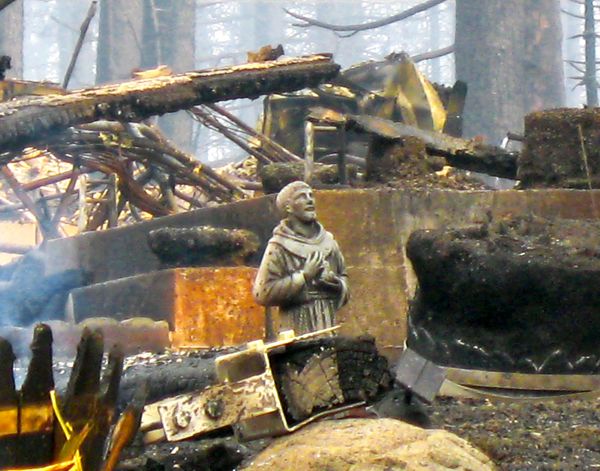
So many items lost in the fire did not have a true price tag because sentimental value is priceless. Photo/USFS

Horn said the first thing he and other agents did was man their office and hold on tight to see what they could do to help. “We knew we had access to shelter, from Harvey’s to rental homes, for our clients. I have authority out of my office to write some pretty healthy checks for food, clothing, shelter, etc. I wrote quite a few of those checks.”

The fire started on a Sunday, Horn recalled, and by noon he and others had moved a big motor home into their parking lot to serve as a disaster shelter. “We also rented a building to serve as a disaster claims office. For nine months it was staffed with claims adjusters, estimators, logistics staff and secretaries.

“At first you can’t believe it, then realization sets in,” he said of the fire victims. “It takes time to get their lifestyle back. There’s some counseling to be done as an agent. I found myself in a role of assisting clients with claims people, contractors, adjusters, city officials and had to go to fire meetings, too. I helped people get new driver’s licenses. You lose all of your personal papers.”

Horn had high praise for Guy Lease, president of Lake Tahoe Community College at the time. “He really came through. He threw open the doors for as long as necessary for people who needed a place to meet; a place to contact FEMA or the state or whoever.”

Since the fire, Horn’s company is much more sensitive to wildfire now. “Now we have locations, not just South Lake Tahoe, but throughout California that are designated as wildfire areas. This means these places have a higher propensity or risk for fire, so they require, for me, extra underwriting (exposure to risk).”

Here’s a list of some of the new considerations for fire insurance underwriting, put into place since the Angora Fire:

• how far away are trees and brush from a home

• roofing; no wood shingles, must be Class A or metal roofing

• windows; no plastic/vinyl window casings

• siding must be fire resistant

• decks must be enclosed around their perimeter.

In order to be more proactive, Horn said he now inspects and photographs every home he insures. “We’re trying to be fire wise,” he said.

In Horn’s estimation, 99 percent of his clients were pleased with the service they received. “It was a well-choreographed claims situation. Other governmental agencies have come to Tahoe to see what we did.”

AAA was one of the insurance company’s that received a tremendous amount of praise after the fire because of the way claims people handled the situation – including writing checks before any paperwork was officially filed.

But it’s five years later and the company has gone – at least physically – from the basin. The South Lake Tahoe and Kings Beach offices have closed in that time. And now Matt Skryja with AAA won’t even give Lake Tahoe News an interview.

Proving your worth

Joe and Lisa McAvoy lost their home in the fire and have since rebuilt, although on a different parcel. The McAvoys said ultimately they were pleased with their claims coverage and the way it was handled, even though it took a year to go through the process.

“We had to haggle for a long time,” Joe McAvoy said. Besides fighting fires for a living, Joe is also a cabinetmaker, and with Lisa, did most of the planning and construction of both of their homes — pre-fire and post-fire.

“We showed them that the home couldn’t be rebuilt for what they wanted to pay.

We showed them photos of the craftsmanship involved in our house. We finally showed them what it would cost to rebuild, although it was really tough to get them to see the true costs.”

Although, in Joe McAvoy’s words, the adjuster was a “good guy” and a “straight shooter,” it took a year of haggling, topped off by six months dealing with El Dorado County and another nearly two years to rebuild.

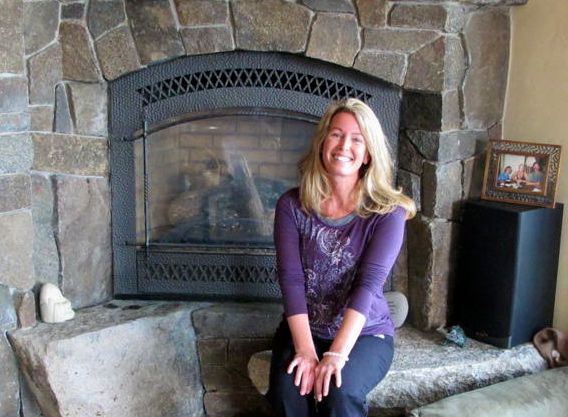
Lisa MacAvoy in her rebuilt home. Photo/Linda Fine Conaboy

“The adjuster said we probably wouldn’t like him when this is all done, but at least after all the stress of it, it turned out good in the end. They finally paid the policy that I was paying for. The adjuster kept saying it’s going to take time. You have to inventory every single thing in your house from the forks and spoons, when you bought them and for how much.

“But there were groups of people who came up from San Diego who had been in a fire and they had drawn up inventory sheets. So instead of starting from scratch, we had a road map. At least the blender and replacement costs were on the list,” he laughed.

He said eventually his insurance company came through and they’re still insured with the same company. “You end up doing what they say. My company ended up doing what was right, but the process was arduous. I think there should be a better way. But if we didn’t have insurance, we’d be starting over from scratch.”

Damage claims hard to process

Suzanne Kingsbury isn’t entirely pleased with her insurance company either. The Kingsbury home didn’t burn down, but it did suffer extensive smoke and heat damage that necessitated they vacate for six months.

“Everything we owned went to smoke rehab,” the El Dorado County Superior Court judge told Lake Tahoe News. “What an ordeal. I had no clothes and no belongings.”

Kingsbury said her experience with the insurance company was interesting to say the least. “The adjuster came out and made an assessment; all the restoration people were there too. As time moved on, the insurance company balked and the restoration folks disappeared.

“All of our neighbors were insured by the same company, but they had different adjusters. When we all compared notes, we found we were not being treated equitably. Interestingly, we all were accused of conspiring. We had a meeting with the insurance company and the end result was a different adjuster — service improved immediately.”

For Kingsbury and her husband, the fire and their return from it became a multi-year project including painting, repainting and new siding. “It seemed like everything that was done had to be re-done multiple times, but our insurance company finally hung with us. I know people who had fabulous experiences and then there were those who did nothing but fight with their companies.”

When you’re in a trauma situation it makes it impossible to properly deal with insurance companies and fight with them, Kingsbury said. “Some people threw their hands up and couldn’t deal with it.”

Fortunately, Kingsbury’s husband is retired and handled much of the legwork.

Rebuilding was important

Delicia Spees is seemingly is a poster child for all people involved in the Angora Fire. The Spees’ family home burned to the ground; in fact, there was only one neighbor in her vicinity who didn’t lose a home.

“We never considered not rebuilding,” she said. “I have mixed emotions about our insurance company. We were underinsured by a whole lot; I didn’t have a mortgage then and I do now.”

She said it took a while to work with her insurance company because it didn’t have a local presence. “We had our home for 34 years and had done extensive remodeling, but our agent never talked to us about upgrading to cover the additions. Up to that time, most of us lived in la-la land and didn’t talk about insurance.

“We’ve learned to be quite pro-active now and have definitely changed companies. You’d think the insurance company would contact you about upgrades.”

Spees continued: “My jewelry, my mom’s jewelry, my kids’ things are all gone. That’s what kills you. Insurance didn’t cover that. What I learned though, are monetary things come back. We lost no lives in the fire. I love this town — so generous. I lost my children’s things, but in reality, I now have a beautiful home and a job.

“Losing a human is tragic; losing a home is losing monetary things — just stuff that you were going to clear out anyway. Life isn’t fair, but it doesn’t pick on you; you go forward and you’re lucky to have anything.”

Things to consider

To help navigate the insurance recovery process, the Insurance Information Network of California offers the following advice to those whose property has been damaged or destroyed:

• Call your insurance agent or insurance company and report the damage. Most homeowner policies cover additional living expenses and will advance money if there is a need for temporary shelter, food or clothing.

• If your home or business has been damaged but not destroyed, make temporary repairs where possible to prevent any further damage. Save receipts for supplies and materials purchases as the insurance company will reimburse for any reasonable expense for those temporary repairs.

• Prepare for the adjuster’s inspection. Take the time to inspect the property in advance and note anything that you would like the adjuster to see. Provide the adjuster with a list of the damaged items, photographs, receipts, bills and other relevant paperwork. Doing so will help the adjuster correctly determine the value of destroyed property information or how to create an inventory. Free inventory software is also available at the IINC website.

It is important for those filing an insurance claim to maintain a calendar of benchmark dates for decisions on rebuilding and completing the recovery process.

To view a copy of the brochure, Settling Insurance Claims after a Disaster, visit the IINC website.


Golf event benefits South Tahoe Cancer League

South Lake Tahoe Moose Lodge No. 1632, along with Sierra-at-Tahoe and Harrah’s-Harveys Lake Tahoe are sponsoring the 7th annual Longest Day of Golf on June 20.

Tahoe Paradise Golf Course has committed to helping this community fundraiser by donating the course for the entire day. Golfers will start at sun rise and play as many holes as they can before sundown.

Last year, the golfers played 125 holes and raised more $12,000 for the South Tahoe Cancer League. Every dollar raised stays in town to provide financial assistance to local cancer patients.

Consider pledging on a per hole basis or a flat dollar amount. Send tax-deductible donations to either Angie Keil or Greg Kuntz at SLT Moose Lodge No. 1632, 961 Eloise Ave., South Lake Tahoe, CA 96150.


Individuals, teams invited to Tahoe Legends runs

The Tahoe Legends 10K and 5K runs are June 16 starting at 8am at Lake Tahoe Community College.

TR4CK (Track for Community and Kids) sponsors the annual event that stars at the college and ends on the track at South Tahoe Middle School.

The Tahoe Legends Challenge also pits local fitness clubs in head-to-head competition for the Fast and Fit Trophy.

Here is the registration form.


California government unions move to squeeze out private contractors

By Jon Ortiz, Sacramento Bee

With California facing yet another budget crisis that threatens state jobs and pay, employee unions are moving on several fronts to push use of civil service workers instead of private contractors for state government work.

Unions had a say in Gov. Jerry Brown’s 2012-13 budget revision last month, which proposes axing outside contracting for a range of work, from computer consulting to custodial services.

State employee unions also threw their weight behind recent legislation that, among other things, would have given civil service employees first crack at all state government jobs. The measure failed but is likely to resurface.

Last month, the state attorneys’ union successfully contested a multimillion-dollar contract with a private law firm for legal services.

“We’ve got a bunch more (cases) in the pipeline,” said Patrick Whalen, general counsel for California Attorneys, Administrative Law Judges and Hearing Officers in State Employment, or CASE. “When it’s crunch time, you look for every penny you can.”

The union efforts have intensified the debate over privatizing government functions, especially with California confronting a budget deficit of at least $15.7 billion through June 2013. Brown has suggested closing some of that gap by eliminating thousands of state jobs next year and putting roughly 214,000 employees on a four-day workweek schedule that would cut their pay by 5 percent.

In that same vein, Brown and labor leaders say curbing what the state spends on contractors would save money.

Read the whole story


Grief group meets twice a month in South Tahoe

Barton Hospice’s grief class — Reflections of Life and Loss Grief — is the first and third Thursday of each month from 3-4:30pm.

The group meets at the Barton Foundation, (2092 Lake Tahoe Blvd., Ste. 600, South Lake Tahoe).

People who have experienced the loss of a loved one or have endured a significant, life-altering event are encouraged to attend.

The benefits of a bereavement group include sharing emotional connections with others when many cannot find peace with friends and family.

For questions or more information, call (530) 543.5581.


‘Glamping’ removes all the roughing-it from camping

By Sam McManis, Sacramento Bee

BIG SUR – Over the past few days, while “roughing it” on the rugged Central Coast, I have slept between high-thread-count sheets made toasty by a heated mattress, cringed as my bloated carcass was kneaded like a blob of sourdough by a sadistic redheaded masseuse named Nora, gazed at a coniferous hillside while submerged in the amniotic warmth of a hot tub, and seen a dazzling ocean view from a bed inside a yurt.

I also have eaten a $22 Caesar salad, with free-range chicken, at a campground. I have hiked on private trails where ticks wouldn’t dare alight on your epidermis. I have been basted, scalp to toenails, with medicinal oils purported to promote healing. I have lingered under a hot, pulsating shower, all lathered up with a loofah and artisan peppermint-and-grapefruit soap.

Yeah, it’s been a nice time.

But, tell me, have I really been camping?

“No, not at all,” said traveler Molly Lindgren, cradling a coffee cup outside her yurt at Treebones Resort, equidistant between Hearst Castle to the south and Big Sur proper to the north. “And that’s a good thing. I hate camping. I did it as a child and loved it back then. But now, I don’t want to be bothered. The great thing here is, you’re in this yurt, it’s totally in nature, but comfortable. You’re not roughing it so much.”

What I’ve been doing, snooty as it sounds, is “glamping.”

That’s the smashed-together term meaning “glamorous camping,” a high-end activity for those seeking to commune with nature without struggling with troublesome tent poles, without sleeping on the cold, unforgiving ground, while substituting organic, locally grown cuisine for reheated beans and franks, and happily trading up from s’mores to tiramisu.

Read the whole story


Angora Fire — 5 years later part 2 coming June 10

Day 2 of Lake Tahoe News’ four-part series on Angora Fire — 5 years later will run June 10.

El Dorado County Supervisor Norma Santiago talks about the fire, find out about insurance issues, defensible space and if there are the resources today to fight the next Angora.

If you missed the June 3 installment, here are links to those stories:

Susan Wood was the first reporter on the scene.

Forest Supervisor Nancy Gibson looks forward.

A garden grows from the ashes.

No arrests made.