Ruth (Murphy) Valine — 1931-2013

Ruth (Murphy) Valine of Reno died Oct. 10 after a brief illness. She was 82. She was born Sept. 4, 1931, in Oklahoma City to Pearl Marie and Henry Goslin.

She was greatly influenced by wartime. As a young woman, Ruth volunteered for church groups and was proud to plant a victory garden to help her family survive.

By 1951 she was out on her own and working in the insurance industry in California. She married the late William “Brad” Murphy in 1953 in Grass Valley. They began their life together in Sacramento. They were blessed with two daughters, Patti and Kathy.
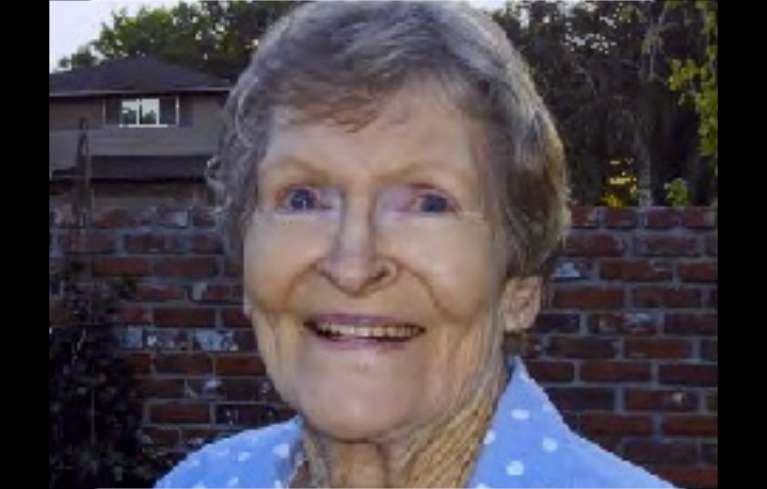
Ruth Valine

Ruth Valine

At the time of their marriage, Brad was a partner in a Sacramento CPA firm. In 1959, they jumped at the chance to relocate their young family to Lake Tahoe, opening a branch office of Johnson, Miller and Murphy. They quickly immersed themselves in their new community and Ruth became active in the Soroptimist club, where she was elected president in 1962. Both were ardent supporters of the drive to form a new city government. In November 1965, Brad was honored to be elected the first mayor of the newly incorporated city of South Lake Tahoe. After Brad’s untimely passing in 1971, the family relocated to Sacramento.

In 1993, Ruth relocated to Las Vegas to reunite with her family. In 2004, Ruth moved to the Reno area with her daughter, Patti, son-in-law Chuck and granddaughters Abigail and Caroline. Ruth’s daughter Kathy joined them in 2006.

Upon her return to her beloved Sierra Nevada, Ruth was thrilled to rejoin the Soroptimist International of South Lake Tahoe chapter to reconnect with many old friends. She looked forward to the Wednesday morning drive “over the hill”.

Ruth continued her lifelong history of volunteerism in Reno as she devoted time to the S.A.F.E project, numerous service activities with the Soroptimist club, and knitting hundreds of winter scarves for the Reno-Sparks Gospel Mission.

Grandma Ruth had a profound impact on her two granddaughters, instilling good manners and respect for adults. She was an avid supporter of the school activities the girls were involved in, and attended all of the girls’ volleyball, basketball, ROTC and track and field events over the years. She was quite well known in the Reno High Gym, arriving several hours before each event to knit or play her hand-held solitaire game. Grandma Ruth was passionate about creating and continuing family traditions. Her granddaughters will tell their children about “Red Shirt” ravioli dinners, the yearly Christmas gingerbread house and the ingredients for the perfect Thanksgiving stuffing and gravy.

Ruth is survived by her sister, Fran Tarjany of Culver City; daughters, Patricia Boorman (Chuck) and Kathleen Murphy. She also is survived by five grandchildren, Abigail, Caroline, Shawn, Jason, Aaron and three great-grandchildren. She will be greatly missed by her extended family and friends in Nevada and California.

The family wishes to thank the doctors, nurses, and Home Health Care employees at Saint Mary’s Regional Medical Center for their loving and compassionate care of Ruth and her family during her illness.

In lieu of flowers, the family is requesting donations be made in Ruth’s name to the Food Bank of Northern Nevada (fbnn.org) or the Reno-Sparks Gospel Mission, 355 Record St., Reno.

Many thanks to Del Laine for her assistance and support of the family. A graveside service is scheduled for Oct. 25 at 11am at Happy Homestead Cemetery in South Lake Tahoe.A celebration of Ruth’s life will be next summer in Lake Tahoe.
Calif. on the road to legalize marijuana

By Kathleen Miles, Huffington Post

Nearly two-thirds (65 percent) of Californians support legalizing, regulating and taxing recreational marijuana in the state, according to a Tulchin Research poll.

The figure, based on responses of 1,200 likely 2016 voters surveyed during the last two weeks, shows a “solid majority” back proposals to legalize adult recreational marijuana, the San Francisco-based pollster said. The poll found 32 percent oppose legalization and 3 percent were undecided.

Lt. Gov. Gavin Newsom and American Civil Liberties Union representatives released the poll results during a news conference Thursday and announced the launch of a two-year research effort focused on proposals to legalize recreational marijuana. Newsom will chair a panel of 16 experts, including professors, medical professionals and policy researchers, who will study legal and policy issues involved in adult recreational marijuana.

“This is about real people,” Newsom said to the Huffington Post. “Communities are devastated because of this abject thing called the drug war. Forget the politics. This is the right thing to do.”

Read the whole story


STHS sports medicine instructor brings real-world experience to classroom

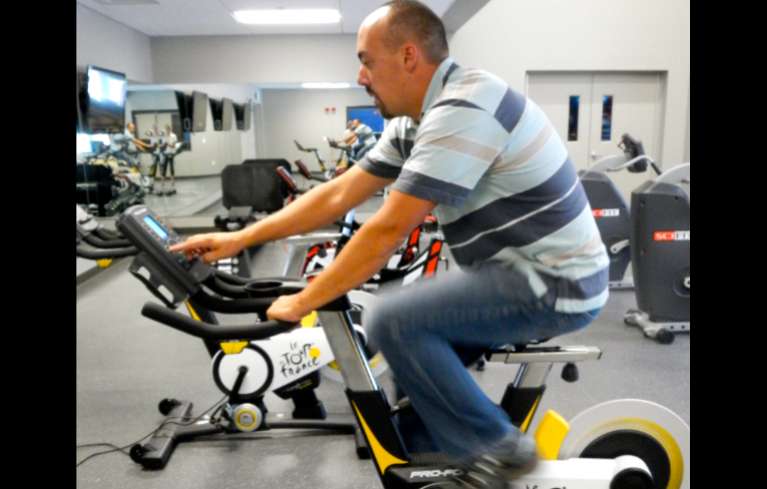
Isaiah Tannaci demonstrates what the equipment in the Sports Medicine Center at STHS is used for. Photo/Kathryn Reed

Isaiah Tannaci demonstrates what the equipment in the Sports Medicine Center at STHS is used for. Photos/Kathryn Reed

By Kathryn Reed

Isaiah Tannaci doesn’t have to rely on a textbook to answer a student’s questions. There’s a good chance whatever is asked he has the answer from personal experience.

Tannaci is not the ordinary high school instructor. His goal was never to be a teacher. And he’s just starting to work on his credential. But none of that stopped Lake Tahoe Unified School District from hiring him to start this school year.

“We are thrilled to have someone with such a strong background and passion to launch our new Sports Medicine Center at South Tahoe High School,” Principal Ivone Larson told Lake Tahoe News.

Students are excited too. The maximum — 90 students — signed up for this semester and for next semester.

Tannaci was a paramedic in Mount Shasta City when he got a call from a friend about the director job for the sports med program at STHS. He was blown away when he saw the facility. More equipment keeps arriving. It is state-of-the-art. Some of it is so new to the market Tannaci has only read about it.

While Tannaci was going to Southern Oregon State in Ashland, Ore., he became interested in athletic training. He has been a certified athletic trainer since 1998, has a bachelor’s in exercise physiology and a master’s in sports medicine. After he left Tahoe Fracture he went to paramedic school.

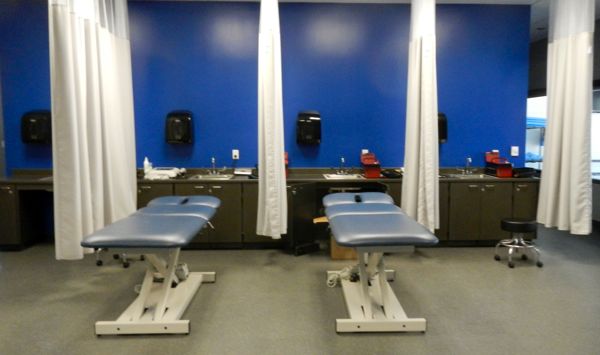
Exam tables for sports med students.

Exam tables for sports med students.

Tannaci has a million ideas for what he would like to do with the sports medicine facility. “Give it time” is the approach his superiors tell him to take.

One goal is to have students trained so there would be medical coverage at all school athletic practices and games. They would work under a certified athletic trainer in a similar manner to what goes on at the college level.

Through the emergency medicine side of the curriculum at STHS students could get enough education so they could volunteer for the National Ski Patrol. The minimum age to do so is 15. Between what STHS and Lake Tahoe Community College offer, students could become an emergency medical technician. Minimum age to do so is 18.

With this being the first semester for the program, intro to sports medicine is being taught multiple times so students have the basics. The program will grow to deal with emergency medicine, sports medicine and being a physical trainer.

As with most career and technical education programs, sports med has something for those who are college-bound, those who want a skill that will lead to a job, and those who want to dabble in something different.

The education is designed to flow into LTCC’s offerings where this fall it’s possible to obtain an associate of art’s degree in kinesiology. It could also be a feeder program for Barton Health.

“I am excited about the uniqueness of this program and the opportunities it presents to the students of STHS. I think it matches well with the internship program that Barton Health has, and that the exposure to sports medicine will foster more students to choose a career in medicine,” orthopedist Terry Orr said.

Even though Tannaci grew up a ski racer in Mount Shasta City, he is very familiar with Lake Tahoe.

He worked for Orr from 2002-08 when he was part of Tahoe Fracture. The two had met when both were working for the U.S. Ski Team. Tannaci was the athletic trainer for the team from 1998-2002. He was the men’s ski team’s head trainer during the Salt Lake City Olympics in 2002. (The traveling is what made him want to stop being involved with the ski team.)

“He was involved in all aspects of treatment of world-class athletes ranging from emergency triage on the race course to recovery from surgery. Isaiah has seen it all and lived it. The experiences he has had in the treatment of our nation’s best athletes brings a relevance to his teaching that would be hard to match,” Orr told Lake Tahoe News.


Scientists find link between achy joints, weather

By Melinda Beck, Wall Street Journal

The Wolff family of Paramus, N.J., was eyeing the gathering clouds and debating whether to cancel a planned park trip when 6-year-old Leora piped up with an idea: “Let’s call Grandma. Her knees always know when it’s going to rain!”

Leora’s grandmother, Esther Polatsek, says she started being sensitive to the weather in her 20s, when a fracture in her foot would ache whenever a snowstorm approached. Now 66 and plagued by rheumatoid arthritis, Polatsek says she suffers flare-ups whenever the weather is about to change.

“It’s just uncanny. Sometimes it’ll be gorgeous out, but I’ll have this awful pain. And sure enough, the next morning it rains,” she says. “It may be just a few drops, but it makes my body crazy.”

Do weather conditions really aggravate physical pain?

It is one of the longest running controversies in medicine.

Hippocrates in 400 B.C. noticed that some illnesses were seasonal. The traditional Chinese medicine term for rheumatism (fengshi bing) translates to “wind-damp disease.”

But modern scholars have gotten inconsistent results in studies that tried to match weather patterns to reported pain symptoms—leading some to dismiss the connection as highly subjective or all in sufferers’ minds.

“People’s beliefs about arthritis pain and the weather may tell more about the workings of the mind than of the body,” concluded the late Stanford psychologist Amos Tversky in the mid-1990s, after comparing the pain reports of 18 rheumatoid-arthritis patients with local weather conditions for a year and finding no connection.

Still, other studies have linked changes in temperature, humidity or barometric pressure to worsening pain from rheumatoid arthritis and osteoarthritis, as well as headaches, tooth aches, jaw pain, scar pain, low-back pain, pelvic pain, fibromyalgia, trigeminal neuralgia (a searing pain in the face), gout and phantom-limb pain.

Scientists don’t understand all the mechanisms involved in weather-related pain, but one leading theory holds that the falling barometric pressure that frequently precedes a storm alters the pressure inside joints. Those connections between bones, held together with tendons and ligaments, are surrounded and cushioned by sacs of fluid and trapped gasses.

Read the whole story


Study: Sitting all day is unhealthy

By Michael J. Joyner, Outside

We all know that sitting around is bad for your health, and that exercising is good for you. But what happens to people who exercise regularly and then sit around all day?

This is one of the hot new topics in exercise and public health research. The idea is that sitting around all day limits the positive effects of your workout or other forms of non-structured physical activity you might be getting.

In a large study from Australia more than 200,000 people.

For the 150,000 healthy people in the study (including those who didn’t exercise), there was a dose response relationship between more sitting and all-cause mortality. This simply means more sitting was associated with more mortality. The sitting mortality relationship was also blunted in the people who got any exercise during the week—a little bit of activity can stop some, but not all, of the negative effects of a lot of sitting.

Read the whole story


It takes billions of dollars to preserve and improve Lake Tahoe’s environment

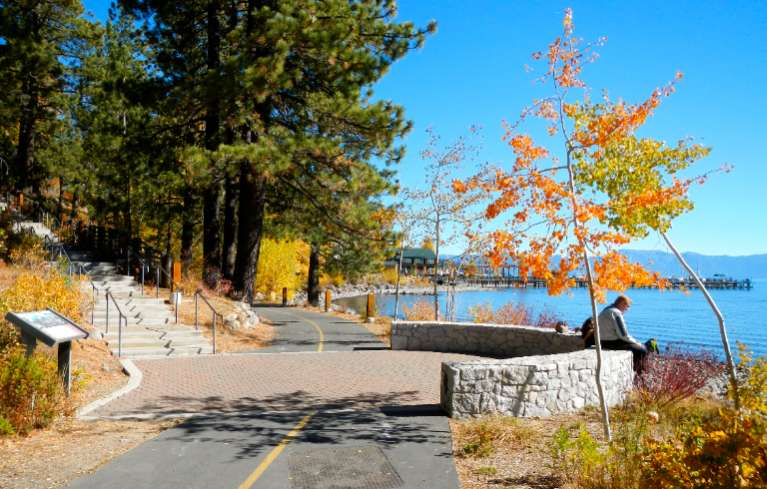
Lakeside Trail in Tahoe City is decorative, has interpretive signs, seating and endless views of Lake Tahoe. Photos/Kathryn Reed

Tahoe City’s Lakeside Trail is decorative, has interpretive signs, seats and endless views of Lake Tahoe. Photos/Kathryn Reed

By Kathryn Reed

TAHOE CITY – A catastrophic inferno like the Rim Fire could wipe out the more than $1.4 billion worth of improvements that have been made to Lake Tahoe through the Environmental Improvement Program.

That was the warning Julie Regan, external affairs chief with the Tahoe Regional Planning Agency, issued Oct. 18.

While 50,000 acres in the Lake Tahoe Basin have received a fuels treatment – or thinning – to make them more fire safe, many have never been touched.

“We can choose our fire. It’s a matter of will and funding,” Mike Vollmer, TRPA forest fuels manager, said.

The TRPA officials along with others were speaking during a tour of a handful of the more than 400 EIP projects that have been completed in the last 15 years. The EIP was created out of the inaugural environmental summit in 1997.

Having trees be spaced out, branches not dangling on the ground and brush removed can help prevent a canopy fire. A goal of thinning is to create terrain that would keep fire on the ground.

Vollmer said a healthy forest has between 90 and 100 trees per acre, whereas there are places now in the basin with 400 trees per acre.

But all of this thinning takes money and that is practically an endangered species these days. If the Lake Tahoe Restoration Act is reauthorized, it calls for $135 million going to fuels reduction projects.

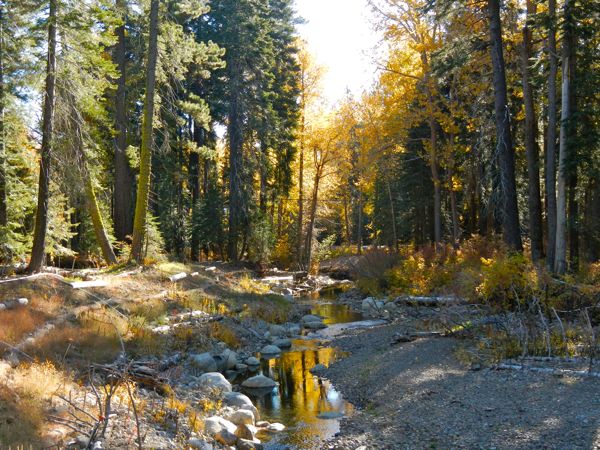
Blackwood Creek near Lake Tahoe was restored by the California Tahoe Conservancy, while the U.S. Forest Service fixed the upper watershed.

Blackwood Creek near Lake Tahoe was restored by the California Tahoe Conservancy, while the U.S. Forest Service fixed the upper watershed.

Money is an issue with most of the improvements.

It cost $12 million to build one mile of trail along the lakefront in Tahoe City.

It’s considered an economic benefit considering more than 400,000 people use it each year. Known as the Lakeside Trail, it’s a definite showcase as the entire lake is visible, with snow on the higher elevations and aspens at lake level. A play area is being used, cyclists are out, and pedestrians are brushing past.

Kelli Twomey, with Tahoe City Public Utility District – the lead agency on the trail project, and Wally Auerbach with Auerbach Engineering spoke of the collaboration needed to get the trail built, how it was a redevelopment project, and that besides recreation it brought water quality and other improvements to the area.

Keeping fine sediment out of the lake is a major component of most environmental improvement projects. Stuart Roll with the California Tahoe Conservancy pointed out how the 54-acre Blackwood Creek project is an example of how restoration of a channel can reduce dirt from clouding Lake Tahoe.

This area has been logged twice and had a quarry in the creek. Banks were steep, the forest was so thick the aspen stand couldn’t thrive, and a user-created trail to Eagle Rock was steep. Now the channel meanders more naturally, sediment reaching the lake has been dramatically reduced, aspens are in full bloom, and a new trail to Eagle Rock has been established.

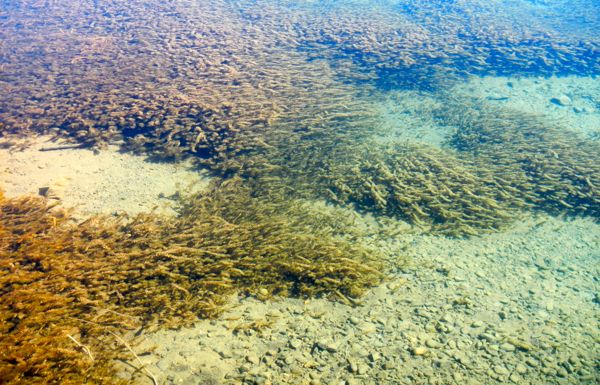
Milfoil near the dam in Tahoe City.

Milfoil near the dam in Tahoe City.

The federal government shutdown prevented the milfoil removal project by the Tahoe City dam from starting, so it will be delayed until next year.

The plan is to put black tarps on the invasive weed to kill it.

There is so much milfoil that it almost covers the width of the channel near the dam. The weed comes from Lake Tahoe and is making its way down the Truckee River. (It’s also going up the Upper Truckee River.)

Tahoe Keys on the South Shore is the largest area with milfoil. Boats distribute it to the rest of the lake via propellers. It’s possible one day herbicides could be applied to kill the milfoil.

But it was pointed out that it’s near impossible to eradicate any of the aquatic invasive species. It’s all about controlling them.


Women slowly making difference in Congress

By Casey Capachi, Washington Post

As the fiscal impasse began to show signs of breaking Wednesday on Capitol Hill, one group may have emerged as a voice of reason all along: female lawmakers.

“I know my colleagues are tired of hearing about the women in the Senate,” Sen. Susan Collins, R-Maine, said with a smile on Wednesday, before continuing to give “kudos” on the Senate floor to those involved in the bipartisan proposal to end the shutdown and temporarily raise the debt ceiling to avoid default.

Six of the fourteen senators behind the compromise that the House approved Wednesday night are women.

“In my experience, women are much more willing to sit down together, build consensus and try to get to ‘yes’ without really clobbering the other side and leaving them bloody,” said Rep. Debbie Wasserman Schultz, D-Fla., in an interview with PostTV’s “InPlay” on Tuesday.

Wasserman Schultz, who is also chair of the Democratic National Committee, said that even though the end result of the budget debate remains “elusive,” one thing has become clear.

“What I think the issue is is that we don’t have enough women in positions of authority to actually make that move and negotiate,” said she said. “That’s why if we get more women elected, more women will be able to move up and be in that position of power.”

Read the whole story


Changing demographics alter U.S. food choices

By J.M. Hirsch and Suzette Laboy, AP

MIAMI — Salsa overtaking ketchup as America’s No. 1 condiment was just the start.

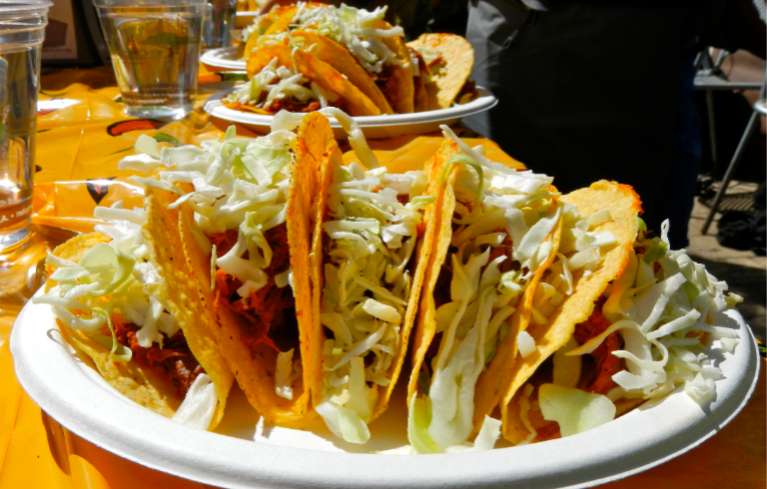
These days, tortillas outsell burger and hot dog buns; sales of tortilla chips trump potato chips; and tacos and burritos have become so ubiquitously “American,” most people don’t even consider them ethnic.

Sierra-at-Tahoe has an annual taco eating contest and salsa competition. Photo/LTN fiel

Sierra-at-Tahoe has an annual taco eating contest and salsa competition. Photo/LTN file

Welcome to the taste of American food in 2013.

As immigrant and minority populations rewrite American demographics, the nation’s collective menu is reflecting this flux, as it always has. And it goes beyond the mainstreaming of once-esoteric ethnic ingredients, something we’ve seen with everything from soy sauce to jalapenos.

This is a rewrite of the American menu at the macro level, an evolution of whole patterns of how people eat. The difference this time? The biggest culinary voting bloc is Hispanic.

Read the whole story


Grant makes Fanny Bridge upgrades more likely

Money is in hand to reroute Highway 89 in Tahoe City so it no longer crosses Fanny Bridge.

A $25.5 million federal grant was awarded to the Tahoe Transportation District for this project as well as bike paths in Meeks Bay and Dollar Point.

An additional $7.5 million needs to be secured to complete the bridge project.

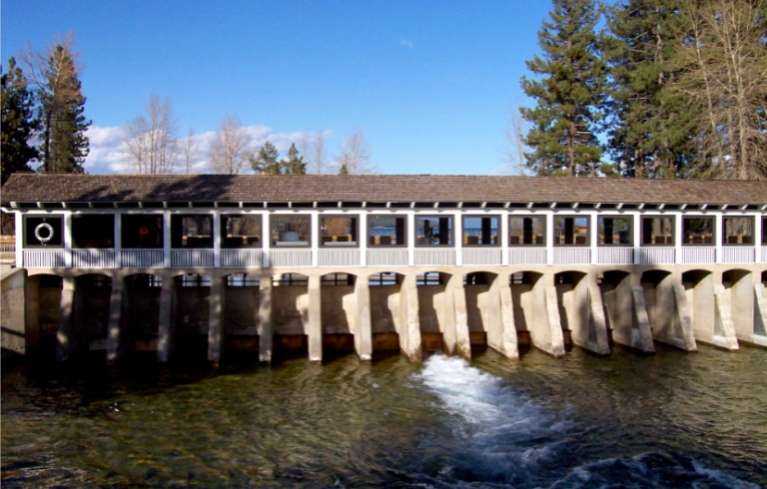
the 100-year-old dam between Fanny Bridge on the Truckee River and the lake outlet. Photo/Bill Kingman

The 100-year-old dam between Fanny Bridge on the Truckee River and the lake outlet. Photo/Bill Kingman

“Although the SR89/Fanny Bridge Community Revitalization Project is still in the environmental stage, the TTD is extremely pleased that a federal agency will fund a major portion once an alternative is chosen,” said Carl Hasty, TTD manager, said in a statement.

The bridge is seismically challenged. The plan is to make upgrades to it and then turn that stretch of the highway into a city street.

The highway will be rerouted through U.S. Forest Service land where the transit center is. The exact route is not set. Alternatives are being studied in the environmental documents. Draft environmental documents could be released in winter 2014.

In addition to the safety concerns, the goal is the new route would relieve congestion at what is now a choke point where highways 89 and 28 come together. Environmental gains are also expected.

Placer County Board of Supervisors will hear an update on the project Oct. 22. An economic study is expected to be completed later this year. Construction could begin in 2015.

The 84-year-old bridge that crosses the Truckee River not far from the mouth of Lake Tahoe got its name because of all the backsides of people that look at the water.

— Lake Tahoe News staff report


Park family splits Tahoe, valley holdings; Horizon hotel-casino to be revamped

By Kathryn Reed

Descendants of the Park family are dividing their thousands of acres at Lake Tahoe and in the Carson Valley, including buildings and business operations, among family members. The property has been in the family since the late 1800s.

“We had a differences with the business philosophy of the company. This split allows us to move forward with ideas that are aligned with our long-term goals,” Jon Park told Lake Tahoe News.

Once known as Park Cattle Company based in Minden, the company this century evolved into Edgewood Companies.

Expect changes at the Horizon hotel-casino in Stateline after the lease expires March 31, 2014. Photo/LTN file

Expect changes at the Horizon hotel-casino in Stateline after the lease expires March 31, 2014. Photo/LTN file

The Blach, Seeliger, Lourdeaux and Kelly families will continue to operate Edgewood Companies. The Park family will establish a yet to be named company.

Edgewood Companies will retain Edgewood Tahoe Golf Course, MontBleu casino, Harveys parking garage land, Friday’s Station and Edgewood Water Company. The company also owns other undeveloped parcels and beachfront properties on the South Shore as well as commercial real estate investment properties in Colorado, Georgia and North Carolina.

“Everything on our end stays the same minus the assets, and they won’t be on the board when the deal is finalized,” Bryan Davis, spokesman for Edgewood told Lake Tahoe News.

The changes do not impact the plan to develop Edgewood Lodge at the golf course.

The new company will own the 539-room Horizon casino at Stateline and the 4,000 acres in Carson Valley, including all of the ranching operations.

The change in ownership is expected to be completed in January or February. The Nevada Gaming Control Board needs to approve the changes involving the casino ownership.

LV Casino LLC, which operates the Horizon, has a valid lease and gaming license until March 31.

Park said, “A big step going forward is improving the operations at the Horizon property. We are hands-on owners and we will definitely be involved in the business at the lake and in Carson Valley on a daily basis.”

He would not get into what the plans are for the rundown casino when the family takes over the operations.

The Horizon has fallen on hard times that go beyond gaming declining at Lake Tahoe. Table games are no longer offered and big-name performers are no longer booked there.

When the property opened in 1965 it was called Del Webb’s Sahara Tahoe, and Elvis Presley played there.

Park isn’t worried about the decline of gaming, saying Lake Tahoe is still a draw from gamblers.

MontBleu, which is across the street from the Horizon, is an Edgewood Companies property. The lease with Tropicana Entertainment out of Las Vegas expires in 2028.

Lake Tahoe News in June 2011 did a three-part series on the Park family. Here are links to part one, part two and part three.