

South Tahoe PUD doesn’t have enough in revenues to meet infrastructure needs


By Kathryn Reed
South Tahoe Public Utility District is spending only half of the money it should on infrastructure in order to keep up with an aging system, according to officials.
The board is trying to figure out how to allocate the money it has.
Earlier this month the five electeds had a workshop about the capital improvement program. The board directed staff to do a rate study in order to have more information on which to base a decision. A significant number of water meters have been installed since the 2011 study, which plays a role in water use and money collected.
After the first of the year the district plans to have more workshops to seek the public’s input regarding their priorities.
On average for the last 10 years the district has spent $4,020,022 on sewer and $6,462,312 on water projects each year.
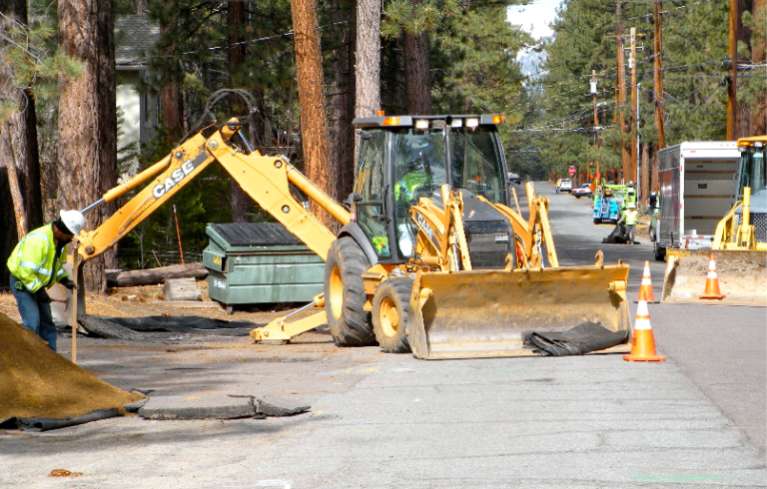
Installing water meters is an unfunded mandate by California. Photo/LTN file
In the district’s 10-year plan nearly $60 million in upgrades to the water system are needed and more than $70 million for the sewer side. Even then, not all of the nearly 8,000 customers who still need a water meter would have one.
To achieve those dollar amounts, the district would need to raise sewer rates 4 percent each year. The needed water rate increase will be determined after the study is completed. Each year that rates are not raised the district falls behind on its master capital improvement plan.
For the current budget, which started July 1, the board voted not to raise sewer or water rates.
Historically, board members Jim Jones and Eric Schafer favor rate increases for infrastructure needs, members Chris Cefalu and Randy Vogelgesang are against increases, and Kelly Sheehan is the swing vote. The last increases were in 2012 on a 3-2 vote to raise sewer rates 5 percent and water rates 2 percent.
Rates in the last 10 years have gone up on average 2 percent a year for water and 2.3 percent for sewer.
Needs of the district
Water meters is the biggest issue board members hear about from constituents. About one-third of STPUD customers are on meters. This creates an inequity between users when it comes to who is paying what.
“It will be unfair until everyone is metered,” Richard Solbrig, STPUD general manager, told Lake Tahoe News.
The state is mandating California water districts install meters by 2025. While the district lobbied to be exempt because it is not in the California watershed, lawmakers said too bad.
The district is looking into zero interest loans from the state to cover the $27 million expense to complete the meter installation. To pay that money back would require a rate increase either just for the 20-year repayment of the loan or an ongoing adjustment. That is another issue for the board to decide.
If STPUD were to ignore the mandate, money from the state would dry up and penalties are likely.
The district also has the need to replace more than 100,000 feet of undersized water line.
“With Angora we had enough water. How much worse would it have been if we didn’t?” Solbrig said of the 2007 Angora Fire that destroyed 254 houses and burned more than 3,000 acres on the South Shore.
An area like Sierra Tract in South Lake Tahoe doesn’t have the minimum 8-inch water lines to fight a fire like Angora. There aren’t hydrants every 500 feet like firefighters want.
Every time the district installs water lines it also puts in meters at residences and hydrants in the neighborhood. Some of the “state streets” were done this fall, with the rest of the area, including Tahoe Keys Boulevard, to get upgraded water lines next year.
Going forward
“The board is looking at the affordability to ratepayers,” Solbrig said in regards to if and when to raise rates.
Earlier this year the majority of the board believed ratepayers could not sustain an increase because of the economic downturn.
Chief Financial Officer Paul Hughes explained that the industry standard is to replace 1 percent of underground facilities annually and above ground at 2 percent. The district isn’t doing that. STPUD’s infrastructure is worth about $1.3 billion.
Besides meters and water lines, the district also has a couple storage tanks and booster stations that need replacing.
“All of our lift stations are approaching 50 years in age and need significant refurbishments,” Solbrig said.
When it comes to prioritizing projects, the district looks at what lines have sustained leaks, the probability of failure, if there are backup units and the risk involved if nothing is done.
The booster station at Luther Pass is inadequate. It pumps the treated wastewater into Alpine County.
“There is not a full backup for utilities there. Every year we get a little more nervous,” Solbrig said.
If something significant fails on the wastewater side, it would likely have a more immediate impact on the environment. But a fire that cannot be extinguished because of inadequate water supply would undoubtedly be detrimental to the land and water as well.
Those are the concerns the board must weigh when deciding how to spend money and where the money will come from.
There was a time in the late 1970s and early 1980s when South Tahoe PUD was banned from adding customers because of issues with the export lines – as in spills and leaks involving sewage and treated wastewater.
Staff wants to ensure the district does not create a scenario with the existing infrastructure where that could happen again.
The bottom line is there is not enough money being generated to do all that needs to be done.
Seventy percent of revenues come from ratepayers. The remaining 30 percent is a combination of grants, loans, connection fees, investment revenue, delinquent penalties and property tax.
With water and sewer mandatory for those who are connected to STPUD, it means 70 percent of the residential ratepayers don’t live in the district. The cost to locals would be much greater without the second homeowner subsidy.

I think that it would be nice for the board to take a look at the salaries of it’s employee’s. They are the highest paid people in the Tahoe Basin.
Do what the City has done, make them pay for their own benefits and get rid of the DEAD WEIGHT that is there, and stop the use of their equipment and tool for personal use and the stealing of district and public property. That should save millions.
Someone should look at the HUGE SALARIES first and make some changes soon.
I’m also confused by the meter issue. When EID started metering houses, they made the homeowner pay. Each parcel owner was given the choice of whether to pay in full up front, or have it made in annual installments as part of their property tax bill. Even here, when we built our house, we paid for a meter when we paid for our water permit.
So why isn’t the district asking people without meters to pay for their own to be put in?
What is “second homeowner subsidy” ?
Steven, I believe that’s the phrase used in reference to all the people who pay a flat rate bill (trash company gets it too) but aren’t actually here using the service all year. Those folks pay full, but use much less than those who live here full time.
Gamechanger, I’m with you. The STPUD jobs are highly sought due to the high wages. Dogula, these people have always had enough money to get the job done. The meters on new homes has just been a big money grab so they can get more money for themselves. They have lobbyists in government that promote laws that lead to these money grabs. If they grabbed our money in a more direct way, it would be obvious to the citizens what they did. The additional revenue that came from meter installments should have gone to the infrastructure. Just look at your bill and multiply that times the homes here. I know there are people that will come up with some lame argument against Gamechanger, and myself, but they don’t crunch the numbers. The revenues taken in by STPUD are enormous. It’s amazing they’re still getting away with this.
Dogula if it weren’t for the second home owner the full time people would be paying a lot more, wake up! Sorry but if you own a second home you need to pay for services just like everyone else, you may not flush your toilet everyday but it sure is nice when you need to.
Uh, Full time, that’s basically what I said. Was I unclear?
Steven the monthly bill to a second homeowner is not sufficient to maintain the system. So the full time homeowners are subsidizing the connections to the part timers.
I bet vacation rentals are lumped in with “second homes” and the usage at the vacation rentals is many times more than a “normal” full time home. To handle all the usage by these 5,6,7 bedroom, 4000 square foot rentals, that regularly house 15-20 people, stpud charges all of us more and more and more. You and me, full time owners are paying for these vacation rentals. Yes, they pay too, but they are a big reason our rates go up.
Second homes are generally charged the same as everyone else. Many who are not yet metered(either full time or second home) are charged a flat fee, until they get meters. Also though some second homes may at sometime have more people in their homes, these 4-6 bedroom homes that can house up 20 people are not the norm, if you dont believe me you may check the cities list of vacation rentals. Also the average vacation rental is only about between 25-30% occupancy at most.
STPUD’s payroll & benefits package is the problem.
Let’s have an honest discussion about that.
Drill a water well. It wil pay for itself.
The STPUD Board of Directors has historically bestowed generous salaries and perks upon the staff so they could hook up their own caboose to the benevolent gravy train. Like top of the line health and medical insurance paid for by ratepayers and taxpayers for their part-time positions. Gourmet coffee delivered by Alpen Sierra. A magnificent office building that certainly doesn’t help transport sewage or deliver water. If it can be squeezed into another rate increase, it flies.
Its easy don’t vote for Jones or Schafer next election. If Kelly votes for increases vote her out too.
SLTPUD is a huge community asset. Our district’s water and sewage systems are state of the art and the envy of every other place in the country.
We should be thankful that planning, installation and maintenance of our system was done by some smart people who cared enough about Lake Tahoe to do it right.
I think water wars are coming and the hate gov’t types will want to sell our water rights to the highest private bidder instead of paying some more in taxes. These are really good jobs for Tahoe, I agree but there’s bigger issues.
Im curious why PUD is in charge of taxis and tour guide licensing. If a person has a Federal DOT/MC# that is good in every state, then why does someone need a special license for California as well. By the way, the Federal Gvmnt charges $375.00 for their licensing in all 50 states and PUD charges $1500.00 just to be able to work in Cali. The Feds have a simple online application, with PUD, you have to hire someone to complete the application for you because it is so complex. Is there any agency in SLT that isn’t totally screwed up?
Bijou Bill, the bigger issue is whether we can afford to keep living here. Not all of us can absorb the almost annual increases for water, sewer, electricity, taxes, etc. Unless of course you just want millionaires living here. Then I completely understand your comment about paying some more in taxes.
dryclean,
How much do you figure you paid in increases in your basic bills this year as opposed to last? If you’re a regular local homeowner I would say not much.
“So why isn’t the district asking people without meters to pay for their own to be put in?
The people who have been connected to the system for years have already been paying for it and all of the upgrades over the years. The new builder gets the benefit of being able to connect to a system that other people have paid for.
Should they pay for your PRV, backflow, and your meter? Those are required because they protect the system and the property.
The people already on the system shouldn’t have to pay for a new liability. Your pipes, your problem, your meter, your problem.
cosa pescado
when a new home is connected to the STPUD system, they pay a hookup fee.
The last I knew the fee for the sewer was $14940 for the minimum connection of 3 sewer units. Each bathroom after 2 requires an additional fee of $4930.
The fee for the minimum water connection is $8983.
That means you write STPUD a check for about $24,000 to connect to their infrastructure before you start to pay for your house. Oh, and don’t forget the fire sprinkler connection you have to have now. I don’t know the cost of that connection.
These fees have nothing to do with the owners side of the connection. Your pipes your problem are all on top of this.
STPUD was given grant money (spell that federal funds passed through state agencies) a couple of years ago to put in meters. I think the total was around $7 Million. They spent this on meters but haven’t finished everyone’s connection.
I think STPUD should use eminent domain and offer fair market value to any privately owned water companies before the defecation hits the oscillation about fresh water and they hold everyone hostage in certain areas of our city. If you think rates are high now wait until water is strictly a profit driven enterprise.
“when a new home is connected to the STPUD system, they pay a hookup fee.”
You know I knew that.
Meters go on private property (new ones), correct? Even more reason why the customer should pay.
Caso, the meters where already paid for by federal grant, why should people who havent been hooked up yet pay for them when they were already paid for the the fed. also so if you are saying that new meter hookup should be paid for by the owners, then should not STUPD go back and charge all of those who have meters now, since they did not originally pay for them?
Reloman I want to correct you on one very important point, Since about 1990 when the building moratorium ended, Those of us who built our homes all paid for our own water meters and that amounts to hundreds of homes in the last 23 years and that estimate is very low. The rules should be fair to everyone.
I don’t believe the water meters are on your property. I think water meters are different than gas and electric.
Advocate, they are on your property. Underground, close to the street.
The people who have wells don’t pay for fire protection because their well does not have the capacity to put a fire out, so the fire dept. uses STPUD’s fire hydrants for water. The cost of having enough water and storage (water tanks) is about 35% of your bill. So people with well get a free ride on fire protection. This issue has never been addressed because people with wells vote and the board members want to stay in office. The total compensation for board members is about $30,000.00 per year. The district does have the best leadership in the basin or your rates would be even higher.
This comment thread is chock full of opinion and plenty of misinformation. Frightening how little facts seem to matter.
Julie, please elaborate.
Some of us value facts, if mine are wrong I want to know.
Dogula, if true that is more reason why you should pay for it. You still think someone else should?