South Tahoe PUD doesn’t have enough in revenues to meet infrastructure needs
By Kathryn Reed
South Tahoe Public Utility District is spending only half of the money it should on infrastructure in order to keep up with an aging system, according to officials.
The board is trying to figure out how to allocate the money it has.
Earlier this month the five electeds had a workshop about the capital improvement program. The board directed staff to do a rate study in order to have more information on which to base a decision. A significant number of water meters have been installed since the 2011 study, which plays a role in water use and money collected.
After the first of the year the district plans to have more workshops to seek the public’s input regarding their priorities.
On average for the last 10 years the district has spent $4,020,022 on sewer and $6,462,312 on water projects each year.
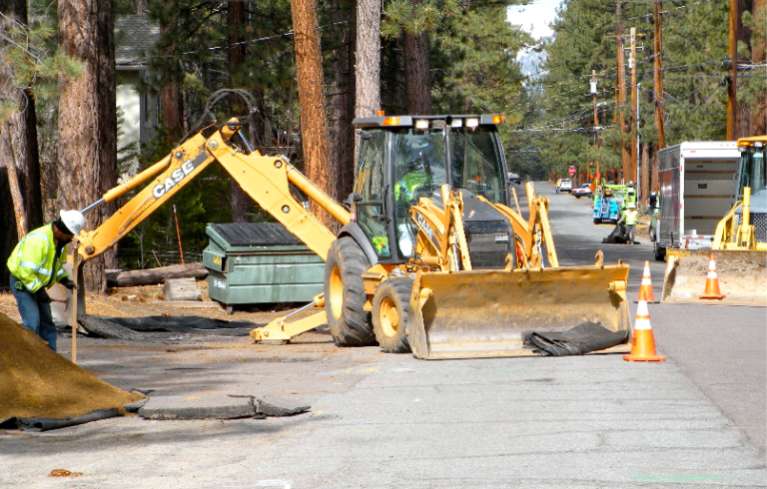
Installing water meters is an unfunded mandate by California. Photo/LTN file
In the district’s 10-year plan nearly $60 million in upgrades to the water system are needed and more than $70 million for the sewer side. Even then, not all of the nearly 8,000 customers who still need a water meter would have one.
To achieve those dollar amounts, the district would need to raise sewer rates 4 percent each year. The needed water rate increase will be determined after the study is completed. Each year that rates are not raised the district falls behind on its master capital improvement plan.
For the current budget, which started July 1, the board voted not to raise sewer or water rates.
Historically, board members Jim Jones and Eric Schafer favor rate increases for infrastructure needs, members Chris Cefalu and Randy Vogelgesang are against increases, and Kelly Sheehan is the swing vote. The last increases were in 2012 on a 3-2 vote to raise sewer rates 5 percent and water rates 2 percent.
Rates in the last 10 years have gone up on average 2 percent a year for water and 2.3 percent for sewer.
Needs of the district
Water meters is the biggest issue board members hear about from constituents. About one-third of STPUD customers are on meters. This creates an inequity between users when it comes to who is paying what.
“It will be unfair until everyone is metered,” Richard Solbrig, STPUD general manager, told Lake Tahoe News.
The state is mandating California water districts install meters by 2025. While the district lobbied to be exempt because it is not in the California watershed, lawmakers said too bad.
The district is looking into zero interest loans from the state to cover the $27 million expense to complete the meter installation. To pay that money back would require a rate increase either just for the 20-year repayment of the loan or an ongoing adjustment. That is another issue for the board to decide.
If STPUD were to ignore the mandate, money from the state would dry up and penalties are likely.
The district also has the need to replace more than 100,000 feet of undersized water line.
“With Angora we had enough water. How much worse would it have been if we didn’t?” Solbrig said of the 2007 Angora Fire that destroyed 254 houses and burned more than 3,000 acres on the South Shore.
An area like Sierra Tract in South Lake Tahoe doesn’t have the minimum 8-inch water lines to fight a fire like Angora. There aren’t hydrants every 500 feet like firefighters want.
Every time the district installs water lines it also puts in meters at residences and hydrants in the neighborhood. Some of the “state streets” were done this fall, with the rest of the area, including Tahoe Keys Boulevard, to get upgraded water lines next year.
Going forward
“The board is looking at the affordability to ratepayers,” Solbrig said in regards to if and when to raise rates.
Earlier this year the majority of the board believed ratepayers could not sustain an increase because of the economic downturn.
Chief Financial Officer Paul Hughes explained that the industry standard is to replace 1 percent of underground facilities annually and above ground at 2 percent. The district isn’t doing that. STPUD’s infrastructure is worth about $1.3 billion.
Besides meters and water lines, the district also has a couple storage tanks and booster stations that need replacing.
“All of our lift stations are approaching 50 years in age and need significant refurbishments,” Solbrig said.
When it comes to prioritizing projects, the district looks at what lines have sustained leaks, the probability of failure, if there are backup units and the risk involved if nothing is done.
The booster station at Luther Pass is inadequate. It pumps the treated wastewater into Alpine County.
“There is not a full backup for utilities there. Every year we get a little more nervous,” Solbrig said.
If something significant fails on the wastewater side, it would likely have a more immediate impact on the environment. But a fire that cannot be extinguished because of inadequate water supply would undoubtedly be detrimental to the land and water as well.
Those are the concerns the board must weigh when deciding how to spend money and where the money will come from.
There was a time in the late 1970s and early 1980s when South Tahoe PUD was banned from adding customers because of issues with the export lines – as in spills and leaks involving sewage and treated wastewater.
Staff wants to ensure the district does not create a scenario with the existing infrastructure where that could happen again.
The bottom line is there is not enough money being generated to do all that needs to be done.
Seventy percent of revenues come from ratepayers. The remaining 30 percent is a combination of grants, loans, connection fees, investment revenue, delinquent penalties and property tax.
With water and sewer mandatory for those who are connected to STPUD, it means 70 percent of the residential ratepayers don’t live in the district. The cost to locals would be much greater without the second homeowner subsidy.