

A lesson in cooking via the farmers’ market


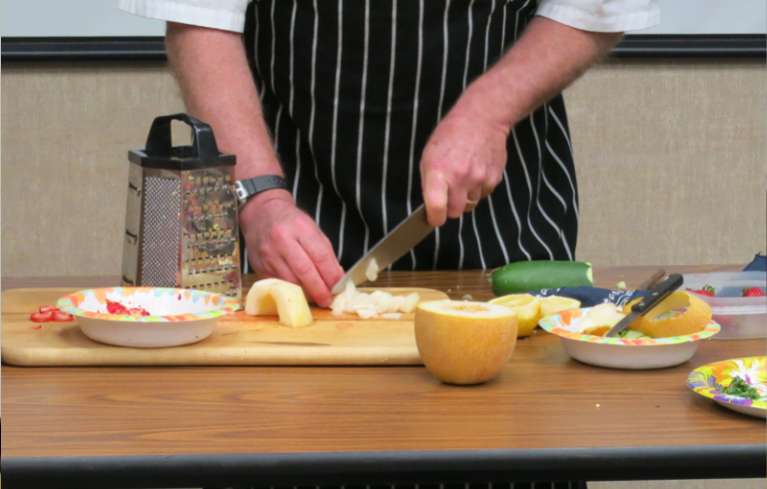
Chef Steve Fernald demonstrates cooking with food from the farmers’ market. Photos/Jessie Marchesseau
By Jessie Marchesseau
Bright red tomatoes, dark green zucchini, sunshine yellow squash and purple sweet peppers were among the fresh produce adorning the table at chef Steve Fernald’s fresh cooking demonstration at the South Lake Tahoe Library on Tuesday.
“They say you eat with your eyes first. People either accept or reject a meal based on how it looks,” said Fernald, culinary arts instructor at Lake Tahoe Community College.
The demonstration was designed to show people how to create simple, tasty summer dishes with fresh ingredients from local farmers’ markets. Fernald suggests starting out by choosing the most colorful options at the market and practicing what he calls “cooking on the fly,” meaning creating dishes in your head as you shop for ingredients. He also described how he took the time to talk to the vendors, learning the differences between varieties of tomatoes and peppers, even discovering new items like melons he had never heard of before.
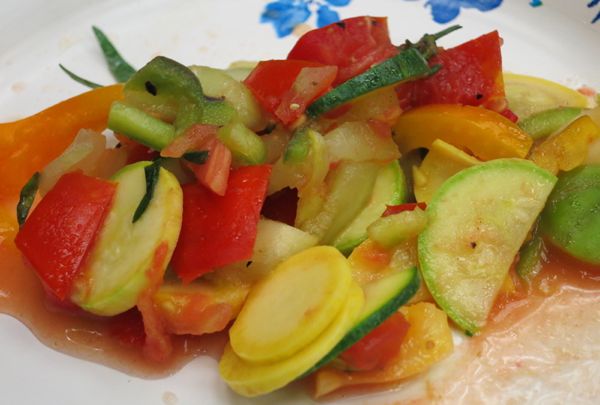
Mediterranean salad
In addition to the fresh produce, Fernald purchased at the farmers’ market earlier that day, the table also displayed a selection of vinegars, olive oil, salts, fresh herbs and dried spices. From this arsenal, Fernald created two dishes: a savory Mediterranean salad and a sweet strawberry chili salsa which he served with homemade crunchy almond cookies.
Starting with the basics, the chef explained the importance of having a variety of textures and tastes in each dish. For example, a combination of crunchy and chewy or sweet and salty is more interesting to the palate than one solitary flavor or texture.
Another essential aspect of cooking, especially in uncooked dishes such as these, is often overlooked: cutting. He explained how size and shape should be considered for the specific preparation, and for uncooked food, small or thin pieces create the most surface area for flavor in your mouth.
Since the event was sponsored by the Barton Foundation, Fernald wanted to create dishes that maximized the flavor while keeping fat content low. One of the ways he achieved this was by using high-quality, high-flavor ingredients. Fernald explained how the gourmet apple cider vinegar, 18-year-old balsamic vinegar and rich olive oil on the table have bolder flavors – meaning you don’t have to use as much of them.
After the quick culinary lesson, the chef began his preparation. First was the Mediterranean salad for which he thinly sliced zucchini and summer squashes, then lightly salted them just enough to bring out the flavor, but not break down the tissues. Then he carefully cut sweet peppers and cucumbers, removing the seeds from both. All of this was tossed with a splash of rice vinegar and a light sprinkle of sugar, not for sweetness, but to encourage the vegetables to release their juices. Next came the chopped tomatoes with seeds left in for added texture, a drizzle of olive oil and, finally, a handful of freshly torn thyme.
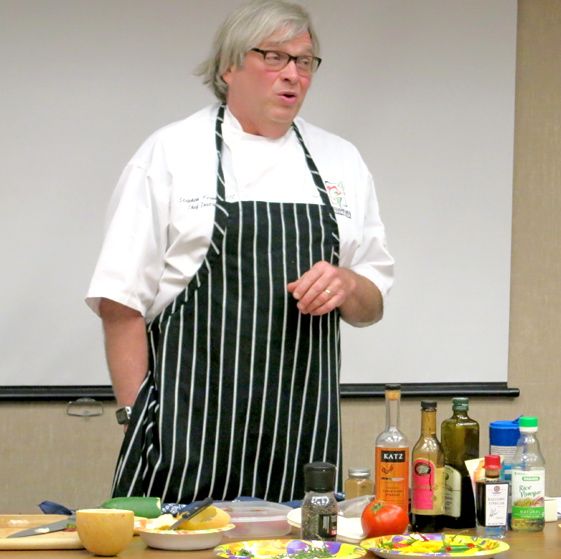
Steve Fernald leaves the LTCC classroom to give a public cooking demo.
The result was a simple dish exploiting the bright flavors of a summer harvest. Crunchy sweet peppers contrasted with soft ripe tomatoes and the fresh thyme left me thinking of my own little herb garden at home.
The next dish Fernald dreamed up was a little more off the beaten path, but no less delicious. Tiny little chili peppers were diced and tossed with a sweet apple cider vinegar. Then in went ripe red strawberries from Watsonville, sliced as thin as he could possibly get them, a sprinkle of sugar and just a pinch of salt. Next were tiny cubes of a melon Fernald discovered at the market just that morning (which he could not even remember the name of), fresh lemon juice and lemon rind. A quick drizzle of balsamic vinegar finished off this sweet and spicy combination.
To balance the heat of the dish, Fernald served it piled on crunchy almond cookies. The result was what one of the tasters in the room called “a party in your mouth.” The sweet flavor of strawberries gave way to a heat that notably cooled your face and urged you to take another bite. This dish had several people, myself included, going back for seconds.
Fernald also took the opportunity to pay homage to renowned chef and restaurateur Alice Waters of Chez Panisse in Berkeley. Waters and Chez Panisse are credited with pioneering the farm to table movement in the early 1970s by serving entirely locally sourced food.
Waters’ vision helped define American cuisine and is a large-scale example of what chef Fernald demonstrated: creating delicious, healthy food using fresh, local ingredients.
“You can tell the difference in not just the tomatoes,” Fernald said of the food from the local farmers’ market, “but in pretty much everything.”

Enjoyed Steve’s presentation very much, noting that the Library has no ‘cooking’ facilities, therefore it was very creative to deal in a cool summer salad, using essentially a “ceviche” mode (natural juices and/or acids like citrus to “cook” with). . .
A slight disagreement as to his enthusiasm for salt, though – one of the executive chefs (Dutch) I trained with offered another viewpoint. . . although salt has recently been “vindicated” somewhat, my Dutch mentor always lamented the American-style habit of reaching for the shaker before they even taste the food in front of them, as most natural ingredients (i.e, “farm-fresh”) have enough sodium in them already.
That is essentially what started the controversy over salt in the first place – before the advent of, for example, sea, salt, which has way more mineral content than ordinary ‘salt’, therefore can in fact be added nutritional value to a meal.
Great job, Steve !…