Opinion: Expensive gas will drive alternative energy exploration

By Robert F. Brands

Long lines at the gas pump weren’t the only product of the twin energy crises of the 1970s. A legislative push toward energy conservation and innovation were also born as a result.

And that’s why I believe the skyrocketing price of oil will do the same in 2011.

History has proven that innovation in the energy industry has almost always been driven by high consumer prices. When we had cheap and abundant oil – and low gas prices – during the 1980s, energy exploration and innovation slowed to a halt. We didn’t need it, and we didn’t see an end in sight to the steady stream of oil from the Middle East. So, investors held back funds for new technologies, oil companies stood pat and conservation became a four-letter word.

According to the Pacific Northwest National Laboratory for the U.S. Department of Energy, more than $172 billion of government money was spent on new energy technology between 1961 and 2008, with the bulk of it being used during the 1970s. In the 1980s, the spending accounted for only 1 percent of all federal investment.

I believe oil companies, besieged by Congress over taking huge tax breaks amid record profit reports, could earn some much needed political points by taking history’s cue and putting some of that money back into energy innovations.

When you look at the broad spectrum of what the oil companies are making and compare it to the rate of innovation in alternative energy, it’s like comparing Mount Kilimanjaro to a grape. Now, most consumers aren’t aware of that truth, because oil companies and ad agencies are very good at making it look like alternative energy is humming along when it’s not. While consumers may not connect those dots, they are very aware of the headlines that show record oil company profits combined with massive tax breaks – especially during a time when federal deficits are threatening them, their children and their children’s children. Today’s energy innovation is a fraction of the total and what should be spend. What’s more, the same old song and dance the oil companies offer with regard to touring how much of a percentage their research and development expenditures are as compared to revenue is a joke, and absolutely no guarantee of success.

I want oil companies to spark innovation not only because of the positive press it will net, but also because it’s the right thing to do.

The truth is that many scientists are beginning to calculate an end to the fossil fuel era, because one day, we will run out. Innovation in this area has been driven by high prices and it has been driven by shortages. When we begin to run out, we’ll experience both, and it will be too late to innovate. We need to do it now, when our resources to commit to it are abundant.

Robert F. Brands is a veteran of companies like GTE, Kohler and Rexam, is president and founder of InnovationCoach.com.


Hard Rock gives a big thank you to community

To the community,

Lake Tahoe, you rock!

Hard Rock Cafe Lake Tahoe’s anniversary event was May 18 through June 26. Hard Rock Cafe Lake Tahoe partnered with Bread & Broth; an all-volunteer program in South Lake Tahoe that provides hot, well-balanced meals to those in need; to help collect food in 40 days.

Hard Rock Lake Tahoe, along with community partners, friends, staff and guests, collected 26,234 pounds of food to present to Bread & Broth.

We are very proud of the way our community, staff and partners have rallied together to make a difference even during difficult economic times. The Hard Rock Cafe Lake Tahoe and Bread & Broth would like to thank everyone who came out to support this effort. One of Hard Rock Café’s long standing mottos, “Take Time To Be Kind”, is truly reflected in these actions.

We would also like to single out and thank those who rose to the occasion in donations and support:

*Kim Templeton, sales and marketing Hard Rock

*Safeway Northern California

*Harrah’s and Harveys employees

*MontBleu

*Hard Rock employees

*Barton Memorial Hospital

*All those in our community who donated above and beyond.

Because of the nature of our cause and the generosity of those who donated, Bread & Broth is donating a portion of the food collected to Back Door Pantry and Christmas Cheer so those they feed are taken care of as well. Hopefully, more events like this one will pull us all closer together still, and allow us to “Feed the Need”. Our goal is simple: One lake, One cause, Feed Lake Tahoe.

This was a great event in our town. But, every day, of every year, we have those in need in our community to help. If you missed this event, or wish to donate to Bread & Broth in any way, contact Connie Blue at (530) 208.8707 or midwest2tahoe@yahoo.com

David Smith, Zephyr Visions Marketing & Consulting


Opinion: A case for giving more and giving locally

By Scott Hanson

It’s impossible to go through a single day in our community without experiencing the difference made by local nonprofits.

Shade trees planted by volunteers. The talented kid who can afford college only because a foundation recognized her potential with a scholarship.

The simple fact that anyone can express their hope for a better tomorrow by encouraging artistic expression, contributing to medical research or extending a helping hand to those in need.

Nearly everyone is capable of engaging in charitable giving. If more people did, the resulting impact on local nonprofits’ ability to realize their full potential would make a stunning difference in the Sacramento region’s quality of life. A recent study on behalf of the Greater Sacramento Generosity Project detailed exactly how, and how easily, that could be accomplished.

The research brought to light three key findings, with the first attracting the most attention. Currently, 62 percent of households in our region – Sacramento, Yolo, Placer and El Dorado counties – give to nonprofits. The national average is 66 percent.

Closing that 4 percent gap, and exceeding the average by a single extra percentage point to 67 percent, is an essential goal of the Generosity Project. And while the percentage points alone may seem negligible, they represent a challenge for all of us to achieve a historic transformation within our home region.

Scott Hanson chairs the Greater Sacramento Generosity Project’s steering committee.

Read the whole story


Opinion: S. Tahoe officials stonewalling the truth

By Steve Kubby

Despite the official denials by the city manager and city attorney, criminal wrongdoing by the South Lake Tahoe City Council has already been documented by the grand jury. In its previous investigation into the conduct of the South Lake Tahoe City Council, the El Dorado Grand Jury concluded its report with a stern warning: “This Grand Jury is of the opinion that an accusation for malfeasance or nonfeasance by this City Council may be appropriate … The Grand Jury only touched the ‘tip of the iceberg’ in its investigation and recommends that the citizens of South Lake Tahoe get involved with their City government. It is up to the citizens to establish the kind of governance they desire, to exercise their democratic right to vote, and get a City government that works for the common good and in an efficient manner for its citizens.”

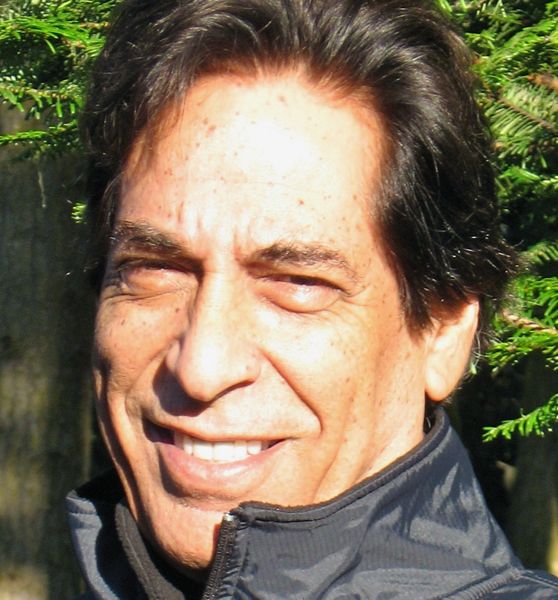
Steve Kubby

Steve Kubby

The grand jury was also quite clear about Councilman Bruce Grego. Here is what the grand jury had to say about Mr. Grego and the $935.50 that was paid to him: “A member of the City Council requested reimbursement for legal fees paid to an outside law firm. The legal advice consisted of a legal opinion and preparation of a letter to the Fair Political Practices Commission. No contract had been signed and the City Council had not approved the expenditure in advance.”

The grand jury then concluded that the payment to Mr. Grego was a violation of California state law, yet Mr. Grego continues to insist he did nothing wrong and refuses to return the money.

Unfortunately those warnings have gone ignored. In an editorial dated July 28, 2010, the Tahoe Daily Tribune said, “The City Council’s response to the critical and scathing El Dorado Grand Jury report is embarrassing and disheartening.”

The editorial then went on to point out that instead of accepting responsibility, the City Council adopted a response that was peppered with the phrases: “the city does not agree in part with the finding,” “the city agrees and does not agree in part,” and “the city does not completely agree with the statement,” among others. That didn’t fly with the Tribune, which reminded the City Council and the citizens of South Lake Tahoe, “The first step to solving a problem is admitting to having one.”

More recently, Tony O’Rourke, the city manager, seems determined to continue this policy of stonewalling the past crimes and culpability of the South Lake Tahoe City Council. For example, Mr. O’Rourke assured the community in a recent column published in the Lake Tahoe News that, “In 2003, the city conducted an audit of the Redevelopment Agency’s financial performance to complete the redevelopment projects in the Stateline area. Following this comprehensive audit, the City Council authorized a loan in the amount of $7 million to the Redevelopment Agency for costs and revenue shortages related to the redevelopment project.”

If this audit was so “comprehensive,” then why is there still no explanation of who raided the general fund for $7 million or who authorized the raid? Furthermore, no one can explain how the city can create a loan to be repaid by funds already allocated to the general fund. This hardly seems like the “comprehensive audit” claimed by city officials.

Mr. O’Rourke, who until now has impressed me with his dedicated and professional performance, claims in the aforementioned column, “Neither Mayor Hal Cole, nor any city councilmembers, are responsible for the collapse of the (convention) project or the economy.” However, neither Mr. O’Rourke, or any other city official, can ignore the failure of Mayor Hal Cole to require a performance bond, which makes the entire City Council totally responsible for the nearly 12-acre crater of rotting concrete, rusting iron and graffiti they created.

It’s time for Mr. O’Rourke and other city officials to stop the stonewalling, end the coverups and heed the advice: “The first step to solving a problem is admitting to having one.”

Steve Kubby is a resident of South Lake Tahoe.


Opinion: Why nothing in Tahoe improves

To the community,

My wife and I decided it was time to replace our tired and totally torn up by tree roots driveway.

So we called a contractor for a bid. He remarked that the offending trees must be removed.

So we called a tree remover contractor for a bid. We also thought we should have the house painted as soon as the dust settled. I will not mention any contractors name to protect the innocent, but some people are named because there is no one else to name. Tree remover says that I will need tree removal permit from TRPA. I called TRPA. A nice lady arrived and issued me a permit for the sum of $53 so I could cut down two trees on my own property.

This is a three-year permit. I now have three contractors who have given me a bid (tree remover), (driveway contractor), (and painting contractor). Trees must be removed by a crane because of their location and size. Our new power company Liberty Energy has a policy that any crane operating over power lines must have a Liberty person on site during this operation at a cost yet to be determined and paid by persons unknown.

My tree remover company has yet to be contacted by a Liberty person. The tree removal permit was issued on June 28, 2011, we hope to have our new driveway before the first snow. The only people who have responded is TRPA so far. This project cannot go forward before the first phase (tree removal) is done. Is it any wonder things are as they are here in the basin?

David DeWitt, South Lake Tahoe


Opinion: AT&T, T-Mobile merger is the right move

By Norma Santiago

I fully support the proposed merger of AT&T and T-Mobile.

It is no secret that I am a zealot about economic development and entrepreneurial and environmental innovation. This merger is in the best interest of residents and visitors to our region and will expand broadband Internet services to rural or otherwise disconnected areas.

According to the California Broadband Task Force’s commissioned report, more than 80 percent of California’s landmass is considered rural and 13 percent of Californians live in these areas. Of the state’s 5 million rural residents, 20 percent do not have access to broadband Internet and the remaining 80 percent suffer from spotty and – at best – insufficient coverage. In comparison, 96 percent of their urban and suburban counterparts have broadband access. Clearly, rural Californians are drastically underserved.

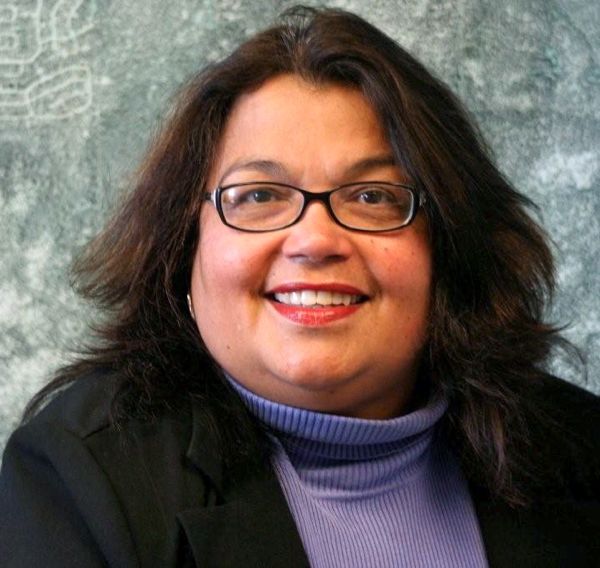
Norma Santiago

Norma Santiago

We live in a technology-driven society. Broadband Internet is no longer a luxury, it’s a necessity. High-speed mobile broadband access allows businesses to work efficiently and effectively, to reach a wider range of customers and is critical for economic growth and development in our communities.

Broadband access improves rural quality of life by giving those previously underserved the ability to do things like, pay bills, monitor healthcare, and take classes online. Web access even makes it easier for residents to keep in touch with friends, family and connect in their community. Broadband access is often taken for granted and accomplishing even the most basic things like sending a letter, downloading a photograph or effectively applying for a job online is a common assumption by those who already have high speed services.

If approved, the proposed merger of AT&T and T-Mobile would effectively, efficiently and cheaply deliver wireless broadband to rural Californians. By combining their assets and infrastructures, merging AT&T and T-Mobile would speed up achieving the goal to give high-speed access to all.

Broadband and mobile broadband Internet access can no longer be viewed as just an option. In today’s world, it is a necessity, and one that many rural Californians find themselves without. This is an economic and social problem that we have an obligation to solve before California’s rural residents find themselves falling technologically even further behind their urban counterparts. The approved AT&T/T-Mobile merger would provide a fast, cheap, and effective fix that would be a huge step forward for both businesses and residents in our rural areas.

Norma Santiago is the El Dorado County supervisor from Lake Tahoe.


Opinion: Stop Congress from taking Tahoe bike money

To the community,

Tahoe and the nation need your help right now. As I mentioned months ago, members in Congress are seeking to eliminate bike/ped and recreation trail funding from the transportation bill.

bikeFinally, major Tahoe stakeholders have finally got it right about the need to build a bicycle-friendly region with a connected network of bikeways bringing us together more often — without the need for motor vehicles. But is it too late?

Help Tahoe and America stay the course with building a low cost, high-valued, and sustainable transportation system not reliant on motor vehicles. Motor vehicle infrastructure is not sustainable because we can’t afford to increasingly build more as energy costs continue to escalate from unstable governments.

Contact your local and state representatives and tell the Senate to vote for our sustainable future through human powered transportation initiatives — trails.

Keepin it real and rollin,

Ty Polastri, president Lake Tahoe Bicycle Coalition


Opinion: Telling the truth from city hall

By Tony O’Rourke

Mr. (Steve) Kubby recently wrote about a complaint he filed with the grand jury, which he has a right to do.

However, misrepresenting the facts is harmful to the community and creates confusion. The following facts can be supported with documentation upon request:

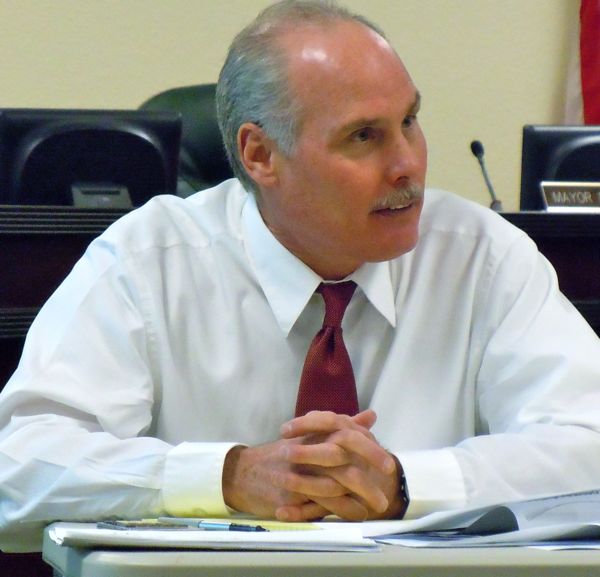
Tony O'Rourke

Tony O'Rourke

• Prior to the city’s incorporation in 1965, “rural road standards” existed throughout the community. In 1965, the city inherited the rural roadway network from the county. The current City Council’s proposed initiative to invest $20 million over the next five years to improve and fix the city’s road infrastructure is a significant and important step in the right direction. The city has published several articles about its efforts to set aside funding to improve the roads.

Unfortunately, Mr. Kubby continues to ignore this fact.

• In 2003, the City conducted an audit of the Redevelopment Agency’s financial performance to complete the redevelopment projects in the Stateline area. Following this comprehensive audit, the City Council authorized a loan in the amount of $7 million to the Redevelopment Agency for costs and revenue shortages related to the redevelopment project. The Redevelopment Agency continues to repay $500,000 each year for this loan, which covers principal and interest. Over half of the loan amount has been repaid to date. Each year, Redevelopment Agency proceeds also support the city’s general gund for services rendered by the city on behalf of the Redevelopment Agency. The city provided all of the background documentation regarding this issue to Mr. Kubby upon his request and reviewed many documents with him about this issue.

Two separate grand juries looked in this issue and recommend the city adopt financial policies to more efficiently recover their costs for redevelopment projects. The city adopted those polices in 2005. Now let’s move onto more pertinent and immediate challenges, like financial sustainability and infrastructure investment rather than beating this matter to death.

• Mr. Randy Lane’s Chateau project is not funded by the city. The city’s interest is the same as everyone’s, which is a desire to see a project completed at the site. Neither Mayor Hal Cole, nor any city councilmembers, are responsible for the collapse of the project or the economy. The project continues to attract interested investors and will require the collaboration of all parties to see a project come to fruition at the site. The City Council supports completion of a project.

• The city has increased its efforts to keep the public informed about the cost of roads, the progress of projects and all aspects of the city. Visit the city’s website and sign up to receive news and information.

Tony O’Rourke is city manager of South Lake Tahoe.


Opinion: A vision for No Child Left Inside

By Garry Bowen

Late last week, a significant bipartisan bill was introduced in Congress that could be valuable to the Lake Tahoe economy, not to mention the educational efforts of both of Tahoe’s represented states. The fact of a bipartisan introduction these days may seem significant enough on its own, but the fact that this one directly relates to what Lake Tahoe’s agencies have always said they are about makes this one an extraordinary opportunity.

The bill is SB2447, the No Child Left Inside Act, introduced by Sens. Jack Reed, D-R.I., Mark Kirk, R-Ill., and Reps. John Sarbanes, D-Md., on July 14. As we approach the 15th annual Lake Tahoe Environmental Summit talks, and with Lake Tahoe News reporting yesterday work on a vision for Tahoe, I thought I’d throw mine into the mix. California and Nevada’s educational statures are hurting, both being in the lowest 10 percent of the nation, while the United States continues to lose global ground in the very area (called STEM for Science, Technology, Engineering & Math) called for in the 21st century.
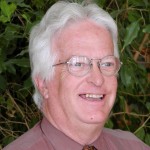
Garry Bowen

Garry Bowen

Lake Tahoe can benefit by being of better service to our world.

Says Sen. Reed: “Teaching children about the environment and giving them a hands-on opportunity to experience nature makes them smarter and healthier. Environmental education should be an important part of the curriculum in our schools. This legislation will reconnect more kids with nature and help raise student achievement in core subjects like math, science, and reading.

“Environmental awareness should be second nature for our young people and protecting the environment is crucial to future economic growth.”

From Sen. Kirk: “Our education system needs new, innovative approaches to prepare our children to compete in the 21st century global economy. By utilizing the natural world as a classroom, we can engage more students in STEM education while exposing them to the benefits of being outside and living an active lifestyle.

“This bill promotes hands-on learning and an integrated curriculum, while bolstering important science education programs.”

From Rep. Sarbanes: “By creating an environmental education grant program and providing teacher training for environmental education across the curriculum, we can prepare our children for science, technology, engineering, and mathematics jobs that will be the cornerstone of the United States’ 21st century economy. Research shows that hands-on, outdoor environmental education has a measurably positive impact not only on student achievement in science, but also in reading, math, and social studies.

“By creating an environmental education grant program and providing teacher training for environmental education across the curriculum, we can prepare our children for science, technology, engineering, and mathematics jobs that will be the cornerstone of the United States’ 21st century economy. Research shows that hands-on, outdoor environmental education has a measurably positive impact not only on student achievement in science, but also in reading, math, and social studies.”

What’s my vision surrounding this bill? As I’ve been engaged in this work, that of the North American Association of Environmental Educators and the NCLI Coalition for about two years, along with work on global sustainability for more than a decade, this introduction is particularly noteworthy for our future.

And California Superintendent of Public Instruction Tom Torlakson conducted a forum on No Child Left Inside the Friday before his election last November – the timing may be “on”.

The model that I am working with to accomplish this is an extremely well-done Nature Center that focuses on K-12 curriculums, is in a LEED gold complex on 255 acres, and has an overlay of a master’s degree program in sustainable development. The complex consists not only of stream environment zones, forests, and several watershed examples, but the solar gain, indoor air quality, and energy saving aspects of green building are all part of the youth experience while there. As this particular model was built without the input of No Child Left Inside directions, Tahoe can indeed improve on a model that already exists to call its own, for an unprecedented future.

As I have been advocating “policies equal to the scenery” for a long time, this direction allows an eco and geo tourism scale not yet seen, but eminently amenable to Lake Tahoe, and as a counteraction to our gaming decline. People will need new reasons to spend additional time here, and my own extensive experience with Bill Harrah for 10 years suggests an intrinsic understanding of our current industry.

The notion that nature plays a key role in boosting brain function and emotional and physical health has been around for awhile — recently popularized by Richard Louv’s 2005 book “Last Child in the Woods: Saving Our Kids from Nature-Deficit-Disorder”. The essence of his message, and the idea that this book is this generation’s “Silent Spring”, comes from the fact that our youth are continually bombarded with thoughts about almost everything but what they will need to realign our world from these distortions.

Third-graders in England, for example, know all the Pokemon characters’ names, but nothing about the tree outside the window. What better place to augment what our Environmental Magnet school is already attempting for our own kids than to expand upon that effort with offerings that contribute mightily to the regional economy. I have spoken elsewhere about a recent study conducted by UC Berkeley Lawrence Hall of Science and KQED that found a major discomfort level with teaching about the outdoors and science, an outgrowth of the last decade’s emphasis on “teaching to the test”, but that just makes a relatively major opportunity to make learning about nature more of a major attraction – with fun, healthy sharing a goal. California alone has more than 250,000 teachers, a not insignificant amount.

With all of our current consternation about funding sources, as SNPLMA dries up, it is interesting to note that U.S Secretary of Education Arne Duncan still has about $4.5 billion in allocated funds awaiting the receipt of innovative directions for the future. California and Nevada have so far not been able to tap into those funds, as their directions have not been innovative enough – this bill emphasis could be the stepping stone for an entirely new direction for the community and region, as both the demographics and psychographics are addressed by such a direction.

And, as they say, “not a moment too soon.”

Just the work in the direction of more fully comprehending the inherent vital advantages of global sustainability will assist the basin agencies’ in something other than the provincial attitudes they’ve adopted, while giving all the communities the boost they so fervently want. Contradictions neutralized.

What would be a next step? Well, as the imminent vision effort is about championing projects, mine would be to organize a tour of the facility mentioned above as to its’ obvious viability to the directions so often talked about, but not yet realized. Then, marshal the significant resources to actualize “new”.

Garry Bowen has a 50-year connection to the South Shore, with an immediate past devoted to global sustainability, on most of its current fronts: green building, energy and water efficiencies, and public health. He may be reached at tahoefuture@gmail.com or (775) 690.6900.

Opinion: Patience needed to bring Olympics to Tahoe-Reno

Publisher’s note: This editorial is from the July 12, 2011, Reno Gazette-Journal.

There are lots of hurdles that must be jumped before the Reno-Lake Tahoe area wins the right to host the Winter Olympic Games.

Some are out of the hands of local organizers — among them the often complicated politics of the U.S. Olympic Committee and International Olympic Committee, as well as their diverse constituencies.

When it comes time to choose the next bidder from the U.S., will the USOC favor Denver, just up the Interstate from the USOC’s Colorado Springs headquarters but also the only city to ever renege after winning the bid to host the Olympics? Will the IOC favor the U.S. again once financial disagreements finally are settled? Or will a U.S. bid for the Summer Games in 2020 (in Chicago, perhaps) derail a U.S. bid for the 2022 games?

Those are the unknowns that face the Reno Tahoe Winter Games Coalition, led by Lt. Gov. Brian Krolicki.

The highest hurdle, however, might well be impatience. It already has been a long road for an idea that’s floated around this area since at least the 1980s, and there are many miles still to go.

Read the whole story