Letter: Heavenly makes an impact at Bread & Broth

To the community,

After serving beef and salmon burgers with all of the fixings at Bread & Broth’s Aug. 11 dinner, several members of Heavenly Mountain Resort’s sponsor volunteer crew joined B&B’s dinner guests to enjoy the evening’s meal and engage in some lively conversation.

“The dinner guests were thankful, very happy with the meal; and shared some great stories about Heavenly and Tahoe with us,” said Jesse Plate.

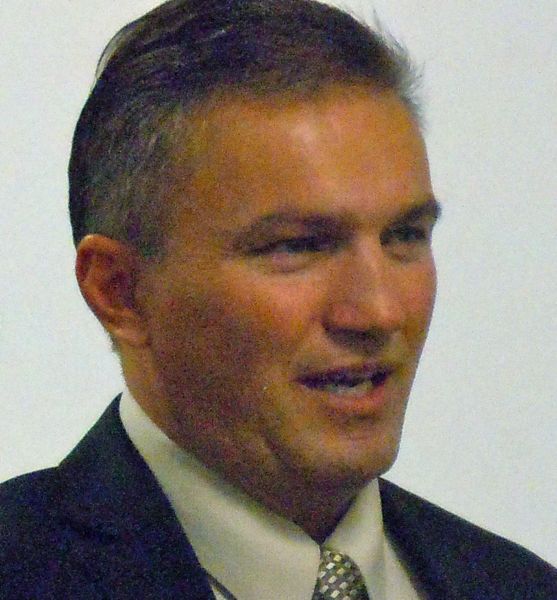
Feeding the needy of our community is the goal of Bread & Broth, but also providing a safe place to socialize and experience a positive sense of community is a wonderful bonus of the evening meals. Helping to make B&B’s guests enjoy the evening was the marketing team from Heavenly which included Aly Borawski, marketing research; Nate Gardner, videographer; Jesse Plate, marketing coordinator; Arnaud Robin, partnership sales manager; and Sally Gunter, communications manager.

“We’re all very happy to be able to support Bread & Broth. It’s important to volunteer and stay involved with the community. Giving back keeps you very grateful for what you have,” was the consensus of the Heavenly marketing team.

B&B is very grateful for the active involvement of Heavenly/Vail and their enthusiastic employees in our efforts to feed the needy.

For more B&B information, go online.

Carol Gerard, Bread & Broth


Opinion: The drought on my dinner plate

By Megan McArdle, Bloomberg

California is suffering an epic drought. It’s not the worst drought the state has ever had, but it’s certainly the worst drought the state has ever had while housing tens of millions of residents and containing a significant fraction of U.S. agricultural production. And there’s some suggestion that this may be the new normal — not just because of global warming, as you’ve probably already read, but also because California’s natural condition is “extra dry.” An expert interviewed by Tom Philpott of Mother Jones says that the 20th century, which saw California’s rise as an agricultural powerhouse, was an unusually wet period for the state. Merely reverting to “normal” would mean having about 15 percent less water — and the state is still growing.

That does not mean that California will become an uninhabited desert, scattered with wind-scoured ruins providing a silent and reproachful testimony to Man’s hubris. California has enough water to support quite a lot of population growth — if it cuts out a lot of that agriculture. It may even be able to support most of the agriculture — if people start leaving. The problem is, it may not be able to manage both unless the rains return or it finds some clever way to reclaim low-cost potable water from the sea.

In a worst-case scenario, my money is on agriculture losing out; its lobbyists are motivated, but they’re simply outnumbered by all the city dwellers. So it’s worth contemplating what a dramatic scale-back in California’s agricultural production would do to California — and the rest of us.

Read the whole story


Opinion: Vaccinations critical for kids

By Michelle Feeney

As a parent, we want our children to be safe. Certain safety measures are designed to help keep children safe, like child safety seats, seat belts, and toddler gates. However, some parents may overlook one critical component to keep children healthy and safe: vaccinations. Current vaccinations are the most effective and safest they have been in history and have saved millions of lives from vaccine-preventable diseases.

Vaccines are ensured by the Centers for Disease Control and Prevention (CDC) and the Food and Drug Administration (FDA) and monitored by the Vaccine Adverse Event Reporting System (VAERS), a national vaccine safety surveillance program.

Michelle Feeney

Michelle Feeney

Side effects from vaccines vary, but the most common are discomfort, redness, or tenderness at the site of injection. Serious side effects following vaccination, such as severe allergic reaction, are rare. The CDC estimates 0.00001 percent of all vaccinations have a serious side effect. Considering the pain and suffering caused from acquiring these preventable diseases, for most people the benefits of vaccines outweigh side effects or getting the disease.

Families, healthcare professionals, and public health officials must work together to protect our community. Adults must also keep up on their vaccinations. Vaccinations help preserve the health of our community, especially individuals who cannot be vaccinated, including children who are too young or those who can’t receive certain vaccines for medical reasons, and the small portion of people who don’t respond to a particular vaccine.

Vaccines work by triggering the immune system to produce antibodies to fight antigens or disease, without being infected with the disease. In other words, vaccination protects us against a disease without getting the disease.

Each day, we are exposed to hundreds of viruses and antigens. Miraculously, the human body can tolerate a large amount of immunologic stimuli without causing illness.

Vaccinations have greatly improved our overall health. Because of the polio vaccine, the U.S. has had no new polio cases since 1979. However, polio still exists in under-vaccinated countries such as Afghanistan, Nigeria and Pakistan. Though preventable, it is a crippling and potentially deadly disease with no cure. Worldwide, cases have fallen from an estimated 350,000 in 1988 to 407 in 2013.

As a family nurse practitioner, I believe vaccinations are the safest way to protect ourselves and our community from devastating diseases. An immunization schedule works effectively with a child’s immune system at specific ages and frequency. The CDC, FDA, and VAERS evaluate the immunization schedule yearly based on the most current information. Contact your primary care provider for what is currently recommended for you and your child.

For disease specific information and vaccination schedule, visit the following sites:

American Academy of Pediatrics

Centers for Disease Control and Prevention

National Network for Immunization Information

Vaccine Adverse Event Reporting System.

Michelle Feeney is a family nurse practitioner at Barton Pediatrics.


Editorial: Time to replace old water pipes

Publisher’s note: This editorial is from the Aug. 20, 2014, Sacramento Bee.

After decades of neglect, the bill is coming due – in the neighborhood of $70 billion in water system fixes needed statewide, according to one estimate.

The $7.5 billion water bond on the November ballot would provide some help. The bond includes four pots of money that could potentially be used to replace or repair old pipes: $510 million in competitive grants for regional water management projects; $260 million in grants for small community wastewater projects; $260 million in grants and loans for small community safe drinking water projects; and $100 million for water use efficiency and conservation.

This, however, is primarily the responsibility of local agencies, and the tab is largely going to be paid by their customers.

Even when aging pipes don’t break, they exact a cost – the loss of treated water that leaks before making it to homes and businesses. Residents who are being urged, or ordered with the threat of fines, to conserve have a right to expect better.

No one knows exactly how much water is leaking because there’s no requirement or standard reporting procedure for the state’s 362 urban water suppliers. Based on audits voluntarily submitted to the state in 2010, the average loss was 10 percent, with a range of 5 percent to 30 percent.

Read the whole story


Letter: Golf course at Washoe Meadows not all bad

To the community,

I was the Sierra District superintendent for the California Department of Parks and Recreation when the state acquired and classified Washoe Meadows State Park and Lake Valley State Recreation Area during the 1980s. During the 1980s the state was in protracted litigation with a developer who had approval from El Dorado County to construct thousands of homes on the property that became Washoe Meadows State Park and Lake Valley State Recreation Area.

The state opposed the development for environmental reasons. It was estimated litigation costs would be in the millions. Greg Taylor represented the state from the Attorney General’s Office. All concerned believed it would be best if we could settle the matter out of court with the state buying the property. El Dorado County and the city of South Lake Tahoe would only agree to the state’s purchase of the property (concern of losing tax revenue and tourism) if the golf course would remain. Negotiations were held with State Parks, AG, city of South Lake Tahoe, El Dorado County and the League to Save Lake Tahoe. It was agreed the state would purchase the property for $5 million, the golf course would remain, and the property would be managed by California State Parks. The developer was required to relinquish all development rights.

State Parks structured the golf course concession contract with very tight environmental restrictions. The concession contract was written in close consultation with the Lahontan Regional Water Quality Control Board. We had concerns about fertilizer entering the Upper Truckee River. We limited the amount and type of fertilizer used on the course and we required that the golf course establish monitoring wells above the golf course, in the middle of the course, and downstream from the course. Results of the tests were sent to State Parks and Lahontan Regional Water Quality Control Board.

All parties agreed that it would make good environmental sense to move the holes away from the Upper Truckee River to lessen impacts to the river. To attain this goal it may require some of the holes be moved.

If the state did not take a lead on this issue in the 1980s, we would have thousands of homes instead of an environmentally sensitive golf course (acknowledged by the Audubon Society) and several hundred of acres in open space park lands.

It is my understanding that the current proposed plans call for the removal of 10 percent in the turf area, this results in reducing water usage, and reducing the footage next to the river from 8,000 linear feet to about 1000. These proposed actions have a positive environmental effect on the Upper Truckee River watershed and water quality at Lake Tahoe.

Charles Goldman is an outstanding environmentalist and is very knowledgeable about Tahoe issues; however his recent viewpoint article did not fully share the history and politics of the acquisition of Washoe Meadows SP and Lake Valley SRA by the state of California. State Parks share a common vision with Dr. Goldman’s of protecting Lake Tahoe, but an understanding of the history of the property and the politics is necessary to make informed decisions.

Thank you for allowing me the opportunity to comment on this issue.

Bob Macomber, Graeagle (Sierra District superintendent 1979 to 2000 – California State Parks)


Opinion: Will California ban plastic bags?

By Dan Walters, Sacramento Bee

When Capitol insiders talk about a “bag bill,” it refers to something for which an interest group is willing to spend big money – legally, it’s presumed – to see done.

Senate Bill 270, one might say, is a double bag bill.

Dan Walters

Dan Walters

It would phase out, beginning in 2015, the single-use plastic bags that grocery stores commonly use to send purchases home. It also involves big money and big interest groups.

Banning plastic bags is a burning cause for some environmentalists, contending that they squander energy, add to solid-waste-disposal problems, and often pollute waterways and the ocean, where they pose dangers to wildlife.

Sen. Alex Padilla, D-Los Angeles, the author of SB270, says the billions of bags used annually in California “cost state and local governments at least $25 million,” and dozens of the state’s more liberal cities have already banned them.

Previous efforts to enact a statewide ban failed, but this year the powerful grocery industry signed on, saying that a statewide policy makes more sense than a patchwork and enticed by new authority for grocers to charge 10 cents (or more) for every bag – paper or reusable plastic – they provide.

Read the whole story


Editorial: Keep politics out of the pulpit

Publisher’s note: This editorial is from the Aug. 7, 2014, Los Angeles Times.

Under federal law, it is illegal for churches and other so-called 501(c)(3) nonprofit organizations to “participate in, or intervene in … any political campaign on behalf of (or in opposition to) any candidate for public office.” But in recent years the Internal Revenue Service has failed to aggressively enforce the law, despite open defiance by religious groups that believe — erroneously — that they have a 1st Amendment right to endorse candidates without losing their tax-exempt status.

That soon may change. The Freedom From Religion Foundation, which had sued the IRS seeking to require it to enforce the law, says it has reached an agreement with the IRS under which the agency has adopted procedures for “reviewing, evaluating and determining whether to initiate church investigations.”

IRS investigation of political activity by nonprofits has been complicated by allegations that the agency improperly targeted tea party and other conservative groups that sought tax exemptions; those allegations are the subject of a congressional probe. But that is no reason for the agency to stall on scrutinizing politicking by churches.

Read the whole story


Opinion: Gaming mergers long overdue

By Howard Stutz, Las Vegas Review-Journal

The combined $11.5 billion in lottery company-slot machine company mergers in the past few weeks has the investment community relieved.

The gaming equipment sector, in the eyes of some analysts, has been bloated.

A soft replacement market for new games left slot machine manufacturers with a backlog.

In the past few years, many new products never made it from the Global Gaming Expo trade show floor to a casino.

A shake-up was needed.

In July, Italian lottery company GTECH Holdings announced it would buy slot machine giant International Game Technology for $6.4 billion. Less than two weeks later, New York-based lottery provider Scientific Games Corp. said it was acquiring Bally Technologies for $5.1 billion.

The deals for the Nevada-based companies — the world’s No. 1 and No. 2 slot machine providers — involve cash and stock transactions, along with debt assumption.

Fitch Ratings Service gaming analyst Alex Bumazhny said the buyouts were overdue.

Read the whole story


Letter: Leash laws should be enforced

To the community,

There is a reason for the leash law.

A couple days ago, I was riding my bike on one of our beautiful mountain bike trails and when coming around a blind corner I encountered two dogs off leash that caused me to flip head over landing on my shoulder.

Bob Sweatt

Bob Sweatt

I recall hearing a crunch, crunch, and crunch. Upon rolling over and sitting up, one of the dogs was lunging and barking at me and I thought I was now going to be bit.

After pulling the dog away, the owner of the dogs asked me if I was OK. Being in shock and in pain I didn’t know what to say other than I told her she should have had her dogs on leash. She came back at me with, “I always ride slowly down this hill.”

Well, I don’t think I was going that fast because I was holding a piece of bark in my hand for carving and I don’t think it would have mattered anyway because the dogs would have done the same thing.

She continued on her way with her dogs and I just sat there.

After gaining my composure, I got up, picked up my bike and because my backpack was so heavy, I put it on my handle bars and started walking up the steep hill to my truck. Naturally, the straps on the backpack got tangled in the spokes which made it that much harder and a continual adjustment was necessary. After getting back to the truck I had to lift the bike up into the bed, which was not fun. Then, I just stood there for a while. Before getting into the truck, I noticed the lady was walking back the other direction with her dogs now on leash. I sure could have used her help with my bike. She again blurted out “are you OK?” To which I responded a quivery I don’t know.

Well, upon going to the emergency and getting an X-ray, I found out I had a fractured humeral bone in my shoulder. The doctor gave me some Percocet for the pain, put my arm in a sling and sent me on my way.

I guess I am writing this to bring awareness to the need of having dogs on leash when you are sharing a trail that is narrow and has blind corners. I understand why people let their dogs have more independence when out in the open, but I now truly understand why we have the law and am now a firm believer in using a leash.

I hope this article will bring awareness and if it keeps one person from injury like me, it will be worth it.

Bob Sweatt, South Lake Tahoe


Opinion: Marijuana growers need a permit

By Brian Uhler

Marijuana is a major concern for many in our city. As part of the City Code, our City Council provided for a safer community by allowing marijuana grow operations only after a permit is obtained. The permit process provides for a building official to inspect for things like:

1. Safe wiring — Adding a large number of “grow lights” overburdens conventional electric outlets and can cause fires.

2. Proper ventilation — Too many marijuana plants in an area where people live can be hazardous, so the law limits the total square footage for a grow operation to be smaller than 10 percent of the available space.

3. Proper permission — Especially in the case of rentals, the permit process requires that the owner gives permission to grow marijuana. Many home owners have been left with extensively damaged homes from illegal marijuana growing.

4. Minimal impact to neighbors — The code requires growers to filter or control odors that may impact neighbors.

Brian Uhler

Brian Uhler

In South Lake Tahoe, there are currently only two permitted grow operations. The police department estimates that there are approximately 300 actual grow operations within the city. This said, we ask for two things:

1. People who have a grow operations should get their permit. They can do so by calling the city’s permit center at 530.542.6020 or 530.542.6010.

2. People who know of a grow operation in their neighborhood should call SLEDNET at 530.542.6029. (Leave a message after hours.) Or log onto the city’s website, click the communications tab at the top of the page and use “report a concern.”

Your police department and SLEDNET have continued the effort to locate and close illegal and unsafe marijuana grows. This will continue to be a priority because our community’s safety depends upon it.

Last month, we reported on the Live at Lakeview event and concerns about either not enough or too much police presence. I’m pleased to say that the community responded well to the concerns raised. Despite several issues during the first two events, the events throughout July have been good events and as family friendly as possible.

Brian Uhler is the police chief for South Lake Tahoe.