Californians act like pot is legal

By Adam Nagourney, New York Times

LOS ANGELES — Let Colorado and Washington be the marijuana trailblazers. Let them struggle with the messy details of what it means to actually legalize the drug. Marijuana is, as a practical matter, already legal in much of California.

No matter that its recreational use remains technically against the law. Marijuana has, in many parts of this state, become the equivalent of a beer in a paper bag on the streets of Greenwich Village. It is losing whatever stigma it ever had and still has in many parts of the country, including New York City, where the kind of open marijuana use that is common here would attract the attention of any passing law officer.

“It’s shocking, from my perspective, the number of people that we all know who are recreational marijuana users,” said Gavin Newsom, the lieutenant governor. “These are incredibly upstanding citizens: Leaders in our community, and exceptional people. Increasingly, people are willing to share how they use it and not be ashamed of it.”

Marijuana can be smelled in suburban backyards in neighborhoods from Hollywood to Topanga Canyon as dusk falls — what in other places is known as the cocktail hour — often wafting in from three sides. In some homes in Beverly Hills and San Francisco, it is offered at the start of a dinner party with the customary ease of a host offering a chilled Bombay Sapphire martini.

Lighting up a cigarette (the tobacco kind) can get you booted from many venues in this rigorously antitobacco state. But no one seemed to mind as marijuana smoke filled the air at an outdoor concert at the Hollywood Bowl in September or even in the much more intimate, enclosed atmosphere of the Troubadour in West Hollywood during a Mountain Goats concert last week.

Arnold Schwarzenegger, the former Republican governor, ticked off the acceptance of open marijuana smoking in a list of reasons he thought Venice was such a wonderful place for his morning bicycle rides. With so many people smoking in so many places, he said in an interview this year, there was no reason to light up one’s own joint.

“You just inhale, and you live off everyone else,” said Schwarzenegger, who as governor signed a law decriminalizing possession of small amounts of marijuana.

Some Californians react disdainfully to anyone from out of state who still harbors illicit associations with the drug. Bill Maher, the television host, was speaking about the prevalence of marijuana smoking at dinner parties hosted by Sue Mengers, a retired Hollywood agent famous for her high-powered gatherings of actors and journalists, in an interview after her death last year. “I used to bring her pot,” he said. “And I wasn’t the only one.”

When a reporter sought to ascertain whether this was an on-the-record conversation, Maher responded tartly: “Where do you think you are? This is California in the year 2011.”

John Burton, the state Democratic chairman, said he recalled an era when the drug was stigmatized under tough antidrug laws. He called the changes in thinking toward marijuana one of the two most striking shifts in public attitude he had seen in 40 years here (the other was gay rights).

“I can remember when your second conviction of having a single marijuana cigarette would get you two to 20 in San Quentin,” he said.

In a Field Poll of California voters conducted in October 2010, 47 percent of respondents said they had smoked marijuana at least once, and 50 percent said it should be legalized. The poll was taken shortly before Californians voted down, by a narrow margin, an initiative to decriminalize marijuana.

“In a Republican year, the legalization came within two points,” said Chris Lehane, a Democratic consultant who worked on the campaign in favor of the initiative. He said that was evidence of the “fact that the public has evolved on the issue and is ahead of the pols.”

A study by the California Office of Traffic Safety last month found that motorists were more likely to be driving under the influence of marijuana than under the influence of alcohol.

Still, there are limits. No matter how much attitudes in California may have changed, it remains illegal in most of the country — as Californians have been reminded by a series of crackdowns by the Justice Department on medical marijuana here. People who use the drug recreationally, who said they would think nothing of offering a visitor a joint upon walking through the door, declined to be quoted by name, citing the risks to career and professional concerns.

That was the case even as they talked about marijuana becoming commonly consumed by professionals and not just, as one person put it, activists and aging hippies. Descriptions of marijuana being offered to arriving guests at parties, as an alternative to a beer, are common.

In places like Venice and Berkeley, marijuana has been a cultural presence, albeit an underground one, since the 1960s. It began moving from the edges after voters approved the legalization of medical marijuana in 1996.

That has clearly been a major contributor to the mainstreaming of marijuana. There is no longer any need for distasteful and legally compromising entanglements with old-fashioned drug dealers, several marijuana users said, because it is now possible to buy from a medical marijuana shop or a friend, or a friend of a friend growing it for ostensibly medical purposes.

That has also meant, several users said,¸that the quality of marijuana is more reliable and varied, and there are fewer concerns about subsidizing a criminal network. It also means, it seems, prices here are lower than they are in many parts of the country.

Newsom — who said he did not smoke marijuana himself — said that the ubiquity of the drug had led him to believe that laws against it were counterproductive and archaic. He supports its legalization, a notable position for a Democrat widely considered one of the leading contenders to be the next governor.

“These laws just don’t make sense anymore,” he said. “It’s time for politicians to come out of the closet on this.”


Skier who died at Squaw identified

By Jeffrey Weidel, Examiner

Theodore Stanley Sorensen of Auburn died while doing what he loved – skiing.

Sorensen, who was reportedly an expert skier, died on Friday when he hit a tree at Squaw Valley ski resort.

According to a report from Squaw, the fatal incident occurred at 11am on the West Face of KT-22 involving the 71-year-old skier. He was wearing a helmet.

According to an online website post, Sorensen had taught many members of his family how to ski. One post said his favorite run at Squaw was KT-22.

“He was an amazing skier and a wonderful man with a loving family. Skiing was his passion,” wrote a friend on an online post.

The first death associated with a Lake Tahoe ski resort took place Nov. 10 at Alpine Meadows.

Annalise Kjolhede, 24, was a member of the Alpine Meadows Kids Ski School at Alpine Meadows. She suffered a serious accident while freeskiing at Alpine Meadows. The resort was closed at the time of the accident.

According to an Alpine spokesperson, Kjolhede sustained a head injury when she fell and collided with a rock outcropping at the bottom of Wolverine Bowl. She was wearing a helmet, but she sustained injures to an unprotected part of her head.


Northstar celebrates 40 years, looks forward

By Kathryn Reed

TRUCKEE – “Everything in the middle of nowhere.” That was Northstar’s motto in 1972 when the first lift started turning.

A lot has changed since Dec. 22, 1972 – owners, lifts, amenities, and definitely the fact that the Truckee resort can no longer be considered being in the middle of nowhere.

Its evolution into being a fixture in the greater Lake Tahoe area and a destination resort for those beyond the drive up market of the Bay Area and Central Valley was  heralded on its 40th anniversary.

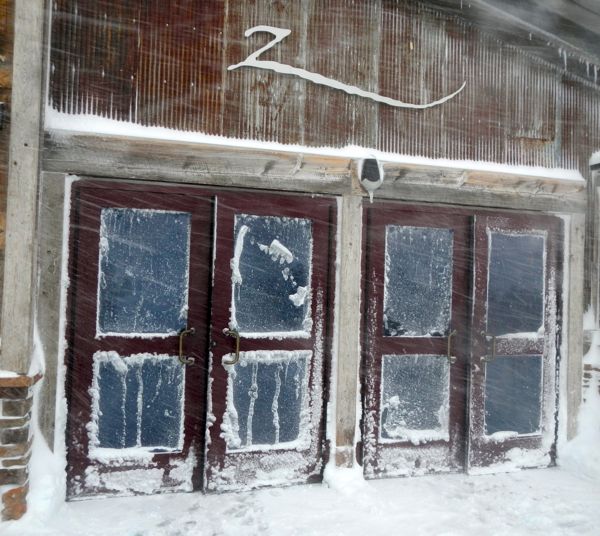
In blizzard conditions year 41 started with snowboard legend Shaun White joining a group of riders for first tracks. While he is normally in the resort’s halfpipe (when it’s built), on this Saturday he was letting loose in the fresh powder – and not always on the trails.

The day before, White, who is now sporting a much shorter haircut after last week cutting off his locks for charity, did another charitable act. He made a Make a Wish come true by giving a young boy a snowboarding lesson.

Northstar’s Zephyr Lodge is one indication of Vail’s commitment to upgrade the resort. Photos/Kathryn Reed

On Dec. 22, White dropped in on the kids at the Burton Snowboard Academy to offer some advice.

Still under snowy skies, at 4pm it was time for White and Northstar COO Bill Rock to offer a toast.

Earlier in the day Rock had been at a celebration that was part reminiscing about the past and part looking forward to the next 40 years.

A bit of history

In 1949 a tree farm was started where Northstar is located. The land when Georgia Pacific owned it was called the Timber Farm.

It was the Fibreboard Corporation that opened Northstar-at-Tahoe in 1972.

The first snowboarders were allowed in the 1988-89 season. In the video that was shown at the celebration on Saturday the binding settings on the boards were much different than they are today.

Trimont took over operations of the resort in summer 1994. Two years later, Booth Creek Ski Holdings acquired Trimont/Northstar.

In 1999, Booth Creek and East West Partners agreed to a real estate agreement that led to the development of the village and various lodging properties. The first phase of the village opened in 2005-06. The village kept expanding, culminating with a third phase.

The Ritz-Carton, Lake Tahoe opened three years ago at mid-mountain – though it has separate owners.

(The Highlands Gondola that goes from the Village at Northstar to the Ritz-Carlton was in jeopardy of not operating this season. The funding partners for the eight-passenger gondola that opened in 2009 were having trouble finding resolution. A deal was reached Dec. 21. However, that same day a tree fell on the cable. It should be fixed by the end of the year.)

In 2010, Colorado-based Vail Resorts bought Northstar. In its first year more than $30 million in on-mountain improvements were made.

The past and future

Hank Schwarz, Zeke Straw and Paul Daily were highlighted in the video shown to a select group at Schaffer’s Camp on Saturday. The trio talked about the early days, the dozens of romances developed in ski school and the fun that was had on the slopes.

Blaise Carrig, president of mountain operations for Vail Resorts, recalled how his first experience at Northstar was in 1982. He was impressed with the ambiance, sense of feeling from the people, but completely understood why it had the moniker “flat star”.

In 2002, after Vail Resorts bought Heavenly Mountain Resort on the South Shore, Carrig made it a point to return to Northstar. The transformation was remarkable. More of the mountain was open – which included steeper terrain.

As the top executive at Heavenly, he would bring his management team to Northstar each year to see what the resort was doing.

“We saw Northstar as an able competitor,” Carrig said.

But he also knew about the 40-minute lines on busy weekends and people having to eat on the floor of the mid-mountain lodge.

In 2010, Vail Resorts bought Northstar.

“We wanted to come in and capitalize on their success,” Carrig said. That meant an infusion of cash to disperse people around the mountain via a lift that opened last December, new runs, and a lodge at the top of Zephyr chairlift to provide more dining choices – and chairs.

And Vail is not done. The master plan is in the works.

As Carrig said, Beaver Creek is the template for what Northstar will become.

Beyond the infrastructure improvements, Carrig said it’s the people who come to the mountain that matter most.

“It’s not about customers, it’s about maintaining relationships,” Carrig said.

Taking on a trait from its Colorado properties, guests at Zephyr Lodge are now offered a tissue when they walk in – and more than one when dripping wet coming in from a blizzard.

In the end, it’s all about the experience people talk about long after they’ve left the mountain.

ngg_shortcode_0_placeholder (Click on photos to enlarge.)


Skier dies at Squaw Valley

By Phillip Reese, Sacramento Bee

A 71-year-old man died Friday after skiing into a tree at Squaw Valley, according to a statement released by resort officials.

The man, whose name has not been released, was skiing on the west face of KT-22 about 11am when he hit the tree. He was wearing a helmet.


Law enforcement working to stop underage alcohol abuse

To help eliminate alcohol related collisions involving minors, combat underage alcohol abuse and help ensure the overall safety of the community, the Washoe County Sheriff’s Office is collaborating with regional law enforcement agencies regarding juvenile parties and other incidents in which alcohol and/or illicit drugs are contributing factors.

The sheriff’s office is partnering with the Nevada Highway Patrol, Reno Police Department, Sparks Police Department, Washoe County School District Police Department and the University of Nevada Police Department.

These partnering agencies all share the same message; alcohol-related collisions, crimes, incidents, emergencies and tragedies are absolutely preventable and it is never a responsible decision to drive impaired.

Local law enforcement agencies are taking a proactive approach in helping to ensure each person enjoys the holiday season. Their objectives are to prevent tragic incidents that are a direct result from underage alcohol consumption and/or illicit drug use.

Law enforcement officials will also be visiting numerous businesses and establishments that sell alcohol to check for up-to-date alcohol awareness training cards.


2 women in artist Kinkade’s life settle estate dispute

By Julia Prodis Sulek, San Jose Mercury News

Anyone expecting a dramatic courtroom showdown between Thomas Kinkade’s estranged wife and his live-in girlfriend over the late artist’s multimillion dollar Monte Sereno estate will be sorely disappointed.

After months of name-calling and finger-pointing, lawyers for Nanette Kinkade and Amy Pinto announced Wednesday they have reached a secret settlement. And despite Pinto’s vow months ago to clear her name and explain how she was no gold-digger but rather Kinkade’s soul mate, she has accepted a deal in return for her silence.

Lawyers would make no comment about the details of the settlement or the legitimacy of two tantalizing, barely legible handwritten wills that Pinto claimed Kinkade wrote to her, leaving her $10 million and the keys to his hillside mansion.

Instead, they issued this brief yet strangely sentimental statement:

“Putting Mr. Kinkade’s message of love, spirituality, and optimism at the forefront, the parties are pleased that they have honored Mr. Kinkade by resolving their differences amicably.”

So who gets the 7,000 square-foot house on Ridgecrest Avenue, the studio next door, his warehouse of paintings, copies of which are said to hang in one of every 20 American homes? Nobody is saying. How much the estate is worth also hasn’t been made public but adding millions of dollars in value are the licensing of his bucolic images on coffee cups and calendars, china plates and tote bags, many of which will surely be

wrapped under Christmas trees next week.

It wasn’t clear Wednesday whether Pinto, 48, was still living in the house she had shared with Kinkade, 54. After the artist’s April 6 death of a lethal mix of alcohol and Valium, Pinto refused to leave the house. Estate lawyers posted a security guard within the gates of the estate to make sure Pinto didn’t steal anything. In a recent court hearing, she had agreed to pay $11,000 a month to continue living there, without the intrusive security guard.

But that was before the case was settled.

Kinkade’s reputation as the “Painter of Light,” with his popular images of candlelit country cottages and Christian symbolism, cratered in the aftermath of his death, both by the revelations that he was a regular fixture at local bars and that his marriage of 28 years had recently imploded.

Kinkade’s brother, Patrick, had told the Mercury News that mean-spirited criticism of Kinkade’s work and his estrangement from his wife and four daughters had taken its toll on the artist and factored into his alcoholism.

The story became more tawdry when Pinto, who began dating Kinkade six months after his separation, produced the two handwritten wills that were dated several months before Kinkade’s death. Stating that Kinkade was “of sound mind and body,” the wills left Pinto his house and $10 million to establish a museum of his works in the studio next door. Pinto’s lawyers interpreted those notes to mean they also included some $66 million worth of Kinkade’s paintings to put on display.

Lawyers for the Kinkade estate had said the squiggly notes “speak for themselves” and were confident they would be thrown out of court. But Pinto’s lawyers were equally convinced of their credibility, saying Kinkade’s alcoholism had left him with a shaky hand, but the letters reflected his true desires.


Nevada lawmakers vote to stop posting public salaries online

By Hannah Dreier, AP

LAS VEGAS — Critics in Nevada are calling new regulations that excuse cities and counties from posting public salaries online a strike against transparency.

A legislative commission Thursday passed regulations allowing cities and counties to post only aggregate salary expenditures on their websites. Previously, they had been required to post individual salaries.

Nevada Press Association Executive Director Barry Smith says the move could open the door to fraud and abuse. He notes that local governments spend most of their taxpayer dollars on payroll.

The new regulations implement a 2011 law ending a requirement that local governments posting quarterly financial statements in the newspaper.

State Sen. David Parks of Las Vegas said cities and counties should not post employee salaries because it is an invasion of privacy.


Traffic collision kills 1 person on Mt. Rose Highway

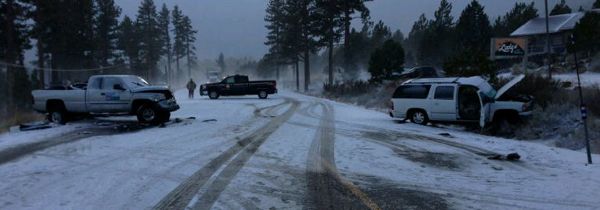
One person died and two others were hospitalized after their vehicles collided on slick Mount Rose Highway on Friday afternoon.

The name of the deceased woman has not been released pending notification of family.

One person died in a two-car collision Dec. 21 on Mount Rose Highway. Photo/Provided

According to the Nevada Highway Patrol, the preliminary investigation indicates a white Chevy Suburban was traveling west on the two-lane highway when the female driver apparently lost traction. Snow was falling and blowing at the time of the crash. Her vehicle traveled into the opposing lane as it was rotating in a clockwise direction and was struck by a Dodge Ram 2500 pickup pulling a two-axle trailer. The front of the Dodge struck the left side of the Chevy SUV.

The driver of the SUV died.

Two occupants in the Dodge received minor injuries, but were taken by ambulance to Renown Medical Center in Reno.

The accident forced the closure of the highway for almost an hour before troopers were able to open one lane to alternate traffic in each direction around the scene.

The accident occurred about 1:50pm east of Joy Lake Road.

 — Lake Tahoe News staff report


Meteorite fragments found in El Dorado County a scientific gold mine

By Matt Weiser, Sacramento Bee

The meteorite fragments that crashed down in El Dorado County in April contain some of the best-preserved elements from the dawn of the solar system ever recovered, according to a study.

The Sutter’s Mill meteorite, as it has been called, entered Earth’s atmosphere at about 8am on April 22 with the force of a 4-kiloton bomb. The explosion when it broke apart could be heard as far away as Washington state, and it produced a fiery streak seen across large areas of Northern Nevada and California.

The meteorite weighed about 100,000 pounds and was as big as a minivan. The 77 fragments recovered on the ground weigh only about 2 pounds.

Yet those 2 pounds are proving to be among the most significant meteorite finds in history, according to the study published in last week’s issue of the journal Science, which includes nine co-authors from UC Davis.

The meteorite arrived at a record entry speed of nearly 18 miles per second, and it broke apart at a record altitude of about 34 miles above sea level. Much of it would have disintegrated in the heat of the entry.

“The entry was very violent,” said Peter Jenniskens, an astronomer and senior research scientist at the Search for Extraterrestrial Intelligence Institute, and also lead author of the study. “We think that’s why there were no big chunks, because this object came in with such a high speed.”

It was called the Sutter’s Mill meteorite because most of the fragments were found near the towns of Lotus and Coloma along the American River, where the Gold Rush began in California in 1848. Jenniskens himself found one piece in the parking lot of Marshall Gold Discovery State Historic Park.

The study, which includes 69 co-authors from around the globe, found that the meteorite fragments are the most pristine samples ever collected of a rare type of carbonaceous chondrite, an amalgam of minerals that formed about 4.5 billion years ago when the solar system was taking shape.

Doppler weather radar was used to track the meteorite’s arrival – a relatively new technique. As a result, researchers know more about where this meteorite came from than most meteorites.

They believe it came from an asteroid belt with a highly eccentric orbit that passes between Jupiter and Mars, then swings close by the sun. They also believe it broke off from a larger object, likely an asteroid, between 15,000 and 19,000 years ago – very recent in meteorite terms.

“Among the known asteroid orbits, this one might be the most eccentric,” said Qing-Zhu Yin, a geology professor at UC Davis and a co-author of the study. “As a result, its orbit may have had its outmost point all the way to Jupiter.”

The meteorite contained evidence of its travels through the solar system. Among the elements detected in the fragments, using specialized equipment at UC Davis, was oldhamite, a sparkly brown crystal-like mineral thought to have originated in the solar nebula when the solar system formed.

Oldhamite is very reactive and can disappear just from being breathed on. It often vanishes before it can be examined in recovered meteorites.

In this case, Jenniskens and a few local residents were able to recover and preserve fragments within hours of their falling from the sky. Rain that fell the next day would likely have erased the oldhamite. It marks the first time oldhamite has been detected on a recovered meteorite.

“We are suspecting that the oldhamite originated in a different type of meteorite, normally associated with Earth and Venus and not in an area of primitive asteroids from farther out …” said Jenniskens. “It’s telling us a story about mixing in the early solar system.”

The meteorite contains compounds picked up from very different regions of the solar system: one that is relatively cold and wet, and another that is hot and dry. This is unusual, indicating that parts of the meteorite had very different histories.

And according to an accompanying news article in today’s issue of Science, the researchers more recently found diamonds in the meteorite, which don’t belong in either type of environment.

Analysis by UC Davis scientists also shows evidence that minerals in the meteorite once had contact with flowing water, possibly on a parent asteroid.

This is not unusual in meteorites, Yin said, but nevertheless fascinating. Earth is thought to have originally acquired a water supply from crashing meteorites.

“You can say with one little piece in your hand, you are holding the entire solar system,” said Yin. “There’s a lot of excitement with this meteorite.”

NASA as well as the European and Japanese space agencies are all planning to land probes on asteroids over the next decade. One goal is to look for water. The first of these is a NASA probe expected to launch in 2016, Yin said.

“It so happens the target they identified, based on remote sensing, resembles this meteorite,” he said. “Basically, this material gives us an early glimpse of what we might find.”


S. Tahoe council to discuss how to fill vacancy

How will the vacant seat on the South Lake Tahoe City Council be filled?

That is the sole item on the agenda for a special meeting of the four remaining members. The meeting is Dec. 27 at 9am at Lake Tahoe Airport.

Claire Fortier abruptly, though not unexpectedly, resigned last week. The council options for how to replace her are dictated by state and local laws.

It is possible the council will decide next week how to move forward. But it’s also possible another special meeting could be called before the regular Jan. 8 meeting.

— Lake Tahoe News staff report