Drought is bad news for honey bees

By Melissa Breyer, Mother Nature Network

Honeybees have been having a rough go of it lately; between tragic insecticide mishaps, truck crashes and especially colony collapse disorder, the poor things can’t get a break.

And now to add to their troubles, honeybees in California are suffering from the drought, which is leaving them with very little natural forage to make honey with. Bees need flower nectar to make honey; less water means less nectar and ultimately, a honey shortage.

Typically, the Golden State is a gold mine for honeybees. Its abundant agriculture and variety of wildflowers provide an enticing array of nectars for the bees — and with that comes honey. In addition to the popular crops, with sufficient rain the state produces exotic (and sought after) honeys, like sage, buckwheat, blue curl, tarweed and Manzanita.

“In years when California receives adequate rainfall and especially in years when California receives above-normal rainfall, like the El Nino years, California is the number one honey-producing state in the nation,” Gene Brandi, vice president of the American Beekeeping Federation told NPR. “We’ve done that many times in the past.”

But in a year with little rain, honey production can cut in half; this year Brandi says it might be even worse.

Read the whole story


Rising college costs push students to tech schools

By Tim Grant, Pittsburgh Post-Gazette

While most high school students still plan to go the traditional route of attending four-year colleges and universities when they consider educational options after graduation, a significant number say they are open to the idea of attending community colleges and technical schools

The Washington, D.C.-based College Savings Foundation’s fifth annual “How Youth Plan to Fund College” survey of high school students across the country found many are broadening their perception of what higher education means. One-in-five, or 21 percent, said they think of vocational or career schools in the same way they think of public or private college.

Prior surveys did not ask that question so there is no way to compare past attitudes toward community college and vocational schools.

Cost continues to be a hot topic for families and students — a reality reinforced when President Obama issued an executive order attempting to ease loan-related stresses many face following graduation from college or other post-high school educational programs.

Read the whole story


SLT making it lucrative to redevelop at the Y

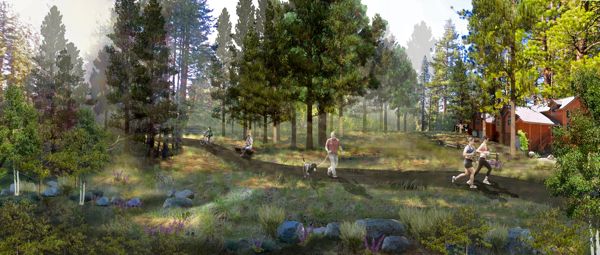
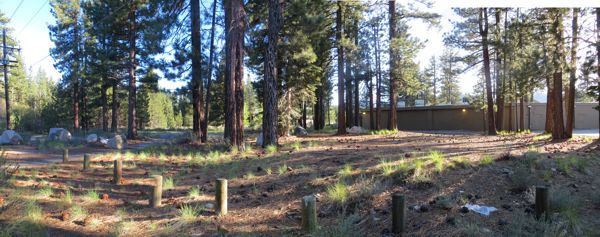
Tahoe Valley -- aka the Y in South Lake Tahoe may become more of a destination. Renderings/Design Workshop

Tahoe Valley — aka the Y in South Lake Tahoe — may become more of a destination. Renderings/Design Workshop

By Kathryn Reed

South Lake Tahoe officials believe the best way to get people to renovate their properties is to dangle a carrot in front of them. For those with property in the Tahoe Valley Area Plan, the carrots are coverage and commercial floor area.

At a meeting Thursday night about the plan, where only a handful of residents showed up, it was revealed that incentives are part of the draft plan.

“Some properties in Tahoe Valley are 70 percent or 100 percent covered,” John Hitchcock, planner with South Lake Tahoe, said. “Either they can’t afford the fees or they don’t want to rip out the coverage.”

Tahoe Regional Planning Agency has rules about how much of a property can be covered with an impervious material. When it comes time to remodel, mitigation fees come into play. Either that, or the end result must be less coverage to comply with the regulations.

The city plans to match coverage transfers in certain instances. Projects will have to meet city environmental and economic goals to receive the incentives.

The city will create specific criteria for when incentives would be allowed.

Commercial floor area (CFA) is another TRPA-created commodity. Based on the Regional Plan, jurisdictions in the basin have 200,000-square-feet of CFA to use. The city has less than 50,000 square feet banked and will get another 15,000 square feet from the TRPA when the Tahoe Valley Area Plan is approved.

Above, is what a section of the Tahoe Valley are looks like today. Below, is conceptually what it could become.

Above, is what a section of the Tahoe Valley are looks like today. Right,  is conceptually what it could become.

tv-newTRPA limits development with CFA instead of allowing jurisdictions to use more traditional zoning methods.

The incentives are being used so the plan gets implemented instead of being a document that collects dust or is disregarded on some computer server.

Some of the written comments about the plan include having large swaths of landscaping in front of buildings to keep an open feel and not impacting views of ridgelines.

Hitchcock said that while the design of future buildings or redevelopment projects will have a mountain theme, there is leeway for creativity.

People also said they have no desire for the Y to look like the Stateline end of town.

The stormwater basins are still projected to be turned into a greenbelt that people could use for walking and biking.

—-

Notes:

• For more info, go online.

• The draft Tahoe Valley Area Plan and notice of preparation of an EIR/EIS will go before the Tahoe Regional Planning Agency June 25, to the City Council on July 1 and to the Planning Commission July 10.

• The final plan is expected to be released later this summer, with it going to the City Council for adoption in the fall and likely to TRPA in December.


3 arrests in gang sweep on South Shore

Three people were arrested this month in a gang sweep of the South Shore.

Probation searches were conducted on six residences in the South Lake Tahoe area on June 11. During these searches evidence of gang affiliation was found. Two additional gang member validations were documented, according to law enforcement.

One person was arrested on a violation of probation and another for possession of drug paraphernalia. The third person was a fugitive from justice who was wanted on a felony warrant out of San Diego County. El Dorado County sheriff’s officials are not saying why they are not releasing the names.

— Lake Tahoe News staff report


South Lake Tahoe woman missing

Ruth Anne Scudder, 28, has not been seen by her family since June 4.

The South Lake Tahoe woman is considered a voluntarily missing adult. She lives with family in town.

Ruth Anne Scudder

Ruth Anne Scudder

She has a mild mental handicap, which causes the police to consider her at risk.

Scudder does not drive and, although she has a history of voluntarily leaving home unannounced, she has always returned within a few days.

Scudder is 5-foot-4 and weighs 135 pounds. She has blonde hair and green eyes.

No crime is suspected at this time.

Anyone with information is asked to call 530.542.6100.

— Lake Tahoe News staff report


Nev. lobbies to oppose bigger trucks on roads

By Amber Phillips, Las Vegas Sun

Could the commercial trucks we share our highways with be getting bigger?

Congress is mulling an idea to allow bigger and heavier semitrailers on American roads. There’s nothing set in stone yet, but the idea floating around Capitol Hill has transportation safety and law enforcement advocates worried enough to fly out to Washington, D.C., and try to convince lawmakers otherwise.

Two Nevada advocates are part of the delegation talking to lawmakers in Washington this week. They say the state has seen its fair share of traffic accidents and fatalities from big trucks.

In 2012, 450 crashes and 18 deaths in Nevada were tied to big trucks, said Richard Tiran, the president of the Peace Officers Research Association of Nevada.

Read the whole story


Drought conditions worsen in California

By Caitlin Owens, Los Angeles Times

California’s drought conditions have worsened over the past week with the percentage of the state suffering from the highest category increasing, the National Weather Service said Thursday.

“Exceptional” drought conditions have spread in Central California since a week ago, weather officials said. Areas in Northern California have also moved into this category since last week, according to the U.S. Drought Monitor.

Almost 33 percent of the state faces exceptional conditions. About 25 percent of the state faced those conditions last week.

Every part of California remains in what is considered severe drought.

A year ago, no part of the state was in exceptional drought conditions, the weather service said.

Read the whole story


Caretaker accused of using client’s credit card

A Placerville woman working as a caretaker at an Auburn residential recovery center was arrested June 18 for allegedly using a resident’s bank card to make purchases at local stores.

Amanda Marie Sinnott

Amanda Marie Sinnott

Amanda Marie Sinnott, 29, was an employee at Westview Healthcare. A 69-year-old man discovered his bank card missing and about $1,300 had been charged at two Auburn stores.

Authorities said Sinnott is on store video using the credit card.

Sinnott faces charges of burglary, committing a financial crime against the elderly, fraudulent use of a bank access card and possession of stolen property.

Her bail was set at $50,000.

— Lake Tahoe News staff report


Grand jury: El Dorado County is dysfunctional

By Kathryn Reed

A year after the El Dorado County Grand Jury was disbanded mid-session, the next group investigated 20 issues.

The county is dysfunctional in many aspects was the conclusion. The final report was released Thursday.

The report says, “Early in its term, the grand jury began to see a thread of dysfunction running through El Dorado County government. The grand jury heard repeated testimony of three practices, which would seriously jeopardize efficiency in any organization and are especially troublesome in an organization with the complexity, varied duties and size of El Dorado County government:

1. Elected officials can refuse to cooperate with both the Board of Supervisors and the county’s chief administrative officer.

2. Department heads both elected and appointed went around the CAO directly to the Board of Supervisors in support of their own positions to the detriment of the county as a whole.

3. Individual members of the Board of Supervisors interfered in the day to day administration of the county.”

All of this, according to the report, came at the expense of taxpayer dollars, wasted time and work not getting done.

The jury found that the county’s Charter is in part to blame because it allows elected officials beyond the Board of Supervisors to have power that an ordinary employee would not likely have. The recommendation is to only have the elected positions that are required by the state Constitution – district attorney, sheriff, assessor and Board of Supervisors.

“We are going to seriously consider the contents of the grand jury report regarding the dysfunction of the county and we do plan to respond,” Stephanie McCorkle told Lake Tahoe News. McCorkle’s firm has been hired by the county to do public relations work.

She added that much of what the grand jury found the county had earlier uncovered in a survey it did.

The county has to review the Charter every five years and started to do so last week by a committee. Those meetings are open to the public. The supervisors would have to approve changes to the Charter and then the voters would make the final decision.

Other key grand jury investigations:

• Sixteen employees of the South Lake Tahoe Probation Office were questioned. “The employees interviewed are intelligent, well spoken, and dedicated. They have college degrees and many years of probation experience. Yet, most described the work place environment as toxic. Supervisors and managers micromanage employees; fostering and allowing a clique system that identifies employees as either favored, or shunned, by management.” (The emphasis was written by the grand jury.)

The recommendation is the new chief needs to make eliminating the cliques a priority.

“The cumulative result, described by employees and some managers, is poor morale in and dysfunction of the SLT Probation office as a whole, detracting from their overall mission to enforce court orders.”

The recommendation is for the skills of managers and supervisors to be reviewed, as well as looking at the worker to manager ratio.

“El Dorado County hired a new chief probation officer on Dec. 2, 2013. A week after beginning his duties, the grand jury disclosed its findings about the working environment in the South Lake Tahoe office to him. Four months later the new chief reported back that he had not found the toxic work environment and had made no substantive change to personnel or policies. The grand jury then re-interviewed SLT personnel who reported that, in fact, the same toxic environment continues.”

• The grand jury found that when the county waived the permit fees for property owners in the Angora Fire burn area, this was a gift of public funds. The same goes for other times the Board of Supervisors waived fees.

“The grand jury recommends that the Board of Supervisors no longer waive or reimburse permit fees unless they are specifically allowed by a board policy, California Constitution or state statute. Waving fees in an ad hoc manner gives the impression of collusion and favoritism.”

• The animal shelter in Placerville came under scrutiny for how the county deals with real estate acquisitions and leasing protocols. Environmental report, architectural studies and leasing temporary property cost the county hundreds of thousands of dollars.

“The Grand Jury recommends the Facilities Investment Team concept be kept active, but reviewed by the CAO on a regular basis for its effectiveness. Although we found no evidence of improprieties, the same individual was used in each of the four projects where a real estate broker was utilized.”

• It was determined that toxic limestone waste continues to flow into Webber Creek from the former Diamond Lime Plant site, and that no one is doing anything about it. “It would be completely irresponsible of the county to allow the Diamond Dorado Parkway project to proceed without ensuring that all environmental issues and mitigations have been resolved.”

• The grand jury received multiple complaints about improper grading on private property that affected other properties. Investigation led the jury to conclude that there “was a pattern and practice of failing to comply with the county Grading Ordinance.”

The ultimate finding was, “The county’s failure to enforce its Grading, Erosion and Sediment Control Ordinance encourages illegal grading to the detriment of other property owners and residents.”

Some things the grand jury looks into are mandated by the state – like checking on the management and conditions of the county jails each year, as well as the juvenile detention facilities.

The South Lake Tahoe and Placerville jails have a difficult time hiring women, have been impacted by the state sending prisoners to the county jails, and mental illness is a growing problem among inmates.

The jury recommends because of the age of both facilities replacement of them should be considered, and that management should look into why there is high staff turnover.

Concerned citizens initiate other investigations. In the case of the probation department, it was an article in Lake Tahoe News that prompted the probe.

In the final report released June 19, grand jury foreman Neil Cunningham said if the county adheres to the recommendations, “El Dorado County will follow the lead of many other California counties and step in to the 21st century.”

Public agencies have 90 days to file a written response to the grand jury’s findings, while elected officials or department heads have 60 days.



Californians failing at water conservation

By Matt Weiser, Sacramento Bee

As California slips into summer amid the worst drought in a generation, state residents, as a whole, have done relatively little to cut their water use, falling well short of the 20 percent target set in Gov. Jerry Brown’s emergency drought declaration in January.

Between January and May of this year, California as a whole cut its water use 5 percent compared to the same period over the preceding three years, according to data released Tuesday during a meeting of the State Water Resources Control Board. The figures were drawn from a survey of water agencies across the state conducted by water board staff. The survey was sent to 443 water agencies but completed by only 270, representing about 25 million retail water customers.

Max Gomberg, a senior environmental scientist for the board, said water use actually increased statewide in January, a month that is normally the state’s wettest but instead proved to be extraordinarily dry. During February through April – months immediately following the governor’s drought declaration – there was no significant conservation. Water use statewide was essentially the same in those months as the prior three years.

Only in May did conservation seemingly take hold, with water agencies in aggregate reporting a water savings of 25 percent. That seems encouraging, but it was before the hot months of summer when water demand typically peaks.

Read the whole story