El Dorado County board of ed seeks some say in how superintendent could be disciplined

By Kathryn Reed

El Dorado County Office of Education’s board has called for a special meeting with the sole agenda item being a discussion about Superintendent Jeremy Meyers.

Meyers is an elected official, so the board does not have control over any discipline or sanctions.

“On the surface, and my reading of the Education Code and of the law we don’t have any authority to have those kinds of policies about the superintendent,” board member Heidi Weiland told Lake Tahoe News.
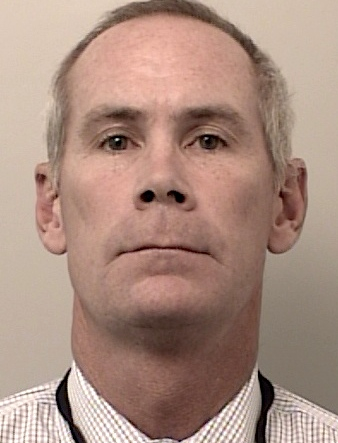
Jeremy Meyers when he was booked Aug. 22.

Jeremy Meyers when he was booked Aug. 22.

This means Meyers was allowed to continue to earn his $196,837 a year salary when he was on house arrest for five days, it means the board’s not being able to mandate he get any type of treatment or that members have oversight of it, nor can the board even discuss the situation in closed session because he is not an employee.

Because the board doesn’t meet in July, the Aug. 27 meeting was the first time the board had met since Meyers was cited June 9 by the California Highway Patrol for driving under the influence. Meyers usually attends all board meetings, but he was not at the Aug. 27 meeting. No reason was given for his absence.

It was at last week’s meeting that Weiland requested the Sept. 15 special meeting, to which her colleagues agreed, though none of them spoke to the issue.

The unadopted minutes from the Aug. 27 meeting summarize Weiland’s desire for the special meeting to have discussions include “but not limited to laws pertinent to the relationship between the elected superintendent and the elected board, the elected board’s ability to put in place systems or protections, and legal counsel as it relates to a possible conflict of interest.”

The current attorney, who works on a contract basis, works for the board and county office of ed so there is a potential conflict.

Board member Georgie Knight told Lake Tahoe News, “It needs to be very public out there what we can and cannot do. It’s important we know what our roles are and then adjust whatever that might be.”

She said if the board thought programs were being compromised or kids put at risk, then the board likely would have called for a special meeting sooner.

Board member Rich Fischer, who represents Tahoe on the board and is the vice president, did not return a phone call.

Requests to speak to Meyers are deferred to his criminal attorney.

While Meyers let the board know of his DUI shortly after it occurred, the public didn’t become aware of it until last month when he had to be booked into the El Dorado County jail in Placerville as part of his sentencing agreement.

Meyers eventually pleaded no contest to driving under the influence at just more than the legal limit. His five-day jail sentence was converted to house arrest. He is on probation and must complete court-mandated courses.

A California Highway Patrol officer found Meyers asleep in a construction zone on Highway 49 at 2:45pm June 9. He had attended a board meeting earlier that Tuesday that lasted about 15 minutes and ended at 11:59am. People who were at the meeting said he did not appear to be impaired.

Meyers’ blood alcohol level, according the CHP report, was 0.15 percent – nearly twice the legal limit. In addition to DUI, he was cited for being in possession of hydrocodone, a synthetic narcotic often prescribed for pain. It is along the lines of vicodin. That charge was later dropped when he produced the prescription.

Meyers, who is a long-distance runner, seriously hurt his foot about a year ago.

Instead of being taken directly to jail, Meyers was released to the custody of his wife. While the CHP has the authority to make that judgment call, others in law enforcement have told Lake Tahoe News it is “highly unusual” for that to have occurred.

—–

Notes:

·      The special meeting is Sept. 15 at 1pm in Placerville at the county education office.


If Calif. levees fail, impact would be global

By Nick Stockton, MSN

California’s always been for dreamers. Dreams of gold brought the forty-niners. Easy seasons and expansive arable acreage brought farmers, dreaming of an agricultural paradise. Fame, natural beauty, and the hang-loose cultural mosaic have brought dreaming millions to the state where summer never seems to end.

The summer dream has become a nightmare drought. But the years-long dry spell isn’t what keeps engineers, economists, and state water planners awake at night. No, they worry about the network of levees at the crux of California’s plumbing—a massive freshwater confluence called the Sacramento-San Joaquin River Delta.

Most of the state’s water is drawn from the Delta, protected by levees that pretty much amount to mounds of dirt, even when compared to infrastructure that infamously failed New Orleans during Hurricane Katrina. Hurricanes don’t hit NorCal, but these levees are alarmingly susceptible to disaster. If enough were to breach—in an earthquake perhaps, or severe El Niño storm—sea water from San Francisco Bay could rush in, tainting the water supply serving two-thirds of the state. The worst-case scenario could cause up to three years of severely curtailed water for most Californians.

Even if you’re not a California dreamer, this affects you. Delta water keeps Hollywood in the movie business, Silicon Valley in the tech business, and 750,000 acres of farmland in the business of producing half of America’s veggies, fruits, and nuts. If the levees go, so goes the water for 25 million residents of the world’s seventh largest economy.

Read the whole story


Reward offered in church vandalism cases

The FBI is offering a $5,000 reward for information leading to the arrest and prosecution of those involved in a series of vandalism cases at Incline Village churches dating back to Easter.

Investigators are interested in tips from citizens who have witnessed or seen graffiti or writings from anti-Christianity websites and/or satanic worship graffiti.

Citizens with information regarding the vandalisms are asked to call 800-225.5324. In addition to the FBI, Secret Witness announced an increase in the reward it is ,offering to $1000 for the arrest and prosecution of those involved.

Since April, the Washoe County Sheriff’s Office in conjunction with the FBI have investigated four incidents involving churches in Incline Village. Most recently, between Aug. 29 and Aug. 30 a subject broke multiple windows and attempted to cut down a wooden cross at two Incline Village churches and again on Tuesday night or Wednesday morning.

— Lake Tahoe News staff report


Grant means big changes in Nev. children’s mental health services

By Jackie Valley, Las Vegas Sun

A nearly $11 million federal grant will transform how Nevada cares for children with mental health issues, according to state officials who cheered the award.

On Tuesday, the administration of Gov. Brian Sandoval announced that the Nevada Division of Child and Family Services will receive a grant from the Substance Abuse and Mental Health Services Administration, a federal agency. The grant will support the development of comprehensive mental health services and wraparound support for children with serious emotional disturbances and their families.

Activities associated with the grant will last for four years, with the state receiving about $2.7 million per year.

Read the whole story


U.S. transportation officials embracing more than cars

By Josh Cohen, Next City

Local bike and pedestrian planners have long had a complicated relationship with the federal Department of Transportation. It is often incredibly difficult to pay for ambitious infrastructure projects without the U.S. Department of Transportation’s help, but because the feds haven’t yet codified much of those ambitious, next-generation street designs, ambitious municipal projects are ineligible for funding.

At least that’s the story risk-averse engineers like to tell advocates and their bolder colleagues. But in a recent attempt to change attitudes, the Federal Highway Administration (FHWA) published a laundry list of common funding and design misconceptions aimed at local and regional planners.

The report highlights five major funding misconceptions. The FHWA points out that federal funds can, in fact, be used for protected bike lanes, road diets and local road networks. Cities and states can also draw from far more funding sources for biking and walking projects than just the Transportation Alternatives Program (TAP). The DOT also provides walking and biking funding via channels such as the Congestion Mitigation and Air Quality Improvement Program, the National Highway Performance Program and more.

Read the whole story


SLT, STPUD at odds over franchise agreement

South Tahoe PUD does not currently pay a fee for having its water and sewer lines on South Lake Tahoe property. Photo/LTN file

South Tahoe PUD does not pay a fee to have its water and sewer lines on South Lake Tahoe property. Photo/LTN file

By Kathryn Reed

South Lake Tahoe since earlier this summer has been paying South Tahoe Public Utility District for water and sewer just like any other customer. South Tahoe PUD, though, is not paying the city a franchise agreement like all the other water companies in town.

If the city has its way, there will be franchise deal in place – and soon. South Lake Tahoe officials want to correct what they see as a 50-year-old problem.

“It’s a standard practice that utilities pay for the right to use a city’s property,” City Manager Nancy Kerry told Lake Tahoe News.

Tahoe Keys, Lukins and Lakeside water districts all pay 2 percent of their gross revenues to the city per their franchise agreements. South Tahoe PUD never has. When STPUD acquired smaller water districts that were paying the fee, the practice stopped. The city never pursued its right to those dollars.

The city in 1966 – just after becoming incorporated – entered into 50-year franchise agreements with the various water districts. Those all expire at the end of this year.

City Attorney Tom Watson told Lake Tahoe News that state law allows cities to create an ordinance – like South Lake Tahoe has – to impose the franchise fee.

The city has been talking with the four water districts about 10-year franchise agreements, with the goal of treating them all the same. The council will likely discuss the issue Oct. 20.

South Tahoe PUD has the topic on Thursday’s agenda. The Sept. 3 item is to discuss the proposed franchise agreement and direct staff.

“Since we have not seen anything at all at this point, I would rather not speculate on possibilities. We have chosen not to begin any research or analysis until we actually see what is proposed,” STPUD General Manager Richard Solbrig told Lake Tahoe News.

However, according to city officials the two entities have been discussing the issue for several months. The last meeting was Monday, though an agreement was not reached.

The contract the two had expired at the end of July. Former City Manager Dave Jinkens negotiated it at a time when the district was doing a lot of work in the redevelopment area near Stateline. It included free water and sewer for the city, while the district paid nothing.

Kerry said not paying a water-sewer bill saved the city about $100,000 a year. She added that STPUD is saving about $500,000 a year by not having a franchise agreement.

Franchise agreements between municipalities and utility companies are fairly routine. The whole point is that the utilities are essentially renting space owned by the city – albeit underground in this case – in order to operate their business.

Kerry said the proposal that will be before the council this fall is to have the STPUD franchise fee be dedicated to the replacement of roads. Money from the other water districts goes toward the broader public works budget.

STPUD does not have a franchise agreement with El Dorado County. Lake Tahoe News on Aug. 28 asked El Dorado County Counsel Robyn Drivon about any agreements with West Slope water providers. She said she would look into it, but has not responded.

—–

Notes:

·      The STPUD board meeting is Sept. 3 at 2pm, 1275 Meadow Crest Drive, South Lake Tahoe.

·      Also on the agenda are formal mutual aid agreements with Tahoe Keys and Lukins. “The agreement will provide the backup reliability sought by the state inspector. The agreements should be virtually identical, except for any differences in the physical connections,” Solbrig said.


Water conservation comes with unintended consquences

By Matt Stevens, Los Angeles Times

Under orders to slash water use amid a historic drought, cities and towns across the state saved about 75 billion gallons in July, eclipsing Gov. Jerry Brown’s once-daunting order for a 25% reduction.

But, in a paradox of conservation, water agencies say the unprecedented savings — 31% in July over July 2013 — are causing or compounding a slew of problems.

Sanitation districts are yanking tree roots out of manholes and stepping up maintenance on their pipes to prevent corrosion and the spread of odors. And when people use less potable water, officials say, there’s less wastewater available to recycle.

Water suppliers, meanwhile, say the dramatic decrease in consumption has created multimillion-dollar revenue shortfalls.

Read the whole story


Busy holiday weekend expected

AAA is projecting 35.5 million people in the U.S. will take to the roads and skies Labor Day weekend.

That calculates to $13.5 billion travelers will pour into the economy — up 2 percent over 2014. Each person taking a trip for the long weekend is expected to spend an average of $380 on goods and services, according to a survey and analysis released by the U.S. Travel Association.

The survey, conducted for U.S. Travel by the firm TNS, found that even among those who plan to travel this weekend, 8.7 percent will stay fewer days and 9.1 percent will travel shorter distances due to concerns over road congestion and flying headaches. Factoring in those shortened trips, the total Labor Day economic cost of hassles due to infrastructure rises to $1.7 billion.

Trip spending by auto travelers is expected to average $270, according to U.S. Travel’s survey. With AAA projecting 30.4 million travelers by car, that totals out to $8.2 billion — an increase of 0.5 percent over 2014. The fact that the spending figure will increase at all is significant, say U.S. Travel Association researchers, given that gasoline is considerably cheaper than a year ago.

Expected trip spending by air travelers is significantly higher at $1,090 on average, for a total weekend spending figure of $2.9 billion — a year-over-year increase of 4.9 percent — based on AAA’s projection of 2.6 million air travelers.

The remaining $2.4 billion in predicted Labor Day spending will come from the 2.5 million Americans expected to travel by “other means.”


5 million people left Calif. in the last decade

By Phillip Reese, Sacramento Bee

An unprecedented number of Californians left for other states during the last decade, according to new tax return data from the Internal Revenue Service.

About 5 million Californians left between 2004 and 2013. Roughly 3.9 million people came here from other states during that period, for a net population loss of more than 1 million people.


Read the whole story


2 Incline Village churches vandalized

By Marcella Corona, Reno Gazette-Journal

Two churches were damaged in a string of vandalism in Incline Village over the weekend.

The Village Church on McCourry Boulevard and the St. Francis of Assisi Catholic Church near Kelly Drive were vandalized overnight Saturday. Both churches are located along Mt. Rose Highway less than a mile apart.

The incidents follow several similar occurrences at local churches, Washoe County sheriff’s Lt. Jeff Clark said. If arrests are made, hate crime charges could be considered.

Read the whole story