Electric cars and the coal that runs them

By Michael Birnbaum, Washington Post

ROTTERDAM — In this traffic-packed Dutch city, electric cars jostle for space at charging ­stations. The oldest exhaust-spewing vehicles will soon be banned from the city center. Thanks to generous tax incentives, the share of electric vehicles has grown faster in the Netherlands than in nearly any other country in the world.

But behind the green growth is a filthy secret: In a nation famous for its windmills, electricity is coming from a far dirtier source. Three new coal-fired power plants, including two here on the Rotterdam harbor, are supplying much of the power to fuel the Netherlands’ electric-car boom.

As the world tries to reduce greenhouse-gas emissions and combat climate change, policymakers have pinned hopes on electric cars, whose range and convenience are quickly improving. Alongside the boom has come a surging demand for power to charge the vehicles, which can consume as much electricity in a single charge as the average refrigerator does in a month and a half.

The global shift to electric cars has a clear climate benefit in regions that get most of their power from clean sources, such as California or Norway. But in areas supplied by dirtier power, like China, India and even the Netherlands, which is on track to miss ambitious emissions targets set for 2020, the electric-car jump has slimmer payoffs. In some cases, it could even worsen the overall climate impact of driving, experts say.

Read the whole story


Smartphones overtake desktops for holiday shopping

By Mae Anderson, AP

If the beginning of the holiday season is any indication, it could be a merry mobile Christmas for shoppers.

For the first time, there’s expected to be more people visiting retailers’ websites through their smartphones than on desktop computers or tablets during the first weekend of the holiday shopping season that begins on Thanksgiving Day.

Mobile traffic during the five-day start to what is typically the busiest shopping period of the year is expected to reach 56.9 percent of total traffic, up from 48.5 percent last year, according to IBM Watson.

And even though everyone who “window shops” on their phones isn’t going to buy, mobile sales are jumping too. Mobile sales are expected to account for 36.1 percent of online sales, up from 27 percent last year, according to IBM Watson Trend.

The bumps in traffic and sales come as retailers try to make the mobile shopping experience easier by improving their mobile apps and adding coupons and other deals. Shoppers also have gotten more comfortable browsing retailers’ web sites as smartphone screen sizes have gotten bigger, making it easier for them to see photos of the items they want to buy. Digital wallets and apps that let shoppers store payment information are helping too.

“It’s very convenient,” said Seth Reineke, 25, an insurance worker from Iowa City, Iowa, who plans to peruse Amazon’s weekend deals from his phone. “It allows me to keep track of time-sensitive sales without being tied to a computer or having to leave a holiday event or get-together.”

Overall spending this season is expected to be somewhat muted. The National Retail Federation, a trade group for storeowners, expects industry-wide sales to be up 3.7 percent in November and December, less than the 4.1 percent of last year’s holiday season.

But online spending figures are stronger. Forrester predicts online sales will rise 11 percent to $95 billion. And mobile sales are becoming a bigger piece of that pie. Forrester expects them to account for 35 percent of e-commerce this year and 49 percent in five years. That compares to 29 percent in 2014.

Adobe, which measures 80 percent of online sales from the top 100 U.S. retailers, predicts 40 to 45 percent of all retail traffic during November and December will come from mobile devices, up from 37 percent last year. Mobile sales are expected to total 20 to 25 percent of total online sales, up from 16 percent last year.

Wal-Mart, the world’s largest retailer, expects that 75 percent of U.S. traffic to its website will come from mobile devices this holiday shopping season. That’s up from 50 percent two years ago. Likewise, eBay says it expects mobile sales during the holidays will be “significantly” higher than the 41 percent mobile sales made up of total revenue in the third quarter.

Thanksgiving and the day after the holiday known as Black Friday are expected to be particularly mobile-friendly shopping dates because people can use their phones to take advantage of limited-time offers wherever they may be. Adobe predicts mobile will drive the majority of shopping traffic, 51 percent, for the first time on Thanksgiving Day.

“There’s a lot of opportunity to do ‘shopping under the table’ on Thanksgiving Day,” said Tamara Gaffney, director of Adobe Digital Index. “In between cooking, watching football and in general hanging around family and friends, there’s down time to glance at the iPad and smartphone and do some shopping.”

Take Danyell Taylor, 34, a writer in Washington, D.C., who likes the “easy access” of smartphone shopping. Taylor plans to start looking for holiday deals on Wednesday and continuing through the weekend, specifically for Converse shoes and Kate Spade home accessories.

“I’m going to sit on my couch with my phone and my laptop and buy from there,” she says. “I don’t plan on going into the store at all.”

Mobile shopping still has its problems, including security concerns, sluggish apps and hard-to-navigate mobile web sites. And much of mobile traffic doesn’t translate into sales.

But for shoppers, the convenience factor is hard to beat, says Forrester Research analyst Sucharita Mulpuru.

“While retailers may lament their low conversion rates and slow download speeds on mobile devices, shoppers still keep shopping on those devices,” Mulpuru says, adding that shoppers “appear to have greater tolerance for imperfection, much like in the early days of desktop.”

Jill Markiewicz, 38, a personal shopper in New York, says she shops frequently on her iPhone 6s on Saks Fifth Ave and J.Crew’s mobile websites.

“I’m typically on foot running around a lot … don’t get a whole lot of desk time,” Markiewicz says. “You can go from email to checkout cart in a matter of minutes.”


Snow impacts DCSD, more on the way

Douglas County students at the lake will be picked up at the main bus stops today.

Lake Tahoe Community College is open as normal.

Lake Tahoe Unified and Tahoe Truckee Unified school districts, and Incline Village schools were already closed Wednesday for the Thanksgiving break.

A winter weather advisory remains in effect for the Lake Tahoe Basin until 4pm Nov. 25 Douglas County students at the lake will be picked up at the main bus stops today.. Temperatures will remain below normal for the next few days.

For highway conditions, click on the state icons on the home page of Lake Tahoe News.

— Lake Tahoe News staff report


Coffee could literally be a lifesaver

By Carina Storrs, CNN

Throughout the ages, coffee has been called a virtue and a vice for our health. The latest study comes down in favor of virtue: It says that drinking coffee, whether regular or decaf, could reduce the risk of death.

Researchers started with data from surveys of adults in the United States that asked how much coffee they consumed, as well as other foods and drinks, and then they looked at their rates of death and disease over the following two decades.

The study was large, including more than 200,000 women and 50,000 men.

Read the whole story


Medical pot regs may cause Calif. growers pain

By Guy Kovner, Santa Rosa Press Democrat

As California prepares to bring in the $1 billion medical marijuana industry from the legal shadows, growers and marketers on the pot-rich North Coast are waiting to see how much the massive regulatory structure will cost them and whether to stick instead with the prosperous but risky outlaw status they have lived with for nearly two decades.

The regulatory scheme, which will cost up to $50 million, must be funded entirely by license fees paid by the industry, while new taxes on the cannabis trade — which some advocates say is one of Sonoma County’s major industries — offer the prospect of millions of dollars to help pay for paving roads, hiring police and other public services.

Investors have taken note of the imminent regulation of California’s cannabis industry, which accounts for nearly half of the nation’s booming $2.7 billion market in legal cannabis, according to one report.

Read the whole story


EDC school board pays superintendent to quit

By Kathryn Reed

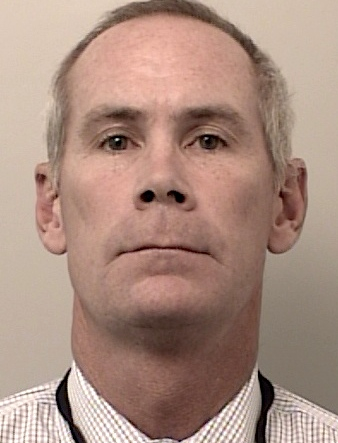
Jeremy Meyers, the disgraced former superintendent of El Dorado County Office of Education, is receiving more than seven months worth of severance – aka taxpayer money.

The attorney for the district, David Girard, did not return multiple calls or an email asking how this is not a gift of public funds. Lake Tahoe News also asked Girard, as well as the public information officer for the district Dina Gentry, to site the Government, Education and/or Election code(s) that allow for the board to financially compensate an elected official upon his resignation. Neither did so.

Jeremy Meyers when he was booked Aug. 22.

Jeremy Meyers when he was booked Aug. 22.

Board President John Lane also did not respond to an email from LTN.

After being arrested on DUI charges twice in five months and pleading no contest to the first offense, Meyers opted to sign a resignation agreement Nov. 13, while the board acted on in Nov. 16. Meyers had not worked since his Nov. 5 arrest.

On that day he had a blood alcohol level of 0.19 percent, more than twice the legal limit, according to the California Highway Patrol. This was in the middle of a work day. The district office shares a parking lot with an elementary school.

Meyers will receive $114,821.55 – the equivalent of his salary through June 30, 2016. The five elected board members agreed to also give him $10,930. This is what the value of his medical, dental and life insurance would be for that same time period.

Per the agreement Meyers has until Dec. 1 to return all property belonging to the district. This includes master keys, credit cards and security passes. A condition of getting paid off is those items must be turned in.

The agreement contained language that the document would not be released without an entity like Lake Tahoe News invoking the Public Records Request Act.

Lake Tahoe News had two attorneys with experience in municipal government law review the agreement and offer input into its legalities. Both believe it’s possible the payment is a gift of public funds.

“I have not found any basis upon which the $114K can be paid. If he had a contract with a severance clause, that would need to be examined, also the basis of such a contract in the first place,” one of the attorneys said. “The salary schedule for the superintendent does not outline a severance. Ordinarily when a resignation occurs, there is no basis for payment, although they may claim that it is in exchange for a release from potential suit.”

Anyone can challenge the agreement in court. This must be done within 90 days.

Because Meyers was elected and was not accused of committing a felony the board had little recourse.

Gentry emailed this statement, “The board of education determined that the separation agreement is in the best interest of the El Dorado County Office of Education. As an elected official, the county superintendent was legally entitled to complete the remaining three years of his term of office, and any legal or other challenge to the county superintendent’s right to continue in office would have been potentially expensive and lengthy.”

Had the board waited for a recall to occur, the odds are the process would have taken until next summer. Meyers would have been collecting his paycheck that whole time. Plus, there is no guarantee voters would have recalled him. Without a recall, he would have been on the job for the rest of his term – the end of 2018. With a recall, the district would have to pay the expense for a special election.

The statement from the district went on to say, “The board, with strong public input, came to the unanimous conclusion that it must take all reasonable and feasible steps to effect an immediate leadership change in the El Dorado County Office of Education.”

The board is looking to finalize the application process by Dec. 1, with the goal of naming a replacement in January.


Meyers resident dies following car accident

Mikey Sheehan

Mikey Sheehan

Meyers resident Mikey Sheehan died Nov. 21 from injuries he sustained in a vehicle accident the week before.

Sheehan was driving by himself Nov. 14 in Truckee on Highway 89 south of Sagehen when his vehicle drifted off the side of the road for unknown reasons. The vehicle rolled and he was ejected, according to the California Highway Patrol.

Sheehan died at Renown Medical Center in Reno.

Sheehan worked at Freshies in South Lake Tahoe as a waiter, and as the beer and wine buyer.

Music was a passion of his. He was also a huge Giants fan, though he kept his loyalty to the Orioles since Baltimore is where he hailed from.

Sheehan is survived by his parents, David J. and Elizabeth A. Sheehan; sister Kerry DiBiagio (Mark); niece and nephew Molly and Anthony DiBiagio; and numerous aunts, uncles and cousins.

The family, who are in Maryland, had a private service and interment.

In lieu of flowers, memorial contributions may be sent to the American Cancer Society, 8219 Town Center Drive, Baltimore, MD 21236.

— Lake Tahoe News staff report


Snow needs to fall now for drought relief

By Brian K. Sullivan, BloombergBusiness

The drought relief for California widely expected from El Nino in early 2016 will be far more effective if a chill descends soon — ideally with a bit of snow.

“If we can get some snow on the ground and some cold nights, it will set up the snowpack and get cool air pooling,” said California State Climatologist Mike Anderson.

Cool air, especially at high altitudes, will help ensure snow falls and stays on the ground in the mountains through the winter, as needed to supply the state’s reservoirs. While that may seem like a non-issue given the height of the mountains and the tradition of heavy snows there, recent years have seen some worrisome trends.

During the winter of 2014-15, the three-month average temperature in the Sierra region topped the freezing mark of 32 degrees Fahrenheit for the first time in records dating to 1950, data compiled by Anderson show.

California as a whole posted its warmest February on record and both December and January came in among the top 10, according to the National Centers for Environmental Information in Asheville, N.C.

Read the whole story


Armed robbery suspects found in Sacramento

Two men accused of staging an armed home invasion on the West Slope have been arrested.

Sacramento County sheriff’s deputies arrested Deshawn Stone and Jeremy Ross, both 21, on Nov. 20 at about 6:30pm. Deputies said the men were armed with loaded firearms. They were booked on weapons and drug charges.

Some of the property from the Nov. 19 Greenwood robbery was recovered.

— Lake Tahoe News staff report


Massive excavation project necessary before Carson City I-580 connector can be paved

Crews work five days a week hauling 3,000 yards of dirt for what will be an extension of Interstate 580 in Carson City. Photo/Carolyn E. Wright/Copyright

Crews work five days a week hauling 3,000 yards of dirt for what will be an extension of Interstate 580 in Carson City. Photo Copyright 2015 Carolyn E. Wright

By Kathryn Reed

CARSON CITY – The pile of dirt at the end of Spooner Summit in Carson City never seems to change. Grown men in what look like life-size Tonka trucks move it around, and yet, it still seems to stay the same.

For 16 hours a day, six days a week, dirt moves under the highway via a 2,600-foot conveyor belt to the other side of the street, where another pile is being created. On the Spooner side it is a 1,500-foot-long continuous belt.

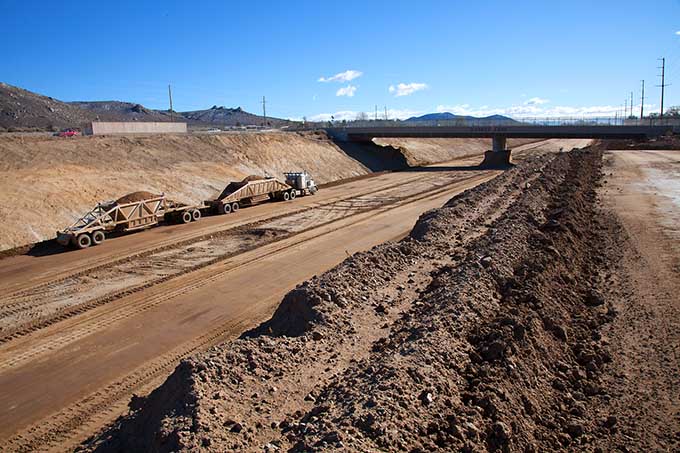
While it may seem like not much is happening, behind the 40-foot dirt wall that faces drivers as they descend into the capital city is a trove of workers excavating dirt for what in 2017 will be the extension of Interstate 580 from Fairview Drive to Spooner Summit.

A feeder – which looks like a grain feeder – separates out the larger rocks before it goes onto the conveyor belt.

The reason to move the dirt under South Carson Street is to keep trucks off the road, thus reducing traffic jams.

In 2017 the connector to Fairview Drive will be complete. Photo/Carolyn E. Wright/Copyright

In 2017 the connector to Fairview Drive will be complete. Photo Copyright 2015 Carolyn E. Wright

Road and Highway Builders based in Sparks this spring was awarded the $42 million contract to complete the final section of Interstate 580. Work began in June on what will be two lanes each going north and south.

Behind the wall is a dozer pushing a scraper as it picks up dirt with its belly. Backhoes are filling semi-trailers.

It’s a methodical process to dig down about 30 feet. Six thousand yards of dirt are being moved each day. By the time the project is done it’s estimated 600,000 yards will have been removed. The excavation work should be done in February.

Project manager Will Hellickson, left, and Mark Cooper with NDOT are the leaders on the project. Photo/Carolyn E. Wright/Copyright

Project manager Will Hellickson, left, and Mark Cooper with NDOT are the leaders on the project. Photo Copyright 2015 Carolyn E. Wright

“We are scraping to get down to the design elevation. We are close to the final grade,” Mark Cooper, an engineer with the Nevada Department of Transportation, said as he and Will Hellickson with Road and Highway Builders gave Lake Tahoe News a tour of the project site.

Part of the reason to dig so deep is to help reduce the noise to the neighboring residential area. Plus, the interstate will go under Clearview Drive and Koontz Lane. Those overpasses were built with the anticipation I-580 would one day be a reality. Before work began the dirt was as high as the concrete on the overpasses.

As the excavation work is being done, so is some of the electrical. Crews are putting in the footings for the 14,000 feet of sounds walls. The decorative barriers will be 8- to 13-feet high. In some locations the houses will be as close as 50 feet from the interstate.

Footings for the retaining wall near neighborhoods are being put in. Photo/Carolyn E. Wright/Copyright

Footings for the retaining wall near neighborhoods are being put in. Photo Copyright 2015 Carolyn E. Wright

At various locations some of the 20,000 feet of storm drainpipe is at the ready to be installed.

As the highway gets closer to Fairway Drive it is level with the side streets. NDOT has secured a 300-foot right-of-way.

This section from Fairview to Spooner will be 3.2 miles. It is actually 1.8 miles longer than going from Spooner via South Carson Street to Fairview. Still, NDOT estimates the time saved will be five minutes on the interstate.

“Within the next two decades, an estimated 43,000 vehicles are anticipated to travel on the south end of the freeway daily, meaning this time savings will really add up when considering all vehicles projected to drive the freeway every day,” Meg Ragonese with NDOT told Lake Tahoe News.

Dirt from the large pile in the background will all come across the conveyor. Photo/Carolyn E. Wright

The large pile of dirt will end up on the conveyor that goes under South Carson Street. Photo Copyright 2015 Carolyn E. Wright

Until the Carson City Freeway project came into being Nevada was one of the few states where the capital did not connect to the federal interstate system.

There are no plans to continue Interstate 580 farther south.

What is in the future is an overpass at the bottom of Spooner. That is why the dirt is being stored – with the idea it will be used for that project. However, that may not break ground for another 20 years. It’s dependent on funding. When the newest section of the interstate opens there will still be a light at the bottom of Spooner.

Excavate dirt is being stored for future projects.  Photo/Carolyn E. Wright/Copyright

Excavated dirt is being piled near the bottom of Spooner Summit. Photo Copyright 2015 Carolyn E. Wright

“By constructing the southern end of the freeway as a signalized intersection instead of the previously-planned overpass, the department deferred approximately $20 million to $24 million of construction costs in today’s dollars,” Ragonese said. “With limited funding available, not constructing the freeway overpass over South Carson Street was the only way we were able to secure enough funding to open the last leg of the freeway to traffic in 2017.”

—–

Notes:

·       Here is a YouTube video of the dirt conveyor system.