Spooner Summit area home threatened by fire started from lightning

A single power pole was the only property loss from a fire on Spooner Summit last Thursday morning. It did not cause the power to go out.

A house in the area was threatened and Highway 50 temporarily closed.

“The cause of the fire is unknown at this time, however it is suspected a small blaze may have started and smoldered throughout the night and early morning hours as a result of the numerous lightning strikes that occurred throughout Douglas County the previous night,” Douglas County sheriff’s Sgt. Jim Halsey said in a statement.

At approximately 11:10am, firefighters from East Fork, Tahoe-Douglas, Carson City, and the U.S. Forest Service responded to a possible wildland fire in the vicinity of Highway 50 and Old Clear Creek Road, at the north end of Douglas County. The fire burned approximately 1.5 acres.

— Lake Tahoe News staff report


Coke bust lands 2 South Tahoe residents in jail

By Kathryn Reed

A South Lake Tahoe man twice deported to Mexico faces a third deportation after being arrested on felony narcotics charges.

Florentino Vargas Barragan, 43, was arrested on charges of possession and sales of cocaine, transportation of narcotics and conspiracy.

Jeff Catchings, who heads the South Lake El Dorado Narcotics Enforcement Team, said, “It’s very significant because of the amount (of cocaine) and amount of activity. He was very popular around the area of the Y. He would go to some of the restaurants and bars and hangout. We have received complaints from restaurants. For the most part they would kick him out.”

Barragan, according to Catchings, was arrested Aug. 30 after selling cocaine to an undercover agent. He was arrested in the parking lot of Rite-Aid. Also arrested that Tuesday was Juan Pablo Garcia Mora, 27, of South Lake Tahoe. He faces charges of transportation of a narcotic and conspiracy.

The street value of the nearly 1 pound of uncut cocaine that was seized is $17,000.

Barragan faces a minimum of seven years in jail if convicted and could serve additional federal time for illegal entry. The two times he was deported to Mexico was because of drug charges originating in South Lake Tahoe, according to Catchings.

Also taken by officers from the suspect’s apartment after a search warrant was issued were three cell phones. The warrant allows officers to answer the phone. Catchings said they were ringing nonstop until people figured out it wasn’t Barragan on the other end.

Barragan’s clientele was an extensive network of locals, according to Catchings. Officials, though, are focusing their efforts on dealers at this time and not users.


S. Tahoe shooting victim — compassionate, outgoing, giving

By Jeff Delong, Reno Gazette-Journal

A while back, Florence Donovan-Gunderson dropped by Scott Shehadi’s business with a gift — two hats she knitted to keep his sons warm during the Tahoe winter.

She did it, Shehadi said, not because he asked her, but because she thought it would be a neat thing to do.

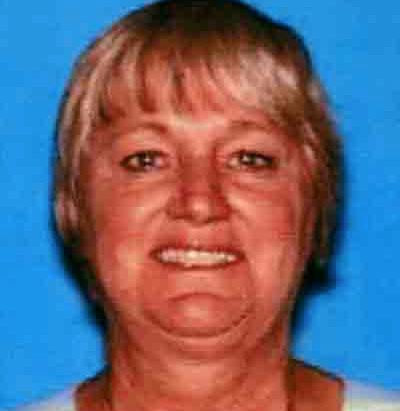
Florence Donovan-Gunderson

Florence Donovan-Gunderson

“It was just a grandma thing to do. That’s her,” Shehadi said.

Late Tuesday while coaching on the football field, Shehadi received a text message from a friend informing him Donovan-Gunderson, 67, had been gunned down in a Carson City restaurant — one of four killed by a gunman. Her husband, Wally, was wounded.

On Wednesday, Shehadi, other friends and family were coping with the loss of a woman described as outgoing, compassionate and giving.

“It’s a tragic loss. All they were doing is getting some pancakes, for crying out loud,” Shehadi said.

Read the whole story


Former Tahoe fire official critical of how Texas fire prevention efforts

By Ashley Powers and Molly Hennessy-Fiske, Los Angeles Times

BASTROP, Texas — Beleaguered firefighters battling one of the most destructive Texas fire seasons on record found themselves punished not only by searing weather, but by lax brush clearance and dwindling budgets.

With no end in sight to scores of blazes — the largest had burned 785 homes and was only 30 percent contained Wednesday — fire officials pleaded for more equipment, and experts urged property owners to do a better job of protecting their homes.

“We needed resources yesterday,” Lt. Gov. David Dewhurst said, noting that he and Gov. Rick Perry — who was in California for a debate of GOP presidential contenders — were requesting that the federal government declare the state a major disaster area.

President Obama called Perry to assure the governor that requests for additional assistance would be quickly assessed, the White House said. Officials with the Federal Emergency Management Agency were in Texas preparing financial assessments to help pay the cost of fighting the fires.

It is unclear what the federal government’s share of the cost will be. In the last week, FEMA agreed to cover 75 percent of the expenses of fighting eight fires across the state.

The Texas Forest Service has been spending about $1.5 million a day on fighting the fires this week, agency spokesman Gary Lacox said. That does not include spending by local fire districts and volunteer fire departments.

As state officials scrambled to summon resources, the magnitude of the wildfires — at least 122 as of Wednesday — continued to overwhelm even the most experienced firefighters.

Officials in hard-hit Bastrop County were confident that firefighters would gain control of the state’s largest and most destructive blaze as winds ease and residents are allowed back into fire-ravaged neighborhoods, perhaps by week’s end. Some residents had done little to prepare for fire.

Ken Gold, a battalion chief from Denton, said residents in a subdivision burned by the Bastrop fire east of Austin had left homes blanketed in six-inch piles of pine needles as dry as matchsticks.

“They kind of let nature be nature,” Gold said. “It didn’t seem very fire-aware.”

The loss of one blue house particularly pained him.

It was a single-story, wood-frame home with a yard full of pine trees. He and his crew spent an hour scraping away pine needles and hosing down the area with water from an above-ground pool. Before he could finish, the fire snaked through the 30-foot-tall pine trees behind him.

“I was calling for help,” Gold said. “But everyone was busy somewhere else.”

Flames crept within a few feet of the crew.

“Then it got real hot real fast and we had to go,” Gold said.

About two hours later, he returned. There was nothing left but some propane tanks and the pool. All Gold could do was sit in the driveway and stare.

The Bastrop fire forced thousands of residents to evacuate and killed two people. Michael Farr, 48, who worked for Austin’s electrical department, was found dead at his home in Smithville. The other body was found several miles away and had not been identified late Wednesday.

Lake Travis Fire Rescue Chief Jim Linardos, a Redondo Beach native who worked for years in the North Lake Tahoe area, said Central Texas faced some of the same wildfire risks as California, but lacked the fire-prevention efforts and resources that help California firefighters immediately tackle blazes.

Read the whole story


California on the brink of financial ruin

By Dashka Slater and Gary Rivlin, Newsweek

Toni Sevchuck knows that budgeting is about making tough choices: taxes vs. cuts, parks vs. prisons, health care vs. schools. But as California’s austere new state budget goes into effect, the 47-year-old mostly deaf single mother is finding that her own options have run out. “I don’t get to make choices,” she says. “I don’t have the money to make choices with.”

The state’s Medicaid program, called Medi-Cal in California, stopped covering dental care in 2009, so Sevchuck has had four molars pulled and is likely to lose a fifth. Last month her welfare and disability payments were cut by 8 percent each, leaving her with $1,160 in monthly aid, plus $200 a month in food stamps. After she pays her rent, she has $310 to pay all her other bills, including a $237 car payment. Each month most of her bills don’t get paid. “It doesn’t seem like a lot of money to most people,” she says of the combined $44 reduction in her monthly checks. “But when you’re in my boat, that pays your utilities.”

Click here to find out more!

Sevchuck’s sense of dwindling options is being echoed across the state. You hear it from the 22-year-old senior at the University of California, Santa Cruz—the first in his family to go to college—whose tuition has risen 80 percent since freshman year. You hear it from the 49-year-old partial quadriplegic in Orange County who may lose the state-funded caregiver who allows her to stay out of a nursing home. And you hear it from the 55-year-old accountant in Inglewood as he braces for the end of state funding for the adult-day-care center where his 75-year-old mother, a retired schoolteacher with advanced dementia, spends her days. “Many of these cuts are hitting the same vulnerable people over and over again,” says Lydia Missaelides, executive director of the California Association for Adult Day Services. “It’s not sharing the pain, it’s really piling on the pain.”

As the nation’s most populous state and the world’s eighth-largest economy, California rarely does things by halves. Dreams are bigger and glossier here, and when they crash, they crash spectacularly. California’s per capita foreclosure rate is the highest of any state outside of Nevada. Unemployment has reached a grueling 12 percent, nearly 3 points higher than the national average. And while nearly every state in the union faced budget deficits this year, California’s was the nation’s largest, at $26.6 billion. The resulting $15 billion in cuts came on top of the $22.5 billion axed in the previous two budget cycles. By way of contrast, the package of austerity cuts and tax hikes that sent rioters into the streets in Athens this spring totaled $40 billion over three years—and those cuts hadn’t even gone into effect when the demonstrations started.

Read the whole story


9/11: Terrorist attacks just part of Tahoe’s economic woes

Publisher’s note: This is one in a 12-part series running from Sept. 1-12 about how Lake Tahoe is tied to 9/11.

By Susan Wood

A decade after Sept. 11, 2001, the terrorist attack may not turn out to be the Lake Tahoe economy’s worst enemy. But it didn’t help with the snowball effect of the economic downward spiral.

The South Shore’s long recovery through peaks-and-valleys from a series of economic challenges started in March 2001. It shows a region that’s both reliant on and hard hit by a drop in tourism. The challenges since the March 2001 recession are in line with national trends.

Fear of travel, skyrocketing fuel prices, subsequent wars, high unemployment, a burst housing bubble and a few recessions before and after the horrific event have contributed to a plummet in consumer confidence and travel numbers.

From Sept. 1-12, Lake Tahoe News is looking at 9/11.

From Sept. 1-12, Lake Tahoe News is looking at 9/11.

Consumer confidence fell substantially according to national reports in one month from August to September 2001. Tourism, and with that hotel occupancy, took a dramatic drop across the nation. In New York City, hotel occupancy fell 40 percent and 3,000 employees were laid off, according to reports compiled by the U.S. Commerce Department.

Then, the worst recession in a generation forced companies to retool, rethink and re-evaluate business as usual.

Throw in smack-you-in-the-eye competition from Indian casinos to the largest South Shore employers, and Tahoe may have lost and seen the last of its tourism heyday.

“Certainly air transportation has become quite a bit more annoying since 9/11,” Lakeside Inn and Casino Chief Executive Officer Mike Bradford told Lake Tahoe News, also echoing a few national studies on the subject. “But no doubt, it’s shown how resilient we are (as a country).”

The longtime local businessman has seen all the other economic factors hit the Lake Tahoe Basin hard.

“Tahoe is in a unique situation,” he said, referring to tribal gaming options popping up all over the Central Valley and on the West Slope. What stands out for Bradford while observing the region is in a sense “what hasn’t changed.” And “that’s unfortunate when you consider what we have to offer,” he said, characterizing the lack of an evolving tourism market as a major impediment.

“Because it’s no longer an economy based on gaming – we have to make adjustments. I’m not sure we’ve learned much since (2001), but we’ll need to take an educational look at Tahoe after 9/11 and now. Really, I bet it looks not that much different except for the excavation of Project 3 (South Lake Tahoe’s convention center redevelopment project based near Stateline).”

Tourists keep coming to Lake Tahoe, but they aren't spending like they did before 9/11.

Tourists keep coming to Lake Tahoe, but they aren’t spending money like they did before 9/11.

The casino chief admitted to the difficulty in quantifying any particular factor like terrorism attacks based on the eastern seaboard. However, 2001 appeared to serve as a catalyst for challenges to business from one side of the United States to the other.

Immediately following Sept. 11, the stock market closed for four days – the third time in history. Only two other events – the 1972 Munich Olympic massacre and the Wall Street bombings of 1920 – showed a 252 trading-day decline in the stock market. Insurance losses topped $30 billion – the worst in history.

Changes to air travel

“It’s certainly been our Pearl Harbor. From an aviation perspective – using that as a reference point, 9/11 brought a dramatic change to the aviation world. Airlines took a significant beating that some couldn’t recover from. The impact of tourism was huge. When you take a look at the airport now, it’s a hassle some people avoid altogether,” said Adam Mayberry, a Reno-Tahoe Airport Authority board trustee and former spokesman for the Northern Nevada aviation center.

But the problems started even sooner.

“We couldn’t seem to get a break,” Mayberry said. In about the same time period, American Airlines bought Reno Air – which did a substantial business out of the Reno-Tahoe airport – “then reduced flights,” he added.

Right after 9/11, passenger counts “took a dive.”

However, the Reno-based airport experienced a much better recovery than many airports following 9/11. Before 9/11, it offered 80 departures a day. Then with much work, the airport authority and staff did the leg work to get the number back up 72 today.

Current airport spokesman Brian Kulpin cites high fuel prices as more of a culprit, using history to back up the opinion. Five years after 9/11, the departures clawed and scratched their way up to 90 flights a day.

“But when fuel hit $145 per barrel in July 2008, our number of daily departure flights hit a low of 54,” he told Lake Tahoe News. Moreover, more than 100 commercial airports nationwide lost all of their air service in summer of 2008.

“In terms of passengers, we saw a drop to 284,000 per month just after 9/11. When fuel hit a $145 per barrel (rate) in 2008, we saw a drop to 283,000 passengers per month in fall 2009,” Kulpin pointed out. Just last year, Reno was ranked first in the nation for recovering flights over the decade with a 14 percent increase.

The recession hit airlines like Aloha and Northwest hard, with them either going out of business or merging with another. Then came travel’s ugly byproduct of 9/11, the recession and fuel prices – baggage fees and liquid container restrictions.

Impact on the South Shore

The recession has taken its toll on Lake Tahoe business. First, there are the musical chairs of retailers and restaurants on the South Shore. Second, boarded up buildings diminish the natural scenery. Of the businesses left, budget and creative adjustments had to be made.

Marlene Lewis, the manager at the Great Outdoor Clothing Co. at the Y, has noticed a steady decline in business in at least the last handful of years working there.

She points to the combination of Indian casino competition, recession and 9/11 as the culprit for our town’s downward spiral.

Lewis worked at Albertsons during 9/11 and remembers how people walked around in a daze in the store.

“But about three years ago, things really started declining,” she said, referring to her current business at the Factory Outlet center. She further quantified her shop’s drop in business by about 30 percent.

Jana Walker, who runs Sealed With a Kiss and the Lakefront Wedding Chapel, has seen a mixed bag as a result of 9/11 and the recessions. Her retail shop has called on her creativity.

“Being in business here, you have to have creativity, flexibility and ingenuity – or you’ll be passed up,” she said. “You can’t rest on your laurels.”

Walker admitted to making fewer buying trips for the Heavenly Village shop since 2001. And buying mistakes are less forgivable than previous decades. In her other business, the wedding chapel has seen a big drop in the large weddings since 9/11.

“People aren’t flying in 50 people or so anymore,” she said.

Even though she cites the recession as a worse culprit to business than 9/11, Walker recalls that time period as a trying one. Days after the terrorist attacks, she organized a local fundraiser for the victims of 9/11 at the casino corridor. Hundreds of people showed up. Most who attended told this reporter that life as we know it had changed forever.


Pedestrian hurt, South Tahoe man in jail on DUI charges

A man walking on Ski Run Boulevard near Forest Avenue in South Lake Tahoe was seriously injured when he was struck by a vehicle.

South Lake Tahoe police officers did not have specifics on the injured man – like his age, hometown or current medical condition.

The accident occurred Sept. 4 at 7:49pm.

Arrested at the scene was Larry Halverson, 60, of South Lake Tahoe. He was arrested on suspicion of driving under the influence as well as causing bodily injury. An enhancement was added because of prior felony convictions that resulted in time spent in prison.

As of Wednesday afternoon Halverson remained in El Dorado County Jail in South Lake Tahoe on $230,000 bail.

— Lake Tahoe News staff report


Tahoe bear needs driving lessons, wrecks car

By Justin B. Phillips, Contra Costa Times

It was 3:30am, and Brian McCarthy was fast asleep when a bear took his 2002 Toyota Prius for a test drive. The Pleasanton man’s car had been parked in the driveway of his west Lake Tahoe cabin.

After wedging itself inside the car, the bear became stuck. Frustrated, hungry and mad, it kicked, scratched, bit and tore at the interior of the hybrid, trying to force a way out as easily as it found its way in.

In its behind-the-wheel rampage, the bear ripped open the seats, bit a chunk out of the steering wheel and damaged the Prius’ gear box, shifting the car into neutral.

From the safety of the cabin, the awakened family watched helplessly as the commandeered Prius slowly started rolling out of the driveway.

“Our son was the first one who woke up, and he was watching the bear through the window,” McCarthy said. “We were looking out of our bedroom window and from our view, you could look down and see the bear in the car, and its arms were just flailing all over the place, through the windows and everything.”

Read the whole story


South Lake Tahoe woman killed in Carson City shooting rampage; husband injured

By Kathryn Reed

A South Lake Tahoe woman is one of the four people killed by a gunman Tuesday at IHOP in Carson City.

Florence Donovan-Gunderson, 67, was at the restaurant having breakfast with her husband, Wally Gunderson, when shots rang out just before 9am. He was wounded, but his condition is unknown.

sue photoCarson City Sheriff Ken Furlong at a 9am press conference this morning said it was not believed the South Lake Tahoe couple was sitting with the Nevada National Guard personnel, but were at a nearby table.

Eduardo Sencion, 32, of Carson City is the shooter. He later shot himself, dying Tuesday afternoon at Carson Tahoe Hospital. Sencion with his brothers ran Mi Pueblo market in South Lake Tahoe and Stead. Their second Tahoe store closed last year.

“The family is grieving. They did not take part in this. They are cooperating,” Furlong said of Sencion’s family. His brother Gilberto Sencion Gonzalez is listed as the owner of the South Lake Tahoe market.

The others killed were all members of the National Guard. They are: Those killed included Maj. Heath Kelly of Reno, Sgt. 1st Class Christian Riege of Carson City, and Sgt. Miranda McElniney of Reno.

The names of the other injured are not being released. The extent of their injuries range from they will recover to life-threatening, according to Furlong.


Property values decline in El Dorado County, rise in state

By Rick Daysog, Sacramento Bee

Property assessments declined 2.9 percent in the four-county Sacramento area during the 2011-12 fiscal year, underscoring the continued weakness in the local real estate market.

Figures released by the state Board of Equalization on Tuesday show that assessed values in Sacramento, El Dorado, Placer and Yolo counties fell by about $6.5 billion to $220.2 billion during the most recent fiscal year.

Read the whole story