Charges of neglectful oversite of logging on private lands

By Matt Weiser, Sacramento Bee

California’s regulation of logging on private land has run afoul of state law as a result of recent budget cuts, a coalition of environmental groups claims.

In a letter last week to John Laird, secretary of the state Natural Resources Agency, the groups charge that a $1.5 million cut to the Department of Fish and Game put the state in violation of laws intended to protect wildlife and habitat.

The budget cut was imposed by former Gov. Arnold Schwarzenegger shortly before he left office, and continued by Gov. Jerry Brown. It slashed a Fish and Game program set up to determine whether logging harms sensitive wildlife, including salmon, owls and other species.

Logging on private forestland is regulated by the California Department of Forestry and Fire Protection. The agency is required to consult with Fish and Game biologists on the impact of logging on wildlife. But because of budget cuts, Fish and Game has fewer people, and these consultations aren’t happening in many cases.

“We need Fish and Game oversight,” said Justin Augustine, an attorney at the Center for Biological Diversity. “It’s required by law, and it’s not happening.”

The state has 30 days to respond to the complaint, he said, and a lawsuit may follow. Eleven other groups joined the letter, including the Sierra Club, Federation of Fly Fishers and Defenders of Wildlife. The budget cuts hit hard in the Sierra Nevada and Cascade ranges, where clear-cutting remains common and has the potential to damage wildlife and water quality.

Read the whole story


Law gives state agency say in how invasive mussels are handled

By Central Valley Business Times

A new law is letting the California Department of Fish and Game to continue an aggressive strategy to combat the spread of quagga and zebra mussels in state waterways.

“If we didn’t allow the DFG to continue with this aggressive control strategy, dreissenid mussels will colonize with alarming speed and cause major harm to our state waterways,” says state Sen. Bob Huff, R-Diamond Bar, the author of the measure.

Dreissenid mussels attach to and rapidly colonize boat hulls, piers and water intake pipes. They reproduce quickly and in huge numbers. They have been found in the Colorado River system and in aqueducts, waterways and reservoirs in Orange, Riverside, San Bernardino, San Diego, Imperial and San Benito Counties.

According to the U.S. Department of Fish and Wildlife, quagga mussels have the potential of collapsing entire food webs. The mussels are filter feeders that “remove food and nutrients from the water column very efficiently, leaving less or nothing for native aquatic species” and they “have no natural predators in North America.”

Read the whole story


K-9 units find drugs at STHS, 2 students suspended

Two South Tahoe High School students have been suspended and face criminal charges after School Resources Officer Aaron Crawford said marijuana and paraphernalia were found in their vehicles on campus.

K-9 units from the South Lake Tahoe Police Department were brought to STHS and South Tahoe Middle School on Sept. 26 to sniff around lockers and vehicles.

The school board in March approved the random periodic narcotic searches by the dogs.

Crawford, in a press release, said, the more students see police K-9s on campus, the less likely they are to bring drugs and drug paraphernalia to school.

The students, whose names are not being released based on their age, were cited for possession of marijuana on school property, lost their driving privileges on campus, were suspended and await a decision from the El Dorado County District Attorney’s Office if charges will be pressed.

— Lake Tahoe News staff report


Fire near Bridgeport expected to be contained Thursday

By KOLO-TV

The Buckeye Fire burning near Bridgeport in Mono County is 50 percent contained, with full containment expected Thursday.

Smoke from that fire can be seen in the Truckee Meadows.

Click here to find out more!

Tuesday, fire crews are focusing on improving and holding containment lines, and they are starting to mop up all hot spots 100 feet in. Firefighters have been faced with steep, rocky terrain, making it a difficult fire to contain.

Read the whole story


Cell phone use growing among ages 12-17

By Claudia Buck, Sacramento Bee

Brandon Gonzales has been carrying his black Pantech cell phone with the slide-out keyboard for two years. Brandon is 12.

And he’s certainly not unusual. Over the last decade, the age of kids packing their first cell phone has been dialing back younger and younger.

This month, as millions of students swarm back to school, it’s estimated that more than 75 percent of all U.S. teens have a cell phone.

And so-called “tweens” – kids ages 9 to 12 – may be the fastest-growing cell phone market out there.

“The age a child gets a first cellphone is getting progressively younger. Parents want to be in touch with their kids,” said John Breyault, who authored a new guide on tweens and cellphones for the National Consumers League (NCL) in Washington, D.C.

For Brandon, a skateboarding tween, having a cell phone is no big deal. Even though he almost doesn’t “know anyone who doesn’t have one,” Brandon said he’s not much of a serial texter and only makes occasional calls.

Picking up Brandon outside Sutter Middle School last week, his mom, Elizabeth Gonzales, said he got his first phone at 10 “for safety reasons.” Even when he’s outside with friends in their midtown Sacramento neighborhood, she likes knowing Brandon can call home in any emergency. “It gives me peace of mind,” Gonzales said.

There’s plenty of debate over what age kids should get their first cell phone.

Read the whole story


Outsourcing doesn’t affect Nevada as much as other states

By Karoun Demirjian, Las Vegas Sun

For months, Senate Majority Leader Harry Reid has blocked consideration of any free trade agreement until Congress first approves a federal program to help retrain U.S. workers whose jobs are outsourced.

“I’ve told Sen. McConnell, I’ve told the president, I’ve told anyone who will listen. I told Speaker Boehner. There will be no trade agreements unless trade adjustment assistance passes,” Reid said, referring to the program last week.

Reid’s distrust of free trade agreements runs deep: He’s said often that he doesn’t think they’re fair, and that in pressing for Congress to take up treaties to remove trade barriers without offering displaced workers some compensation, Republicans “are more concerned about what jobs are being created in Colombia or Panama or Korea than what are being created here in America.”

Trade-related outsourcing is a real concern for many states, but the impact in Nevada is small.

Trade adjustment assistance, or TAA, is offered to workers who have been hurt by competition from imports, or by companies moving their U.S. operations to a foreign country with which the U.S. has a free-trade agreement.

Last fiscal year, almost 16,000 displaced workers in Pennsylvania were certified to receive the benefits.

In Nevada, there were 63.

In fiscal 2009, when the recession hit and companies all over the country started to shed jobs, the Labor Department certified employees of 199 Michigan-based workplaces as eligible for TAA assistance.

In the same fiscal year in Nevada, the Labor Department certified five companies. The year before, it certified one; six employees received benefits.

In fact, through the past decade Nevada has ranked among the bottom handful of states for workers seeking such assistance.

“There’s not much going on there for Nevada’s economy,” said Elliott Parker, chairman of the UNR economics department and a professor of international trade. “When Sen. Reid makes that argument, he’s thinking about it on a national scale and not a state scale … The truth is, Nevada does not have much of a history of a manufacturing base, and that is the area that has been harder hit by free-trade agreements.”

In other words, Nevada’s 13.4 percent unemployment may be the worst the nation, but it isn’t because foreigners have been picking off our jobs.

Read the whole story


Squaw-Alpine join forces to become one ski company

By Kathryn Reed

The owners of Squaw Valley and Alpine Meadows are forming a company that will own and operate the two legendary North Shore resorts.

KSL Capital Partners bought the 1960 Olympic venue in November 2010, while JMA Ventures took over the neighboring resort in 2007.

With the Tahoe-Reno area going after the 2022 Winter Olympics, this combined force could add to the region’s solid foundation to prove it is worthy of hosting the Games again.
Looking toward Squaw Valley from Alpine Meadows. Photo/LTN file

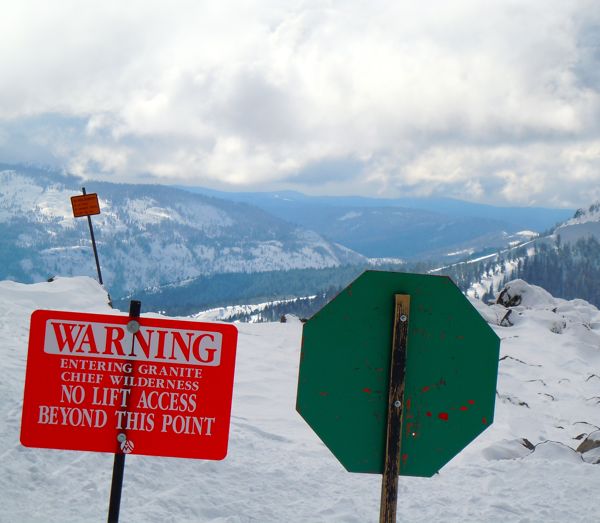
Looking toward Squaw Valley from Alpine Meadows. Photo/LTN file

Rumors have circulated for years that Squaw and Alpine would become one resort in some fashion, with the latest chatter about it coming in June. It was officially announced today Squaw Valley Ski Holdings Inc. is operating both resorts.

Officials say the resorts will retain their unique brand and that the terrain will remain separate. But with one owner, those who have skied both resorts and kept an eye on all of the changes in the industry know that linking the resorts with something like the Peak-2-Peak Gondola that combines Whistler and Blackcomb mountains would be ideal in the Sierra.

Combined, Squaw and Alpine have 6,000 skiable acres, with more than 3,600 of them at Squaw. That terrain encompasses eight peaks.

KSL of Colorado will be the majority owner of the combined company, though it was not disclosed what the actual split is of the resorts that are just a 10-minute drive from one another. Nor has is been disclosed how the operations will be structured other than Andy Wirth, who was brought in as CEO of Squaw after CNL bought the resort, will be CEO and president of the new company.

The U.S. Forest Service and California Tahoe Conservancy must approve the transaction because both government entities own the land where the resorts operate.

Homewood Mountain Resort on the West Shore of Tahoe will remain solely owned and operated by JMA. The San Francisco-based company is in the process of trying to turn that small resort into a destination with hotel, condos, on-mountain upgrades and a new base lodge.

KSL already pledged $50 million in improvements to Squaw. The first $15 million will still be spent on upgrades for this season that is just two months away.

Wirth sent a letter this morning to Squaw guests that says, “Like many of you, I have stood at the top of KT-22 and looked at Alpine Meadows thinking how incredible it would be if the two resorts were combined. The idea of combining Squaw Valley and Alpine Meadows is a long time coming, but the actual transaction originated, very fittingly, on a chairlift.

“It was on a spectacular California bluebird day when I happened to be riding a chairlift with Todd Chapman, President and CEO of JMA (the owners of Alpine Meadows). We were talking about what an amazing winter we were all enjoying and lamenting that we didn’t have more time to get out and enjoy the snow.

“As the chairlift ride came to an end the talk turned to the obvious concerning our two mountain resorts. In the end, this was an effort forged in a passion for the mountains, snow, skiing, and riding.”

The first noticeable change for skiers is a joint pass for the two resorts called the Tahoe Super Pass.

With this merger, it ups the stakes a bit in the Lake Tahoe Basin to be the talk of the industry. After all, it was just a year ago Vail Resorts acquired Northstar-at-Tahoe. With Heavenly Mountain Resort being in its stable of resorts since 2002, it gives the Colorado company a presence on the North and South shore.

How the Alpine-Squaw merger will change the skiing community in Tahoe remains to be seen.


Human trafficking — a concern for girls on the streets

By Kathryn Reed

While people coming across the border illegally in the back of truck, then sold for slave labor is often the image people conjure when they hear the phrase “human trafficking,” it is not the only kind.

Young girls lured into prostitution to be part of a stable for some pimp are also victims of human trafficking.

traffickingJanice Dean, victims’ rights advocate with the FBI, and Minerva Shelton, an FBI agent, spent 90 minutes last week talking to a group of about 40 people about this issue. While they are out of the Sacramento office, their jurisdiction covers Lake Tahoe.

Girls as young as 11 have been found on the streets turning tricks. The average age is 14.

While the problem is more acute in Sacramento, South Lake Tahoe is not immune from this type of crime.

Frustration, though, from those sitting in the El Dorado County courtroom in South Lake was vented at the end of the talk. Lawyers, CASA volunteers, law enforcement, assistant district attorneys – all lamented that the system is failing the girls.

The FBI’s solution is to lock them up. The two speakers said this is the only choice because the girls tend to run when placed in a home. A group home far from civilization – the streets – is the only alternative, and those are rare.

“We know the perps are bringing the girls here,” Shelton said.

Hotel managers sometimes turn the other way, choosing to accept the cash for a room instead of calling the cops if they see young girls with guys clearly not their father.

An officer in the back of the room asked the FBI if there was a database where they could enter information about a suspicious stop – when there is no legal reason to detain the adult driver, but something seems fishy. The FBI said nothing is being used by everyone, but the officer could contact them.

“What I’ve seen in Sacramento is we are not talking to each other. We say we’re on the same team, but we don’t talk,” Shelton said.

Wendy David, a CASA volunteer, vented her frustration with no one doing anything to help these girls become responsible, functioning adults.

“My experience is these girls are sexually exploited at a young age and then they are treated like a criminal,” David said.

Judge Suzanne Kingsbury relayed how she’s had cases where the girls said the allure of the lifestyle got them started in the dead-end business.

Dean said statistics show many of the girls who end up on the streets have run from home where they had been sexually abused. They may end up in a foster home or group home, but run again — back to their “daddy” — what they call their pimp.

“We need to focus on the runaways. We need to focus on why they are running away; then we might be able to prevent them from being lured into prostitution,” Shelton said. “Once they are into prostitution, it’s very hard to get them out.”

More information about human trafficking is on the FBI’s website.


Fire started by lightning near Strawberry allowed to burn

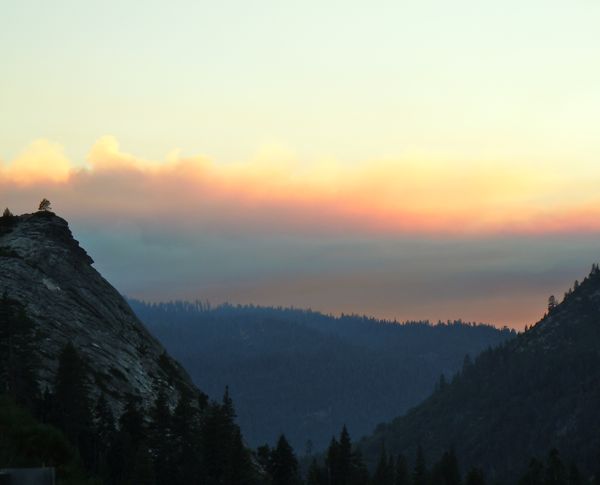
A plume of smoke west of Strawberry that looks like a wildfire burning in the Sierra is under control – but is not going to be put out by firefighters any time soon.

Known as the Long Fire, it started Sept. 12 by lightning, but is just now starting to show itself to travelers along Highway 50.

“Fire specialists on the Placerville Ranger District are managing the lightning-caused Long Fire to meet multiple benefits such as allowing the fire to burn naturally in a fire-adapted ecosystem when it can been done safely, effectively and efficiently (while) posing no immediate risk to life, safety, property or resources,” Kristi Schroeder with the Eldorado National Forest said in a press release.

Smoke from a lightning ignited fire fills the American River canyon Sept. 26. Photo/LTN

Smoke from a lightning ignited fire fills the American River canyon Sept. 26. Photo/LTN

The cloud of smoke can be seen in the west as far as El Dorado Hills, and from the east at about Lovers’ Leap. Travelers on Highway 88 can also see the smoke.

It is burning at about 7,000 feet in the Packsaddle Pass area, southwest of Strawberry.

Firefighters are on scene to make sure it does not get out of control. The fire is expected to burn another five to seven weeks.

According to fire officials, the benefits to natural resources derived from a managed wildfire include:

• Reduction of heavy fuel loading that diminishes the threat of catastrophic wildfire.

• Reintroduction of fire into the landscape to perform its historical role of cleaning the forest floor of dead and down vegetation, eliminating sickly trees, and generally keeping the ecosystem healthy.

• Raising the crown base height. The crown base simply means the lowest limbs on an individual tree that would allow a ground fire to climb into those limbs and transition the fire vertically up into the tree to create a crown fire.

• Recycling valuable nutrients back into the soil.

• Maintaining and improving wildlife habitat.

— Lake Tahoe News staff report


North alignment of Stateline-Stateline bike trail under review

The north end of the Stateline-to-Stateline bike trail is undergoing an environmental assessment.

The Tahoe Regional Planning Agency, Federal Highway Administration and U.S. Forest Service are the lead agencies.

The area being studied is between Incline Village and Sand Harbor. This roughly 3-mile stretch would include a 10-foot wide paved path with 2-foot shoulders. It will also include a sidewalk on the west side of Highway 28 between Lakeshore Boulevard and the guard rail north of Hidden Beach, trailhead parking, and a drop-off/turn-around area just north of Tunnel Creek that may include limited parking.

This is part of the larger 30-mile trail going from Crystal Bay to Stateline. The Stateline demo portion has passed its environmental hurdles. Construction is supposed to start in 2012, with it taking three seasons for that section to be built.

The project description and alignment map are on TRPA’s website and the project website.

People may comment on the north demo site until Oct. 21. Send comments to Brian Judge, TRPA, P.O. Box 5310, Stateline, NV 89449-5310.

A meeting on the project is slated for Oct. 5 at 6pm at the Chateau in Incline Village.

— Lake Tahoe News staff report