Obesity campaigns appear to have the cause wrong

By Gary Taubes, Newsweek

Most of my favorite factoids about obesity are historical ones, and they don’t make it into the new, four-part HBO documentary on the subject, The Weight of the Nation. Absent, for instance, is the fact that the very first childhood-obesity clinic in the United States was founded in the late 1930s at Columbia University by a young German physician, Hilde Bruch. As Bruch later told it, her inspiration was simple: she arrived in New York in 1934 and was “startled” by the number of fat kids she saw—“really fat ones, not only in clinics, but on the streets and subways, and in schools.”

What makes Bruch’s story relevant to the obesity problem today is that this was New York in the worst year of the Great Depression, an era of bread lines and soup kitchens, when 6 in 10 Americans were living in poverty. The conventional wisdom these days—promoted by government, obesity researchers, physicians, and probably your personal trainer as well—is that we get fat because we have too much to eat and not enough reasons to be physically active. But then why were the PC- and Big Mac–-deprived Depression-era kids fat? How can we blame the obesity epidemic on gluttony and sloth if we easily find epidemics of obesity throughout the past century in populations that barely had food to survive and had to work hard to earn it?


These seem like obvious questions to ask, but you won’t get the answers from the anti-obesity establishment, which this month has come together to unfold a major anti-fat effort, including The Weight of the Nation, which begins airing May 14 and “a nationwide community-based outreach campaign.” The project was created by a coalition among HBO and three key public-health institutions: the nonprofit Institute of Medicine, and two federal agencies, the Centers for Disease Control and Prevention and the National Institutes of Health. Indeed, it is unprecedented to have the IOM, CDC, and NIH all supporting a single television documentary, says producer John Hoffmann. The idea is to “sound the alarm” and motivate the nation to act.

At its heart is a simple “energy balance” idea: we get fat because we consume too many calories and expend too few. If we could just control our impulses—or at least control our environment, thereby removing temptation—and push ourselves to exercise, we’d be fine. This logic is everywhere you look in the official guidelines, commentary, and advice. “The same amount of energy IN and energy OUT over time = weight stays the same,” the NIH website counsels Americans, while the CDC site tells us, “Overweight and obesity result from an energy imbalance.”

Read the whole story


Consensus on TRPA Regional Plan elusive at this point

By Kathryn Reed

Sides are clearly being drawn as the clock ticks on the comment period on the environmental impact statement for the Tahoe Regional Planning Agency’s Regional Plan update.

TRPA Executive Director Joanne Marchetta is making the rounds pitching her agency’s views that are contained in preferred alternative 3.

Meetings are scheduled to gain input and disseminate info.
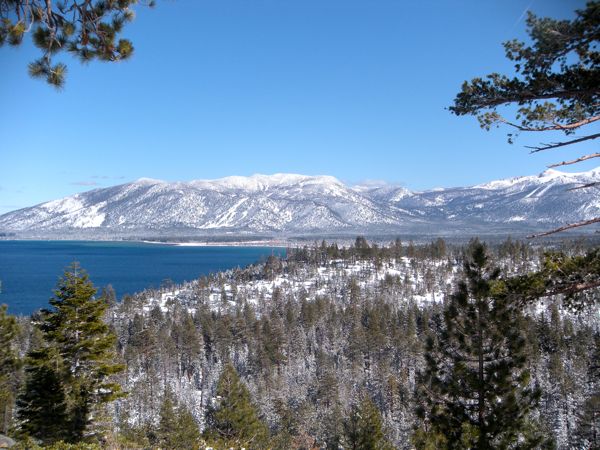
The future of Lake Tahoe is likely to be determined by TRPA's Regional Plan update. Photo/LTN file

Conservation groups are sending out info saying why they believe the plan is flawed.

While most of those groups – with the League to Save Lake Tahoe being the largest – have been at the table as the process has been going along, they are not happy their entire proposal was not considered as one of the alternatives. Instead, alternative 2 is what TRPA calls the conservationists’ alternative.

“We provided a 256-page Conservation Alternative to the TRPA. That alternative was discussed with the staff over a number of months,” Laurel Ames, with the Tahoe Area Sierra Club, told Lake Tahoe News at the April 26 TRPA meeting. “We were shocked to find our alternative eviscerated and allegedly replicated as current alternative No. 2. The EIS analysis of alternative No. 2 does not reflect our alternative.”

At that meeting, representatives of conservation groups lobbied for a 90-day comment period, but the Governing Board chose 60. The reasoning by the groups was the volume of material that needed to be read would be time consuming. The board’s reasoning was to meet the goal of voting on the measure in December, the shorter time period was ideal.

Friends of the West Shore on May 17 in an email newsletter said, “The TRPA has provided stakeholders with only a 60-day period to comment on these documents. FOWS wants to inform you that we are reviewing these documents with technical consultants and will keep you abreast of each new development.”

However, that group and others have already sent a letter to TRPA outlining concerns. Lake Tahoe News was sent a copy of this letter on Mother’s Day weekend by neither a member of TRPA nor one of the groups.

So, despite needing time – the groups obviously have enough knowledge to know what they don’t like and to voice their concerns.

That letter in part says, “It appears to us that the agency is reversing many of the crucial regulations mandated by the Tahoe Regional Compact. We urge the TRPA Board to exercise prudence and do everything in its power to uphold, achieve, and maintain the environmental thresholds it is charged to enforce.

“It is our belief and concern that the proposed Regional Plan will neither restore nor protect the lake. Instead, it will open the floodgate one more time to rampant growth and high-density urbanization, thereby making more thresholds impossible to attain.”

The letter is signed by Laurel Ames – Tahoe Area Sierra Club, Darcie Goodman-Collins – League to Save Lake Tahoe, Susan Gearhart – Friends of the West Shore, David Hornbeck – Sierra Club-Toiyabe Chapter, Ann Nichols – North Tahoe Preservation Alliance, Scot Rutledge – Nevada Conservation League, Jerry Wotel – North Tahoe Citizens Action Alliance, Roger Patching – Friends of Lake Tahoe, and Ellie Waller – Tahoe Vista resident.

Marchetta, while speaking to Soroptimist International South Lake Tahoe on May 16, told the members to do their own research because a lot of misinformation is floating about.

She said TRPA’s goal to regulate growth worked so well that it has had the adverse affect of stagnating progress.

“The environment, economy and communities are inextricably linked. We are pursuing that goal through our Regional Plan update. Responsible environmentalism has to look at the whole system,” Marchetta said.

In the Friends of the West Shore newsletter, it states, “Preliminarily, FOWS is concerned that the RPU as currently written does not adequately protect the lake, and contains fundamental weaknesses that could prove to be the plan’s undoing. … There is simply no way the TRPA can comply with its central mandate of achieving and maintaining environmental thresholds on the one hand and facilitating upland urbanization and unsustainable development on the other.”

Alarm bells are being raised about the prospect of increasing how tall a building can be and the density of development.

Marchetta at the Soroptimist meeting said, “We are proposing modest changes or additional height and density in 1 percent of the land area. We are not proposing to grow the basin; we are proposing to fix it.”

—–

Dates to know:

• May 21, 5-8pm: Open house on the Regional Transportation Plan and Regional Plan, The Chateau, 955 Fairway Blvd., Incline Village

• May 22, 5-8pm: Open house on the Regional Transportation Plan and Regional Plan, TRPA office, 128 Market St., Stateline.

• May 23, 9:30am: TRPA Governing Board meeting public hearings, North Tahoe Events Center, 8318 North Lake Blvd., Kings Beach.

• May 24, 9:30am: TRPA Governing Board meeting public hearings, TRPA office, 128 Market St., Stateline.

• June 11, 9:30am: Advisory Planning Commission public hearings, TRPA office, 128 Market St., Stateline.

• June 27, 9:30am: TRPA Governing Board public hearings, North Tahoe Events Center, 8318 North Lake Blvd., Kings Beach.

• June 28, 9:30am: TRPA Governing Board public hearings, TRPA office, 128 Market St., Stateline.

———-

Other vital info:

The public comment period runs through June 28 for the environmental impact statements for the draft Regional Plan update and Regional Transportation Plan. Send comments to regionalplancomments@trpa.org or to mobility2035comments@trpa.org for the Regional Transportation Plan.

All of the documents are on the TRPA website.


California lagging behind other states in digging out of deficits

By David Siders, Sacramento Bee

The pile-on was in full effect within hours of Gov. Jerry Brown’s announcement this week that California’s budget deficit had grown to $15.7 billion, with The Week giving its national audience a summary of the Golden State’s financial affairs.

“California’s financial apocalypse,” the magazine offered. “A concise guide.”

Fox News played the Red Hot Chili Peppers’ “Californication,” and host Greg Gutfeld proclaimed Brown captain of “the Titanic that is California, a state so broke it may ask Greece for a loan.”

On Friday, the Democratic governor slapped back on national TV.

“This is not Europe,” Brown told Charlie Rose on “CBS This Morning.” “This is still the Wild West, and we’re going to prove to the rest of this country and the world that we know how to do it.”

For Brown – and California – it may be a tough sell.

Though no part of the country was immune from the effects of the recession, California’s latest deficit projection comes as many other states begin to climb out of their own budget sloughs.

Fewer state budget deficits are being projected than in recent years, the National Conference of State Legislatures said in a report this month, with revenue in most states meeting or exceeding expectations.

“This is good news for state lawmakers who have closed more than $500 billion in budget gaps over the previous four fiscal years,” the report said.

As budget officials elsewhere were describing their financial situations as “cautiously optimistic” or “stable,” the Conference of State Legislatures said, California lawmakers “continue to cope with the state’s multibillion (dollar) gap between projected revenues and anticipated expenditures.”

On Friday, the nonpartisan Legislative Analyst’s Office said California’s deficit may be even larger than Brown’s latest projection, perhaps higher than $17 billion. Though state revenue is growing, the amount is less than officials hoped.

Read the whole story


Security an issue as Nevada delves into online gaming

By Richard N. Velotta, Las Vegas Sun

With the state about a month away from granting its first online gambling license, two experts told members of the Gaming Policy Committee on Monday that regulators needed to stay vigilant in their efforts to keep the online gaming environment secure.

One of them hopes to take the security of Nevada’s potential Internet gambling industry to a new level by using grant money to develop a system that not only would protect gamblers’ online transactions but detect and prevent underage players and cheaters from playing.

Online security strategist James Elste, principal for INOV8V CyberCQRT, told the advisory committee that his company was one of 27 finalists out of 186 applicants for a federal grant through the National Institute of Standards and Technology. Up to eight grants are expected to be awarded in several aspects of cybersecurity.

Elste’s company is working on behalf of the state to get $2 million a year for two years to develop the gold standard for Internet gambling security.

Committee member Mark Lipparelli, chairman of the state Gaming Control Board, said the state would demand the highest levels of security when regulators begin issuing licenses. Under regulations approved by the Nevada Gaming Commission, there’s no specific security standard in place since companies are using differing strategies to detect illegal play and participation.

However, applicants will have to prove to regulators that their systems will be able to identify players and prevent underage gamblers from playing and detect whether players are within the state’s borders.

Read the whole story


Free Bird awarded Lakeview Commons concessionaire, Regan Beach up in the air

By Kathryn Reed

One South Lake Tahoe beach concessionaire is locked in – Free Bird will be at Lakeview Commons.

These are the crepe people.

Lake Taco has been offered a deal to continue operating at Regan Beach, but owner Danny Chavez has told city officials he isn’t so sure he wants it because access to the beach will be encumbered this summer.

The day after the City Council tabled making a decision on who will be selling food, staff decided to reject all bids. This also eliminated the need for the May 18 special meeting that had been scheduled.

City Attorney Patrick Enright and Assistant City Manager Nancy Kerry met with Lake Tahoe News on May 18 to talk about what is likely to happen.

Because there were two ranking systems used by the three city staff members who evaluated the potential concessionaires, there were irregularities. That is why the top candidate from each set of criteria was chosen.

Staff, because no money is being expended and it’s a short-term contract, can make these decisions without council approval. The contracts are for this season only.

The plan is to send out a request for proposal in the fall to have a business or businesses on board for the following five summers.

Enright said Chavez has not signed the one-summer contract because new playground equipment will be installed at Regan Beach this summer and the parking lot will be used as a staging area for construction work in the Al Tahoe neighborhood after Labor Day.

Chavez is afraid it will not be a profitable endeavor, Enright said.


April one of the warmest on record

By Nick Wiltgen, Weather.com

The waning influence of La Niña helped April 2012 to become the fifth warmest April worldwide in 133 years of recordkeeping, and the warmest April on record in the Northern Hemisphere, according to scientists at NOAA’s National Climatic Data Center.

The global average temperature of 57.87 degrees F last month was about 1.2 degrees above the 20th-century average. It was the greatest departure from that average since November 2010. The Northern Hemisphere was even farther above average, running a record 1.7 degrees above the 20th-century baseline.

Earlier this month, scientists determined that La Niña had ended during April as water temperatures continued to warm across the equatorial Pacific Ocean. La Niña is typically associated with relatively cooler global temperatures.

Read the whole story


Blitz nets 16 phony contractors on South Shore

Sixteen contractors on the South Shore were accused operating without proper licenses by either the California Contractors State License Board or Nevada State Contractors Board during a simultaneous enforcement operation.

The individuals are accused of contracting without a license and related violations of home improvement contracting law. The sting operations were conducted at a single family home in the Tallac Park area of South Lake Tahoe, while the other was in a vacant business property in a Stateline strip mall.

Investigators on May 16 posed as property owners who were seeking bids for carpentry, painting, and landscaping. Suspects who bid more than the legal limit for labor and materials were issued a notice to appear in Superior Court.

It is against California law to contract for home improvement or construction jobs valued at $500 or more for labor and materials without a state-issued contractor license. In Nevada, it is illegal to contract for such jobs valued at more than $1,000. California law also requires licensees to place their license number in all forms of advertising. Those who work on jobs valued at less than $500 may advertise their services, but those ads must state that they are not a licensed contractor. Nevada prohibits anyone without a trade license to advertise for services. California and Nevada have a reciprocity agreement, which simplifies the application process for contractors licensed in one state who want to seek a license in the other.

Individuals on probation for theft and burglary were among those who bid on the Lake Tahoe area projects. Michael D. Abbey, who bid on a painting job at the California sting site, was on probation for theft. Tyson McKenrick accompanied Eric James Brown, who bid on cabinetry work at the South Lake Tahoe house. DCA investigators transported McKenrick to jail on a probation violation on a prior burglary conviction.

The following suspects will be arraigned in El Dorado County Superior Court in South Lake Tahoe and will be contacted later about their future court date:

SUSPECTS NAME


WORK

CLASS

VIOLATIONS


Ruben Zavala Gonzalez

Landscaping

Contracting without a license, illegal advertising

Oscar Rojas Segura

Landscaping

Contracting without a license, illegal advertising

Juan Manuel Lopez Gomez

Landscaping

Contracting without a license, illegal advertising

John Michael Troccoli

Painting

Contracting without a license, illegal advertising

Eric James Brown

Framing and Rough Carpentry

Contracting without a license, illegal advertising *Accompanied by Tyson McKenrick who was arrested for violating probation from a prior burglary conviction*

Juan Carlos Martinez-Munoz

Painting

Contracting without a license, illegal advertising

Michael D. Abbey

Painting

Contracting without a license, illegal advertising *On probation for theft*

Andrew James Bowen

Framing and Rough Carpentry

Contracting without a license, illegal advertising

Daniel Allen Brown

Framing and Rough Carpentry

Contracting without a license

John Thomas Saites

Painting

Contracting without a license, illegal advertising

Alonzo Sanchez-Ruelas

Landscaping

Contracting without a license, illegal advertising

The following suspects were cited in the Nevada sting operation:


SUSPECTS NAME AND BUSINESS


WORK

CLASS

VIOLATIONS


Sean Hilla

Amazing Handyman Services

Painting and Carpentry

Contracting without a license

Michael Gonzales

Painting and Carpentry

Contracting without a license, advertising without a license

Edward Polaske

Tahoe Technicians

Carpentry

Contracting without a license

Dan Chandler

Top-Notch Home Repairs

Electrical and Plumbing

Contracting without a license, advertising without a license

Micky McFarren

Carpet and Carpentry

 Contracting without a license, advertising without a license


Financial instability taking its toll on children’s mental health

By Rebecca Ruiz, Huffington Post

Drew McWilliams, a clinician and the Chief Operating Officer at Morrison Child and Family Services in Portland, Ore., suggests that amid the underwater mortgages, chronic unemployment and other fallout of the recent recession, a less obvious but equally worrying phenomenon has emerged: the troubled minds of children.

Since the financial collapse of 2008, McWilliams said his clinic has seen an increasing number of children suffering anxiety, depression and post-traumatic stress disorder. Of the 6,000 children that the center treats through in- and out-patient programs, McWilliams said many are trying to cope with the stress borne of persistent financial insecurity.

“Parents are struggling with their own issues and that spills over to their kids,” he said.

Most parents don’t think children are affected by financial burdens. In a 2010 survey, the American Psychological Association found that 69 percent of parents said their stress had little or no impact on their kids, while 91 percent of children said they saw the effects in their parents’ behavior, which included yelling and arguing. The young respondents who noticed their parents’ tension reported feeling sad, worried and frustrated.

The developing brain is also more vulnerable to chronic stress than most parents may realize. New and emerging research hints at how the constant barrage of stress hormones can change the way the brain develops, causing behavioral and psychological disorders and putting children at risk for mental illness later in life. While the brain’s malleability may be worrisome, it also means positive changes can occur with the right interventions.

“Kids who face adversity have highs and lows, strengths and weaknesses,” said Christopher Sarampote, a program officer at the National Institute of Mental Health who focuses on trauma and anxiety disorders. “Parents can really be strong agents of change.”

It may not always feel that way to the millions of parents who have struggled since the recession. In addition to the middle-class families that have experienced unemployment, the number of children living in high-poverty areas increased by 25 percent to nearly 8 million in the last decade, according to a recent report. Last month, the child advocacy group First Focus reported that the foreclosure crisis has affected 8 million children, 2.3 million of whom have lost their homes.

Read the whole story


Contractors being sought for Stateline bike route

One segment of the Stateline-to-Stateline bike trail should break ground this summer.

The bid process is open. Potential contractors have until June 1 at 1:30pm to submit their proposals.

Last fall planners had hoped to seek bids in April for the 3.2-mile south demo part of the larger 30-mile route that goes from Stateline to Crystal Bay.

The plan is the demo site, which goes from Stateline to Round Hill Pines, will be built in three phases – three consecutive summers. The middle section will be built first because it is all on U.S. Forest Service land through Rabe Meadow.

The three South Shore segments are:

• Casino area to Kahle Drive

• Kahle Drive to Elks Point Road

• Elks Point Road to Round Hill Pines.

Tahoe Transportation District is the lead agency.

Planning is under way for the north end, but not to the level it is on the south.

For more information about bidding on the south project, contact Alfred Knotts at (775) 589.5503 or aknotts@tahoetransportation.org.

— Lake Tahoe News staff report


Expense of cancer pills can be hard to swallow

By Michelle Andrews, NPR

If you’ve got cancer, chances are you’d rather take a pill to fight the cancer cells than sit for hours hooked up to an IV line as the chemotherapy drips slowly into you.

The difficulty is, many of the new cancer pills, which often target cancer cells for destruction but leave healthy cells intact, are pricey, costing tens of thousands of dollars for a course of treatment. And how some insurers pay for treatments means that pills can wind up costing a patient more than chemotherapy given by IV.

Nineteen states and the District of Columbia now require private health plans to cover cancer-fighting pills, if they’re available, to the same degree and without charging patients more than they would for traditional intravenous infusion therapy, according to the National Patient Advocate Foundation.

So, for example, a health plan that has a $1,500 limit on out-of-pocket spending for outpatient services like IV chemotherapy can’t charge more than that annually for their treatment pills.

But Medicare beneficiaries don’t benefit from these laws.

Read the whole story