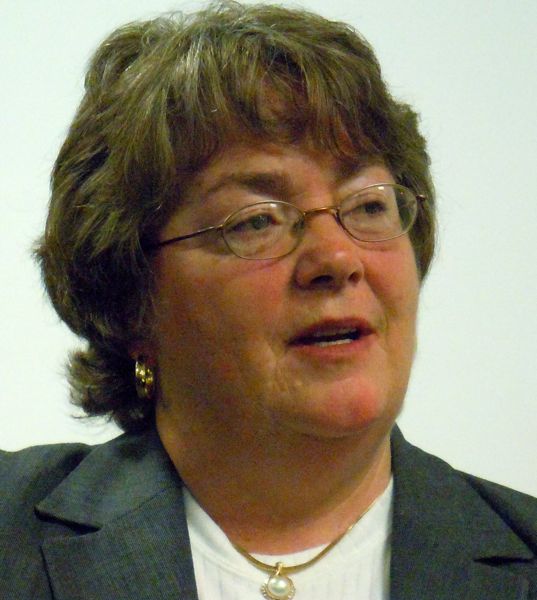
State lawmakers condemn parks officials

By Kevin Yamamura, Sacramento Bee

In their first examination of state accounting problems, California lawmakers condemned parks officials Thursday for hiding nearly $54 million from budget writers.

The revelation has damaged the integrity of state government and its budget process, lawmakers from both parties said at an Assembly budget subcommittee hearing.

“Many of us here today feel betrayed,” said Assemblyman Bob Blumenfield, D–Woodland Hills, chairman of the Assembly Budget Committee. “It’s our constitutional duty as state legislators to craft the state budget. And the credibility of this year’s budget has been tarnished.”

Officials from the Department of Finance and state controller’s office told legislators they will install new cross-checks to verify that figures for 560-plus special funds are consistent across their different sets of books. Previously, state departments were largely responsible for keeping their own special fund accounting in order.

Finance Director Ana Matosantos testified that her department has found no other instances where departments purposely shielded funds in the way that parks officials apparently had for years.

In a quick audit released last week, the Finance Department found $268.5 million of accounting errors, both positive and negative, in a special fund universe that spent $33.4 billion in 2010-11. The errors netted $196.7 million more in state accounts than finance officials knew about in late 2011 as they crafted Gov. Jerry Brown’s January budget.

Read the whole story


Cops want to question man about shooting in S. Tahoe

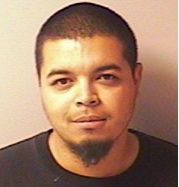
South Lake Tahoe police officers want to question Agustin Bautista in regards to the Friday night drive-by shooting in the Al Tahoe neighborhood.

As Lake Tahoe News first reported, shots were fired Aug. 10 into a house and vehicle on Nevada Avenue. No one was injured.

In the course of this investigation, police have located weapons and a black Dodge Charger. What type of weapons and how many were taken are not being disclosed. Nor are officers saying where the weapons were found or who they belong to  or what the significance of confiscating them is. Nor is it known if the gun used in the drive-by is one that is now in police custody.

Agustin Bautista

Police also aren’t saying anything about Bautista other than “he is a person of interest”.

Anyone with information about Bautista’s whereabouts or the shooting is asked to call (530) 542.6100 or Lake Tahoe Secret Witness at (530) 541.6800.

— Lake Tahoe News staff report


Recreation, fire, revenues top S. Tahoe council’s priorities

By Kathryn Reed

Raising revenue, including via taxes, which would fund recreation; dissecting the workings of the fire department; and prioritizing capital improvement projects dominated a nearly four-hour meeting Saturday of the South Lake Tahoe City Council.

The lively discussion among the five, along with the city manager and finance director, also touched on the future of the airport, what’s going on with the concrete-rebar hole at Stateline, and how staff is overworked and keep having more work piled on.

South Lake Tahoe City Manager Nancy Kerry talks finances and priorities Aug. 11 with the council. Photo/Kathryn Reed

An irony was at the end of the meeting there was a discussion about how long the regular council meetings are. This took place in the fourth hour when the meeting was supposed to be three hours. Talking less was the emphasis – and being concise.

Suzie Alessi, city clerk, said more public praise and less public criticism of staff would go a long ways.

She is giving a workshop today to staff about efficient staff reports. That is one way meetings may be streamlined; by providing council the material they desire in the most logical manner.

Jim Boylan with Pathfinders Consulting of Carlsbad facilitated the meeting. His $12,000 fee included the Aug. 11 workshop along with time spent with staff to elicit their thoughts, concerns and desires.

The overriding message is that no matter what the council sets as goals and priorities, the workload cannot increase based on current staffing levels. That is why council needs to finally make specific decisions, leave staff alone so they have time to actually get their work done and not waffle on policy decisions.

“The message is ‘we can provide core services and not much more’,” Boylan relayed to the council from staff. He explained how when council says something is routine business, it still consumes time and resources.

Boylan will cull all the information he has obtained into a report for the council and staff by the end of the month.

Only three members of the public attended the meeting. One was City Council candidate JoAnn Conner – no other candidates were in attendance other than the incumbents.

Future of recreation

The council agreed a recreation master plan needs to be developed.

Then in 2014 the voters are likely to be asked to increase the hotel tax and institute an amusement-entertainment tax. These sources of revenue would then fund the recreation plan.

Most of the council agreed increasing taxes to merely fill the general fund is not what they or their constituents want.

Fire department issues

Councilman Tom Davis is most concerned about outdated equipment.

Even though negotiations are under way with Lake Valley Fire Protection District regarding consolidation of the departments, the county entity has not backed down from mandating that the city have functioning equipment to bring to the table.

Staff is an issue for South Lake. An unsafe structure exists now because the incident commander doubles as someone working the scene, too.

What to do with the aging Station 2 will be explored.

Looking at how Lake Tahoe Community College wants to expand the fire academy, fire science program and build physical resources could affect what the city does.

Mayor Claire Fortier said in six months she expects to have a “holistic views of the fire department.” She said with that knowledge it will better drive the budget discussion about this department, too.

Nearly 50 percent of the city’s entire budget is allocated for public safety – police and fire. It was pointed out by City Manager Nancy Kerry and reiterated by councilmembers that the cities filing for bankruptcy in California sacrificed other departments for public safety so that at some point revenue-generating sections were essentially non-existent. Kerry said South Lake Tahoe is on the edge and needs to be aware of this as priorities are decided.

From the midyear revision of the current budget to what is projected for the next fiscal year that begins Oct. 1, fire is the only department to have its expenses increase. Part of this is reflected in the recent hiring of three firefighters and programmed raises. Firefighters were given a raise last year because they were the first to come to the table to agree to other budget cuts.

Other items

• Aug. 30 is the date to settle the dispute with Lahontan Regional Water Quality Control Board regarding the stormwater permit. South Lake Tahoe’s stance is that it does not have the money to do everything Lahontan is mandating. This ties into the city figuring out its priorities. Out of four items related to that permit, it can comply with a quarter.

• Harrison Avenue is near the top of the list of things to get done.

• Staff will be asked to present to council how much work it will take to go forward with the Stateline and Tahoe Valley area plans that would need to be completed in an updated Tahoe Regional Planning Agency Regional Plan. Then council will decide which to pursue first. Transportation, including the Loop Road, would be part of the Stateline discussion.

• An area-by-area paid parking plan will be brought back to the council. (In the working budget for 2012-13 is $150,000 from paid parking.)

• Council at its Aug. 7 meeting agreed to have someone go after the unpaid transient occupancy tax. This remains a priority, with a conservative estimate of net revenues of $50,000 in the next fiscal year.

• A capital plan for equipment replacement will be devised.

• Fortier and Councilwoman Angela Swanson will form the subcommittee to work with Kerry to formulate a collaborative approach to getting projects in the ground regionally.

• The council may broach Douglas County commissioners when the two elected bodies meet Oct. 23 about having them pay to help keep Lake Tahoe Airport open. There is a precedent for this.

• If all employees don’t agree to a 2 percent pay cut, more layoffs are inevitable. This is to cope with the nearly $1 million budget deficit.

• The council wants a future workshop to discuss the airport, decide if a request for proposal to privatize the airport should go out, what to do regarding the settlement agreement, and look at land uses for that area.

• The council would like movement on the rebar-concrete that was once going to be a convention center. Bill Owens of Owens Financial is working on a plan that would divvy up some of the area, but nothing has been solidified.



Refinery expected to cause California gas prices to spike

By Mark Glover and Richard Chang, Sacramento Bee

California drivers will soon feel the heat from the fire Monday evening in the sprawling Chevron refinery in Richmond.

Energy analysts expect gas prices to surge to $4 a gallon or more in the weeks leading up to the Labor Day holiday weekend.

GasBuddy.com, which tracks gas prices in Sacramento and other cities, warned that gas costs in California – which were already rising – are likely to spike between 10 and 25 cents this week alone.

“Spot (wholesale) prices have already increased by as much as 30 cents per gallon in some West Coast markets, and that’s before the refinery damage has been fully assessed,” said Patrick DeHaan, senior petroleum analyst for GasBuddy.

“While wholesale increases do not always translate directly into retail increases of the same amount, they certainly point to the direction for which consumers should be prepared.”

Even before the fire, California prices were affected by the shutdown of the Valero Benicia facility in July for maintenance. On Monday, SactoGasPrices said the average price of gas in the Sacramento area rose 5.8 cents over the previous week to $3.73 a gallon.

Read the whole story


Suspect on the loose in drive-by shooting in South Tahoe

By Kathryn Reed

Shots rang out in the Al Tahoe neighborhood late Friday night, leaving a window of a home shattered, bullet holes in the siding and residents shaken.

Justin Pecsi told Lake Tahoe News he is pretty sure he knows who the shooter was who was driving a black Charger, but doesn’t know why the man would want him dead. His connection to the suspect is that he dated his girlfriend’s sister.

A front window of a house on Nevada Avenue in South Lake Tahoe is shattered after a drive-by shooting Aug. 11. Photos/Kathryn Reed

Pecsi claims the man believed to be the shooter got out of jail a few days ago.

“At this point we have nothing to indicate this shooting is gang related,” police Lt. Brian Williams told Lake Tahoe News.

Other city officials said six shots were fired, a gun has been recovered and that there have no arrests.

Pecsi said when cops were at his house on Nevada Avenue on Aug. 10 the suspect drove by. Officers went after him at a high rate of speed down San Jose Avenue, but never caught him, Pecsi said.

Pecsi said he asked the officers why they weren’t looking at the tire marks to be able track them back to the vehicle he believes was involved in the shooting.

“‘This isn’t CSI. It’s not TV’,” is what Pecsi said the officers told him.

On Saturday afternoon, glass still littered part of the front yard. The bullet holes in the window had not been boarded up or fixed.

Pecsi believes the casings left behind are from a Glock .45-caliber handgun.

Evidence from Aug. 11's shooting.

The four-year South Lake Tahoe resident says he isn’t sticking around, and plans soon to be headed to Los Angeles.

Officers have not said if this was an isolated incident or if there is a random shooter on the loose.

Where the shooting occurred is walking distance to the popular Regan Beach.


With NCLB not a factor, Nevada looks at education planning

By Paul Takahashi, Las Vegas Sun

After months of reviews and revisions, U.S. Department of Education approved Nevada’s waiver from the stringent requirements of the No Child Left Behind Act.

The waiver no longer binds Nevada’s struggling schools to the 2001 law’s key mandate that all Nevada children be 100 percent proficient in math and reading by 2014.

Instead, the waiver announcement on Wednesday heralds a new school accountability system for the Nevada Department of Education, said state Superintendent Jim Guthrie.

The new accountability system includes a different method of measuring student achievement, more rigorous national standards and new school and teacher evaluation systems, he said.

“The time for excuses has stopped,” Guthrie said, citing a recent national report that ranked Nevada dead last in education. “By 2020 — on every important measure of student achievement — Nevada will be at least at or better than the national median.”

Read the whole story


Not enough evidence to arrest anyone in Homewood bear killing

By KRNV-TV

HOMEWOOD — California Game Wardens say they do not have enough evidence right now to charge anyone with shooting the bear found dead in Homewood last week. Game Warden Patrick Foy tells News 4 they lack any conclusive evidence that would lead them to the bear’s killer.

Michael Garton lives along the beach where the bear was found. Foy says he was considered a person of interest, but declined to answer questions by officials and has since hired an attorney. Outraged residents allege Garton has a shotgun and used it on the bear, but Foy says there is no proof of this.

Foy says dozens of people claim to have video of Garton with a shotgun, but that video has not made it to the Department of Fish and Game. Foy says, if this video exists, it needs to be brought forward and could be used as evidence.


South Tahoe mayor lauds agreement without revealing details

By Kathryn Reed

As expected, leaders from California and Nevada came up with a compromise nearly at the eleventh-hour before Monday’s Lake Tahoe Environmental Summit.

When leaders met a year ago the promise was made to both state governors that by this year’s summit some sort of consensus would be achieved.

Claire Fortier

A committee of Tahoe Regional Planning Agency Governing Board members has been meeting to hash out the updated Regional Plan and bring the environmental documents together, which was achieved earlier this year. They reconvened earlier this summer to work on items the group had not been able to agree to.

A second committee was also formed that included people beyond the Governing Board. The idea was if everyone sat at the table, it might mean compromise could be achieved and lawsuits avoided.

It has been publicly known for some time California Secretary of Natural Resources John Laird and Nevada Director of Conservation and Natural Resources Leo Drozdoff have been meeting with stakeholders on a variety of issues that could see the light of day at the Aug. 13 summit.

Laird, when he was at the California Tahoe Conservancy meeting in June, said he was all but certain something would be brought forward at the summit, so reaching consensus is not news.

What will be news are the agreements.

No specifics have been released to the public, otherwise media outlets would have reported on them. South Lake Tahoe Mayor Claire Fortier in a press release on Aug. 10 spoke in generalities: “That agreement, which addressed everything from building height to drive up windows, bike friendly town centers to decks and stream environmental zones, was a masterful compromise.”

But the Governing Board still needs to vote on all of this for any of it to be policy. And legal action still needs to be avoided for it to be a working document.

While consensus has been reached in the past regarding the Regional Plan, the real history is that it got derailed by special interest groups and is five years overdue.

While Fortier went on to write, “The future of Tahoe has been re-established as a collective vision, not a battleground over regulations vs. state rights,” she did not say what the vision is or whose vision. It is not known if the average resident is considered a stakeholder or just people with the means to sue and vote on policy are stakeholders.

—-

Note: The Lake Tahoe Environmental Summit is Aug. 13, 10am at Edgewood Tahoe in Stateline. Gates open at 9am. It’s free and open to the public.


Some schools believe the answer is more time in the classroom

By Motoko Rich, New York Times

PHOENIX — It was the last Sunday in July, and Bethany and Garvin Phillips were pulling price tags off brand-new backpacks and stuffing them with binders and pencils.

Griffith is one of five schools in Phoenix’s Balsz Elementary School District.

While other children around the country readied for beach vacations or the last weeks of summer camp, Bethany, 11, and Garvin, 9, were preparing for the first day of the new school year at Griffith Elementary, just six weeks after the start of their summer vacation.

Griffith, one of five schools in the Balsz Elementary School District here, is one of a handful of public schools across the country that has lengthened the school year in an effort to increase learning time.

A typical public school calendar is 180 days, but the Balsz district, where 90 percent of the students qualify for free or reduced lunch, is in session for 200 days, adding about a month to the academic year.

According to the National Center on Time and Learning, a nonprofit research group in Boston, about 170 schools — more than 140 of them charter schools — across the country have extended their calendars in recent years to 190 days or longer.

Neither Bethany, who plans to run for student council president, nor Garvin, who was excited about his fourth-grade teacher, seemed bothered by the change. “The kids’ education is more important than all of these breaks that we have,” said their mother, Debra Phillips.

A growing group of education advocates is agitating for more time in schools, arguing that low-income children in particular need more time to catch up as schools face increasing pressure to improve student test scores.

Read the whole story


Nevada awarded money to implement Common Core Standards

By Sean Whaley, Nevada News Bureau

CARSON CITY – Nevada has been selected by the National Governors Association to receive a $65,000 grant and additional technical assistance to implement Common Core State Standards at the postsecondary education level.

Nevada, Maryland and Missouri were selected to receive the support from NGA staff, the National Association of System Heads and the U.S. Education Delivery Institute as well as other national experts.

The Common Core State Standards Initiative is a state-led effort coordinated by the NGA Center and the Council of Chief State School Officers. Governors and state commissioners of education from 48 states, two territories, and the District of Columbia developed a common core of state standards in English language arts and mathematics for grades K-12.

The standards seek to define the knowledge and skills that students should have to succeed in entry-level, credit-bearing, academic courses and in workforce training programs. They are internationally benchmarked to ensure that all of America’s students are prepared to succeed in a global society.

To date, 45 states, three territories and the District of Columbia have adopted the standards.

The Common Core State Standards Postsecondary Collaborative is designed to accomplish four main objectives to support successful postsecondary implementation of the CCSS: Identify necessary policy actions, develop a communications and engagement plan, engage multiple stakeholders and foster alignment and collaboration across education systems.

“Nevada has already developed a framework for CCSS implementation that recognized the importance of postsecondary involvement,” said Gov. Brian Sandoval. “Although Nevada’s higher education system is well positioned and willing to fully support CCCS implementation, the collaborative will help the state develop a comprehensive engagement plan.”

Funding for the collaborative is provided by the William and Flora Hewlett and Lumina foundations.