5% hike at CSU likely if Prop. 30 fails

By Carla Rivera, Los Angeles Times

After hearing dire budget scenarios of devastating cuts to faculty, students and classes, California State University trustees Tuesday tentatively approved a plan to raise tuition 5 percent next year if voters reject a tax measure on the November ballot.

The board’s finance committee acted on a series of contingency measures during a meeting in Long Beach to deal with what Chancellor Charles B. Reed called “the biggest challenge CSU has ever had to face.”

Failure of Proposition 30, backed by the governor, would trigger a $250-million funding cut to the Cal State system. The 5 percent tuition hike — equal to $150 per semester — would raise an estimated $58 million in revenue in fiscal 2012-13, officials said.

Annual undergraduate tuition at the system’s 23 campuses would rise to $6,270, not including school-based fees, books and other costs.

Officials are also proposing to increase per-unit costs for non-resident students 7 percent, to $399 from $372.

If Proposition 30 passes, Cal State would forego the January hike and also rescind the 9 percent tuition hike that took effect this fall and was expected to raise $132 million in revenue. The system would have to refund tuition checks, grant tuition credit and recalculate financial aid packages for most of its 412,000 students.

The finance panel approved the measures by a vote of 6 to 1, with student trustee Jillian Ruddell opposed. The full board of trustees is expected to approve the plan Wednesday.

The University of California regents last week held a brainstorming session to determine how that system would deal with a potential $375-million funding cut if the tax hike measure fails. The regents also said a midyear tuition increase, possibly as much as 20 percent, or about $2,400, could be possible.

At the Cal State meeting, several speakers, including Lillian Taiz, president of the California Faculty Assn., spoke against the revenue-raising measures, arguing that other options to save costs and increase funds had not been exhausted.

Several students spoke against the fee hike, noting that it was particularly distressing as incoming campus presidents receive such perquisites as salary hikes, car allowances and in many cases state-funded housing.

“We’ve had ongoing tuition hikes year after year,” said Cal State San Bernardino anthropology major Miguel Garcia, 26, before addressing the board. “Why do they keep giving executives pay increases if they don’t have any money?”

Despite the uncertainty of Proposition 30’s outcome, the chancellor argued for action now.

“We’re operating on the edge,” Reed told trustees. “The contingencies need to be voted on now and not kicked down the road. We need to give students, parents and the public adequate notice.”

Several trustees said they voted for the plan with reluctance.

“There’s no question we will do whatever it takes to roll back tuition,” Roberta Achtenberg said. “We never wanted to raise it in the first place because we knew it would be a burden on families. But we had no choice…. We should be doing everything possible to pass Prop. 30, but it’s important to make everybody understand that if it doesn’t pass there will be terrible consequences.”

Reed highlighted some of those consequences: about 20,000 qualified students turned away, 5,500 class sections slashed, and 1,500 faculty and staff reductions.

Cal State campuses are preparing to send out letters to prospective students warning them that they may not have spots if the tax measure fails. Critics, who oppose raising taxes, also said the system should not be using public funds for such political purposes.

Proposition 30 would raise billions of dollars for the state budget by temporarily increasing sales levies, and income taxes on high earners.

Several college leaders previewed ongoing and potential campus effects if that measure fails. Cal Poly Pomona President J. Michael Ortiz said the school is using obsolete equipment in a number of academic fields because it can’t afford cutting-edge technology.

John D. Welty, president of Cal State Fresno, said his campus may be forced to cut the number of majors offered at the school as well as courses offered in some majors. The campus has built up $130 million in deferred maintenance.

“I’m awake at night worrying about whether we’re going to be able to keep the infrastructure in place,” Welty said.

Reed had also proposed a controversial series of fee hikes even if Proposition 30 passes that were designed to increase revenue but also to change student behavior. The trustees’ finance committee shelved those ideas until its November meeting, which falls after the election.

Among those ideas, which would bring in about $35 million, were:

• A per-unit supplement of $372 for seniors who have already accumulated 150 semester units.

• A $100 per-unit fee for students who want to repeat a class. Officials estimate that each term, about 40,000 seats in classes are occupied by students who have already taken the course.

• A $200 per-unit fee for any course load of 17 units or more, which is intended to discourage students from enrolling in a number of classes and then dropping some later.


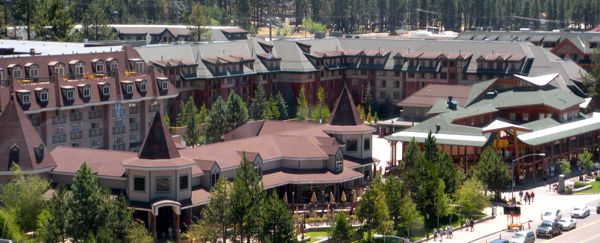

S. Tahoe council slow to make substantive decisions

By Kathryn Reed

For a City Council that claims it wants change, it is slow to take action to back up all that talk.

Hours and hours of chatter is what Tuesday was all about. South Lake Tahoe Mayor Claire Fortier started the proceedings with a lengthy speech about the Tahoe Regional Planning Agency’s Regional Plan update. (No one from the TRPA was in the audience.)

Then the conversation turned to prioritization of area plans. The council, after hours of discussion, couldn’t pick a plan to study.

This was followed by what turned into a heated debate about the loop road, where at one time Councilwoman Angela Swanson accused some of her colleagues of being “nimbyistic and racist” for wanting to alter the alignment into a poorer area of town.

Then after the vote was taken to “strongly recommend” the Tahoe Transportation District board take the alternative that has been proposed off the table, Councilman Hal Cole caved. Then he waffled on the cave.

Well past the lunch hour and not breaking, the council then jumped into discussing the Harrison Avenue project. They seemed surprised to learn property owners expected the city to front their portion, which would be paid back over 20 years with interest. But Lake Tahoe News knew this. The council still has to decide if it wants to be a bank of sorts for this project.

As for the area plans – those are what planning documents are expected to be called in the Regional Plan update. (That document could be before the TRPA Governing Board in November.) It remains to be seen how the council will proceed. With the city’s staff being gutted, only one plan can be done at a time unless an outside consultant is hired. The two areas of town being considered are the Y and Stateline.

The Tahoe Valley Community Plan – community plans are the old way of doing business – was never finished. It’s been sitting around since 2003. City staff thinks an environmental impact report can be done for $150,000, but those with more experience in these matters tell Lake Tahoe News that figure is laughably low.

The Stateline plan does not need the enviro docs, so it would definitely be cheaper to complete and faster. Plus, it would dovetail into the other planning going on in that section of town.

In the end, the council asked staff to come back with the cost and timeline to do both simultaneously.

The vote regarding the loop road had Councilmen Cole, Tom Davis and Bruce Grego winning – meaning a letter will be written to the TTD board telling them to no longer study the alternative they first proposed. Of course the TTD board can completely disregard the letter and do what it wants. Fortier dissented. Swanson abstained – saying she didn’t want her personal vote to be misconstrued when she went to the TTD board and voted the voice of the council and not of herself.

The TTD board at its Sept. 14 meeting said it was starting fresh, but that the alternative on the table will stay on the table – just not as the preferred alternative.

Then Cole wanted to reconsider his vote. Then he decided he didn’t want to. He has 48 hours from the time of the vote to make up his mind.

As for Harrison Avenue, the project is moving forward. For the residents who are miffed about the one-way streets that are in the plans, they will get to voice their concerns at a special meeting in October that has yet to be finalized.


Lights back on throughout South Lake Tahoe

Updated Sept. 18 10:05pm: Power is restored to all customers.

——-

Updated Sept. 18 9:15pm: All of the Keys north of Texas has power restored. A burned jumper has been identified in the overhead portion. Once that is fixed, the remaining customers will have their power restored within the hour.

———

Part of the Tahoe Keys and state streets in South Lake Tahoe are in the dark tonight.

Liberty Utilities said the outage was reported about 7:45pm Sept. 18. Crews are on the scene trying to figure out the problem.

Until the cause is determined there is no estimate of when power will be restored.

A spokesman for the utility told Lake Tahoe News he is not sure how many customers are without power, but said it’s quite a few.

— Lake Tahoe News staff report


2 South Lake Tahoe houses gutted by fire; 1 man injured

Update: City officials are saying it will be after midnight when people will be able to return home.

By Kathryn Reed and Susan Wood

A South Lake Tahoe man was taken to Barton Memorial Hospital after being burned while trying to put out a structure fire Tuesday night and two houses were completely destroyed.

The fire on April Drive in South Lake Tahoe started a little before 6pm Sept. 18.

It did not take long for Peter Darvas' house to be fully engulfed in flames. Photo/Damian Frisby

Peter Darvas, who owns the larger of the two houses, is the person who was injured. He was being treated at Barton for burns to his face and shoulders. Officials told Lake Tahoe News he was trying to put the fire out and in the process was injured.

Fire officials said it is too early to know the cause of the fire and estimated damage.

Flames spewed from windows and the shake roof was disintegrating as firefighters attacked the flames from the ground and the ladder truck.

People in the area of Pioneer Trail were being evacuated.

“I heard explosion after explosion and I saw the (corner) house on fire and it caught the house next to it (on fire) in three seconds,” Karen Holmes, who lives on the street over, told Lake Tahoe News. “It’s the most incredible thing I’ve ever seen.”

Holmes, who grew up in South Tahoe, looked across the street and saw Hal Cole’s horses running around a bit frantic. Cole, who was not home at that the time of the fire, lives on the other side of Pioneer Trail from the fire.

While Darvas does have animals, it is not known if they are OK. No one was home at the residence next door on April.

Holmes echoed Fire Chief Brian Uhler’s sentiments that the town was lucky there was no wind. Uhler and area firefighters were at first concerned the fire would spread uphill into the forested area.

It is not known what the explosions were, however Darvas is a well-known artist so it could have been some of those supplies.

Darvas also is known for having a lot of debris in his spacious yard. The city has hauled some of his stuff away and the two sides have been dealing with abatement issues.

At the time of the call South Tahoe crews were gathered at the airport. More than 60 people and 15 pieces of fire equipment were on the scene. They included South Tahoe, Lake Valley, Tahoe Douglas, Fallen Leaf Lake, and U.S. Forest Service. El Dorado County sheriff’s deputies and California Highway Patrol also assisted.

Traffic was still being rerouted around the area and likely will be well into Tuesday night as fire crews keep attacking the flames. Liberty Utilities crews are also on scene because of downed utility lines.

ngg_shortcode_0_placeholder (Click on photos to enlarge. Photos/Kathryn Reed)


Sandoval wants funds for long-term student performance data system

By Sean Whaley, Nevada News Bureau

CARSON CITY – Gov. Brian Sandoval will support some level of funding in his next budget to continue the work of implementing a statewide longitudinal data system to allow for the measurement of individual student performance over time.

Sandoval, in a Sept. 13 letter to Sen. Barbara Cegavske, R-Las Vegas, the chairwoman of Nevada’s P-16 Advisory Council, said he supports the group’s recommendations for moving forward with the measurement tool, which will help improve student achievement and provide for better teacher evaluations.

“I commend the council for developing a set of recommendations that is based on a high level of cross-agency collaboration and I thank them for their hours of research and dedication to our state’s children,” Sandoval said. “The council’s work related to the development of Nevada’s SLDS is critical to education in our state. I am committed to providing leadership and support to this project, and my staff will continue to assist Senator Cegavske and the council on this important project.”

Additionally, Sandoval informed the council he will submit a budget appropriation bill during the 2013 legislative session that allocates funds to support the development of Nevada’s SLDS, though it is unclear precisely to what extent the state will be able to financially support the development of the state’s SLDS at this preliminary stage.

Sandoval noted in the letter, however, that, “the success of important education reforms hinge on the establishment of a SLDS, so you have my commitment that I will work hard to ensure the appropriate level of funding.”

Along with supporting the recommendations, Sandoval asked the P-16 Advisory Council to convene a data governance committee to establish a cross-agency data governance structure.

Sandoval also notified Cegavske that he has submitted a bill draft request for the 2013 legislative session that will propose the expansion of the P-16 Council to include representatives of, among others, the Department of Employment, Training and Rehabilitation as well as grant the council policy authority for the state’s SLDS.

In its report adopted in July, the council suggested that as much as $4 million in state funding would be needed to continue the implementation of the data system, which is intended to track individual student performance from preschool through entry into the workforce.

Sandoval issued an Executive Order on Oct. 7, 2011, asking the council to take the necessary steps to create the system to track students, following the lead of other states as part of an effort to reform education and improve student performance in Nevada.

The effort got a boost in June when the Nevada Department of Education was awarded a $4 million grant from the Institute of Education Sciences (IES) to develop the SLDS. Nevada was one of 24 states to receive funding to support the design and implementation of its tracking system.

The three-year grant will create and assign a Unique State Personal Identifier so that students, teachers and those in the workforce can be followed from pre-school through grade 12, into post-secondary education and on into the workforce.

The grant will also be used to fund an in-depth technical needs assessment at the state Department of Education, the Nevada System of Higher Education and the state Department of Employment, Training and Rehabilitation to determine solutions for implementing the enhanced SLDS. The assessment is expected to be completed by June 2013.

But the P-16 Council, in its report, said that state funding will be needed to accomplish the solutions identified in the assessment. In addition, funding will be needed to incorporate early childhood data into the SLDS – a project that is not included within the grant.


Study: Reading literature a good way to stimulate brain

By Corrie Goldman, Stanford University

The inside of an MRI machine might not seem like the best place to cozy up and concentrate on a good novel, but a team of researchers at Stanford are asking readers to do just that.

In an innovative interdisciplinary study, neurobiological experts, radiologists and humanities scholars are working together to explore the relationship between reading, attention and distraction – by reading Jane Austen.

Surprising preliminary results reveal a dramatic and unexpected increase in blood flow to regions of the brain beyond those responsible for “executive function,” areas which would normally be associated with paying close attention to a task, such as reading, said Natalie Phillips, the literary scholar leading the project.

During a series of ongoing experiments, functional magnetic resonance images track blood flow in the brains of subjects as they read excerpts of a Jane Austen novel. Experiment participants are first asked to leisurely skim a passage as they might do in a bookstore, and then to read more closely, as they would while studying for an exam.

Phillips said the global increase in blood flow during close reading suggests that “paying attention to literary texts requires the coordination of multiple complex cognitive functions.” Blood flow also increased during pleasure reading, but in different areas of the brain. Phillips suggested that each style of reading may create distinct patterns in the brain that are “far more complex than just work and play.”

The experiment focuses on literary attention, or more specifically, the cognitive dynamics of the different kinds of focus we bring to reading. This experiment grew out of Phillips’ ongoing research about Enlightenment writers who were concerned about issues of attention span, or what they called “wandering attention.”

Phillips, who received her doctorate in English literature at Stanford in 2010, is now an assistant professor of English at Michigan State University. She said one of the primary goals of the research is to investigate the value of studying literature. Beyond producing good writers and thinkers, she is interested in “how this training engages the brain.”

Read the whole story


BASE jumper dangles in tree for 5 hours

By Brian Hickey, KCRA-TV

AUBURN — A BASE jumper was rescued under the Foresthill Bridge on Tuesday morning after his parachute got snagged in a tree.

CalFire rescuers were called to the bridge at 8:55pm Monday when the jumper’s parachute tangled in the branches of a 150-foot-tall pine tree.

The 26-year-old man from Canada was left dangling more than 100 feet above the ground for five hours while rescuers came up with a plan to lower him.

Rescuers used a bulldozer to dig a road to the base of the tree.

A PG&E truck with a 90-foot boom was then called in to raise rescuers up to the victim.

They were able to get the man out of his harness just after 2am, but left the parachute hanging in the tree, according to incident commander Jeff Brand.

The man was treated for minor injuries and then handed over to the Placer County Sheriff’s Office to be charged with illegally jumping from the bridge.

A friend of the victim was also in custody following the failed stunt.

CalFire rescuers said they were in the canyon for a similar rescue just a few months earlier.

Foresthill Bridge is the tallest bridge in California at 730 feet above the canyon floor, making it a popular destination for thrill seekers.


Study: Too many rooms, prices too low on South Shore

By Kathryn Reed

STATELINE – The $35,000 economic study involving the South Shore Vision Plan has been completed, but is not being released to the public.

Carl Ribaudo with Strategic Marketing Group gave a presentation to the Lake Tahoe Visitors Authority board last week, but because he neither provided members nor staff with a written or electronic version of his PowerPoint, it is not a public record, according to the Douglas County District Attorney’s Office.

Nancy McDermid, Douglas County’s rep on the LTVA board, and Tom Davis, South Lake Tahoe’s rep, were surprised after the Sept. 14 meeting to learn it was not public. They are the only two public officials on the board. The rest represent private entities.

Embassy Suites has the highest occupancy on the South Shore and the Marriott properties are among a handful built from the ground up in the last 15 years. Photo/LTN file

However, when Ribaudo makes his presentation to the South Lake Tahoe City Council in October, it will have to be public – whether he hands anything out or not, per California opening meeting laws, according to city officials.

Ribaudo told Lake Tahoe News he did not want to physically release the data to his clients – and by default the public – until all had heard his presentation. This is why Lake Tahoe News does not have a full report on the economic study. Douglas County commissioners are expected to hear from Ribaudo in November.

Douglas, South Lake Tahoe and LTVA each contributed $10,000 to the study, while South Tahoe Association of Resorts put in $5,000.

Ribaudo told the LTVA board with every town seeming to tout a tourist attraction, Lake Tahoe has more competition than ever before.

Besides tribal gaming taking a hit on casinos throughout Northern Nevada, the introduction about 15 years ago of cheap air service from the Bay Area to Las Vegas has whisked people away.

John Koster, general manager for Harrah’s Lake Tahoe and LTVA board member, acknowledged the deals being offered are significant – including what his parent company is putting out there.

Ribaudo noted that the value of the lake itself is missing when it comes to the rate of a hotel room. Lakefront lodging is not doing substantially better than the rest of the South Shore. Embassy Suites is doing best in terms of occupancy and average daily rate.

Non-casino lodging on the South Shore represents 34 percent of the inventory, but where only 20 percent of the visitors are spending the night. This highlights the fact that many of the hotel rooms in South Lake Tahoe are not where tourists want to stay. Many have become weekly and monthly rentals.

It also points to the problem that the number of hotel rooms far exceeds any anticipated demand. Those rooms also drive down the price of rooms throughout the region.

Part of the problem is anyone who might want to buy the rundown motels are handcuffed by the regulatory process. McDermid, who also sits on the Tahoe Regional Planning Agency board, said the Regional Plan update should give more flexibility to people wanting to repurpose those properties.

Her LTVA colleagues were more skeptical in what might emerge in the Regional Plan that is supposed to be adopted in December. Davis would like to turn tourist accommodation units into commercial floor area. Both are commodities based on how the TRPA does business.

But, as attorney Lew Feldman pointed out, “We also have too much commercial that is unsustainable.”

Ribaudo did note the campgrounds in the area are faring quite well.

He shared data from Smith Travel that said South Lake Tahoe has an occupancy rate of 43 percent, with an average daily room rate of $102. This, Ribaudo said, is well below the regions South Shore is competing with – like Napa and Monterey.

In 2001, at the peak of gaming, hotel occupancy in the area was 50 percent. Ribaudo said the lodging was built to sustain the once $400 million gaming industry. Now gaming is a $190 million industry in Stateline.

It was also noted that the South Shore has had few lodging properties built from scratch in the last 15 years and that most hotel chains are getting rid of exterior room entrances. But when hotels are remodeled on the South Shore that isn’t the case.

Ribaudo said based on his research it’s not a matter of if things should change, but what should the changes be.

Economic study history

SMG was one of three firms to send in bids to do the report. The others were from Las Vegas and Denver.

Mike Bradford, with Lakeside Inn and Casino, has been leading the South Shore Vision Project for Douglas County, which initiated the idea. Bradford said it was through the county’s Economic Vitality Department that a request for proposal was put out to find someone to do the economic study.

Bradford and Mitchell Mize, director of real estate for Edgewood Tahoe, are the two who reviewed the three bids. They picked Ribaudo. (Lynda Ribaudo, Carl’s wife, is CFO for Edgewood Companies.)

Ribaudo’s study also has specific applications for LTVA – called the Destination Decision Model – that will allow the tourism bureau to use “what if?” scenarios for economic forecasting. The goal is LTVA will be able to track its marketing dollars better and see if there is a return on investment.


Thief takes off with South Lake Tahoe campaign signs

Late the night of Sept. 16 someone stole approximately 20 re-election campaign signs for Bruce Grego.

These signs were located at various points along Lake Tahoe Boulevard throughout the city limits. Most of the signs had been secured by wire rods pushed into the ground to support the signs, but at least one of the signs was pounded into the ground with wooden stakes.

Theft of political campaign signs is a local issue, and not mentioned in the California Elections Code. While the city code of South Lake Tahoe has no ordinance prohibiting the theft or vandalism of political campaign signs specifically, such actions still amount to a property crime and may be criminally prosecuted as such.


Snowboarder Shaun White charged with vandalism

By Devon O’Neil, ESPN.com

NASHVILLE — Authorities say two-time Olympic gold medalist snowboarder Shaun White has been charged with public intoxication and vandalism after an incident at a Nashville hotel.

According to a police affidavit, White tried to attack a hotel guest who had followed him out of the hotel. When the guest told White he had called the police, the skateboarder “attempted to attack the man and fell and hit his head.”

The report says White appeared to be drunk.

A separate affidavit states that White, who trains at Northstar in Truckee, deliberately broke a phone belonging to the hotel.

Police say he was given the opportunity to sign misdemeanor citations and refused.

Read the whole story