Author helping others become published

Have you ever wanted to write a novel and not known how to begin? Or maybe you’ve written fiction and you’d like help polishing your manuscript?

Regardless of where you are in your writing process, South Lake Tahoe author Todd Borg is putting on a writing workshop that may be helpful.

“The Hook, the Twist, and the Cliffhanger” workshop is designed to help move people from the beginnings of a story, then to a completed novel, and from there to publication and finding an audience.

The workshop is a three-day weekend, Nov. 16-18 at the Sacramento Fine Arts Center.

More information and complete details including how to sign up are online on the “Workshops” page.


Eydie Gorme — 1928-2013

By Bob Thomas, AP

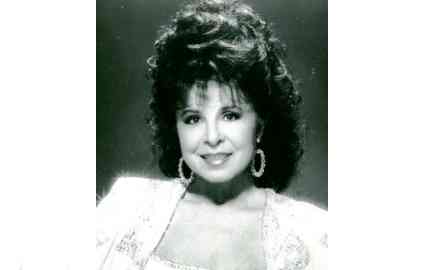
Eydie Gorme, a popular nightclub and television singer as a solo act and as a team with her husband, Steve Lawrence, died Aug. 10. She was 84.

Gorme and Lawrence were regulars at Harrah’s Lake Tahoe South Shore Room in the 1980s.

Gorme, who also had a huge solo hit in 1963 with “Blame it on the Bossa Nova,” died Saturday at Sunrise Hospital in Las Vegas after a brief, undisclosed illness, said her publicist, Howard Bragman.

Eydie Gorme

Eydie Gorme

Gorme was a successful band singer and nightclub entertainer when she was invited to join the cast of Steve Allen’s local New York television show in 1953.

She sang solos and also did duets and comedy skits with Lawrence, a rising young singer who had joined the show a year earlier. When the program became NBC’s “Tonight Show” in 1954, the young couple went with it.

They married in Las Vegas in 1957 and later performed for audiences there. Lawrence, the couple’s son David and other loved ones were by her side when she died, Bragman said.

“Eydie has been my partner on stage and in life for more than 55 years,” Lawrence said in a statement. “I fell in love with her the moment I saw her and even more the first time I heard her sing. While my personal loss is unimaginable, the world has lost one of the greatest pop vocalists of all time.”

Soon after their marriage, the pair had landed their own TV program, “The Steve Lawrence and Eydie Gorme Show,” which was a summer replacement for Allen.

Not long after that, however, Lawrence entered the Army, and Gorme went on the nightclub circuit as a soloist until his return to civilian life two years later.

After his discharge, Lawrence and Gorme quickly reteamed, and their careers took off.

She is survived by Lawrence, her son David and a granddaughter. Her other son with Lawrence, Michael, died of heart failure in 1986 at age 23.


Teen writes worthy coming of age book

By Kathryn Reed

Writing a coming of age book is no easy feat. Writing a book with the main character as the opposite sex is not easy. Writing compelling dialogue and description — again, not easy.

Heather E. Pauly was able to do all of the above in “Changing Strides.”

bookAnd while many authors have accomplished what Pauly has done, a key difference is their age. Pauly is 16.

The teenager draws on her experience of living in Yerington and riding horses to create a story about a troubled 14-year-old boy who was sent away for the summer to live and work on his uncle’s ranch.

And while a veteran writer clearly did not write this, one with vision wrote it. The plot is compelling and believable.

There are sections that could have been developed more and where tighter editing would have helped the final outcome.

Still, Pauly has all the ingredients in the book to want to keep reading it.

If Pauly keeps writing, she will be an author many will want to read.


Carmel combines laid back with classy

The Lone Cypress along 17-Mile Drive is more than 250 years old. Photos/Kathryn Reed

The Lone Cypress along 17-Mile Drive is more than 250 years old. Photos/Kathryn Reed

By Kathryn Reed

CARMEL-BY-THE-SEA – Nine wineries in three days – all by foot. A 17-mile ride instead of a drive. Oh, and that big expansive body of water known as the Pacific Ocean.

Monterey County is one of California’s premier wine regions. The climate varies depending on if one is close to the coast or more inland. And this means a variety of wines are produced in this region.

While it’s possible to visit the different tasting rooms by vehicle, it doesn’t have to be that way.

The visitor’s center in Carmel sells Carmel Wine Walk by the Sea tickets for $65. (We paid $50 for nine wineries Memorial Day weekend; the price has gone up and more wineries are expected to be added. Individual tastings are usually $10 each.) The ticket doesn’t expire, but we opted to taste all nine in the three days we were there.

The tasting rooms are actually storefronts dispersed along the streets of Carmel. So it was easy for the four of us – Sue, Pam, Tom and me – to peruse shops and window-shop in between the sipping.

One winery is next to a 40-year-old cheese stop. We buy some snacks and the winery lets us eat as we sample their wines.

Peter Figge is pouring tastings in a small area that is attached to an art gallery. He’s the winemaker for Figge Cellars and has been a vineyard manager since he was in college.

“You have 10 months to grow grapes and only six weeks not to screw it up,” Figge told us of the winemaker’s role in the finished product. “The expression of the fruit is more important than anything.”

To work off some of what we have been drinking we get on our bikes to pedal the famous 17-Mile Drive in Pebble Beach that has existed since 1881. We can ride there from Tom’s place at Carmel-By-The-Sea. Going on two wheels means free entrance.

Dressed inappropriately and not on high-end bicycles, we are still let in to the Lodge at Pebble Beach. We look around and decide if we stop to eat or drink this early we’ll never finish the loop.

We pedal on, but still there are more stops to take in the scenery. Endless pictures of the famous Lone Cypress are shot. The Monterey Cypress only grows in this area of the world. Some say this particular tree is more than 250 years old.

I think this is the first time I’ve been on these 17 miles of private property as an adult. As a kid my parents took endless guests here and I was stuck in the backseat. I had zero appreciation for what I was seeing. It’s nice to grow up to be able to embrace and appreciate the natural wonders that spill forth.

The sea air; those crashing waves; wind blown trees; sea creatures; and iconic landscape – it’s everywhere on this bike ride.

We stop at Spanish Bay to sit outside with a cocktail before we complete the circle. Cycling was the perfect way to see this famous stretch of California coastline.

I marveled at the pristine tennis courts at so many of the resorts. I’m sure most people were mesmerized by the exquisite greens and fairways of the golf courses.

Pam and Tom extend the ride and take us along other parts of the coast that are just as scenic, but less rugged.

Then there are the hours than can be spent walking on the beach as surfers attempt to catch a wave and people throw balls for their dogs or just sit listening to and watching the ocean.

Another morning Sue and I take in the Monterey Bay Aquarium. It’s another must-do while in this part of the state.

ngg_shortcode_0_placeholder (Click on photos to enlarge.)


West Nile virus a concern in Placer County

Placer County Public Health officials are tell people to take precautions against West Nile virus, a preventable, mosquito-borne disease that can infect humans.

The disease is typically spread when a mosquito bites an infected bird, then bites a human. While most people who are infected with the virus will not become ill, in certain populations the disease can cause serious illness and even death.

The Placer Mosquito and Vector Control District has advised that there is increased mosquito activity and is conducting additional control activities and surveillance in and around areas where they have detected the virus.

In Placer County, most human cases have occurred between mid-July and the end of August.

About 20 percent of those infected with WNV may experience mild to moderate flu-like symptoms, called West Nile fever, which may be prolonged. About one in 150 infected people will become very ill. People over 50 and people with suppressed or compromised immune systems are more likely to become seriously ill.

Her are tips for preventing the spread of West Nile virus:

Drain any standing water that may produce mosquitoes.

Defend yourself and your home by using an effective insect repellent and dressing protectively when outside and making sure screens on doors and windows are in good condition.

If you know of swimming pools that are not maintained and become “neglected,” report them to the district at (916) 380.5444.

Report dead birds to 877.968.2473.

Horses are vulnerable to West Nile virus, and the mortality rate for unvaccinated horses is high.


Annual fashion show keeps the League in green

By Peggy Bourland-Madison

INCLINE VILLAGE – The annual Oscar de la Renta and Saks Fifth Avenue Lake Tahoe benefit for the League to Save Lake Tahoe is a tradition that started in 1969.

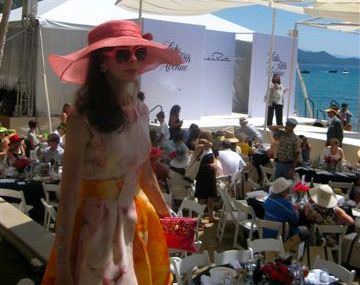
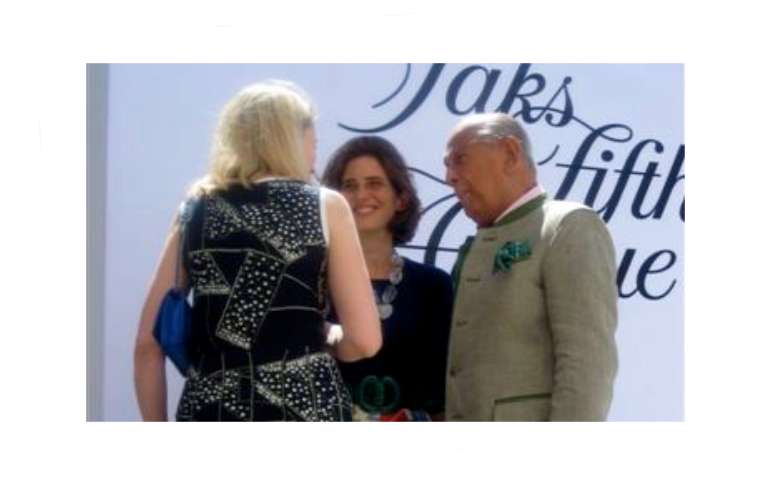
Oscar de la Renta with fans at the annual fundraiser on Aug. 3 for the League to Save Lake Tahoe. Photos/Peggy Bourland-Madison

Oscar de la Renta with fans at the annual fundraiser on Aug. 3 for the League to Save Lake Tahoe. Photos/Peggy Bourland-Madison

San Francisco-Tahoe philanthropist and socialite Diana Dollar Knowles conspired with a few of her notable friends, some still very involved today, to bring American designer and pal Bill Blass to Lake Tahoe for a benefit fashion show to support the work of The League to Save Lake Tahoe. Back then the show took place at a private residence on the West Shore’s “Gold Coast”, with a small number attending and tickets at just $15. Now in its 44th year, the sold-out event accommodates 600, with a wide range of ticket prices. The event attracts fashion lovers from near and far, with the added appeal of helping to protect the lake.

In 1995, after 20 years of dazzling fashion events on the shore of Lake Tahoe, Blass at age 73 announced he would be retiring and would no longer be taking his fall collection to Lake Tahoe. This news was not entirely unexpected and with his help a replacement was quickly found. Blass convinced a friend and fellow designer that coming to Lake Tahoe was too much fun to miss and thus the Oscar de la Renta era began.

Though he calls New York City his home, de la Renta clearly has developed a fondness for Lake Tahoe. His shows, presented by Saks Fifth Avenue, have raised millions to benefit the League.

This year the event returned to the extensive grounds of Kern Schumacher’s 5-acre lake front estate in the tony village of Incline. With de la Renta “in the house”, excitement was high as guests arrived and passed through the gates to a live band and a hosted bar serving Tahoe’s own Tahoe Blue Vodka that was swizzled into libations that set a festive mood.

Many of the guests’ images are often found on the society pages of the San Francisco Chronicle and the Nob Hill Gazette. Last Saturday they were in Tahoe providing plenty of fashion diversion long before the runway show began. The hats, the dresses, and the bags were what you would expect to see at a fashion event. In spite of their best intentions, there were a few “fashion misses”, but it was all good fun and highly entertaining.

This year’s fashion show and luncheon was dedicated to the memory of Diana Dollar Knowles who died in 2013, at the age of 96. Knowles and the many blue blood families that have deep roots in Tahoe as summer home residents dating back to the early 1900s have made preserving Tahoe’s clear blue waters a responsibility to restore some of the impacts their ancestors may have left behind.

Looking the part at the fashion show.

Looking the part at the fashion show.

Lunch was served at noon and the first part of the live auction begins. Bidding is very competitive and items included the coveted New York Fashion Week with de la Renta. It was now time to settle into your seats to enjoy the show. Sixty designs are revealed worn by 19 stunning runway models. While this flotilla of $10,000 couture dresses and gowns float down the runway, there is a flurry of activity back stage. South Shore’s 25-year veteran, Mary Ann Werley is in “the tent” with her crew of 20 dressers getting the models in and out of the 60 costume changes. Saks has their hair and make-up teams making last minute touch ups before each model steps onto the runway. The final showing is the evening gown finale.

De la Renta’s designs did not disappoint and are met with wild applause.

Designs by Oscar de la Renta.

Designs by Oscar de la Renta.

Before audience members can rush backstage to order items from this 2014 Resort Collection, part two of the live auction begins. League Executive Director Darcie Goodman Collins is on stage to introduce the League’s newest project — Eyes on the Lake. Eyes on the Lake is a volunteer aquatic invasive species monitoring program. Volunteers are trained to identify and document evidence of aquatic plant species considered to be one of the leading causes of Lake Tahoe’s clarity loss. In just a few minutes more than $30,000 is raised to fund this program.

Collins stated, “The real significance of this event is being able to fund the League’s new programs that include tangible hands-on projects that will help improve water quality. Funding raised at this benefit makes that research possible.”

In the end it is all about The League’s iconic motto: Keep Tahoe Blue.


Looking at why workers are disengaged

By Trevor Wilson

An alarming Gallup poll published earlier this year is still sending shockwaves throughout the business community: Most American workers either hate their jobs or don’t care one way or the other about them.

Less than a third of Americans are actively engaged in their work, meaning they’re passionate about it, enthusiastic and energetic. They’re consistently productive, and high performing.

Gallup estimates the 20 million who are “actively disengaged” – openly negative and unhappy have a staggering effect on the economy, costing the United States $450 to $550 billion each year in lost productivity.

To engage the 70 percent of non-committal or “actively disengage” employees, business managers need to change how they view human capital.

Engaging employees is an issue I’ve been working on for more than two decades, and there is a solution. I call it human equity — the unique assets each individual brings to the workplace that are often unrecognized. Recognizing and leveraging your own human equity, as well as that of your employees, addresses not only the incredible waste of human capital illustrated in the recent poll, but also related concerns business leaders share, including the constant need for innovation. These challenges are not unique to the United States.

There is a reason why executive royalty, such as Warren Buffet and former General Electric CEO Jack Welsh, sought talent beyond traditional criteria like knowledge and skills, which are also important.

Here is a method for uncovering valuable intangibles in employees; I call it the SHAPE V Talent model:

• Strengths: Consider strength as defined by the 1999 Gallup StrengthsFinder study, which includes consistent near-perfect performance in an activity. The study identifies 34 qualities, which can be innate and, unlike skills, are not learned. Individual employees and managers should not force a square peg into a round hole; if an employee’s near-perfect, near-effortless strength is in research and analysis, but not so much in data management, managers should allocate this resource accordingly.

• Heart: Have you ever wondered what comes first, whether you’re good at something because you like it, or you like it because you’re good at it? The chicken-or-egg question aside, what matters is the passion one has for a talent. This includes activities a worker would do even if he or she didn’t have to do it on the job. If a talented manager won the lottery and decided to quit his job, for example, he might be inclined to manage people in a local political campaign or take the helm of his son’s little league team.

• Attitude: There are three general attitudes an employee might have, according to a branch of study in positive psychology. First, there are those who approach their work as a job, who seek only a paycheck and benefits. The second group includes those with a career perspective who seek advancement. The third group views their work as a calling and deeply connects with what they do every day.

• Personality: In 2009, nearly $500 million was spent on personality testing in North America alone. A reliable test isn’t valuable in so much as it reveals differences among workers, which are most likely already apparent. The value of these tests is in showing how and where differences lie. Understanding differences can lead to an appreciation for how and why coworkers perform and improve the synergy of teams.

• Experience: Who is the person you’re sitting next to at work; who is she when she’s not making business-to-business calls, scheduling meetings or troubleshooting technical problems? How does her race, religion, economic background, family situation and overall lifestyle influence – or not influence – her work life? More importantly, how might her life beyond work offer diversity of thought in the workplace? Life experience should not be overlooked when assessing talent.

• Virtue: Value in action, that’s virtue. Candor, temperance, courage – these traits preempt problems like public scandals, harassment and discrimination and foster a positive moral pragmatism among coworkers and practical wisdom among leaders. With social media continuing to expose bad behavior and employee morale revealed to be at a stunning low, this is a significant quality in the on-going search for the best talent.

Trevor Wilson is the CEO of TWI Inc. and creator of the human equity management model. He is the global diversity, inclusion and human equity strategist who regularly speaks at corporate functions.



Patch helps keep biting mosquitoes at bay

By Robin Wilkey, Huffington Post

When it comes to dealing with mosquitoes, one generally has two options: drench yourself in potentially harmful (and often ineffective) repellant or suck it up.

But California-based start-up Olfactor Laboratories has developed a sticker that the company claims can make wearers virtually invisible to mosquitoes.

Dubbed the Kite Patch, the sticker reportedly uses nontoxic materials to block mosquitoes from detecting the carbon dioxide omitted in our breath –- the means by which the bugs usually track us.

“When you wear Kite, the product makes you practically invisible to mosquitoes,” said Dr. Michelle Brown, the project’s chief researcher, in an Indigogo video. “And we’ve been able to accomplish this using food-grade FDA approved compounds, removing the need to use toxic and dangerous chemicals that are currently found in today’s products.”

Read the whole story


Sculpting demo at South Tahoe gallery

Wyland Gallery in South Lake Tahoe will host an artist’s reception and sculpting demonstration by international bronze artist June Towill Brown on Aug. 17-18 from 2-6pm.

Brown will be finishing her bear series which is a spin-off of the life-size showcase brown bear that sits in the roundabout in Incline Village at the base of Mount Rose Highway on Highway 28. Some of her more popular limited edition sculptures will be on display.

In addition, the gallery will showcase Brown’s newest artistry with a selection of her sterling silver equine jewelry collection.

Wyland Gallery is located at 4000 Lake Tahoe Blvd., Building A, Unit 3 in South Lake Tahoe.


Young burn victims bond at Tahoe camp

By Ian Schwartz, CBS-13

Kids who have suffered severe burns are getting special treatment this week at a firefighters’ burn camps along the shores of Lake Tahoe.

Camp is a great way for kids to get away from the city and be around nature. But at this camp, it’s a chance for kids to get away from the questions, the stares and be around fellow burn survivors who know what it’s like.

These kids have gone through a lot, physically scarred by fire. But in many cases, the pain didn’t stop there.

“Everybody will just look at me weirdly, and I’d just be like, ‘Who cares?’”

That’s what growing up has been like for girls like Kindsey Woodrow. But at this camp, none of that matters.

Read the whole story