Garden of Joy brightens Mt. Tallac High campus
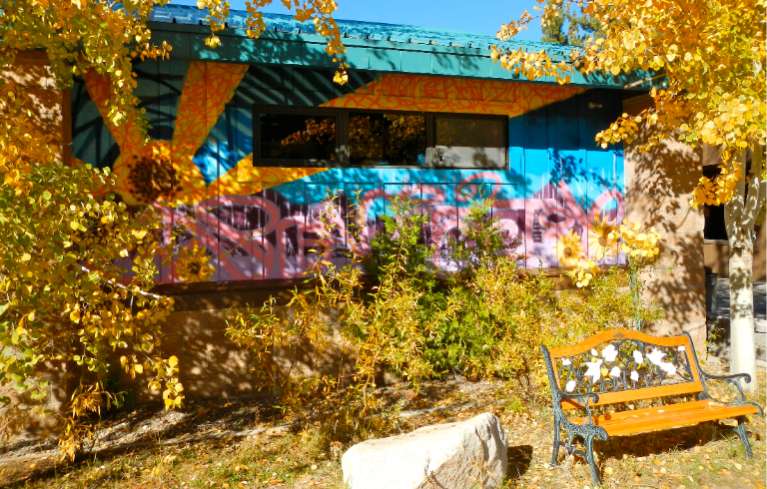
Garden of Joy of Mount Tallac High Schoo. Photo/Kathryn Reed

Garden of Joy at Mount Tallac High School. Photo/Kathryn Reed

By Kathryn Reed

“Who was that?”

“That’s one of my kids,” Joy Rothschild would say.

Biologically she didn’t have any children. But Rothschild had a bond with so many Lake Tahoe Unified students through being an aide in the schools, working to get those who in some manner were homeless to have a more stable life, and through volunteering with Court Appointed Special Advocates that she had many kids in a different way.

There was a special place in her heart for youngsters who didn’t fit into society’s definition of “normal teen”.

She regularly gave money for a scholarship to Mount Tallac High so students could continue their education.

Rothschild died in August 2012 at the age of 63. But her memory lives on and the work she did continues.

Today there is spot in the back of the Tallac campus in South Lake Tahoe called Garden of Joy. A bench was donated last year through the classified union and friends, with the mural being painted at the start of this school year. Pavers donated by Tahoe Paving Stones and laid by students under the direction of teacher Jackie Tan give it a more complete look.

In the stones is an 11-foot-by-11-foot chessboard. Tan plans to write a grant so by spring there would be large game pieces students could use to play chess.

Oct. 22 was Mount Tallac’s annual open house, with students giving tours of the campus. The garden is one of the stops along the way.

“Joy just loved the Tallac school. She was very loved by students who liked the alternative programs. She loved them,” Karen Tinlin, principal of Mount Tallac, told Lake Tahoe News.

Teri Rothschild believes her sister would be thrilled with the tribute. She and their father, Rocky, donated to the cause.

“I like having something up there that is permanent,” Rothschild said.

Rothschild and artist Matt Kauffmann met only once – and it was rather random. He works with the Sphere of Influence program that has kids paint electric boxes in the area. They are the type of youth Rothschild connected with and always helped. Kauffmann was on Ski Run Boulevard with some youths when a vehicle pulls up and out pops Rothschild saying, “I love what you are doing” – gives him a hug and gets back in the car.

Kauffmann spent a day creating the mural. A large sunflower represents Rothschild’s favorite flower. Aspens frame the artwork.

“I wanted to make it bright, alive and fun,” Kauffmann told Lake Tahoe News.


Ron Rose — 1930-2013

Legendary South Shore musician Ron Rose died Oct. 22. He was 83.

Born Rupert Ronald Rose on June 18, 1930, in Warren, Ohio, he began playing piano at age 4.

Jazz was hot and Ron took to it quickly. Before ever learning to read music, young Ron became an expert at his trade. In his hometown he was a bit of celebrity by his teens and playing at every town gathering from dances to roller rinks.

Ron Rose

Ron Rose

It was at one of these gatherings where he’d meet the love of his life, a petite blonde with a strong will to dance, Dorothy Louise Palmer. He’d later learn her strong will was a powerful force he would rely on to build a life and family together.

They were married in the summer 1950. They were blessed with the birth of their first daughter, Sandra Lee, in June 1951. One year later, their second daughter, Rhonda Jean, was born. Ron was playing gigs in the Ohio area and anywhere else he could to provide for his family such as Virginia Beach and Biloxi. While in Ohio, their son, Jeffrey Scott, was born. Soon to follow was daughter, Lynda Jo.

In 1958 Ron was invited to play at North Lake Tahoe at the North Shore Club. Upon arrival, Ron suspected his life would take a new turn. In fall 1958 he walked in to Harveys Lake Tahoe Casino where he played a tune for Bill Ledbetter, Harvey Gross’ son-in-law. He was hired on the spot and returned to Ohio to prepare his family for a move West.

At Harveys Ron found the reliable work he’d hoped for as he and Toots continued to grow their family. As they moved, Toots was pregnant with their second son, and final addition, David Allen. The hard winters in Tahoe were no match for Toots who had grown up in a working Ohio family and knew how to take care of herself. She continued to chop wood, plan around a tight budget, and shovel endless snow. Ron worked countless nights at the casino, a star on the South Shore.

Ron’s tunes at Top of the Wheel drew crowds from all over. Jazz lovers and young professionals from San Francisco and Sacramento would drive all night to hear him play and dance well into the night. Throughout his 43 years at Harveys, he would rub shoulders, play music and often host family dinners for talents coming through the South Lake Tahoe area, including BB King, Liberace, and Jay Leno, to name a small few.

A local living legend, Ron released three albums during his career among many single recordings and traveling from coast-to-coast sharing his love of melody and jazz.

The Rose family gained the reputation as a stronghold in the small Tahoe community. Always enough food to spare, family dinners created a community and family gatherings were commonplace.

The life of Rupert Ronald Rose will be celebrated Oct. 30 from 1-3pm at Montana Health and Fitness Community Center (Resort Course Genoa Lakes) 468 Mountain Meadows Drive, Genoa.


Pumpkins are multi-dimensional gourds

By Mandy Kendall

With All Hallows Eve nearly upon us, I thought I would explore some fun ways to use those ever present pumpkins and take a look at some alternatives for treats and Jack-o’-lanterns, too.

With the avalanche of corn syrup drenched candy that kids are likely to be presented with on Halloween, how about being a treater with some alternative treats to offer.

Mandy Kendall

Mandy Kendall

Here are a few ideas for healthier snacks for those trick or treaters:

• mini boxes of raisins

• sesame seed bars

• granola bars

• popcorn (uncoated if possible)

• small packs of trail mix

• pretzels (uncoated if possible)

• Clementines with Jack-o’-lantern faces draw on with a Sharpie. These are a fun way of getting kids to look at fruit in a different way.

Once you’ve made your Jack-o’-lantern what can you do with all that pumpkin flesh?

Pumpkin face mask – Pumpkin is full of vitamin A, vitamin C and zinc is good for sun-damaged, dry or sensitive skin. Take a couple of tablespoons of pureed pumpkin. Add a touch of honey and a dab of milk, apply to face for fifteen minutes then wash off. You can also use canned pumpkin, just make sure it pure pumpkin and not pie filler!

Pumpkin hair mask — Pumpkin is also a great hair conditioner. Blend 1 cup fresh cooked pumpkin (or canned pumpkin) with four tablespoons of coconut oil in a food mixer. Apply to your hair, cover with a shower cap (or plastic wrap) and leave on for 30 minutes. Then rinse thoroughly. (Courtesy of Organic Authority.)

Alternative uses for pumpkins

Pumpkin bowl: Small sugar pumpkins make great bowls. Just cut off the tops, scoop out the seeds, rub the insides with oil and sprinkle with salt and pepper. Put the lids back on and bake at 350 degrees for 25 minutes. Remove lids, turn pumpkins upside down and bake another 25 minutes. Once they are cool you can use them like a bowl … which is edible.

Table décor: Glue fall flowers-leaves (real or fake) to pumpkins to use as table decorations for your holiday table or as give as gifts.

Plant pot: Use a cleaned out pumpkin as a pot to grow pumpkin seeds in.

Bird feeder: String up carved pumpkins as bird feeders. You could even put the seed and guts for the birds to eat.

Pumpkin potpourri: I thought this was a great idea.

Frosty the pumpkinman: This is my favorite.

Family fun

Pumpkin bowling: Remove the stem from the roundest pumpkin you can find. Set up some kitchen paper towel rolls, or stack up bathroom tissue rolls as bowling pins. It’s all the more fun as it never rolls straight.

Guessing games: Play guess the weight of the pumpkin for prizes.

Mystery bowls: Fill covered bowls with mystery items and have the kids (big kids too!) stick their hands in and try to guess what’s in there. You could fill the bowls with peeled hard boiled eggs, cold pasta, chopped up Jell-O, mini marshmallows, and other slimy foods or objects and ask guests to guess what’s in there. You could tell them it’s “body parts” for extra yuck factor.

Alternative Jack-o’-lantern: These make a great alternative to pumpkin lanterns.

You can use white light electric tea lights or multi color changing tea lights for a more ghoulish effect. (I found some on Amazon just as an example.)

Until next time … Happy Halloween!

Mandy Kendall operates Health Connective in South Lake Tahoe, which aligns wellness seekers with their ideal wellness provider. If you have questions, would like some advice, or would like to request some Qwik-e tips on any health and well-being topic, drop her an email at connect@healthconnective.com or keep an eye out on Lake Tahoe News for regular Qwik-e tips on how to make healthy changes one Quick and Easy step at a time.


Study: Brain flushes toxic waste during sleep

By Meeri Kim, Washington Post

While we are asleep, our bodies may be resting, but our brains are busy taking out the trash.

A new study has found that the cleanup system in the brain, responsible for flushing out toxic waste products that cells produce with daily use, goes into overdrive in mice that are asleep. The cells even shrink in size to make for easier cleaning of the spaces around them.

Scientists say this nightly self-clean by the brain provides a compelling biological reason for the restorative power of sleep.

“Sleep puts the brain in another state where we clean out all the byproducts of activity during the daytime,” said study author and University of Rochester neurosurgeon Maiken Nedergaard. Those byproducts include beta-amyloid protein, clumps of which form plaques found in the brains of Alzheimer’s patients.

Staying up all night could prevent the brain from getting rid of these toxins as efficiently, and explain why sleep deprivation has such strong and immediate consequences. Too little sleep causes mental fog, crankiness, and increased risks of migraine and seizure. Rats deprived of all sleep die within weeks.

Although as essential and universal to the animal kingdom as air and water, sleep is a riddle that has baffled scientists and philosophers for centuries. Drifting off into a reduced consciousness seems evolutionarily foolish, particularly for those creatures in danger of getting eaten or attacked.

Read the whole story


Now is the time to plan for tax season

By Rick Rodgers

Unlike last year, tax planning for 2013 is not hampered by uncertainties over a looming fiscal cliff. Unfortunately, there is always some uncertainty and a few expiring provisions to warrant special attention by taxpayers.

Managing income taxes at year-end involves techniques designed to address three issues:

• Accelerating or deferring income: If a taxpayer expects to be in the same or a lower tax bracket next year, it’s best to defer as much income as possible until after the year-end.

• Accelerating or deferring deductions: If a taxpayer’s overall tax rate is the same in both years, accelerating deductions achieves tax savings this year rather than waiting for those tax savings to materialize next year.

• Take advantage of tax provisions scheduled to expire at the end of 2013. There are several temporary tax provisions which can only be used this year.

Tax planning begins by projecting income and deductions for the year to determine your tax bracket and income thresholds that trigger higher and/or additional taxes, or limits the effectiveness of deductions. One of the impacts of the American Taxpayer Relief Act of 2012 is the reintroduction of the Pease limitation, which can greatly limit itemized deductions. Once a taxpayer knows what his or her income taxes will look like, it’s time to evaluate which techniques will help the most.

Strategies to accelerate or defer income:

• Adjust your elective deferral plans at work: Taxpayers who participate in 401(k), 403(b), most 457 plans, or in the Thrift Savings Plan can defer up to $17,500 this year. Taxpayers age 50 and older can defer up to $23,000.

• Harvest capital gains or losses: Long-term capital gains are taxed at zero percent for taxpayers in the 15 percent bracket. Capital losses can be used to offset capital gains and reduce other income up to $3,000.

• Use the IRA. Taxpayers age 59½ and older can accelerate IRA distributions in 2013. Contributions may be deductible depending on your income level and whether you’re covered by a retirement plan through work. Taxpayers under age 59½ can convert traditional IRAs to Roth IRAs to accelerate income.

• Health-care assistance: People with health savings accounts – available with some high-deductible health insurance policies — can save up to $3,250 tax-deferred for an individual and $6,450 for a family. Those who are 55 and older can save an additional $1,000. Flex spending contribution limits are capped at $2,500 this year.

Strategies to accelerate or defer deductions:

• Medical expenses: The Affordable Care Act raises the income threshold this year to 10 percent of adjusted gross income for taxpayers under age 65. The threshold remains at 7.5 percent for those 65 and older. Taxpayers may need to prepare or defer medical bills to lump expenses in a single year to get the deduction.

• Gifts to charities: Use a donor advised fund (DAF) to maximize the tax savings from charitable giving. A DAF makes gifting appreciated securities easier. The DAF can be funded in tax years when the deduction will have the most impact. Distribution to charities can be made at any time without tax consideration.

• Qualified Charitable Distribution: This year only, taxpayers age 70½ or older can choose to direct up to $100,000 of their IRA-required minimum distribution to charity. By doing so, the distribution does not show up as taxable income, which can lower taxation of Social Security benefits and help reduce other threshold levels to further minimize taxes.

ATRA12 extended but did not make permanent several tax incentives for individuals.Taxpayers should consider whether they can benefit from these incentives this year and plan accordingly. The following provisions are set to expire on Dec. 31 unless extended again:

• State and local sales taxes deduction. Taxpayer can choose between deducting state and local income taxes or the sales taxes they’ve paid through the year.

• Deduction for teacher expenses. Eligible educators can deduct up to $250 of any unreimbursed expenses.

• Deduction of mortgage insurance premiums. Payments of Private Mortgage Insurance premiums can be treated as deductible home mortgage interest in 2013.

• Discharge of principal residence indebtedness. This can be excluded from gross income this year.

• Qualified Charitable Distribution. Taxpayers can make tax-free charitable donations from their required IRA distributions.

2013 is certainly an exciting year for tax planning. Start now in order to minimize your tax bill in April.

Rick Rodgers is a certified financial planner and president of Rodgers & Associates.


Making a case for why libraries are critical

By Neil Gaiman, Guardian

It’s important for people to tell you what side they are on and why, and whether they might be biased. A declaration of members’ interests, of a sort. So, I am going to be talking to you about reading. I’m going to tell you that libraries are important. I’m going to suggest that reading fiction, that reading for pleasure, is one of the most important things one can do. I’m going to make an impassioned plea for people to understand what libraries and librarians are, and to preserve both of these things.

And I am biased, obviously and enormously: I’m an author, often an author of fiction. I write for children and for adults. For about 30 years I have been earning my living though my words, mostly by making things up and writing them down. It is obviously in my interest for people to read, for them to read fiction, for libraries and librarians to exist and help foster a love of reading and places in which reading can occur.

So I’m biased as a writer. But I am much, much more biased as a reader. And I am even more biased as a British citizen.

And I’m here giving this talk tonight, under the auspices of the Reading Agency: a charity whose mission is to give everyone an equal chance in life by helping people become confident and enthusiastic readers. Which supports literacy programs, and libraries and individuals and nakedly and wantonly encourages the act of reading. Because, they tell us, everything changes when we read.

And it’s that change, and that act of reading that I’m here to talk about tonight. I want to talk about what reading does. What it’s good for.

I was once in New York, and I listened to a talk about the building of private prisons – a huge growth industry in America. The prison industry needs to plan its future growth – how many cells are they going to need? How many prisoners are there going to be, 15 years from now? And they found they could predict it very easily, using a pretty simple algorithm, based on asking what percentage of 10- and 11-year-olds couldn’t read. And certainly couldn’t read for pleasure.

It’s not one to one: you can’t say that a literate society has no criminality. But there are very real correlations.

And I think some of those correlations, the simplest, come from something very simple. Literate people read fiction.

Read the whole story


TY&FS helping homeless, runaway youth

By Laura Salinas

There are an estimated 1.6 million to 2.8 million young people identified as homeless and runaway youth in the United States.

This number may seem surprising to some, but what people don’t realize is that this number reflects not just the youth living on the streets, but also the youth who are unaccompanied, meaning they are under the age of 18 who lack parental or institutionalized care. Furthermore, this number also reflects the youth who are couch surfing, wards of the court, at risk of becoming homeless and chronically homeless youth.

The Runaway and Homeless Youth Act (RHYA) defines homeless youth as individuals who are “not more than 21 years of age … for whom it is not possible to live in a safe environment with a relative and who have no other safe alternative living arrangement.”

Only a few youth are truly homeless and do not receive any support. Unfortunately, when young people get to that point, it is often almost impossible for them to seek help and make changes to improve their quality of life. It is when they are at-risk or have experienced minimal homelessness that they have the best chance to lead a different life.

During November, Tahoe Youth & Family Services coordinates with the National Runaway Switch Board and other local agencies to bring awareness to our community. Awareness and prevention is the best way to help the youth in our community from running away and becoming homeless. Despite great efforts, there are still a few young people in our communities who attend school and have no idea where they will be sleeping tonight. These youth go unnoticed, not from the lack of interest from school officials or other adults, but because they are experts at hiding their lifestyles for fear of being institutionalized.

Everyone is encouraged to participate in the National Runaway Prevention Month. By working together we can help youth identify community resources and develop life skills. This can make a crucial difference between a youth running away and finding the resources they need to be successful. Youth and families need to know that there are options and alternatives to running away from home and living on the streets.

“Tahoe Youth & Family Services has provided me with not only a reliable safe place to eat, shower and do laundry, but most importantly has provided me with immediate help. I could not ask for more of a kind, fun, caring, understanding and realistic staff members when in times of trouble and need. Not only do they help families, but have become family since I have never had one of my own. .. if anyone needs anything I always direct them to TYFS’ Drop in Center … this place saved my life,” said Elliot, whose full identity is being protected.

Tahoe Youth & Family Services’ Drop In Centers are a point of entry for youth to get supportive services they need as well as motivation to move beyond the street with guidance and compassion. It’s a great place for youth to get recharged, get resources, and get respect.

For more information on TYFS Drop In Centers or how you can help runaway youth in our community, contact Cheyanne Lane at (530) 541.2445 or Cheyanne@tahoeyouth.org. Our South Lake Tahoe Drop In Center is open from 1-5pm Tuesday-Saturday and is located at 1021 Fremont Ave. Our Gardnerville Drop In Center is located at 1307 Langley in the Ranchos, behind 7-Eleven. It is open Tuesday-Friday 3-7pm and 11am-7pm on Saturdays.

TYFS offers services in the areas of family counseling, substance abuse treatment services, mentoring and support services for runaway and homeless youth. We offer counseling services in South Lake Tahoe (1021 Fremont Ave.), Gardnerville (1422 Mission St.), Incline Village (DWR Center, 948 Incline Way) and Woodfords (Early Learning Center, 100 Foothill Road) TYFS 24-hour crisis line is 800.870.8937.

Laura Salinas works for Tahoe Youth & Family Services.


Meyers mural captures Celio family’s heritage

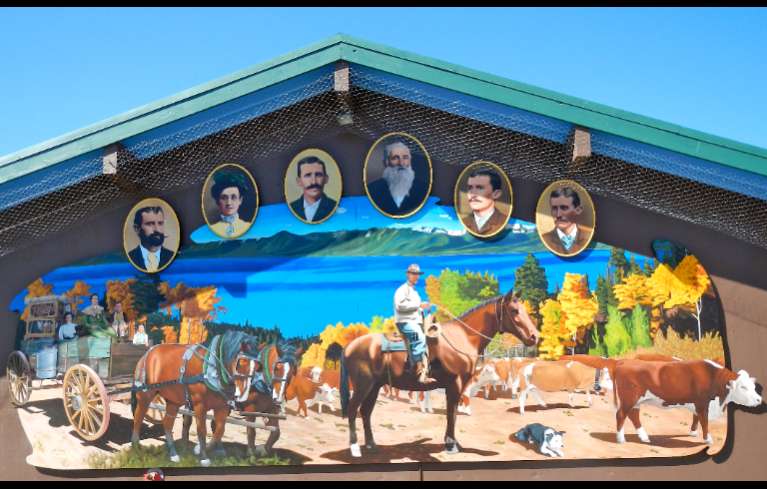
Celio mural at Meek's in Meyers. Photo/Kathryn Reed

Celio mural at Meek’s in Meyers. Photo/Kathryn Reed

By Kathryn Reed

Capturing the South Shore’s history via murals has been an ongoing endeavor since the 1990s. The last creation was recently installed on the Meek’s building in Meyers.

Called the Celio Family Cattle Drive, it brings to life the annual cattle drive between Lake Valley and the West Slope. In the center is one of the Celio men on horseback. His wife is to the left driving the wagon with their three children. To keep it authentic, chickens and most of their belongings are also in the wagon.

Above the vintage scene are portraits of Charles Guiseppi Celio Jr., Henrietta Celio, George Celio, Carlo Guiseppi Celio, Benjamin Caesar Celio and Frank E. Celio.

The Celio family used to own what is now Meyers, along with thousands of acres in the area. Today 103 acres in the Lake Tahoe Basin are controlled by the Celios.

“This is my final tribute to the pioneering Celio family,” Shirley Taylor told Lake Tahoe News. Taylor used to live at the family ranch. Now her cousin and his wife call the South Upper Truckee area home.

A plaque explaining the significance of the mural and what is going on in the picture will be installed later.

The Celio mural is the last of nine that were part of the Heritage Murals of Lake Tahoe project. This was a joint endeavor by the Lake Tahoe Historical Society and the now defunct South Lake Tahoe Chamber of Commerce.

John Cerney of Salinas created the mural. Besides being an accomplished muralist, Cerney was chosen because his work can be relocated if need be. The mural is not painted directed on to the building.

The other murals include: the one at the South Lake Tahoe museum, Nepheles courtyard off Ski Run Boulevard, El Dorado Beach at Lakeview Commons, Tahoe Daily Tribune building, Tallac professional building, South Tahoe Refuse transfer station, and U. S. Forest Service Taylor Creek Stream Profile Chamber. The one at Chateau Suites no longer exists.

The goal was to capture a bit of the various aspects of the area. With the Celio mural complete, Tahoe’s pioneers are now represented.


Ruth (Murphy) Valine — 1931-2013

Ruth (Murphy) Valine of Reno died Oct. 10 after a brief illness. She was 82. She was born Sept. 4, 1931, in Oklahoma City to Pearl Marie and Henry Goslin.

She was greatly influenced by wartime. As a young woman, Ruth volunteered for church groups and was proud to plant a victory garden to help her family survive.

By 1951 she was out on her own and working in the insurance industry in California. She married the late William “Brad” Murphy in 1953 in Grass Valley. They began their life together in Sacramento. They were blessed with two daughters, Patti and Kathy.

Ruth Valine

Ruth Valine

At the time of their marriage, Brad was a partner in a Sacramento CPA firm. In 1959, they jumped at the chance to relocate their young family to Lake Tahoe, opening a branch office of Johnson, Miller and Murphy. They quickly immersed themselves in their new community and Ruth became active in the Soroptimist club, where she was elected president in 1962. Both were ardent supporters of the drive to form a new city government. In November 1965, Brad was honored to be elected the first mayor of the newly incorporated city of South Lake Tahoe. After Brad’s untimely passing in 1971, the family relocated to Sacramento.

In 1993, Ruth relocated to Las Vegas to reunite with her family. In 2004, Ruth moved to the Reno area with her daughter, Patti, son-in-law Chuck and granddaughters Abigail and Caroline. Ruth’s daughter Kathy joined them in 2006.

Upon her return to her beloved Sierra Nevada, Ruth was thrilled to rejoin the Soroptimist International of South Lake Tahoe chapter to reconnect with many old friends. She looked forward to the Wednesday morning drive “over the hill”.

Ruth continued her lifelong history of volunteerism in Reno as she devoted time to the S.A.F.E project, numerous service activities with the Soroptimist club, and knitting hundreds of winter scarves for the Reno-Sparks Gospel Mission.

Grandma Ruth had a profound impact on her two granddaughters, instilling good manners and respect for adults. She was an avid supporter of the school activities the girls were involved in, and attended all of the girls’ volleyball, basketball, ROTC and track and field events over the years. She was quite well known in the Reno High Gym, arriving several hours before each event to knit or play her hand-held solitaire game. Grandma Ruth was passionate about creating and continuing family traditions. Her granddaughters will tell their children about “Red Shirt” ravioli dinners, the yearly Christmas gingerbread house and the ingredients for the perfect Thanksgiving stuffing and gravy.

Ruth is survived by her sister, Fran Tarjany of Culver City; daughters, Patricia Boorman (Chuck) and Kathleen Murphy. She also is survived by five grandchildren, Abigail, Caroline, Shawn, Jason, Aaron and three great-grandchildren. She will be greatly missed by her extended family and friends in Nevada and California.

The family wishes to thank the doctors, nurses, and Home Health Care employees at Saint Mary’s Regional Medical Center for their loving and compassionate care of Ruth and her family during her illness.

In lieu of flowers, the family is requesting donations be made in Ruth’s name to the Food Bank of Northern Nevada (fbnn.org) or the Reno-Sparks Gospel Mission, 355 Record St., Reno.

Many thanks to Del Laine for her assistance and support of the family. A graveside service is scheduled for Oct. 25 at 11am at Happy Homestead Cemetery in South Lake Tahoe.A celebration of Ruth’s life will be next summer in Lake Tahoe.


Memoir captures life of being an outsider

By Kathryn Reed

It took me a few tries to get into “The Days are Gods” by Liz Stephens. Normally this is not a good sign. But something kept the book on the nightstand instead of the give-away pile.

That was a good decision.

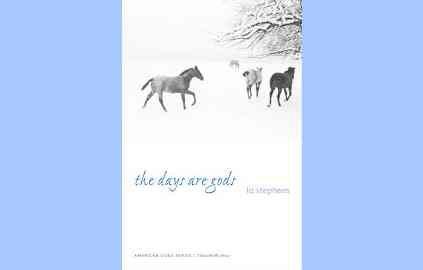
bookThis memoir of Stephens was published this year. It takes the reader on a journey from her life in Los Angeles to a remote town in Utah where she earns her master’s degree to the day she leaves to begin her doctorate.

Her life isn’t extraordinary. But the way she describes the events and the emotions associated with them are compelling. Her words contain a certain raw honesty that isn’t off-putting.

It’s not just about her, though. It’s about the animals and the people in her life. It’s about how the world changes even when you don’t want it to. It’s simply about life.

Anyone who has made a significant geographical move, who knows what it is like to be an outsider, will be able to relate to some of her anxiety, the challenges and eventually heartache in leaving.

The biggest complaint is the title. I think she would sell more books if it weren’t called “The Days are Gods”.