CalFire: Create defensible space before a fire occurs

Publisher’s note: This is the first of three articles from the Amador-El Dorado Unit of CalFire regarding the “Ready-Set-Go!” fire and life safety campaign.

By Teri Mizuhara

CAMINO – Unit Chief Kelly Keenan believes living in the Sierra Nevada foothills is a dream come true but with that dream comes a responsibility that many urban/suburban dwellers do not face. Fire is a natural part of our ecosystem. It helps clear out the weeds and brush and creates a healthy forest dynamic.

But with so many homes scattered throughout the rural foothills, naturally occurring fire is not allowed to do what it should because fire agencies must suppress fires that threaten lives and property. So people must do their part and create a space around their homes where fire can be better controlled as it approaches.
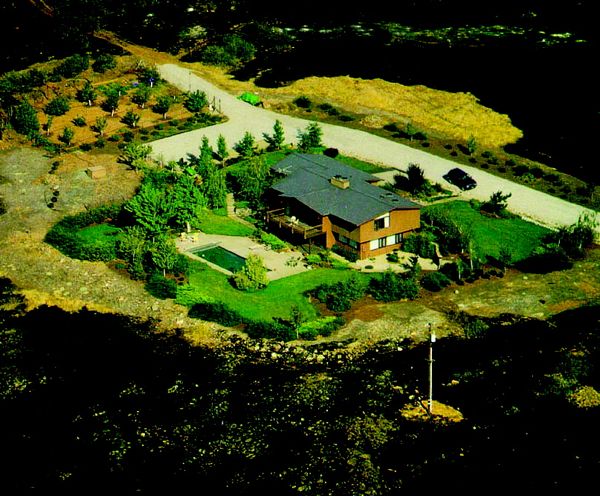
Defensible space is critical to being fire safe. Phot/CalFire

Defensible space is critical to being fire safe. Photo/CalFire

Creating a buffer zone between your home and the wildland greatly reduces the risk of your home catching on fire from radiant heat or flying embers. These embers can destroy homes and even entire neighborhoods that are far from the actual flame front of a wildfire.

Keys to creating defensible space are:

Zone One extends up to 30 feet (or your property line whichever is closer) from every structure on your property

• Remove all dead and dying vegetation

• Remove leaf litter from your roof and rain gutters

• Relocate woodpiles well away from your home

• Trim trees so they are a minimum of 10 feet from your chimney and roof line

• Remove ladder fuels (low-level vegetation that could allow fire to spread from the ground to shrubs and bushes to the tree canopies).

CalFire beginning Monday is increasing staffing for the fire season on the South Shore and the Northern California counties of El Dorado, Placer, Amador, Nevada, Yuba, Tuolumne, Calaveras, Stanislaus, San Joaquin, Butte and Glenn.

Zone Two extends from 30 feet to 100 feet (or to your property line whichever is closer)

• The key is to keep plant material separated from each other horizontally and vertically, this prevents the vegetation from acting like a ladder and allowing the fire to move from the ground to the tree canopies

• Cut annual grasses down to a maximum of 4 inches in height.

Preparing and practicing your family’s disaster plan is also key to being ready for fire season. This plan can make evacuating ahead of a wildfire or other disaster far less stressful. Creating a “Family Disaster Plan” is the first step in preparing for a disaster. It is important every member of your family understands what to do in the event of a wildfire in your area. Practice this plan on a regular basis so each member of your family knows their role and what they need to do; keep a copy of this written plan in an accessible place so that you can refer to it quickly and easily.

“Things to include in the plan are: meeting locations away from your home, communication plans and evacuation plans for your family and your pets. Identify where your gas, water and electrical shut-offs are and how to use them. Plan several evacuation routes in your neighborhood and drive them so you are familiar with them day or night. Assemble emergency supply kits and have them ready for yourself, family and animals. Don’t forget to include a portable radio and/or scanner so you can stay updated,” Keenan says.

Finally, take steps to make your home more fire resistant; if you are building a new home or renovating your home, consider these fire resistive measures (hardening your home):

• Roofs are the most vulnerable surface on your house. Make sure your roof is made out of “class A” materials, such as composition, metal or tiles.

• Rain gutters should be screened or enclosed to prevent accumulation of plant debris that can catch on fire from a flying ember during a wildfire.

• Exterior walls of your home should be made of ignition resistant materials such as cement siding, stucco or fire retardant treated wood.

• Windows should be double paned with one of the panes made of tempered glass which will reduce the potential of the heat from a wildfire breaking the window and catching the interior of the house on fire.

• If your home is dependent on a well for water, install a backup generator so you have water in case the electricity goes out.

The following areas of your home should be checked annually and maintained as needed:

• Check that your chimney has an approved spark arrestor (screen) in good condition covering the opening. The screen should have openings no smaller than three-eighth inch and no larger than a half inch.

• Keep the area under your deck or balcony free of combustible material. Never store your firewood under your deck.

• Consider having multiple garden hoses that are long enough to reach any area of your home and any structure on your property.

Keenan adds, “Wind driven embers can fly up to one mile during a wildland fire so ‘hardening’ your home with fire resistive material, creating a solid buffer zone of defensible space and preparing and practicing your Family Disaster Plan are critical. Being ready for wildfire season is your best defense. Preplanning for a disaster can save your life and the lives of the ones you love.”

For more detailed information, go online or call (530) 644.2345 to receive a free brochure.



School work just part of graduates’ life achievements

By Kathryn Reed

“Every accomplishment starts with the decision to try.”

Those words from Mt. Tallac High School counselor Amy Jackson resonated with the students sitting before her in their blue graduation gowns.

Fidel Valdez Moya with his daughter in hand graduates June 10 from Mt. Tallac High School. Photos/Kathryn Reed

Fidel Valdez Moya with his daughter graduates June 10 from Mt. Tallac High School. Photos/Kathryn Reed

The 45 students who received their diploma Friday morning have overcome obstacles many adults twice their age have yet to – and may never – experience.

While plenty of family and friends turned out for the momentous occasion, many of these young adults have been living on their own for years. Some couch surf – having no real place to call home. A few are already parents. Many work full time. For some, they are the first in their family to earn a high school diploma.

And about 70 percent of these graduates are going onto college. Most never thought a high school diploma would be possible, let alone pursuing higher education.

Austin Beentjes was one of three student speakers. His first stint in the juvenile detention center was at age 14. He admits it took a while to confront a drug addiction.

“A while ago I was scared of the world. Now I’m taking it by the reigns,” Beentjes said. “A while ago I was in an 8 by 10 cell. Now I stand here free.”

All of the speakers praised the school’s staff for providing them an opportunity and the inspiration to be successful.

Emily Yelle spoke of how Mt. Tallac has given all students a second chance.

Her spiral downhill started in fall 2009 while she was a junior at South Tahoe High. Her whole family came down with the flu. It hit Yelle’s mom the hardest. She was hospitalized, airlifted to a Reno hospital, and eventually suffered a stroke that left her brain dead. Yelle’s mom died Nov. 12 that year.

Yelle didn’t go to school. She became depressed. She and her dad started fighting. Family finances were thin.

Finally, she was given the chance to go to Mt. Tallac. It turned her life around.

Yelle told her classmates what makes them different is they’ve been tested so much sooner in life than the average teenager.

“Our stories will not break us,” Yelle said.

Fidel Valdez Moya panicked when his girlfriend told him he was going to be a father. How was he going to support a family without an education? With his daughter now 6-months-old, he doesn’t have to answer that question. He has a high school diploma and has a desire to join the military or go the fire academy.

On Friday, he walked across the stage carrying his daughter – with a huge smile on his face.

Plenty of tears were shed (some adults admitted to wearing sunglasses to hide that fact), lots of hugs were shared, and smiles filled the audience as they celebrated this next step in these young people’s lives.

“This is a pretty incredible class,” Susan Baker, who runs the school, said after the ceremony. “They are very smart and very focused.”

ngg_shortcode_0_placeholder (Click on photos to enlarge.)


Sunny weather launches tourism season in Lake Tahoe

By Kathryn Reed

It’s Day 3 – or at least it’s forecasted to be. Day 3 of sunshine that is. Day 3 of feeling like summer might have arrived in Lake Tahoe before the calendar says it’s supposed to. The National Weather Service expects it will hit 71 in South Lake Tahoe on Monday.

That’s good news for a region that disagrees with economists who say the recession is over. Just look at the near 17 percent unemployment rate in South Lake Tahoe, the vacancy signs on hotels, the empty parking lots and abandoned storefronts.

The Tahoe Queen will race the M.S. Dixie II on Labor Day weekend. Photo/LTN file

The Tahoe Queen will race the M.S. Dixie II on Labor Day weekend. Photo/LTN file

Summer is Lake Tahoe’s bread and butter season. It was beginning to seem more like burnt toast after the dusting of snow covered the ground throughout the basin on Monday and May being more gray sky than blue, which turned the Amgen Tour de California into a bust for Lake Tahoe and Memorial Day one not to remember.

But when things start heating up in Sacramento – it’s supposed to be in the 80s today and higher going forward – those Central Valley dwellers start thinking of cooler climates. Tahoe is often that perfect spot to get-away to.

Lake Tahoe Basin tourism officials are hoping word from the Leisure Travel Summit in New York last week will come to fruition. U.S. residents are expected to travel more this summer compared to a year ago, according to experts from Best Western, AAA and the U.S. Travel Association.

At the annual summit, Best Western reported advance reservations for peak summer travel up more than 4 percent at its U.S. hotels.

On the South Shore, hoteliers are also saying summer bookings are better than a year ago. And for an industry that has seen advance booking become a rarity and the last-minute reservation more the norm, this is a welcome change.

Despite gas prices hovering at about $4 a gallon in Tahoe and just less than that elsewhere, AAA predicts 85 to 90 percent of Americans will travel by vehicle this summer.

All of this could bode well for Tahoe, which despite trying to be a destination market for people with fat wallets, is still reliant on the drive-up market.

This is evident with Lake Tahoe Visitors Authority spending the bulk of its advertising dollars on the Sacramento and Bay Area markets.

Carol Chaplin, LTVA executive director, told Lake Tahoe News it is seeing success with the two television ads that are aired during San Francisco Giants games. They are on cable and network channels, but the Giants games are where they are doing the best.

One TV ad is based on a Japanese game show that shows two guys with pantyhose on their heads, which then leads to the same old visuals of the South Shore. The other lead-in is two boxing chins. The tagline on both is “Get your vacation on.”

That’s the same campaign Duncan/Channon of San Francisco came up with for summer 2010.

“The idea of both is to catch your attention. They are weird and stop you,” Chaplin said.

Radio stations in the Sacramento and Bay Area markets have been airing ads since mid-May that the LTVA is paying for. Soon those ads will be replaced with promos touting the American Century Celebrity Golf Tournament, which is July 12-17 in Stateline. Then the regular ads will be broadcast until just past Labor Day.

What is new this Labor Day is a return to having the three-day weekend be more than just a fireworks show that Sunday.

Tourism officials on Thursday made the rounds to the South Lake Tahoe Lodging Association and Lake Tahoe Visitors Authority meetings to tout what is hoped to be a culinary extravaganza on land and water.

A winemaker dinner aboard the Tahoe Queen and M.S. Dixie II paddle-wheelers will start the fun Sept. 2, with a race between the two boats the next day.

For the past several years the boat race has been in June – in what was dubbed Opening Days Lake Tahoe. That event has been scrubbed from events lists. In the early 1990s Labor Day Lake Tahoe featured the race between the two boats and had events throughout that weekend as a way to keep locals entertained and put heads in beds.

Tourism officials are going back to that line of thinking – making that weekend be full of fun.

Also on Sept. 3 will be Viva Valhalla, a celebration of Tahoe’s Latino culture on Ski Run Boulevard from 10am-5pm.

On the Sunday of Labor Day will be the second annual Sample the Sierra. That night is the annual fireworks show.

But the fireworks are expected to be better and cost LTVA less money. The same goes for the Fourth of July event.

While Pyro Spectaculars is still putting on the show, the music choreographer has been fired and Jerry Bindel, LTVA board member, will be helping coordinate that aspect of the pyrotechnic display.

Mike Frye, who handles special events for the tourism agency, negotiated the rate from $10,000 a minute to $6,000 for the fireworks. The July 4 display will have about 23 minute of fireworks or 1 minute longer than last year, while the Labor Day show is a few minutes less – which is always the case.

Lodging association board members said much discussion was had in January with the LTVA about whether the July 4 fireworks should be moved to July 3 so they would be on a Sunday. Mixed and heated emotions rose to the surface about whether that would be unpatriotic, would tourists be confused if the date were changed, and what is the best option for increasing room nights.

Ultimately, it was decided July 4 fireworks should happen on July 4.


STHS high-tech theater arts building to open in August

By Kathryn Reed

It’s the best theater on the South Shore.

That was the overriding sentiment heard Wednesday night as members of the Measure G Bond Oversight Committee toured the Theatre Arts and Design Academy that will welcome students in August at the start of the next school year.

Also overheard were comments from committee members being happy either their children or grandchildren would be going to South Tahoe High School one day – to experience the facilities and programs.

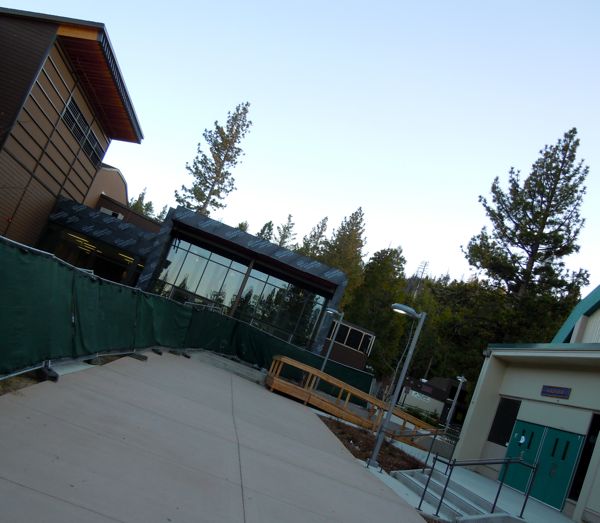
The Theater Arts and Design Academy is changing the look of South Tahoe High School. Photos/Kathryn Reed

The Theater Arts and Design Academy is changing the look of South Tahoe High School. Photos/Kathryn Reed

While the seating at the theater is slightly less than the old theater (350 vs. 265), everything else about it makes it look like a metropolitan performing arts center – albeit scaled down.

Eliminating seating had to happen to accommodate use by disabled people, improving visibility and making the necessary acoustical enhancements.

A spiral staircase is to the audience’s left – which could be incorporated into a production or just be used to access the rafters for lighting needs. What looks like bed springs have give to them to eliminate noise from the production crew walking overhead during a performance.

The 28,000-square-foot building is one of several being built at South Tahoe High School as a result of the voter-approved $64.5 million facilities bond (known as Measure G) and subsequent state matching grant dollars totaling $32 million.

While the whole sum is not being spent on the high school, the bulk is — $44 million.

The Stadium View building opened this school year, while the Construction, Arts and Transportation Academy opened in April 2010. More are still to come.

Steve Morales, facilities director for Lake Tahoe Unified School District, said the final touches on the TADA building would be made this month, with staff being trained in July and students occupying it starting Aug. 29. Seats in the theater will arrive about June 20.

“This is the hardest one-story building I’ve ever built,” Joe Stewart of SMC Contracting told Lake Tahoe News. “I doubt I’ll ever build something like this again.”

It’s all the small details and abundance of technology that made it more intricate than the average classroom. Subtleties like installing oversized doors facing the CAT building so theater sets can be brought in were not left out.

About 17,000-square-feet of the original performing arts building was used, with 11,000-square-feet being new.

“If we don’t do this, we lose this generation,” Angela Swanson said walking from one high-tech room to the next. She was on the school board when Measure G was passed and is now a consultant helping continue to secure grants for LTUSD.

What she was speaking about is all the high-tech components incorporated into this building.

Morales said they like to call it a mini Pixar Studios.

Some of the doors are so heavy one needs to be in good shape to open them. This is all about the acoustics.

There are multiple walls to deal with acoustics, too. One might be a structural fire-rating wall, with a wall on either side to keep noise from the outside out.

“There is acoustic treatment in every room. Some are higher than others,” Morales said in the TV studio. No echo could be heard. It was like a flat, true sound of his voice resonated, or rather didn’t resonate.

Principal Ivone Larson said much of the design concept is the result of years of trips to Hollywood by students and staff to learn about jobs in Hollywood.

“Everything you see today is a replica of actual studios,” Larson said.

The whole idea is students will be ready for a job when they graduate high school. With the No. 1 industry in California being entertainment, STHS is equipped the mold the next crop of creative geniuses.

“We have rooms that reflect the programs. You don’t often have that,” Superintendent Jim Tarwater said as he tagged along on the tour that revealed sound rooms, editing areas, a TV studio, music room, media lab, sound mixing area and more.

LTUSD is reaching to the lower grades to get them on a career path that ties into the high school and might lead them to Lake Tahoe Community College. There are 11 areas where the district wants to link South Tahoe Middle School to South Tahoe High.

Digital arts will be one of the first electives for eighth-graders. Culinary arts is another area.

While the TADA building is nearing completion, work on the Blue and Gold gym next to it has started with the removal of asbestos. SMC should be able to start its work on it Saturday.

ngg_shortcode_1_placeholder (Click on photos to enlarge.)


S. Tahoe employee benefits may be decided by voters

By Kathryn Reed

Voters may have a chance to weigh-in on what they think employees in South Lake Tahoe should get when it comes to pensions and health care benefits.

sltAn idea broached by Mayor Hal Cole earlier this spring came before the full council Tuesday. The five agreed if the necessary concessions the city needs from its seven bargaining units aren’t achieved, the issues will go to the voters in February – when the presidential primary takes place.

In 2002-03, South Tahoe paid $1.1 million into the California Public Employees Retirement System. That figure is expected to increase to $4.7 million for the 2011-12 fiscal year.

While City Attorney Patrick Enright was quick to not single out South Lake Tahoe, saying other cities are in the same boat, he did point out employees in many other cities are making concessions, and where they aren’t, that particular city is trying to take the upper hand.

The more than four time increase to PERS is the result of bad investments, more retirees and an increase in benefits for some retirees.

Most South Tahoe employees don’t contribute a dime to their retirement. The city is paying its share as well as the employees’. It wasn’t until a couple years ago public safety started paying a small percentage.

The employee share to CalPERS is 8 to 9 percent.

When Councilman Tom Davis, who was on the council for 12 years before being elected again in November, asked, “Why are we paying the 9 percent?” Enright said, “Because we agreed to it.”

The “we” is actually the council. They make all the final decisions when it comes to voting on salary and benefits packages for rank and file employees.

But that 9 percent is just a pittance of what the city pays for employee pensions.

The city’s share for tier 1 fire employees in 2010-11 is 40.91 percent and will grow to 47.62 percent for 2011-12.

That means the city is paying more than 50 percent of a firefighters’ salary into the retirement system.

This type of compensation is similar for all employees in the city.

So, if someone has a salary of $60,000 – the city is paying another $30,000-plus into their retirement.

It has changed, though, to where there are two other tiers, meaning new hires don’t have it so cushy. Tier 3 firefighters this fiscal year have the city paying 17.36 into PERS and 22.19 percent for next fiscal year.

“Assume they retire at 50 and assume they live to 80, they will be paid out by the city for 30 years, when they worked 25, so they get more paid to them in retirement than they did on the job,” City Manager Tony O’Rourke said after the meeting of most employees. “And they are guaranteed cost of living adjustments.”

Public employees are guaranteed a set retirement figure based on years worked and their last highest salary.

This compares to the private sector that may rely on a 401(k) – which is not something employers have to offer – and Social Security. The normal range for an employer contribution to a 401(k) is 3 percent to 7 percent. Then the employee must also deal with the fluctuations of the stock market. Sometimes they have few if any options for where the money is invested.

On the public sector side it didn’t matter that CalPERS lost 30 percent in the market one year. Cities had to make up those losses. Cities is the same as taxpayers. The employees saw no loss, felt no financial burden.

Eleven percent of South Lake Tahoe’s general fund goes to pension expenses, while another 18 percent is for employee health care.

As those costs rise, it cuts into basic services – like roads, upgrades to software that would allow the city to operate more efficiently, repairs to equipment that might put more snowplows on the road or even allow more employees to be hired to assist residents.

Also on the private sector side is Social Security. In the recent past, employees contributed 6.2 percent of their wages to Social Security. For 2011, that has dropped to 4.2 percent. Employers still pay 6. 2 percent. Self-employed people pay the combined amount.

When it comes to health benefits, anyone hired by South Lake Tahoe prior to 2008 who works for 25 or more years will receive health benefits for free for the rest of their lives upon retiring. So will their dependents.

It costs the city $1.9 million a year for the 130 retirees – a dollar amount that grows each year. The city pays about $15,000 per year on each retiree for health benefits. Of the city’s retirees, 58 percent don’t cough up a penny for health benefits.

On average, employees pay 4.6 percent of their health care costs, while the city is picking up 95.4 percent.

Even Councilwoman Claire Fortier chimed in how her monthly paycheck for being on the council amounted to about $1,000, while the health benefits were about $9,000. Though she didn’t elaborate what time period this was for.

In the private and public sectors, the employer and employee each pay 1.45 percent of the employees’ wage for Medicare.

South Lake Tahoe spends 78 percent of its general fund on employee related expenses. In the five-year budget plan that was adopted earlier this year, that percentage is slated to drop to 74.

To get there, the city is asking employees to change their contract. The miscellaneous/public works employees’ contract is up this fall, while the other six expire in a little more than a year.

Jere Copeland, who represents some of the unions, said June 7, “The best route is to bargain with your unions.”

While that was the overriding sentiment of the council, they still took the step to place the CalPERS and health care contributions on the February ballot if the unions don’t come through as needed.

For the 2011-12 budget, the council is banking on $1.5 million in employee concessions. If that doesn’t happen, more jobs and more services will be cut.

Meeting between city staff and employee groups are scheduled this month.

If the two sides don’t come to an equitable agreement, then language will be drafted for voters to decide what city employees should get for compensation regarding benefits. If the unions don’t agree to it, the city has the power to impose the will of the voters.


Ordinance change brings S. Tahoe apartments to code

By Kathryn Reed

Starting July 1 more people in South Lake Tahoe will have a better chance of living in an apartment that meets some basic criteria.

This is because the City Council in December revised the multi-family dewelling ordinance to include complexes with eight or more units. Fifteen-unit complexes had been the minimum at the start, which was then reduced to 12 and now eight. One day it’s likely to include properties with four units.

All owners have been sent a letter saying the city is coming for a visit.

Health and safety issues were the impetus for the city to pass the original ordinance in 2004, with inspections staring in November 2005.

“The ordinance is intended to protect the occupant,” explained Bill Potts, senior housing inspector for South Lake Tahoe.

Mold at Bart's Apartments. Photo/South Lake Tahoe

Mold at Bart's Apartments. Photo/South Lake Tahoe

Some nasty places have been condemned or overhauled in recent years. Bart’s Tahoe apartments on Ski Run Boulevard had five apartments closed on its initial inspection in February 2006.

“Cockroaches were so bad they jumped all over you,” Potts said of those 15 units. Mold was so thick it was like a layer of fur. Water damage was forcing ceilings to collapse.

The apartments reopened the next year after the owner practically started from scratch.

The city has the authority to close a structure for health and safety reasons. The landlord must pay for relocation costs and rent/utilities for two months.

The nearby Tahoe Forest Apartments at 1232 Ski Run Blvd. (formerly Heavenly Valley Apartments) also experienced partially collapsed ceilings and signs saying “uninhabitable” on about half the units. The owner has since fixed up the place.

Obviously tenants know they are living in substandard units, but some fear rocking the boat, and language barriers and lack of knowledge about their rights contribute to people staying mum. Plus, South Tahoe renters are more transient in nature, and are often on a month-to-month lease.

“There is a clear link between local property managers – the quality is better compared to absentee owners,” Potts said.

With the city inspecting the units each year, problems are going to be found out without anyone having to complain.

The other change with the revised ordinance is exemplary complexes will not have to be inspected annually, but instead on a three-year rotation if they are up to snuff.

The first apartment complex to qualify for the three-year inspection is at 3999 Cedar Ave. Owners Paul and Sharon Sterling will also receive a 50 percent reduction in the fees.

To achieve this classification properties must have three consecutive years of MFD certification, defensible space, TRPA’s erosion control (aka BMP) certificate and a few other items.

“We think it’s a great program,” Sharon Sterling said. The Sterlings hope the ordinance changes will inspire other landlords to make necessary improvements, especially considering the number of children who reside in South Lake Tahoe apartments.

Tahoe Village Apartments on Cedar Avenue are the first to be on the three-year inspection cycle. Photo/LTN

Tahoe Village Apartments on Cedar Avenue are the first to be on the three-year inspection cycle. Photo/LTN

The Sterlings bought the complex in 2000.

“I’ve been on hand for his inspections. He literally goes unit by unit,” Sterling said of Potts. “Ours was a 40-year-old old building when we bought it and it didn’t have a certain type of exit sign. It was small improvements like that he called out.”

It also helps that the Sterlings live at the complex.

“They have actually done many things at their building that go well beyond the basic requirements of the MFD program, including a couple of years ago full window change out to dual pane, installation of a radon reduction system, secured coded building entry and many other things,” Potts said. “They serve as a great example of how to do it right.”

Potts anticipates a handful more properties may qualify in the next year for the three-year inspection cycle.

He has a list of 59 items he looks for on the inside of a unit and 55 items on the outside. They range from making sure windows don’t have cracks to proper ventilation to plumbing and electrical issues. Exterior items include landscaping, fire alarms, handrails on stairs, and fences.

Potts has been in charge of the program since being hired by the city in September 2005. Part of what makes him qualified is having graduated from the Butte College Building Inspection Technology Program. He also is a certified property maintenance and housing inspector.

Property owners pay $50 per unit each year. With the new units coming online next month, it will bring the total to 1,335 in 75 complexes that fall into the city’s jurisdiction. This equates to $66,750 in annual fees.

The money is used to cover the cost of the program.

Owners pay for the fee when their annual business license fee is due in July.

Sierra Vista is the largest complex in the city at 94 units.

Potts said six properties from the beginning have never been certified.

“They are not willing to do all the things we are asking, but they all have made progress,” he said.

Landlords are supposed to make interior improvements 60 days after being notified of infractions and have 90 days for exterior issues. However, for the imminent violations, the problem must be rectified between 24 and 72 hours depending on what’s wrong.

For now, hotels that operate as long-term housing are exempt from the inspections.

“If hotels are incorporated into the program, they would have to meet a different standard because they are not built to be used as an apartment,” Potts said.


11 diverse acts to play Harveys Outdoor Concerts

By Kathryn Reed

Now in its 10th year, the Harveys Outdoor Concert Series is set to deliver its most eclectic lineup to date.

Sultry jazz songstress Diana Krall opens the Stateline music season June 18. Rocker Sammy Hagar brings it to a close Sept. 10. A little bit of every other genre will fill out the other shows.

Better sound systems and raising the bleachers are two of the more significant changes through the years. Considering the venue is a parking lot – not a lot can be done.

Diana Krall will start the 2011 season of the Harveys Outdoor Concert Series. Photo/Jim Grant 2007

Diana Krall will start the 2011 season of the Harveys Outdoor Concert Series. Photo/Jim Grant 2007

But considering the floor is asphalt, it’s also surprising how good the acoustics are. One would think the South Shore Room might be better for an artist like Krall. But when she played the Outdoor Series in 2007 her voice, her music – well, it was hard to know you weren’t in a nightclub.

Although she has a voice that can carry through the mountains with ease, her lyrics are more of a sensual nature that lends one to think a more private venue would be appealing. After all, Krall says of her 12th album, “It’s not coy. It’s not ‘peel me a grape,’ little girl stuff. I feel this album’s very womanly – like you’re lying next to your lover in bed whispering this in their ear.”

Using line array sound systems allows the music to be focused on the arena instead of filtering outside the venue.

“The sound systems have improved over the years so they are a lot more directional,” explained John Packer, who is in charge of entertainment for Harveys and Harrah’s Lake Tahoe. “We used to get some complaints.”

For the past three years the casino property has paid for studies to be done to appease the Tahoe Regional Planning Agency and its noise regulations.

Although the music is not filtering out as far as it did when the concerts started in 2002, the Horizon parking lot remains a tailgating party for those who don’t want to pay to see a music act. They just aren’t right on the wall anymore. Horizon staff moved them back out of the fire lane.

People also can be seen lining the loop road and along Stateline Avenue.

Part of the issue is people can’t afford to see every concert. For two years now prices are down a bit, though. The exception was last year when the top ticket for Elton John was $235.

June 18 – Diana Krall with Mose Allison                    July 10 – Alison Krauss and Union Station         July 16 – Lionel Ritchie                                July 20 – Soundgarden with The Mars Volta                 July 27 – Slightly Stoopid with Rebelution + Shwayze                             July 29 – Lady Antebellum with Troy Olsen              July 30 – Steve Miller Band with Dave Mason         Aug. 9 – Phish                 Aug. 10 – Phish               Aug. 13 – Big Four                  Aug. 19 – Miranda Lambert with Little Big Town                                 Sept. 10 – Sammy Hagar & The Wabos

“The venue does not set the ticket price. It’s based on a guarantee, the capacity, and other revenue sources like merchandise and beverages,” Packer said.

More artists are making their money off touring than album sales based on how music is purchased. But they are also not going to as many cities as before.

Last summer there were venues that were half full because people didn’t have the cash to fork over for a concert.

“Live Nation, one of the biggest promoters, canceled 250 shows last summer,” Packer said. “Ours was one of the most successful venues for its size.”

The outdoor venue seats about 7,500 and can grow to about 9,300 for a general admission show – like what Phish will be for its two August performances.

Phish fans are clearly an example of people who are willing to spend money. The two Tahoe shows sold-out in less than an hour.

“I was told not to be surprised by it. They are phenomenal,” Packer said. “They are all outstanding musicians and have created quite a following.”

Not only are the shows sold-out, but both are in the middle of the week – a bonus for lodging properties that often have plenty of vacancies midweek even in the summer.

“Before we had it even booked for sure, they were calling to get reservations to get hotel rooms,” Packer said. He heard MontBleu was sold-out before his property had the contract signed. And he said hotels on the North Shore are booked too because of this show.

“A lot of them have never been to Tahoe before. I think that is a good thing that we will be introducing a lot of new visitors to Lake Tahoe for the first time,” Packer said of Phish fans.

Soundgarden is one of those groups doing a limited number of concerts this summer. They picked Tahoe over Sacramento.

This is the first time for Soundgarden to play in Lake Tahoe. The Mars Volta is opening – and they are often a headliner, having sold-out the Greek Theater in Berkeley before.

Alison Krauss and Union Station will be the second concert of the summer. Krauss has been here before.

Next is Lionel Ritchie, who was a regular at Harrah’s South Shore Rom in the 1970s and ’80s after he left the Commodores.

“He has at least 20 hits if not more. He’s real upbeat and personable on stage,” Packer said.

After Soundgarden is Slightly Stoopid. Rebelution + Shwayze, which sold-out the MontBleu theater last year, opens for Slightly Stoopid.

“It’s reggae, but Southern California beach reggae,” Packer said of Slightly Stoopid. “Some of them look like surfers.”

Like Phish, he expects this to be a different crowd than the typical baby boomer who so many of the past concert series catered to.

Lady Antebellum is nearly sold-out. This mega award-winning trio is credited with Tim McGraw selling out last year when they opened the concert series. Even though Lady Antebellum had a slew of awards to their credit by then, they were the opening act a year ago.

Packer is thankful the concert series started a little later this year. Memorial Day weekend started things off in 2010. This year Memorial Day would have been more like a Christmas concert based on the all the white stuff that fell.

Steve Miller Band wraps up July. Opening is Dave Mason, who will be back in the fall at the South Shore Room on his own.

Each year the concert series has an Asian group play, but it’s not always well advertised to the general public. The Big Four is different. The foursome from China is expected to sell a lot of tickets.

Miranda Lambert, also a former opening act at Harveys, is the headliner Aug. 19.

“Country shows are always entertaining. They have more going on, great graphics,” Packer said. “They have a production. I’ll expect no less from Miranda Lambert.”

Wrapping things up for the summer is Sammy Hagar, who is a regular in Tahoe. He’s never had a real opening act in the past; sometimes he’s brought friends on stage, last year his son opened. This year, though, a well-known group is likely to be added to the ticket.

For more information about the concerts, go online.


Trail building day ensures July opening for Van Sickle Park

By Kathryn Reed

STATELINE – I will never look at a trail the same.

Tahoe Rim Trail Association officials warned us this could happen. They even said next time we hike on this section of trail we’ll smile, point out to our buddies what areas we are responsible for. I already feel that sense of ownership.

Saturday was my first experience with any type of trail building. I’m hooked. Besides spending time in the outdoors and feeling good about putting in a few hours of volunteer service – what made this different was the sense of accomplishment and camaraderie. More than 100 people signed up (a few probably didn’t show up because of the lousy weather) to work on the trail at Van Sickle Bi-state Park.

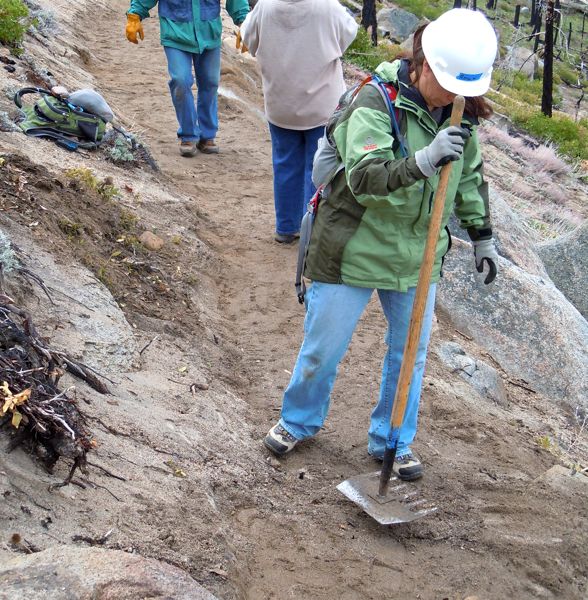
Anna Watkins of Carson City works to improve the trail June 4 at Van Sickle Bi-state Park. Photos/Kathryn Reed

Anna Watkins of Carson City works to improve the trail June 4 at Van Sickle Bi-state Park. Photos/Kathryn Reed

We walked through sections saying, “good job” “this looks great” “keep it up.”

We weren’t the only ones playing in the dirt. June 4 was National Trails Day, an event that has been going on for decades. The American Hiking Society always schedules it the first day of June. (It will be June 2 next year, so mark your calendar.)

“You will never look at a trail again when you are out hiking without realizing what it takes to build a trail,” Mary Bennington, TRTA executive director, told the volunteers before they headed out in the drizzle from Harrah’s Lake Tahoe parking lot.

That is one of the great things about the country’s only bi-state park – it’s accessible by foot from the South Shore’s main bed base at the state line.

Van Sickle Bi-state Park is scheduled to open in July.

The final work being done by professionals is construction of the California day use area under the oversight of the California Tahoe Conservancy. That work started June 1.

The 725-acre park is mostly in Nevada, but the entrance is in California near the intersection of Montreal Avenue and Heavenly Village Way.

The park will be open from sunrise to sunset all seasons except winter.

Steve Weaver, whose goal was to stay employed with Nevada State Parks until the park opened, just retired. But he plans to be at the official ribbon cutting during the environmental summit in August.

Weaver told Lake Tahoe News he is optimistic about the park opening because of a TRT grant. The Tahoe Rim Trail Association secured a $16,000 grant from the Van Sickle Foundation for fire suppression.

Bennington told the volunteers Saturday the TRTA has a five-year contract to pay the water and sewer bills. This commitment is what is allowing the park to open at a time when both states are in a precarious financial situation when it comes to putting money toward state parks.

What the volunteers were working on Saturday was the Daggett Summit system. Most of the work was maintenance. Widening the trail a bit so hikers won’t feel like they are teetering off the edge, trimming back manzanita, removing pine needles and other debris that has been deposited over the winter.

This is a connector trail from Van Sickle to the TRT. The project, which has a couple years before it is complete, includes eliminating three miles of paved trail and putting them in the forest. The whole project adds 13 miles of trail. Included is a short, scenic loop around the Upper Kingsbury neighborhood and out to Castle Rock.

Equestrians will be able to use this trail network. To test what has been built, Petra Keller took Tiara Nevada and Paula Walkins had Jake on the trail. The horses did not like the narrow, rocky stream crossing at the waterfall. This means more technical work by the experts is needed to make it horse friendly.

Rosemary Manning of South Lake Tahoe said women are probably part of the crew because of the detail they put into their work – like getting the pine needles off the trail and making it just so.

A foursome of friends from Carson City came up to work on this trail system in their back yard. They met a couple years ago through Muscle Powered Carson City.

“We love to hike and we want to give back,” Anna Watkins said.

For Watkins, Gina DaSilva and Gisele Geary this was their first experience at trail building. Jenny Haas was the veteran of the group – this being her second time.

“It’s a passive way to get exercise,” Haas said.

Although the TRT says trail building is for all abilities, I have to disagree. A certain amount of physical shape is necessary. You have to hike to the work area – and part of the way includes carrying tools. And then it’s manual labor.

John McCall, who has been building TRT trails since 1985, had his crew of 11 (myself included) make sure some of the spots on the sandy trail we were working on were widened so horses wouldn’t have a problem.

McCall’s basic advice was, “Two things make a successful trail – it keeps water off and it keeps people on.”

We used tools I wasn’t familiar with – like a pickmatic and McLeod. And some tool I didn’t get the name of that a U.S. Forest Service employee created.

Then there was the loper – which I always thought was just called a trimmer.

I learned it is best not to use a shovel for prying things out of the ground. McCall said this is because it’s likely the tool will soon be in two pieces.

It was hard not to put the tools down for a minute to take in the views – even under the always cloudy and intermittent rainy conditions. The views of Lake Tahoe from this trail are stunning. A few offshoots (which have to be enjoyed on a non-work day) look like they will provide even more incredible unobstructed views of the South Shore.

The TRTA needs volunteers on the Daggett Summit portion Tuesdays and Saturdays. Go online for more information.

ngg_shortcode_2_placeholder (Click on photos to enlarge.)


Shuttered South Tahoe hotel may be turned into park

By Kathryn Reed

Edgewood Companies will have the rooms it needs to build a lodge on its Stateline golf course and South Lake Tahoe will have a park to replace a blighted, boarded up hotel.

That’s the proposal on the table. The City Council is scheduled to make the final decision when it meets Tuesday at 9am at Lake Tahoe Airport.

City Manager Tony O’Rourke and Edgewood’s project manager Brandon Hill separately told Lake Tahoe News the agreement is an excellent example of a public-private partnership that benefits the South Shore community aesthetically and economically.

The proposed Bonanza Park.

The proposed Bonanza Park. Rendering/Design Workshop

What the council has to decide June 7 is if the development rights Edgewood has regarding tourist accommodation units in the city can be transferred to Stateline.

Because the Tahoe Regional Planning Agency has set an arbitrary number for how many hotel rooms can ever be built in the basin, these TAUs are now a commodity. It also means to be able to build something a developer needs to secure the TAUs before permitting would be allowed.

Edgewood is in the process of creating a hotel on its Stateline golf course. It has 194 TAUs in the city limits. One hundred forty-four of those have already been approved for transfer. They come from Redevelopment Area 3, a Ski Run project and the old Colony Inn. The remaining 50 are before the council. They are from the C&M Lodge on Bonanza Avenue.

Edgewood bought that property near the Y (nearest cross street is D Street) in November for $850,000 with the sole purpose of wanting the TAUs.

O’Rourke said a long-term benefit to the city is the Edgewood Lodge guests – who are expected to be at an income level not often seen on the South Shore – are projected to bring in more than $2 million in sales tax over a 30-year period.

To sweeten the deal Edgewood is proposing to pay for the demolition of the hotel that still sits on the nearly 1-acre parcel and turn it into a park.

The defunct hotel on Bonanza Street may become a park. Photo/LTN

The defunct hotel on Bonanza Avenue may become a park. Photo/LTN

The company has met with stakeholders, including the city’s Sustainability, Parks and Recreation, and Latino Affairs commissions. Then they went to the neighbors. This area is really a residential area, with apartment complexes and single-family residences.

“We invited over 200 people to the two outreach events in May and over 100 participated in the feedback process. Two-thirds of the participants were actual residents from the Bonanza neighborhood,” Hill said. “The process we used was, with the help of Design Workshop, a very hands-on approach. We sat, we listened, we gathered people around tables and asked them to draw what they would like to see in the park based on the following success factors: a) it would be well used; b) it could be implemented this year; c) it would use sustainable strategies; d) it would be cost-effective to maintain.”

What Edgewood proposes to build is a park that includes a children’s play area, grass play area, picnic pods, half-court basketball court, and a fenced-in dog park area.

The city for a number of years has talked about creating pocket parks so residents have a place within walking distance for gathering and limited recreation. Available land and the cost of creating them have stalled the process.

This would be the first one – and at no cost to the city except for eventual upkeep.

O’Rourke estimates it will cost the city about $7,000 a year to maintain what is being called Bonanza Park.

Hill expects it to cost his company about $200,000 to build the park. The plan is start demolition on the hotel as soon as the council gives the go-ahead. The goal is the park will be ready to be used before next winter.

“Upon completion of the park improvements, the land and park improvements will be dedicated or conveyed to the city,” Hill said.


Block owner arrested in Vegas; Tahoe wants him extradited

By Kathryn Reed

Eneliko “Sean” Smith, former owner of the boarded up Block Hotel in South Lake Tahoe, was arrested June 2 in Las Vegas on driving under the influence charges.

Smith, 40, was being held without bail at Clark County Detention Facility. He is also being held on a warrant out of El Dorado County for a probation violation. South Lake Tahoe officials plan to extradite Smith back to El Dorado County to face charges.

Eneliko “Sean” Smith

Eneliko “Sean” Smith

Even though it has been well documented Smith was living in Las Vegas and attempting to start an airline there, local officials never had him picked up. And it was in Las Vegas where Smith was arrested in September 2008 on the initial charges out of South Lake Tahoe.

He owes the city more than $100,000 in unpaid taxes.

In March 2008 the South Lake Tahoe Police Department began an investigation into Smith’s failure to pay the transient occupancy tax for the hotel on Cedar Avenue. During the investigation, which also involved other city staff, Smith’s Cedar Lodge was also found to be in arrears in paying the hotel tax.

A lien was eventually placed on the properties and Smith was charged with felony embezzlement of public funds.

Both properties were closed by the city in 2008.

Smith pleaded guilty to one count of grand theft and was placed on probation with a condition to reimburse the city the money it was owed. Smith violated probation by failing to keep his probation officer up to date as to where he lived and he never paid a dime. Thus the reasons for the current warrant.

The Block opened in the mid-1990s as a hotel designed for snowboarders. Pro snowboarder Marc Franc Montoya opened it with his brother-in-law Smith.

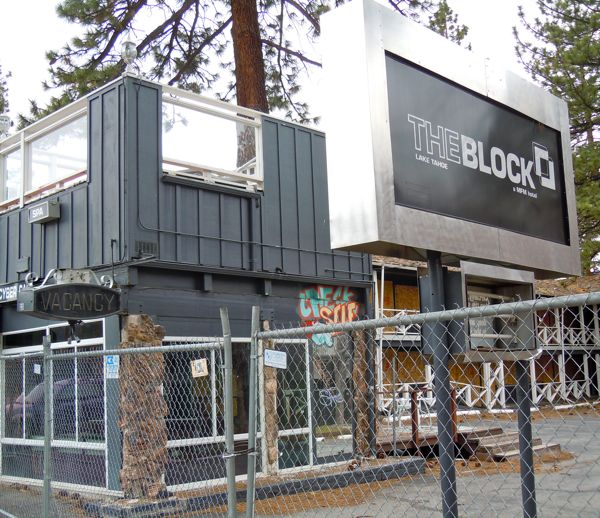
The Block in South Lake Tahoe on June 3, 2011. Photo/LTN

The Block in South Lake Tahoe on June 3, 2011. Photo/LTN

“All of our rooms include items like cordless phones, CD players, PS2/XBOX, board up racks and free Wi-Fi. Other amenities include free beer, energy drinks, gift bags, popcorn, Internet cafe, and rooftop hot tub,” the promotions said.

The Block was happening in its brief heyday. The parking lot was full. The parties were legendary among the younger snowboarding crowd. A reality TV show on G4 was launched in 2007.

Now the hotel is boarded up, with a chain link fence around the perimeter and graffiti in some locations. It sits behind the bankrupt would-have, could-have been convention center property.