9/11: Terrorist attacks just part of Tahoe’s economic woes

Publisher’s note: This is one in a 12-part series running from Sept. 1-12 about how Lake Tahoe is tied to 9/11.

By Susan Wood

A decade after Sept. 11, 2001, the terrorist attack may not turn out to be the Lake Tahoe economy’s worst enemy. But it didn’t help with the snowball effect of the economic downward spiral.

The South Shore’s long recovery through peaks-and-valleys from a series of economic challenges started in March 2001. It shows a region that’s both reliant on and hard hit by a drop in tourism. The challenges since the March 2001 recession are in line with national trends.

Fear of travel, skyrocketing fuel prices, subsequent wars, high unemployment, a burst housing bubble and a few recessions before and after the horrific event have contributed to a plummet in consumer confidence and travel numbers.

From Sept. 1-12, Lake Tahoe News is looking at 9/11.

From Sept. 1-12, Lake Tahoe News is looking at 9/11.

Consumer confidence fell substantially according to national reports in one month from August to September 2001. Tourism, and with that hotel occupancy, took a dramatic drop across the nation. In New York City, hotel occupancy fell 40 percent and 3,000 employees were laid off, according to reports compiled by the U.S. Commerce Department.

Then, the worst recession in a generation forced companies to retool, rethink and re-evaluate business as usual.

Throw in smack-you-in-the-eye competition from Indian casinos to the largest South Shore employers, and Tahoe may have lost and seen the last of its tourism heyday.

“Certainly air transportation has become quite a bit more annoying since 9/11,” Lakeside Inn and Casino Chief Executive Officer Mike Bradford told Lake Tahoe News, also echoing a few national studies on the subject. “But no doubt, it’s shown how resilient we are (as a country).”

The longtime local businessman has seen all the other economic factors hit the Lake Tahoe Basin hard.

“Tahoe is in a unique situation,” he said, referring to tribal gaming options popping up all over the Central Valley and on the West Slope. What stands out for Bradford while observing the region is in a sense “what hasn’t changed.” And “that’s unfortunate when you consider what we have to offer,” he said, characterizing the lack of an evolving tourism market as a major impediment.

“Because it’s no longer an economy based on gaming – we have to make adjustments. I’m not sure we’ve learned much since (2001), but we’ll need to take an educational look at Tahoe after 9/11 and now. Really, I bet it looks not that much different except for the excavation of Project 3 (South Lake Tahoe’s convention center redevelopment project based near Stateline).”

Tourists keep coming to Lake Tahoe, but they aren't spending like they did before 9/11.

Tourists keep coming to Lake Tahoe, but they aren’t spending money like they did before 9/11.

The casino chief admitted to the difficulty in quantifying any particular factor like terrorism attacks based on the eastern seaboard. However, 2001 appeared to serve as a catalyst for challenges to business from one side of the United States to the other.

Immediately following Sept. 11, the stock market closed for four days – the third time in history. Only two other events – the 1972 Munich Olympic massacre and the Wall Street bombings of 1920 – showed a 252 trading-day decline in the stock market. Insurance losses topped $30 billion – the worst in history.

Changes to air travel

“It’s certainly been our Pearl Harbor. From an aviation perspective – using that as a reference point, 9/11 brought a dramatic change to the aviation world. Airlines took a significant beating that some couldn’t recover from. The impact of tourism was huge. When you take a look at the airport now, it’s a hassle some people avoid altogether,” said Adam Mayberry, a Reno-Tahoe Airport Authority board trustee and former spokesman for the Northern Nevada aviation center.

But the problems started even sooner.

“We couldn’t seem to get a break,” Mayberry said. In about the same time period, American Airlines bought Reno Air – which did a substantial business out of the Reno-Tahoe airport – “then reduced flights,” he added.

Right after 9/11, passenger counts “took a dive.”

However, the Reno-based airport experienced a much better recovery than many airports following 9/11. Before 9/11, it offered 80 departures a day. Then with much work, the airport authority and staff did the leg work to get the number back up 72 today.

Current airport spokesman Brian Kulpin cites high fuel prices as more of a culprit, using history to back up the opinion. Five years after 9/11, the departures clawed and scratched their way up to 90 flights a day.

“But when fuel hit $145 per barrel in July 2008, our number of daily departure flights hit a low of 54,” he told Lake Tahoe News. Moreover, more than 100 commercial airports nationwide lost all of their air service in summer of 2008.

“In terms of passengers, we saw a drop to 284,000 per month just after 9/11. When fuel hit a $145 per barrel (rate) in 2008, we saw a drop to 283,000 passengers per month in fall 2009,” Kulpin pointed out. Just last year, Reno was ranked first in the nation for recovering flights over the decade with a 14 percent increase.

The recession hit airlines like Aloha and Northwest hard, with them either going out of business or merging with another. Then came travel’s ugly byproduct of 9/11, the recession and fuel prices – baggage fees and liquid container restrictions.

Impact on the South Shore

The recession has taken its toll on Lake Tahoe business. First, there are the musical chairs of retailers and restaurants on the South Shore. Second, boarded up buildings diminish the natural scenery. Of the businesses left, budget and creative adjustments had to be made.

Marlene Lewis, the manager at the Great Outdoor Clothing Co. at the Y, has noticed a steady decline in business in at least the last handful of years working there.

She points to the combination of Indian casino competition, recession and 9/11 as the culprit for our town’s downward spiral.

Lewis worked at Albertsons during 9/11 and remembers how people walked around in a daze in the store.

“But about three years ago, things really started declining,” she said, referring to her current business at the Factory Outlet center. She further quantified her shop’s drop in business by about 30 percent.

Jana Walker, who runs Sealed With a Kiss and the Lakefront Wedding Chapel, has seen a mixed bag as a result of 9/11 and the recessions. Her retail shop has called on her creativity.

“Being in business here, you have to have creativity, flexibility and ingenuity – or you’ll be passed up,” she said. “You can’t rest on your laurels.”

Walker admitted to making fewer buying trips for the Heavenly Village shop since 2001. And buying mistakes are less forgivable than previous decades. In her other business, the wedding chapel has seen a big drop in the large weddings since 9/11.

“People aren’t flying in 50 people or so anymore,” she said.

Even though she cites the recession as a worse culprit to business than 9/11, Walker recalls that time period as a trying one. Days after the terrorist attacks, she organized a local fundraiser for the victims of 9/11 at the casino corridor. Hundreds of people showed up. Most who attended told this reporter that life as we know it had changed forever.


South Lake Tahoe woman killed in Carson City shooting rampage; husband injured

By Kathryn Reed

A South Lake Tahoe woman is one of the four people killed by a gunman Tuesday at IHOP in Carson City.

Florence Donovan-Gunderson, 67, was at the restaurant having breakfast with her husband, Wally Gunderson, when shots rang out just before 9am. He was wounded, but his condition is unknown.

sue photoCarson City Sheriff Ken Furlong at a 9am press conference this morning said it was not believed the South Lake Tahoe couple was sitting with the Nevada National Guard personnel, but were at a nearby table.

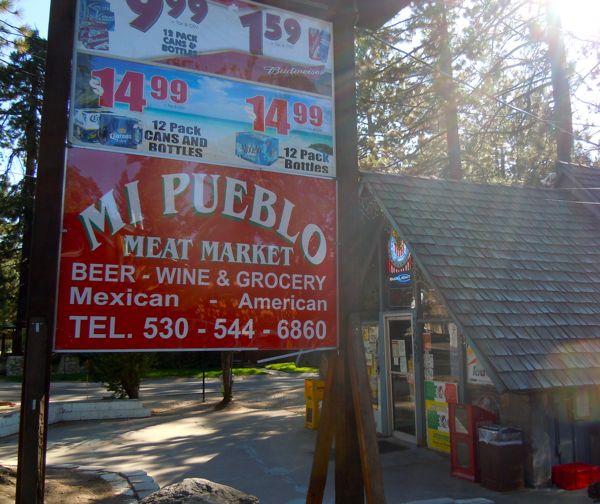
Eduardo Sencion, 32, of Carson City is the shooter. He later shot himself, dying Tuesday afternoon at Carson Tahoe Hospital. Sencion with his brothers ran Mi Pueblo market in South Lake Tahoe and Stead. Their second Tahoe store closed last year.

“The family is grieving. They did not take part in this. They are cooperating,” Furlong said of Sencion’s family. His brother Gilberto Sencion Gonzalez is listed as the owner of the South Lake Tahoe market.

The others killed were all members of the National Guard. They are: Those killed included Maj. Heath Kelly of Reno, Sgt. 1st Class Christian Riege of Carson City, and Sgt. Miranda McElniney of Reno.

The names of the other injured are not being released. The extent of their injuries range from they will recover to life-threatening, according to Furlong.


9/11: South Tahoe residents fend for themselves in D.C.

Publisher’s note: This is one in a 12-part series running from Sept. 1-12 about how Lake Tahoe is tied to 9/11.

By Dennis Cocking

Those of us who are old enough to remember Nov. 22, 1963, have indelibly etched into their memory exactly what they were doing at the precise moment they heard the news of President John F. Kennedy’s assassination. For me, it was just as a classroom movie had finished when I was in the sixth grade. As one grows older, other events are added to that list; wedding days, the birth of children, and the passing of loved ones. On Sept. 11, 2001, another memory was added to the list, as it was to all Americans but, a little too close for comfort for me.

Tuesday, Sept. 11, 2001, I was in Washington, D.C., with South Tahoe Public Utility District Director Duane Wallace seeking congressional support and funding for district infrastructure-related projects. We had a 9am meeting with Rep. John Doolittle in the Rayburn House Office Building not far the Capitol building and I had ducked into the Starbuck’s in the hotel lobby to grab a cup of coffee for the taxi ride. I glanced up at the television and heard that “a plane had crashed into the World Trade Center,” however the news commentator was speculating that it was likely a private aircraft, as there had been several near misses over the years.

From Sept. 1-12, Lake Tahoe News is looking at 9/11.

From Sept. 1-12, Lake Tahoe News is looking at 9/11.

As I met Duane in front of the hotel to catch a cab, I mentioned the news report and Duane said he heard the same report as he was leaving his hotel room. Since it sounded like it might well have been a private plane, we began to go over the points we wanted to make with Congressman Doolittle in our upcoming meeting. I also confirmed that I had been able to locate a couple of tickets to the Baltimore Orioles game Wednesday night to see Cal Ripkin play in one of his last home games before he retired, and what a stroke of luck that was. We were scheduled to fly out of Baltimore-Washington International on Sept. 13 and a ball game would be a great way to spend the last evening in the Washington, D.C., area. I had no idea how my plans would change.

As we entered the congressman’s office, all eyes were on CNN as at approximately 8:46am Flight 11 had crashed into the North Tower and, at 9:02am, Flight 175 plowed into the South Tower. It soon became obvious that this was not accidental and America was under attack. Very quickly things became chaotic in the office with alarms beginning to sound throughout the building. Within minutes, U.S. marshals and Capitol police armed with automatic weapons entered the office and took Congressman Doolittle to a secure location. We were left standing in the office entry with a bunch of staffers all trying to figure out what the next move should be. As the marshals were leaving, we asked, “What about us?” They responded, “You’re on your own, but I would suggest getting out of the building.”

Running down the well-worn granite stairs to the street we heard others talk of one, maybe more, airplanes that were inbound to either the Capitol or the White House. We ran out onto the Capitol Mall and looked back fully expecting a plane to fly into the rotunda of the Capitol. We later learned that the brave folks on Flight 93 gave their lives and prevented that from happening. As we were moving away from the Capitol we heard a large explosion followed by several smaller ones. We would later find out the large explosion was Flight 77 slamming into the Pentagon and the smaller explosions were fighter aircraft from Langley Field in Virginia breaking the sound barrier as they began to patrol the skies over Washington, D.C., for any additional inbound aircraft.

Dennis Cocking

Dennis Cocking

Amid a chaotic gridlock of everyone that could leave the town and those who were trying to make their way back to their hotel rooms, we joined the exodus and made our way back to our hotel. As we walked to the hotel, sharpshooters began to emerge on the rooftops of the federal buildings – pretty spooky. Cell phones were useless on the walk back, but I was able to reach my wife, Kathy, when I got back to the hotel on a landline and let her know that I was all right. It was hard to believe all this had transpired within about 45 minutes.

Like many other Americans, we spent the next six days watching the news and trying to make some sense out of a senseless act. We took a cab to as close as we could get to the Pentagon, and walked the rest of the way to see the damage. It was a sad and depressing sight knowing how many lives had been lost.

We tried a number of different avenues to return home as airline flights were out of the question. We called car rental agencies and Amtrak, all to no avail. We even contemplated renting an RV and heading west. Finally, on Sept. 16, since we had our original return reservations, we were given priority when commercial airline flights finally resumed. Our return flight included more than seven different legs crisscrossing the nation and ultimately taking nearly 18 hours. Seeing the lights of Tahoe when returning from Reno at night is always a welcome sight, but never any better than the return home from this trip.

Dennis Cocking is the public information officer for South Tahoe Public Utility District.


Lake Tahoe customer of Carson City shooter — ‘This came out of nowhere’

By Susan Wood and Kathryn Reed

The gunman in a massive fatal shooting at IHOP in Carson City Tuesday morning who injured seven people and killed five including himself gave no indication to his South Lake Tahoe customers and neighbors of the Mi Pueblo market that he was unstable.

The mood was solemn and one of disbelief Tuesday night as those who knew Eduardo Sencion, 32, of Carson City reflected on the tragic news.

“This is so devastating,” said Robin Carlson, who lives behind the store off Pioneer Trail. “This came out of nowhere.”

Customers of Eduardo Sencion's at Mi Pueblo are in shock. Photo/LTN

Customers of Eduardo Sencion's at Mi Pueblo are in shock. Photo/LTN

Carlson insisted she had seen no change in Sencion’s demeanor lately. Carlson and neighbor Patrick Lauzon had just seen Sencion, and they described him as being “himself.” Business has been steady at the store, but nothing would indicate that things were so bad he was about to snap.

She added that Sencion said business went well over the Labor Day weekend.

“He said it was great,” Carlson said. “And this store is vital to this community.”

A sign on the front door read: “Sorry we are going to be close for today.”

Carlson even recalled how Sencion would cover her purchases on occasion.

Monica Morales, who lives around the corner from the small store, grew up with the store over the last dozen years.

“Is this crazy, no?” she said, standing beside her children outside the storefront. “We just saw him (Monday). When I heard this happened, my stomach was sick,” she added, while rubbing her stomach.

The scene around the store Tuesday night was quiet, albeit a bit eerie as if something wasn’t right with the store being closed and word catching on that such a tragic shooting could have originated with such a fixture of the local community.

History of mental issues

Sencion has had mental issues since at least April 2000. That is when South Lake Tahoe police officers assisted with getting him committed to receive psychiatric care.

South Tahoe Police Chief Brian Uhler told Lake Tahoe News the police report is being given to Carson City officers to assist them with their investigation into the Sept. 6 shooting spree at the IHOP in Nevada’s state capital. Uhler would not release it to the media.

Officials with El Dorado County Mental Health Department in South Tahoe deferred comments to the Placerville office, which did not return calls Tuesday afternoon.

Sencion with his two brothers own Mi Pueblo market in South Lake Tahoe on Pioneer Trail and one in Stead.

According to the Reno Gazette-Journal, Sencion’s brother, Gilberto Sencion Gonzalez, 46, said he arrived in South Lake Tahoe from Sacramento Tuesday afternoon to find the market closed.

“I feel very sorry about what happened,” Gonzalez told the RGJ. “I feel very sorry about those people. I’m trying to find out what happened.”

Sencion walked to the back of the IHOP with an AK-47 and then began shooting, according to officials. Carson City Sheriff Kenny Furlong said at a 5pm press conference there is no apparent motive as to why the 32-year-old unloaded his weapon. He has no military background, though two who died were in the National Guard.

Two other guns were found in Sencion’s vehicle.

Chaos in Carson

While South Tahoe was quiet Tuesday, quite the opposite could be said for the scene in Carson City, where the morning started out with traffic stopped on Highway 395 on the south side of town and helicopters and ground ambulances evacuating the injured. The afternoon gave way to a massive display of news teams at a police command post behind the IHOP and the Wells Fargo Bank.

Media swarm the command area behind the Carson City IHOP. Photo/Susan Wood

Media swarm the command area behind the Carson City IHOP. Photo/Susan Wood

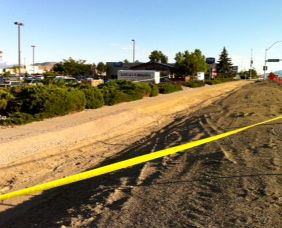
Nearby businesses were closed and the entire parking lot in front of Kohl’s was cordoned off as a crime scene. The shooting became the talk of the town, with state offices closing and nearby businesses taking a page from their own makeshift emergency manual.

Raley’s in Carson went on lockdown when an employee saw the gunman in the parking lot on a rampage. Shoppers were walking by looking bewildered while others stood with their hands over their mouths dazed in disbelief that such a huge crime could happen so close to home.

A bouquet of flowers was placed at the crime tape as a gesture of sympathy to the crime victims.

Western Nevada College in Carson City was spearheading a candlelight vigil starting at 8:30pm Tuesday at the capitol complex, at the statue of the fallen soldier.


9/11: Bracing for news from family working in NYC

Publisher’s note: This is one in a 12-part series running from Sept. 1-12 about how Lake Tahoe is tied to 9/11.

By Jessie Marchesseau

My alarm went off at 6am. It was Sept. 11, 2001, five days after my sister Summer’s 24th birthday.

I was not sure if she had received the gift I had sent yet, a small gold kaleidoscope with a colorful glass wheel on the end. I had a habit of sending gifts late.

Summer lived in Elizabeth, N.J., about 15 miles from the heart of New York City, and 2,700 miles from my home in Genoa. She worked in Manhattan and would have caught the train to Penn Station more than an hour ago. I had visited her for two weeks that May and we had ridden that train several times.

From Sept. 1-12, Lake Tahoe News is looking at 9/11.

From Sept. 1-12, Lake Tahoe News is looking at 9/11.

Now, however, I was back home in Genoa and had to be to work in half an hour. I was a cart washer at the Genoa Lakes golf course, and though I hated the early hours, I did appreciate the free golf.

After dressing and grabbing a quick breakfast, I jumped in my car for the morning commute. At about a mile on a country road, it was considerably less time-consuming than Summer’s.

As I started on my way, it was clear that this morning’s radio content was different than the usual music selection. In fact, there was no music at all. Just people talking about a horrible plane crash in New York City, buildings falling, people dying and possible terrorists.

It only took a few minutes to get to work. I pulled my car into the usual space set aside for employees, but could not bring myself to turn off the engine. I sat there, frozen in my car, listening to every word they were saying on the radio, trying to comprehend.

My first thought was of my sister. She was there, in the city under attack. I knew from my trip a few months before that she worked blocks from the World Trade Center, miles even. I also knew the rest of my family did not know this.

As I sat in my car, paralyzed by the news, my parents, brother and grandparents were in Montana, glued to their televisions.

“My initial thought was that she’s not OK,” my grandmother recalls of that day. “And grandpa was just a nervous wreck. He paced the floor continually; he was just so sure something had happened to her.”

My mother, like me, retained a little more optimism.

“At first I thought, New York’s a big city; she’s probably not close by. But I couldn’t get ahold of her to find out,” my mom said. “But the more I watched the news, the more I thought she might be nearby.”

My sister had visited the World Trade Center a number of times. The ticket office there offered Broadway show tickets without waiting in line, and the restaurants had decent food. Her birthday being only a few days earlier, Summer and some friends were planning to celebrate that evening with dinner and a show.

Jessie Marchesseau, left, at her sister, Summer's, wedding.

Jessie Marchesseau, right, at her sister, Summer’s, wedding.

As soon as my mother heard the news, she tried to contact Summer, her oldest child, but to no avail. All the phone lines in the New York area were down. She tried numerous times over the next few hours, as did my grandparents.

My dad remembers calling Summer maybe a dozen times throughout the morning using his cell phone or a landline whenever there was one nearby.

“You just worry yourself sick until you find out,” he said.

Finally, I turned off the engine and walked hurriedly toward the cart barn, my thoughts racing. Did my family know what was happening? Did my boyfriend know? He was probably still in bed. Did the people at work know? And was my sister really OK?

As I walked in, five minutes late, I was reprimanded for my tardiness. I did not care. Didn’t they know I had a sister in New York? Didn’t they know what was happening? I wanted to go home and call my family and watch the news.

As the morning dragged on, I busied myself at work, and, much like my parents, kept telling myself Summer was fine. I had no access to a phone and spent the entire shift impatiently anticipating my release.

My mother and father also went to work that morning. Staying home was not going to do them any good, and Montana was not under attack.

At the office, coworkers asked my mother about Summer. They knew she lived in the New York area and wondered if she was safe.

“You always worry when your kids are not close by,” my mother said, “especially when you see something like that in their neighborhood. And you get more worried as the day goes by and you can’t get ahold of them.”

My grandparents, on the other hand, were home, watching the incessant news coverage, worrying, crying and praying.

It was not until sometime around noon or 1pm that my parents received a phone call. My sister was fine. Cell phones were still down around New York, but she had managed to get through using a payphone at a nearby school. The call was short; a line of people were waiting to use the payphone, but she wanted everyone to know she was fine.

“Oh god, it was such a relief, it was just such joy,” my grandmother said of the news. “… we had always said we were so lucky that we had never lost any of our grandchildren, and thought maybe our luck had run out.”

What the rest of us did not know that morning was that my sister had not gone to work on Park Avenue as usual. She had not gone to work at all.

“It was just one of those mornings,” she said. “One of those mornings when you get up, and nothing is going right, and you’re running late.”

In her small basement apartment in New Jersey, Summer was getting ready for work while watching the Fox 5 news. She saw the footage of the first plane hitting the World Trade Center.

“I looked at it, but I didn’t think anything of it,” she recalled. “I don’t know why. I was like, ‘god that’s horrible, but I still gotta get to work.’”

Thinking there must be some issues with air traffic control, Summer hopped in the car en route to the train station, still determined to go to work. She remembers listening to Howard Stern on the radio, a very serious, humor-free Howard Stern, covering every second of what was going on: the Pentagon, Pennsylvania, the second plane.

“That’s when I thought, ‘this is scary, I’m not going to go into the city today,’” she said.

She had already taken time off work to fly to Montana two days later. With airports shut down and the city in wounded chaos, Summer decided to start her trip early. She left that day by car.

On that cross country drive, she recalls seeing evidence of patriotism displayed everywhere and how the nation visibly banded together.

However, returning to the city the following week was when it really hit her, Summer said. As she stepped off the train into Penn Station like she had done so many times before, she stepped into a very different New York. This one had missing person posters plastered everywhere, most of them handmade. The once bustling city streets were quiet. Train station parking lots were filled with cars no one picked up for days, weeks. There was no one to pick them up.

Though she was in the city daily, my sister did not visit Ground Zero until Thanksgiving of that year. The site was still smoldering, and the smell sickening. Missing person flyers still posted.

The aftermath, she says, was almost worse than the tragedy itself: the change in the city, the somberness and those faces staring back at you from the ever present flyers.

Our family is lucky; we are all still here to tell our story of that day, to remember and to be grateful. Many were not so lucky. But whether you lost someone close to you or not, here we are 10 years later, still feeling the aftermath of that day: Sept. 11, 2001.

Jessie Marchesseau is a freelance writer living in South Lake Tahoe.


9/11: Helping at Ground Zero — a life altering experience

Publisher’s note: This is one in a 12-part series running from Sept. 1-12 about how Lake Tahoe is tied to 9/11.

By Solange Schwalbe

On Dec. 20, 2001, I traveled to New York City to celebrate my annual Christmas holiday that I have traditionally done since 1980. Only, this time the world had changed. Not only were the World Trade Center Towers and the five other WT buildings destroyed, the destruction changed the face of the entire world.

The towers were a part of my Christmas tradition. Losing them was like losing a friend you look forward to seeing once a year.

After Christmas Day, my friends and I embarked on a journey that would change my life.

From Sept. 1-12, Lake Tahoe News is looking at 9/11.

From Sept. 1-12, Lake Tahoe News is looking at 9/11.

We visited the perimeter of Ground Zero like thousands of other people. I was taking photos of what used to be there. Of nothing. I don’t know why.

When I realized what I was doing, I turned to my friends and asked about volunteering. Suddenly, I was full speed ahead to do just that.

Salvation Army has a 24-hour respite center that offered food, counseling, supplies, massage, anything the rescue workers may need. The food was rich and wonderful. All of the local restaurants donated their high-calorie dishes. Volunteers from Salvation Army served and cleaned-up the dining area 24-hours a day. Three shifts. I worked mornings, 7am-3pm.

Busing tables, I was able to connect with so many rescue workers. I would say, “Hi, my name is Solange, but call me ‘Hollywood’ — it’s so much easier!” When I go Jeeping in the Rubicon, my handle is Hollywood. Everyone called me Hollywood.

A week before my time was up, a man came up to me and offered me a job because I could talk to anyone. He said his workers would listen to me. “What? I’m a sound editor in feature films. I don’t belong here. I’ve never worn a hardhat in my entire life.”

Two weeks of training and I was working with pay in the Pit for three months. My dad thought I was still volunteering.

I worked as a safety monitor in WTC6. This building was located in the northwest corner of the “Bathtub”. It was built against the North Slurry Wall. Tower One fell on WTC6. In order to demolish the rest of WTC6, the Slurry Wall needed to be reinforced. My job was Safety Monitor for 30 drillers for a “Confined Space” — like a mine, no air and no way out. We were located underneath the debris pile of Tower One.

The being of my life was put into a box, put into the closet, shut the door and walk away. I ate, breathed, laughed, cried, wore, felt, saw Ground Zero 16 hours a day. Every day. No days off.

Solange Shwalbe says rebuilding her house after the Angora Fire was stressful because of her experiences at Ground Zero.

Solange Schwalbe says rebuilding her house after the Angora Fire was less stressful because of her experiences at Ground Zero.

The sight of the destruction was so overwhelming that we would use humor to get around the pit. I’d get a call on the radio, “Hey Hollywood, what’s your 20?” “I’m at the pool boss, by the diving board!” The sound was overwhelming. Loud all the time with heavy-duty excavators and vehicles. The “Back-up Beeps” were heard all the time. The Nextel Chirps were always going off. The drone was never-ending.

Touch. What looks like dirt was really Zone Dust. Cement, glass, metal, and every possible element of our lives pulverized around us. It was really sticky and it smelled bad. The smell was like disgusting burnt hair. Everything was chemically and biologically based. Hideous.

The past 10 years has been way too difficult. My life in Lake Tahoe was put on hold. I did not work for two years. I stayed with my dad until his wife kicked me out just after the second anniversary of 9/11. I was so distraught I actually learned how it felt to not want to be around anymore. Never have I felt that. It’s the sickest feeling I have ever felt.

Thank God one of my colleagues hired me on to his movie, and I landed a teaching gig that allowed me to get a place to live.

In 2005, I was diagnosed with a blood clot in the base of my brain. Ground Zero?

In 2007, my home burned down in the Angora Fire along with 253 other homes. Digging through my ashes for six weeks was like my own personal Ground Zero. This time I was digging for my own possessions. I rebuilt out of anger. My new house is beautiful.

I have my career back as a motion picture sound editor in feature films, and I am still teaching at Video Symphony in Burbank.

I will be attending the 10th anniversary of the terrorist attacks at the World Trade Center like I have every year. The biggest difference this year is that because of the political presence (including President Obama), the families of the victims are the only people who will be able to attend the ceremonies. No firefighters, no cops, no EMS, no rescue workers, no volunteers. If it were my decision, due to the lack of room at the site because of the new construction of the Freedom Tower, the ceremonies would be at Madison Square Garden for everyone. We could have a procession from Ground Zero to MSG.

Every year I am at the WTC Cross at 8am on 9/11. This year the WTC Cross has been moved underground for the new memorial. I am devastated. This will be the first year that I will not be able to be at the Cross.

I feel an incredible amount of anxiety getting ready to travel to New York City for two weeks. There are many events planned for the week prior to 9/11. I will probably not attend any of them. My main focus is to see and be with my Ground Zero family. We all worked together in the pit.

I have been able to heal from the Angora Fire. I will never get over Ground Zero. I have the WTC Cross tattooed on my shoulder. I wear my Cross chain every day. Ground Zero will always be a part of me. I suffer from anxiety disorder because of it. I fear nothing. Things don’t matter anymore. How significant a person is in my life has changed. I always wanted to be friends with everyone. Now, I choose a few. My perspective, priorities and how I respond to events have totally changed. I’m more compassionate, less trusting.

How I dealt with the Angora Fire would have been completely different if I had not experienced Ground Zero. I would have been the “victim” in a pity party the whole time. Instead, I felt angry but empowered.

I am not afraid to die.


9/11: Composure in tragedy despite knowing the dead

Publisher’s note: This is one in a 12-part series running from Sept. 1-12 about how Lake Tahoe is tied to 9/11.

By Lorenzo Gigliotti

During a recent interview a reporter noted a lithograph depicting the flag raising at the site of the World Trade Center following the events of Sept. 11, 2001, which led to a discussion of what I was doing on that fateful day, after which I agreed to write a brief column recounting my memory of that day in our nation’s history.

Sept. 11, 2001, I was in my third year as fire chief for the city of Grandview, a first ring suburb of Kansas City, Mo. I arrived at my office in Fire Station 1 at about 6am, and like most mornings parked behind the station and walked through the apparatus bays to the administrative wing of the building. As I was headed to my office to change into workout wear, I found the oncoming and off-going crews glued to the television set which was in the space set aside for physical fitness. Earlier that morning, at 7:59am Eastern time, American Airlines Flight 11, a Boeing 767, crashed into the North Tower of the World Trade Center.

I recall thinking what a tragic accident.

From Sept. 1-12, Lake Tahoe News is looking at 9/11.

From Sept. 1-12, Lake Tahoe News is looking at 9/11.

However, within about two minutes, a second aircraft, United Airlines Flight 175, another fully-fueled Boeing 767, crashed into the South Tower of the World Trade Center.

I recall being shocked, thinking that this was an intentional act and that we were under some sort of attack.

I contacted my boss, the city administrator, at home to discuss what had occurred. This led to a full day of meetings discussing our preparedness and security levels, not only as a small city within the Kansas City metropolitan area, but the security and preparedness level for the metro area as a whole.

Asked by the reporter if I knew anyone who perished that fateful day, it caused me to recall an experience I had 13 years beforehand.

In June 1988, I found myself standing in a long line waiting to check in at the registration desk, having just departed the bus which delivered 40 of us, fire service professionals from around the country, from the Baltimore/Washington International Airport to the campus of the National Fire Academy to enjoy the next two weeks of coursework in executive development. The National Fire Academy is contained within the National Emergency Training Center that is located on the site that was the Saint John’s College for women located in Emmitsburg, Md.

Lorenzo Gigliotti

Lorenzo Gigliotti

Before the campus was remodeled in the late 1980s, students were housed in communal dorms with anywhere from two to seven students sharing large dorm rooms; bathrooms were located in the halls; and meals were served in the “chow” hall which was and still is centrally located on the campus.

At 11 this particular evening, I completed the check-in process and was assigned a room in “C” dorm where I found myself in a double occupancy room with a gentleman from the New York Fire Department. I got to know this gentleman over the next two weeks. His name was Peter Ganci, and he was, at that time a captain with the fire department of New York. Peter’s career progressed to his appointment as the “Chief of the Department” which is the highest uniformed rank with the New York Fire Department. Chief Ganci was among the 343 firefighters killed during the terrorist attacks on the United States on Sept. 11, 2001.

I have been known to use the catch phrases like “the world is a small place” or “the fire service is a small fraternity,” but little did I know how small until I recalled this chain of events that certainly changed my life.

Lest we forget – 343.

Lorenzo Gigliotti served as the fire chief for South Lake Tahoe from January 2005 to September 2011.


9/11: Stage becomes a vehicle to share experiences, feelings

Publisher’s note: This is one in a 12-part series running from Sept. 1-12 about how Lake Tahoe is tied to 9/11.

By Susan Boulanger

On Sept. 11 at 2pm, the LTCC Theatre Arts Department will have a special theatrical presentation to commemorate the 10th anniversary of 9/11. I am excited and grateful that members of various branches of South Lake Tahoe law enforcement and fire departments, as well as several other LTCC staff members, have joined with me to present several events that will follow the play, including a panel discussion, and a special commemoration of the Victims and Heroes of 9/11 at the Ledbetter Terrace. This event will culminate in honoring our present-day heroes in Lake Tahoe – law enforcement, fire, military, and all public safety personnel.

So, the question posed to me was — “Why are you doing this?”

I don’t have enough space to fully express my feelings or thoughts, or to describe my need and my joy to use my art to reach out to my community. But I will try to put some of them into words.

From Sept. 1-12, Lake Tahoe News is looking at 9/11.

From Sept. 1-12, Lake Tahoe News is looking at 9/11.

To me, the events of 9/11 were staggeringly horrific. It’s 10 years later and I still can’t get my mind around it; I still feel for the victims, the heroes, the rescue workers, and all of the families; and a nation that was deeply wounded.

Like so many other people, I wanted so much to go to Ground Zero to help, but that wasn’t possible. And what could I have done there to help?

So, I donated what money I could afford. I prayed. I attempted to comfort one of my students who had lost a brother in the World Trade Center. I wept for the victims and was in awe of the heroic efforts of so many people. I tried to comprehend it all. And I felt helpless.

On the 10th anniversary of 9/11 I can do something. I can use my abilities as a theater artist to help this community pay tribute, remember, and hopefully, heal a little.

Some playwrights in the world of theater wrote plays connected to the impact of 9/11. Some of the plays dealt with personal experiences; some were fictional, and some were taken from the real-life experiences of people near Ground Zero. “With Their Eyes – A View From a High School at Ground Zero,” edited by Annie Thoms, is a collection of real-life accounts of students and staff members at Stuyvesant High School in the shadows of the towers.

A year after 9/11, a play called “The Guys” by Anne Nelson was performed in New York. Based on a true story, this play deals with a NYC fire captain who lost eight of his men in the towers and now must try to find the words to honor each man’s memory. While the world was calling these men “heroes,” (which, of course, they were), this play reminds us that each of those heroes – everyone who ran into the horror to help – was human, an ordinary person who selflessly gave of themselves to help others.

I had the idea to do this commemoration a number of years ago. I knew that I wanted to do something to mark the 10th anniversary and, as a theater artist, I knew it would have something to do with the stage. When I was hired as the director of theater at Lake Tahoe Community College two years ago, one of my first thoughts was “I will have a place to do this commemoration!”

I started with the idea to do the two-character play, “The Guys,” but once I was at LTCC, I wanted to include more people. That is when I decided to incorporate monologues from several different plays. I now have 18 actors involved.

Some of the play will focus on the immediate experiences of people – what happened at the moment of the attack and directly following. Some of the play will focus on the aftermath.

Most important for me, though, are the parts of the presentation that focus on the people who were the heroes – this presentation speaks directly about the firefighters who were lost, but I look at it as a representation of all of the public safety personnel who were lost that day.

Theater is such a unique medium. The immediacy of it, the live actor/audience give and take, provides an experience that is unlike any other art form. Theater provides a connection for the audience that allows a deeper experience. I am hoping that this piece of theater, and the events that follow, will provide a meaningful experience to the members of our community.

Given the scope of what happened that day – and what has happened since – this project is a small thing.

But, it’s something I can do.

Susan Boulanger is director of theater arts at Lake Tahoe Community College in South Lake Tahoe.


9/11: Tahoe awakens to tragedy, Reno airport in chaos

Publisher’s note: This is one in a 12-part series running from Sept. 1-12 about how Lake Tahoe is tied to 9/11.

By Susan Wood

The early morning started out like any other day for me — in pursuit of coffee from the kitchen. Along the way, I turned on the television news and couldn’t believe my eyes. A jet was flying into a high-rise building later identified as one of the Twin Towers in New York City.

Like most Americans on Sept. 11, 2001, I was transfixed. How could this be? Was the pilot suicidal or asleep?

From Sept. 1-12, Lake Tahoe News is looking at 9/11.

From Sept. 1-12, Lake Tahoe News is looking at 9/11.

It didn’t take long before terrorism seeped into my cynical brain when I saw a second plane hit the next building.

Being a news reporter forced me to jump out of my workout clothes and onto the telephone, where I woke up the newspaper’s editor, Michael Green. He had no television, so I had to describe this unprecedented event on the East Coast and convince him it was bound to reverberate to the West.

The newsroom was rocking with activity that most community papers never see. It reminded me of the old days at larger newspapers. The conference room became a designated “war room.” Assignments were handed out readily to journalists who I’d never seen make it to work before 8am.

My primary assignment was clear and evident. I would drive to the Reno-Tahoe International Airport, where I certainly expected chaos.

On the way, I called the Federal Aviation Administration and got on a mass media conference call in which it was difficult to hear yourself think. Questions thrown out by journalists across the United States peppered the line. The FAA was shutting down airspace across the nation. The fear was astounding. Thirty-plus airplanes were unaccounted for, and aviation officials ran out of answers – abruptly leaving the conference call.

With another plane flying into the Pentagon and another into a Pennsylvania field by midmorning, targets all over the country became a real threat.

When I arrived at the airport, traffic was backed up. Police shuffled people away from the doors of the terminal as the airport was being evacuated. Frantic passengers crowded the rental car counters to make their destinations – the long way. They ran out of vehicles that day.

I’ve never seen such cooperative negotiation. I heard many accounts of people sharing vehicles headed to states thousands of miles away from each other. Who knew when we would be able to fly again?

Susan Wood keeps covering stories that impact Lake Tahoe.

Susan Wood keeps covering stories that impact the Lake Tahoe Basin.

The thought entered the mind of Adam Mayberry, the airport’s public information officer at that time. Now an Airport Authority trustee and spokesman for the city of Sparks, Mayberry was forced to go into overdrive 10 years ago. He established a few news conferences, kept a line open for him at all times and even spent the night at the Best Western across the street from the airport.

Sept. 11 started with a shrug by Mayberry, then disbelief turned into tragic shock and a long working day.

While law enforcement and maintenance crews were removing trash containers and shutting down roadways, Mayberry, who is a pilot, was concerned with the public safety message. With all the tools and tactics for various scenarios, nothing matched this event.

“We have all these emergency plans in place, but there’s no scenario in that red binder of a national grounding as a result of a terrorist attack,” Mayberry recently told Lake Tahoe News. And to top it all off, Airport Director Krys Bart was struggling to return from a meeting in Canada.

Mayberry characterized the closing of the region’s airport as surreal. That was a good description. I stayed long enough that day for it to become a ghost town.

The few stragglers left to fend for themselves in trying to get home stayed glued to the televisions. I understood. It took me a few days to pull myself away. It was as though if I kept watching, the outcome would change.

It dawned on me what day it was – 9-1-1, an emergency call sign. I wondered why little mention was being made to that irony.

Instead, I concentrated on my work upon my return to the office late that afternoon. It was as active as the morning. I went home late that night exhausted — mentally, physically and emotionally. Nonetheless, I summoned enough energy to watch rescue efforts in New York pan out on television.

Outside of work, people’s consciousness in the days that followed fluctuated between a general haze and willingness to share. In times of crisis, we often pull together. There was an evident return to home and hearth as loved ones appreciated each other more and strangers in the remote town of South Lake Tahoe formed a kinship.

Forget talking about the weather. Our lives appeared to become more grounded in our roots and genuine humanity.

Susan Wood was a reporter for the Tahoe Daily Tribune on Sept. 11, 2001.


9/11: Still coping with losing airline friends as nation grieves for others who died

Publisher’s note: This is one in a 12-part series running from Sept. 1-12 about how Lake Tahoe is tied to 9/11.

By Cindy Trigg

Sept. 11, 2001, is seared in the minds of all Americans who are old enough to remember. Often it is said that we remember where we were when it happened. Like when Kennedy was shot, when the shuttle exploded, we will never forget.

As part of the American Airline family as a flight attendant and my husband a pilot, both based in New York when it occurred, it is hard to not to forget, especially as the anniversary comes around. Just as it is hard not to forget our colleagues, although when we remember that day as a nation it’s hard not to feel like our colleagues are not remembered. There is no ill will at all toward the accolades that the first responders receive every year at this time; sometimes I just hope to hear someone say the crews’ families are also in the nations prayers.

There are interviews with passengers’ surviving relatives, with first responders’ relatives, with the relatives of the innocent victims in and around the WTC, but barely a whisper about the airline crews. My dear colleagues, flight attendants and pilots, my thoughts and prayers are with your families. I pray they have peace of mind. Always remember your family members are heroes.
From Sept. 1-12, Lake Tahoe News is looking at 9/11.

From Sept. 1-12, Lake Tahoe News is looking at 9/11.

People forget that flight attendants are the first line of defense in a hijacking, and today even more so. The pilots are now locked into the cockpit with a steel door and they tell you, you are on your own, the door cannot be opened, a crewmember will not come out.

Some of you might have heard of Betty Ong. She was one of the two flight attendants who made phone calls to the southern reservation desk who in turn reached SOC, security at American Airlines. She was able to calmly explain to the reservation supervisor what was happening. She gave them the passenger seat numbers of the men who went into the cockpit, gave them the seat number of the passenger who had had his throat slashed, and was able to let them know that one flight attendant, the purser, had been stabbed and was dying and another had been stabbed but was more stable.

Reservations wanted to know if they had called for a doctor.

The remaining flight attendants had moved the balance of first class passengers into coach because what was believed to be mace had been sprayed in the first class cabin. Then flight attendants were comforting the passengers and bringing those who needed something to drink a drink. There was no panic. They did their job and did it well even as one of their colleagues lay dying and another lay injured.

These were the flight attendants on Flight 11, the first aircraft to hit the Twin Towers. These flight attendants were able make sure the central reservation agency knew and confirmed they had been hijacked. Both flight attendants were on the phone with the ground when the aircraft hit; this after being on the phone with the ground for half an hour.

At the end, the flight attendant could be heard saying “we’re too low, we’re too low” and in the recording you can hear the people on the ground asking if they were still there after the aircraft hit the tower. This was 30 minutes prior to the second aircraft hitting the second Twin Tower. In reality it was almost one hour from the first call until the second aircraft hit. How could it be possible for anyone to remotely consider the first aircraft to be a small aircraft or an accident?

Of course there were three more aircraft that went down that day. Betty and her fellow crewmembers were the heroes who stayed calm, did their jobs and made the calls to allow the system to start working to get the rest of the aircraft out of the air. No one really knows what else was planned that morning because cockpit crews all over the United States could be told to keep their doors closed and land immediately. Other aircraft were not able to take off. These people deserve to be mentioned and thanked during every ceremony and commemorative activity that the first responders received.

Getting the call

Having been awakened by the phone ringing at 6:15am, I answered and heard the distraught voice asking, “Where’s Bill?” — all I recall is asking, “What’s wrong, what’s wrong?” while he kept asking, “Where’s Bill?” Here, I handed my husband the phone.

“Turn on the TV!” I must not have been moving quickly enough because he repeated it rather quickly and more harsh than I was used to. Together we sat there and watched with the rest of America as the second aircraft slammed into the second tower of WTC.
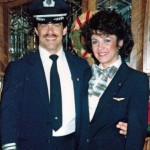
Bill and Cindy

Bill and Cindy in 1999

Our first thought was of course was it an American Airlines aircraft with our crew and colleagues aboard. Sadly, we learned in a very few minutes in fact the first of the aircraft indeed was one of our own.

It is beyond comprehension that anyone in our government, especially our president, could have mistaken the first plane as a small aircraft or a “not a very good pilot” as was later reported. As I am recalling in memory of my colleagues I will not voice my political opinions, however I cannot leave out what all of America learned later. President George W. Bush was given a briefing on Aug. 6 that Osama bin Laden determined to strike in America. Later on there was confirmation that some of the chatter had indicated a hijacking. The response by Condoleezza Rice that “we thought it was only a conventional hijacking” can lead one to think that there is no value to the lives of our crew or our passengers. Only a conventional hijacking? If that were the case, where was heightened security that was implemented prior to the eve of 2000.

Bill went back to New York the first day the flying ban was lifted. That had to be one of the most fearful days I can recall. I think of the flight attendants who had to work in those early days after 911. There were opportunities to ask for the time off, but there would be no paycheck. Most flight attendants scheduled to fly did not have much of a choice if they were supporting a family. Those were heroic crewmembers.

Actually, today is no different; they are the first line of defense. My flight attendant friends say they don’t think about it unless something big happens in the Middle East, which is all too often.

Going to New York

We went to New York together about five months after the tragedy. It seemed like it was miles long, the fence that held pictures of victims, hats, memorials. What you could see of Ground Zero was devastating as it was three years later when I took three seniors from Whittell High School to New York for the Macy’s Thanksgiving Day Parade. We stayed near Ground Zero the first day. They gathered items and notes from the community to take with them and today it is in the small museum that stands at the St. Paul Chapel of the Trinity Church. From everything they received they rotate the items from around the world to acknowledge the brave and fallen. When Bill and I were there five months after the attacks, there were still the piles of ash on the grounds of the chapel cemetery. Some piles were so high it covered the head stones.
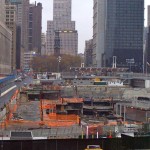
Ground Zero a few months after 9/11. Photos/Cindy Trigg

Ground Zero– New York City. Photos/Cindy Trigg

Interestingly, as close as the chapel was to Ground Zero not one piece of glass broke in the chapel. The large oak in the back entering the cemetery split in half and was the only thing on the chapel ground that was destroyed. Going back with the cheerleaders we were given a tour with the docent of the chapel. The pews in the chapel were scratched and damaged, they were going to repair them but thought it was better to leave them be as a historical marker. This is where the first responders came in and literally collapsed for moments at a time to rest. Their equipment that they wore and did not even take off is what damaged the pews. The special area and chair that President George Washington sat in for his inaugural church service was used for the first responders to sit in to soak and relax their feet. Some of their boots were melting to their feet because of the heat from Ground Zero

Tragedy continues

As it turned out, after 25 years of working as a flight attendant I never returned to American Airlines as a crewmember. At the time of 911 I was on a leave of absence for an injury sustained on the aircraft. I was conflicted on whether I wished to work again in that capacity, not because of fear, but because of my son. His dad had passed away the year before. Two months later, practically to the day, American Airlines experienced another disaster – the crash of an American Airlines AirBus 300 over New York on Nov. 12, 2001.

This was the type of aircraft my husband was flying at the time. All aircraft have tail numbers that help identify the aircraft and it’s always on the paper work. My husband had flown the aircraft that crashed on Monday morning two days earlier, on Saturday. Now, it really hit close to home. The morning of the second crash the same friend called again, “Where’s Bill, where’s Bill?” at 6:15 in the morning. Bill was in New York and I had spoken with him the night before, but it was already after 9:15 and not being quite awake it was a bit confusing.

Again Dave was saying turn on the TV. I was able to let him know right away that Bill was spending his day off in New York and that he was OK. Unfortunately, my husband was standing outside of the terminal and was able to see the plume of black smoke that suddenly came off the horizon. Briefly he hoped it was a fuel storage tank, which if you have flown out of JFK, you can see the maze of those fuel storage tanks. He said the minute he walked back inside the terminal he knew. He went to operations and as soon as the elevator door opened he knew it was an American Aircraft from the sound of the crying and the exclamations of disbelief. And then he found out that one of the best co-pilots on the “Bus” was working the flight. He had had a chance to see them that morning before they went to the aircraft and he got ready to go to the hotel.
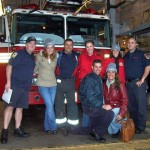
Cindy Trigg, kneeling, and Whittel cheerleaders with New York firefighters.

Cindy Trigg, kneeling, and Whittel cheerleaders with New York firefighters.

The phone rang all day. After calling Bill’s daughter, mother and my mother and father I reset my answering machine with an out going message, “Thank you for calling, Bill is safe, leave a message.”

It was so much more difficult because we were not together. We spoke often that day, but it was like we were all on hold, the speculation if it was another terrorist attack was rampant. It was the last thing the airline industry needed, the grief of so many families, families that were affected or killed on the ground that were first responders in the WTC attack, the worry of another attack, the delicate scab being ripped from the heart of so many who new what the pain was all about and another group of 11 colleagues as well as passengers.

Trying to cope

It is so hard not to be morbid at times. When you know what it feels like to be frightened by something you hear or feel the airplane do that you are not used to, you know how it feels to try and get out of that jump seat to peek out of that little bitty window and then everything is OK except when it is not. It is too easy to put yourself in the same position. There is only one place for a particular flight attendant to sit, same closet in front of you, same galley across from you, same first class or coach seat that you can see or not see. There are no variables, you always know where and what your colleagues were doing when you find out who was on the flight and what position they were working.

I thought 911 would be the worst I would ever see in the airline industry and I hope to God that it is. Over the 25 active years of working, there were probably more air disasters than I can think of. My first year there was the DC-10 on Memorial Day weekend in Chicago, Flight 191. The airlines usually retire a flight number when it has been in a disaster. There was the Delta flight in DFW, another 191, an American flight in Arkansas with a Check Airman, and who can forget the TWA incident that happened over the Atlantic just after take off from New York. These are just a few, and it is when it happens right after take-off or before landing that chills you because that is where we are always in the same positions.

In reality, when you take into consideration all those people who have died on our roads, it is a safe career. It is sensationalized and we see the pictures on TV over and over again. For that very reason, I could not see myself going back to working in the cabin until my son was older.

There are so many stories to tell about how wonderful this group of workers is. I will tell you one. There is a couple who fly international out of Chicago, they used fly out of Los Angeles. I remember flying many times with Ernie. They always flew in and out of Frankfurt to Chicago. During the early years of the Iraq war when our soldiers were being deployed and they started coming home for the first time, Ernie and his wife would bring a fresh roll of grass sod with them on their trip, haul it to the hotel. This is by no means a light item and they would bring it individually if they were flying by themselves. Haul it back to the aircraft for the return flight to Chicago. The agents would always let the military men and women board first. They would walk down the jet bridge and Ernie or his wife would have rolled out the sod from the jet bridge to the inside of the aircraft and they would welcome them back to American soil. I cannot tell you the stories we heard about those military men and women getting down to kiss that soil, the tears, the emotion. The agents always waited for the flight attendants to let them know they were now ready for the other passengers making sure the tears were dry and that roll of sod was now in the hands of the military men and women.

There was the crew I flew with that I will never forget when we were flying to London and Princess Diana died. We were there four days from that Sunday morning when the headlines broke until the day of her funeral. We were there with the ground crews and flight op people from London when Elton John sang and for the moment of silence. We stay at the Forum Hotel in London, which is literally right down the street from Kensington Palace. How do you forget the people you spent those kinds of days with?

Healing process

Such conflicting emotions. Do I write about the drama and the tears? But then we are so lucky to have been touched in such a minimal way? 9/11 was shocking, shocking to all America.

People who died and were involved in 9/11 came from far and near.

People who died and were involved in 9/11 came from far and near.

I still fly, travel, encourage my son to travel and travel with my family. I always pray that we are safe.

It is really funny a lot of times, in fact most of the time we speak about the aircraft in terms of “she”. It’s hard to explain, like when the crash in AK happened, watching the pictures on TV of the aircraft it was so personal. Maybe it would be the same if the building you worked in caught fire and all you could see was the shell. I still look at an airplane taking off and it’s hard to believe you can make a living in that skinny silver tube. Watching Air Force One taking off in Reno I just automatically think to myself, “OK girl, climb, climb, climb.” It is still so remarkable to me.

One thing I do know for sure, I would not trade my years as a flight attendant. I loved my career and colleagues; in fact I married one, my husband, who is still a captain with American Airlines.

When speaking about our crews it’s hard to give you an example of how we all treated each other as family. Charles Burlingame was the captain of American Flight 77 that went into the Pentagon. Before I had been on leave I was commuting from to New York from Reno usually through LA. Capt. Charles “Chick” Burlingame was one of the last pilots I flew with. On one occasion my husband and I both commuted home with him as captain. The last time I flew with him he allowed me to sit in the cockpit for take off and landing because there were no more seats. This was definitely not OK, but that was how things were before 9/11. The crews took care of each other.

Other crewmembers were family, and the cockpit crews were especially nice to those of us who were living with or married to a pilot. That was another thing, I refer to Bill as my husband throughout the story but we did not get married until March 2002. We decided to get married after 9/11 and the crash in New York in November. We had been together for 13 years, had accumulated some real estate and had other investments. We did not want our families to have to sort things out if anything happened. I tease and tell him I finally decided to say yes, actually he was the one who finally relented. It’s hard to explain why we finally actually got married. Of course we had loved each other for many years, but each having our own children it did not seem necessary. There was a sense of wanting to know that we were together, wanting to know there was an “ever after.”

The crash in New York was too close to home and the realization hit hard that it is quite possible that it could be our own loved ones. The odds go up when you do it for a living, but you really never think about it, at least not before 9/11 or the crash on Nov. 12.

Since 9/11, when I fly standby, which is the only way I fly, I do not get the least upset about missing a flight or getting bumped. If I belong on the flight, I will get on, if not, grab a good book and wait for the next flight. If I get home, I get home. If I have to spend the night, I spend the night even if it means sleeping in the airport, which is really not so bad with a good book and a big coat.

I was very proud of the job we did and I still miss it every day. And I was never as proud as I was of my colleagues as I was on 9/11. I always knew we were trained well and always knew they would do their best under the most extreme conditions. Unfortunately, they had an opportunity to prove me right.

Please remember these heroes when we commemorate the 10-year anniversary. If you’re traveling at that time, let your crewmembers know their friends were heroes, too.

Cindy Trigg lives with her husband, Bill, in Stateline.