Leaf peepers find perfection throughout Hope Valley

By Kathryn Reed

HOPE VALLEY – It’s here – that kaleidoscope of color Mother Nature dazzles leaf chasers with each autumn. This may be the peak weekend for colors in and around the Lake Tahoe Basin.

Cresting Luther Pass near the cutoff for Armstrong Pass on Highway 89 the cars are parked on both sides of the road Saturday. Cameras are out. People are smiling and going “ooohhh” and “aaahhh”. Yellow and orange dominate the landscape.

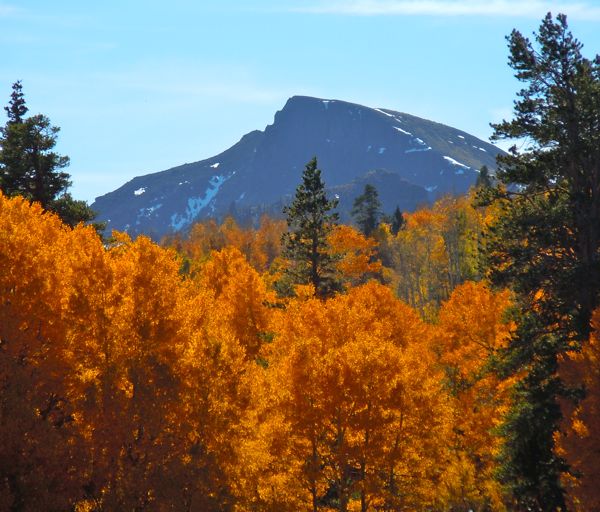
Elephant's Back from a trail off Highway 88. Photos/Kathryn Reed

Elephant's Back from a trail off Highway 88. Photos/Kathryn Reed

Looking across Hope Valley, pockets of aspens look like swatches of paint samples interspersed with the green conifers.

While some of the aspen leaves are still green, most have turned, with others already brown or fallen.

Some areas are like a carpet of leaves.

We pull over again, this time off Highway 88. Crossing a downed barbed wire fence we enter another aspen grove on the far side of the valley.

It’s one of those Tahoe bluebird days so the aspens are even more electrifying when looking up.

People seem mesmerized by the leaves dancing in the gentle breeze. A different type of fool’s gold, perhaps.

Jane Welles is near the highway painting what I’m photographing. Each fall she drives from her home in Nevada City to spend a few days capturing the Sierra autumn on canvas.

Driving up Highway 88 the usual line of cars is not at the old house. Colors here are past their prime – but still worth a stop.

We turn around.

Sue suggests we take a road to the left (about 4.3 miles west of Pickett’s Junction). We stop a little ways up, though the Jeep would have been fine to continue on the road. We wanted a little exercise.

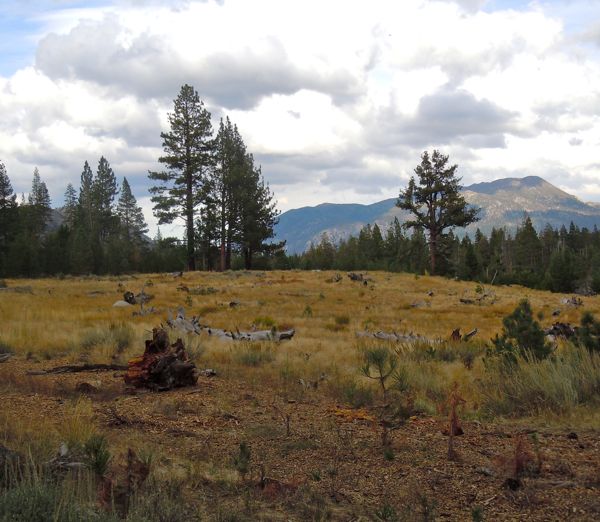
A woman along the way said ahead is a meadow, while back at the Y would lead us to a lake. Oh, that meadow – the views to Elephant’s Back are magnificent.

Time for a bite to eat at Hope Valley Café. (It’s beyond Sorensen’s on the right.) Leesa Lopazanski has owned the place for the last four years. Pie is still a reason to go. But don’t expect to get the recipe. She’s not sharing.

We recommend the pumpkin – which she makes Southern style, with buttermilk.

“It makes it more fluffy,” Lopazanski said.

It’s not like any other pumpkin I’ve had before. Order a piece to go; we wish we had.

ngg_shortcode_0_placeholder (Click on photos to enlarge.)


River restoration, golf course move OK’d by state board

By Kathryn Reed

MEYERS – Tears of relief. Gearing up for the next hearing.

Those were the reactions from the two sides in the divisive Washoe Meadows State Park, Upper Truckee River, Lake Tahoe Golf Course issue.

On Friday, before a crowd that at times numbered more than 100 people, the California State Park and Recreation Commission unanimously approved staff’s recommendation to accept the final EIR for the river restoration project, and to swap land between the park and Lake Valley Recreation Area to allow the golf course to be reconfigured.

State Park and Recreation commissioners on Oct. 20 get an earlful. Photo/Kathryn Reed

State Park and Recreation commissioners on Oct. 20 get an earlful. Photo/Kathryn Reed

It was Cyndie Walck, State Parks hydrologist who after the vote was taken, broke down in tears. She had no idea how the six commissioners would vote. She has been working on this project for five years, attending dozens of public forums.

“I’m surprised,” Walck told Lake Tahoe News after the vote.

On the opposite side are members of Washoe Meadows Community. They don’t want undisturbed parkland on the South Shore to be developed into nine holes of golf. They have been working just as hard as Walck – but for a different outcome.

“We revise our strategy and we get ready for TRPA,” Lynne Paulson said outside Lake Tahoe Golf Course as to what is next for her group.

(On Dec. 7 at 9:30am, Tahoe Regional Planning Agency APC votes on the EIR at the Stateline office. On Dec. 15 at 9am, the TRPA Governing Board votes on certification of final EIR at the Stateline office.)

Fifty people spoke during the 2½ hours of public testimony. Thirty-one were against the preferred alternative 2 in the environmental impact report, 17 in favor, and two were in the middle.

The reach of the Upper Truckee River that flows through State Parks property is called one of the worst. Banks are eroding, causing sediment to plop into the river and be carried into Lake Tahoe – which is said to be helping to maintain that body of water’s clarity loss.

Most of the opponents to alternative 2 are in favor of river restoration. What they opposed is moving half of the 18-hole course into the park.

Each side disputes how much pristine v. disturbed land will be affected. Each side gives tours that are very different and show their respective realities.

Ultimately, though, the commissioners know that if they don’t fix the sediment issue, Lahontan Water Quality Control Board will level the hammer. While they had issues with Washoe cultural sites being covered in dirt as a way to preserve them, it wasn’t enough to vote against the project.

Commissioner Elva Yanez echoed LTVA Executive Director Carol Chaplin’s comments that the triple bottom line is crucial – the economic, environmental, and social needs.

“It’s very clear river restoration has to happen,” Yanez said. “I’m moved by the notion that millions of dollars are generated by the golf course.”

But alarming to many is that Goldman Sachs and Starwood Capital own American Golf Corporation, the concessionaire of the Meyers course on Highway 50.

Jeff Perry, with American Golf, said the Meyers course generates $2 million a year in revenue, of which the State Parks receives one-quarter of that figure. His firm is interested in bidding on redesigning the course.

(Any concessionaire will pay for moving the holes, which will likely mean a smaller annual fee to State Parks. But in the end the park system owns the upgrades.)

Huey Johnson, California secretary of Resources from 1978 -82, gave the commissioners a book about how Michigan put together a trust from oil serverance taxes to fund its parks.

Some questioned how the parks people could think about spending millions of dollars on river restoration when dozens of parks are slated for closure in 2012. Officials said the money for restoration would come from grants, while the concessionaire pays for the golf course.


A vision for South Shore’s future begins to unfold

By Kathryn Reed

STATELINE – Vision – that is what has been missing from the South Shore.

“If we are going to be a world-class outdoor destination, we need the commercial areas to complement the scenery,” Mike Bradford told Douglas County commissioners Thursday.
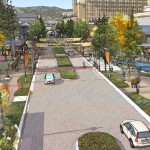
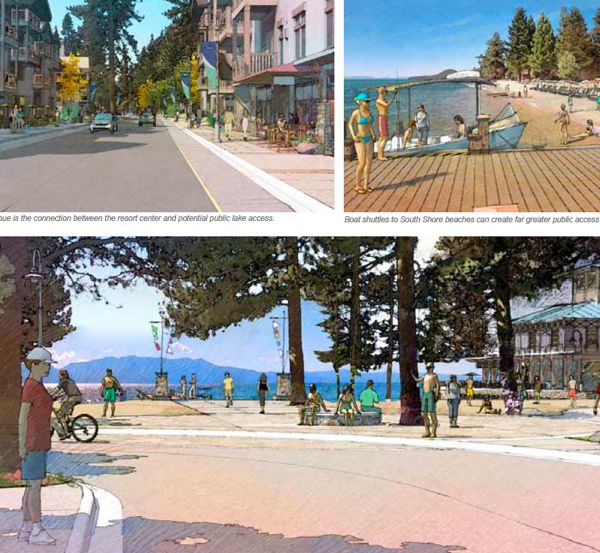
Design Workshop's vision for the South Shore near the state line.

Design Workshop's vision for the South Shore near the state line.

The county in its quest to bring economic vitality to the lake and valley created 12 project areas to focus on, with the casino corridor at Stateline being one of them. Bradford, who is part owner and runs Lakeside Inn and Casino, is the leader of that project.

As he brought others into the scoping process it became evident work needed to start at the state line and spread from there – which meant going into South Lake Tahoe.

While in the past the line separating California and Nevada has been a point of demarcation for those in charge, tourists never saw a line – except for where it was legal to gamble.

Ironically, it’s gaming that has erased the line for local officials and what is bringing them to the same table. Indian casinos in California have put the kibosh on gaming being king of the South Shore. While people move to Lake Tahoe for the outdoors and tourists have been drawn to the area for the same reason, it took the casino industry to be in decline for a decade for those who control the marketing dollars to realize a new business model is needed.

Lake Tahoe News first reported in July that the South Shore Vision Plan was in the works. Aspects of it were outlined for Douglas County commissioners at their Oct. 20 meeting in Stateline. A formal presentation will be made to that board when it has a joint meeting with the South Lake Tahoe City Council on Nov. 4 at noon at Edgewood Tahoe. It is a public meeting.

What the commissioners agreed to Thursday was to put up $10,000 of the $35,000 needed to fund the economic analysis of the plan. Lake Tahoe Visitors Authority and South Lake Tahoe are each being asked to put up $10,000, while the South Tahoe Alliance of Resorts is giving $5,000. The latter paid the $50,000 to Design Workshop to create the plan.

Dealing with TRPA

“We are giving the reigns to the governments to move forward and get it into the (TRPA) Regional Plan,” Bradford said.

One issue to overcome in order to get this plan on the ground is to allow the five counties and one city in the Lake Tahoe Basin to have greater control of their destiny instead of being told what to do by the Tahoe Regional Planning Agency.

Harmon Zuckerman, who until last month when his contract was not renewed was spearheading the much overdue Regional Plan update, supported a more liberal approach to planning than had occurred in the past. Sources have told Lake Tahoe News that Arlo Stockham is pulling back on transect planning that integrates mixed uses. However, TRPA says just the opposite is true. In fact, the plan is to give greater authority to local jurisdictions.

With the TRPA being Big Brother in the basin, for the last 40 years local jurisdictions have been under the bi-state regulatory agency’s thumb. While local politicians have not orchestrated an Occupy Lake Tahoe movement, they are talking and do want more control of what happens in their borders.

When the TRPA Governing Board meets Oct. 26 at 9:30am in Kings Beach it will hear a presentation from staff about the approach.

In some ways, South Lake Tahoe may have the most power because its boundaries are entirely within the basin. This compares to the five counties whose seat of governance is outside the basin.

“This plan should serve as a foundation, a catalyst for what can and should happen for the South Shore and Douglas County,” Douglas County Manager Steve Mokrohisky told Lake Tahoe News before the meeting. “I think everyone recognizes the current model does not allow for pedestrian friendly development, access to the lake, and has challenges regarding the environment.”

The plan

Richard Shaw with the Aspen office of Design Workshop will be at the November meeting to go over the 32-page South Shore Vision Plan. (He was not available to comment for this story.) The plan will be available to the public at that time.

What is presented in the document is not completely new. The loop road directing traffic off Highway 50 and around the casinos is still the major focal point. Overall, the plan goes from Ski Run Boulevard to Kahle Drive.
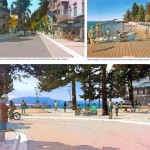
Stateline Avenue is being propoased as a gateway to lake recreation. Renderings/Design Workshop

Stateline Avenue is being propoased as a gateway to lake recreation. Renderings/Design Workshop

“The cost of Loop Road is something in the $70 million range. That is a tough nut to crack,” Mokrohisky said.

Both state transportation departments are likely to be asked to fund the bulk of the work, with the possibility of tapping into the federal jobs bill if that were to pass.

Mokrohisky said the county is talking to NDOT and that it will be up to city officials to get Caltrans on board.

While the plan put forth by Design Workshop is just that – a plan – it is something the government bodies on the South Shore need to vote on to proceed with. That could happen at the joint November meeting in two weeks.

The plan calls for a minimum sidewalk zone of 20-feet from Park Avenue to the Horizon. The speed limit would be 25mph, with multiple crossings for pedestrians.

The idea is it would make the state line area a more walkable, downtown destination, with the bulk of the traffic diverted behind the casinos.

While this idea has literally been talked about for decades, the powers that be believe now is the time to carry the idea forward.

“The principal focus at this point is from Stateline to the end of Loop Road. If we can get that fixed, the rest will be easy,” Tony O’Rourke, South Lake Tahoe city manager, told Lake Tahoe News.

He is one of the nearly 50 people who has been involved in the process to work with Design Workshop to build the vision.

“This is a bold, progressive plan. I like the whole thing,” O’Rourke said. “Clearly it’s an attempt to redefine that corridor. It’s dated and old and won’t meet the needs of destination guests.”

Part of the vision put forth by the Design Workshop says, “Retail activities will frame places for pedestrians; the centers of activity will be engaging places, providing for event programming and strong design appeal; the streets will be developed with outside dining, landscaped edges and ‘complete street design character’; local community orientation and service can be incorporated creating a rich mix of retail opportunities.”

Giving the casinos a makeover is proposed – especially at the ground level to have them be something other than spacious, vacant gaming venues.

Access to the lake has long been talked about. This, too, is a bit of an irony considering all the marketing-tourism gurus say people come to Lake Tahoe for the lake. One would think if this were the main reason, people wouldn’t be having such a hard time finding it if that were their goal.

Now the gurus say no one can find the lake and it needs to be more of a focal point.

“We need to deliver the lake to residents and visitors,” Mokrohisky said. “I have known people who came to Lake Tahoe and they are here several days before they see the lake or get access or know how to get there. This plan lays out the fundamental principals of what we need to do to provide access.”

The plan says, “A new public recreation beach will expand to the north side of Stateline Ave. to fulfill needed water based recreation. Scenic views will result form the recreational acquisitions.”

Maybe someone should ask the visitors and locals why they are here. Maybe it’s the mountains and not the lake.

What’s next?

After the elected officials on the South Shore review the plan in two weeks they will be tasked with deciding how to go forward. Douglas County without even seeing the full presentation is on board to study if the plan is economically feasible. Presuming that study is funded and comes to fruition (LTVA will oversee the bid process), and then environmental analyses will be conducted.

Bradford said the economic component would likely look at what happens if nothing were done, and then forecast for five, 10 and 20 years out.

Everyone agrees public buy-in is crucial. Also agreed to is to make any plan a reality it will take public-private partnerships.

Jobs and tax revenue – those will be the economic indictors that will push the plan forward.

If the numbers work, then the environmental concerns will be looked at. Lake clarity, total maximum daily loads, coverage, height issues, transportation, density – all of that would be addressed. That is why if TRPA doesn’t get its Regional Plan done by the latest deadline of December 2012 (originally it was due in 2007), nothing will happen.

The other buy-in needed is from private property owners who have not been at the table but whose property the planners have other ideas for.

The right players, the right time – the stars being aligned – that is what makes this vision different, according to officials.

“The vision plan creates a path we can head down together,” Mokrohisky.


Variety of questions put STPUD candidates on the spot

By Kathryn Reed

STATELINE — The six candidates running for the South Tahoe Public Utility District board had to think on their feet a bit more than is usual at election forums.

Instead of each being asked the same question, Soroptimist International South Lake Tahoe – sponsors of the event, asked different questions of each candidate. This meant no time to think, no time to essentially repeat what had been said before.

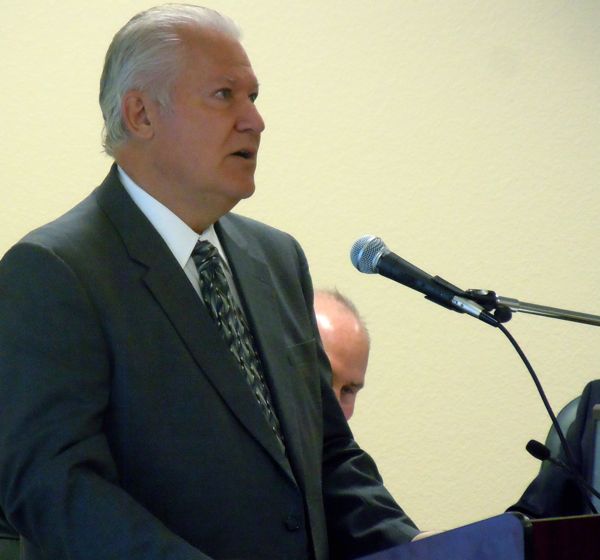
stpudAnn Swallow kept the Wednesday afternoon event at Harrah’s Lake Tahoe rolling along as each candidate was asked two unique questions. With time remaining, she asked them all to comment on their thoughts about the Brown Act – the California open meeting law.

While not all were able to precisely define what it does, they agreed transparency and openness in government is important – that backroom decisions are not the way to conduct public business.

Claude Gunsch, Mary Kortge, John Runnels and Randy Vogelgesang are vying for the seat being vacated by Marylou Mosbacher, while Dale Rise and Kelly Sheehan are going after the seat Rise currently has.

Here are the questions and answers in the order they were asked:

What vote by the board in the last year do you disagree with and why?

Gunsch: He could not think of one.

• Who will you vote for for the seat you are not a candidate for and why?

Kortge: Kelly. She is great. I know her and she will do a good job. We share a lot of views.

• Do you believe snowmaking is good or bad for the groundwater supply – and why?

Runnels: The district entered an agreement to supply Heavenly Valley for this purpose. It increases revenues for the district. I don’t see a problem with it. As long as the aquifers are replenishing, I see it as a good thing.

• What are your thoughts on term limits for the STPUD board?

Vogelgesang: I have not in the past been a strong proponent for term limits. The longer I have thought about it in relationship to STPUD, I’m in favor of it. The longer you are on the board the tougher it is to be an independent voice on behalf of the community and you side with recommendations from staff too often.

• Do you agree legal counsel should be present at STPUD board meeting, as is now the case? Why?

Rise: I’ve discussed this with staff. I don’t believe counsel should be there. Mostly I’ve noticed counsel has little interaction during the board meetings. I believe we should have a part time in-house counsel instead of outside counsel.

• If you didn’t need a majority of the board, what one change would you make immediately upon being elected?

Sheehan: I would eliminate (district) seats. I would have the top two vote getters be elected.

• How do you expect STPUD to look, operate, function four years after your term expires compared to today?

Gunsch: With my knowledge of the district I can make changes that save ratepayers money with infrastructure.

• With STPUD’s water being very drinkable and plastic in landfills considered horrendous, would you back an initiative that had STPUD working with South Lake Tahoe’s Sustainability Commission to ban plastic water bottles from being sold in STPUD’s jurisdiction or some other related campaign to reduce the sale of water bottles?

Kortge: I’m against water bottles – they cause cancer and all sorts of other things. Maybe we should bottle our own and sell it. I think it would be hard to put a ban on it. People buy a ton of bottled water every day.

• The Desert Research Institute in Reno supports cloud seeding. Do you think the water districts in the basin should get together to fund their own cloud seeding so more moisture falls and in turn speeds up replenishing the groundwater? Why?

Runnels: No. It’s an unnecessary expense. There is no shortage of water. I think the money could be spent on other projects.

• The district last week announced it would be resuming the turf buy-back program. What are your thoughts about the program?

Vogelgesang: In general I think it’s great, but with grant money only. If it were funded with our money, I would not support it.

• Liberty Energy offers free energy audits. Part of those audits includes giving out low flow showerheads. Would you support the district installing low flow toilets for customers who want them? Why?

Rise: Yes – anything to slow consumption. We offer a timer for showers. I believe before I got here we had a program for low flow toilets.

• A few years ago the district had a rebate offer for people who bought energy efficient washing machines. What are your thoughts on these sorts of rebate programs?

Sheehan: I agree with anything that doesn’t raise rates, but is an incentive to decrease use. But grant money only – no rate increase.

The election is Nov. 8. Vote by mail ballots have already arrived in mailboxes.


S. Tahoe cuts staff, gears up to make town more liveable

By Kathryn Reed

In a matter of seconds the South Lake Tahoe City Council voted to do away with a list of positions. This, after hearing about 2½ hours of testimony – from staff and a dozen others – on the 2011-12 budget.

“It seems so anticlimactic. With these votes we’ve affected so many people’s lives,” Mayor Hal Cole said as he adjourned the meeting.

As the room cleared out, sitting in the very back was Marty Scheuerman. Dressed in his uniform as a division chief with the South Lake Tahoe Fire Department, his body language did not exhibit that of the usually confident firefighter. Instead, he shook his head – not believing this day had finally come.

South Lake Tahoe Mayor Hal Cole on Oct. 18 delivers the state of the city address. Photo/Kathryn Reed

South Lake Tahoe Mayor Hal Cole on Oct. 18 delivers the state of the city address. Photo/Kathryn Reed

His was one of the 19 positions eliminated on Tuesday. In one month, he along with the 18 others (including all three division chiefs) will be without jobs. It’s possible some of them will be hired for one of the six jobs being created by the city.

He is not ready to retire. He wants to keep working. He is not alone.

Ray Zachau is a division chief and the fire marshal. One of the new positions being created is fire marshal. If he applies and were to be picked for the job, he would get the pay of a captain.

But it’s a job.

Even though the city made a convincing case for downsizing, what with 65 percent of the budget going toward personnel expenses and revenues declining – it still means the 16.5 percent unemployment rate in South Lake Tahoe is about to jut up.

While the room was filled Oct. 18 with current and former employees, their pleas to the council members to rethink their impending decisions were unsuccessful. The council on 5-0 votes ultimately chose to go forward with approving the $94.7 million budget (of which $28.6 million is the general fund budget) and subsequent cuts in staff.

Pulled from the agenda were items D and E under New Business – which both had to do with the General and Public Works contracts.

Steve Crouch, who represents this sector (which at about 60 employees is the largest employee group), was conspicuously absent from the budget hearing. His limited time as negotiator is not being well received by all employees.

Negotiations with other labor groups are ongoing. The firefighter association contract was approved Tuesday. If and when other groups settle, appropriate addendums will be made to the 2011-12 budget (fiscal year started Oct. 1) to reflect any changes.

The city speaks

Another noticeable bit of silence was Councilman Bruce Grego. He said nothing about the budget, the people being let go, or the future of the city.

Councilman Tom Davis said how hard this has been and how frustrated he is, adding that as much as employees fight for their jobs, no one has come forward with another way to eliminate the $5.2 million deficit.

Councilwoman Claire Fortier said is it time to invest in the city so it is a viable place for residents, employees and tourists.

Cole said reliance on reserves, while they are being used this fiscal year and likely will be next year as well, must end and the public sector must wake up to the realities the private sector has been living with for years – the need to live within their means.

Councilwoman Angela Swanson made the most impassioned speech, echoing on speaker Mary Ann Klein’s plea to not lose the sense of community when talking numbers and positions. But ultimately, Swanson said, “I was elected to serve 20,000 people, not just the 200 who work here.”

The day started with Cole giving the state of the city address.

In many ways it was much like a recap of a year’s worth of council decisions. Where the city has been, the decisions made to keep it afloat, and the vision for the future were neatly outlined in his 30-minute speech.

He was adamant in saying the vision is that of the council’s, to which they direct City Manager Tony O’Rourke and the rest of the staff to carry out their policy decisions.

“We have to rebuild this community. That is our long-term future. We need to maintain the residential base and attract tourists,” O’Rourke said. He is the first city manager to embrace and openly acknowledge South Lake Tahoe is a tourist-based economy and as such must work too attract tourists while maintaining a town people want to live in.

What others said

Noteworthy were the faces in the crowd not usually at a council meeting – representatives from Heavenly Mountain Resort, South Tahoe Public Utility District, El Dorado County Sheriff’s Department, South Lake Tahoe police and fire, Barton Health, and Tahoe Regional Planning Agency.

Pete Sonntag, general manager at Heavenly, explained the resort’s $25 million investment in the gondola was contingent upon lift ticket sales not being taxed. He said if the city were to renege on that deal, it would likely make future developers question whether the city will stick by its contracts.

He pointed to the 1,500 employees the resort has in the winter with an annual payroll of $16 million as evidence the company is part of this community.

“Our company may be based in Colorado, but we’re locals,” Sonntag said of the employees.

Recreation was a common theme Tuesday.

Teri Jamin, who worked for the city from 1984-2009, talked snowplow drivers and parks and rec. She believes the personal touch at the rec center will be compromised with the elimination of staff.

“The litmus test is in the end result; is it in the best interest of the city of South Lake Tahoe?” Jamin said.

Setting the record straight

• People still don’t understand the city can’t do anything about the hole – aka would be convention center. It’s in bankruptcy.

• It was noted the current operators of the ice rink are paying utilities, are responsible for maintenance and operations costs, and must set aside money for future capital improvements.

• In the past, 16 full-time employees and three or four seasonal workers were used for snowplowing. This winter, 10 full-time workers will do the job with the assistance of 11 seasonal workers.

• Bijou Golf Course will not be operated by a private entity because the return on invest is not there.

• Talks are under way to have El Dorado County operate the senior center and Lake Tahoe Boys & Girls Club to have a greater role in youth recreation.

“The service will be seamless,” O’Rourke said. And services will not be diminished.

• The City Council’s budget was slated to go up 4 percent or $7,800 to pay for any classes or travel the five may want to partake in. However, they voted that out of the budget.

• It will be in early 2012 the council will be asked to formally approve going forward with the certificate of participation to pay for infrastructure. There would be $4 million for roads, with $1 million divvied up between Harrison Avenue and Linear Park. Linear Park is slated to get about a quarter of that $1 million, with another $20,000 in city coffers for Linear Park donated from Core 24 Charities.

• Even if the Tahoe Valley Community Plan were adopted, it could not be implemented until the Tahoe Regional Planning Agency adopts its Regional Plan.


Kirkwood looking at finacial, partnership options

By Kathryn Reed

“As one of the few independent resorts left at this point and time, it is clearly in our best interest to see what type of partnerships exist and to see what our best opportunities are.”

So says David Likins, CEO for Mountain Springs Kirkwood, which owns Kirkwood Mountain Resort.

Likins acknowledged a bevy of activity has been going on at the resort on Highway 88, south of Lake Tahoe. But he was adamant the resort has not sold. Nor is it in any hurry to enter any type of agreement with anyone.

Kirkwood usually gets the most snow of any Tahoe-area resort. Photo/Jessie Marchesseau

Kirkwood usually gets the most snow of any Tahoe-area resort. Photo/Jessie Marchesseau

“We are in a good financial state. We have no pressing needs. We had solid years back-to-back and almost no leverage on assets. We sold more real estate in the last two months than we have in the last two years,” Likins told Lake Tahoe News.

“We are looking at ways of restructuring, but not along the lines of JMA buying Kirkwood.”

JMA Ventures owns Homewood Mountain Resort and until the announcement last month, all of Alpine Meadows. Squaw Valley’s owners, KSL Capital Partners, and JMA have formed a third company to operate Squaw and Alpine.

Kirkwood, Alpine and Homewood have various pass deals that link the resorts.

With the California Ski Industry Association having a meeting at Northstar on Thursday, talk of consolidation in the industry was rampant. Lake Tahoe has lost some of its market share to Colorado and Utah. It’s the Vails and Whistlers of the world that Tahoe area ski operators want to compete against – not with each other.

Likins doesn’t believe KSL and Vail Resorts are finished with acquisitions. The latter bought Northstar a year ago.

“Big, successful companies go to areas that they see are attractive and then other folks follow,” Likins said. “Resorts with real estate are even more attractive.”

Likins knows his employees saw JMA and other folks at Kirkwood on Oct. 14 – after the ski industry meeting – and that rumors are running rampant.

“I won’t deny people have been out at Kirkwood and I’ve been out at places,” Likins said. “Every discussion we’ve had is focused on how to improve strategic opportunities at Kirkwood so we can accelerate the pace of mountain and real estate development.”

Kirkwood officials have never been shy about saying real estate will fund on-mountain improvements. With the housing and financial markets tanking, this meant all upgrades were put on hold. The Expedition Lodge, five years ago touted as the resort’s showcase property of the future, was supposed to be occupied in summer 2009. It hasn’t even been built.

When Kirkwood is built-out it will have about 1,400 housing units – double what it has today. Sales of that property will allow for expanding the ski area into the 1,100 acres of terrain it has a permit to use – nearly doubling the acreage that is now lift accessed.

With Chip Seamans, COO and general manager at Kirkwood, having left about six weeks ago, personnel changes are likely, according to Kirkwood insiders.

Likins doesn’t deny management and financing discussions are what are taking place.

“Ultimately there are always possibilities for ownership mergers, investment and co-investments, either financial investors, or equity investors. There’s lots of that out there now,” Likins said.


South Lake Tahoe solidifies job cuts, budget up for vote

By Kathryn Reed

On Tuesday, the South Lake Tahoe City Council is being asked to layoff 19 people, not fund six open positions, reduce the hours of three employees, reclassify four people, and either establish or reclassify six other positions.

The action would equate to a $1.7 million savings in fiscal year 2011-12, and $2.2 million the following year.

The savings comes from salaries, pension payments, health care, workers’ comp and everything else the city as an employer must pay.

sltSouth Lake Tahoe’s fiscal year begins Oct. 1. With the council unwilling to pass a budget last month because of ongoing labor negotiations, it is operating on an emergency budget for this month.

On the Oct. 18 agenda are agreements to be ratified by the council with the South Lake Tahoe Firemen’s Association and Stationary Engineers Local 39 (General and Public Works).

While the council had a special closed session meeting Oct. 14 to discussion labor negotiations, no reportable action was taken. However, people close to the negotiations have told Lake Tahoe News agreements with the other employee groups are possible before Tuesday’s 9am meeting. If this were to occur, either a special meeting will be called to vote on contract changes or it could be incorporated into the next regular meeting in November. An addendum to the budget would be made to reflect the changes.

The positions slated for elimination include:

• Assistant engineer – one position

• Engineering manager – one position

• Engineering supervisor/stormwater coordinator – one position

• Fire division chief – three positions

• Heavy equipment operator – two positions

• Housing and redevelopment assistant – one position

• Lead street maintenance worker – two positions

• Legal assistant – one position

• Public works inspector – one position

• Recreation supervisor – two positions

• Recreation coordinator – one position

• Senior accounting technician – two positions

• Special events coordinator – one position

The positions not being funded include:

• Fire chief

• Firefighter

• Information systems technician

• Police officer

• Police sergeant

• Street maintenance worker

• Parks maintenance worker

The following positions are being created:

• Accountant (one position)

• Construction engineer (new classification, one position)

• Director of engineering (new at-will classification, one position)

• Environmental programs analyst (one position)

• Fire marshal (one position, unrepresented)

• Recreation program coordinator (new classification, one position)

Other personnel changes:

• Fire shift commander (three current employees reclassified from fire captain)

• Human resources technician (one incumbent reclassified from senior human resources administrative clerk)

• Three administrative assistants going from 40 to 32 hours per week.

Employees will be officially notified the same day the council votes, with changes effective 30 days later.

While talk on the street is those left behind are getting raises, this is only a partially correct statement. After two years, furloughs are being eliminated for most city employees. They will be paid for their time worked. Their hourly wage is not increasing. Their take-home pay increases because they are working more. In most dictionaries, that scenario does not define a raise.

If one uses the city manager as an example, the contract Tony O’Rourke signed in August 2010 called for a salary of $175,000 year. He has yet to be paid that because furloughs immediately meant his pay was $150,000. Though his pay is restored, the net effect of paying his share of PERS means his annual check is $161,000.

For the public, it means 23,000 hours more of service available each year. Those hours also equal to the salary of 11 full-time employees.

The lack of employees working is most noticeable with the road crew. Many of the snowplow drivers work roads in the dry months. But with all the overtime accrued while plowing and the inability to take furlough days because Mother Nature doesn’t cooperate, is means about a third of the road crew at any give time isn’t working during the summer/fall to get the back time for hours worked during the winter. This is one reason potholes go unfilled for long stretches.

It’s possible still that some of the snowplow drivers originally set to be laid off will remain on the city’s payroll.

The overall difference in savings from this fiscal year to next is in large part based on paying out accrued sick and vacation time, along with any severance that may have been negotiated.

While many have said that cuts should come from the top – that has happened. Most of those jobs were slashed in March. Overall, the reduction in staff from the spring saved the city $1.8 million. Of the nearly $3.6 million in personnel savings this calendar year, 53 percent of that comes from management cutbacks. Management-type employees represent 15 percent of the city’s workforce.

Even though it’s slashing of the budget that is the focus, the city is looking at ways to increase revenue. However, the three main revenue sources still remain – property tax (with many saying the Tahoe area has not hit bottom even though the 2011-12 budget calls for a modest increase), hotel tax (talk of raising it in 2013 to pay for roads), and sales tax (which is flat). Not much can be done to increase those sources of revenue.

A suggestion brought up by a member of the public to charge utilities for cutting city roads could bring in about $70,000 a year. With the work done this construction year, it might have been four times that amount.

A recreation tax is being talked about for 2013. The city has a multi-decade agreement with Heavenly Mountain Resort that lift tickets cannot be taxed. This was done when ASC owned the ski resort.

The budget is slated to be discussed at 2pm Tuesday. The meeting starts at 9am at Lake Tahoe Airport. This is the Oct. 18 City Council agenda. Mayor Hal Cole will start the morning with the state of the city address.


Northstar upgrades resort with lift, trails and lodge

By Kathryn Reed

TRUCKEE – New lift, new lodge, new terrain – it’s what Vail Resorts has done to Northstar with an infusion of $30 million since it bought the North Shore resort a year ago.

With a projected opening date of Nov. 18, the resort will have the Promised Land Express chairlift running, with the Zephyr Lodge expected to open a month later, and the additional 170 acres of ski area ready when Mother Nature cooperates.

The resort even has a new name. Gone is the “at-Tahoe” part of Northstar. The formal name is Northstar California – with the idea that it’s more than a mountain. The logo is changed and font is slightly different. The tagline is – The Way It Should Be.

The new detachable quad provides more access to the Backside – doubling the lift capacity to that area. Castle Peak run lines up so intermediate skiers are schussing toward that mountain in the far distance. Islands is so named because it has 22 trees – essentially providing islands – for skiers to skirt around.

Snowmaking guns will make sure they are covered with white stuff; plus Drifter now has snowmaking.

COO Bill Rock said so many lines exist off Islands trail that people may never want to leave it.

“As you can see, there are spectacular views of the whole Pacific Crest.”          — Bill Rock, Northstar COO

For the more advanced rider, the long-awaited access to Sawtooth Ridge is happening bill rockthis season. Called sidecountry terrain, this area in the past was accessed by hearty hikers carrying their gear up in order to ride down. Now Northstar will use snowcats to transport people to the area when conditions permit. Guided tours will be available there as well as to White Rabbit. One day the resort hopes to put Sawtooth inside the boundaries.

The additional 170 acres in the 2011-12 expansion don’t include Sawthooth. The boundaries have been extended to the skier’s left of the Prosser trail on Lookout Mountain. This adds about 1,000 vertical feet of terrain for new Lookout Glade, which is accessed from Martis Camp Express. Another 800 vertical feet is on the Sawmill Glade (off Vista Express) which is to the skier’s right of Logger’s Loop.

That’s all advanced terrain.

The additional runs bring the skiable acres at Northstar to 3,170.

While Northstar, especially with the addition of the mid-mountain Ritz-Carlton two years ago, would like to be a year-round resort, Rock acknowledged, “Our bread and butter is winter. We are a winter business.”

Thus the reason for millions of dollars being spent on winter guests.

Gold is also coming to the resort in the form of Shaun White – two-time Olympic gold medalist. He chose Northstar to be his training ground this season. The 22-foot halfpipe that will be built for his needs will be open to aspiring Olympians.

Dining with a view

Riding the Zephyr Express from the mid-mountain lodge it looks more like a construction zone at the top than a ski resort. At the top to the left is a structure that will be for the ski patrol. Their yurt to the skiers’ right was dismantled to make way for the Zephyr Lodge.

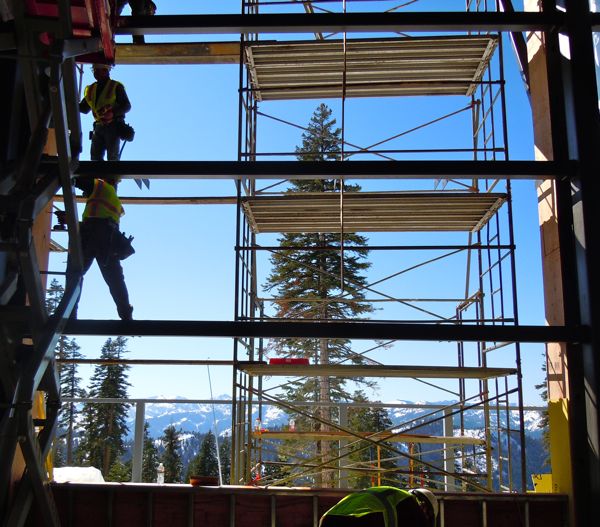
Glass panels will provide views to the Pacific Crest from the Zephyr Lodge. Photos/Kathryn Reed

Glass panels will provide views to the Pacific Crest from the Zephyr Lodge. Photos/Kathryn Reed

While it’s modeled after the Tamarack Lodge at Heavenly Mountain Resort (also owned by Vail Resorts), this is built out of steel instead of wood. SMC Contracting is also putting this facility in the ground.

The signature difference is the deck.

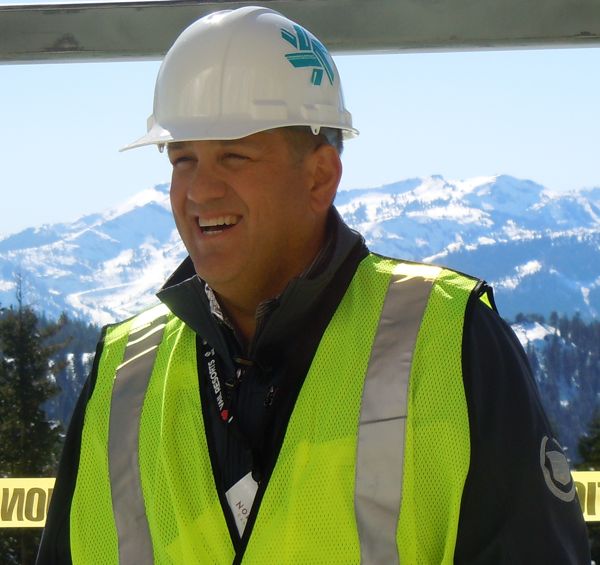
“As you can see, there are spectacular views of the whole Pacific Crest,” Rock said as the pounding of nails and other construction equipment reverberated through the partially completed lodge.

Trudging through snow even in October to get to the lodge – it was a winter scene in early fall with the distant peaks covered in white. Bear prints are visible from the deck so critters are having fun in the snow. Glass is still needed to prevent people from falling over the edge.

Besides incredible views, the location was picked because it’s accessible for most skier abilities.

Kelly Rodriguez, director of food and beverage at Northstar, is tasked with ensuring people’s stomachs are full and satisfied while dining anywhere on the mountain – but the Zephyr Lodge allows for the chefs to be a bit more creative. Yes, the Vail Resorts’ signature Epic Burger will be on the menu, but so, too, will be a burger unique to Northstar, and a veggie burger made from scratch – not cardboard.

“We have the ability to serve healthy items to consumers in a food court setting,” Rodriguez said.

Gourmet pizzas (using their own dough), a grill, Asian station and salad bar are all planned.

Whenever possible the resort will buy local products – which is defined by a 100-mile radius.

It won’t all be healthy – French fries and homemade onion rings will be available. Breakfast won’t be served, unless a bloody Mary counts. It will be Northstar’s first on-mountain sit-down bar.

In keeping with Vail Resorts’ Lunch for Less program, this will probably be offered this season at the Big Springs Lodge.

Besides the food, what resort officials hope people will notice is less congestion at the dining venues throughout the mountain. Zephyr adds 500 indoor seats and about 250 outdoor to the mountain.

Sampling some of what will be offered this season at Zephyr, the gourmet grilled cheese with its three types of cheese and side of tomato soup is yummy. Chef Steve Anderson came up with this combo.

Chef Deb Finn designed the s’mores that come with a variety of choices – such as coconut covered marshmallows, chocolate filled with caramel or mint, and graham crackers beyond the normal variety. The gas fire pits in the village toast up the marshmallows just as plump as any wood fire.

And a Dirty Snowman goes good with everything – just ask the bartender.

More information about Northstar California is available online.

ngg_shortcode_1_placeholder (Click on photos to enlarge.)


LTVA finalizing website, ready to promote winter on S. Shore

By Kathryn Reed

STATELINE – A mountain biker navigating the thin Flume Trail with Sand Harbor in the background – that’s the type of image South Shore tourism officials want people to think of when they are planning their next trip to Tahoe.

Recreation – it’s the mantra they are embracing, with gaming taking a back seat.

With nearly $300,000 spent overhauling Lake Tahoe Visitor Centers’ website, the final tweaks are being made so it is ready to go live by Dec. 1. The LTVA board was given an update on the site at Thursday’s meeting, with the folks from Duncan/Channon phoning in the presentation, but able to manipulate the screen from their San Francisco offices.

LTVA wants the new website to focus on recreation.

LTVA wants the new website to focus on recreation.

Play, Sleep, Eat, Events, Deals, Blog – those are the categories on the website. But not all board members think they are the best.

John Koster, Harrah’s-Harveys rep on the board, said, “Sleep seems incredibly boring.”

Sleep, he said, is not the word that comes to his mind when thinking about lodging.

Mindi Befu, who is on the LTVA’s marketing committee, said it is important to pick words that people intuitively understand as well as that help with search engine optimization.

The board does want to see what the final photo selections are because they were not thrilled with some of the placeholders – like the one of Emerald Bay that had a dead tree in the foreground.

“I want photos that you can’t duplicate elsewhere,” Koster said.

Carol Chaplin, executive director of LTVA, after the Oct. 13 meeting told Lake Tahoe News what people will notice most with the new site compared to the current site is more continuous fresh content, outstanding photography and video, and a look that is more current.

Noble Studios in Reno will be adding the content. Blogs will be in place for people to write about their passions.

“It will be more dynamic overall,” Chaplin said.

The logo LTVA will use to promote the South Shore.

The logo LTVA will use to promote the South Shore.

The board also agreed to the logo changes, with the T in Tahoe not being straight across as the main change from previous versions.

Open meeting law violation

The winter ad campaign was not on the posted agenda, but was added by the board members at the meeting. The same scenario transpired regarding discussing sending a letter supporting alternative 2 for the Washoe Meadows golf course-Upper Truckee River proposal.

Board member Tom Davis, South Lake Tahoe’s rep to the board, said he thought doing so would violate the Brown Act – which even though LTVA is based in Nevada, must still adhere to because of receiving California dollars and doing business in the state. To that, board President Pat Ronan, the South Lake Tahoe Lodging Association’s LTVA rep, said, “We’ve done it before.”

The board’s conclusion is they could add things to the agenda, discuss them, but not take action. But they took action on both items – so the Brown Act was violated because the public was not informed of the agenda items 72 hours in advance of the meeting as is required per the law. Even discussing the add-ons is a violation.

This could invalidate the decisions regarding the winter ad campaign and sending the letter.

Winter ad campaign

While the LTVA has not had its own winter ad campaign in years, it is going to this year. Through its affiliation with Ski Lake Tahoe, LTVA has had a voice in the past. Plus, the individual ski resorts are out in force touting their slopes.

Boarding often involves chilling, especially at Sierra -- a message LTVA will convey. Photo/LTN file

Boarding often involves chilling, especially at Sierra -- a message LTVA will convey. Photo/LTN file

With about $200,000 in carryover dollars for advertising, the board agreed to buy a billboard ad in San Francisco for January-February-March. This will use about half those dollars.

Tied to that billboard will likely be a promotional campaign with a Bay Area radio station that will include give-aways to the South Shore.

Laura Davis, with Duncan/Channon, told LTVA that billboard receives 756,000 impressions a week.

In changing policy with having a winter campaign, Chaplin said, “We felt we hadn’t talked to those people directly in a long time. We feel a need to do our own thing year-round.”


Washoe Meadows golf course drives wedge between users

By Kathryn Reed

A river runs through it – and that’s one of the problems as well as one of the things that make this area on the outskirts of South Lake Tahoe so beautiful.

Washoe Meadows State Park and Lake Valley Recreation Area are places even residents of the South Shore can’t locate on a map. This is one of the few state parks that is undeveloped – no signs, no trail markers – definitely no camping or concessionaire. The recreation area is better known as home of Lake Tahoe Golf Course in Meyers.

Part of Washoe Meadows State Park may be turned into a golf course. Photos/Kathryn Reed

Part of Washoe Meadows State Park may be turned into a golf course. Photos/Kathryn Reed

The areas are side-by-side, with no true indication of any property line. They share the Upper Truckee River running through the landscape. Therein lies the problem.

Various sections of the river have been or are slated to be reconfigured to restore the Upper Truckee to its natural meander. The goal is to reduce sediment reaching Lake Tahoe and to create a natural flowing river that floods its bank, which in turns restores meadows and provides appropriate habitat.

It’s the 1.5 miles of river belonging to the State Parks system that is taking center stage this month.

State Parks commissioners are slated to vote on the final environmental impact report Oct. 21. Alternative 2 is the preferred course of action. This would likely mean moving nine of the existing holes of the 18-hole course onto what is now State Parks property from the Recreation Area.

The original 1984 statute that came out of the lawsuit that resulted in State Parks owning the land says 777 acres were acquired by the state – which includes the state park and recreation area. The final EIR says the existing acreage in Lake Valley Recreation Area is 173 acres and would go to 211 if alternative 2 were approved; and Washoe Meadows has 608 acres and would become 570 in alternative 2. That’s from Volume V Page 5-3. However, Appendix K contradicts those numbers, saying what exists in the recreation area are 155 acres and it would go to 195; while the state park acreage is 628 and would go to 588.

An economic study indicates keeping the golf course a full 18-holes is preferable than reducing it to nine holes or making it an 18-hole executive course like Tahoe Paradise, which is on the other side of Highway 50.

It would be the concessionaire who would pay to essentially rebuild the golf course, but in turn it would be less income for State Parks at the get-go because the contract would be for less per year. State Parks contends in the long run it would be a financial gain for the state agency.

(A year-to-year lease is in place now until a decision about the river and golf course’s futures are decided.)

There are disagreements about whether river restoration is needed. There is no argument the river has been changed by man – mostly to accommodate logging and grazing needs from decades ago. But with the runoff from urban areas being the primary cause of the decline of lake clarity, some question why millions of dollars in taxpayer money is continuing to be spent on restoring Upper Truckee River.

Cyndie Walck, State Parks hydrologist, said that no one is mandating her agency restore the river, but at some point her agency must comply with Lahontan Regional Water Quality Control Board’s total maximum daily load standards. That unfunded mandate is being passed from the federal EPA to the state board to landowners in the Lake Tahoe Basin to reduce fine sediment from their respective properties that reach Lake Tahoe.

Walck told Lake Tahoe News that without funding to restore the river and to rebuild the golf course, neither would happen. Money does not exist at this point, but often becomes available once environmental documents are in place.

“The EIR lays out what we think the conceptual design of the river and golf course would be,” Walck said. “If approved, then we [get a] design contract to get grades right and river meander right.”

But there is a vocal group that believes the conceptual aspects of the preferred alternative are all out of whack.

Two members of the Washoe Meadows Community, a group dedicated to not altering the state park, this month gave this reporter a tour of what would be changed if alternative 2 were approved. On their website is a map that may printed to walk the route where changes are likely to occur.

This was a much different tour compared to what Walck led reporters on a year ago. That tour is the one parks commissioners will be given next week.

A notable difference is the State Parks tour enters from the golf course, shows the deteriorating banks of the river, goes into what looks like disturbed area and convincingly makes the point – why not make this area look better with a golf course?

The private tour that starts from a trail off Grizzly Mountain Road is equally convincing of their point-of-view – that this land should remain untouched.

“Where is the holistic view of the ecosystem?” asked Krissi Russell, who lives near the park.

“This provides a wildlife corridor,” Russell said as she walked near a fen.

The EPA defines a fen as, “… peat-forming wetlands that receive nutrients from sources other than precipitation: usually from upslope sources through drainage from surrounding mineral soils and from groundwater movement. Fens differ from bogs because they are less acidic and have higher nutrient levels. They are therefore able to support a much more diverse plant and animal community. These systems are often covered by grasses, sedges, rushes, and wildflowers. Some fens are characterized by parallel ridges of vegetation separated by less productive hollows.”

Walck says two studies have been done that say the fen will not be disturbed.

Lynne Paulson with the Washoe Meadows Community is enlisting the aid of a UNR professor to dispute the State Parks view.

Paulson’s group says the proposed changes will reduce public access to the Upper Truckee River in this area, while Walck says the opposite.

“It’s not fair for them to say we are trying to keep it for ourselves when they keep (the park) a secret,” Paulson said. “It is unusual to downgrade a state park.”

She believes if State Parks had put money into Washoe Meadows in the last 27 years then maybe it would be better known, used more and others would not want it to go from a natural environment to pristine grass for golfers.

They are not against the river restoration, but against a golf course on what is now State Parks land. Their preference is alternative 3 – making the course a nine-hole or executive course.

Moving the course will bring it to within 200-feet of some homes which now boarder a state park.

It would not go into the meadow where the Celio barn is, but it would bring it closer to that icon.

The Washoe Meadows Community is concerned other relics of Tahoe’s past will be disturbed as well, like the grinding rocks used by the Washoe Indians (which are part of their tour) and the old spring house (outside the tour) area.

Walck points to the two projects restoring Angora Creek on State Parks land as evidence of improvements to the property and her agency’s ability to do successful waterway upgrades.

In a week the State Parks commissioners will be asked to:

• Adjust the classification of certain land areas at Washoe Meadows State Park and Lake Valley State Recreation Area by modifying the boundary of the two units.

• Amend the General Plan for Lake Valley SRA.

• Certify the Upper Truckee River Restoration and Golf Course Reconfiguration Project environmental impact report.

The final EIR is in volumes four and five, which are downloadable, and are each about 1½ inches thick.

Dates to know:

• Oct. 20 at 1:30pm at the clubhouse of the Lake Tahoe Golf Course state parks commissioners will tour the proposed changes. Members of the public are requested to contact Louis Nastro at lnastro@parks.ca.gov prior to Oct. 17 if planning to attend.

• Oct. 21 9am at the clubhouse of the Lake Tahoe Golf Course state parks commissioners will vote on the environmental documents regarding swapping Washoe Meadows State Park and Lake Valley Recreation Area land. Here is the meeting agenda.

• Dec. 7 9:30am, Tahoe Regional Planning Agency APC votes on the EIR at the Stateline office.

• Dec. 15 9am TRPA Governing Board vote on certification of final EIR at Stateline office.

ngg_shortcode_2_placeholder (Click on photos to enlarge.)