Spring training — where the score is secondary to the fun

By Kathryn Reed

SCOTTSDALE – Eighty-degree days in March and beer vendors meandering through the outfield grass. Clearly this is not AT&T Park in San Francisco.

It’s Scottsdale Stadium – where the Giants call home during spring training. They will be playing there for another week to get ready for the real season.

It’s appropriately named the Cactus League based on the flora throughout the Phoenix area where 15 teams play in 10 stadiums.

Fans are closer to the field at spring training. Photos/Kathryn Reed

There is something special about spring training. Parks are more intimate, fans of the sport – not just of the teams playing – fill the stands, beer is brought to you, a slew of players fill the lineup, and the sun is beating down. It’s less intense – maybe because the score doesn’t have the same meaning as during the regular season.

It’s hard not to run into someone from Tahoe. The Merkleys were sitting a few rows in front of us on the grass, with one of the boys wearing a South Tahoe High shirt. John Rice’s trip overlapped with ours. For many in Tahoe, it’s an annual ritual – where that crack of the bat sounds rhythmic and the thought of snow melts.

Players make a habit of signing autographs for throngs of fans. It’s almost like you could be on a first name basis with them. If only Buster would want to play a game of catch.

Load up your wallet

Spring training is big business for Arizona. And it’s not cheap.

Bring cash. Many vendors at this particular park wouldn’t take plastic. Food prices are creeping up to what AT&T charges, what with $6 garlic fries and $8.50 for Gordon Biersch beer.

Tickets, too, are pricey — $25 to sit on the grass on a Sunday. This is more than any of my season ticket games at AT&T ballpark. The price dropped to $12.50 for a Tuesday afternoon game.

In addition to the ballpark prices, extra taxes are levied on visitors to provide all the fun. The Arizona Sports and Tourism Authority collects a 1 percent hotel tax, which will expire in 2031. Maricopa County adds a 3.25 percent tax on car rentals.

But tax revenue for the tourism agency is short $165 million, in large part because of the recession. That money was supposed to go for stadium improvements. Individual towns may need to pony up the cash for the upgrades to satisfy agreements with various baseball teams.

The state brings in about $350 million a year off people coming to the region for spring training, according to the Arizona Republic. A record 1.59 millions fans filled the 10 stadiums for about 230 games in 2011, the newspaper said.

How to save

But not everything is expensive. We parked in the free, unlimited parking lot owned by the city of Scottsdale. Parking on city streets was available for free for three hours.

And the trolley is free, too. And the sign for it makes sense – visitors know it’s public transit and the schedule is posted. How refreshing.

Meandering up and down the streets of Old Town Scottsdale can fill hours. It’s just a couple blocks from the stadium. Stores are varied, sidewalks wide and most are covered – which on a hot day would be incredibly welcome. It’s touristy without having the feeling it was created just for tourists.

The Old Town Tavern is perfect to sip a local brew after the game. Baseball chatter echoes from most of the tables.

Lodging is all over the board. We stayed at a friend’s condo in Scottsdale at the Troon North Golf Club. Perfect accommodations for the four us – me, Sue, mom and my sister, Pam.

For golfers, this is an ideal location. For those more interested in listening to songbirds announcing the arrival of a new day, bunnies hopping at twilight, and cacti flowers sprouting, then Troon North is still the place to stay.

ngg_shortcode_0_placeholder (Click on photos to enlarge.)



Sand Harbor parking, kayak access concern beach-goers

By Anne Knowles

CARSON CITY – Capacity and kayakers top the list of issues to be addressed in the Lake Tahoe Nevada State Park general management plan update.

The Nevada Division of State Parks had meetings this week with interested agencies and the public to get input on the blueprint for managing the park that runs along the East Shore of Lake Tahoe, from Incline Village to Spooner Lake, and contains the popular Sand Harbor beach and miles of hiking trails.

Bus access to Sand Harbor may ease parking issues. Photo/LTN file

The update, which will revise the current plan done in 1990, will cover everything from natural resources to recreation as well as fiscal management of the park. The division plans to produce a draft by the end of this summer, followed by a 30-day review period with another public meeting, and a final version by the end of the year.

First on the list of challenges is Sand Harbor beach, which on summer days quickly fills up, causing cars to back up on Highway 28 and creating a public safety hazard.

“Capacity at Sand Harbor is a huge issue for us,” Jay Howard, park supervisor III at Lake Tahoe Nevada State Park, told about 100 people during the public meeting. “We close the gates as soon as it is full and may reopen them at 3(pm), but we don’t have the staff to open, close, open, and close the gates.”

Inadequate staffing is a problem that may not be resolved any time soon due to budget constraints. In the last two years, the Nevada parks division has cut staff in department offices and the state’s 25 parks by 60 percent.

“It’s a challenge, but we have found some opportunities,” said Dana Dapolito, environmental planner with California Tahoe Conservancy, who attended the meeting the Nevada parks division hosted for agencies. “What it has done is made us more creative in pursuing public-private partnerships.”

CTC, while it operates in California, is interested in what Nevada State Parks does because the two agencies jointly run Van Sickle Bi-State Park on the South Shore. A general management plan for it was created in 2005.

To address the capacity problem on the East Shore, the Tahoe Transportation District is launching a shuttle bus service between Incline Village and Sand Harbor. Scheduled to start in mid-June, the service will run two to three 40-foot buses with room for people and gear back and forth between the sites. Tickets are expected to cost $3.

Howard said the location of the Incline Village bus stop is still being worked out because it will need adequate parking.

If successful, the East Shore Express will be extended to Spooner Lake, taking in Chimney Beach where parking is also is short supply, said Howard.

Meanwhile, a 1.5-mile zone around the entrance to Sand Harbor is being marked to deter people from parking on Highway 28, said Howard. Signs going up before the summer season will clearly delineate the area and warn drivers of a $115 fine for parking there.

Howard said the division will monitor for overcrowding at Sand Harbor, but he expects attendance to remain about the same as people deterred by fines along the highway will be replaced in equal numbers by beachgoers who take the shuttle bus to the beach.

Sand Harbor has another capacity conundrum: kayakers. Kayakers must use the boat launch, where parking is limited, because kayaks are a hard-bottomed boat which cannot be launched from swimming beaches.

“There are only 14 places to park,” said Lola Mitchell, an Incline Village resident and kayaker who attended the meeting. “So we need new access. They are talking about letting them access the beach.”

Howard said a designated launch for kayaks and paddleboards – another hard-bottomed vessel — on the beach is being considered but nothing has been decided yet.

Paddleboards are competing with kayaks in popularity and visitors are requesting the park add a concession for renting the boards, said Curtis Appling, principal with Ascent Environmental, a Sacramento-based environmental planning firm hired by the parks division to develop the general management plan.

During the public meeting, at a series of information stations for different parts of the park, the division was writing down concerns and suggestions from the public. At the Sand Harbor station, for example, one attendee suggested requiring reservations to reduce traffic jams. At the station for the Spooner Lake backcountry, mountain bikers said visibility is poor on the path dedicated to bikes.

Another issue of concern to the division and public alike is fuels management and indentifying priority areas, such as Tunnel Creek, where ladder fuels in dense forested areas can develop. The division’s plan is to control it through hand thinning and controlled burns.

Howard said the agencies that met with the division at a separate meeting voiced concerns about fuels management as well, and about protection of certain species including bald eagles, mountain beaver and Northern Goshawk.

Officials said information on the developing general management plan would be posted at the parks division website.


Film captures life and legacy of conservationist Leopold

By Kathryn Reed

Condensing any man’s life and his legacy to 72 minutes would be difficult. Doing that for Aldo Leopold was even more challenging because of the significant contributions he made to conservation efforts in the United States.

In his lifetime that spanned from 1887 to 1948 Leopold became known as the father of wildlife ecology. He started working for the U.S. Forest Service in 1909, four years after the agency was formed.

Ann and Steve Dunsky were tasked with creating a film that captures who Leopold was and the mark he left on society. “Green Fire” will be shown at Lake Tahoe Community College on March 28.

“We initially started with community, which is the central theme to Leopold. Where we ended up was on his most important idea which is the land ethic,” Steve Dunsky told Lake Tahoe News.

Leopold wrote, “That land is a community is the basic concept of ecology, but that land is to be loved and respected is an extension of ethics. A land ethic, then, reflects the existence of an ecological conscience, and this in turn reflects a conviction of individual responsibility for the health of land.”

Despite Leopold’s impact, the Dunskys note that the majority of people have never heard of him. This fact required delicate editing by Ann Dunsky to combine enough biography about the man and the essence of why his work is relevant today so movie-goers will know who the film is about and the importance of his work.

Steve Dunsky is the producer/director of the film, while Ann Dunsky is the editor. The husband-wife duo has been working for the Forest Service in this capacity for more than 20 years. Some of their films are their ideas; some are ideas that get handed down through the agency.

“Green Fire” is like a sequel to their earlier film “Greatest Good”. That film, which was a history of the USFS, was completed in 2005.

“Green Fire” is a partnership between the USFS and the Aldo Leopold Foundation. The latter funded the project and wanted the emphasis to be on the legacy of their namesake. The Forest Service provided the Dunskys and equipment for the making of the film.

The film debuted in February 2011, with it coming to PBS stations later this year or early 2013. It has been shown in 17 countries, with more than 600 screenings in that time.

The name of the film has multiple meanings. For one, Leopold wrote about how his beliefs toward wildlife and the environment changed after he watched the green fire in a wolf’s eye extinguish after he had killed it.

Another tie to the name is the worldwide green movement. The third is how fire itself can be green.

“We need fire, especially in the Western U.S., to have properly functioning ecosystems,” Steve Dunsky said. “The Lake Tahoe Basin is very much aware of fire and ecosystems.”

The Dunskys will be in Tahoe for the local screening for a Q&A/discussion after the movie. (They work out of the regional USFS office in Vallejo.)

They said they’ve been pleasantly surprised by the reaction to the film and the number of entities which want to show it.

“Ultimately the science will only get us so far and politicians will get us only so far. It gets down to discussions about what we value,” Steve Dunsky said. “We need to find common ground and move forward. For too long we have been stuck in a morass of lawsuits and bickering. That doesn’t help the land any.”

—–

Movie info: Lake Tahoe premiere of “Green Fire” will take place at the Duke Theatre at Lake Tahoe Community College, One College Drive, South Lake Tahoe on March 28. Doors open at 6:30pm, and the film begins at 7pm. Admission is free. Filmmakers Ann and Steve Dunsky will be available to answer questions after the screening.


Feds threaten to seize property where South Lake Tahoe pot clubs do business

By Kathryn Reed

The federal government has written letters to the property owners of the three South Lake Tahoe medical marijuana dispensaries threatening to seize their property, fine them or send them to jail if they keep those particular tenants.

“The letter didn’t direct us to shutdown. It put the landlord on notice about the dispensary,” Cody Bass, who runs Tahoe Wellness Collective, told Lake Tahoe News. “We are open every day and we’ll remain that way. We have no intention to close.”

What his landlord Patty Olson does remains to be seen. In a terse conversation with Lake Tahoe News on March 21, Olson said she wants to talk to Bass about what his collectives in Sacramento and Berkeley are going to do. She could not explain how that would be relevant to what she, as the property owner in South Lake Tahoe, would do.

Darcy De Tarr of De Tarr Properties in Burlingame was sent a letter dated Feb. 27 from the U.S. Attorney’s Office in Sacramento that says, “This letter is formal notice that continued use of the property in violation of federal law may result in forfeiture and criminal or civil penalties. You should consult an attorney concerning this letter.”

De Tarr was not reachable and Gino DiMatteo, who operates City of Angels 2 on De Tarr’s property, did not return a phone call.

Kevin Khasigian, assistant U.S. attorney, who co-signed the letter with U.S. Attorney Benjamin Wagner, provided his number in the body of the letter to De Tarr. He did not return a phone call from LTN.

Erika and Matt Triglia run Patient2Patient and own the property.

“We are always concerned about being shut down, but we are committed to patients getting plant based medicine,” Erika Triglia told Lake Tahoe News.

She believes the three South Tahoe dispensaries are on the fed’s radar because city officials have legalized the businesses by issuing them business licenses and having created an ordinance that will permit each facility.

City Attorney Patrick Enright said he was not surprised the letters were sent after the federal government sent the first batch of letters in October to larger collectives in bigger cities. But the city also was not given a heads up the letters were in the mail.

Enright said he does not foresee South Lake Tahoe being threatened by the feds even though the city has approved medical marijuana being cultivated, sold and possessed. The city is going with state law under the voter approved Proposition 215. It’s the federal government that believes all marijuana is illegal.

Police Chief Brian Uhler echoed Enright’s belief, saying he had been talking to federal authorities while the city was writing its ordinance.

El Dorado County Assistant District Attorney Hans Uthe had heard about the letters, but had neither seen one nor had his federal counterparts contacted him.

The letter to property owners says, “It is also a felony for a property owner to rent, lease or otherwise make a place available for cultivation or distribution of marijuana. Violation can result in imprisonment and a fine up to $500,000; or a civil penalty of $250,000 or twice the gross receipts, whichever is greater.”

Lauren Horwood, spokeswoman for the Sacramento U.S. Attorney’s Office, said follow-up with landlords would be done on a case-by-case basis. She said the intent of the letter was to get people to “comply on their own” and not have her office file a forfeiture complaint with the court.

Triglia doesn’t believe the feds can do much more than write threatening letters at this point because of a lawsuit filed late last year by NORML against the four U.S. attorneys in California, Attorney General Eric Holder and DEA Administrator Michele Leonhardt to keep them, as the suit says, “from arresting or prosecuting plaintiffs or those similarly situated, seizing their medical cannabis, forfeiting their property or the property of their landlords or threatening to seize property, or seeking civil or administrative sanctions against them or parties whose property is used to assist them.”

Triglia said, “We are here to help people and we’re going to continue to do that.”


Lovell calls it quits after 30 years with sheriff’s office

By Kathryn Reed

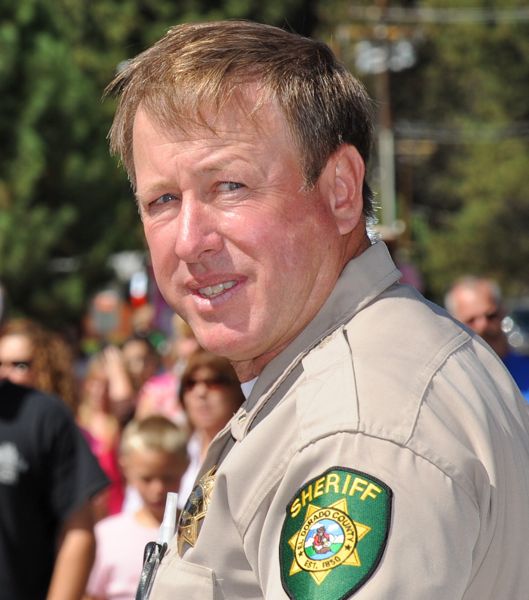
Lt. Les Lovell’s last day on the job is Thursday.

After more than 30 years with the El Dorado County Sheriff’s Office, he is turning in his badge – at least until the summer. Then he returns to the seasonal boat patrol with Larry Olsen, who was a detective with the agency until he retired last fall.

“Thirty-one years is a long time to give to an agency,” Sheriff John D’Agostini said of Lovell. “He has done a fantastic job. I relied on him immensely for the knowledge and wisdom he has for the basin.”

Lt. Les Lovell is retiring March 21. Photo/Lisa J. Tolda

Lovell, 52, started his career with the department in 1980.

“I just had such a varied career and wonderful opportunities that other law enforcement officers don’t get. I did everything I could do,” Lovell told Lake Tahoe News.

He started in the jail, worked boat patrol, patrolled the streets, was a canine officer for 11 years, an undercover narcotics officer, investigated person and property crimes, graveyard watch commander, internal affairs, jail commander, and finishes as commander of the Tahoe substation after a little more than nine years.

At one time he had aspirations of moving farther up the ladder, but others thwarted those dreams.

In an unusual ploy, sheriff candidate Stan Perez essentially ran with Lovell as No. 2 even though it is an appointed position. Perez quit the race under a dark cloud in February 2010, giving Lovell an hour’s notice this was about to happen.

Still, Lovell says he wouldn’t change a thing about his career.

In 1989, Lovell was working undercover. He didn’t look like the clean-cut officer he is today. His efforts helped bring down then Mayor Terry Trupp and 19 others in the federal investigation that was called Operation Deep Snow – so named because the drug of choice was cocaine. Lovell was an undercover cocaine buyer in the multifaceted case.

Two years later he was in the thick of the investigation of the Jaycee Lee Dugard kidnapping. He had recently finished a stint with the DEA, so the leads he followed had to do with drugs.

He supported Soroptimist International South Lake Tahoe when it created the Fighting Chance program after Dugard was abducted in June 1991. Lovell also brought change to his department.

Lovell was there 18 years later when the call came that she had been discovered. He was there Sept. 6, 2009, when the community came together in a parade to celebrate Dugard’s escape from captivity.

He missed the brunt of the Angora Fire in June 2007 because he was in a remote area of Alaska fishing. When the operator of the outpost powered up the generator to get online he saw Tahoe was on fire and told Lovell about it. He was back in Tahoe in a few days, but not before his wife, Kathay, had to evacuate.

In fall 2005, he graduated from the FBI Academy, and in May 2010 he graduated from the state’s command college.

It was in 2009 that Lovell obtained his associate’s degree from Lake Tahoe Community College.

“I was on the extended plan. I literally have hundreds of units,” Lovell said of the degree he started in 1979.

It’s not that Lovell really wants to call it quits, but with how retirement dollars work, he has actually been losing money the last six months. Thirty years is the maximum someone can pay into CalPERS.

While he plans to spend time “vacationing” in Tahoe – something he hasn’t done in the last 30 years, traveling to national parks, and fishing, he might not be done with having a title before his name.

“If it looks like there is a void in leadership for the (El Dorado County) Board of Supervisors, I might step up for that. I don’t want Tahoe not to have the representation it needs,” Lovell said. (Norma Santiago will be termed out when the next election comes up in November 2014.)

Besides being in law enforcement for three decades, Lovell has been on the board of the Tahoe Area Coordinating Council for the Disabled for nine years, an instructor at Lake Tahoe Community College for 12 years, and in Kiwanis for 10 years. Those endeavors he plans to continue.

—–

Lovell’s departure is not the only change.

Pete Van Arnum has been promoted from sergeant to lieutenant. Van Arnum’s position will not be filled. When there is a staffing shortage in Tahoe, a sergeant from Placerville will be sent down, D’Agostini said.

Randy Peshon, who had been lieutenant in the Tahoe jail for years, has been promoted to captain for the county’s two jails. He spends most of the week in Placerville.

Lt. Terri LeDoux has taken over for him in Tahoe, however she is out on leave. D’Agostini would not say why she is off work.


Bear box battle forces S. Tahoe to bid project for 3rd time

By Kathryn Reed

To avoid another lawsuit when it comes to bids and contracts (like Lakeview Commons), the South Lake Tahoe City Council voted for the safe bet – to start the process all over. When the bids go out again for bear boxes to be installed on public property it will actually be the third time.

This is because the first time the bid documents were released they included a photo of a trademarked bear box. That’s a big no-no. Not only that, but it was a box from a company planning to submit a bid.

Bear boxes may be installed in public areas throughout South Lake Tahoe. Photo/NPS

Then bids went out again, with nine entities responding to that request. One of the respondents commented on the type of material needed for durability reasons, citing the low bid not being the right standard.

Gary O’Neill, purchaser for the city, told the council on March 20 that he only contacted the low bidder to see if they would upgrade the material to galvanized steel.

“The additional cost did not affect the lowest bidder,” O’Neill said at Tuesday’s meeting.

The four councilmembers – Mayor Claire Fortier was absent – were not comfortable with bid requirements changing midstream before a contract was awarded and without all applicants weighing in on the change to know how, if at all, it would affect their bids.

“It troubles me how the timing of this happened,” Councilwoman Angela Swanson said. “It’s an irregularity in the bidding process that I’m uncomfortable with.”

What is being bid on is providing the city with 200-plus bear boxes that will be installed throughout town on public property. This was originally supposed to happen a few years ago when the Department of Resources Recycling and Recovery named South Lake Tahoe one of four cities in California to share a $1.5 million grant. The news came in October 2008 and nearly five months to the day later the money was frozen.

In May 2010, the city got word it could go forward with spending the $394,000 grant. It wasn’t ready to do so and asked for an extension. Now the deadline to spend the money is May 2012.

A primary reason the matter was pulled from the consent agenda is because on March 16 protests were filed by Tahoe Bear Box Co. and BearSaver – two bidders. They believe Carson Valley Welding, the low bidder and whom staff recommended the city contract with, is infringing on their trademark and don’t have containers that are bear resistant.

Randy Stanaway of Tahoe Bear Box said, “It was unclear if you wanted the cheapest box or the best value.” He said if criteria were strictly the lowest bidder, he would have put in a different bid.

It’s customary for public projects to award the bid to the lowest reasonable bid. However, the bid documents didn’t mention lowest bidder, just best value.

When questioned by the council, O’Neill said the only criterion staff used was price.

Stanaway admitted to the council he is affiliated with BearSaver as well, saying it’s one product, but two distributors. He said two bids are turned in to meet the needs of entities like the U.S. Forest Service that require a minimum of two bids.

Stanaway made accusations that Carson Valley Welding’s boxes would not last long.

Don Heldoorn, owner of Carson Valley Welding, took great issue with this statement. He assured the council the hinges and locks on his boxes – what he says get used the most – have a lifetime warranty, the actual boxes have a 10-year warranty, and all come with anti-graffiti powder.

Robert Huckaby, attorney for Carson Valley Welding, also spoke at the meeting. He said there is no trademark issue and that his client would indemnify the city against any trademark claims.

City Manager Tony O’Rourke after the meeting told Lake Tahoe News there is no official can in the industry as some claim. He said when he worked in Beaver Creek a bear box was designed specifically for that community.

Now the process begins all over, with the idea the money will still be available for the boxes to be distributed at city owned beaches, public buildings like the recreation complex, ball fields and perhaps bus stops.

The remainder of the grant is earmarked for a Chevy Silverado hybrid pickup to replace the current pickup that gets 4 miles to the gallon.

In other action:

• The council heard a presentation from trails planner Garrett Villanueva of the U.S. Forest Service about the proposed bike park at Bijou Community Park. No action was taken.

• The land swap with the California Tahoe Conservancy was unanimously approved.

• An agreement with RO Anderson Engineering for design, permitting and financial consulting service for the Harrison Avenue project was approved. This includes working on turning the newly acquired property at Modesto and Harrison avenues into a parking lot and possibly expanding the city lot closer to El Dorado Beach. The Planning Commission will review more detailed Harrison Avenue plans on April 12, with the council having the topic on its April 17 agenda.

• It was agreed to proceed with a feasibility study to look at how South Lake Tahoe and Lake Valley fire departments could share or consolidate resources.  Councilmembers Tom Davis and Angela Swanson were appointed to that committee because they are the reps on the ambulance JPA that involves the same two agencies.

• Steve Knoll was appointed to the Parks and Recreation Commission.


Students to get hands-on education in Tahoe forest

By Kathryn Reed

Joy Barney is doing her part to make sure students on the South Shore are getting outdoors.

The conservation education coordinator for the Lake Tahoe Basin Management Unit of the U.S. Forest Service was shocked when she moved here five years ago and some high school students looked at her funny when she asked if they had ever hiked in the surrounding forest. She presumably had a look of disbelief when they said no.

“A lot of students who grow up here don’t have the same access as tourists who come play here,” Barney said.

Students will be learning about life in the outdoors of Lake Tahoe through Children's Forest. Photo/LTN

Through the Children’s Forest program third- through fifth-grade students will explore the area from the Tallac Site to Taylor Creek Visitors Center along Highway 89 on the South Shore. It’s officially known as the Pope-Baldwin Recreation Area.

Barney said the goal is to link the two areas historically, culturally and environmentally, and then explore how to improve what’s there. Youngsters will be given opportunities to have a voice and be leaders in forest management.

Children’s Forest is an expansion of the Forest Service’s More Kids in the Woods program that started in 2007. The new program is site specific, whereas the older initiative is more programs driven.

This is the second year the USFS has handed out Children’s Forest grants, with it the first time for LTBMU to receive a grant. The amount allocated is $40,000. Another $50,000 in in-kind contributions has come from LTBMU, South Tahoe Environmental Education Coalition and Tahoe Heritage Fund. The Washoe Tribe is also an integral partner.

The bulk of the costs are to start the program, with the goal being it will be in existence for years. The funding provides age-appropriate curriculum.

The big launch will be June 2-3 during the Wild Tahoe Weekend, which is now in its second year. Fourth- and fifth-graders will initiate the Children’s Forest, with third-graders becoming part of the program in the fall during their annual kokanee salmon field trips.

Besides Lake Tahoe Unified students, Incline Elementary, Lake Tahoe School and Tahoe Expedition Academy students will be part of the outdoor program. About 1,700 students are expected to go through Children’s Forest this summer and fall.

The Native Species Festival on June 3 is when the Children’s Forest will be in the forefront. While it is geared toward adults and kids, it will be students who lead most of the programs that day, including a play put on by fifth-graders. Everyone may dress as a native species for the parade.

The Forest Service is talking with Washoe Tribe members to see if they would do seed collection earlier than normal so plantings could occur during the festival at the Washoe Tending and Gathering Garden at the Tallac Site.

The plan is once the garden is finished, it will provide students an opportunity to learn about native plant species and develop a relationship with the Washoe Tribe.

From June 4-13 field trips to the site for fourth- and fifth-graders are slated. This is when the pilot curriculum for Children’s Forest will be introduced to the students.

Learning materials include fourth-graders tackling forest ecology and land management, and fifth-graders watershed restoration, hazardous fuels reduction, and human impacts on the environment.

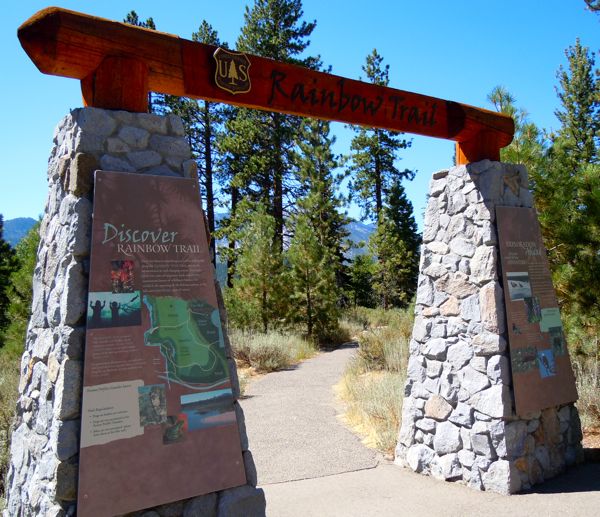
During the summer, expect to see high school students who are part of the 4-year-old Generation Green program leading tours from the Rainbow Trail to the Tallac Site, talking about trees, forest ecology, history and cultures of the area.

In a separate program, K-2 students get outside each year in what’s called Outdoor Explore where they follow the Lam Watah trail in Stateline to Nevada Beach. This group may eventually be incorporated into Children’s Forest.


Lake Valley may absorb South Lake Tahoe Fire Department

By Kathryn Reed

South Lake Tahoe residents may no longer have a fire department to call their own. That is because talks are under way for the city department to be run by Lake Valley Fire Protection District.

Lake Valley, which is overseen by a five-member board, voted this month to proceed with a consolidation feasibility study of the two fire departments. South Lake Tahoe City Council members are slated to vote March 20 to go forward with the same study.

Lake Tahoe News furnished a slew of questions to both entities. Both agencies said they would not answer those questions until the council votes Tuesday and/or until the study progresses.

“We are probably looking at least a four- to six-month process to study the pros and cons of this,” City Manager Tony O’Rourke said.

Financial issues

Lake Valley has three sources of revenue – property taxes, developer fees and Measure M. The latter is a June 1986 voter approved tax that charges property owners $10 or $20 per year depending on whether a structure is on the parcel.

If the merger goes through, it is unknown how the new LVFPD would be funded, or how the discrepancy of some members of the service district being taxed and others not being taxed would be rectified.

Property taxes are the department’s primary source of income.

City residents don’t have a separate fire tax or fee. The fire department’s annual budget is $5.7 million, according to the city’s website. This comes out of the general fund, which gets its dollars primarily from property, sales and hotel taxes.

Lake Valley Fire Chief Gareth Harris in a letter dated March 8 to the City Council proposes the city use property tax dollars to fund its share of fire services for its residents to the tune of $6.526 million.

What the additional $800,000 the city would pay for compared to what is in this year’s budget is unknown because Lake Valley and the city are not answering questions. Nor is it known what other services might be cut by the city to make up this difference.

The city, though, is saving money this fiscal year by having the police chief take on the roll of fire chief, too. The council also eliminated the three battalion chief positions and is contracting with Lake Valley for fire marshal services.

Harris in his letter says he came up with the figure by taking 16.7 percent of 1 percent of the 2011-12 assessed tax roll of city properties that total $3,903,077,660.

Harris’ budget outline in his letter says to cover the city’s fire expenses it would take $6,999,5000.

What isn’t known is if the city were to pay $6.526 million as Harris suggests, if county residents are then subsidizing city fire costs to the tune of nearly a half million dollars.

Some particulars

O’Rourke told Lake Tahoe News, “We are looking also at different spectrums from contracting to a JPA to a full consolidation. We are going to look at it from multiple angles.”

However, the letter from Harris, which is included in the city’s fire consolidation staff report, has some specific details about how his department would be taking over the city department. He goes so far as to detail how the city would need to pay one-time startup costs of $787,000 that would pay for new uniforms for city firefighters, stationery, station signage and vehicle insignias.

The bulk of that figure — $534,000 – would be to buy out city employees’ sick, comp and vacation time.

In that total figure is $5,000 for public relations; what that entails is a mystery as well.

It is also not known where that one-time fee would come from.

Equipment upgrades are part of what’s being talked about.

Harris’ letter states, “This proposal also includes the replacement of two of the city’s first out fire engines and the ladder truck. This will be accomplished by a financed lease/purchase of the apparatus. In addition, both Station 3 and Station 2 will be remodeled and updated to accommodate the new ladder truck and meet current fire station design codes and requirements.”

The board of directors, according to Harris’ letter, would remain intact, with “residents of South Lake Tahoe … eligible to run for a seat on the board of directors at the next fire district election just like any other resident in the unincorporated county area.”

According to a clearly not updated Lake Valley fire website, the board of directors and their terms are:

• Dave Huber, Dec. 1, 2006-Dec. 3, 2010

• Robert Bettencourt, Dec. 5, 2008-Dec. 7-2012

• Gregory Herback, Dec. 5-2008-Dec. 3, 2010

• Robert Rossi, June 10, 2010-Dec. 3, 2010

• Ryan Wagoner, Dec. 5-2008-Dec. 7, 2012.

A little history

Lake Valley fire has been in existence since 1947. Most people think of it as the area serving Meyers. It covers approximately 83 square miles.

South Lake Tahoe’s department was formed in 1965 when the city was incorporated.

“They actually wanted to be part of the city. They were in the city boundaries at the time,” Laurel Ames said of the firefighters.

Ames was one of six members on the city’s incorporation committee. (The others were Wink Ames, Tom and Betty Mitchell, and Vaughn and Mary Burlingham.)

“When we incorporated we were controlled by very strict state incorporation laws,” Ames told Lake Tahoe News.

The only real leeway was with the boundaries. With no money to pay a surveyor, known landmarks were used. But it took court action (Ames v. County of El Dorado) and precedent setting law to figure out how to count landowners.

Ames said the ruling came out in their favor which said whoever was legally allowed to sign for all the other members became in name the landowner of the lot for incorporation purposes.

Another person involved with the early years of South Lake Tahoe said a reason to incorporate was to “control our own destiny”. Incorporation was tried three times – though not all came to a vote – before it was approved.

Now the destiny may change without the voters having a say.

That’s another of those unanswered questions – if the voters of either jurisdiction would have a say in the fire department consolidations or if the two governing boards have ultimate authority.


STHS grad takes a swing at making it in Major Leagues

By Kathryn Reed

Fans crowd Scottsdale Stadium to watch the 2012 Giants – to see their favorite players, new acquisitions and the young guys they want to learn about. Who will be on the 25-man roster is still an uncertainty. But those trying to make the team had to be invited to this audition.

No one said the road to the Major Leagues is easy.

No one said that road is short.

STHS grad Stephen Yarrow hopes to be invited to spring training with the Giants in the future. Photo/LTN

But in some ways it is. About a mile away from this downtown stadium is a training complex with four fields. This is where everyone who is definitely not going to San Francisco is working out.

One of those players is third baseman Stephen Yarrow, who graduated from South Tahoe High School in 2007.

This is the 23-year-old’s first spring training because last year this time he was wrapping up his senior year at USF. Last July he reported to the Rookie League in Arizona, having been drafted by the San Francisco Giants.

While Yarrow hasn’t been given his assignment, he expects to start the season – which begins in early April – in single A ball in Augusta, Ga., in the South Atlantic League.

Pablo Sandoval, the Giants current third baseman, spent some time in that same league.

“I’m in a group with guys who will be in single, double and triple A. A lot of them have been in the system a long time,” Yarrow said.

It’s definitely competitive because everyone wants to get to the next level.

Yarrow’s goal this season is to do well enough to get a midseason promotion.

“Usually it takes three to four years to get to the Big Leagues because there are so many levels of Minor League,” Yarrow told Lake Tahoe News.

He added the main thing this season will be to see how his body does playing so many days in a row.

Days off during the season are rare – five in five months. That’s almost 140 straight games. Minor leaguers don’t play in September because this is when the Major League rosters expand to 40. They are filled with players from the lower levels.

For Yarrow, it meant a promotion to AAA in Fresno last fall. In those two games his average was .333, with two RBI.

Overall, he finished 2011 with a batting average of .289 for the 20 games he played.

Lake Tahoe News was unable to meet with Yarrow while in Scottsdale last week. Daily schedules for Minor League players are released one day in advance or that day.

“Our schedule today is quite unusual. It is as close to an off day as we receive; that being said we only practice for a couple of hours, from 10:30-12:30, but then we go straight into meetings about health insurance, 401(k) and travel policies. I have heard that these meetings may take awhile, anywhere from one to three hours,” Yarrow told Lake Tahoe News on March 13.

Practice has been going for a couple weeks. Scrimmages with other teams start this week.

While fans are eager to see the Major Leaguers, Yarrow said those players don’t interact a ton with guys at his level.

Just in case he isn’t able to put his finance degree to use managing the millions of dollars he makes in baseball, Yarrow spent part of the winter interning for a hedge fund in San Francisco, where he lives.

Yarrow is well aware the odds are against most people with dreams of playing for a Major League team.

“I feel incredibly lucky to still be playing baseball at 23,” Yarrow said. “The game of baseball passes everyone. For some it passes at 18; for some it passes at 42 and they get to the Hall of Fame. Eventually, it will happen. It is good I have a backup plan for when that does happen.”


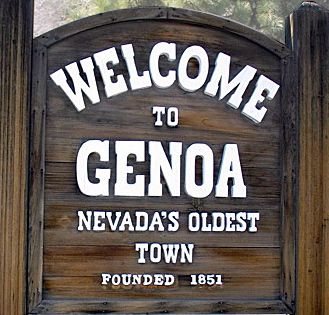
Nevada’s oldest town strives to keep its roots as it changes

By Anne Knowles

The more things change, the more Genoa wants to stay the same.

That’s the idea, so to speak, behind Destination Genoa, the project to update Nevada’s first town while maintaining its historic integrity and appeal.

The project is a key piece of Douglas County’s economic vitality plan, the county’s nearly 2-year-old, 12-pronged strategy to jumpstart its economy.

“We refer to Genoa as the glue or the hub,” said Dave Whitgob, chair of the Genoa Town Board and designated “champion” of Destination Genoa. “We have committed to make a collaborative effort to draw attention to South Lake Tahoe, Minden and Gardnerville as well.”

Whitgob heads up the Destination Genoa team, which he has affectionately dubbed the “posse,” that includes Randy Falcke, Chad Coons, Dan Aynesworh, Genoa Town Manager Sheryl Gonzales and Lisa Granahan, Douglas County economic vitality manager.

The project is being funded with more than $1.5 million from Douglas County’s Redevelopment Agency as well as money from the town and private donations. It consists of several pieces, some of which, like the 1.3-mile trail between David Walley’s Hot Springs Resort and the center of town, should be done by year end. The biggest piece – the downtown improvement project – is nearing design completion and is slated to break ground this summer with a ribbon cutting in spring 2013.

The goal is to bring to town more businesses and more tourists. At an update on the economic vitality plan last month, Aynesworth said the town has recently added seven businesses, including three restaurants, a 46 percent spike, while room nights recently went up 6 percent.

Destination Genoa takes elements from previous plans, such as the 10-year-old Genoa Main Street Master Plan, that for one reason or another never got off the ground.

“The difference is all the work Sheryl (Gonzales) did to coordinate public outreach,” said Whitgob, which got nearly everyone in town on board this time.

That outreach included two public meetings with public comment as well several meetings with the historical commission and ongoing dialog with the town’s businesses. Last fall about two dozen people showed up to take a walking tour outlining the plans.

The downtown improvement project is being designed by Sandra Wendel & Associates, a landscape architect in Gardnerville, and Resource Concepts Inc., a civil engineering firm with offices in Carson City and Zephyr Cove. Gonzales said the design would be completed within weeks, then permits would be applied for and the various pieces would go out to bid, with the goal of breaking ground sometime this summer. This is an artist rendering of what may occur.

The downtown face lift includes new streetlights, walkway, signage and parking.

Six to 10 reproduction streetlights will join a handful of existing historic lights downtown. The lights have to be custom made, despite availability of some old ones, to comply with Nevada Department of Transportation’s “dark skies” rules which require that the lights do not reflect back into the sky, obscuring views of the night sky and stars.

A new, 4- to 6-foot cobblestone walkway will begin at the southern end of town and run to at least Candy Dance Lane, Gonzales said. The walkway will meld with the 8- to 10-foot Walley’s Trail made of asphalt.

Landscaping using all native plants, signage and some seating will be placed on Mill and Nixon streets to create corners.

“The southeast corner of Main Street and Genoa Lane with the island with the utility and light will go away and that will become a four-way intersection,” Gonzales said.

A non-asphalt parking lot will be added at the north end of town, where the county owns the right-of-way, as well additional designated parking will be created by finishing off the rough edges of Nixon, Mill and Carson streets.

In addition, at least three informational kiosks will be placed around town to help guide visitors to local businesses and sites.

The town has spent $20,000 and is working with Nevada Energy and affected businesses to take down four electrical poles and run the utilities underground.

The Walley’s trail, made possible with easements granted by Walley’s, should be open by Candy Dance, the town’s signature event every September, which brings in the bulk of the revenue that funds the town’s annual budget.

A separate project by The Nature Conservancy will double the length of that trail, extending it to the conservancy’s Whit Hall Interpretive Center on Genoa Lane. In May, the Carson Valley Trails Association expects to open 16 miles of trails called the Genoa Trail System, including the Discovery Trail and the Sierra Canyon Trail, a 9.6 mile trail that connects to the Tahoe Rim Trail.

Private entities are working on other Destination Genoa pieces. The nonprofit that manages the town’s cemetery is working on a beautification project being funded by Sparks casino owner John Ascuaga. And a new town sign made of a covered wagon is being paid for by the Greater Genoa Business Association with the cover being made and donated by North Sails, the Minden-based sail manufacturer. The sign should be installed just off Highway 395 by the town’s third annual Cowboy Poetry & Music Festival in April.