South Tahoe mayor likely won’t finish term on council

By Kathryn Reed

Claire Fortier will reportedly not be finishing her term on the South Lake Tahoe City Council. Her partner, Maria Pielaet, has been offered a job in Washington to run the medical clinic for Microsoft.

Fortier did not want to talk much with Lake Tahoe News about what this means.

“I’m not comfortable addressing the issue until Maria has a contract signed,” Fortier said.

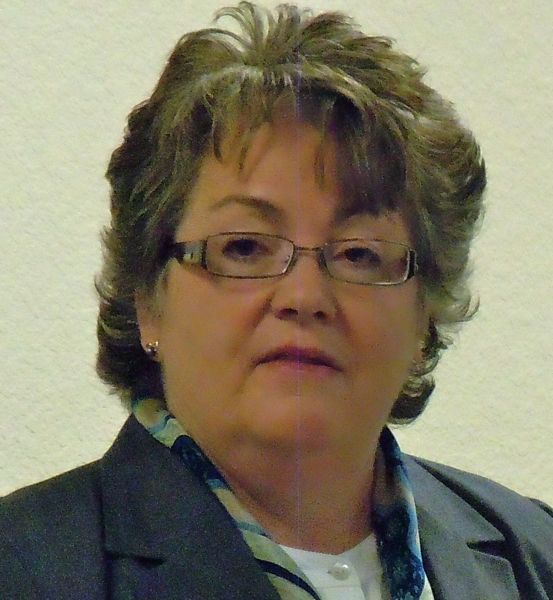
Claire Fortier

While Fortier would not say what her plans are, the buzz at city hall is she wants to stay until her term as mayor is up. She has told people she will be resigning in the middle of her four-year term.

Fortier was elected to the council in November 2010. Her term expires in December 2014. Her term as mayor is over in the fall. The council votes among themselves as to who will be mayor and mayor pro tem, with each being a one-year stint, though people can be voted in consecutive or multiple years.

Mayor Pro Tem Tom Davis said Fortier had not spoken to him about her plans.

As the city ordinance is now, a council member’s position is not considered vacated until they actually leave. So, if Fortier were to stay until her term as mayor is up, the council in December would either appoint someone to fill the two remaining years or a special election would be called. The first scenario means the public has no say in 20 percent of the representation on the council, the latter scenario means the taxpayers pay for Fortier’s desire to hang onto the title of mayor.

Because the city ordinance mirrors state law the process for appointment or election cannot be changed at the local level.

The process is that the remaining council members must decide within 60 days of a council position being vacated whether to appoint someone or to call for an election. There are three specified dates in 2013 when an election could occur — March 5, June 4, Nov. 5. The election cannot occur less than 114 days from the date it is called. So, if Fortier stays until December, the soonest there could be an election to fill that vacated seat is June 4, 2013.

On the Nov. 6 ballot will be the council positions now held by Hal Cole and Bruce Grego. Cole has not decided if he will be running for another term, while Grego is ready to hit the campaign trail.

Besides the council position, Fortier is the city’s rep on the Tahoe Regional Planning Agency Governing Board. That agency is in the midst of approving a Regional Plan update, which is expected to be voted on in December. How having a lame duck member would affect that process is not known.

“There is no impact to the current makeup of the TRPA Governing Board until the city makes a change,” Julie Regan, spokeswoman with TRPA, told Lake Tahoe News. “Mayor Fortier is very engaged in the Regional Plan update and other matters, and we would not expect any departure from that.”

The city is also in the throes of dealing with the need to hire a city manager, so Fortier may be in town making important decisions about issues and people she will not have to be held accountable to or for.


USFS listens — saves popular trails in Fallen Leaf Lake area

By Kathryn Reed

While a final decision has not been made about what the Fallen Leaf Lake-Camp Richardson area trail system will look like, the U.S. Forest Service has incorporated the public’s views into the alternatives that are now under consideration.

Two trails on the far end of Fallen Leaf Lake that end on private property were going to be decommissioned as was a trail on the west side of Taylor Creek.

Jacob Quinn with the U.S. Forest Service on May 16 talks about plans to change trails in the Fallen Leaf Lake-Camp Richardson area. Photo/Kathryn Reed

Public outcry has the Forest Service rethinking its original plans. Those three trails are in Alternative 4 – the preferred alternative of the six that will be included in the environmental analysis when it is released in mid-July.

“We would devote significant energy to keep those trails and get the easements,” Jacob Quinn said of the trails on the west end of Fallen Leaf.

Quinn, who is leading the charge on this project for the Lake Tahoe Basin Management Unit, gave a presentation Wednesday at the South Lake Tahoe branch of the county library.

By some accounts, those trails have been used for close to 100 years.

The trail next to Taylor Creek has a steep bank that is eroding that could mean relocating that section back about 35 feet. Otherwise, that trail is not likely to see much upgrading.

“There may be be stone steps or native material to get to the creek,” Quinn said.

Quinn explained the five ratings for trails go from being accessible for practically everyone to rugged where being hit by a branch while mountain biking would be expected.

All Forest Service trails in the basin are open for multiple uses – hiking, biking, equestrian – but trail builders create routes that are more desirable for certain users to naturally keep them separate.

“It’s not just recreation we look at,” Quinn told the group.

This is why the trail to Mount Tallac via Spring Creek will be decommissioned. This is a breeding area for northern goshawk.

This summer the agency will also try to determine if Lahontan cutthroat trout are in Taylor Creek.

Yellow cress is one of the plant species the Forest Service will be paying attention to.

While more than 13,000 acres are included in the plan area of this heavily used system on the South Shore, a much smaller area will be touched.

The point of the Fallen Leaf Lake Trail Access and Travel Management Proposal is to create a user-friendly trail system with routes that are all designated and then maintained by the Forest Service. Gone will be the user-created trails.

The problem is trampling on so much land compromises vegetation and habitat. It’s also a safety concern because land managers may not travel those routes and therefore not find someone who is injured.

In showing maps of what is in the area now compared to what could be there in several years when the work is completed, more loops and fewer offshoots are visible.

But new routes are also slated to be built – like one between Tahoe Mountain and Fallen Leaf Lake. More parking is expected to be put in at Tahoe Mountain, too.

Gone completely, at least as proposed now, will be all the routes from West Way through the meadow to the dirt trails to the east of the paved Camp Rich trail. People in the Tahoe Keys-Tahoe Island areas use this to avoid the masses on the paved trail. A private property owner who lives part time on that street in fall 2009 cut off access to mountain bike riders who would use the edge of his property to get to or from the meadow. According to Quinn, even the California Tahoe Conservancy parcel farther up the street will no longer be an access point for the meadow.

Unrelated to this massive project is the repair work to the Pope-Baldwin Bike Path (aka Camp Rich paved trail) that started Tuesday. This is a stopgap measure to fill in the holes on the heavily used route.

——-

Note: More information about the project is online. The draft EA when it is released this summer will be out for public comment for 30 days. The final EA is expected to be done in mid-October.


South Lake Tahoe beach concessionaire deal hits snag

By Kathryn Reed

Another South Lake Tahoe City Council meeting, another questionable bid and contract.

With summer having arrived unusually early in Lake Tahoe, people are at the beaches. And these people are hungry. But there is no vendor at El Dorado or Regan beaches because the city again can’t get its act together.

Danny Chavez will know May 18 if he will be the concessionaire for Lakeview Commons and Regan Beach. Photo/LTN file

The number of irregular bids is beginning to mount – from the contractor for Lakeview Commons to the bear box issue that was resolved earlier this month to the current concessionaire for the city owned beaches.

City Attorney Patrick Enright wanted to bring the bid back to the council June 5, but the electeds said no way, this needs to be resolved immediately. Staff has until 3pm Friday to get all of its ducks in a row because that is when a special council meeting has been set to deal with just this issue. (Mayor Claire Fortier will be absent because her son is graduating from college.)

Enright on May 15 told the council he heard from the county Health Department late Monday with issues involving the applicant who staff had recommended the bid be awarded to. He also has issues with the bid saying the venues will be open five days a week, when in fact the city wants them open seven days.

Cronyism was the charge leveled against staff’s recommendation to award the contract to Danny Chavez of Lake Taco Catering. While that word was used, the people who spoke at Tuesday’s council meeting presented no evidence of cronyism.

Ryan Payne, who owns Energy Drink Outlet in South Lake Tahoe, was the first public speaker. He said on Monday he filed a formal protest against Lake Taco getting the concessionaire because according to a survey he took “the community is not behind this”. He questioned how the contract is different than what is in the proposal – saying cronyism was at play.

Jeff Sparrow of Lake Tahoe Catering Company, who was one of the five bidders for the concessionaire, said he believes the process is whom you know, not what you know.

Three South Lake Tahoe employees, including Community Services Director Stan Sherer, evaluated the applications and interviewed the five candidates. All were graded on five criteria:

• Experience, background and qualifications – 20 points

• Proposed concession plan – 50 points

• Compensation schedule – 30 points

• Financial capability – pass/fail

• Completeness and comprehensiveness of proposal – pass/fail.

Sherer said Chavez with Lake Taco was the No. 1 choice of the panel.

“He knows what it takes to provide for a lot of people,” Sherer told the council. “We feel he can increase gross revenue more than all the other respondents. Ultimately he will provide more revenue for the city.”

Sanchez has been operating the Regan Beach concessionaire for a handful of years. This will be the first year for Lakeview Commons to have a vendor now that the boathouse is complete.

Sherer said he did go over financials with Chavez – which is common in a bid like this when the lowest responsible bidder is not the main, overriding criterion.

While Chavez’s bid says he will work five days a week, he told the council that was a typo. He said seven days is what it should say with no changes to any other numbers.

Rick Meyer, El Dorado County public defender, and Delicia Spees, executive director of Lake Tahoe Family Resource Center, were two people who sang Chavez’s praises.

Chavez countered Payne’s allegations that he was irresponsible and left things outside that shouldn’t be by saying he was remodeling the Regan Beach facility so things had to be placed outside while work was done inside.

Others applying for the concessionaire were Crepes on the Lake and Commons Cafe, Beach Hut Deli, and Bijou Snack Shack.

The contract is slated to be for five years, with the city receiving 10 percent of gross sales in the first year, 11 percent in year two and 12 percent for the remaining years.

In other council action:

• Councilman Tom Davis reported Go Ape would not be building a ropes course this summer at Lake Tahoe Airport. He said the FAA is the hang up, with the hopes those issues will be resolved in the coming weeks.

• The city will be looking for a commercial real estate agent to help get rid of properties once owned by the Redevelopment Agency that are now under the purview of the successor agency since the state dissolved all redevelopment agencies.

• Signs will be put up at Lakeview Commons prohibiting people from using the built environment for use by snowboarders and skateboarders – and others – who want to do tricks and not just pass through the area.

• On a 3-2 vote, with Councilwoman Angela Swanson and Fortier voting no, the majority wants owners of historic signs to be able appeal any Planning Commission decision to the council.

• Swanson and Councilman Bruce Grego were appointed to an ad hoc committed to deal with the Lakeview Commons lease with El Dorado County.


South Lake Tahoe council praises Kerry, but wants full search for next city manager

By Kathryn Reed

Spending more than $20,000 to find a city manager is clearly what the South Lake Tahoe City Council wants to do, even though the electeds agree an internal candidate is more than qualified to do the job.

The five sent conflicting messages to the public during the Tuesday afternoon presentation by four individuals who represent companies that could be hired as the headhunter to find the permanent replacement for Tony O’Rourke. (O’Rourke told the council he will be around for the two June meetings. Then he is off to do the same job in Yakima, Wash., having fulfilled less than two years of his three-year contract in South Lake Tahoe.)

The South Lake Tahoe City Council on May 15 appointed Nancy Kerry to be interim city manager when Tony O'Rourke leaves in a month. Photo/LTN

The mixed message is how they praised the internal candidate, saying how strong and qualified she is; then saying they want to look elsewhere – just in case someone better is out there. This all came after a presentation on the five-year budget that included how horrible the local economy is and how revenues for the city are stagnant at best.

Where the money will come from to pay the headhunter was not discussed.

The council is slated to pick one of the firms at a special May 29 5pm council meeting

The council on May 15 agreed to appoint Nancy Kerry interim city manager effective July 1. With the appointment comes a $2,000 month raise, which brings her annual salary to $141,240. Police-Fire Chief Brian Uhler, who will report to Kerry, makes a few thousand dollars more than her per year. O’Rourke makes $175,000 a year.

In the contract with Kerry, the council agreed if the electeds pick someone else for the job, she would return to the assistant city manager position with a contract of at least one year.

Kerry told Lake Tahoe News she definitely intends to apply for the city manager position.

When it came to the headhunters, all were asked how the process would go with an internal candidate in the mix who is respected and that day was appointed to be interim city manager.

First up was Bob Murray of Bob Murray & Associates. He is the man who recruited the last three city managers.

Second was Phil McKenny of Peckham & McKenney.

“If you have a strong internal candidate, hire her,” McKenney advised the council. “If it doesn’t work, call me in six months.”

Bob Neher, with Neher & Associates, told the council that while most searches take three to four months, he would strive to do it sooner so there was not much lag time between O’Rourke’s departure and the hiring of the next city manager.

Heather Renschler of Ralph Andersen & Associates said having a strong internal candidate “could change the composition of the pool.”

No matter who is hired as city manager, that person will not be hiring the finance director. O’Rourke is expected to choose one of the two out-of-town finalists before he leaves. That person will replace Christine Vuletich, who left earlier this year for Douglas County.


STPUD board expected to increase sewer, water rates

By Kathryn Reed

With the percentage of protests to the proposed sewer and water hikes in single digits, the South Tahoe Public Utility District board can go forward with raising rates.

On the May 17 agenda is an item to raise sewer rates by 5 percent and water by 2 percent. At the May 10 budget hearing the board did not request staff to come up with another scenario. However, the board can vote for these rate increases, any lower percentage or for no increase.

About 15 people attended last week’s budget session, with a handful of people speaking and others asking questions from their seats. Several people were concerned about the changes for metered water customers. The proposal is to increase the base rate and decrease the rate based on usage.

“It is still less than the flat rate. We have never argued at all that this law is equitable. It is not,” South Tahoe PUD spokesman Dennis Cocking told Lake Tahoe News. “California is famous for the law of unintended consequences and this is one of them.”

The state is mandating water districts have meters in by 2025, but did not provide a funding mechanism to purchase them or get them installed. That means districts throughout the state have people on meters and some who aren’t. With this comes water rates that are not the same for all customers because the state mandates metered customers be billed with a usage component.

The entire 2012-13 STPUD budget, which takes effect July 1, is on Thursday’s agenda. For now, employees are not getting a salary increase or having a change to health benefits. This is because negotiations are ongoing.

“Our goal is to have a new contract by July 1. I don’t know at this time if we will be able to hit that deadline,” CFO Paul Hughes told Lake Tahoe News.

The board will have to approve any contract. If monetary issues were part of the contract, an addendum to the budget would have to be made.

The main reason staff wants the 5 percent sewer increase is to move forward with the Diamond Valley Ranch Irrigation Project.

The estimated cost of the project is $5.5 million. STPUD can secure a 2.7 percent loan through the state to pay for it. The rate increase would pay back the loan.

Treated wastewater in the Lake Tahoe Basin must be pumped off the hill per federal law. STPUD’s goes to Alpine County where it irrigates hay and alfalfa fields.

With upgrades to Alpine County’s electric grid in the past five years, it can now buy back power. South Tahoe PUD wants to create a hydroelectric facility that would be used to transport the water over Luther Pass and then be able to sell power to the grid.

Smaller sewer projects in the district’s service area would also be funded by the rate increase.

The water rate increase – which is estimated to bring in an additional $180,000 per year – will also be used to pay back debt, as well as installation of water meters. Three projects in the next three years should amount to 1,000 meters being installed.

STPUD wants to borrow another $5 million for various water line projects.

Cocking said, while water meters are important, the district’s emphasis is on replacing old, small water lines that are not optimum for fire suppression.

“Our biggest threat is catastrophic wildfire,” Cocking said.

If any rate increase were approved, July 1 would be the start date for the new rate.

People will have an opportunity to comment at this week’s meeting as well as the ability to make a formal protest via Proposition 218 even though the mandated 45-day protest period is over. If 50 percent plus one ratepayers were to file a protest to the proposed rate increases, the district could not go forward no matter what the board wanted to do.

As of May 14, about 1,400 protests had been filed – or just more than 8 percent of ratepayers.

——

Note: South Tahoe Public Utility District board meeting May 17 2pm, Meadow Crest Drive, South Lake Tahoe.


Splendor of the falls worth the trek up Hawley Grade

By Kathryn Reed

MEYERS – Express delivery of mail was probably slowed down a bit this time of year as men on horseback crossed the Hawley Grade Falls.

Also called the Upper Truckee Falls, this trek in Meyers used to be part of the Pony Express route. It was used from April-November 1860 after which time the trail was altered to go along Johnson Pass Road.

While no falls in California are raging like they were a year ago, enough thundering water is descending at a rapid pace that Kim and I chose not to cross the falls.

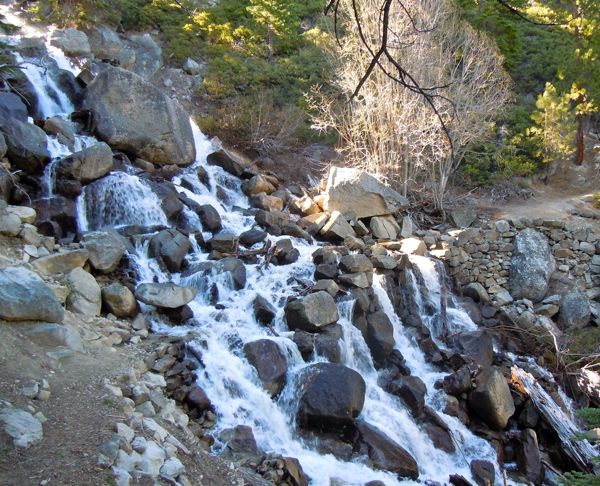
The trail cuts right through the Hawley Grade Falls. Photos/Kathryn Reed

Evidence of the winter’s high winds is in abundance with large trees blocking the trail. We did not let it impede our progress as we scampered over them to keep walking to our destination.

In 2008, a 75-foot section was taken out in a landslide. The U.S. Forest Service stabilized the lower slope, though the upper looks like it could use some attention.

As we keep going, the roar of the falls bounces off the towering pines. Soon the cascading icy water comes into view. It’s like a series of mini waterfalls tumbling over granite boulders to form one long fall that eventually reaches the Upper Truckee River.

Manzanita is just beginning to bloom. Closer to the river the distinctive red willow branches are clustered together.

Much of the trail is dry, though spots are muddy.

An abundance of butterflies flit about near the base of the trail. We hear something scurry in the brush.

Kim’s dog Joe on a previous hike up Hawley Grade ended up at the vet’s office after tangling with a porcupine.

One of the best things about going this time of year is the absence of mountain bikers. They prefer when the water is a trickle or non-existent so they can keep going up to Echo Summit or descend from there into Meyers.

Hawley Grade gets its name from Asa Hawley, a pioneer on the South Shore. This was reportedly the first graded wagon road crossing the Sierra.

Besides being a National Recreation Trail, this route is said to be an area where Snowshoe Thompson saved someone’s life.

It’s a relatively short hike to the falls, with an elevation gain of about 900 feet. Sturdy shoes are recommended. It’s narrow in spots, but most people who live in Tahoe will be able to do this hike.

Getting there:

Go west on Highway 50 to Meyers. Pass through town. Turn left on South Upper Truckee Road. Go almost to the end. On the right, at least last week, the gate is closed. (This is before the bridge.) Park near the gate and start walking. If the gate is open, drive as far as you can go.

ngg_shortcode_0_placeholder (Click on photos to enlarge.)


Tahoe mom-child celebrate Mother’s Day every day

By Michele Lynn

When Bonnie Clarke needs some motherly advice, she doesn’t have to travel far. That’s because she and her mom enjoy the unusual perk of having retired to the same community.

The two women are neighbors at ABHOW’s Tahoe Senior Plaza in South Lake Tahoe. Mom has lived in the community for three years, while her daughter, also named Bonnie Clarke, became a resident in January with her husband, Paul Devers.

“It was a big decision to move here because I had a very busy life in New Hampshire, with 50 years of friends and 50 years of being in the same church,” says the elder Bonnie, who was widowed in 2000. She put her name on the Plaza’s waiting list in 2005 so that she could be closer to her three children, who live in California and Nevada, and moved into the community in 2009.

Two generations living retirement days at Tahoe Senior Plaza. Photo/Provided

Seeing how much her mother enjoyed life at the Plaza, the younger Bonnie — who goes by Bonnie Del to avoid confusion — put her name on the waiting list for the community when she turned 62 last year. She and her husband received the news that they were in just a few months later.

It’s unusual for a mother and daughter to live in the same retirement community, says Lauren Shaham, vice president of communications at LeadingAge, ABHOW’s national professional association. She says that she hasn’t heard of another family pair like the Clarke women.

Mother and daughter see each other daily, going on group outings together or checking in for a chat.

“If my husband is asleep or out of town, I might wake up in the morning and give her a quick call, or walk down the hallway and up the stairs to see her,” says Bonnie Del. “We’ll sit there and start to talk and then, all of a sudden, it’s two hours later.”

They have always been close.

“Throughout my life, most of my friends were surprised at the relationship that my mother and I had,” says Bonnie Del. “We would do hikes together, go on shopping excursions, and bake together every Christmas.”

When they lived in New Hampshire, a favorite tradition was their annual “Miss America trip.” They would drive to Maine and spend the weekend “shopping, eating out, and then watching the Miss America pageant on a good television in a nice hotel,” says the daughter.

They still enjoy many of the same activities.

“Just last night,” says the mother, “I was in the living room area working on a puzzle when (Bonnie Del) came in. I asked her if she was going for a walk, and we went out and did at least four miles together.”

Those regular walks are especially meaningful.

“It gives us the opportunity to do enough talking to solve problems,” Bonnie says. “I can talk to her and help her with the things that are troubling her.”

Bonnie is extremely active and youthful. In fact, says her daughter, “I’m only in my 60s and I’m trying to get in shape so I can keep up with my mother who will be 90 this summer. I had to start dyeing my hair so people would stop thinking that I was the mother and she was the daughter.”

Bonnie says that she is always excited when she’s out in the hall and her daughter appears.

“Just having her close has made me feel more secure,” she says. “As I’m getting older, it’s a comfort knowing that if anything happens to me, she’s there.”

Bonnie Del shares those feelings.

“In these years, it’s just nice to be able to spend time with her,” she says.

Both women share a strong faith and worship together every Sunday at Sierra Community Church in South Lake Tahoe.

“God opened the door for us to be together,” says Bonnie Del. “This is where we’re supposed to be at this time of our lives.”

Michele Lynn works for ABHOW, the company that runs the senior center.


Sides being taken in South Shore loop road project

By Kathryn Reed

Driving down Fern Road it’s one of those typical South Lake Tahoe streets with a variety of housing options. Apartments are at the east end, various size single-family residences closer to Highway 50 – including a fairly decent size dwelling. Sprinklers are going, gardens starting to sprout. Kids toys are out and about.

It’s a neighborhood.

If planners have their way, it will be a state highway.

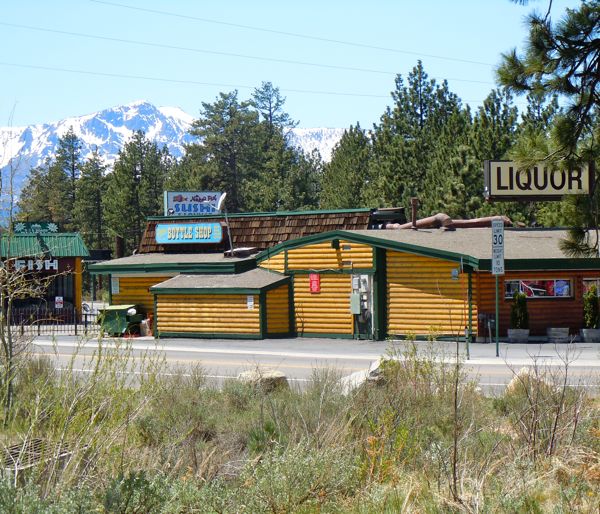
From the cul de sac at Fern is a paved path to the corner of Highway 50 and Pioneer Trail. There sit a variety of businesses – liquor store, sushi restaurant, pizza and ski shop. Places locals go to as well as tourists.

The owners and operators are in a prime location. They wonder where an equal parcel with the same foot and vehicle traffic could be found in town if planners relocate them.

Across the highway is the Holiday Inn Express. Access to that hotel will be dramatically affected if the proposed loop road goes in.

There is already a loop road behind the four main Stateline casinos. But the bulk of traffic stays on the straight thoroughfare through the casino corridor.

Tahoe Transportation District is the lead agency plotting a course that would widen the route behind Harrah’s Lake Tahoe and MontBleu because it would be a state highway. On the California side it will eliminate 88 dwellings where 245 people live. Thirteen businesses would be affected in some way. “Affected” was not defined at the May 11 TTD board meeting.

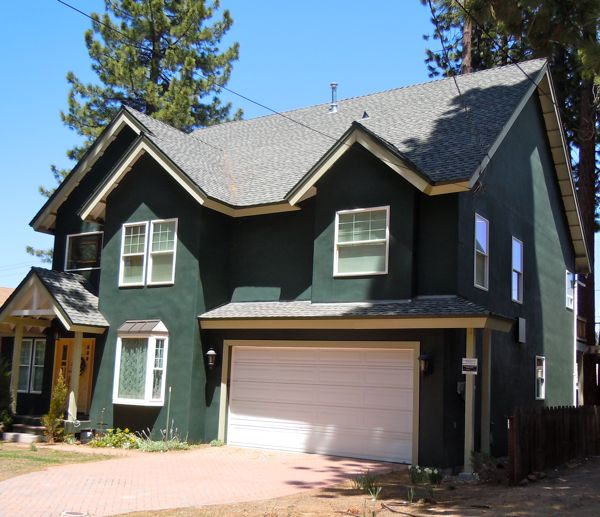
A house on one end of Fern Road.

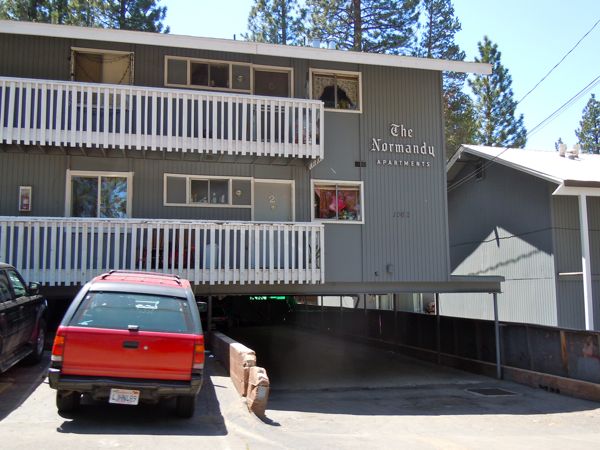
Housing on the other end of Fern Road that would be wiped out if the Loop Road goes through. Photos/Kathryn Reed

The route would in some ways follow the back way locals go to avoid the casino area.

Highway 50 through the tourist corridor would become a city street on both sides of the state line.

While an underpass and overpass were talked about in the planning stages of the would-be convention center to link that site with Heavenly Village, Caltrans approval was never secured. If the loop road project goes forward, then it would be South Lake Tahoe that would have the say regarding an underpass-overpass.

Environmental gain is touted as a reason to do the loop road, but the reality is the project has always been about creating a better atmosphere for people walking in the area. So, better for tourists and the businesses that service tourists in the Stateline area.

Businesses that would be affected if the highway is rerouted.

But with a road still dividing the casino properties, it won’t be all that pedestrian friendly.

Gone, though, would be the through truck traffic.

This project is also tied to the South Shore Vision Plan – a public-private revitalization project that would overhaul the area from Ski Run Boulevard in South Lake Tahoe to Kahle Drive in Stateline.

Of the 13 members of the public who spoke, seven voiced support for the project, five were against and one asked questions.

Angie Watson, who owns apartments on Fern Road, said she wasn’t surprised to hear her tenants liked the idea of a $12,000 cash payment that has been talked about.

“I have a lot to lose,” she told the TTD board during the meeting at Embassy Suites. “I don’t understand how the loop road will bring business. Is it for the 2½ months we have good weather?”

Fern Road parallels the backside of the formerly named Crescent V Center. Nearby streets that would be affected are full of people who walk to work.

Shawn Kearney, owner of Tahoe Duck Tours, says she hears all the time from tourists about how pretty the area is, but the town looks like a dump.

“Relocating the highway is a chance to reinvent ourselves. It’s not wise to rest on our laurels,” Kearney said.

Few people disagree the South Shore as a whole is in need of upgrades to the way it looks. How that happens is the sticking point.

Inertia has partly set in because redevelopment projects like the loop road are talked about for decades so property owners don’t want to make a substantial investment if they don’t have the opportunity to get a return on that investment. Another reason is the Tahoe Regional Planning Agency has eliminated a true free market by making tourist accommodation units and commercial floor area commodities. TRPA has also been the spoke in the wheel of progress for converting dilapidated hotels into another use.

What the TTD board agreed to on Friday was to establish a citizen review committee and established a 30-day comment period for when the relocation plan is released. That is expected to be released to the public by the end of the month.

The South Lake Tahoe City Council is having a special meeting May 29 from 6-8pm at Lake Tahoe Airport to discuss the loop road. The city has eminent domain powers, which means it could take a private entity’s parcel for a project like this. However, a previous council on a 5-0 vote passed a resolution saying eminent domain cannot be used. That decision could be overturned if four council members agree to do so.

TTD staff said a series of meetings would be scheduled throughout the summer for people to learn more about specifics of the project, such as what happens from their meeting May 15 with the design consultants, and for staff to gather input from proponents and opponents.


Farmers market season about to begin in Lake Tahoe

By Kathryn Reed

A true sign winter really is history is when seasonal farmers markets open.

Placerville’s market opened last Saturday; Tahoe City’s opens later this month; and the two South Lake Tahoe markets start in June.

While fresh produce is the thrust of the markets, it is a growing business venture, too. According to the U.S. Department of Agriculture, there are 7,175 farmers markets in the country. There were half that many less than 10 years ago.

Lots of greens are expected when the South Lake Tahoe Tuesday farmers market opens June 5. Photos/LTN file

The USDA estimates farmers markets are a $1 billion a year business. However, that represents just 2 percent of retail farm sales in the U.S.

Jim Coalwell, who runs the Tuesday certified market in South Lake Tahoe, partly attributes the success of markets to people wanting to know where their food comes from.

He said the markets have weathered the recession well. One thing that hurts the Tahoe market is the dwindling population.

Coalwell, with wife Lois, run five markets – most in El Dorado County.

The market at the American Legion parking lot off Highway 50 will open June 5. Like past years, it will run from 8am-1pm each Tuesday until the weather says it’s time to fold up the tables for the season.

The other South Shore market returns to Ski Run Boulevard on June 22. New this year is that it will be on Fridays from 3-8pm. The boulevard is closed between Birch and Larch streets.

This will be the third year for the Ski Run market, but its second full year.

Alex Mellon, who runs this market, told Lake Tahoe News it will be like a brand new market.

“It will be more like street festival atmosphere,” Mellon said. “It is a certified farmers market, so you have to have more farmers than crafts.”

Still, he is working on bringing in a number of artist-type booths. He’s also in discussions with Blue Angel Café for the restaurant to provide a beer garden.

“It will be a unique dynamic,” Mellon said of what is planned. Food, crafts and music are expected to be part of the mix.

While the Tuesday market is more traditional, Coalwell said what would be most noticeable on day one is the number of vendors.

Asparagus was a big seller in June last year.

“Everything looks really good. We should see cherries the first day and peaches, and a lot of greens,” Coalwell told Lake Tahoe News.

A blueberry grower from Orland should be at the first few markets before more regional blueberries ripen.

Early season peaches will be from the Modesto area before the foothill trees start producing.

Coalwell said on May 5 at the Placerville market he tasted the cherries from a Stockton grower – and then went on to rave about them. Those growers will be in Tahoe in a matter of weeks.

With a good winter, consumers should expect to see more fruit available compared to a year ago.

Coalwell said the late rains were a good omen for this year’s harvest. The lack of hard frosts also is good for farmers.

A couple new vendors will be someone selling tablecloths and a local chef who is expected to cook with some of the products available at the market.

Other regional farmers markets:

Tuesdays:

• Truckee: Truckee River Regional Park

10500 Brockway Road off Highway 267

June-October, 8am–1pm

• Kings Beach: Kings Beach SRA

Highway 28 at Bear Street

June 8-Sept. 7, 9am-1pm

• Minden

Esmeralda Avenue

June 1-September, 4-8pm

Wednesdays:

• Carson City: Pony Express Pavilion in Mills Park

Highway 50 East and Saliman Road

June 8-Aug. 31, 3-7pm

• Gardnerville: Lampe Park Farmer’s Market

Waterloo Drive, one block west of Highway 395

June 2-Sept. 15, 8am-1pm

Thursdays:

• Truckee: Donner Pass near the train station

June-August, 4-6pm

• Tahoe City: Commons Beach

Commons Beach Road and North Lake Boulevard

May 27-Sept. 30, 8am-1pm

Saturdays:

• Carson City: Saturday Morning Farmer’s Market

Third and Curry streets

June 11, 8:30am-1:30pm.


Opinion: Discrimination alive and shameful on Tahoe fields

By Kathryn Reed

Walk onto a tennis court or dive into a swimming pool – it doesn’t matter what sex you are. The net is the same height, the lines spaced the same; 50 meters is 50 meters.

Walk onto a boys’ baseball field and girls’ softball field – the differences are noticeable because of the pitchers’ mound and the distance between the bases.

Who cares?

No one, probably, when it comes to just these differences.

Who cares about the balance of opportunities offered the two genders as well as the quality of facilities?

A whole heck of a lot of people.

Title IX makes people care, or at least pay attention to potential and real differences, even when they don’t want to. The same goes for California Assembly Bill 2404.

No person in the United States shall, on the basis of sex, be excluded from participation in, be denied the benefits of, or be subjected to discrimination under any education program or activity receiving Federal financial assistance.

That’s what Title IX, the landmark law signed by President Richard Nixon on June 23, 1972, says.

Personal impact

I had just finished first grade when the president signed that law which will be 40-years-old next month. I knew who Nixon was. I was living just outside of Washington, D.C., that year – even went to his inauguration the following January. But I didn’t know what Title IX was. I don’t know when I first knew about it.
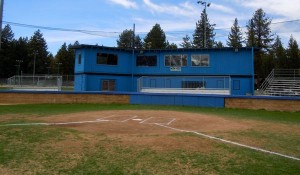
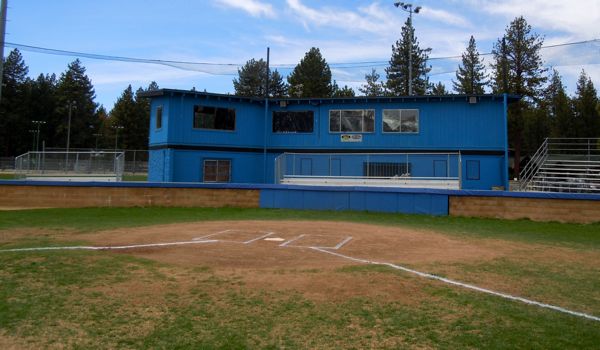
The Babe Ruth field where the STHS boys' varsity team plays comes with an announcers' booth, snack shack and ample seating for spectators. Photos/Kathryn Reed

While Title IX was about making educational opportunities equal for both sexes, its lasting impact when people talk about the law is how it leveled the playing field for boys and girls, men and women.

I’d like to think it didn’t have much impact on my life. I played all the sports I wanted to – still do. Maybe it’s because I had three older sisters and therefore didn’t see any potential discrimination without having a brother.

My guess, though, is plenty of things weren’t fair. I played softball as a third-grader. We were called the Fireflies. I swam competitively for years in AAU, having competed in the Far Western Nationals. I played a year of JV softball. I lettered in tennis all four years in high school. I even played a year of college tennis.

Title IX opened doors that were previously dead-bolted shut to girls. Last year, according to the Women’s Sports Foundation, 3,173,549 girls played a sport in high school. Forty years ago that number was 294,015. Other reports show 1 in 27 girls played a sport pre-Title IX and now 2 in 5 participate. The number of female college athletes has increased by 500 percent in the last 40 years, another report says.

I’ve played softball on some of the fields in Tahoe. A co-ed team practiced at Sierra House Elementary. I’m so glad none of my employees twisted or broke an ankle. It was and still is a scary place to run. And the way the ball skips – well, that would be comical if it weren’t scary as well.

We played our games at the softball field by the middle school.
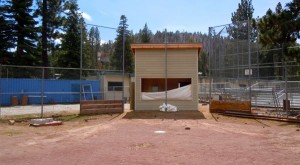
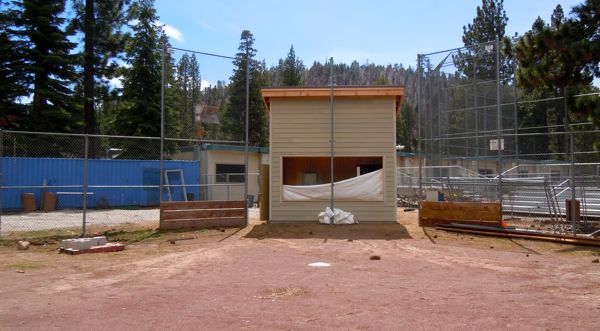
The softball field under construction at STHS.

I also played on a women’s team at Zephyr Cove. Much better facilities in Nevada.

As for tennis on the South Shore – well, the treatment of non-revenue generating sports is worth another column, as is a private operator making money off the high school courts.

But then again, private entities making money off taxpayer built facilities is the norm around here – whether it’s the city or school district allowing it.

Reality check

With numbers like those presented above the easy conclusion is Title IX has done its job.

Not so fast.

AB2404’s passage in 2005 would not have been necessary if all were fair on the playing fields in the Golden State. The law came into being after a group in Los Angeles fought to have city recreation facilities for each gender be the same quality.
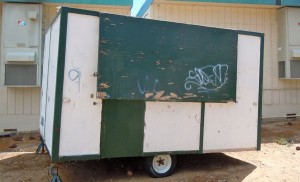
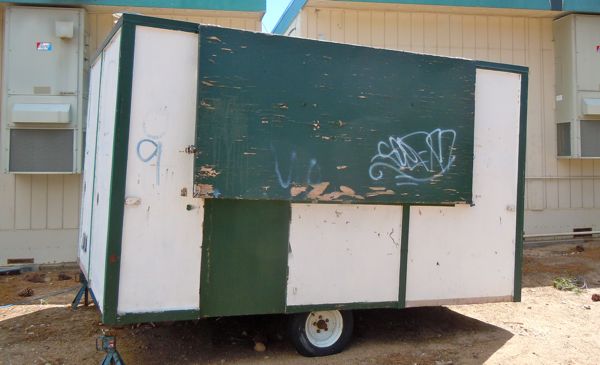
The snack cart the girls get to use.

The inequality of playing fields in South Lake Tahoe has long been a contentious issue. Ask anyone who has played softball or whose child has and they shake their head. They are dismayed about the substantial inequities in the fields in town and embarrassed when playing off the hill and seeing what other towns have.

“Most communities have convertible fields. That is how they are doing it in modern times, but South Lake Tahoe is not in modern times,” Marilyn Breisacher told Soroptimist International South Lake Tahoe when she spoke to the group May 9.

Breisacher was there to talk about Title IX and AB2404 as someone who has been involved with softball for the past 10 years. But she is also on the Fields Advisory Committee for the South Lake Tahoe Recreation Facilities Joint Powers Authority. The committee was formed to make recommendations to the three-member JPA board about how to spend the $500,000 it has that came from turning Measure S into Measure R.

The other members of the committee are:

• Chuck Leonard: committee chair, also chair of the Community Athletic Coordinating Council.

• John Dalton: experience includes soccer coach and Little League.

• Brian Hogan: experience includes Little League, soccer, softball.

• Steve Noll: experience includes Lake Tahoe Bicycle Coalition, softball, baseball, soccer, fields design.

• Ken Riegal: experience includes CAAC board member, soccer.

• Steve Weiss: former South Lake Tahoe recreation director.

At the April 30 meeting of this committee the agenda item titled “Equity of facilities issue: Review and discuss city attorney’s office opinion on requirements of AB2404 and Title IX as it applies to Measure R funds” was tabled. Presumably it will be discussed at the May 21 4-6pm meeting at Lake Tahoe Airport.

Issues to be resolved include, but are not limited to:

• Whether the half million dollars allocated via Measure R for ball field improvements can go to baseball fields and not softball fields.

• Whether girls’ playing fields would all need to be brought up to the same standard as the boys’ fields before boys’ facilities get a dime.

• Is AB2404 relevant when it comes to spending this money?

• Who has jurisdiction when the fields mostly belong to Lake Tahoe Unified School District, are maintained by the city of South Lake Tahoe, but private money has been used to put in infrastructure like the snack shack at the Babe Ruth fields on Lyons Avenue? With federal money being involved with the district, Title IX becomes an issue. With the city having teams play on the fields and doing the upkeep, it becomes an AB2404 issue. With boys’ baseball dads raising the money and doing the work on upgrades, it becomes a turf war in multiple definitions of that phrase.

Discrimination on the diamond

Have someone who knows the fields take you on a tour. To the uneducated, it’s hard to see the true differences.

Go to the fields on Lyons Avenue by South Tahoe Middle School. To the left is where the boys play. It has a grass infield – just like Big League parks have. Plenty of seating is available for spectators. A large announcers’ booth and snack shack are there.

Look to the right. That’s the softball field. It has a dirt infield. Seating? Keep looking. Announcers’ booth? No. Ability to share the snack shack? On rare occasions, during tournaments, if a fee is paid to Babe Ruth.

A field is being built at South Tahoe High School for softball. Remember, this is 40 years after Title IX was signed by the president of the United States (clearly not united genders) of America.

The dugouts are in, as is the announcers’ booth. But school district officials are scrambling to make the field not be an embarrassment. Steve Morales, facilities director for the district, at the April 30 fields committee meeting said bleachers would be put in in front of the announcers’ booth.

This will allow fans to see action down the first and third baselines. No one sitting to the right of home plate behind the fence and parallel to the dugouts will be able to know if the runner is safe or out at first.

But when the bleachers behind home are in, how will the announcer be able to relay what is going on or the scorekeeper to rule on a play? Another quandary in the world of ball fields in South Lake Tahoe.

JV boys are allowed to play on girls’ fields, but girls may not play on boys’ fields – at least in South Lake Tahoe.

Boys’ fields come with batting cages – even bathrooms. The girls, well, they don’t have equal amenities.

Bigger picture missing

In having attended part of the last fields committee meeting before going to another assignment, I witnessed democracy and open meeting decorum close to the worst I’ve seen.

Leonard, the chair of the committee, clearly has no sense of how to run a meeting. Committee members were allowed to speak at the same time – therefore over each other. How John Upton, the lone paid staff member of the JPA board, could take notes is beyond me. I couldn’t follow the multiple conversations.

These meetings are supposed to follow the Brown Act – California’s open meeting law. Upton, a former elected official to multiple boards, could have kept the gang in check.

It was clearly the men against the woman. I don’t know how many times I heard the guys tell the gal – go raise money and you can have a better field. Neanderthals is the word that came to mind while listening in disbelief to their diatribe.

Do they have a wife, a daughter, a sister, a mother who would want to play on the same quality field as the males in the family?

Each of the committee members seems to have his or her own turf to protect, with little consideration given to what’s best for the greater good of the community. It would have seemed better for the JPA board to appoint people who didn’t have a horse in the race.

A true assessment of the fields and the inventory needs to be done – not Weiss walking around the grounds and reporting back. The committee needs to know what it costs to upkeep each field and what it would cost to improve it. The committee needs to know what kind of money is generated from as well as what the potential income from the fields is.

Why is there no discussion of leveraging the half million dollars into bigger bucks either through going after grants, seeking partnerships or even getting corporate naming rights to a field?

Why isn’t there discussion of how best to spend the people’s money so the people get the biggest bang for their buck?

The $500,000 is taxpayer money.

Measure S dollars were audited once by the county auditor-controller. They can be again.