Orthopedic center at Kahle Park proposed

By Anne Knowles

MINDEN — Barton Health and Douglas County are in talks to locate an orthopedic center of excellence in Kahle Park.

Barton approached the county with the idea and this week the Douglas County Board of Commissioners approved a letter of intent allowing county personnel to explore a possible project in Stateline, according to Steve Mokrohisky, Douglas County manager.

Any deal would likely involve a long-term lease of the property and include county use of a Barton building for a library, senior services or some other public use, Mokrohisky told Lake Tahoe News after the inaugural Financial State of the County meeting on March 11 at the Carson Valley Inn in Minden.
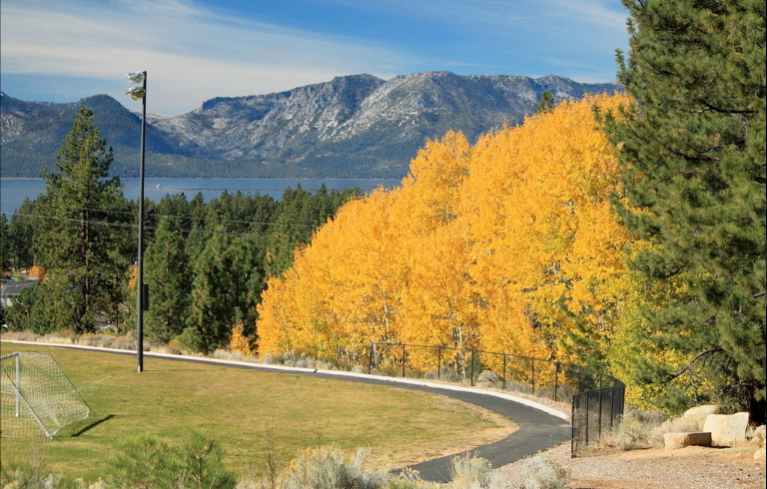
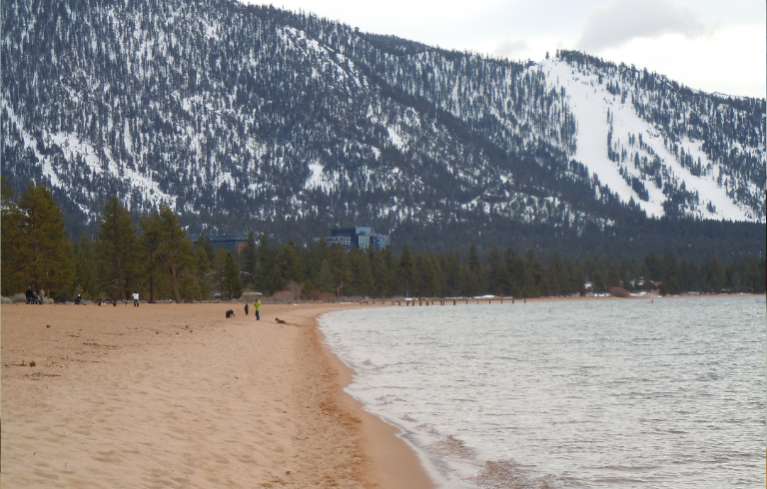
Douglas County is considering Barton's proposal to build at Kahle Park in Stateline.

Douglas County is considering Barton’s proposal to build an orthopedic center at Kahle Park in Stateline.

For Barton, a central facility would consolidate four doctors’ offices and bring seven physicians into the same building with a surgery center, radiology, sports performance center and other services, said Jonathan Finnoff, a doctor of osteopathic medicine and the medical director of rehabilitation and sports medicine with Barton’s Tahoe Center for Orthopedics.

“All different parties with a vested interest under one roof,” Finnoff said, would enable the practice to integrate various programs and better consult with and refer patients to one another.

Barton looked at 17 sites on the South Shore, but found no existing structures that could accommodate their plans, according to Chris Proctor, director of the Tahoe Center for Orthopedics.

Barton is still considering several sites, but if Kahle Park worked out, the health facility would be built near the existing parking garage and all other structures already in the park would remain. Initial concept designs have been rendered for partners and potential investors, but Proctor cautioned that it’s early in the process and many factors, such as site and cost, will determine the final plan.

If all goes to plan, Barton is expecting to have the new center completed in two years.

The possible Barton deal was talked about at the county meeting as part of Douglas County’s plans to cut costs and increase revenue in order to deal with a lingering $3 million budget deficit.

“If we fix it one year at a time, we won’t fix it structurally,” Mokrohisky said during his presentation to about 100 attendees.

To do that, the county now is using priority-based budgeting. Instead of instituting across the board cuts to meet goals, said Mokrohisky, the county is reassessing what it spends on everything and reallocating money where it is most needed while reducing overall costs.

For example, the county decided its permit requirement for home-based businesses was a waste of staff time and is now spending some of that money on better enforcement of vacation home rentals, mostly at Lake Tahoe.

It is also taking some property tax money to help pay the annual $4 million road maintenance tab.

The county says it wants to work with and support businesses wherever possible. The potential Barton deal may be the most ambitious, but the county is also making zoning changes and reviewing sign ordinances to better accommodate businesses. And in a first, it filed an amicus brief in support of Sierra Colina, the proposed housing development in Stateline that is being sued by the League to Save Lake Tahoe.

The county is also working with other area municipalities to generate revenue and outsource services. Douglas County has added $330,000 to its general fund by providing geographical information services to Carson City and Storey and Lyon counties, and saves about $50,000 a year contracting with Carson City to supply signal light maintenance.

Since 2008, about 60 staff positions in the county have been eliminated and in 2011 salaries were reduced 5 percent. Since 2010, employees have absorbed all of the annual 10 percent increases in health insurance costs.

The county’s projected budget for 2013-14 is $39.9 million, about $1 million above its projected revenues of $38.9 million.
Thieves snag copper from USFS Tahoe sites

By Kathryn Reed

Copper thieves have hit the South Shore again; this time U.S. Forest Service structures.

USFS spokeswoman Cheva Heck told Lake Tahoe News the thieves caused “extensive damage in order to get to the copper.” She said it could cost as much as $200,000 to make the repairs at the Kiva picnic area, Fallen Leaf Campground, and Pope and Baldwin beaches.

The goal is to repair the damage by Memorial Day – the normal time the seasonal areas open for the summer.

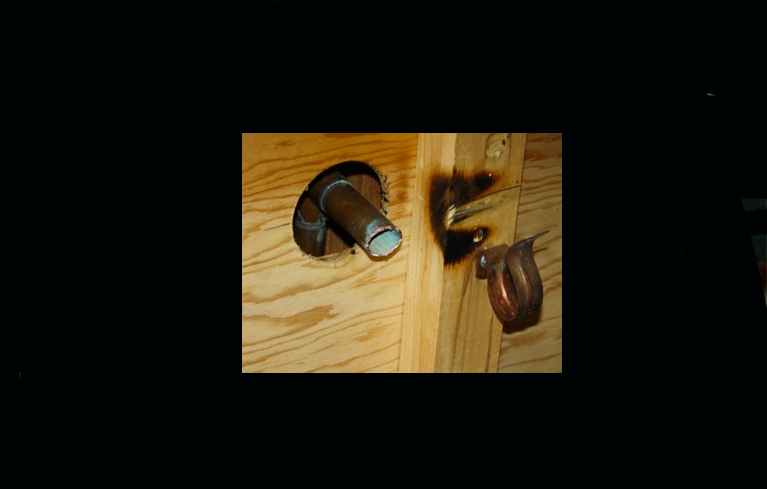
Damage done by copper thieves to a USFS bathroom on the South Shore. Photo/USFS

Damage done by copper thieves to a USFS bathroom on the South Shore. Photo/USFS

The damage was discovered in the last several weeks.

Thieves this winter have also made off with copper pipes from Camp Concord, and Emerald Bay and D.L. Bliss state parks.

No one has been arrested in any of the heists and authorities have not identified any suspects.

The Forest Service is working with El Dorado County sheriff’s detectives to track down the culprits.

The violations, which include damaging and removing government property, carry the standard criminal penalty of fines of up to $5,000 and six months in jail for each charge. The Forest Service said it could also pursue civil penalties aimed at recovering the cost of repairing the facilities.

Some of the sites had been recently renovated. Non-copper plumbing will be used when the fixes are made.

The copper plumbing is targeted because the pipes can fetch cash at scrap metal yards that will buy it.

Anyone with information may anonymously call Secret Witness Program at (530) 541.6800 or USFS law enforcement at (530) 545.9853.


Bob Bender — 1938-2013

Dr. Bob, as he was known to so many, died March 8 after a long battle with cancer. He was 74.

Robert I. Bender was born Sept. 20, 1938, in Downey to Blaine and Helen Bender. Bob grew up in Temple City with his siblings Darryl and Cheryl.

He graduated from Whittier College with his bachelor’s degree and went on to receive his medical doctorate at UC Irvine College of Medicine. He served four years in the U.S. Air Force as a captain and flight surgeon.

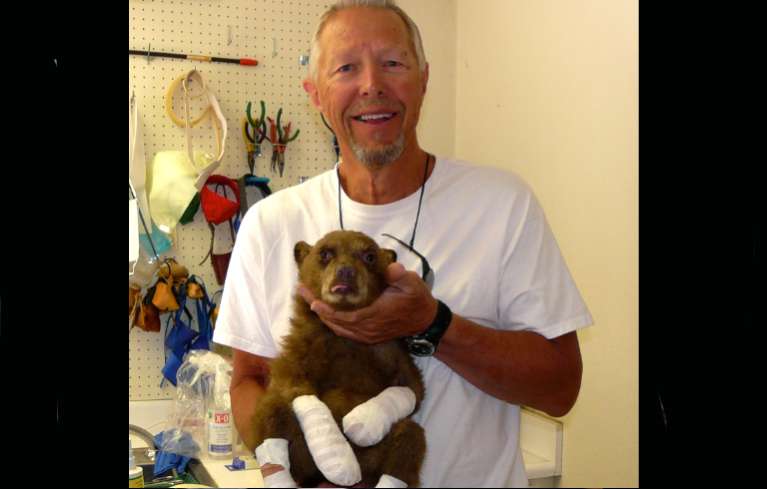
Bob Bender with L'il Smokey at Lake Tahoe Wildlife Care. Photo/Provided

Bob Bender with Li’l Smokey at Lake Tahoe Wildlife Care. Photo/Provided

Bob practiced medicine in Whittier and La Habra.

In 2007, he left Diamond Bar and moved to his vacation home in South Lake Tahoe after retiring from medicine. A former owner of Camp Richardson Marina, Bob has been a long-time member of this community.

On Feb. 27, 1971, Bob performed his first wedding as a minister. It was for his sister, Cheryl, and Tom Millham.

The Millhams operate Lake Tahoe Wildlife Care. Bob was a part of LTWC since the inception, helping with medical situations whenever he was available.

Bob is survived by his wife, Robin; daughter Samantha; son Robert Spencer; son Randy and daughter-in-law Yolanda; daughter Tiffani Calvert and son-in-law Chris; daughter Kari Deol and son-in-law Steven; sister Cheryl Millham and brother-in-law Tom; and brother Darryl and sister-in-law Beverly; seven grandchildren, four nieces and one nephew.

A loving husband, father, friend and physician, Bob will be truly missed by all who knew him.

A memorial service is planned for March 23 at 12:30pm at Calvary Chapel Chino Hills, 4201 Eucalyptus, Chino. An open house will be in South Lake Tahoe in April. Details to follow.

In lieu of flowers, a special fund has been set up for Samantha, 16, and Spencer, 13, at: Dr. Bob Bender Memorial Fund, c/o El Dorado Savings Bank, 942 Emerald Bay Road, South Lake Tahoe, CA 96150.


South Lake Tahoe council wants environmental study of loop road

By Kathryn Reed

Will a loop road beyond what exists today ever be built is a question to be answered on another day. What the South Lake Tahoe City Council on Tuesday night decided is that the environmental process needs to move forward.

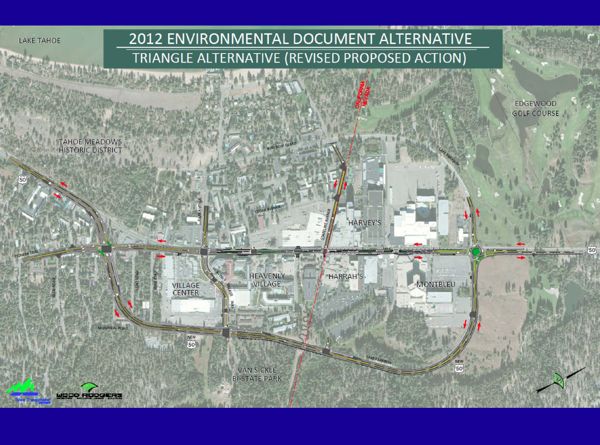
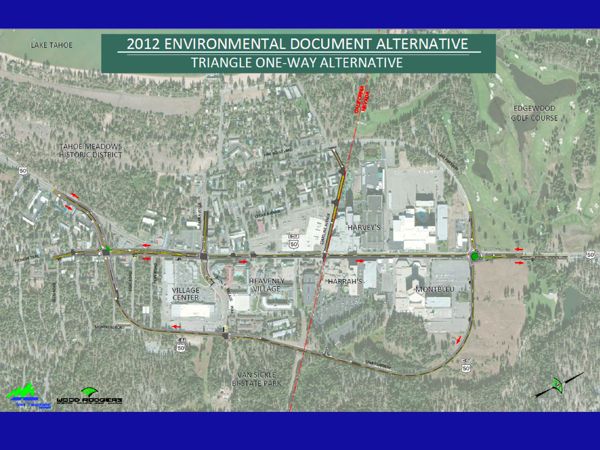
After four hours of input from the community, the project engineer, the financial consultant and the council, the vote was 4-1, with Councilwoman Angela Swanson the dissenter, to take it to the next level. The motion was to recommend to the Tahoe Transportation District board members that at their April meeting when they are expected to vote on what to include in the EIR-EIS that they include the following alternatives: the two triangle proposals, no action, and a fourth to be determined by the TTD board that is not the proposal that they first talked about. Transit is also to be incorporated into one of the alternatives.

Swanson wanted the TTD suggestions to be studied plus the 2004 alternative A to provide more variety.

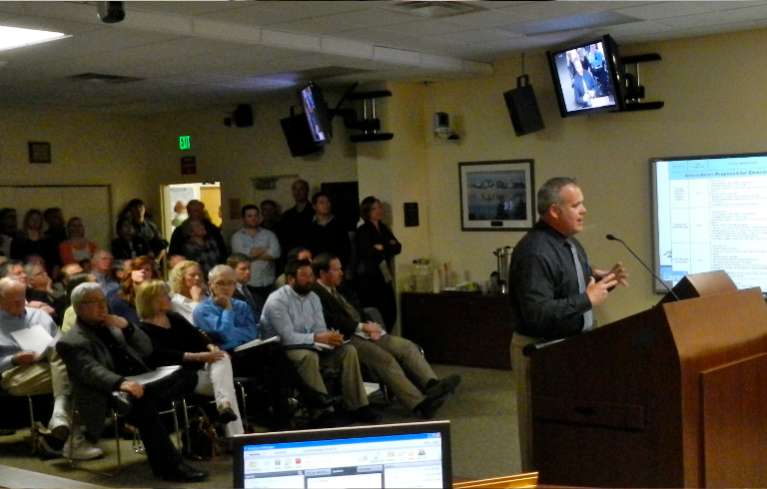
Loop road project manager Mark Rayback talks Mach 12 to the South Lake Tahoe City Council. Photo/Kathryn Reed

Loop road project manager Mark Rayback talks March 12 to the South Lake Tahoe City Council. Photo/Kathryn Reed

She is the city’s rep on the TTD board. Swanson assured everyone she would vote the conscious of the council at the TTD meeting.

While the council recognizes the need for change, they aren’t convinced the loop road is the change that is needed. But they also don’t believe now is the time to stop progress.

They worry about how businesses that are barely hanging on will be able to endure three-plus years of construction, how deliveries will be made to existing businesses if the front and back of centers change, if people will bypass Heavenly Village if the highway no longer takes them directly in front of it, and if this is the best idea for the city.

Mayor Tom Davis is tired of consultants saying X number of dollars will come to town if the council builds something and then the city winds up in debt over unrealized promises.

For more than 30 years people have talked about having Highway 50 go behind all the Stateline casinos or on one side and making the current highway a city street that would be narrowed, have a reduced speed limit and be able to be closed off for events.

(The TTD presentation will be on the city’s website. It includes historical alignments that have been studied, the ones TTD staff favors, along with information about the economic study that was done.)

The proposed preferred alternative by Tahoe Transportation District staff.

The proposed preferred alternative by Tahoe Transportation District staff.

It’s estimated it could take up to two years for the final environmental documents to be done. Through that process there will be more opportunities for public input.

Of the 23 people who spoke March 12, 11 were in favor of a loop road, eight against the project and four took no distinct position. In the latter category is Tahoe Crescent Partners, owners of the Village Center.

Mark Rayback, project engineer with Wood Rogers, said it’s possible an all-season bridge could be built to cross over Highway 50, if it goes on the mountain side, to take people to Van Sickle Bi-State Park.

It’s possible Stateline Avenue could be three lanes by using the right-of-way that exists. This way during special events the traffic could be two lanes in the direction with the most vehicles.

The second triangle proposed route.

The second triangle proposed route.

Vision. That is the word that was used the most.

Many speakers embraced wikeable, a word coined by City Manager Nancy Kerry at last week’s economic forum. It’s walkable and bikeable all at the same time. That is one vision.

Complete streets. This would bring sidewalks, lighting and landscaping.

Community. It would better erase the state line, thus tying the South Shore together, with the goal of creating a place for locals that tourists want to visit.

Environment. It would reduce traffic congestion, increase air quality, retain the same number of streets (so nothing more is being paved, it would just be repurposed).

A big vision goes beyond talking about the highway, but looking at four to five blocks deep at what the “tourist district” could evolve into.

Having signs telling people where things are, allowing easy crossing of the roads, transit that is reliable and better access to the lake are all components of the vision.


Nevada considers erecting war memorial

By Ed Vogel, Las Vegas Review-Journal

CARSON CITY — A Nevada War Memorial honoring all fallen Nevadan soldiers since statehood would be added to Capitol Complex under a bill introduced Monday in the state Senate.

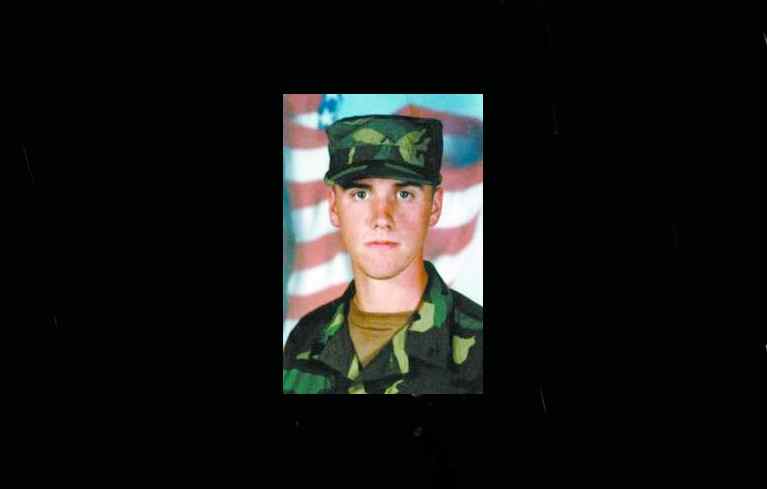
The move to establish a memorial for fallen veterans came from Brad Williams, a South Lake Tahoe police officer, whose son, Army Pfc. Brandon Williams, 21, of Gardnerville, was killed in Iraq in 2006.

Brandon Williams

Brandon Williams

Under Senate Bill 230, introduced by Sen. David Parks, D-Las Vegas, the inclusive memorial for all fallen armed forces members would be constructed only through donations to the state Public Works Division, not with tax money.

It is estimated to cost several million dollars, said Caleb Cage, executive director of the Office of Veterans Services.

The memorial, envisioned as more than 200 feet with benches, a pavilion and a wall of names, would be an addition to others on Capitol grounds.

Nevada already has a State Veterans Memorial; a memorial for the sailors who died on the USS Nevada battleship at Pearl Harbor on Dec. 7, 1941; statues for mining; Abraham Curry, the founder of Carson City; Kit Carson; and fallen police officers.


Nevada bill would keep state in TRPA Compact

By Sandra Chereb, AP

CARSON CITY — A bill that would rescind Nevada’s threat to leave the decades-old Lake Tahoe Compact over a rift with California was introduced Monday in the state Senate.

SB229 seeks to repeal a law passed by lawmakers in 2011 and signed by Republican Gov. Brian Sandoval. The law would allow Nevada to leave the Compact and the Tahoe Regional Planning Agency that has governed development and environmental controls in the scenic Lake Tahoe Basin since 1969.

Politicians see a state line, but Lake Tahoe is one lake. Photo/LTN file

Politicians see a state line, but Lake Tahoe is only one lake. Photo/LTN file

Two years ago, Nevada lawmakers blamed their counterparts in California for favoring tough environmental standards that they said were hindering development and the economy. Among other things, they cited a regional plan that hadn’t been updated since the late 1980s.

That hurdle was cleared in December, when TRPA’s Governing Board approved a plan giving more development control to local governments. The plan was viewed by most as far from perfect, but a necessary compromise that wouldn’t hinder environmental programs designed to protect Tahoe’s famed blue waters.

Monday’s bill was hailed by conservationists.

“We’re excited to see the bill introduced today and we’re optimistic we can get it passed this session so Nevada can recommit to the future of Lake Tahoe,” said Kyle Davis with the Nevada Conservation League.

Assemblyman David Bobzien, D-Reno, agreed, saying that now that Tahoe’s Regional Plan has been updated, “it’s time to come back together.”

But a Republican senator who testified in favor of Nevada pulling out of TRPA said the same issues that forced Nevada’s hand in 2011 remain.

Sen. James Settelmeyer, R-Minden, noted a lawsuit has already been filed challenging the new Regional Plan.

The lawsuit was filed in February in U.S. District Court in Sacramento. In it, the Sierra Club and Friends of the West Shore claim the rules that TRPA adopted in December will erode environmental protection of the mountain lake by allowing denser development and giving more control to local governments.

“Obviously to me the lawsuit proved that SB271 still needs to be in play,” Settelmeyer said.

Bobzien, however, said there was nothing in the original law that conditioned Nevada’s staying in the Compact on whether others file lawsuits.

“People have a right to litigate,” he said.


Narcotics officers do their part to reach kids early

Publisher’s note: This is one of a few articles about the Drug Store Project. This marks the 10-year anniversary of the program. This year’s event will be April 2 at Lake Tahoe Community College. For more info about volunteering, donating or if you have questions, email Lisa Huard at lhuard@ymail.com.

By Jeff Catchings

For more than six years I have been involved with South Lake Tahoe’s Drug Store Project, a reality based presentation targeting our community’s sixth-grade students. The project was originally presented 10 years ago as an awareness campaign targeting our youth and educating them on the debilitating effects drugs have on our society.

This campaign has, over time, become much more than that. By reaching out to an impressionable target group, law enforcement and local educators are bringing the message of “choices” to young students. The choices you make through middle school and high school can shape what you will become as a young adult.

slednetThe Drug Store Project is a daylong, simple depiction for the students of “Make bad choices and you or others will have negative consequences.” “Good ones will benefit you.”

I believe most child advocates agree a sixth-grade child stands on the doorstep of making independent choices on who they will associate with, what type of group they may socialize with and what choices will best suit their blossoming lifestyles. These students, believe it or not, also stand on the frontline of experimenting with drugs or alcohol. Friends, siblings, social groups and families will weigh heavily on these pending decisions.

The Drug Store Project points the students’ attention toward these choices front and center with a reality-based platform depicting the consequences of drug and alcohol abuse.

As the commander of the South Lake El Dorado Narcotic Enforcement Team, I lead a group of law enforcement personnel on the opening presentation for the Drug Store Project. Our presentation deals with recognition of certain drugs, their effects on the body as well as the social consequences of drug use. Every year we see a different group of sixth-grade students who all have the same look on their faces when they walk into our presentation. The look of, “Cool! Were out of class and on a field trip!” In 15 minutes of speaking I change that to “My mouth is shut, my eyes are wide-open and you have my full attention”.

It’s actually quite easy to do when you experience 24 years of dealing with “not societies finest”. The stories that go along with the experience somehow get everyone’s attention.

It’s this attention that will help the students focus on the remainder of the presentations in the Drug Store Project. My message to the students during our presentation is something they can use as a tool to push back against peer pressure, “That’s not me” or “That’s not who I am”. The words are simple but firm. It’s a statement that allows students to remind their friends of who they are, someone who does not use drugs or alcohol.

Helping them understand the effects of drug use and how to respond to someone who encourages it is our cornerstone for the daylong event. The presentation opens the gateway to a realistic encounter for the student and introduces them to the judicial and familial consequences through role-playing with the presenters. It is accomplished by placing the students in a hands-on environment with first responders, judicial personnel, narcotic agents, educators and the National Guard all of whom carry a message of “Choices — What are yours?”

In addition to the presentations, the California National Guard and first responders present a static display of equipment and are available for one-on-one time with the students. Most students may know some of the Drug Store Project facilitators and ask questions they would not ask in any other forum. Most of the facilitators are members of this community who are not recognized outside of their jobs or vice, versa. Seeing them in uniform always brings a positive feeling to the students who know them.

Numerous students following the presentation have approached me off duty. The comments are always positive and all agree it was “pretty cool.” Then I get the “I didn’t know you were a cop.” Then “That’s not me!” The short time spent bonding with these students during this unique day is resounding in a way that’s hard to describe.

Hearing “That’s not me” shouted across a baseball field on Saturdays and seeing a middle school student giving me the “what’s up” nod shows we got in their heads for good.

By no means is the Drug Store Project an end all answer for drug prevention. It is, however, an incredibly successful tool that allows us to convey the message of “choice.” Participants in the Drug Store Project receive a message of support from the facilitators and hear firsthand from their own community on the effects of drug and alcohol abuse. Failing to teach the consequences of drug and alcohol abuse rest on the shoulders of those who refuse to advocate against it.

The news of its debilitating effects seems to have grown heavy on those who have heard it for so long. Our society in general seems to embrace the use of narcotics and alcohol as a recreational vice now more than ever. It is the impression of which we as parents will and rightfully should teach against for children who are standing at the gateway of its use.

As a resident of South Lake Tahoe and one who is involved in youth sports programs, it is the community aspect that I most admire about the Drug Store Project. How people will convene to present a voice against a debilitating vice targeted at our youth. Others admire it as well. So much so that other communities in Placer County have adapted or are starting their own community based model.

Awareness is a powerful tool when targeted at the impressionable. It is something that we should include in the curriculum of growth and knowledge.

I will always be an advocate for this program and would encourage or even challenge others in our own community to take one step further. We should never fail at something so simple to teach.

Jeff Catchings is the task force commander for South Lake El Dorado Narcotics Enforcement Team.


No STPUD rate increases —- for now

By Kathryn Reed

Water and sewer rates will not be going up this year for South Tahoe Public Utility District customers. But that won’t be the case in future years if the district sticks to its 10-year capital improvement plan.

The board had a workshop with staff last week to go over the proposed 2013-14 budget and the CIP. No one from the public attended.

At the May 2 board meeting there will be a public hearing on the budget, with the board slated to take a vote May 16.

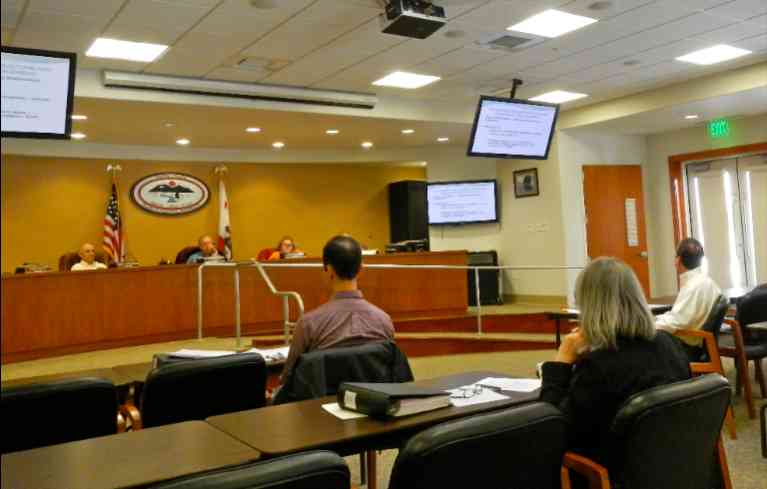
South Tahoe PUD staff, foreground, discuss the budget March 6 with the board. Photo/LTN

South Tahoe PUD staff members, foreground, discuss the budget March 6 with the board. Photo/LTN

In the fall the board expects to have workshops about rates and meters.

“We have work to do. By the fall we have to have concrete ideas about how to deal with this situation,” board President Eric Schafer said at the March 6 meeting.

Per California law all district customers must be on water meters by 2025. That could require borrowing money if grants are not available.

The continued decline in property values in the district’s boundaries, which are similar to those of Lake Tahoe Unified’s, means less money in the bank. The current budget assumed there would be 1 percent drop, when in reality it has been 1. 9 percent. This comes to a difference of $60,000. But with the district always forecasting 10 years out, cumulatively it equates to a potential $600,000 hit.

Paul Hughes, the district’s chief financial officer, presented a graphic that showed the revenue for water and sewer in 2008 and what is proposed in the coming fiscal year. 2008 was the peak revenue year for STPUD when service charges represented 59 percent of collections. That has grown to 69 percent for 2013-14. Revenue has decreased 4.7 percent in six years.

Connection fees have dramatically dropped as a budget line because people aren’t building. However, the situation was not as dismal as the district had forecast in the 2012-13 budget. It was assumed there would be no commercial connections and 15 residential. Through February, Bob Dogs was the one commercial connection and there has been the equivalent of 31 residential connections.

Hughes said he’d like the board to entertain the possibility of putting out a multiyear announcement so rate increases could take effect back-to-back years. “This would allow for continuity and planning on the engineering said in the CIP,” Hughes said.

As it is now, each year the district proposes a rate increase on either the sewer or water side Proposition 18 kicks in which requires all customers to be notified and given the chance to protest the increase.

Schafer told his colleagues that they better take a hard look at the 10-year capital improvement plan.

“We have been scaling back and we need to decide if that’s right,” he said.

And without continued rate increases, that 10-year plan will just collect dust and never be a reality. The 10-year sewer needs would cost $64.1 million, while the water needs are $57.8 million.

For now, replacing small water lines is the district’s focus so fire suppression will be improved. There are $3.6 million water engineering projects on the books for 2013-14, with bulk — $2.5 million – being spent on the state street waterline.

A sign the local economy is improving is that the number of people seeking a low-income discount has declined. It peaked in 2011 with 325 enrolled, dropped to 307 in 2012 and to 297 for 2013. What isn’t known is if these people are doing better or don’t live in the district any more.


Nutrition, exercise key to being healthy after 50

By Kathryn Reed

Eat well and exercise. That was the message delivered by Barton Health dietician Lynn Norton for people who are 50 and older who want to live longer.

She spoke to about 50 people on March 6 at Lake Tahoe Community College about nutrition and aging. And while much of the information delivered that night was routine, it was a reminder to get moving and watch what you consume.

With 20 percent of the population expected to be 65 and older by 2040, aging and nutrition will likely be a growing topic.

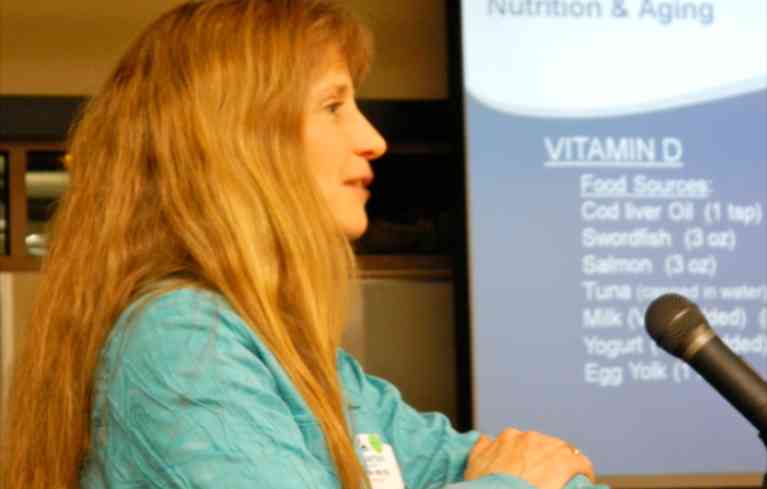
Lynn Norton talks March 6 about nutrition and aging. Photo/LTN

Lynn Norton talks March 6 about nutrition and aging. Photo/LTN

Norton said energy levels on average decrease 2 to 5 percent each decade as people get older. She said the way to stem that decline is to do aerobic and muscle strengthening exercises multiple times a week.

With exercise burning calories, the odds are people will then be at their ideal weight, too.

She mentioned how people who are overweight also tend to have more issues with high blood sugar levels and high blood pressure.

As people get older, they have changes to their digestion and nutrient absorption. B12, zinc and calcium absorption declines.

“To counter this, eat nutrient dense foods,” Norton said.

While she said supplements can fill in the gaps, she offered more warnings about supplements than recommendations.

Constipation can be an issue for older people. Proper fluid and fiber intake can help with that condition, Norton said. She suggested adding wheat bran to foods.

Paying attention to bone mass is also critical.

“Fifty percent of women older than 50 will break a bone due to osteoporosis, 25 percent of men,” Norton said.

She recommends getting a bone density test and vitamin D test so if a deficiency turns up, the correct treatment can begin.

When it comes to having a good immune system, Norton recommends eating oily fish, nuts, seeds, fresh fruit, vegetable, wholegrain, cereals and lean meats.

These were the same foods she promoted throughout much of her talk.

While she said studies have shown limited alcohol has benefits, she said much more could have effects on dementia.

Norton said, “We have a high alcohol population in ICU and ER. We move them from ICU with dementia to long-term care. It really is a long-term problem.”

She said proper diet and physical activity are how people will be healthy as they age.


Sahara dust contributing to Sierra snow

By Alicia Chang, AP

LOS ANGELES — One of the driest spots on Earth – the Sahara Desert – is increasingly responsible for snow and rain half a world away in the western U.S., a study released last week found.

It’s no secret that winds carrying dust, soot and even germs make transcontinental journeys through the upper atmosphere that can affect the weather thousands of miles away. Yet little is known about the impact of foreign pollutants on the West Coast, which relies on mountain snowmelt for its water needs.

Previous studies hinted these jet-setting particles may retard rainfall in the Sierra Nevada of Northern California by reducing the size of water droplets in clouds. But scientists who flew through storm clouds in an aircraft, measured rain and snow and analyzed satellite imagery found the opposite: Far-flung dust and germs can help stimulate precipitation.

During the 2011 winter, a team from UC San Diego and the National Oceanic and Atmospheric Administration traced particles suspended in clouds over the Sierra to distant origins – from the skies over the arid Sahara, to mingling with other pollutants in China and Mongolia, then crossing the Pacific.

The days with the most particles in the clouds were also “days when we see the most snow on the ground,” said study leader Kimberly Prather, an atmospheric chemistry professor at UC San Diego, whose study was published in the journal Science.

Scientists believe wafting dust, grit and microbes – including bacteria and viruses – can spur the formation of ice crystals in clouds that in turn can influence how much rain or snow falls.

For years, governments and utilities in California and other Western states have used cloud seeding, in which a chemical vapor is sprayed into clouds, in a bid to increase rainfall.

The new study shows how “Mother Nature has figured out how to give us more precipitation” and that may lead to changes in cloud-seeding efforts, which can be hit or miss, Prather said.

David J. Smith at the NASA Kennedy Space Center said it was refreshing to see measurements from the ground, air and orbit to tackle how airborne particles affected Northern California snowfall.

“Such a comprehensive approach is the only way to thoroughly examine global transport” of particles, Smith, who had no role in the research, said in an email.