McClintock shares his beliefs with the people

By Kathryn Reed

TRUCKEE – Federal spending, government regulations, banking, the economy, carbon emissions, immigration and the Auburn Dam dominated the discussion Thursday night between Rep. Tom McClintock and his constituents.

At times it was a bit argumentative between the congressman and those in attendance, as well as between attendees – but nothing like what is heard on talk radio.

McClintock, R-Granite Bay, was at the Truckee Tahoe Airport on May 2 for a town hall meeting. He represents Truckee and the California side of the Lake Tahoe Basin in Congress.

As chair of the House Water and Power Subcommittee, McClintock has some pull in getting the Auburn Dam project through; despite many thinking the issue was dead in the water. It’s a project that has been discussed since the late 1960s, was started, but has been on hold for decades because of seismic and political reasons.

Rep. Tom McClintock, R-Granite Bay, talks May 2 to constituents in Truckee. Photo/Kathryn Reed

Rep. Tom McClintock, R-Granite Bay, talks May 2 to constituents in Truckee. Photo/Kathryn Reed

One woman got in a bit of back-and-forth debate with the congressman about the benefits of the dam. She believes the value of today’s natural resources need to be weighed before a vast area is flooded to create what would be Lake Auburn.

McClintock believes the state needs another area to store water, that it would provide recreation and flood control.

The constituent said the money would be more wisely used to develop better irrigation for farmers who want to use Northern California’s water.

When it comes to the greater disconnect in Washington, McClintock said, “The government is divided because the people are divided.” He said the people need to resolve their differences and then lawmakers will follow their lead.

He is fine with sequestration, especially because it is getting people to the table to talk.

“At this moment in time it is the only tool we have to get the federal budget back to solvency,” McClintock told the nearly 50 people in the room.

But he is not usually for across the board cuts that are equal in nature.

“That’s the lazy man’s way to budget cutting,” he said. McClintock said that way of thinking doesn’t allow for thoughtful analysis of whether something should be funded more or less. He doesn’t want all things to be treated equally because their importance is not of equal value.

McClintock wants changes in Medicare and Social Security, saying the former will be bankrupt in nine years and the latter 10 years later.

One person responded, “I’m entitled to that. I paid into that.”

The congressman said with people living longer, people taking out more than they paid in and the ratio of those contributing compared to those withdrawing diminishing, the two funds are not going to have money for everyone who is paying in today.

When it comes to banks, McClintock believes people should know what their banks are doing – saying that if you have your eggs in one basket, you better keep an eye on that basket. The audience was a bit taken aback, wondering how they were supposed to know what big banks were doing with their money after it was deposited.

“I think the bailout was one of the worse, (most) corrupt mistakes ever made,” McClintock said.

But he is for personal accountability.

While he sympathizes with people who came to this country illegally as children, he doesn’t have an answer for what to do with them.

He believes in the path that exists to become a U.S. citizen, but does not want to allow those who are in the country illegally to have the right to become a citizen.

“If we are going to support illegal immigration, then there is no point to have legal immigration,” McClintock said.

He got in a bit of debate with a woman who said the system is not working for her. She has hired people from other countries with advanced degrees, but when their visa ran out the person had to leave. She believes the workforce is not educated enough to fill all the jobs on U.S. soil and that immigration laws need to change.

McClintock said if the recent gun control law that failed in the Senate had made it to the House, he would have voted against it.

“We are taking increasingly Draconian steps to disarm the law abiding population. That is not going to end well,” McClintock said.
Lack of moisture triggers early fire season

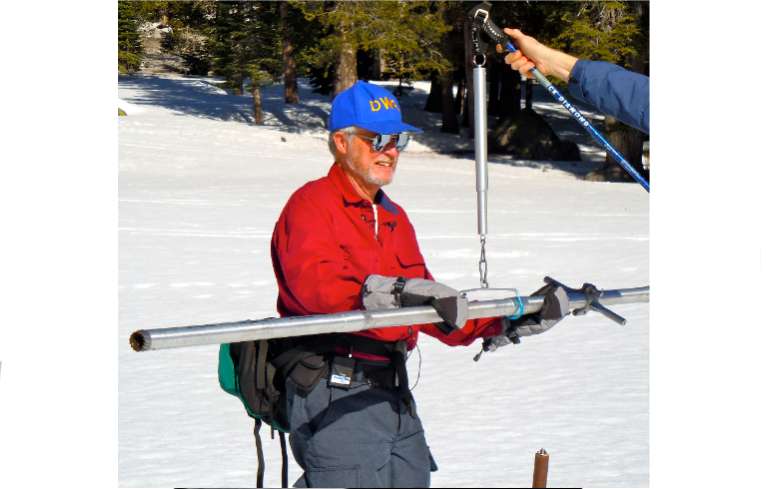
There was no snow to be found today during the final survey of the season near Echo Summit, which comes as no surprise considering temperatures in the Lake Tahoe area have been running above normal for most of this spring.

Statewide, the snowpack as of May 2 is 17 percent of normal for this date.

Electronic readings show water content in the northern mountains is 16 percent of normal for the date. Electronic readings for the central Sierra show 23 percent of normal water. The numbers for the southern Sierra are 9 percent of average.

While Lake Oroville in Butte County, the State Water Project’s principal storage reservoir, is at 103 percent of its average level for the date (86 percent of its 3.5 million acre-foot capacity) and Shasta Lake north of Redding, the federal Central Valley Project’s largest reservoir with a capacity of 4.5 million acre-feet, is at 95 percent of its normal storage level for the date (83 percent of capacity), it won’t take long for those numbers to change with water users downstream tapping into the supply and normal evaporation with summer’s high temps in these areas.

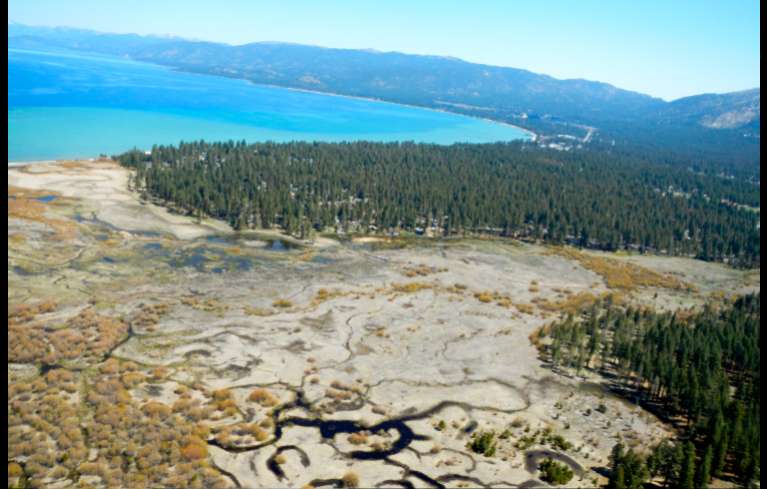
The Upper Truckee Marsh on April 22 is drier than normal. Photo/Kathryn reed

The Upper Truckee Marsh on April 22 is drier than normal. Photo/Kathryn Reed

Already the Department of Water Resources is projecting to deliver 35 percent of the requested amounts of water for SWP customers. Snow normally provides about one-third of the water for California’s homes and farms as it melts into streams, reservoirs and aquifers.

Sprinklers coming on in April was a sure sign the ground is abnormally dry in Tahoe.

The average temperature in the Lake Tahoe Basin has been running 10 to 15 degrees higher than normal for this time of year, which just helps to dry things out faster.

However, with the unsettled weather moving in, the mercury will be returning to normal – back to the low 60s.

Even though rain is in the forecast for the Lake Tahoe Basin starting on Saturday and continuing through Tuesday, the amount of wet stuff will not be enough to make up for the dismal snowpack.

The good news with thunderstorms in the forecast is there is still plenty of snow in the higher elevations. This means little chance of lightning starting a fire.

“Once this system moves out of the area, it will give a little reprieve before the start of fire season. But once it starts to heat up, fire season will be here earlier than typical,” Scott McGuire, meteorologist with the National Weather Service in Reno, told Lake Tahoe News.

For other areas of the state, fire season is in full force. The Santa Ana winds have whipped up multiple fires in Southern California that as of this afternoon were still out of control. Fire is also eating up grasslands in Sonoma and Napa counties. Fire season usually starts in June in California.

All indicators point to 2013 likely being a bad year for fire.

“Our firefighters have responded to an increased number of wildfires due to the very little rainfall we have received over the past few months,” CalFire director Ken Pimlott said in a statement. As of the end of April, CalFire had responded to more than 680 wildfires this calendar year. This is about 200 more than the average for this time of year.

— Lake Tahoe News staff report


Skilled nursing facilities clear first hurdle

Skilled nursing facilities throughout California are cautiously optimistic about their future with this week’s 17-0 bipartisan vote that would reverse Medi-Cal cuts to health care providers.

Assembly Bill 900 was before the Assembly Health Committee on April 30.

Now it goes to the Assembly Appropriations Committee and then to the full Assembly. If AB900 were to move out of the Assembly, then it would go through a similar path on the Senate side.

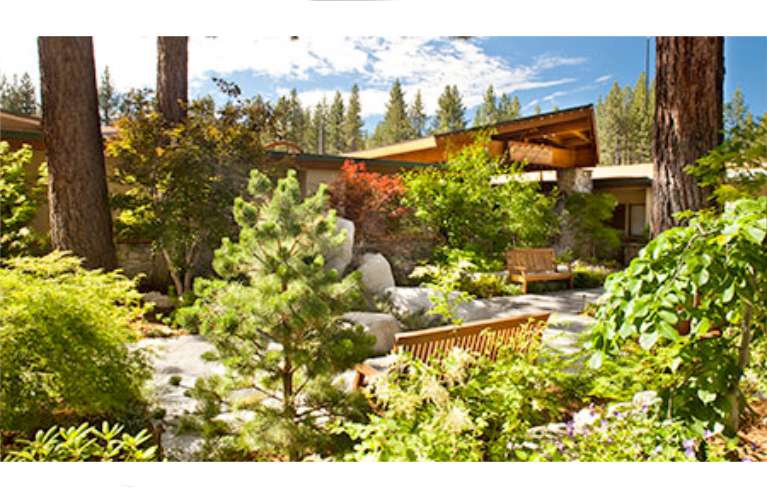
Healing Garden outside Barton Memorial Hospital’s Skilled Nursing Facility. Photo/Provided

Barton Skilled Nursing Facility’s healing garden. Photo/Provided

“This is anticipated to be a tough process and we still have a long way to go. The results of AB900 not passing will be that many facilities will have to close their doors,” Mary Bittner, vice president of nursing and ancillary services for Barton Health, told Lake Tahoe News.

Barton Memorial’s Skilled Nursing Facility is one of those care centers that is threatened with closure if reimbursements are cut. The 48-bed skilled-nursing and short-stay rehabilitation facility often runs at capacity.

Mostly it’s lower income older people who live at the South Lake Tahoe facility. The center provides around-the-clock care for aging adults.

In the last five years, approximately one-third or 40 hospital-based skilled-nursing facilities in California have closed because of financial reasons, according to the California Hospital Association.

Throughout the state Medi-Cal beneficiaries make up nearly 80 percent of the patients receiving hospital-based skilled-nursing care. Barton relies on these reimbursements, too.

The California Hospital Association believes AB900 is necessary to reverse Medi-Cal cuts to health care providers.

“Although these reductions amount to a 10 percent reduction for doctors and most other health care providers, the payment cuts are much deeper – averaging 25 percent or greater – for hospital-based skilled-nursing units,” the association said in a statement. “The consequence would be cutbacks and closures that would tear a hole in California’s safety net, rip families apart, and punish the most vulnerable and sick among us. Families would be forced to relocate their loved ones to another facility, perhaps hundreds of miles away.”

— Lake Tahoe News staff report


Northstar ramping up for summer operations

By Kathryn Reed

Zipping through the trees is soon going to have a different meaning for people visiting Northstar.

No longer will skis, a snowboard or mountain bike be necessary.

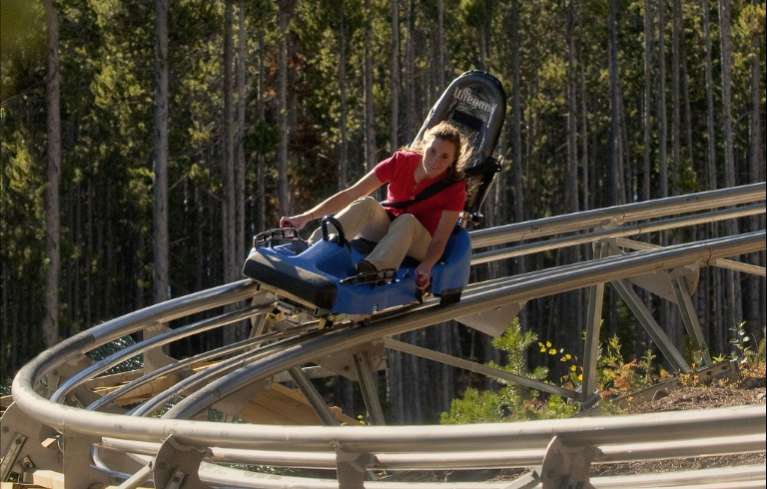
The Forest Flyer is expected to be in operation next winter. It’s a toboggan of sorts that is on wheels on a track. People will be towed to the top of the track, then gravity will take them through the bank turns, loops, over bridges, through the forest and back to the starting point at the bottom of the Vista lift at mid-mountain.

This will be an attraction that is designed to be open year-round. (Pricing has yet to be set.)

A ride similar to this could be operational at Northstar this winter. Photo/Provided

A ride similar to this could be operational at Northstar this winter. Photo/Provided

“People have a need to get out in the woods and some don’t have the ability or skill to do it,” Bill Rock, chief operating officer of Northstar, told Lake Tahoe News. “One thing about this project and ziplines is they make the outdoors more accessible to people. You really can get a sense of flying through the forest.”

Since Vail Resorts took over the Truckee resort, the location of the flyer has been changed. This is in large part to accommodate those who had voiced concerns.

Plans still need to be approved by Placer County. Then the state needs to sign off on the designs, too.

Also working its way through the halls of the county’s planning department is the resort’s master plan. The draft environmental impact report is expected to be released for public comment in June.

It’s possible some of the items in the plan could be implemented in 2014. A priority list has not been disclosed.

Events continue to be huge draw for Northstar. This year Tough Mudder will be over two weekends – one in July, the other in September.

Rock said last year it attracted so many people to the resort who had not been there before, that the organizers and Northstar thought doubling the exposure of the endurance event would benefit everyone.

This will be the third summer Northstar has hosted the Tahoe Trail 100. The amateur mountain bike race is a qualifier for Colorado’s Leadville 100.

On a less intense note are the Strider bike series for those who are new to cycling. Rock’s twins, who are now 8, learned at age 2 on Striders.

“It’s revolutionizing how to ride bikes,” Rock said. “We do it on the ice rink so it’s a contained environment.”

And when the rink isn’t full of little kids learning to ride a bike, that rink is for roller skating this time of year.

While Rock would like Northstar to be as popular in summer as it is winter, he knows it will take more work to make that happen. But he said the interest in the resort sans snow is growing.


NDOT gives Tahoe roads a pass in 2013

Publisher’s note: This is one of a few stories about construction planned for the Lake Tahoe Basin this summer.

By Kathryn Reed

While Nevada state highway officials are well aware of the condition of Kingsbury Grade, it’s going to be another year before that stretch of road in Lake Tahoe gets any more attention.

Also known as Highway 207, this South Shore artery that links Tahoe and the Carson Valley was torn up during the last four years for an erosion control project that took much longer than it was supposed to. Not touched were the numerous potholes and other hindrances with the asphalt.

Work continues at the Kahle Drive portion of the Stateline-to-Stateline bike path. Photo/LTN

Work continues at the Kahle Drive portion of the Stateline-to-Stateline bike path. Photo/LTN

Starting in 2014 and possibly going into 2015 will be a $7.5 million project to overlay the highway from the basin at the juncture of Highway 50 and going up 3.7 miles.

“No one will argue it’s needed. It’s falling apart,” Scott MacGruder, spokesman for Nevada Department of Transportation, told Lake Tahoe News.

MacGruder call this a “pretty low-key year for NDOT” when it comes to work in the Lake Tahoe Basin.

In less than 20 years, NDOT has put in about $30 million worth of erosion control work in the basin.

NDOT and Caltrans talk to each other, as well as the local jurisdictions, to try not to have every highway in the basin torn up at the same. With dirt only supposed to be moved from May 1 to Oct. 15 based on Tahoe Regional Planning Agency rules, the window to do work is limited for all concerned. With dry years like this, though, exemptions are often granted to start work sooner.

Caltrans has projects on most of the California routes in the basin.

To help get NDOT projects wrapped up last year, there was an incentive clause in the contract for the roundabout on Highway 28 in Incline Village to be finished last year. It could have stretched into this year.

NDOT crews will be doing some maintenance to highways, but no big projects.

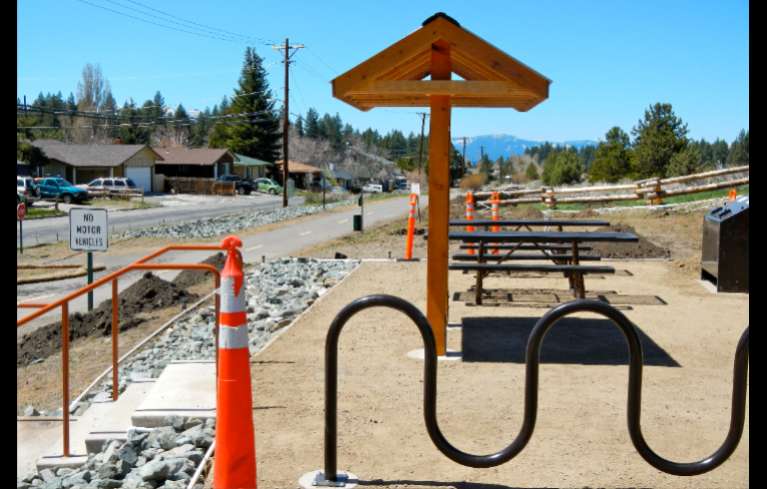
The department is overseeing the $900,000 completion of what is called Phase 1C of the Stateline-to-Stateline bike path. The first section of the South Shore route was laid down last year starting at Rabe Meadow in Stateline at the Lam Watah Trailhead parking lot on Kahle Drive.

This year the section of trail linking the bike path to Round Hill Pines Beach will be completed.

The three South Shore segments are broken up as follows:

• Casino area to Kahle Drive

• Kahle Drive to Elks Point Road

• Elks Point Road to Round Hill Pines.

The middle section was built first because it is all on Forest Service land..

When completely built, the 30-mile bike path will go the Crystal Bay.


California looks at new way to manage water

By Lenny Bernstein, Washington Post

Like a pitcher taking the mound on opening day, Frank Gehrke gets the spotlight in California every early April. That’s when the otherwise obscure state water official trudges into the Sierra Nevada mountains, media in tow, and plunges aluminum tubes into the snow.

With those snow samples — and historical data and mathematical formulas — Gehrke and his colleagues can tell anxious farmers and hydroelectric power generators how much water they can expect for the coming summer.

Even with about 150 people taking samples across the state and the help of satellites and sensors buried in the ground, it’s a highly uncertain way to gauge much of the water supply for a thirsty state, where every drop is precious and expensive to move. According to one study, the predictions are off by 18 percent at least half the time.

Manually checking the water content of the snowpack is a winter ritual in the Sierra. Photo/LTN file

Manually checking the water content of the snowpack is a winter ritual in the Sierra. Photo/LTN file

That could change dramatically if an experiment in snowpack measurement under way this month proves promising. For the past few weeks, researchers from NASA and the California Institute of Technology’s Jet Propulsion Laboratory have been flying over the Tuolumne River Valley, which runs through Yosemite National Park, with sophisticated instruments that measure the snow’s depth and area, as well as the amount of energy it absorbs from the sun.

That will allow them to more precisely predict the volume of water that will come from the Sierra snowpack for 2.6 million people in the San Francisco area, how fast it will melt, where it will flow and how soon, the researchers say.

And they can deliver that information within 24 hours — a potential godsend to the people who control the hundreds of reservoirs strung the length of the state. When water managers guess wrong about the supply headed from the mountains, the valuable liquid can spill over dams or run dangerously short. Those can be expensive mistakes for consumers, farmers and electric utilities.

“What [the new method] gives me that we have never had is an actual estimate of what the total volume of water is in the mountains,” said Bruce McGurk, a consultant to the Airborne Snow Observatory (ASO) project and former manager of the Hetch Hetchy reservoir, which serves the San Francisco area. “All we’ve ever had is the statistical relationship between snow measurement at a bunch of points” and the water flow, he said.

Gehrke’s calculations show that the state will deliver only 35 percent of its normal water supply to agencies across California, which must figure out how to make up some of the difference. Farmers already are preparing to see their allocations cut and consumers are being urged to conserve. Knowing more about when the water will come down from the mountains would help.

“The idea that you can determine the total snow water equivalent in the basin is the icing on the cake of snow science,” Gehrke said.

At 20,000 feet, a DeHavilland Twin Otter aircraft jammed with equipment can cover the entire Tuolumne River basin in about six hours, according to Thomas Painter, the lead scientist on the ASO project, which has been aloft weekly since the beginning of April. Light-detection and ranging lasers, more commonly known as lidar, measure the depth of the snow, while a spectrometer maps the area it covers.

Also critical is the snow’s “albedo,” or reflective quality, which dictates how much sunlight it absorbs and helps determine how quickly it will turn to water. Albedo varies considerably; freshly fallen snow reflects 90 percent of the sunlight that hits it, while older snow, which forms larger crystals, reflects only 60 percent. Dust and black carbon carried to the snowpack by winds also can change the percentage. The spectrometer measures that as well.

The information is fed into powerful computers and combined with historical measures and models of snow density, Painter said. The end product, the scientists hope, will be the best estimate of water volume and flow ever developed, a truly new generation of snow science and snowpack measurement.

Satellites can map the snow’s area, but they provide huge snapshots, compared with the aerial surveys, which can show a patch of snow a yard or two square, and a patch of bare ground next to it, Painter said. And the satellite images can take weeks to arrive.

A sparse network of underground sensors, known as “snow pillows,” provides some idea every few hours of the snow’s depth, but they weigh everything that lands on them, including tree branches and the occasional bear, Painter said. They are small and there are far too few of them, none in the higher elevations of a mountain range that reaches more than 13,000 feet. There is no method to calculate snow albedo.

“We are massively undersampling the snowpack,” Painter said.

Climate change has begun to make the historic data that snow scientists use less reliable, McGurk said. “Our predictive tools get noisy,” he said. “What that means is you have to hedge more.”

Attempts at aerial snow measurement have been made for the past five or 10 years, said Ethan Gutmann, associate scientist at the National Center for Atmospheric Research, who has mounted a single, fixed laser in the Rocky Mountains near Boulder, Colo., to measure the snowpack there.

The aerial survey can cover a huge area once a week, while Gutmann’s laser provides continuous, precise information but for a much smaller swath. It is much less expensive than the $1 million aerial project and not subject to days when planes can’t fly, he said.

But the ASO, he said, is “the future of snow science and resource management for mountainous areas” and probably beyond.

Hetch Hetchy is a small reservoir by California standards; it holds just 360,000 acre-feet of water. (An acre-foot is the volume of water that would cover an acre at a depth of one foot, or about 326,000 gallons.). When water is plentiful, the challenge is to channel it to hydroelectric generators without allowing it to collect too quickly in the reservoir and spill over the dam.

The water needed to generate electricity at the Kirkwood Powerhouse 11 miles away is worth $66,000 per day, McGurk said. Any mistake that results in the use of gas or coal to generate power is therefore quite expensive and releases greenhouse gases into the atmosphere. Heavy spills also can affect downstream ecosystems, he said.

In times of scarcity, like the approaching summer, the trick is to keep the reservoirs as full as possible, while supplying consumers and farmers with the water they need. Moving water is an extremely expensive proposition in California. About 15 percent of the power used in the state goes to pumping water through its vast network of reservoirs and pipelines, McGurk said.

“There are very large dollar figures attached to this water and knowing how much is there and when it’s going to come out,” Gutmann said.

In droughts, water managers may have to shortchange power generators to ensure that reservoirs are full when the snowmelt stops flowing in the spring. “There is a great penalty, both political and personal,” for missing that goal, McGurk said.

“We’ve had reasonably good tools, and we were doing OK,” he said. “And what we’re trying to do is get to the next level.”


South Shore electeds united in legislative, recreation endeavors

By Joann Eisenbrandt

What bothered everyone present was the substantial loss of local representation and control, and the negative impacts on future funding for transportation and other projects that dissolution of the Tahoe Regional Planning Agency Compact would create.

This was one of many topics at the April 29 joint meeting of the Douglas County Commission and South Lake Tahoe City Council at Lake Tahoe Resort Hotel (formerly Embassy Suites).

The final topic was the potential impacts of California and Nevada Senate bills on the future configuration of TRPA. Controversy over the role and effectiveness of the bi-state agency has been the background noise of Tahoe economic and environmental discussions since its inception. Everyone’s ears perked up with the passage of Nevada Senate Bill 271 in March 2011, providing for the withdrawal of Nevada from the Tahoe Regional Planning Compact by 2015 unless the 1987 Regional Plan was updated. In that case, the Nevada Tahoe Regional Planning Agency would assume TRPA’s duties for the Nevada side of the Lake Tahoe Basin.

Recreation on the South Shore is now the economic focus. Photo/LTN file

Recreation on the South Shore is now the economic focus. Photo/LTN file

South Lake Tahoe Mayor Tom Davis said, “(I) never thought I’d be supporting TRPA, but SB271 got us to where we wanted to be with the Regional Plan. Now to see the California reaction. It will put the Tahoe economy back to the dark ages. This is how wars get started.”

The Regional Plan update was finalized and adopted in December 2012, but SB271 has not been repealed. That is the intention of Nevada Senate Bill 229, introduced in March. It was approved by the Senate on April 22 and now goes to the Assembly. Nevada Gov. Brian Sandoval has said he will veto the bill pending further information on the status of the Sierra Club’s lawsuit against the TRPA Regional Plan update.

Uncomfortable with the uncertainty, California decided to cover its own Tahoe backside, with the introduction of Senate Bill 630, authored by Sens. Fran Pavley, D-Agoura Hills and Senate President Pro Tem Darrel Steinberg, D-Sacramento. Should Nevada withdraw from TRPA, or fail to repeal SB271 in its 2013 legislative session, the California Tahoe Regional Planning Agency (CTRPA), a precursor to TRPA that was dissolved when the bi-state compact was enacted, would be reconstituted and put in charge of the California side of the lake on Jan. 1, 2014.

TRPA’s current 14-member board would be replaced with a nine-member governing body, appointed by California’s governor with the approval of the Senate, with one member coming from South Lake Tahoe and one from either El Dorado or Placer counties.

City Councilwoman JoAnn Conner expressed her indignation over the idea that those outside the basin have the right to control what happens here. “It’s a governance issue. Who has the right to govern this city . . . those senators from Southern California who condone the taking of our rights? Leave us alone. We’re the stewards of the lake, not Santa Barbara or Los Angeles.”

Douglas County Commissioner Nancy McDermid felt that all the work of SB271 has not yet been done. The Regional Plan was updated, but issues remain regarding the voting structure and who should bear the burden of proof in lawsuits against the agency. Currently the burden is on TRPA to prove it has lived up to its mandates, rather than on those suing to prove it hasn’t. “[SB] 229 is premature. It’s not like it’s now or never. We have time to work on the other parts of [SB] 271.” (McDermid is on the TRPA Governing Board.)

Commissioner Lee Bonner put into words the general sentiment in the room, “Our hearts are together on this issue …. Nobody wants the Compact to go away. No matter what, those of us at this table will work together.”

City Councilwoman Angela Swanson asked that sentiment be put into concrete action, requesting that a joint letter from the city, Douglas County, Placer County and El Dorado County to the California and Nevada legislatures be drafted, outlining just what’s at stake for the lake, and urging them to honor the commitments they made at the last environmental summit. City Manager Nancy Kerry and Douglas County Manager Steve Mokrohisky were tasked with drafting the letter as quickly as possible. The next joint City Council/Douglas County Commissioners meeting was tentatively set for immediately before or during the environmental summit in August.

Recreation, like most everything else at Lake Tahoe, is much more than child’s play. Whether it’s adults playing slot machines, or children thundering across a soccer field, it’s a high stakes game because it’s all tied to the basin’s economic survival.

At Monday’s meeting, the elected officials discussed the joint South Lake Tahoe-El Dorado County Parks, Trails and Recreation Master Plan, and the opportunity for Douglas County to partner with this effort.

Cindy Mendoza of MIG, the master plan consultant, spoke on the plan’s components, goals and timeline. The plan focuses on a change from a mainly gaming-based economy to a recreation-based one. The cost to the city and county for the master plan is $132,000. MIG was chosen, according to City Manager Nancy Kerry, “because they got the idea we needed guidelines on how to implement the plan, not just a document with pretty pictures.” The projected completion date is May 2014.

Along the same joint planning theme, Nevada and California Tahoe-based area plans were discussed. Brandy McMahon, senior planner for Douglas County, gave a presentation on the county’s South Shore Area Plan and John Hitchcock, planning manager for South Lake Tahoe gave a presentations on the city’s Tourist Core Area Plan. While these are separate area plans, being developed under the recently-approved TRPA Regional Plan update, they have compatible design guidelines and standards and both focus on a long term vision to make Tahoe a more viable resort destination.

Mark Rayback, project engineer with Wood Rogers, gave a presentation on Tahoe Transportation District’s loop road project. This project envisions the reconfiguration of Highway 50 from Pioneer Trail to about Edgewood Tahoe Golf Course, with the goal of creating a community “Main Street.”


Stressed? Your body has the answer

stress

We all know the face of stress: the clenched jaw, the furrowed brow, the intense stare. And, really, it’s not a bad look. We all do some of our best work under pressure. Adrenaline and other stress hormones give us the kick start we need to meet deadlines and generally get ahead in life.

But when stress runs too hot for too long, the look changes. People who are stressed for years don’t merely appear driven or focused. They look beaten down. In large doses, stress can wear the body and speed up the clock on aging.

The wear and tear of stress can show up in every part of the body: individual cells, bones, skin. You can even see it in photographs. A Dutch study from 2012 asked volunteers to guess the age of nearly 300 people from photos. The researchers also checked all of the photo subjects for cortisol, a key stress hormone. The results were telling: People with high levels of cortisol almost always looked older than they really were. The researchers estimated that each tiny increase in cortisol — each micromole per liter, to be exact — aged a person by about half a year.

Ronald Nathan, an author and psychologist who runs a men’s-only practice in Albany, N.Y., says he can see the telltale signs of stress in his clients. Wrinkles are one giveaway. “They have the No. 11 between their eyebrows,” he says. “I think the Botox industry is largely based on trying to erase the signs of stress.”

Why does stress leave so many marks? As Nathan explains, cortisol and other stress hormones trigger a “fight or flight” mind-set—something that was very helpful when our species was competing with lions and cave bears. “But in modern life, we don’t have a lot of fights, and there’s no place to run,” he says. The body turns that tension inward, sometimes with disastrous results.

Here are just a few ways that stress can wear down the body. As Nathan frequently tells his patients, stress-related problems can often be avoided. Lifestyle changes, counseling and relaxation exercises can take much of the sting out of stress, he says.

Grinding teeth. Lots of people take out their stress on their teeth, says Eugene Antenucci, a fellow of the American Academy of General Dentistry who has a practice in Huntington, N.Y. As he explains, teeth grinding, or bruxism, is a natural extension of the clenched jaw that most people have in times of stress. When patients come in with newly chipped or worn-down teeth, they’re usually going through a rough patch in their lives. “I hear it all the time. Their jobs are tough. They have money issues. Someone has passed away. They need to deal with stress to stop the grinding.”

Gum disease. Studies have found that people with the most cortisol in their blood, an unmistakable sign of stress, are especially likely to suffer from periodontal disease. And that leads to tooth loss and root canals, as if they didn’t already have enough stress in their lives. It’s not entirely clear how trouble at work or home can lead to unhealthy gums, but Antenucci says that stressed-out people often have dry mouths, one of the major causes of gum disease. “They also don’t take very good care of themselves. When you’re under stress, brushing every day is something that might not happen.”

Inflammation. Lots of people are literally inflamed with stress, says Sheldon Cohen, professor of psychology at Carnegie Mellon University. He explains that cortisol and other stress hormones trigger inflammation all over the body. In small doses, that’s OK, because a little inflammation can help fight infections and speed up healing from injury. But when people are too stressed out for too long, inflammation can get out of control, setting the stage for a long list of potential problems, including pain, heart disease and a weakened immune system. Cohen’s own research has found that stressed people get more than their fair share of colds.

Thinning hair. Most people dealing with hair loss can put the bulk of the blame on their genes. But stress certainly doesn’t help. A 2012 study of 98 pairs of identical female twins found that sisters who reported the most stress in their lives also had the most hair loss. Perhaps not entirely coincidentally, thinning hair was also especially common in women who had the most children.

Thinning bones. One of the pernicious side effects of cortisol is that it keeps bones from absorbing calcium. A 2012 Israeli study of 135 post-menopausal women found that depression, anxiety and stress were all associated with low bone mineral density.

Weight gain. Recent studies have found that stress can upset the balance of hormones that help control appetite. But it’s no secret that stressed people often turn to food for comfort. A 2012 study of 457 women by researchers at UC San Francisco found that women with the most stressful lives also had the biggest problems with overeating.


Calif. keeps tweaking pot policies

By Peter Hecht, Sacramento Bee

Colorado has the nation’s most meticulously regulated medical marijuana industry. Washington has the first-ever blood-level standard for driving while high.

But in the birthplace of America’s medical cannabis movement and home of the most robust pot economy, California lawmakers can’t seem to figure out what they want to do about marijuana.

The governance of marijuana in California remains hazy as many legislators are skittish over California’s medical cannabis industry, over an unfolding federal crackdown and over risking disapproval of law enforcement interests.

An Assembly committee this month advanced a bill to have the state agency that regulates bars and liquor stores oversee medical cannabis dispensaries.

The bill’s author argued that state regulation could discourage ongoing federal raids on California marijuana businesses. But law enforcement hates the proposal, and marijuana advocates are divided.

A cop-driven bill in the Senate faces furious resistance from cannabis advocates who complain that it will criminalize sick people relying on marijuana. The bill would punish drivers for any detectable level of nonprescription drugs, including marijuana.

Though voters made California the first state to legalize marijuana for medical use by passing Proposition 215 in 1996, California lags behind in setting the rules.

“Proposition 215 called for the Legislature to come up with regulations and they never have,” said Sacramento lawyer George Mull, whose California Cannabis Industry Association last year pushed for a licensing bill for marijuana businesses and is trying again this year.

State Senate leader Darrell Steinberg said it may take two years for the Legislature to agree on how – or whether – to license hundreds of dispensaries and govern an industry providing marijuana to as many as a million Californians with physicians’ recommendations for cannabis.

Steinberg, a Sacramento Democrat, has co-sponsored a regulatory bill in the Senate that he says will be heavily rewritten before getting a vote. He said he is troubled by pot stores that sprouted long after Proposition 215 legalized use for people with ailments such as AIDS or cancer or “any other illnesses for which marijuana provides relief.”

“I don’t think there is any secret that, with the dispensary system, there has been a lot of license taken and there is very little distinction between those who suffer from serious illnesses … and those who can easily get a piece of paper to get the marijuana,” Steinberg said.

Steinberg said he wants to regulate pot businesses and protect access by sick people to marijuana. But he said, “I do not support the legalization of marijuana.”

In Colorado, where voters approved marijuana for medical use in 2000, a for-profit industry thrives under 2010 legislation that licenses marijuana stores and commercial cultivation. The law requires video surveillance of operations and state registration and background checks for medical marijuana workers.

Last year, voters in Colorado and Washington legalized marijuana for recreational use. While California advocates plan a similar measure in 2016, they’re still struggling to persuade lawmakers to deal with medical marijuana.

A California cannabis industry, once valued at $1.5 billion, hangs on a nebulous 2003 state bill that says people with diagnosed illnesses have legal protection “to cooperatively and collectively cultivate marijuana for medical purposes.”

Police and prosecutors in some jurisdictions argue that retail-style dispensaries are not legal under California law, and state courts have issued conflicting rulings. The state Supreme Court is weighing whether cities can ban pot outlets or be forced to accept them.

Amid the ambiguity, federal prosecutors have brought criminal charges against California marijuana businesses, asserting that pot profiteers are operating in “an unregulated free-for-all.”

Colorado’s regulated marijuana industry has seen far less federal enforcement. With that in mind, the Assembly public safety committee Tuesday passed a bill to set a California licensing and oversight program for businesses selling, growing, baking, transporting or lab-testing medical marijuana.

“We have a state of urgency on this issue,” said Assemblyman Tom Ammiano, D-San Francisco, the bill sponsor and committee chair. “People who are obeying the law are currently being heavily prosecuted and having their bank accounts seized. … It’s crying out for regulation.”

Ammiano’s Assembly Bill 473 was blasted by law enforcement interests, signaling a difficult road ahead.

“What this bill does is go beyond Proposition 215 and authorize dispensaries throughout California,” said John Lovell, a lobbyist for the California Narcotic Officers’ and California Police Chiefs associations. “Dispensaries are a blight on communities.”

Mull said many lawmakers are intimidated by police lobbying against perceived pro-pot legislation. He said fears of more federal raids in California, even if legislators act, are another reason “for the lack of energy” on marijuana.

Last year, the Assembly passed an Ammiano bill that would have created a medical marijuana policing division in the state Department of Consumer Affairs, overseen by a committee laden with cannabis business interests and advocates. It stalled in the state Senate.

Don Duncan, California director of the medical cannabis advocacy group Americans for Safe Access, supports Ammiano’s new bill. But he is uncomfortable with the agency picked to oversee dispensaries – the state Department of Alcoholic Beverage Control.

“ABC is better than not moving forward,” Duncan said. “But I really do find it an inappropriate place for regulating medicine.”

Medical marijuana advocates are out to kill separate legislation – Senate Bill 289 by Sen. Lou Correa, D-Anaheim. Backed by law enforcement as “zero tolerance” for “drugged driving,” it would make it illegal to drive with any detectable level of narcotics.

While SB289 exempts prescription medications, the legislation provides no waiver for people with a physician’s recommendation for marijuana.

The bill, to be heard Tuesday, contrasts with the nation’s first-ever driving under the influence standard for marijuana in Washington. Passed by voters as part of that state’s 2012 pot legalization initiative, it sets a blood-level standard for impaired driving based on a specific measurement of pot’s psychoactive component, THC.

The California State Sheriffs’ Association said in a letter that the “any detectable amount” standard in the Correa bill “would provide law enforcement the necessary tools to prosecute drugged drivers.”

“This bill was designed to placate lobbyists for law enforcement,” protested Duncan. “It’s not OK to pass a law that jeopardizes legal medical cannabis patients.”


Farmers’ market season arrives in Lake Tahoe

By Kathryn Reed

Fresh produce is about to arrive on the South Shore – and it doesn’t involve a grocery store.

The farmers’ market season begins Friday at Kahle Community Park in Stateline. This is the first market to open in the area. It will be one of three on the South Shore.

Markets throughout the region are gearing up to bring seasonal vegetables and fruit to consumers from California and Nevada. Most of the markets are still working on locking in all of their vendors. While produce is the focus of the events, most also have another component – whether it’s prepared food, arts and crafts, entertainment or alcohol.

“I treat this one like a boutique farmers market,” Steve Rozier said of the Kahle market. “When I look at this market, I think of our community.”

Farmers' market season about to begin in Lake Tahoe. Photo/LTN file

Farmers’ market season is about to begin in Lake Tahoe. Photo/LTN file

He owns this market, while this year he will also run the Lampe Park market in Gardnerville that is owned by Douglas County Parks.

(The Kahle market is Fridays through October from 4-7pm starting May 3. Lampe starts June 12 and is then every Wednesday from 8am-4pm.)

Kahle had a market years ago, but for about a decade was non-existent. Rozier, who is assisted by his wife, resurrected this market last year.

Rozier told Lake Tahoe News he starts with farmers from California and then brings in Nevada growers when their crops are ripe – which usually starts in June.

“We focus on farmers and markets. We will bring entertainment over time,” Rozier said.

Cheese created from a dairy farmer in Nevada will be for sale. Olive oil, craftsmen from Carson Valley and Carson City will sell their wares, a woman from Gardnerville will return to sell her cupcakes. Eggs and flowers are also going to be for sale.

The second South Shore market to open this year is the oldest one. This will be the 19th season for the El Dorado County Certified Farmers Market Association to operate every Tuesday from 8am-1pm at the American Legion parking lot in South Lake Tahoe. The market runs from June 4-Oct. 8.

Jim and Lois Coalwell, who own a farm on the West Slope of El Dorado County, are the longtime operators of this market.

“Everyone is hopeful this will be a good, strong spring,” Lois Coalwell told Lake Tahoe News.

Expect to see cherries from Day 1 at this market. Stone fruit from growers in Stockton and Fresno will come early.

Potatoes and tomatoes are in the ground in El Dorado County soil, but won’t be seen at the market right away.

Despite a still sluggish economy last year, Coalwell said the farmers did fairly well.

Besides fresh produce, this market also has prepared food vendors, but a minimal number of crafts people.

The produce changes each week, as it does at each market, as the crops come in. It’s a true testament to buying, and therefore eating, what the land produces locally. Imperfections in the product are normal when it comes to what it looks like. This is nature and normal.

What is sold at any market is usually picked at zero-dark thirty that morning to be able to be sold as fresh as possible.

The other South Shore market is on Ski Run Boulevard between Larch and Birch avenues. It will be each Friday beginning June 21. It starts at 3pm, and goes to dusk – about 8pm in the heart of summer.

“It’s more of a street fair atmosphere than strictly a farmers’ market,” said Alex Mellon, who runs the market. This will be the fourth year for the Ski Run market.

He expects about one-third of the vendors to be agriculture, one-third crafts and one-third prepared foods.

Dogs won’t be allowed this year except on the sides of the market – but not where the vendors are. And alcohol cannot be consumed in the market area.

This market wants to distinguish itself by being more kid friendly.

Many of the markets have Facebook pages as a way to reach clients.

Here is a list of some of the markets in the region:

Tuesday:

• Truckee: Truckee River Regional Park

10500 Brockway Road off Highway 267

8am-1pm, June 4-Oct 8

• Kings Beach: Kings Beach SRA

Highway 28 at Bear Street

9am-1pm, June 25-Aug. 27

Thursday:

• Tahoe City: Commons Beach

Commons Beach Road and North Lake Boulevard

8am-1pm, May 23-Sept. 26

• Tahoe City: Tahoe Lake Elementary School

375 Grove St.

June 27-Aug 22

• Truckee Thursday Nights: Donner Pass near the train station

5-8pm, June 13-Aug. 22

Saturday:

• Carson City: Downtown

Third Street and Curry Parking Lot

8:30am-1pm, opens June 9

Sunday:

• Homewood Farmers Market

Homewood Mountain Resort on Highway 89

8am-1pm. Opens June 20.