Overhaul of wiretap law could target Internet users

By Charlie Savage, New York Times

WASHINGTON — The Obama administration, resolving years of internal debate, is on the verge of backing a Federal Bureau of Investigation plan for a sweeping overhaul of surveillance laws that would make it easier to wiretap people who communicate using the Internet rather than by traditional phone services, according to officials familiar with the deliberations.

The FBI director, Robert S. Mueller III, has argued that the bureau’s ability to carry out court-approved eavesdropping on suspects is “going dark” as communications technology evolves, and since 2010 has pushed for a legal mandate requiring companies like Facebook and Google to build into their instant-messaging and other such systems a capacity to comply with wiretap orders. That proposal, however, bogged down amid concerns by other agencies, like the Commerce Department, about quashing Silicon Valley innovation.

The federal government wants wire tapping laws to encompass the Internet. Graphic/DigitalTrends

The federal government wants wire tapping laws to encompass the Internet. Graphic/DigitalTrends

While the FBI’s original proposal would have required Internet communications services to each build in a wiretapping capacity, the revised one, which must now be reviewed by the White House, focuses on fining companies that do not comply with wiretap orders. The difference, officials say, means that start-ups with a small number of users would have fewer worries about wiretapping issues unless the companies became popular enough to come to the Justice Department’s attention.

Still, the plan is likely to set off a debate over the future of the Internet if the White House submits it to Congress, according to lawyers for technology companies and advocates of Internet privacy and freedom.

“I think the FBI’s proposal would render Internet communications less secure and more vulnerable to hackers and identity thieves,” said Gregory T. Nojeim of the Center for Democracy and Technology. “It would also mean that innovators who want to avoid new and expensive mandates will take their innovations abroad and develop them there, where there aren’t the same mandates.”

Andrew Weissmann, the general counsel of the FBI, said in a statement that the proposal was aimed only at preserving law enforcement officials’ longstanding ability to investigate suspected criminals, spies and terrorists subject to a court’s permission.

“This doesn’t create any new legal surveillance authority,” he said. “This always requires a court order. None of the ‘going dark’ solutions would do anything except update the law given means of modern communications.”

A central element of the FBI’s 2010 proposal was to expand the Communications Assistance for Law Enforcement Act — a 1994 law that already requires phone and network carriers to build interception capabilities into their systems — so that it would also cover Internet-based services that allow people to converse. But the bureau has now largely moved away from that one-size-fits-all mandate.

Instead, the new proposal focuses on strengthening wiretap orders issued by judges. Currently, such orders instruct recipients to provide technical assistance to law enforcement agencies, leaving wiggle room for companies to say they tried but could not make the technology work. Under the new proposal, providers could be ordered to comply, and judges could impose fines if they did not. The shift in thinking toward the judicial fines was first reported by the Washington Post, and additional details were described to the New York Times by several officials who spoke on the condition of anonymity

Under the proposal, officials said, for a company to be eligible for the strictest deadlines and fines — starting at $25,000 a day — it must first have been put on notice that it needed surveillance capabilities, triggering a 30-day period to consult with the government on any technical problems.

Such notice could be the receipt of its first wiretap order or a warning from the attorney general that it might receive a surveillance request in the future, officials said, arguing that most small start-ups would never receive either.

Michael Sussmann, a former Justice Department lawyer who advises communications providers, said that aspect of the plan appeared to be modeled on a British law, the Regulation of Investigatory Powers Act of 2000.

Foreign-based communications services that do business in the United States would be subject to the same procedures, and would be required to have a point of contact on domestic soil who could be served with a wiretap order, officials said.

Albert Gidari Jr., who represents technology companies on law enforcement matters, criticized that proposed procedure. He argued that if the United States started imposing fines on foreign Internet firms, it would encourage other countries, some of which may be looking for political dissidents, to penalize American companies if they refused to turn over users’ information.

“We’ll look a lot more like China than America after this,” Gidari said.

The expanded fines would also apply to phone and network carriers, like Verizon and AT&T, which are separately subject to the 1994 wiretapping capacity law. The FBI has argued that such companies sometimes roll out system upgrades without making sure that their wiretap capabilities will keep working.

The 1994 law would be expanded to cover peer-to-peer voice-over-Internet protocol, or VoIP — calls between computers that do not connect to the regular phone network. Such services typically do not route data packets through any central hub, making them difficult to intercept.

The FBI has abandoned a component of its original proposal that would have required companies that facilitate the encryption of users’ messages to always have a key to unscramble them if presented with a court order. Critics had charged that such a law would create back doors for hackers. The current proposal would allow services that fully encrypt messages between users to keep operating, officials said.

In November 2010, Mueller toured Silicon Valley and briefed executives on the proposal as it then existed, urging them not to lobby against it, but the firms have adopted a cautious stance. In February 2011, the FBI’s top lawyer at the time testified about the “going dark” problem at a House hearing, emphasizing that there was no administration proposal yet. Still, several top lawmakers at the hearing expressed skepticism, raising fears about innovation and security.



Ironman swim change will affect Tahoe event

By Michael Buteau, Bloomberg

World Triathlon Corp., the owner of the sport’s Ironman-branded events, is making changes to the swim portion of select races after an increase in competitor deaths in recent years.

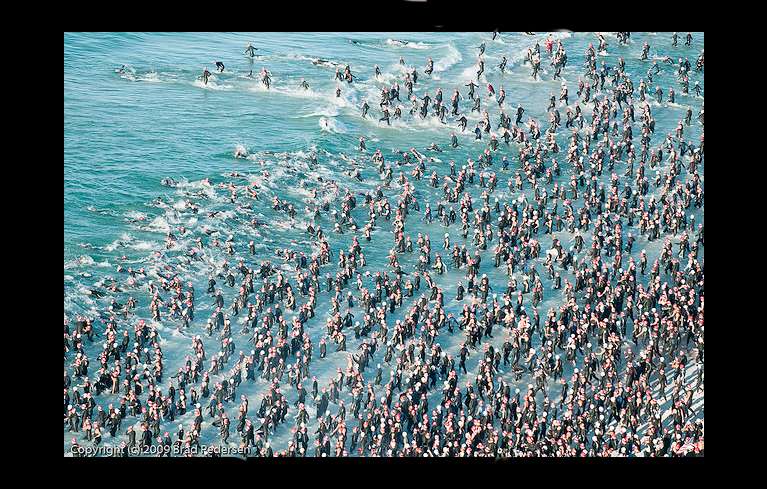
Events in Coeur d’Alene, Idaho; Lake Placid, N.Y.; and Mont-Tremblant, Quebec, will no longer feature a mass swim start format, eliminating a long-standing Ironman tradition. Athletes at those races will either enter the water in a continuous stream through an access point, with their time starting when they cross a timing mat, or in staggered waves based on their age group.

Ironman is making changes to swim starts. Photo/Brad Pederson

Ironman is making changes to swim starts. Photo/Brad Pederson

The changes come two months after Ross Ehlinger, a 46-year-old man from Austin died during the swim portion of the Escape from Alcatraz Triathlon and nine months after Andy Naylor, a 43-year-old member of the Hong Kong Police Force, died near the conclusion of the 2.4-mile swim portion of the New York City Ironman. In 2011, two competitors died during the swim portion of the Olympic-distance New York City Triathlon.

All North American Ironman events will also include a pre-race, in-water warm-up when possible. In addition, if the water temperature is below 52 degrees or above 88 on race day, the swim portion will be canceled or shortened, World Triathlon said in a statement May 9.

The Coeur d’Alene and Lake Placid races will feature the rolling start process, while Mont-Tremblant will begin in age-group waves entering the water every five minutes.

Events in Lake Tahoe (Sept. 22) and Panama City, Fla., will alter their mass swim start, with seeding into corrals based on the competitor’s estimated swim finish time.

USA Triathlon, the governing body for the sport in the U.S., released a study in October that found 30 of 43 athlete fatalities in triathlons from 2003 through 2011 happened during the swim portion. The study found most triathlon-related deaths were caused by sudden cardiac incidents and that course conditions didn’t play a role.

All swim courses will now include numbered buoys to assist in locating and helping distressed swimmers. Anchored rafts, as well as an increased number of rescue boats, kayaks and in-water personnel, will be included along the courses. Competitors who use the rafts to rest won’t be disqualified, World Triathlon said.

The swim changes will also include educating athletes about reducing anxiety, including pre-race screening for potential health issues, pre-race training and race-week preparation.


Pieces coming together for portion of hole near Stateline to be filled in this summer

By Kathryn Reed

Stateline Ventures – that’s the name of the company that will be building the next phase of the convention center project.

Bill Owens of Owens Financial foreclosed on the remaining parcels May 9 and formed the new company. It is not known who the other partners in that company are.

Owens Financial has title to the bulk of the properties on the nearly 11-acre site near the state line that at one time was to be a convention center, two hotels, retail and open space.

The building permits from the city and Tahoe Regional Planning Agency expire in July if nothing is done. That is a big reason Owens wants to proceed this summer with something. That something is retail that would go along Highway 50 and a much larger McP’s restaurant than what exists today.

Guests at Harveys may have something other than concrete and rebar to look at later this summer. Photo/LTN file

Guests at Harveys may have something other than concrete and rebar to look at later this summer. Photo/LTN file

The footprint cannot change, nor the main intent of the buildings. But it can be built in more phases than were originally planned for, which is what is being proposed. The type of lodging in terms of it being timeshares, condos, fractional ownership or traditional hotel would be up to the developer.

City Manager Nancy Kerry said the design elements would be different because everything is not being built at once.

While South Lake Tahoe officials have yet to sign off on any work to be done on the infamous hole near Stateline, a lighting designer sent out a press release last month stating they have started work on the project.

“We’re thrilled to have commenced work on Phase II of the Chateau at the Village project, working in partnership with Lee Harris, owner of Light + Space of Reno,” Jim Sultan, senior lighting designer and project manager of Studio Lux, said in the April 24 press release. “Phase II encompasses the completion of the underground parking garage, construction of the shells of retail spaces and the signature restaurant McP’s Pub, and outdoor public spaces and walkways alongside Stateline Avenue and Highway 50.”

Kerry this week told the council that staff received a detailed letter last week from Owens’ people regarding what is planned for the six parcels. Staff as of Tuesday was still going through the documents.

The Studio Lux press release says, “The lighting design will incorporate cutting edge lamp and optical technology to illuminate the project’s facades, walkways and public spaces, featuring LED light sources that exceed current lighting and California LEED compliances. Chateau at the Village will weave lighting within its timber frame and stone construction to artfully accent the project’s striking facades while providing a continuous illumination for pedestrian walkways. Architectural and decorative lighting will also play a key role in Phase III of the project, consisting of vacation-share condominiums, a restaurant with two bars and a hotel with a grand lobby that evokes the style of traditional ski lodges.”

Before any of that happens, the Planning Commission must give its approval. The commissioners’ regular meeting was Thursday. It’s likely a special meeting will be called for May 23. If the applicant can’t make that date, it would have to be in June based on the commissioners’ availability.

The City Council has said it wants to sign off on everything involving this project. June 11 is the only date that group is planning to meet next month. A special meeting could be called just for this project.

It is not a slam-dunk that the council will say yes. A road that used to go through what is now rebar and concrete still belongs to the city so that has to be abandoned. Had the former developer, who went bankrupt, consolidated the parcels as is customary in these types of projects, that road would not be an issue today. There could be other items the council will need to approve even though permits are in hand.

And at that June meeting the city will likely be without in-house legal counsel because the current attorney will have left, the new one doesn’t start until July and the second in charge is likely to be on leave.


Nev. bill would tax lift tickets, outdoor concerts

By Anjeanette Damon, Las Vegas Sun

CARSON CITY — The Legislature’s attempt to craft an entertainment tax in 2003 read a little bit like the children’s story of the hen who couldn’t persuade her barnyard animal friends to help her gather and grow grain for the winter.

Lawmakers then considered a proposal by the Nevada Taxpayers Association to tax admissions to nearly every form of entertainment and recreation.

But when it came time to write the bill, a common refrain was sounded by many targeted for the tax.

“Not I!” said the movie theaters.

“Not I!” said the Las Vegas Motor Speedway.

“Not I!” said the baseball parks, bowling alleys, golf courses, hula dancers and strip clubs.

A bill in the Nevada Legislature would have meant the 2011 Miranda Lambert concert at Harveys would have cost even more. Photo/LTN file

A bill in the Nevada Legislature, if passed, would inflate ticket prices at Harveys Outdoor Concert Series. Photo/LTN file

Now, as the state climbs its way out of a recession that depleted funding for education and other services, Assembly Speaker Marilyn Kirkpatrick has a message for the naysayers: You gotta pay the tax.

On Wednesday, Kirkpatrick released a sweeping entertainment and admissions tax proposal — the centerpiece of her effort to clean up a Nevada tax code rife with exemptions and haphazardly applied interpretations.

The measure, Assembly Bill 498, would eliminate the two-tiered live entertainment tax, which levies a 5 percent rate on large concert venues and a 10 percent rate on smaller venues and exempts everything from the Las Vegas Motor Speedway to outdoor concerts.

The new Nevada Entertainment and Admissions Tax would levy a flat 8 percent tax on any venue that charges an admission fee or requires a minimum purchase of food, alcohol or merchandise for admittance. The venue would remit the tax to the state but likely charge the ticket purchaser the amount.

And, most important to Kirkpatrick, the exemptions would be eliminated.

Movies would be taxed. Strip clubs, nightclubs and brothels that charge an entry fee would be taxed. Fitness centers, boating clubs, ski resorts, swimming pools and bowling alleys would be taxed.

How much revenue would be generated? Kirkpatrick isn’t sure yet.

“It’s a policy that gets rid of exemptions,” she said. “It’s about the policy, not about the money. It’s about collecting what we set out to collect in 2003.

“Everything’s in.”

The measure also would give tax collectors investigatory power to make sure venues are paying what they owe.

But Kirkpatrick’s approach to cleaning up the tax by including such activities as movies and fitness clubs is likely to hit a wall of Republican opposition.

Early in the session, Republicans, including Assembly Minority Leader Pat Hickey, spoke favorably of closing tax loopholes and eliminating exemptions.

Those same Republicans say Kirkpatrick’s actual bill goes too far.

“This goes beyond cleaning up the exemptions,” said Sen. Ben Kieckhefer, R-Reno. “This expands the policy from a live entertainment tax to an admissions tax on new activities.

“These are things that families save up to do with their kids.”

Hickey said he continues to support eliminating exemptions from the live entertainment tax for such things as outdoor concerts and the Las Vegas Motor Speedway, but he’s uncomfortable with the broad scope of Kirkpatrick’s bill.

“There are certainly some good elements,” Hickey said. “However, there are certainly elements of it that are clearly a new tax, whether it’s on movies or golf or gym visits.

“There are elements that are new taxes that Republicans in the Assembly are opposed to.”

A spokeswoman for Gov. Brian Sandoval said he opposes the measure.

Kirkpatrick’s measure is clearly aimed at increasing the portion of the entertainment tax paid by nongaming venues. As it stands, the state’s casino industry pays $125 million a year while nongaming venues pay $11 million.

That’s not to say gaming won’t be affected by the changes. The rate for larger venues would increase while the rate for smaller venues would decrease. And nightclubs on casino properties — some owned by the casinos and some not — would be responsible for the tax.

Kirkpatrick described it as an “across-the-board” cleaning-up of the statute.

Not all exemptions are eliminated. A specific group of nonprofit organizations — 501(c)3 groups — are exempt, as well as venues with fewer than 50 seats. Governmental organizations — including college sporting events — are also exempt.

Still, the “Not I’s” have begun.

Formally, industry lobbyists are taking a neutral approach to the bill. But in background conversations, they attack the premise of taxing gyms, movies, golf and other activities that aren’t necessarily “live entertainment.”

Tom Clark, a lobbyist for Burning Man, said the organization does not yet have a formal position on the bill. But he noted that the event — a counterculture festival in the Black Rock Desert that draws 50,000 attendees — is already contending with efforts from the federal government and county governments to increase fees.

“It’s important to note that we have to take all that into consideration,” Clark said.

Clark stopped short of threatening to take the event elsewhere — a threat he made earlier in the session.

Kirkpatrick has been known to offer tax naysayers a U-Haul out of state.

The bill’s first hearing will be Tuesday.

In 2003, when lawmakers first crafted the entertainment tax, the debate turned ugly when consumers realized the potential effect on their pocketbooks. Harsh letters were written; petitions were signed.

Kirkpatrick, however, argued that consumers spend discretionary income on such things as golf games and ski passes.

“So you choose whether or not you play golf. It’s discretionary,” she said. “It’s not the everyday person who can afford to go skiing.”

As for those ugly emails and petitions that may be coming her way?

“I’m willing to take it,” she said. “I wouldn’t have put it out there if I couldn’t do it.”


Film captures the short life of Shane McConkey

By Mina Hochberg, Outside

When freeskier Shane McConkey of Squaw Valley passed away at age 39 during a ski-BASE accident in 2009, he left behind an inspiring legacy that’s deftly captured in the documentary “McConkey”.

The film leads you through the many phases of McConkey’s career: After an unsuccessful attempt to join the U.S. ski racing team, he forged his own path as a freeskier, then a BASE jumper, then a ski-BASE jumper—all the while documenting his exploits on camera, becoming an adventure film star. Directed by a team of his friends, “McConkey” is as heartfelt as it is gripping. We spoke with two of the directors, Rob Bruce and David Zieff, about the film.

When did the documentary first start coming together?

Bruce: Pretty much the moment he passed away it seemed like a logical thing to do. It seemed like it would be a wonderful living tribute to him, his family—and a great thing for his daughter [Ayla] to have. The fact that Ayla has a film about her father that she can refer to throughout her life is fantastic.

David, what did you know of Shane before doing the film?

Zieff: I didn’t know him and I really didn’t know of him, frankly, beforehand. Little did I realize that I’d come to love him indirectly through the footage and all the stories that everybody told about him.

The cliché, and it’s not such a cliché in his case, is living life to the fullest. He truly did that, but what was almost more attractive to me was the fact that he knew how to laugh with himself. He was self-deprecating and humble and he knew how to enjoy life and not take it too seriously.

It’s been a motivator in my own life, taking each day as a challenge to do more and enjoying myself and living life to the fullest and not taking things so seriously. That, in addition to learning how to ski better by way of footage through a point-of-view camera.

Rob, how far back did you and Shane go?

Bruce: Shane and I knew each other ski racing [as teenagers]. We both quit ski racing at the same time and we both pursued figuring out a way to be professional freeskiers at the same time — him as a skier, me as a cameraman.

More importantly, every day that I was with Shane, regardless of whether we were shooting, or hanging out, or in an airport, was always a great day. And that’s what he really gave all of us. When we were around Shane, everybody was elevated. It was impossible to be having a bad time because nothing got Shane down. If you started whinging, or complaining about having to climb something, or the snow wasn’t good, or that we’ve been in Alaska waiting for shoot day for three weeks, Shane would just laugh at you. He’s like, “Look guys, we’re living our dream, this is part of it.” He was able to overcome fear to have fun no matter what was going on.

Seeing the 80s ski rockumentary “Blizzard of Aahhhs” seemed like a real pivotal moment for Shane. What changed him?

Bruce: Our last ski race was at U.S. Nationals. We were in the lift line and he looks at me and he’s like, “Have you seen that movie “The Blizzard of Aahhhs”? And I looked at him and I was like yeah. He’s like, “Can you f—— believe that? Those guys are doing that? They’re getting paid to do that? We do that when we’re not training. That’s what we do on a powder day when they’re setting the course.”

We were probably supposed to train that afternoon but we went out with his mom and practiced skiing like those guys. So for me and a lot of other people, seeing that film was an example of an alternative way to keep playing in the mountains and possibly getting paid to do it. We were all really good skiers and we felt we could ski like that. We just had to figure out how we could make our own films and find a sponsor and figure out the business of it.

There are so many milestones in his career. How did you decide which ones to highlight?

Bruce: I sort of took the responsibility of tracking things in his life that would be relatable to audiences, so that became a matter of finding the events in his life where he overcame something. Because he was sort of Superman. The sports he was doing and inventing and his interests are not of the mainstream, so that’s not very relatable to a lot of people. What is relatable is having a difficult childhood. What is relatable is having a goal and failing — but then overcoming. That’s ultimately the message of the film.

How many hours of footage did you have altogether? Shane shot a lot of video throughout his life.

Zieff: I estimated it’s probably a thousand hours of footage. So there was a fair amount of work just in labeling and getting through it all.

When people talk about who directed this film, Shane directed it. It started 20 years ago when he was 18 years old with a yellow handycam camera capturing everything.

I wanted to ask about the footage of his fatal accident in the Dolomites. Did you know from the start that you didn’t want to show any of it? Can you talk about editing that?

Zieff: I think all of us knew that was something we would be very respectful about. The footage has been destroyed of the actual accident. I don’t think anybody would want to see that. In fact, I never did. I was given censored footage myself.

I think this is a film about his life, and that’s what matters. Obviously there’s a logistical issue that we’d have to deal with — people need to know something. So we only show the lead-up to it and not the actual moment, out of respect for the family and obviously for Shane’s wife, Sherry, and daughter. That’s not something they need to see. No one really does.

Rob, as someone who knew Shane for so long, was it difficult editing that whole sequence in the Dolomites?

Bruce: Yes, it’s hard. It’s hard for all of us, and it’s hard for audiences that are watching that portion of the film. It’s incredibly sad. So it was a hard film to make in that regards. Every time I see the film I come out a little bit rattled.

Do you guys have any favorite shots from the film?

Bruce: The college sequence I found hugely important because that’s a common time in a lot of people’s lives where people are trying to find themselves. And if you think about making the U.S. Ski Team and getting dropped early, that’s like having a mid-life crisis when you’re 18, 19 years old, right? It’s like, oh, now I have reinvent myself, and I’m in this academic environment and I haven’t really gone to school. There’s not a lot of footage from that period, and I was just so pleased with how it worked out because it shows him overcoming a tough spot.

Did his mother, Glenn, ever express regret that she hadn’t tried to restrain him from becoming a daredevil?

Bruce: She is obviously incredibly sad that her son is gone, but she never held him back. It’s so clear that the mountains and skiing — and eventually skydiving — were the things that he loved so much, and you just can’t ask people to stop doing what they love.

He only lived 40 years, but the way he lived them is so incredible. That’s much better than spending 70 years unhappy and without passion. I’d take the 40 years in a heartbeat.


Gardening in Lake Tahoe — it’s possible

By Kathryn Reed

While it can be dicey in the Lake Tahoe Basin to put plants in the ground before Memorial Day weekend, it doesn’t mean there isn’t gardening to be done now.

Carolyn Meiers drove that point home Tuesday night during a talk at the South Lake Tahoe library that was sponsored by Friends of the Library. Meiers, who is a master gardener, knows the soils of Tahoe well from living here for decades and being part of various garden clubs.

“Just because they sell it in Lake Tahoe, don’t assume it will be OK. There are a lot of things you should not be buying,” Meiers said May 7.

She suggests people go to reputable garden centers to talk to experts about plants.

Master gardener Carolyn Meiers says frost cloth will protect plants from freezing. Photo/Kathryn Reed

Master gardener Carolyn Meiers says frost cloth will protect plants from freezing. Photo/Kathryn Reed

Reading the information on the tags that come with plants is also critical because they talk about sun and shade, growing season and how tall the plant will become.

While there are rules to follow, Meiers also advocates for just trying something to see how well it does in your yard.

Sun, shade, wind, water, soil – they all play a role in the success of a plant’s life.

“You don’t want to put a $5 plant in a 50-cent hole” is a phrase Meiers said she has borrowed from a fellow gardener. This means making sure the soil is nutrient rich.

“You need to modify the soil. There are all kinds of mulches you can buy,” she said.

Ideally, much of the work on the soil is done in the fall so when spring rolls around it’s perfect for planting.

Now is the time when everything should be raked, weeds dug out and anything that has blown into beds plucked out. Meiers even said people should be picking their daffodils. Some of the nearly 50 in the audience laughed, saying theirs were barely out of the ground and blooms have yet to be seen.

“Be careful how you fertilize. It’s either going in the air or water or on your own body,” Meiers said. “Use the least toxic pest control method. We do have a beautiful lake that we need to protect.”

Critters are something every gardener has to contend with. Rabbits have been growing in numbers on the South Shore in recent years. Meiers talks fondly of climbing roses she once had. Then a beaver “decimated” them. She is left with photographs of them.

A member of the audience suggested using sonar devices that are stuck into the ground to rid a yard of voles. Steer manure compost was another suggestion.

Putting tulip bulbs in nylon stockings stops the squirrels from uprooting them.

There are always daffodils. Squirrels don’t go after them.

A trend in gardening is to have edible plants as landscaping, and not just be part of a vegetable garden.

Even after Memorial Day the basin is susceptible to freezing nights. Meiers recommends using a frost cloth to put over plants on those occasions. She said lots of things could be used – just use something that is not too heavy.

For those who are going to start with seeds, time is ticking because they usually take four to six weeks before needing to be transplanted.

Meiers suggests everyone in the basin have a copy of “Home Landscaping Guide for Lake Tahoe and Vicinity” to use as a resource for gardening.

—-

Note: University of Nevada Cooperative Extension will host its annual Master Gardener Plant Faire and Sale from 7am-2pm May 18 at the Master Gardener Greenhouse, No. 13, 920 Valley Road in Reno. Thousands of certified organically grown plants will be available for sale.


CTC worker vying to win Australia park ranger job

By Ky Plaskon, Capitol Public Radio

A South Lake Tahoe woman has beaten out nearly 600,000 other contestants from around the world to become a finalist for a dream job.

Victoria Ortiz, who works for the California Tahoe Conservancy, makes her pitch for what some have called the best job in the world with a 30 second video of her adventures.

Victoria Ortiz

Victoria Ortiz

“She fords raging rivers, she summits epic peaks and she takes herself very seriously. She is Australia’s next park ranger,” stated Ortiz in a video.

Ortiz is competing for one of six positions as a park ranger at the Great Barrier Reef. The job description includes checking water temperatures, patrolling the beaches and talking to tourists all day.

“I will tell them how excited I am to be there and hopefully about all the interesting species that are really endemic to that area,” Ortiz said.

The job comes with $100,000 in salary and living expenses. Ortiz will learn if she won on May 15.


S. Tahoe budget good now; deficits likely next 4 years

By Kathryn Reed

While the projected deficit for this fiscal year is expected to be less than originally forecast, the city of South Lake Tahoe is looking at approximately a $1 million shortfall each year through 2017-18.

City Manager Nancy Kerry went over the mid-year budget at Tuesday’s City Council meeting, while also providing indicators of what the 2013-14 budget might look like when it takes effect Oct. 1. The council will have work sessions on the next budget in August, with adoption expected the next month.

slt-bigThe original projection for this fiscal year was a shortfall of $806,000. With the increase in hotel and sales taxes, that has been scaled back to about $200,000.

The winter season, while not abundant in snow, saw an uptick in people coming to town. This was evident with the number of skier visits increasing from the prior year. The transient occupancy tax collection in South Lake Tahoe is up 26 percent in the first quarter compared to 2012.

Mayor Tom Davis, who works in the vacation rental business and is on the local lodging association board, said April’s TOT collections would drop off dramatically. But ski resorts for the most part closed earlier in the month than in some years.

Embassy Suites, as a brand name and member of the Hilton Corp., had long been the region’s highest hotel tax generator as well as having the top average daily rate. This spring the Japan-based owners chose to operate it locally without a flagship.

“They are struggling with occupancy,” Kerry said of the renamed Lake Tahoe Resort Hotel. And she told the council she is concerned about this in terms of what it may mean for city coffers in the future.

In the first month that the TOT auditor has been on board about $20,000 in back fees and fines have been collected. This person is tasked with finding vacation home rentals that have not been paying their taxes.

The other indicator that people have been in town is sales taxes revenue from October-December was up 13 percent from 2011. It’s likely with T.J. Maxx only being open since November and Big 5 opening later this month, sales tax numbers could keep going up.

Property tax, which is the third main revenue source for the city, is flat. Indications are that it will remain that way.

“Housing in South Lake Tahoe is on an uptick,” Kerry told the council May 7. But she cautioned that some people in the real estate industry are worried there is a possible bubble being created again, especially locally. While houses are turning over here, the assessed values could be lower, which would bring down property tax revenue.

While revenues are going up, expenses are too.

“The headwinds to the general fund are the increase in employee costs,” Kerry said.

The state retirement system has changed how it bills municipalities and health care costs are going up. The city has issued a request for proposal to potentially find a new health care provider.

Kerry has spoken to all of the employee groups about potential changes in the health care plan and what the Affordable Health Care Act could mean. There are 780 people who receive city health care benefits – 165 employees and their dependents, 145 retirees and their dependents.

The council unanimously approved the mid-year budget changes which amount to an increase of $1,021,908 in revenues and increase of $468,435 in expenses for a positive net gain of more than $500,000.

“If we are going to compete, we as a city need to build infrastructure,” Kerry said.

This comes in the form of streets and recreation. While it would take $300 million to upgrade all city streets, the course of action is to do this in a gradual manner – with $3 million spent last season.

Councilman Hal Cole said he would like to see a more dedicated source of money for capital improvement projects.

In the five-year budget, projections are for revenues to grow not more than 2 percent annually.

But on the revenue side is the assumption the TOT tax will be raised to bring in an additional $250,000 next fiscal year and $1 million each of the following four years.

The $31.7 million general fund does not include any cost of living increases for employees for the next five years.

Related to the budget was the approval Tuesday of nine positions being reclassified. This equates to an increase of $59,000 to this year’s bottom line.

The Public Works Department has been reorganized to function like a department with that name. Interviews for the director will be in mid-June.

It will be divided into operations and engineering. Jim Marino is now the assistant director overseeing operations, which includes streets, facilities and the fleet. Sarah Hussong-Johnson is the deputy director and will work part time.

Administrative Services is a new department that merges finance, human resources, IT and other internal services. In early June potential directors will be interviewed.

Parks and Recreation will go without a director and instead will have two managers. Greg Ross, who has been with the city 33 years, will lead the parks side, while Lauren Thomaselli heads recreation.

In other action:

• Tahoe Resource Conservation District will be operating the city’s boat ramp at El Dorado Beach, which includes boat inspections.

• It was noted that the rec center is having to close its doors on occasion because so much water is coming through the leaky roof.

• Kerry said news out of the governor’s office could come soon regarding Senate Bill 630; saying there could be a compromise soon.

• A number of people during public comment talked about wanting to delay the Harrison Avenue assessment collection until the city goes out to bid. Bid docs are 95 percent ready. They should be ready in June. The council agreed to get a Harrison Avenue update, including discussion of the district at the June 11 meeting.

• Kerry reported El Dorado County Board of Supervisors discussed the senior center in closed session and that county counsel would be sending a letter. That hasn’t happened yet. (Lake Tahoe News is waiting for the  county to explain how this qualifies as a closed session agenda item.)


South Lake Tahoe hires city attorney

By Kathryn Reed

South Lake Tahoe’s next city attorney hails from the San Joaquin Valley.

Tom Watson, whom the council on May 7 unanimously agreed to hire, is currently a partner with Fike & Watson in Clovis. The firm contracts out to be counsel for various cities.

Watson represents Woodlake and Mendota – two extremely small towns.

“It’s the capstone of a 24-year legal career,” Watson told Lake Tahoe News of being hired by the city. He expects to start the first week of July.

Tom Watson will be South Lake Tahoe's next city attorney.

Tom Watson will be South Lake Tahoe’s next city attorney.

While all the details of the contract are still being worked out, Watson said he is definitely going to accept the offer – calling this a “dream job.”

Much of the work he has done is municipal and construction litigation, which he believes will be a great fit in Tahoe. Even though the towns he has worked for are smaller than South Lake Tahoe, he said issues are the same, just on a different scale. He has been an in-house attorney in the past for Tulare County.

“The critical element of being part of a team is to be proactive. As a contract attorney you are reactive,” Watson said.

Watson graduated from Santa Clara University School of Law in 1989. He has been with the current firm since 2002.

He was one of five candidates the City Council interviewed.

“He’s a go-getter. He’s not afraid to jump in and tell the council what to change. He is going to give us great legal advice,” Mayor Tom Davis told Lake Tahoe News after announcing the decision.

Watson has done his research – knowing the different legal battles the city has faced.

“The key for any city attorney is to recognize trust in the law is becoming more rare,” Watson said. He wants to restore trust to the City Attorneys Office. “I will work for the council and the community for the betterment of everyone.”

Current City Attorney Patrick Enright will be leaving at the end of the month. He will be taking a job in Sacramento. Enright was hired in June 2009.

Deputy City Attorney Nira Feeley will be going out on maternity leave in June. During this month without a city attorney Davis said it’s possible the city will contract with a former city attorney to do work. He wouldn’t name who that might be. Dennis Crabb, Cathy DiCamillo and Jacqueline Mittelstadt are all still in the area.

Watson will be moving to Tahoe with his wife, Jennifer, and their 15-year-old daughter. They also have a 24-year-old daughter.

The Watsons were married at Harveys in 1995 and come up here regularly. Watson said he’s been skiing in Tahoe since he moved to California in 1972. Besides more time on the slopes, he looks forward to getting into mountain biking.


Gaming industry across U.S. on growth spurt

By Ed Komenda, Las Vegas Sun

The U.S. casino industry captured $37.3 billion in gaming revenues in 2012, a 4.8 percent increase from 2011.

That growth rate is largest since the recession swept through the industry in 2008, according to an annual report released today by the American Gaming Association.

The AGA’s “State of the States” survey — a national snapshot of the casino industry based on economic data and public opinion — targets 22 states with commercial casinos and racetracks.

Frank J. Fahrenkopf, the AGA’s president and CEO, said this year’s data is a major bright spot in an industry marred by a recession that hemorrhaged workers and construction projects through the recession.

People continue to spend their money at casinos. Photo/LTN file

People continue to spend their money gambling at casinos. Photo/LTN file

“After three years of increasing growth and positive signs in all sectors of the industry, it’s clear we’ve weathered the recession,” Fahrenkopf said in a statement. “Whether we look at jobs, casino visitors served or tax revenues being provided, the bottom line is that there is much to be optimistic about in the commercial casino industry.”

In 2012, consumers spent $10.86 billion in Nevada casinos, 1.5 percent more than they did in 2011, when they spent $10.7 billion.

Of the 22 surveyed states with casinos or racetracks, 15 saw an uptick in consumer spending between 2011 and 2012.

Accelerated by the openings of casinos, spending in Kansas ballooned by 603 percent, growing from $48 million to $341 million in 12 months. The AGA attributes the growth to a full year of operations of the Kansas Star Casino in Mulvane and the opening of the Hollywood Casino at the Kansas Speedway.

Maryland saw another stellar increase in consumer spending, which increased by 142 percent, from $155 million to $377 million, rocketed by the opening of the Maryland Live! Casino.

Spending in New Jersey — home of the famed Atlantic City market — dropping from $3.32 billion to $3.05 billion. While the opening of Revel Atlantic City led to an uptick in jobs, the growth of regional competition and Hurricane Sandy led to the loss in revenue.

In 2012, Nevada had 170,000 commercial casino employees, a 2.4 percent drop from the previous year.

Employment grew by 5.8 percent in New Jersey, from 32,800 employees to 34,700.

The number of casino employees in New York grew by 9.2 percent, from 4,700 to 5,200. Many of those new employees went to work for Resorts World New York in Queens.

In all, the casino industry lost less than 1 percent of its employees, falling from 335,000 to 332,000.

The casino industry last year contributed $8.6 billion to the government in tax revenues, up 8.5 percent from 2011.

Gaming taxes in Nevada brought in $868 million, less than a percent more than the year before.

The AGA survey says 34 percent of Americans visited casinos last year.

Many of them did much more than gambling: more than 69 percent of casino visitors ate at a fine-dining restaurants, 55 percent saw a show or concert and nearly 45 percent visited a club. About 26 percent of those visitors said they never or rarely gamble when they visit casinos.

In the realm of public opinion, the survey says, the majority of Americans think casino gaming is acceptable for themselves or others.