McCloud River not an ordinary paddle

The Reed sisters -- Jann, from left, Pam and Tami -- paddle on the McCloud. Photos/Kathryn Reed

The Reed sisters — Jann, from left, Pam and Tami — paddle on the McCloud. Photos/Kathryn Reed

By Kathryn Reed

McCLOUD – The Hearst Castle of the north is a little more difficult to get to than the one in San Simeon that is now part of the State Park system. But it’s worth the paddle.

Going up the McCloud River the Wyntoon spread that is owned by the Hearst Corporation is not open to tours. Rumor has it Patty Hearst calls this castle in the North State home.

Tom and Pam approaching Wyntoon.

Tom and Pam approaching Wyntoon.

It was Phoebe Apperson Hearst who first purchased the land along the river. Her only son, media mogul William Randolph Hearst, took over the deed when she died. Now the corporation has title to the property, which is 67,000 acres in dense forest, with some of the structures right along the river.

The water is how the public can get a glimpse – via kayak or canoe. The roads leading into the compound are private.

Julia Morgan designed this estate, just like she did San Simeon.

Tami and Lester in clear waters.

Tami and Tom in clear waters.

Wyntoon got its name from the local Wintu Indian tribe that used to call this part of Northern California home.

This is the area where Hearst was going to re-create a 13th century monastery. Those stones instead ended up in Vina at the Abbey of New Clairvaux.

Last weekend eight of us set off to see what my sister, Pam, and her boyfriend, Tom, have been talking about – water that changes colors, at times so clear it makes Lake Tahoe look cloudy, and a house that is beyond ordinary.

It takes us less than two hours to get to the estate. Sue and are in our canoe, while my three sisters and their significant others are in individual kayaks.

Much of this section of the McCloud is emerald in color.

Much of this section of the McCloud is emerald in color.

The water is like glass. Pine trees come down to the water’s edge. At times the embankment is extremely steep. There is little opportunity to beach, but that doesn’t bother us.

The few motorboats that are out are full of people fishing for rainbow and brown trout. They are courteous as they pass, slowing so their wake is gentle.

As we paddle upstream the water begins to change. From the dock it started off as an emerald green. It becomes more teal. Then it’s sparkling clear to a depth of at least 10 feet in some spots.

Normally it’s the shore during a canoe voyage that captures my attention. This time it’s the water. It’s mesmerizing.

Soon we reach our destination – Wyntoon. Signs say don’t trespass. Instead we take pictures of the rock and wood structures that in some ways do resemble a castle.

My brother-in-law, Mike, paddles up a bit farther to the rapids where instead of getting anywhere he gets a workout.

We head back, taking our time, chatting among ourselves and wishing the headwind would go away.

A bald eagle swoops down and successfully plucks lunch from the lake. We aren’t the only ones enjoying the McCloud.


Supermoon to dance across the sky Sunday

By Scott Neuman, NPR

The largest full moon of the year will grace the night sky Sunday as our nearest neighbor in space makes its closest approach.

The moon will reach its closest perigee of 2013, dominating the sky. For about a half-hour of the event, the moon will also turn full — a confluence of events that produces a so-called supermoon. The full moon on Sunday will appear to be 14 percent to 30 percent brighter than it does when it’s at the other end of its orbit, known as apogee.

At closest approach, the moon will be 221,300 miles from Earth. A few days later, on July 6, it will be at its most distant apogee of the year at 252,583 miles.

Sunday will be a supermoon. Photo/Huffington Post

Sunday will be a supermoon. Photo/Huffington Post

Moonrise occurs at about 8:50pm on the East Coast and at about 8:29pm on the West Coast.

As Hoax Slayer, a Snopes-like website dedicated to “debunking email hoaxes and exposing Internet scams,” notes: “Some of the circulating messages tend to exaggerate how big the moon will actually appear. And, of course, it will not appear bright purple or blue as suggested by some circulating graphics. Nevertheless, June 23 should present a great opportunity to view and photograph the moon in all its splendor.”

LiveScience also writes about the myth of the supermoon, which it says has been blamed for everything “from the sinking of the Titanic to Japan’s earthquake and tsunami of 2011.”

“But Earth science experts say linking geological events to the full moon is foolish. The gravitational changes created by a few tens of thousands of miles of difference in distance between the moon and Earth aren’t enough to alter tectonic forces in any meaningful way. …

“Nor have studies turned up evidence that the moon affects human health and behavior. A 1985 review of research published in the journal Psychological Bulletin found no convincing evidence that full moons spur mental hospital admission uptakes, psychiatric disturbances, homicides or other crimes. A 2010 study similarly found a lack of excess criminal lunacy on full-moon days.”


AAA: Fewer July 4th travelers than a year ago

Not as many people in the U.S. are expected to travel during the upcoming Fourth of July holiday compared to 2012.

AAA is projecting 40.8 million Americans will venture at least 50 miles from home during the holiday, a 0.8 percent decrease from the 41.1 million people who traveled in 2012.

Much of this has to do when the Fourth falls — on a Thursday. When it was on a Wednesday last year, more people opted to take the whole week off.

Decade-high travel volume occurred in 2007 when 42.3 million Americans traveled and the holiday also fell on a Wednesday.

The Independence Day holiday travel period is defined as July 3-7.

Highlights from the 2013 AAA Independence Day travel forecast include:

  • Eighty-four percent of travelers (34.4 million) to travel by automobile, a decrease of 0.7 percent from 34.7 million last year
  • Holiday air travel expected to increase slightly to 3.07 million from 3.06 million in 2012
  • Independence Day holiday travel volume is expected to remain above the 13-year average of 38.9 million for this holiday
  • The largest share of travelers (32 percent) will depart July 3, with July 7 the most popular date of return
  • The average traveler is expected to travel a round-trip distance of 613 miles and spend $747

This year 46 percent of intending travelers plan to begin their trip prior to the start of the holiday travel period (July 3-7), compared to 65 percent last year. The largest share of travelers (32 percent) on a single day will depart on July 3 and the largest share will return on July 7 (38 percent).

Approximately 34.4 million people (84 percent) plan to drive to their destination, a decrease of 0.7 percent from the 34.7 million who drove last year.

 — Lake Tahoe News staff report


Initial Greenway Bike Path phase coming in ’14

Planned bike trails on the South Shore. Map/CTC

Planned and existing bike trails on the South Shore. Map/CTC

By Kathryn Reed

The significance of a stretch of bike trail cannot be measured in its length.

Such is the case with the initial phase of the South Tahoe Greenway Trail that is slated to be built next summer. It will be less than a half-mile and comes with a construction price tag of about $500,000.

The money to build what is being called Phase 1A is in hand and was allocated at Thursday’s California Tahoe Conservancy board meeting.

In 2008, the CTC was projecting the entire 9.2-mile trail would cost $20 million to build.

While that entire project that has been on the books since 2002 is still on the drawing board, it is now being cobbled together, but in a way that is designed to attract future funding.

“We strategized how we were going to phase this carefully so we could attract additional funding,” Sue Rae Irelan, with the CTC, told Lake Tahoe News after the meeting. “If you can make transportation an argument, there will be bike funding available.”

This initial phase is in a heart of a community that relies heavily on walking and biking as its modes of transportation.

Today, grant dollars go to entities that also have a proven track record. The CTC has built numerous bike trails on the California side of the basin.

The Greenway Trail has been Irelan’s baby since the get-go.

“It’s just going to feel so wonderful to ride this first section of trail,” Irelan said.

It will be 10-feet wide, with 2-foot shoulders, meet ADA requirements and have a grade of less than 5 percent.

The entire project is now three phases. And within phase 1 are three phases. Phase 1A is 0.47 miles linking the Bijou neighborhood to the edge of Bijou Meadow. It will be ready to ride at the end of the 2014 construction season.

Phase 1B hooks up at the meadow and connects to Bijou Community Park and crosses Al Tahoe Boulevard to connect to Lake Tahoe Community College and the community ball field.

Phase 1C connects on the other side of 1A and goes to Ski Run Boulevard.

All of Phase 1 is 3.62 miles. The Tahoe Regional Planning Agency has issued a permit for the entire phase.

Phases 2 and 3 include going to Meyers in one direction and Van Sickle Bi-state Park in the other.

Phases 1B and 1C may cost more because they involve boardwalks to cross stream environmental zones. But the extent of those crossings is up in the air with the TRPA Regional Plan update not classifying all SEZ areas the same. And with coverage for bike trails not part of the equation, that, too, could drop the price.

This will be a CTC owned trail. Usually the state agency is a funding pass-through of sorts to other entities. This means the CTC also needs to figure out how to pay for maintenance and operation costs.

Irelan at the June 20 meeting told the board because CTC is not eligible for voter approved Measure R funds for bike trail maintenance it’s possible an agreement with the city will be worked out so the local government could use Measure R dollars for the Greenway.

That topic has not been discussed by the Measure R board, which consists of a city rep, El Dorado County member and Tahoe Paradise Park person.

Also at the Thursday board meeting, the board allocated up to $350,000 for the remainder of the Sawmill bike path to be finished in 2014.


Tahoe Douglas adds wildland engine to fleet

Tahoe Douglas added a wildland engine to its fleet. Photo/Provided

Tahoe Douglas is ready for the next wildland fire. Photo/Provided

A wildland fire in Tahoe – it’s not a matter of if, but when.

Tahoe Douglas Fire Protection District is even more prepared than before.

“This new engine provides our residents with two Type 3 Wildland engines for wild fires. Type 3 engines are a shorter wheelbase and typically four-wheel drive for operating off road in wildland fires,” Fire Chief Ben Sharit told Lake Tahoe News.

Tahoe Douglas firefighters are all too aware of how dry the terrain is after battling the King Fire last week on the Carson side of Kingsbury Grade. Now they have another machine to help them with the next fire.

“They can carry a crew of four or five firefighters and a lot of forestry tools, chain saws and hose packs. They can also cut fire lines around fires much like a hand crew does,” Sharit explained.

The 16-year-old engine this one is replacing will be put on reserve status for about five years.

According to Sharit, it’s best for an engine to see regular action for 15 years before moving to reserve status. Tahoe Douglas sells its 20-year-old engines or donates them to department that will use something that old. Lake Tahoe Community College Fire Academy is leasing one of the department’s reserve 1996 Seagrave Type 1 engines for $1 per year.

“This provides the college fire academy with an engine to train their recruits and assist TDFPD with storing the engine in case we need it back when our front line engines are assigned to large fires or are out of service for repairs,” Sharit said.

A Type 1 is also known as a structure engine. They are typically larger than a wildland engine and pump a lot more water. The Type 3 engines pump water at a higher pressure to deal with what is usually a longer hose in the wild compared to what is needed at a structure fire.

To pay for the equipment, Tahoe Douglas Fire Protection District has a strategic plan that includes a capital asset plan for replacing equipment in a 15- to 30-year span. This rig cost $280,000, which included all the equipment on like the hoses and saws.

— Lake Tahoe News staff report


Douglas County approves South Shore Area Plan

By Kathryn Reed

STATELINE – The Tahoe Regional Planning Agency Governing Board next month will tackle the initial area plan under the 6-month-old Regional Plan.

In what some thought would be a big deal has been a rather easy process to date. On Thursday, the Douglas County commissioners approved all of the items associated with the South Shore Area Plan on 4-0 votes, with Lee Bonner absent.

While the League to Save Lake Tahoe submitted two letters and the Sierra Club one and reps from both groups spoke June 20, there was no other opposition.

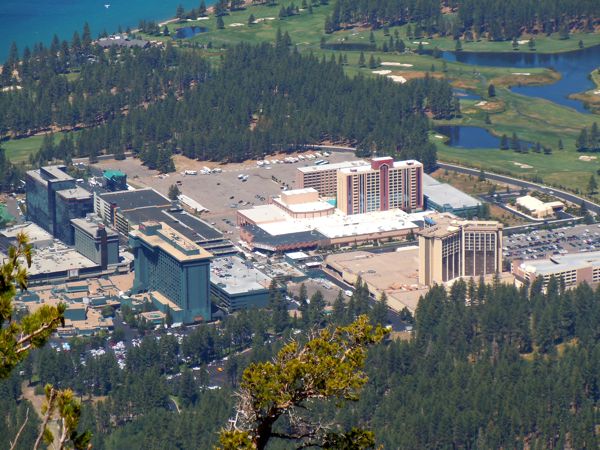
With Douglas County approving new design guidelines, it's possible the Stateline casino core could have more modern look one day. Photo/LTN file

With Douglas County approving new design guidelines, it’s possible the Stateline casino core could have a more modern, even alpine look one day. Photo/LTN file

They are likely to repeat what they said this week at the July 10 TRPA Advisory Planning Commission meeting and July 24 Governing Board meeting.

Douglas County opted to go with an environmental checklist for its review instead of a more stringent environmental process. Staff believes that by following what is in the Regional Plan, which had an environmental impact report and environmental impact statement, that duplicating those efforts was not needed.

Jennifer Quashnick with the Tahoe Area Sierra Club said there is a gap between the Regional Plan and checklist, adding that many of the changes have not been studied.

There is also a memorandum of understanding between the county and TRPA that the conservation groups have an issue with that is likely to be debated further at the TRPA level.

Richard Shaw, with Design Workshop in Aspen, developed the design standards and guidelines for the area plan. He is also the man behind the South Shore Vision Plan and Tahoe City’s Vision.

“It’s a visual guide that establishes the character for the area that is consistent with the mountain setting and environmental conditions,” Shaw said.

He told the commission he sees the document as a guide to what the area could become. He said with revitalization, the South Shore has the “capability to be a full resort community.”

This area plan affects the casino area of Stateline and Lower Kingsbury Grade.

This is a program document. Any projects must still be approved, and depending on what they are may require TRPA approval.

The county and South Lake Tahoe have been talking as each goes through the area plan process. The goal is that similar design guidelines will be adopted so it looks like one contiguous community.

This is more likely to happen if the casinos revamp their facades.

South Lake Tahoe’s plan on the other side of the state line will be the next one the TRPA will review. First, though, it has few local processes to go through. A special council meeting is set for July 2 at 9am at Lake Tahoe Airport, then the negative declaration will be released for a 30-day review. The Planning Commission will discuss the plan Aug. 8 and it will be on the council’s agenda Aug. 20. The APC and Governing Board will vote in September.

A difference with the city is that it must adhere to the California Environmental Quality Act, which can slow the process down.


Wildflower season beginning to blossom in Tahoe

A setting sun casts a spotlight on lupine. Photos/Kathryn Reed

A setting sun casts a spotlight on lupine among the aspens. Photos/Kathryn Reed

With a dry winter, wildflower season is bound to arrive early in the greater Lake Tahoe area.

Reports from the Carson Pass are that the flowers are not out yet.

However, at lake level, lupine, mules’ ear and Indian paintbrush are creating a purple-yellow-red mosaic on the landscape.

With summer now here, temps are supposed to be in the 70s starting Saturday. This should help the wildflowers blossom even more. There is a slight chance of showers on Sunday.

The Tahoe Rim Trail Association, Sorensen’s Resort and other entities organize wildflower hikes at various times for those who want to know where to look and what they are looking at.

— Lake Tahoe News staff report

ngg_shortcode_0_placeholder (Click on photos to enlarge.)


Obesity declared a disease by AMA

By Melissa Healy and Anna Gorman, Los Angeles Times

The American Medical Association voted Tuesday to declare obesity a disease, a move that effectively defines 78 million American adults and 12 million children as having a medical condition requiring treatment.

The nation’s leading physicians organization took the vote after debating whether the action would do more to help affected patients get useful treatment or would further stigmatize a condition with many causes and few easy fixes.

In the end, members of the AMA’s House of Delegates rejected cautionary advice from their own experts and extended the new status to a condition that affects more than one-third of adults and 17 percent of children in the United States.

“Recognizing obesity as a disease will help change the way the medical community tackles this complex issue that affects approximately 1 in 3 Americans,” said Dr. Patrice Harris, an AMA board member.

Tuesday’s vote is certain to step up pressure on health insurance companies to reimburse physicians for the time-consuming task of discussing obesity’s health risks with patients whose body mass index exceeds 30. It should also encourage doctors to direct these patients to weight-loss programs and to monitor their often-fitful progress.

The federally funded Medicare program, which insures an estimated 13 million obese Americans who are over 65 or disabled, already covers the costs of “intensive behavioral therapy” for obese patients, as well as bariatric surgery for those with additional health conditions. But coverage for such obesity treatments has been uneven among private insurers.

Insurers who are members of the California Association of Health Plans cover many services to treat medical conditions associated with obesity, including bariatric surgery and diabetes, said President and Chief Executive Patrick Johnston.

The AMA’s decision essentially makes diagnosis and treatment of obesity a physician’s professional obligation. As such, it should encourage primary care physicians to get over their discomfort about raising weight concerns with obese patients. Studies have found that more than half of obese patients have never been told by a medical professional they need to lose weight — a result not only of some doctors’ reluctance to offend but of their unwillingness to open a lengthy consultation for which they might not be reimbursed.

Past AMA documents have referred to obesity as an “urgent chronic condition,” a “major health concern” and a “complex disorder.” The vote now lifts obesity above the status of a health condition, disorder or marker for heightened risk of disease — as high cholesterol is for heart disease, for instance.

“As things stand now, primary care physicians tend to look at obesity as a behavior problem,” said Dr. Rexford Ahima of University of Pennsylvania’s Institute for Diabetes, Obesity and Metabolism. “This will force primary care physicians to address it, even if we don’t have a cure for it.”

The new designation follows a steep 30-year climb in Americans’ weight — and growing public concern over the resulting tidal wave of expensive health problems. Treatment of such obesity-related illnesses as cardiovascular disease, Type 2 diabetes and certain cancers drives up the nation’s medical bill by more than $150 billion a year, according to the Centers for Disease Control and Prevention.

Projected increases in the obesity rate could boost that figure by an additional $550 billion over the next 20 years, a recent Duke University study concluded.

In laying out the case for and against the redefinition of obesity, the AMA’s Council on Science and Public Health argued that more widespread recognition of obesity as a disease “could result in greater investments by government and the private sector to develop and reimburse obesity treatments.”

The Food and Drug Administration, which has approved just two new prescription weight-loss medications since 1999, would probably face increased pressure to approve new obesity drugs, spurring new drug development and more widespread prescribing by physicians, the council noted.

“The greater urgency a disease label confers” also might boost support for obesity-prevention programs such as physical education initiatives and reforms to school lunch, the council added. In addition, it speculated that “employers may be required to cover obesity treatments for their employees and may be less able to discriminate on the basis of body weight.”

But the council also said that making obesity a disease could deepen the stigma attached to being overweight and doom some patients to endless nagging — even if they were otherwise healthy or had lost enough weight to improve their health.

It might also shift the nation’s focus too much toward expensive drug and surgical treatments and away from measures to encourage healthy diets and regular exercise, the council wrote in a background memo for AMA members.

Dr. Daniel H. Bessesen, an endocrinologist and obesity expert at the University of Colorado Anschutz Medical Campus, called the AMA’s shift “a double-edged sword.” Though the semantic change may reflect “a growing awareness that obesity is not someone’s fault,” he worried that “the term disease is stigmatizing, and people who are obese don’t need more stigmatizing.”


Plane travel has long history at Lake Tahoe

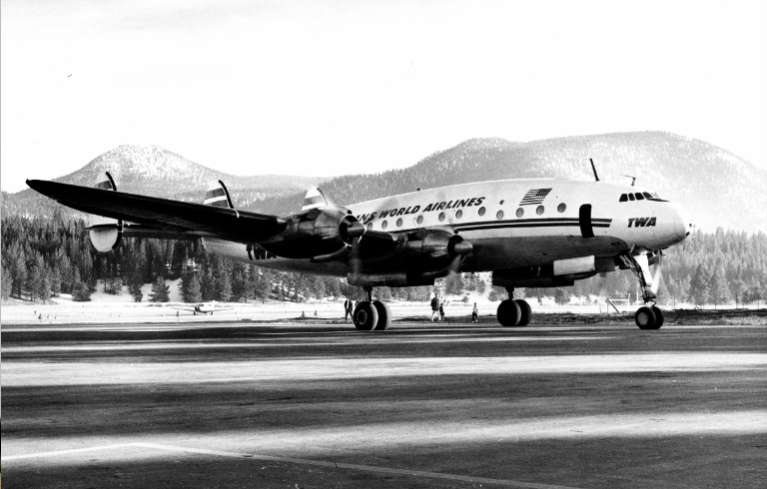
TWA was one of several airlines that used to fly into Lake Tahoe Airport. Photo/Del Laine

TWA was one of several airlines that flew into Lake Tahoe Airport in South Lake Tahoe. Photo/Del Laine

By Kathryn Reed

STATELINE – Aviation on the South Shore is nearly 100 years old, with the first recording of planes landing in the 1920s on the water. It was a bi-wing floatplane near Camp Richardson.

Swaths of land have served as air strips, plans were drawn up that never came to fruition, and some airfields are talked about but historians are not exactly sure where they located.

Local historian Dave Borges gave a brief history of Lake Tahoe aviation during the June 19 Soroptimist International South Lake Tahoe lunch at Harrah’s. He is a past history instructor at Lake Tahoe Community College and is on the board of the Lake Tahoe Historical Society.

It was the 1960 Squaw Valley Olympics that led the charge to develop what is now Lake Tahoe Airport. It was completed in 1959. The land was home to the Barton dairy before it was paved over for planes.

The runway was extended and the current terminal added as the years went by.

“It was paid for with a lot of casino money,” Borges said.

It was in 1983 that South Lake Tahoe bought it from El Dorado County for $1.

Several commercial airlines flew in and out of the airport. The highest passenger count was in 1978 at 294,188. The last commercial flight was in 2000.

Borges showed an ad for a flight from the Bay Area to South Lake Tahoe costing $11.95. A pamphlet claimed that a DC-3 could bring passengers from Oakland to Lake Tahoe Airport in 50 minutes.

The deadliest crash at the airport was on March 1, 1964, when 85 people died. The flight originated in Oakland, went to Salinas, and then San Jose before heading to Tahoe. While officials claim the weather was good when they took off, it was stormy in the Sierra, plus mechanical issues contributed to the crash.

Before Lake Tahoe Airport opened most of the planes flew in and out of Sky Harbor Airport in Stateline. This strip is essentially what the mobile home park on Kahle Drive now sits on. It operated from 1946-56.

“They would fly from the mountain side to the lake to alert the cattle. The planes made so much noise,” Borges said. Then they would go out to the lake and circle around to land. “From a pilot’s perspective it looked like they were going into the mountain because Kahle Drive goes uphill.”

A fence had to be erected so the cows would not eat the fabric on the wings.

In the area was also the Sky Harbor Casino.

Johnson Field existed in the 1930s and ’40s, but where exactly is not known because old maps don’t have it pinpointed. But the old drive-in is said to have moved to the Johnson Field. The Johnson family used to own much of the Bijou area.

The Dunlap Ranch-Tamarack Dairy near what is now the Tahoe Keys was going to be an airfield in the 1930s, but never came to fruition.

Borges showed plans from 1938 for the Meyers Lake Tahoe Airport.

“I’ve talked to a few people. A Meyers airport would be horrible,” Borges said, explaining that the current airport is already challenging for pilots.

In 1951 there was a proposal by the California Aeronautics Commission for a tarmac that could hold 400 aircraft near Pope Beach.

“It’s what the Tahoe Keys would have been if the Tahoe Keys didn’t happen,” Borges said.

—-

Note:

For more information about Lake Tahoe Airport, revisit the three-part series Lake Tahoe News published in July 2012:

Part 1

Part 2

Part 3.


Calif. budget bill threatens access to public records

By Annalise Mantz and Jeffrey Dastin, Sacramento Bee

A budget bill awaiting Gov. Jerry Brown’s signature would make it optional for local governments to comply with several key provisions of the California Public Records Act.

The change is intended to save the state money because it typically reimburses local agencies for providing services it mandates.

Brown’s administration says it expects little effect on public access to records. Many local governments told the Bee they intend to comply anyway and pay the costs themselves.

Yet advocates of open government say the changes essentially would gut provisions that ensure the public and the media get responses to their records requests. They warn it would do the most damage in places where there is a need to protect the public’s interests – local governments that already seek to restrict access or have a history of corruption.

Peter Scheer, executive director of the First Amendment Coalition, said citizens and journalists who request public records would now have to trust local governments and agencies to skirt the “very big hole” the bill opens in the Public Records Act.

“I think the biggest cities will continue to comply, or they will say that they are adhering to the provisions, and in practice they may not really be adhering to them,” Scheer said. “Once they become optional as a matter of law, I’m not sure how enforceable they will be.”

The language of Assembly Bill 76, one of several bills in the budget package for the coming fiscal year, would make multiple provisions of the records act “optional best practices.” It adds a requirement that local governments who choose not to follow “best practices” publicly announce that they won’t comply with that portion of the act.

Local governments could choose whether to help members of the public craft their records requests to increase the chances they will obtain what they are seeking. The governments could opt to release records on paper rather than electronically.

The measure would eliminate a requirement that governments respond within 10 days with a determination about whether the records are wholly or partially disclosable. It also would eliminate a requirement that governments provide a legal justification for not releasing documents.

The Legislative Analyst’s Office has estimated that removing the mandates would save California tens of millions of dollars.

Terry Francke, general counsel at Californians Aware, said the way the measure is written conceals the effect of the changes.

“(It) allow(s) the governor and the Legislature to say, ‘The CPRA is still there, we didn’t repeal it,’ when the effect is really to gut the act of response to your request,” Francke said.

He said he has concerns about the minority of agencies that are already not fond of releasing information to the public.

“If you tell local agencies that are already rogues under the CPRA that any legal duty they have is no longer present, then it’s going to serve the interest of those who have something to hide most,” Francke said.

Brown’s administration maintains that the backbone of the Public Records Act would remain intact. Department of Finance spokesman H.D. Palmer said that making those provisions optional would cut the state’s costs without infringing on public right to access government records.

“Californians will continue to have a constitutional access to rights of information,” Palmer said. “The Legislature only chose to change a few provisions.”

Last year’s budget deal triggered a suspension of state mandates tied to the Brown Act, which regulates meetings of local agencies that must be open to the public. Palmer said that change was similarly minor and that the administration expects local governments are likely to remain responsive to public records requests.

Jean Hurst, a lobbyist with the California State Association of Counties, predicted that many counties would continue to follow the best-practices provisions in order to avoid backlash.

She said shortages of staff and funding make it unlikely that counties would gamble with the extra expense of a potential lawsuit.

“Why would we waste the time and money on litigation over a records request?” she said.

Hurst also said that responding to requests for records has become routine for most local agencies and that changing their policy would be more of a hassle than complying with the law.

Mike Applegarth, principal analyst in the El Dorado County Administrative Office, agreed with Hurst but noted that records requests can be a burden.

“I think open-government laws like the Brown Act and the Public Records Act are just part of the fabric of local government, and I can’t see El Dorado County deviating from that,” Applegarth said. “We would definitely have to take it on a case-by-case basis. We have in the past received very voluminous records requests, and it’s very challenging to respond.”

Both Placer and Yolo counties also said they would continue to comply with the act. Placer County Supervisor Jennifer Montgomery, who represents District 5, said potential costs would not deter the county from responding to public records requests. “We’re going to be sure that we remain committed to being responsive to the public – honest, fair and above board in our dealings,” Montgomery said. “If we have to cover those costs, then we will cover those costs.”

Several Sacramento area school officials and board members contacted by the Bee also said they didn’t have much of an appetite for changing the way their districts deal with records requests.

California is not the only state to roll out changes to its open records laws in recent years.

In 2011, Utah legislators passed House Bill 477, which modified the state’s Government Records Access and Management Act to prohibit elected officials’ text messages, voice mails and communications from being released. The widely unpopular bill also allowed the state to keep more records private and increase fees for viewing public records.

Utah Gov. Gary Herbert eventually asked legislators to repeal the bill, and they complied.

Mark Horvit, executive director of Investigative Reporters and Editors, said both Utah and California represent a nationwide trend toward more stringent records laws.

“In general, the state legislatures have been rolling out these suspensions to public records requests laws,” Horvit said. “Now, for some reason, lawmakers are finding a raft of excuses to prohibit the public from finding out what government is doing.”

Opponents of California’s changes also criticize the bill for being hastily written late in the budget process.

When the Pacific Media Workers Guild sent Brown a letter urging him to veto AB 76, the organization not only objected to the effect the bill would have on journalists making records requests but also to the principle of crafting the “trailer” bill at the last minute.

“Equally egregious is the surreptitious manner in which (the bill) and other trailer bills have been attached to the budget package,” the letter said. “The Guild strongly urges either that you remove the afore-cited sections from (the bill) before signing it into law or that you veto the entire bill.”

Without a full guarantee of legal coverage, open government advocates say citizens would have to take more responsibility for ensuring access to public documents.

Jim Ewert, legal counsel for the California Newspaper Publishers Association, guessed that in cities and counties with active citizens, agencies would feel obligated to continue responding to records requests within 10 days as an act of good faith. The problem, he said, would be in places like the city of Bell, which earlier this year saw the mayor and four City Council members convicted of corruption.

“To the extent that there is a vibrant presence, (the change to the law) may have little impact at all. The expectation won’t change among the constituents,” Ewert said. “In those areas such as the city of Bell where this may not be the case, this has to be very damaging.”