Invasive weed threatens Calif. vineyards

By Edward Ortiz, Sacramento Bee

A new invasive weed has been expanding exponentially along roadways in the Sacramento region and the state, prompting plant scientists to warn that its unchecked growth could end up costing taxpayers millions of dollars.

The new weed, named stinkwort for its turpentine-like odor, threatens to choke out native plant species. The weed also has begun appearing in vineyards, raising a concern that it could affect the flavor of some grapes in the state’s premier wine-growing region.

The low-lying weed, known by the botanical name Dittrichia graveolens, is a relative newcomer to the state, making its first appearance near Milpitas in 1994. It resembles a tumbleweed, and rarely grows taller than 3 feet. Its flowers are small and sport tiny yellow petals.

To the east, the weed has been seen on the side of roadways such as South Shingle Road in Placer County and in Diamond Springs in El Dorado County.

Read the whole story


Bay Area residents buying Tahoe-Truckee real estate

By Pete Carey, San Jose Mercury News

The Bay Area’s economic recovery is sparking a surge of vacation home sales in the Lake Tahoe-Truckee mountain playground.

“Two or three years ago, nobody was buying houses, period,” said Patience Lewis, a Coldwell Banker agent in the Tahoe-Truckee area. “Now it’s like the floodgates have opened.”

In the first half of the year, Bay Area buyers helped drive second-home sales in the region to their highest level since 2005, according to the real estate company DataQuick. About a third of the region’s vacation-home buyers this year live in the Bay Area, a DataQuick analysis for this newspaper shows.

Fueled by tech’s spreading wealth and lured by the region’s pristine summer and winter beauty, the buyers range from families with young children snapping up condominiums in ski resorts at bargain prices to multimillionaires from Silicon Valley acquiring expensive lakefront estates.

Read the whole story


Tahoe wilderness anything but desolate

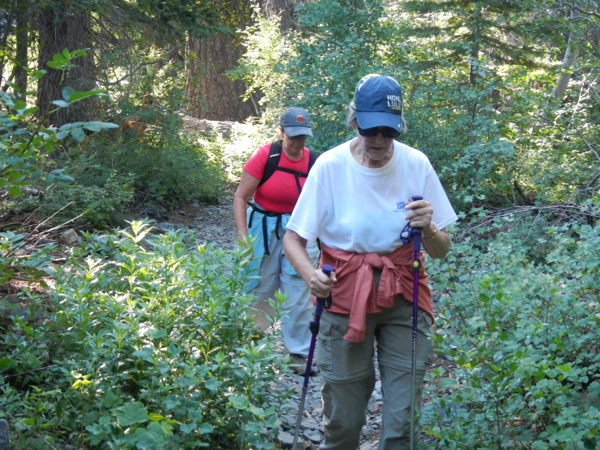
Trekking through Desolation Wilderness. Photos/Kathryn Reed

Trekking through Desolation Wilderness. Photos/Kathryn Reed

By Kathryn Reed

FALLEN LEAF LAKE – With 63,960 acres to explore in Desolation Wilderness, it’s not necessary for the quest to be a peak. But if being on top of the world is the goal, there are plenty of mountaintops to choose from – including Mount Tallac.

Last month mom, Sue and I started off about 7am to see how far we could walk in this wooded area that spans the Lake Tahoe Basin Management Unit and Eldorado National Forest. We began the Sunday hike at Glen Alpine trailhead.

Cleo Reed and Sue Wood hiking in Desolation in July.

Cleo Reed and Sue Wood hiking in Desolation in July.

The rule is that you are supposed to fill out a form and attach it your daypack or backpack if staying overnight. This helps the U.S. Forest Service know where people are and how many are using this popular area. But there are no forms. I left a sheet of notepaper – just in case something goes awry someone might come looking for us.

It doesn’t take long and I’m hitting myself. Sue and mom are swatting a bit, and we are all whining. Mosquitoes. They are everywhere. Later that night I’m scratching and those two are just looking at me.

It was so bad that Sue was asking backpackers on their way out if they had any bug juice they would share. Finally, one guy had some extra repellent wipes that we offered to pay good money for. He said take them; he wouldn’t need them. I can’t imagine how many welts I would have had if we hadn’t applied some chemicals.

Another guy coming out was hiking with his Great Dane. All four paws were wrapped with what looked like human socks and the dog was limping. Later we saw a volunteer from and the chief of Fallen Leaf Lake Fire Department lifting the dog into a pickup to truck it out.

The start, and therefore end, of the trail is super rocky. It’s the worst part of the hike because when you are tired coming down, it’s so necessary to keep paying attention.

Going up, though, the scenery is stunning. This is when you want your eyes focused ahead or even up higher when possible. (Except when climbing all those steps.) Desolation was designated a wilderness area in 1969. This means it will be protected to keep it essentially the way it was when first discovered.

Groups of pine cones in the treetops look like small bunches of bananas.

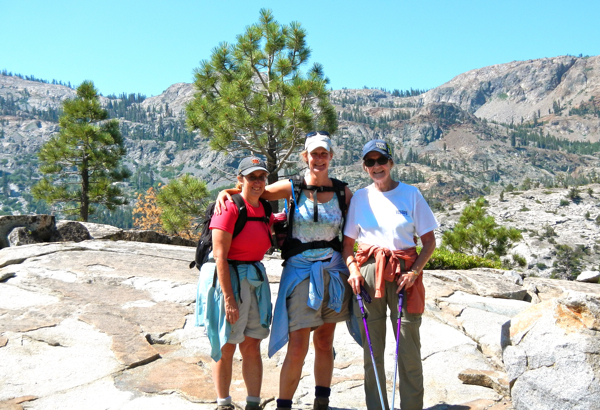
Sue Wood, Kae Reed and Cleo Reed surrounded by wilderness.

Wilderness surrounds Sue Wood, Kae Reed and Cleo Reed.

Indian paintbrush, yarrow and thistles are in bloom.

At times if feels like we are in a bowl of granite. It amazes us how in short order we are immersed in wilderness.

As we keep going the elevation starts to affect mom. The other time she felt like this she was in the Alps skiing between Switzerland and Italy. Altitude sickness was setting in. She was feeling lightheaded. We stop. Drink water. Eat. And we head back. Still, we did 7.5 miles on this trek.

Had we kept going, we would have ascended Mount Tallac. This is the route the Forest Service suggests for seniors (my mom is 78) and those with bad knees. Still, hiking poles can be a good idea.

Plenty of lakes are off this route, too – Aloha, Susie and Gilmore to name a few.

—-

Notes:

Trailheads in Desolation Wilderness:

Lake Tahoe Basin Management Unit:

• Echo Lakes

• Glen Alpine

• Mount Tallac

• Bayview

• Eagle Falls

• Meeks Bay

Eldorado National Forest:

• Loon Lake

• Buck Island

• Van Vleck

• Rockbound

• Twin Lakes

• Lyons

• Pyramid Creek (Twin Bridges)

• Ralston

• Echo.

Getting to the Glen Alpine trailhead:

From South Lake Tahoe, take Highway 89 north. Turn left on Fallen Leaf Lake Road. Follow the road around the lake, the store will be on your right, keep going, stay to the left when you have a choice to go right toward Stanford Camp. You will run into a parking area. If fills up fast on weekends, so arrive early.


OxyContin maker knows docs who overprescribe

By Scott Glover and Lisa Girion, Los Angeles Times

Over the last decade, the maker of the potent painkiller OxyContin has compiled a database of hundreds of doctors suspected of recklessly prescribing its pills to addicts and drug dealers, but has done little to alert law enforcement or medical authorities.

Despite its suspicions, Purdue Pharma continued to profit from prescriptions written by these physicians, many of whom were prolific prescribers of OxyContin. The company has sold more than $27 billion worth of the drug since its introduction in 1996.

Purdue has promoted the idea that the country’s epidemic of prescription drug deaths was fueled largely by pharmacy robberies, doctor-shopping patients and teens raiding home medicine cabinets. The database suggests that Purdue has long known that physicians also play a significant role in the crisis.

Purdue’s database, which contains the names of more than 1,800 doctors, could provide leads for investigators at a time when they are increasingly looking at how reckless prescribing of painkillers contributes to addiction and death.

Purdue has said little about the list since it began identifying doctors in 2002.

Read the whole story


NV Energy board, stockholders score with Buffett’s purchase

By Eli Segall, Las Vegas Sun

Warren Buffett’s purchase of NV Energy will be a financial bonanza to the utility’s stockholders, and the board of directors is no exception.

Filings with the Securities Exchange Commission show that each of the Las Vegas power company’s 10 board members holds tens of thousands of shares in the utility and is poised to cash in big on Buffett. His MidAmerican Energy Holdings Co. reached a deal in late May to buy NV Energy for $23.75 per share, or $5.6 billion cash.

NV Energy President and CEO Michael Yackira, one of the highest-paid executives in the Las Vegas Valley, will collect $21.2 million from the buyout, far more than the other board members. He’s followed by Chairman Philip Satre at $2.7 million, former Station Casinos executive Glenn Christenson at $2.5 million and Las Vegas attorney John O’Reilly at $2 million, according to a filing last month with the SEC.

Read the whole story


Carmel combines laid back with classy

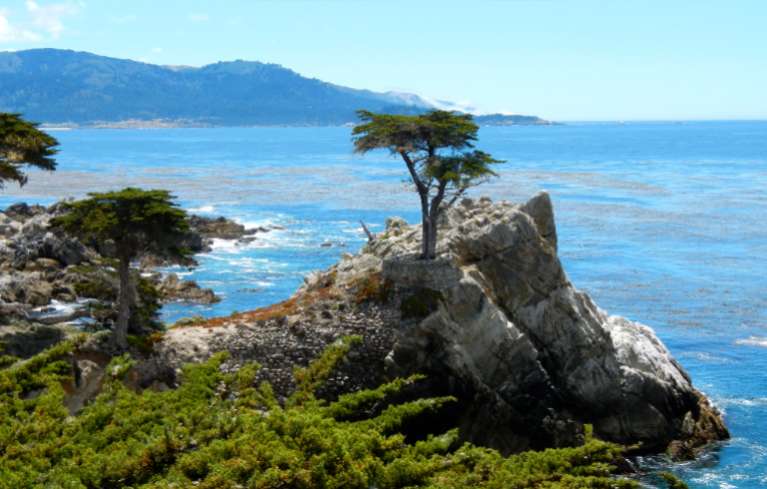
The Lone Cypress along 17-Mile Drive is more than 250 years old. Photos/Kathryn Reed

The Lone Cypress along 17-Mile Drive is more than 250 years old. Photos/Kathryn Reed

By Kathryn Reed

CARMEL-BY-THE-SEA – Nine wineries in three days – all by foot. A 17-mile ride instead of a drive. Oh, and that big expansive body of water known as the Pacific Ocean.

Monterey County is one of California’s premier wine regions. The climate varies depending on if one is close to the coast or more inland. And this means a variety of wines are produced in this region.

While it’s possible to visit the different tasting rooms by vehicle, it doesn’t have to be that way.

The visitor’s center in Carmel sells Carmel Wine Walk by the Sea tickets for $65. (We paid $50 for nine wineries Memorial Day weekend; the price has gone up and more wineries are expected to be added. Individual tastings are usually $10 each.) The ticket doesn’t expire, but we opted to taste all nine in the three days we were there.

The tasting rooms are actually storefronts dispersed along the streets of Carmel. So it was easy for the four of us – Sue, Pam, Tom and me – to peruse shops and window-shop in between the sipping.

One winery is next to a 40-year-old cheese stop. We buy some snacks and the winery lets us eat as we sample their wines.

Peter Figge is pouring tastings in a small area that is attached to an art gallery. He’s the winemaker for Figge Cellars and has been a vineyard manager since he was in college.

“You have 10 months to grow grapes and only six weeks not to screw it up,” Figge told us of the winemaker’s role in the finished product. “The expression of the fruit is more important than anything.”

To work off some of what we have been drinking we get on our bikes to pedal the famous 17-Mile Drive in Pebble Beach that has existed since 1881. We can ride there from Tom’s place at Carmel-By-The-Sea. Going on two wheels means free entrance.

Dressed inappropriately and not on high-end bicycles, we are still let in to the Lodge at Pebble Beach. We look around and decide if we stop to eat or drink this early we’ll never finish the loop.

We pedal on, but still there are more stops to take in the scenery. Endless pictures of the famous Lone Cypress are shot. The Monterey Cypress only grows in this area of the world. Some say this particular tree is more than 250 years old.

I think this is the first time I’ve been on these 17 miles of private property as an adult. As a kid my parents took endless guests here and I was stuck in the backseat. I had zero appreciation for what I was seeing. It’s nice to grow up to be able to embrace and appreciate the natural wonders that spill forth.

The sea air; those crashing waves; wind blown trees; sea creatures; and iconic landscape – it’s everywhere on this bike ride.

We stop at Spanish Bay to sit outside with a cocktail before we complete the circle. Cycling was the perfect way to see this famous stretch of California coastline.

I marveled at the pristine tennis courts at so many of the resorts. I’m sure most people were mesmerized by the exquisite greens and fairways of the golf courses.

Pam and Tom extend the ride and take us along other parts of the coast that are just as scenic, but less rugged.

Then there are the hours than can be spent walking on the beach as surfers attempt to catch a wave and people throw balls for their dogs or just sit listening to and watching the ocean.

Another morning Sue and I take in the Monterey Bay Aquarium. It’s another must-do while in this part of the state.

ngg_shortcode_0_placeholder (Click on photos to enlarge.)


El Dorado slow-growth advocates fight development

By Peter Hecht, Sacramento Bee

In the county that brought the Gold Rush, surging with newcomers and rough-hewn mining camps, prospects of another boom are unnerving the modern-day populace.

Amid an improving real estate economy, developers are proposing nearly 7,000 new houses for the Western Slope of El Dorado County.

The new wave of potential major projects is emerging after a 2004 county general plan that promised to preserve the county’s rural character while anticipating up to 21,000 additional houses.

In a region renowned for perhaps the most bitter growth battles in the lower Sierra Nevada, current residents are pushing back. Where miners once ravaged land for gold, determined homeowners are digging in for a protracted political fight to protect rustic lifestyles from new people, more houses and increased traffic.

Slow-growth advocates are now threatening a 2014 vote to limit new construction.

Read the whole story


Calif. braces for worst part of fire season

By AP

BANNING -– California truly is the Golden State this summer — golden brown — and that has fire officials worried heading into the peak of the wildfire season.

It’s still weeks before the fire-fanning Santa Ana winds usually arrive and already it’s been a brutal fire season, with nearly twice as many acres burned statewide from a year ago, including 18,000 scorched this week in a blaze still raging in the mountains 90 miles east of Los Angeles.

So far this year, California fire officials have battled 4,300 wildfires, a stark increase from the yearly average of nearly 3,000 they faced from 2008 to 2012, said Daniel Berlant, a spokesman for the CalFire.

Until last week, those fires had already burned 111 square miles or more than 71,000 acres, up from 40,000 acres during the same period last year. The annual average for acreage charred in the last five years was 113,000 acres, he said — roughly 177 square miles.

“We have seen a significant increase in our fire activity and much earlier than normal,” said Berlant, adding that fire season began in mid-April, about a month ahead of schedule after an especially dry winter. “We’re not even yet into the time period where we see the largest number of damaging fires.”

Sen. Barbara Boxer, D-Calif., who lives in Riverside County, said more than 165,000 acres or 258 square miles have burned in California this year, and climate change is setting conditions for more disastrous blazes, while budget cuts are limiting resources to fight them. Boxer’s data comes from both California officials and federal agencies, including the U.S. Forest Service.

This year, state fire officials have called up more firefighters and reserve engines on days with hot, dry conditions, Berlant said.

And while state officials encouraged residents to rid their properties of dry brush before fire season starts, he said authorities are now urging the public not to use lawnmowers or weed eaters during the heat of the day because a spark off the metal blades can trigger a blaze.

On Friday, firefighters launched a fleet of seven retardant-dropping airplanes against Southern California’s latest destructive wildfire, which has destroyed 26 homes and threatened more than 500 others in the San Jacinto Mountains.

The so-called Silver Fire injured five firefighters and seriously burned one civilian.

It had grown to 28 square miles late Friday, but it was 40 percent contained and showed little more than white smoke.

At its peak, it forced the evacuation of 1,800 people, including 800 campers, but orders were lifted for many areas Friday and only a few hundred evacuees remained.

Gov. Jerry Brown declared an emergency for the area Friday, freeing up additional funds and resources for the firefight and recovery.

In the Twin Pines neighborhood outside Banning, Andy Schrader said he couldn’t get out in time. The wildfire crept up suddenly and blew over his house, burning his motor home and singeing his hair as he sprayed water from a hose to try to keep the house wet.

“I could feel my face burning,” the 74-year-old carpenter said. “And I thought I was going to die.”

Most of Southern California’s severe wildfires are associated with Santa Ana winds, caused by high pressure over the West that sends a clockwise flow of air rushing down into the region.

This week’s fire, however, was being fanned by a counter-clockwise flow around a low pressure area over northwest California. The National Weather Service said conditions could change in the second half of next week, with weaker winds in the mountains and deserts.

Wildfire experts say the traditional fire season has grown longer in California as rainfall has been lower than usual over the last two years and tapered off sooner.

Los Angeles, for example, received only 5.85 inches of rain from July 2012 through June 2013, compared with 8.71 inches a year before and a 30-year average of 14.93 inches, said Eric Boldt, a meteorologist with the National Weather Service.

Tom Scott, a natural resources specialist who teaches at University of California campuses in Riverside and Berkeley, said plants can have a harder time staying hydrated under such conditions.

“The whole system is like a bank account — it’s being drawn down,” he said.

Richard A. Minnich, a professor of earth sciences at UC Riverside, said much of Southern California is in pretty good shape because older vegetation burned off during a spate of wildfires over the past decade, but there are spots at serious risk because of the prevalence of old-growth chaparral.

“Wherever there is very old chaparral, we’ve got a tremendous threat,” he said.


Gliding makes flying a peaceful experience

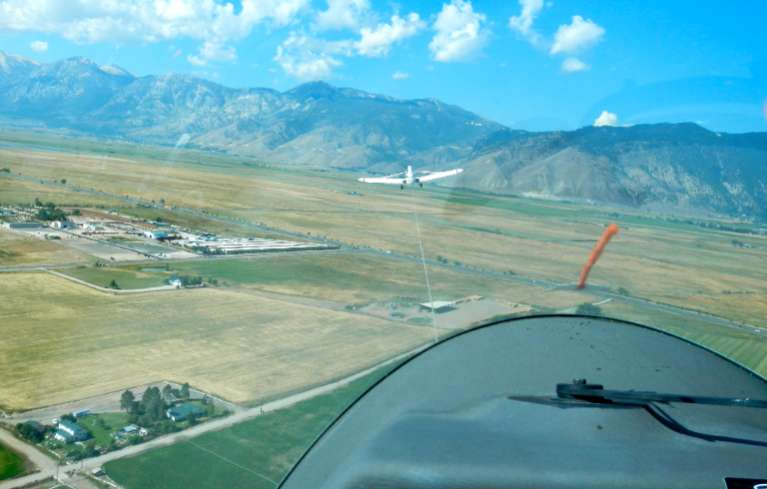
A Piper Pawnee tows the glider to an elevation where it can fly on its own. Photos/Kathryn Reed

A Piper Pawnee tows the glider to an elevation where it can fly on its own. Photos/Kathryn Reed

By Kathryn Reed

MINDEN – Ten thousand feet in the air without an engine. And I only have myself to blame. I pulled that yellow knob and the plane with an engine went one way and we went another.

At this speed – about 55 knots – it would have been easy to pick out hikers along the Tahoe Rim Trail. Instead, this section on Friday morning was a vacant swath of dirt.

It was as though I could reach out and touch the treetops. We weren’t really that low, but going this slow made individual trees standout. That doesn’t happen in a power plane or helicopter. We were on the crest of the east side of the Lake Tahoe Basin coming up from the Minden airport.

Alfalfa fields near the Minden airport

Alfalfa fields near the Minden airport

The lack of an engine made it so tranquil. While not silent because of the whir of the wind against the glider, there is no need for headsets to communicate with pilot Elizabeth Tattersall.

“It is such a thrill to stay up without burning fuel – to use just what Mother Nature provides,” Tattersall says.

She points out the iconic landmarks of Jobs Peak, Heavenly, Spooner Lake, Glenbrook Bay. The list goes on with a 360-degree view of Tahoe.

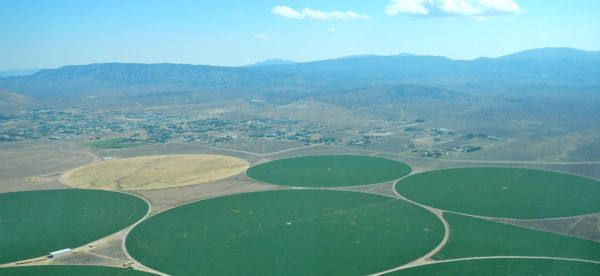
Leading up to the lake the tow plane takes us over the Carson Valley where dirt fields and those green with alfalfa, some square and some circular, fill the landscape. Large houses stick out – and there are many of them.

As we approach the Sierra, Mount Tallac is framed in the distance – while still impressive, it’s a bit dwarfed from this perspective.

I could float up there for hours just watching the scenery of Tahoe and her peaks – Pyramid with a dollop of snow; the lake shimmering in shades of blue that rival a Crayola box; the trees with stories to tell. But we must be back by sunset because this bird has no lights because it has no engine to power them.

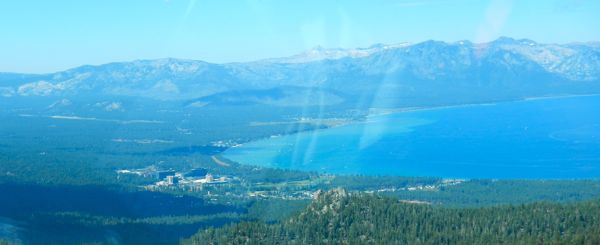
Lake Tahoe and the South Shore from 10,000 feet.

Lake Tahoe and the South Shore from 10,000 feet.

Soaring NV has been around for five years as a school and scenic tour company. With the thermal patterns, it’s a destination for people wanting to fly long distances.

Michael Marshall, who works for the glider company and is a pilot, possibly set five records for juniors earlier this week with his 350-mile flight that took him to Independence and back. (The paperwork needs to be submitted and the state must verify it.)

Lenticular clouds – the ones that look like a UFO – are common to this region in spring and late fall.

“Those are air waves. When that happens, it’s like nature’s elevator,” Soaring NV owner Laurie Harden told Lake Tahoe News.

A lot of what makes the Tahoe area difficult for power pilots in the summer is what glider pilots love – the thermal pockets. Those lift the glider, allowing a plane to keep soaring.

Mineral Peak, which is about seven miles from the Minden airport, is a location for gliders to head to because of the lift.

Tattersall sees the concave nature of the bottom of a cumulus cloud that is on the mountain ride. That, she says, is going to keep this bird in the air even longer. It got us 200 more feet.

The ASK21 weighs about 850 pounds and can carry about 400 pounds.

The ASK21 weighs about 850 pounds and can carry about 400 pounds.

For those looking for a unique wedding setting, Tattersall is also a reverend and has performed nuptials in the air.

Soaring NV will be at the Aug. 24 Lake in the Sky Air Show at Lake Tahoe Airport.

“I do believe they are the prettiest manmade thing in the sky,” Harden said of gliders.

While many of the aircraft at the South Lake Tahoe show are military in nature, gliders have played a role in this country’s history. They were used to sneak troops into France during War World II.

Most gliders, including seven of the eight Soaring NV has, are made in Germany. Because Germany cannot make power planes based on treaties agreed to at the end of the war, it turned to gliders.

—-

Notes:

• Lake in the Sky Air Show is Aug. 24 from 8am-4pm at Lake Tahoe Airport. More info is online.

• More info about Soaring NV is online.


Annual fashion show keeps the League in green

By Peggy Bourland-Madison

INCLINE VILLAGE – The annual Oscar de la Renta and Saks Fifth Avenue Lake Tahoe benefit for the League to Save Lake Tahoe is a tradition that started in 1969.

Oscar de la Renta with fans at the annual fundraiser on Aug. 3 for the League to Save Lake Tahoe. Photos/Peggy Bourland-Madison

Oscar de la Renta with fans at the annual fundraiser on Aug. 3 for the League to Save Lake Tahoe. Photos/Peggy Bourland-Madison

San Francisco-Tahoe philanthropist and socialite Diana Dollar Knowles conspired with a few of her notable friends, some still very involved today, to bring American designer and pal Bill Blass to Lake Tahoe for a benefit fashion show to support the work of The League to Save Lake Tahoe. Back then the show took place at a private residence on the West Shore’s “Gold Coast”, with a small number attending and tickets at just $15. Now in its 44th year, the sold-out event accommodates 600, with a wide range of ticket prices. The event attracts fashion lovers from near and far, with the added appeal of helping to protect the lake.

In 1995, after 20 years of dazzling fashion events on the shore of Lake Tahoe, Blass at age 73 announced he would be retiring and would no longer be taking his fall collection to Lake Tahoe. This news was not entirely unexpected and with his help a replacement was quickly found. Blass convinced a friend and fellow designer that coming to Lake Tahoe was too much fun to miss and thus the Oscar de la Renta era began.

Though he calls New York City his home, de la Renta clearly has developed a fondness for Lake Tahoe. His shows, presented by Saks Fifth Avenue, have raised millions to benefit the League.

This year the event returned to the extensive grounds of Kern Schumacher’s 5-acre lake front estate in the tony village of Incline. With de la Renta “in the house”, excitement was high as guests arrived and passed through the gates to a live band and a hosted bar serving Tahoe’s own Tahoe Blue Vodka that was swizzled into libations that set a festive mood.

Many of the guests’ images are often found on the society pages of the San Francisco Chronicle and the Nob Hill Gazette. Last Saturday they were in Tahoe providing plenty of fashion diversion long before the runway show began. The hats, the dresses, and the bags were what you would expect to see at a fashion event. In spite of their best intentions, there were a few “fashion misses”, but it was all good fun and highly entertaining.

This year’s fashion show and luncheon was dedicated to the memory of Diana Dollar Knowles who died in 2013, at the age of 96. Knowles and the many blue blood families that have deep roots in Tahoe as summer home residents dating back to the early 1900s have made preserving Tahoe’s clear blue waters a responsibility to restore some of the impacts their ancestors may have left behind.

Looking the part at the fashion show.

Looking the part at the fashion show.

Lunch was served at noon and the first part of the live auction begins. Bidding is very competitive and items included the coveted New York Fashion Week with de la Renta. It was now time to settle into your seats to enjoy the show. Sixty designs are revealed worn by 19 stunning runway models. While this flotilla of $10,000 couture dresses and gowns float down the runway, there is a flurry of activity back stage. South Shore’s 25-year veteran, Mary Ann Werley is in “the tent” with her crew of 20 dressers getting the models in and out of the 60 costume changes. Saks has their hair and make-up teams making last minute touch ups before each model steps onto the runway. The final showing is the evening gown finale.

De la Renta’s designs did not disappoint and are met with wild applause.

Designs by Oscar de la Renta.

Designs by Oscar de la Renta.

Before audience members can rush backstage to order items from this 2014 Resort Collection, part two of the live auction begins. League Executive Director Darcie Goodman Collins is on stage to introduce the League’s newest project — Eyes on the Lake. Eyes on the Lake is a volunteer aquatic invasive species monitoring program. Volunteers are trained to identify and document evidence of aquatic plant species considered to be one of the leading causes of Lake Tahoe’s clarity loss. In just a few minutes more than $30,000 is raised to fund this program.

Collins stated, “The real significance of this event is being able to fund the League’s new programs that include tangible hands-on projects that will help improve water quality. Funding raised at this benefit makes that research possible.”

In the end it is all about The League’s iconic motto: Keep Tahoe Blue.