Sleepy workers impacting gross domestic product

By Sendhill Mullainathan, New York Times

The problem is very simple: Many of us need more sleep.

Here’s an alarming statistic: A survey by the Centers for Disease Control and Prevention found that one in 25 people admitted to having fallen asleep while driving during the previous month. To put that in perspective, mathematical models based on this data imply that an estimated 15 to 33 percent of all fatal crashes in the United States might involve a drowsy driver. But even that may be an underestimate, as some people who fall asleep at the wheel may be sheepish about acknowledging as much in a survey.

What does sleep have to do with economics? Doesn’t it sit squarely in the realm of physiology?

First, the economic consequences of inadequate sleep are surely huge. There may be more sleepy workers than drivers. In one month in 2008, a poll showed that 29 percent of workers had fallen asleep or had been very sleepy at work. The effects can add up: one study in Australia calculated the cost of sleeplessness at 0.8 percent of the country’s gross domestic product.

Read the whole story


Out of this world service, amenities at Constellation property in Truckee

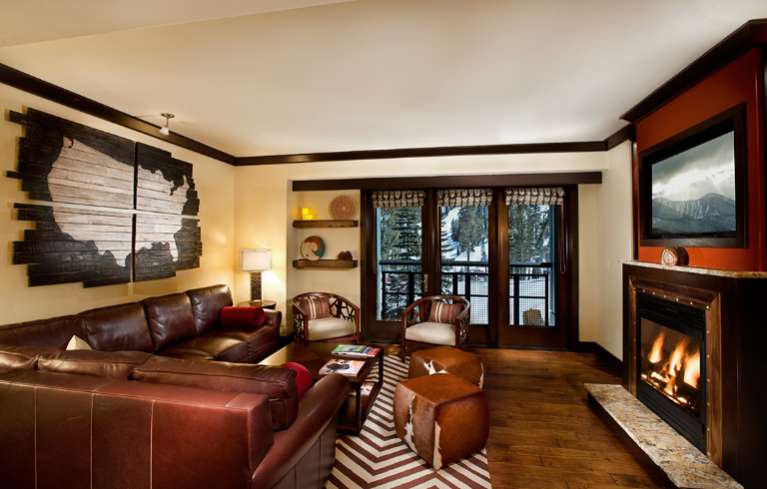
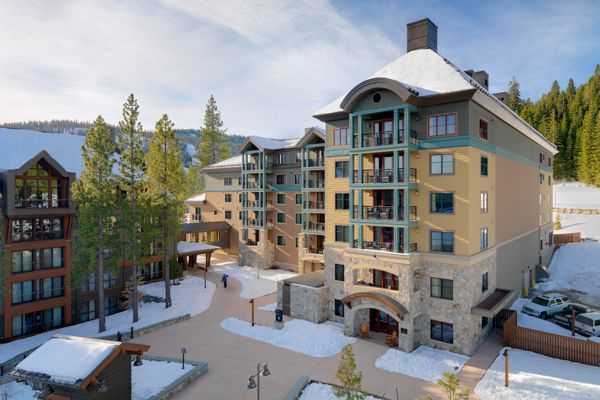
Constellation residences, which are full ownership, come completely furnished. Photos/Provided

Constellation residences, which are full ownership, come completely furnished. Photos/Provided

By Susan Wood

TRUCKEE – Kate Wormington knew she bought into the right ski resort housing venture when she surrendered part of this season to nursing a knee injury — and it wasn’t from skiing.

The San Carlos woman recently came up to her four-bedroom, ski-in, ski-out abode that is attached to the Ritz-Carlton Lake Tahoe at Northstar’s mid-mountain lamenting her running injury. The staff listened. Without a request, an employee working at the Constellation Residences owned by JMA Ventures and managed by Vail Resorts’ RockResorts’ hospitality division delivered a surprise – popcorn, hot chocolate and a movie.

“I didn’t even ask,” she told Lake Tahoe News.

The perfection of the place was also confirmed one day when her family of four was whisked away by a snowcat driver who happened to pull up to ask if they wanted to go on a joy ride. They jumped in and had a blast.

Wormington, her husband and two children also have spent many hours watching the mountain bikers roll down Northstar’s ambitious park, walking their Bernese mountain dog on the mountain and stargazing out the window.

And this year, it’s increasingly obvious how a family may overcome a lackluster snow winter season. The ski-in, ski-out complex has a snow gun situated next to the building on a bunny run leading down to the Big Easy chairlift.
The Constellation, right, is attached to the Ritz-Carlton at Northstar via a walkway.

The Constellation, right, is attached to the Ritz-Carlton at Northstar via a walkway.

“A lot of people talk about how terrible the season is because of the snow this year – but ask a mom. The ski school groomers are ideal, and the snowmaking at Northstar is fantastic,” Wormington said, acknowledging the most prominent silver lining for the dry winter season. This is the best time to learn how to ski or hone your children’s skills. The days are sunny, and the crowds are less.

While her 9-year-old daughter has all but passed her up in ability, her 4-year-old son still could use a little work just based on his age. In the summer, he’s also enamored with catching a trout at Northstar’s reservoir that is used to make all that snow when Mother Nature doesn’t deliver.

“My kids have never skied anywhere else. And we never felt the need to take them anywhere else,” Wormington said, albeit further admitting she and her husband have traveled and skied all over. “When it came to Northstar, it’s such a cool atmosphere for kids.”

There are other choices in housing or hotel stays around Northstar – at the village, in the surrounding neighborhoods served by bus or even near Martis Valley with the 3-year-old Martis Camp, luxury homes built by DMB Development.

“They’re beautiful homes and way more expensive, but kids can’t get down to the place. My 4-year-old can’t make it,” she said. The Martis chairlift off Lookout Mountain serves five black diamond runs. The one blue run, Washoe, is even “tricky” for him, she added.

The Wormingtons briefly thought about housing options at the Northstar Village but believed it was a little too noisy to live or stay in.

“I don’t want a club scene. I want a community,” Wormington said. “If we want a vibrant scene, we’ll take the gondola down,” she said. A gondola is located outside the two adjacent properties. “And I like that there’s a certain sense of decorum here at mid-mountain.” She finds that staff watches out for her kids when they’re out and about.

They considered housing sold through the Ritz-Carlton Destination Club but didn’t like the fractional ownership idea.

“We would wonder what weeks we would get,” she said.

With JMA Ventures at the helm, the Wormingtons believe they got the best of all worlds. They brought in their own furniture, which is optional but not common, and turned one of their bedrooms into a bunkroom to accommodate six kids. Everything is there, so when they drive up from the Bay Area, they bring half a suitcase and a cooler and park the car until they leave. The Wormington family is a big hit with friends, too, hosting 20 families since buying Labor Day 2012.

Last November, JMA – which owns Homewood Mountain Resort and expects to break ground in 2015 with an ambitious master plan for the West Shore resort – upped the stakes at Northstar by bringing RockResorts on board as the manager to its Constellation Residences. The Vail Resorts subsidiary specializes in “casually-elegant accommodations,” so Constellation was right up its alley.

Starting at $1.3 million, the residences come with the amenities of the Ritz-Carlton, which is attached by a sky bridge, so owners could saunter through the properties with their slippers on.

Wormington declared the RockResorts-JMA team “takes better care of us than even the Ritz.” Of course, access to all those Ritz amenities like the year-round heated pool, 1,700-square-foot spa and fitness center as well as ski valet and three dining outlets such as its signature Manzanita restaurant add to the ambiance. There are even grocery runs and in-room dining service provided at Constellation.

The residences are loaded

Built in 2008 to sell, the 1,800-square-foot residences are equipped with LCD televisions, wireless Internet, gas fireplaces, patio furniture, washers and dryers, central heating and air conditioning, a wine refrigerator, heated marble floors and jetted tubs in the master bathroom – among other things. The craftsmanship is meticulous, and the floor plan is ideal for those wanting a little space in their bedroom wing. Outside storage for larger toys is available.

Then there’s the no-holds-barred service to answer every whim. Units the owners have rented out have hosted wedding parties and many special occasions.

“You know, we bought it for the layout, and the Ritz amenities are super, but we found out later how amazing the Constellation staff is. We’ve stayed all over the world, but the customer service is best here,” Wormington said.
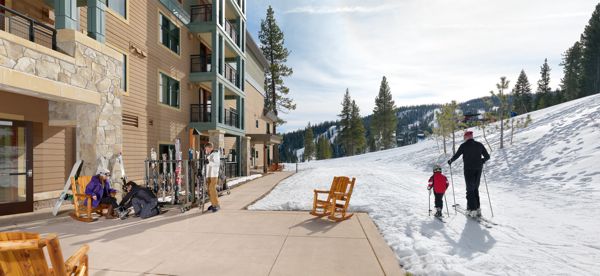
Northstar's slope are out the back door. Ski valet is provided as well as an area to warm boots.

Northstar’s slopes are out the back door. Ski valet is provided as well as an area to warm boots.

And Constellation sales specialist Brit Crezee said more ideas are in the works to beef up the service and amenities such as beach shuttles in summer. Prospective buyers have responded. While 11 units fall under the fractional Ritz Destination Club realm, only five of the 17 Constellation housing units in the first phase are left. The second phase of Constellation is expected to be available for purchase in about a year. JMA Ventures expects to begin building those 50 units in 2015.

Crezee isn’t surprised by the demand. Beyond the obvious San Francisco Bay Area market, she’s had buyers from Boulder, Colo., and San Diego.

“At 6am, they can be on a flight (to Reno), and be on the slopes by 9,” she said of Southern Californians.

Crezee has seen all types of buyers and renters – but all seem to share one common denominator.

“People want the Ritz experience, but want more convenience and to have the room to spread out,” she said. “There’s really nothing like this in Tahoe or North America.”

Indeed, the Constellation Residences represent the positive “perfect storm” of ski resort housing for those who can afford it.

First, the Ritz-Carlton Lake Tahoe is the only 5-diamond resort in the Tahoe area and for good reason. It lives up to its brand name in a mid-mountain environment.

And Vail has made a significant investment since buying Northstar from Booth Creek Holdings a few years ago.

“They know the demographic and know what to do to make people happy,” Crezee said.

Vail’s subsidiary RockResorts is a leading vacation-rental and whole-ownership hospitality company with luxury resorts maintained and managed from Colorado to Jamaica’s renowned plantation-influenced Half Moon property in Rose Hall, which is celebrating 60 years in 2015. Vail has been the sole owner of RockResorts since 2005. Laurance Rockefeller started it.

Interestingly enough, the city of South Lake Tahoe had a shot at RockResorts to run the hotel of the convention center project before the developer of the Chateau at Heavenly Village went bankrupt due to financing issues. RockResorts long ago terminated marketing license and technical services agreements associated with the project.

Vail Resorts Hospitality Chief Operating Officer James O’Donnell declined to comment on previous “business dealings” such as the aforementioned negotiation, but as the ski resort company runs Heavenly Mountain Resort across the street he took the high road in saying Vail “has a keen interest in seeing someone being successful with development there.”

Vail Resorts Hospitality still made its mark in the South Shore market by recently buying the Accommodation Station when long-time vacation rental owner Greta Hambsh retired. The Vail company changed the name to Lake Tahoe Lodging Co., which manages 70 vacation rentals and nearly 200 long-term seasonal rentals.

The Constellation project represents a shift in focus to grow lodging properties at the base of ski resorts. Nonetheless, Vail’s focus on the year-round business through RockResorts’ offerings is expected to lean toward enhancing the activities of summer.

“This is a unique opportunity to demonstrate our commitment to enhancing the entire guest experience. We couldn’t have been more excited,” said Ashley Lowe, the senior spokeswoman for the hospitality and real estate division of Vail Resorts Management Company.

It’s all about relationships

No one could be in more agreement with the RockResorts’ line of thinking than Todd Chapman, chief executive officer of JMA Ventures, a company he has helped run for 13 years with his father, Art.

Chapman pointed out to Lake Tahoe News that he has a professional and personal interest in Constellation Residences at Northstar.

“The partnership is the driving force behind the relationship. We have a well-located product. RockResorts – Vail’s hospitality arm – saw this opportunity as unprecedented access to the mountain that no one else can deliver,” Chapman said. “It’s obvious that when we look at investment opportunities, we look at the interest level of others to them.”

But it’s not all about business and coinciding partnerships to Chapman. He walks the talk. Chapman bought into the housing complex and relishes his time there to “unplug” from the pressures of modern life with his family consisting of his children, ages 6, 8 and 9.

“This is the best time to enjoy our family. We drive up from the Bay Area, park the car, and we don’t touch the car until we leave for the weekend,” he said. “My kids can sleep in until 8 and be on the mountain by 8:45. We value (that time),” he said.

However, he did admit to being a little surprised by the interest level this year with the dry winter conditions.

“Based on the snow, this says a lot about the commitment folks have to the alpine life,” Chapman said.


Calif. drought-relief bill being fast-tracked

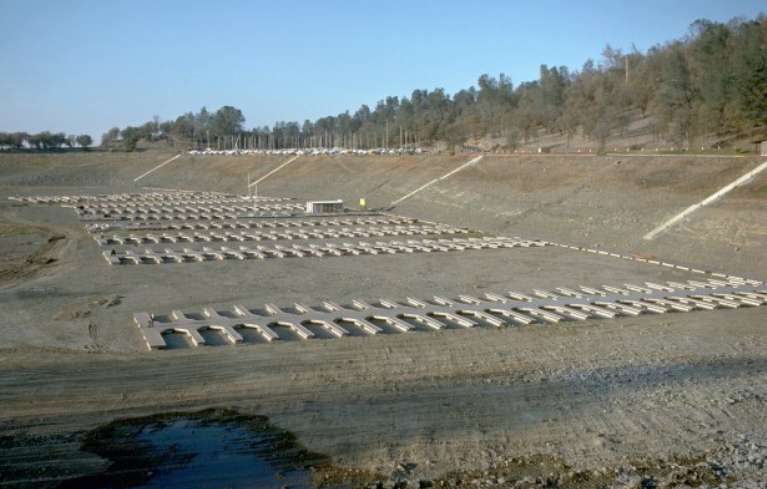
Boat slips in Folsom Lake in a drought (1976).  The reservoir was at 18 percent of capacity on Tuesday (Jan. 7, 2013). Source: California Department of Water Resources

Boat slips in Folsom Lake during the 1976 drought. Photo/California Department of Water Resources

By Rory Carroll, Reuters

California’s senate leader is preparing a $644 million emergency drought relief bill designed to quickly fund shovel-ready projects to combat the state’s severe water shortage, according to a draft of the bill.

The wide-ranging effort would fast-track water supply projects, speed up funding for expanded use of recycled water and stormwater capture projects, and better monitor and manage groundwater resources.

California is facing its worst drought in decades. State officials have said it is likely to force for the first time a complete cutoff this year in state-supplied water sold to 29 irrigation districts, public water agencies and municipalities up and down the state.

Read the whole story


Drug forfeiture money rolls into El Dorado County

El Dorado County will receive more than a quarter million dollars in forfeited narcotics proceeds.

Cash, bank accounts, and a house on 10 acres in Placerville were forfeited from two El Dorado County residents. Robert Edward Mulready, 50, of Placerville, and Duane Patrick Petersen, 40, of Shingle Springs, were charged in U.S. District Court with conspiring to cultivate marijuana and distribute it out-of-state. Last year, Mulready was sentenced to 3½ years in prison, and Petersen was sentenced to 22 months in prison.

The U.S. Attorney’s Office has given $230,600 to the El Dorado County Sheriff’s Department and $32,900 to the El Dorado County District Attorney’s Office. Both agencies assisted in the investigation of the interstate marijuana-trafficking ring that resulted in a federal prosecution.

“The arrest, prosecution and asset forfeiture of proceeds from this criminal operation should send a strong message that federal and local law enforcement will not allow such operations to continue,” Sheriff John D’Agostini said in a statement.

The Department of Justice’s equitable sharing program is designed to enhance cooperation among federal, state, and local law enforcement agencies through the sharing of proceeds resulting from federal forfeitures. The amount shared with state and local law enforcement agencies is based on the degree of the agencies’ direct participation in the case.

This case was the product of an investigation by the Drug Enforcement Administration and the Western El Dorado County Narcotics Enforcement Team.

— Lake Tahoe News staff report


Meyers residents rally to fight for their beliefs

By Jessie Marchesseau

MEYERS – Flyers stating: “There is a new plan for Meyers, and it’s not good” and “A multi-acre, multi-level resort with almost 500 parking spaces: Have you heard of the ‘Catalyst Project’?” helped bring out a throng of citizens Thursday night.

Concerned Meyers residents organized the Feb. 6 community meeting to discuss the implications of provisions in the new Meyers Area Plan. Area plans something that came about because of the Tahoe Regional Planning Agency’s year-old Regional Plan.

The meeting at Lake Valley Fire Department in Meyers was a full house. There was standing room only, with people sitting on tables around the perimeter of the room and a crowd where some of the latecomers got stuck near the door.

Maps detail development opportunities in Meyers and the basin. Photo/Jessie Marchesseau

Maps detail development opportunities in Meyers and the basin. Photo/Jessie Marchesseau

Jennifer Quashnick, a Meyers resident and main presenter for the evening, said the idea for the meeting came about after the Catalyst Project was released about a month ago. People kept approaching her and asking questions about the project and the plan. It seemed residents really didn’t know what was going on, so she and a handful of others organized the meeting as a way let people know what changes could be coming to Meyers.

Quashnick is a consultant for area environmental groups and was involved with in the TRPA’s planning for the Regional Plan update.

“Frankly, I think people maybe got a little duped,” she said of how Meyers was treated in the RPU.

Quashnick discussed the RPU’s rezoning of Meyers into a high-density town center, something she and most of the listeners seemed to disagree with. However, the main focus of the Feb. 6 presentation was on how the building height and density changes in the new Meyers Area Plan will affect development. Maximum building heights rise from 26 to 45 feet in some areas and maximum density will increase from 10 to 40 units per acre in others.

The Catalyst Project, originally billed as one of the hot topics of the night, was barely mentioned.

El Dorado County Supervisor Norma Santiago piped in in defense of the new area plan calling it even more restrictive than the current plan. She also invited everyone to submit any edits or language they would like changed through the county website and encouraged residents to attend the next Meyers Community Advisory Committee (MCAC) meeting.

Quashnick said she was happy to hear Santiago put that invitation out there, as the MCAC has not been that open to public comment on the plan.

Several other members of the MCAC took the opportunity to tout how hard they had worked on the plan and what a great community Meyers is.

Kenny Curtzwiler held up a plastic bin crammed full of folders and documents as evidence of how hard it is to build a commercial property in Meyers.

Despite the efforts Quashnick made to keep the meeting on track, interjections spurred discussions and sometimes arguments among attendees. By the end, it almost became a Myers pep rally of sorts with people standing up just to tell everyone how much they love living in Meyers and how important it is to get involved in the planning process to ensure the preservation of their community.

Several attendees expressed interest in a follow-up workshop to go over the new area plan in greater detail. The public is invited to bring their input to the next MCAC meeting on Feb. 26.


Calif. has lengthy history of dry periods

By Paul Rogers, San Jose Mercury News

California’s current drought is being billed as the driest period in the state’s recorded rainfall history. But scientists who study the West’s long-term climate patterns say the state has been parched for much longer stretches before that 163-year historical period began.

And they worry that the “megadroughts” typical of California’s earlier history could come again.

Through studies of tree rings, sediment and other natural evidence, researchers have documented multiple droughts in California that lasted 10 or 20 years in a row during the past 1,000 years — compared to the mere three-year duration of the current dry spell. The two most severe megadroughts make the Dust Bowl of the 1930s look tame: a 240-year-long drought that started in 850 and, 50 years after the conclusion of that one, another that stretched at least 180 years.

Read the whole story


Obama pledges high-speed Internet in schools

By Ovetta Wiggins and David Nakamura, Washington Post

Visiting an innovative Prince George’s County middle school where each child has a tablet computer, President Obama spoke Tuesday about his plan to give 20 million more students access to high-speed Internet connections at the nation’s schools and libraries.

Obama announced Tuesday that the Federal Communications Commission will dedicate $2 billion and that several private companies — including Apple, Verizon, Sprint and Microsoft — have committed $750 million to help bring some of the technological opportunities provided at Buck Lodge Middle School in Adelphi, Md., to schools across the country. He said he hopes that 99 percent of U.S. students will have high-speed access to the Internet within five years, something his administration has called a “foundation for a transformation in the classroom” that will give teachers the best technology and training along with rich, digital content.

The initiative, known as ConnectEd and originally announced last summer, could have a widespread impact at thousands of schools. White House officials said the Internet speed in 70 percent of the nation’s schools is too slow.

Read the whole story


Edgewood Companies tweaking hotel project; golf holes to move into South Lake Tahoe

The parcels with the yellow bubbles are owned by Edgewood Companies in South Lake Tahoe and will be affected by the Edgewood Lodge project.

The parcels with the yellow bubbles are owned by Edgewood Companies in South Lake Tahoe and will be affected by the Edgewood Lodge project.


By Kathryn Reed

To accommodate the Edgewood Lodge, which could break ground in August, some changes to planning documents are necessary. And this involves South Lake Tahoe because part of Edgewood Tahoe Golf Course is in the city limits.

Holes 8 and 9 cross into California from Stateline. Part of No. 8’s green complex is in the city as well as the tee boxes for No. 9.

Edgewood owns about 10 acres on four parcels in South Lake Tahoe that go from the lake to about Manzanita Street. The parcels are odd shaped. The Julia Morgan-designed house that is on one parcel will not be touched.

Edgewood Companies is now planning to alter holes 7-8-9 to accommodate the 159-room hotel. The hotel will be repositioned slightly.

“It’s not a big change, but it hits all the right buttons. It will be a better hotel guest experience, better community guest experience and it reduces the impact to beach soils,” Patrick Rhamey, executive vice president of real estate for Edgewood Companies, told Lake Tahoe News.

By modifying Hole 9 more than what was approved in 2012 it will add 130 lineal feet of public beach access to the already 500 feet that was allocated. It also means having more of the golf course on high-capability land and not on beach soil.

Hole 7 is being altered for the entrance road to the hotel. It will generally be in the same location, but have better exposure to sun.

The big change for Hole 8 is that the tree in the middle will be on the right. The creek along this hole will also be restored.

Hole 9 will have the most dramatic changes. Today it starts in California, plays south to north and finishes by the parking lot. In the future it will dogleg right near Lake Parkway in a westerly direction and end with a dogleg right to finish in front of the hotel.

By June 2015 all the changes to the course should be ready for golfers to test.

Because there are changes to the original plans the company will need the Tahoe Regional Planning Agency to approve an amendment. South Lake Tahoe officials must vote on the negative declaration as well as changing the Edgewood General Plan and approve an amendment to the plan area.

The Tourist Core Area Plan that was just approved does not cover this area. In the past, Douglas County incorporated the California part of the golf course in its plans. That was eliminated last year when its area plan for Stateline was approved.

The changes affect Plan Area Statements 70 and 89. The changes would allow golf where it currently is prohibited. No additional development would be permitted.

Changes to the course will not occur until after the July celebrity golf tournament. It’s possible for a bit the course will be 15 holes or the three affected holes could temporarily be modified.

The lodge is expected to take 20 months to build. It could be open in May 2016.

Expanding the south banquet room in the clubhouse is also planned. It’s likely that won’t happen this year. It will not impact the restaurant.

“We have put a hold on taking weddings after the second or third week of September until we figure out the schedule for the south room,” Rhamey said.

—-

Notes:

• Feb. 13 3pm South Lake Tahoe Planning Commission meeting at Lake Tahoe Airport regarding Edgewood General Plan/Plan Area amendment.

• Feb. 24 is the deadline to comment on the draft negative declaration for the proposed General Plan and Plan Area Amendment. Send comments to South Lake Tahoe Planning Department, 1052 Tata Lane, South Lake Tahoe, CA 96150.

• March 13 3pm South Lake Tahoe Planning Commission meeting at Lake Tahoe Airport regarding negative declaration.

• March 18 the South Lake Tahoe City Council will take up the Edgewood negative declaration. The meeting starts at 9am at Lake Tahoe Airport.

• The Tahoe Regional Planning Agency could hear the changes at its March meetings.


Study: Sugar is killing Americans

By Karen Kaplan, Los Angeles Times

Americans consume too much sugar, and our collective sweet tooth is killing us.

So says a study published Monday by the journal JAMA Internal Medicine. It finds that 71.4 percent of U.S. adults get more than the recommended 10 percent of their daily calories from added sugars in foods and drinks – and that higher levels of sugar consumption are correlated with higher risk of death due to cardiovascular disease.

Researchers used data from the National Health and Nutrition Examination Survey, or NHANES – a large study updated each year by the Centers for Disease Control and Prevention – to measure changes in sugar consumption over time and to see its effect on health. Added sugars were defined as “all sugars used in processed or prepared foods, such as sugar-sweetened beverages, grain-based desserts, fruit drinks, dairy desserts, candy, ready-to-eat cereals, and yeast breads, but not naturally occurring sugar, such as in fruits and fruit juices.”

Read the whole story


Impact of Calif. drought could be felt nationwide

By Bruce Kennedy, MoneyWatch

The ongoing severe drought in California is much more than a statewide emergency or a local news story. It will likely have ripple effects nationwide, affecting grocery store receipts in all 50 states, and putting a dent in the nation’s economy.

California is a major player in the country’s economic engine. If California were its own country, it would be the world’s eighth-largest economy – surpassing the GDP of Italy and Russia.

A big part of the Golden State’s wealth comes from its agricultural base. The state’s 80,500 farms reportedly generated a record $44.7 billion for their production output in 2012 – making California the top U.S. state in cash farm reciepts, accounting for more than 11 percent of the overall national total.

Read the whole story