Ire over proposed Tahoe ridgeline development
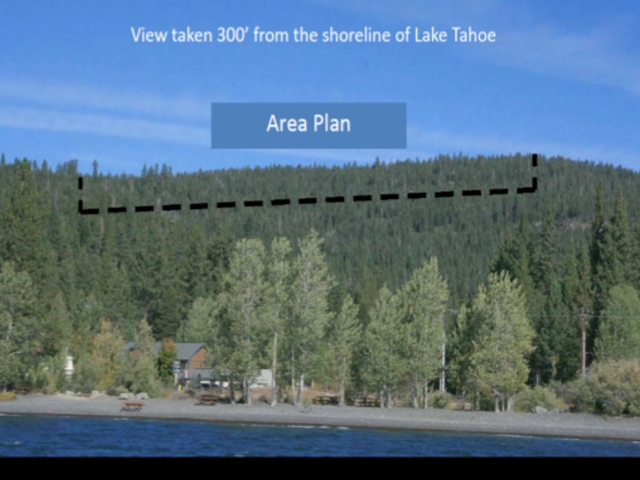
This ridgeline located in Carnelian Bay is what East West wants to develop. 

This ridgeline located in Carnelian Bay is what East West wants to develop.

By Kathryn Reed

KINGS BEACH – Developing 112 acres of pristine ridgeline in Lake Tahoe is drawing the wrath of many North Lake Tahoe residents and environmental groups. Even the Placer County supervisor who represents the area has questions.

“I’m struggling with how the Lake Tahoe piece is consistent with the Regional Plan,” Supervisor Jennifer Montgomery said at the Oct. 21 board meeting. She asked for staff to explain it at a later date.

Paul Thompson with the Community Development Resource Agency on Tuesday gave supervisors an update on several Lake Tahoe projects. His request of the packed audience at the North Tahoe Events Center to not comment on the Martis Valley project was met with grumbles. He wanted comments to wait until the environmental documents are released.

Seven people voiced their outrage with the project, including representatives of the League to Save Lake Tahoe, Friends of the West Shore and the Mother Lode Chapter of the Sierra Club. Many at the meeting were wearing “Stop Martis Valley West” stickers.

East West Partners, which developed the Village at Northstar and Lake Tahoe Ritz-Carlton, is proposing to build housing on both sides of Highway 267 – some of which is in the basin and some in the Martis Valley.

martis valley

“The Tahoe Regional Planning Agency’s most recent Regional Plan update states that new and redevelopment should be concentrated in urban town centers – areas that already have services such as schools, hospitals, banks, retail stores, and so on, plus infrastructure such as roads, sewer, water, and utilities,” said Ellie Waller, who was speaking on behalf of several people at the meeting. “Building on undeveloped forest land miles from any services is in direct contradiction of the Regional Plan. The negative effects are far reaching and will impact everyone who lives, works, or visits, Lake Tahoe.”

Others repeated that sentiment; each time it was followed by applause.

County officials pointed out that anyone could propose any project.

The environmental documents are where concerns will be ferreted out. But many opponents believe it will be a waste of taxpayer money and staff time to go through the environmental impact statement and environmental impact report process when the project doesn’t meet Tahoe Regional Planning Agency rules.

Opponents plan to be at today’s TRPA meeting to speak out about the Martis Valley proposal during public comment.

East West wants to build 760 residential units in the form of single-family homes, townhomes, cabins and condominiums. More than 6½ acres would be used for commercial. To make this happen acreage between the east and west parcels needs to be rezoned.

That is what has people upset because it would mean building on what is now a forested ridge in Lake Tahoe. Opponents believe it would be precedent setting in a negative way.

The west parcel is approximately 1,185 acres adjacent to Northstar. The east parcel is approximately 6,376 acres, of which 660 acres are zoned for residential and commercial development.

Today, the east parcel can have 1,360 residential units and 6.6 acres of commercial. East West wants to rezone 775 acres of timberland production on the west parcel to allow for the development. The 660-acres of the east zoned for development would be rezoned forest.

The end result is for no development on the east side and 600 fewer residential units fewer than currently allowed.


Brown touts decades of water policy experience

By Melanie Mason, Los Angeles Times

Gov. Jerry Brown pitched his decades-long political career as an asset in tackling California’s vexing water problems in a speech at Stanford University on Monday, portraying this year’s major water legislation as a continuation of his first gubernatorial term nearly 40 years ago.

Amid the state’s crippling drought, water was a top policy priority this year, including the crafting of a $7.5 billion water bond now on the ballot as Proposition 1. Brown and lawmakers also pushed through the first statewide groundwater regulation law in California’s history, an accomplishment Brown called “quite heroic.”

Noting he began work on groundwater back in 1978, Brown said “this is not something for a flash in the pan. This is not just for a one-term governor. This is really the work of a four-term governor.”

Brown laid out a number of steps of his administration’s Water Action Plan, which includes water conservation, ecosystem restoration and fixing the San Joaquin-Sacramento River Delta.

Read the whole story


Skiing doesn’t have to break the bank

By Frederick Reimers, Outside

The ticket-window price at major ski resorts this season will be well north of $100, especially during peak times like Christmas and Presidents Day weekend. That’s not to mention the $7 pints of beer, $12 burgers and that $10 can of peanuts you can’t resist grabbing from the minibar at 1am after bar hopping through quaint, snowy streets. But it is possible to cut some costs.

The best deals are always going to be season passes or multi-resort pass deals like the Mountain Collective and the Epic Pass. But if you can’t commit to that much resort riding, you should still buy your day-tickets now.

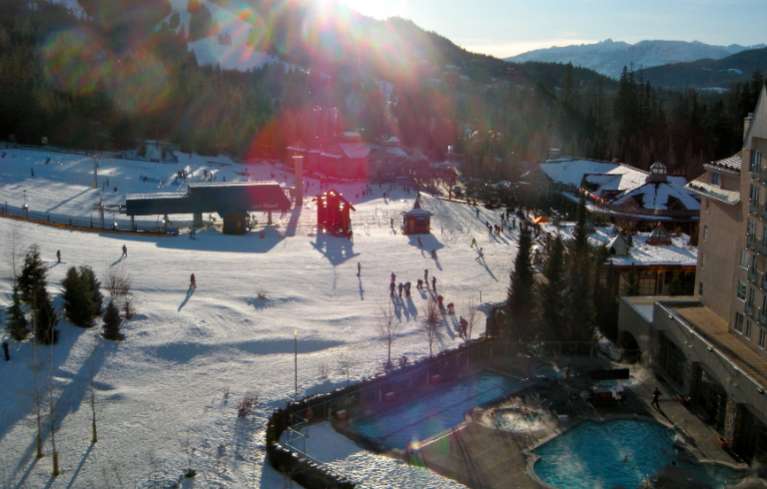
The Fairmont at Whistler is right on the slopes of the ski resort. Photo/LTN file

The Fairmont at Whistler is on the slopes of the ski resort. Photo/LTN file

“Buying your tickets in advance is just as important to cost savings as is skiing at off-peak times,” says Evan Reece, CEO of Liftopia, an online broker of lift tickets similar to airline ticket aggregators like Kayak.com and Skyscanner.com. “The earlier you purchase, the cheaper it will be.”

While you can buy slightly discounted advance tickets on the websites of major resorts like Vail and Jackson Hole, it’s a good idea to check out Liftopia first. They sell tickets for as much as 85 percent off face value for days when demand is projected to be low (think the Tuesday after Presidents Day weekend) at 250 resorts worldwide.

The problem with advanced tickets, however, is weather. Say its 20 below, or there’s freezing rain glazing the chairlifts, and you rightly decide to stay in the hot tub all day instead of skiing. You’ll have to eat the cost of the ticket. Or at least you would have in previous years. This season, however, Liftopia is adding flexibility to their model with two new tiers of pricing that allow purchasers to change their lift ticket to a different day without an additional fee. The “Value Plus” ticket will cost a bit more and allow a single date change. The “Flexible” option allows unlimited changes, though in both cases the buyer is responsible for the difference in cost if there is one.

Read the whole story


Truckee Olympian relives race for hometown

By Kathryn Reed

TRUCKEE – It wasn’t competing in the Olympics that stressed out Travis Ganong, it was the anxiety of being named to the U.S. team.

“It was stressful the whole season last year during World Cup leading up to the Olympics,” the Truckee native told a crowd of supporters. “Once I made the team, I was relaxed and had fun.”

The most fun was walking in during the Opening Ceremonies – seeing the crowd, being with the other athletes, all those flashbulbs going off. After that, it was all about work. After all, his event was the next day.

But he met his goal at the time – make it to the Olympics. He placed fifth in the downhill, four-tenths of a second from gold, seven-one hundredths from bronze.

“It was frustrating, but it gives me motivation,” the 26-year-old said.

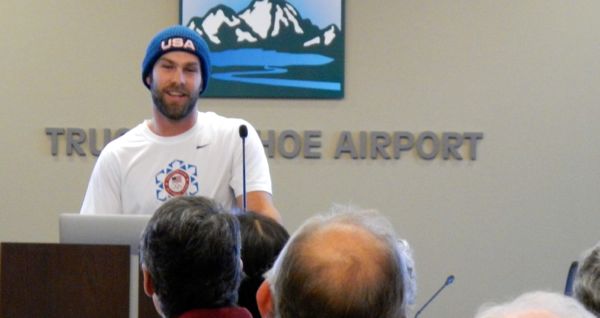
Olympian Travis Ganong returns home to Truckee to talk about skiing. Photo/Kathryn Reed

Olympian Travis Ganong returns home to Truckee on Oct. 14 to talk about skiing. Photo/Kathryn Reed

Dressed in a beanie with USA across the front, the speed skier enlightened the Truckee-Donner Chamber of Commerce breakfast attendees about the Olympics, his life and future goals.

In Russia he was not able to complete his final training run because his ski popped off near the top of the course. Ganong admits this may have helped save his legs.

While he has hit 100 mph on the racecourse, at the Olympics he was in the 80s.

A video of his Olympic race was shown for the group last week, with many oohs and aahs as he flew over huge jumps that at times had him in the air for hundreds of yards.

“That course was very challenging,” Ganong said, with turns and steeps that pushed the racers.

Ganong doesn’t set seasonal goals, but instead he has more of a career vision. He hopes to keep racing at this caliber for another eight to 10 years. After that he plans to stay in the industry in some capacity. Taking courses in ski management at Sierra Nevada College will be in his future.

Winning the men’s World Cup downhill title is the big dream. No U.S. man has done so. Daron Rahlves, who raced for Sugar Bowl, placed second. (Two U.S. women have won it – Tamara McKinney of Squaw Valley and Lindsay Vonn of Vail.)

This summer Ganong worked on his starts. He calls them his “Achilles’ heel” and the one area he could have shaved time in Sochi earlier this year. Training in the giant slalom was another focus this summer. Much of the summer is spent in Chile and New Zealand preparing for the upcoming season.

While he still calls Truckee home, as do his parents, the ski season is primarily in Europe. This year is unusual with two events at Beaver Creek, Colo.

Ganong said with FIS (International Ski Federation) leaders being European it’s hard to generate interest in hosting World Cup events in the United States. Plus, he added, most U.S. resorts don’t want to shut down the bulk of their mountain for these races. (Squaw will be hosting a World Cup skiercross race this season.)

He started with the U.S. Ski Team’s developmental team at age 15 after learning how to ski at Squaw. There he participated in various levels of competition. For the last five years he has been on the World Cup circuit.

U.S. athletes have a harder time securing sponsorships. Then there are limits to how much of his clothing can be covered. For example, the FIS allows only one headgear sponsor and then dictates the size. Ganong is still looking to fill that spot.

One thing that has changed is the shape of skis. There is less of a side cut, more old school.

“With side cut, you get crazy pressure on your knees,” Ganong said. “There are fewer injuries (now).”

After the Olympics, Ganong competed the next weekend – securing his first World Cup podium.

The first downhill World Cup race this season is in December in Lake Louise, Canada.


Apps, hardware keep track of the ski day

By Heather Somerville, San Jose Mercury News

At the end of a long day on the slopes, there’s only one reward as sweet as a cold beer and a fireplace to warm your toes — recounting your epic moves through the powder.

“You won’t believe the air I caught!”

“Did you see how fast I took that tree run?”

At the end of a ski day, Shirley Hackett goes over her Epic Mix account online. Photo/Kathryn Reed

At the end of a ski day, Shirley Hackett goes over her Epic Mix account online. Photo/LTN file

But with a growing number of mobile apps, high-tech goggles and other digital devices that can measure with precision all the moves down a mountain, old-fashioned storytelling with friends and family may not cut it anymore. GoPros and iPhones have long helped athletes record their mountain adventures, but more serious skiers are pushing their limits with gadgets — possibly even Google Glass — that offer skiers a wealth of data about their technique on the trail.

The “quantified self” movement, which emerged as smartphones became more ubiquitous and wearable devices such as the Fitbit grew in popularity, has invaded resorts across the globe, adding competitive aspects and measurable performance gains to the sport. Although many embraced skiing for the chance to be in the mountains, disconnected, alone at the crest of an untracked bowl, even these snow-sport athletes are adopting technology to measure every turn and trick in hopes of quantifying a sport that has for so long been measured by gut feelings.

“You get this emotional feeling, like ‘Wow, that might have been the best powder run I’ve ever done.’ But then you think, ‘A lot of runs feel that way, and they can’t all be the best,’ ” said David Lokshin, co-founder of AlpineReplay, a Southern California company that makes Trace, an app to track ski performance and a sensor that sticks to a ski or snowboard and can identify and record airborne tricks

The data the Trace app collects can then be examined and shared, offering new potential bragging rights and quantifiable improvement.

Read the whole story


Film explores food sustainability in the Sierra

By Kathryn Reed

TRUCKEE – Food is one of the basic needs to survive. Usually it is something people living the Lake Tahoe-Truckee region import.

But what if it didn’t have to be trucked in?

Mayumi Elegado, publisher of Truckee’s Moonshine Ink, and Stacy Caldwell with Tahoe Truckee Community foundation started exploring that concept earlier this year. Their brainstorming led to the creation of the 25-minute movie “Elevate Tahoe”.

The Truckee growing dome is featured in the film "Elevate Tahoe" . Photos/Provided

Truckee’s growing dome is featured in “Elevate Tahoe”. Photos/Provided

SBS Media House created the film that profiles locals who are creating a sustainable food system. They raised more than $5,000 through KickStarter to fund the project.

On the KickStarter page, it says, “In our Elevate Tahoe film, we will feature a program that gets kids to like kale and even request fresh vegetables to be put on the home grocery list, a farmer takes us underground to extend the growing season, and a forager dishes on the bounty that can be found in the woods and your backyard, and how you can bring it home. All of these things are going on every day at the hands of normal people driven to improve the food they, their families, and their communities consume.”

While many people have small gardens in the summer, the film explores how food can be grown in this region throughout the winter, how to harvest native plants – including Manzanita, and how to preserve food so it can be used in the winter.

One segment of the film focuses on the growing dome that Truckee has. This was the inspiration for the two that will be built at Sierra House Elementary School this fall.

Another installment has organic farmer Gary Romano talking about what it takes to grow vegetables year-round.  For much of his segment he is holding a copy of the book “Why I Farm” which was published by Bona Fide Books in Meyers.

Alicia Funk with the Living Wild Project shows how powder from Manzanita berries can be used as a flour or natural sweetener. The other bonus to native plants is they are drought resistant.

Elegado and Caldwell are making the film available to various entities, with the latest showing being Oct. 14 during the Truckee-Donner Chamber of Commerce breakfast. Their goal is to soon have it available via iTunes.


Desalination not a cheap water solution

By Matt Weiser, Sacramento Bee

CARLSBAD  — Along this patch of the Pacific Ocean, welders and pipefitters nearly outnumber the surfers and sunbathers. Within sight of the crashing waves, the laborers are assembling what some hope will make water scarcity a thing of the past.

They are building the Carlsbad Desalination Project, which will convert as much as 56 million gallons of seawater each day into drinking water for San Diego County residents. The project, with a price tag of $1 billion, is emerging from the sand like an industrial miracle. In California’s highly regulated coastal zone, it took nearly 15 years to move from concept to construction, surviving 14 legal challenges along the way.

The desalination plant is being built by Poseidon Water, a private company, and will be paid for in large part by rate increases on San Diego County water customers. On the surface, the plant resembles any other major construction project: Construction cranes scrape the sky as concrete foundations are poured; the giant new blocky building could be any warehouse or parts factory.

Inside, the truth of the project is revealed. The building will house more than 16,000 reverse-osmosis membranes – salt filters, essentially – that will convert the Pacific Ocean into drinking water suitable for making coffee and watering lawns.

Reverse-osmosis desalination was invented in California in the 1950s. But other nations with fewer natural freshwater supplies – Israel, Australia, Saudi Arabia and others – embraced the technology first and built dozens of projects over the past few decades. When the Carlsbad plant begins operating in 2016, it will be the largest desalination project ever built in the Americas. Desalination on this scale is so new, said MacLaggan, that Carlsbad will be operated initially by an Israeli subcontractor, which will help train a staff of California workers.

The eyes of a thirsty state are trained on this project: It is a crucial test for an industry eager to expand in California, where residents are famously protective of their coastline and also accustomed to relatively cheap water. In short, the Carlsbad project is challenging California’s status quo while also offering the tantalizing prospect of relief from drought.

One of the big challenges is energy demand. Desalination requires more electricity than nearly any other water source, because water must be forced through reverse-osmosis membranes by high-pressure pumps. The San Diego County Water Authority committed to the Carlsbad project partly because it anticipates imported water will become more expensive over time and eventually reach parity with desalination.

Others view that equation differently. Four years ago, the city of Long Beach abandoned its desalination plans because of the energy cost. The city of Santa Cruz, with no imported water to shore up its supplies, rejected desalination after an uproar from residents concerned about the cost and environmental risks. The Marin Municipal Water District also decided for similar reasons in 2010 not to pursue desalination, and it boosted conservation efforts instead.

About a dozen new desalination projects are in various planning stages throughout the state. Only a few are as large as Carlsbad. The nearest to construction is another Poseidon project, proposed in Huntington Beach. A final permit from the state Coastal Commission comes up for a vote late in 2015.

Anticipating more proposals, the State Water Resources Control Board is drafting new regulations to govern desalination. The rules focus primarily on two crucial operating features: seawater intakes and outfalls.

Read the whole story


As debt mounts, Caesars in talks with lenders

By Kimberly Pierceall, AP

Caesars Entertainment said Friday it is prepared to start formal discussions with some of its bank lenders as it works to reduce its debt and stave off what some see as near certain bankruptcy.

In a filing to the Securities and Exchange Commission, the casino company announced that it has reached out to some of its creditors — namely bank lenders — to find ways to ease pressure on its $24.2 billion debt.

Caesars is the parent company of Harrah’s Lake Tahoe and Harveys in Stateline.

That came a day after the company promised its creditors who are first in line a claim on cash held by its debt-strapped subsidiary Caesars Entertainment Operating Co. in case it defaulted. It’s been in formal talks with that group of creditors, too, for about a month.

In recent years the company has spun off multiple divisions in an attempt to shape up its finances, including Caesars Entertainment Resort Properties and Caesars Growth Properties, dividing its casinos, properties and businesses among the subsidiaries. The operating company has the largest debt load.

Earlier this year, the company sold the Claridge hotel tower of its Bally’s Atlantic City property and sold the Atlantic City Country Club to a private buyer. It also closed the Harrah’s Tunica casino in Mississippi in June and shut down the Showboat Atlantic City casino in September.

For financial analysts watching the debt-heavy operations division that includes Caesars Palace on the Las Vegas Strip, the company’s trademarks and two of its remaining Atlantic City properties as well as other regional casinos, it’s not a matter of if but when the casino company will file for bankruptcy.

Caesars spokesman Gary Thompson said he couldn’t comment, citing the company’s SEC-mandated quiet period before its third quarter financial results are released Nov. 10. But CEO Gary Loveman has told the Las Vegas Review Journal before that the company has no plans for bankruptcy.

Analysts said Caesars’ actions could be an attempt to reorganize its financials outside of a federal courtroom or, if that doesn’t work, get priority creditors on its side before it inevitably files for bankruptcy.

Alex Bumazhny, a financial analyst with Fitch Ratings, said it’s going to be difficult for the company to reorganize its finances out of court or arrange a pre-packaged bankruptcy wrapped in a bow that it can take to a judge.

The tricky part, Bumazhny said, is the creditors who are second-in-line.

He said the company owes more than the company is worth to those who are first-in-line to be paid back. That leaves little for those second in line.

Those in the latter position have declared Caesars already in default of its agreements. The company dismissed the contentions in recent securities filings.

“It’s just hard to see everybody agreeing to a deal without a pretty long bankruptcy proceeding,” Bumazhny said.

Chris Snow with CreditSights pointed to $230 million in interest owed to some of the second-in-line holders of debt in December. He said if Caesars doesn’t want to pay up, it likely behooves the company to get the priority creditors on its side now rather than later while it still has attractive cash on hand.

Both analysts said it would be difficult to handicap when the company might file bankruptcy, but Bumazhny said it could be within the year. Snow said it could be imminent or into the middle of next year after the company passes the threshold of time for some transactions that the court would otherwise be able to look back on during its bankruptcy consideration.

The company has 52 casinos in the United States and abroad with most bearing the Caesars, Harrah’s and Horseshoe brand. About 68,000 people worked for the company at the end of 2013.


Tahoe’s colors unfold on West Shore paddle

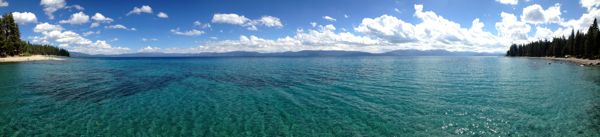
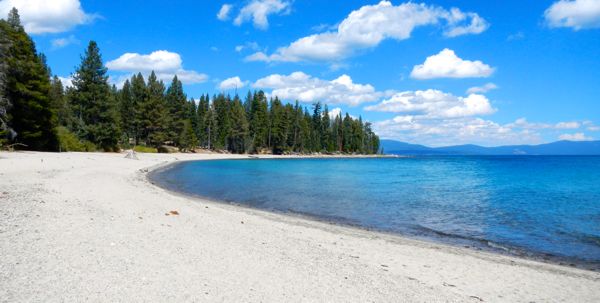
No denying why people call Lake Tahoe blue. Photos/Kathryn Reed

There is no question why people call Lake Tahoe blue. Photos/Kathryn Reed

By Kathryn Reed

HOMEWOOD – Judging by the water’s colors it could have been the Caribbean. Based on the number of boats it was clearly post-Labor Day. A headwind in both directions – it must be Lake Tahoe.

We opt to head south from the West Shore Café in Homewood to tackle a section of the lake we have not paddled before. Normally this is a pretty narrow section of rocky beach on the West Shore. The drought has even more land exposed.

From the get-go things are different than other mooring areas at Tahoe. The abundance of sailboats is noticeable. Too bad their owners are nowhere to be found because on this particular Monday in mid-September the wind is more suitable for their craft than our canoe.

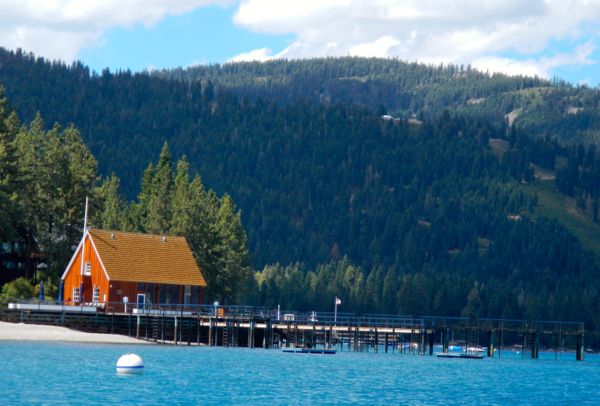
Expansive view of Tahoe from the pier at Sugar Pine Point State Park

Expansive view of Tahoe from the pier at Sugar Pine Point State Park

But we don’t let that bother us.

We have all day to churn away at what is mostly a rough lake. We had thought we might take a break at Chamber’s Landing on the way back, but it’s already closed for the season.

It’s not until one is on the water that the actual contours of the shoreline are revealed. Driving this section of Highway 89, while scenic, doesn’t do justice to the twists and turns that can be encountered while on the water.

It made for some nice reprieves from the wind as we paddled into little inlets.

Chamber's Landing with the runs of Homewood to the right.

Chamber’s Landing with the runs of Homewood to the right.

But rounding a rocky bend the wind was like an assault on our muscles as we had to dig in hard to make forward progress, all the while keeping an eye on the waves hitting the canoe at odd angles.

An expansive stretch of sand unfolded in front of us. We knew we had met our destination – Sugar Pine Point State Park.

Via car this is about three miles from the café.

We pull the canoe on shore and then walk to the pier. Several people are milling about the grounds near the Ehrman mansion.

The water here is an emerald reminiscent of the tropics. The temperature, though, is the opposite.

We didn’t want to linger too long because the wind was not dying down. We strategize on how best to navigate around the rocks, contend with waves that could tip us and a swirling wind. We make it around the bend into calmer water. But that tailwind we were counting on as we headed back had shifted to be a headwind – again.

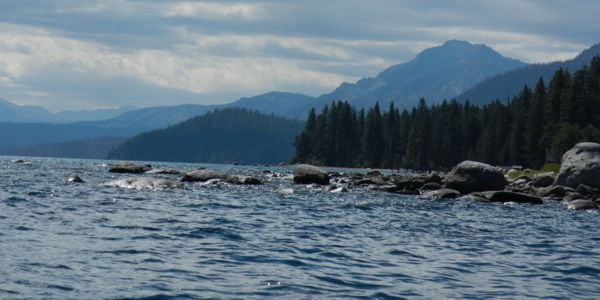
Rough water makes for a bit of a challenging paddle

Rough water makes for a bit of a challenging paddle

Still, going back we had Homewood Mountain Resort ahead and to our left. Those runs look like they are about to drop into the lake – similar to what it’s like when schussing down them.

We had thought about stopping at Obexer’s for lunch, but we were so tired we were afraid if we stopped, we might leave the canoe there. It was going to be easier to walk down there for a sandwich and bring it back to eat in our room at the West Shore Inn.

By this time looking at the lake seemed so much more appealing than being on it. A headwind in both directions can have that affect on a paddler.

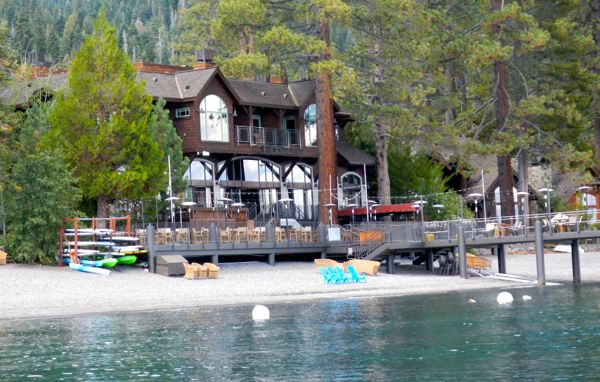
West Shore Cafe and Inn

West Shore Cafe and Inn

—–

Getting there:

From South Lake Tahoe, go north on Highway 89. West Shore Café is on the right across from Homewood Mountain Resort. There is plenty of parking now because the café is closed until Nov. 24.


Nev. takes steps to be prepared for Ebola

By Steve Morre, Las Vegas Review-Journal

An advisory task force to oversee Nevada’s preparations for Ebola is being organized to ensure plans are in place to contain the deadly virus in the event of an exposure in the state, Nevada Chief Medical Officer Tracey Green said Friday.

An Ebola tool kit is available online with information about what steps need to be taken to reduce the risk of infection for emergency medical responders, health care workers and the public.

Gov. Brian Sandoval has called for health care experts and public health officials to enhance communication, training and responsiveness on the Ebola situation, and to provide regular updates to his office. Green, Nevada epidemiologist Ihsan Azzam and others in the state’s Public Health Preparedness and Emergency Management Services agency have followed directives and alerts from the Centers for Disease Control and Prevention.

Read the whole story