SLT establishes goals for next 18 months

By Kathryn Reed

A to-do list filled a large swath of one wall inside the South Lake Tahoe City Council chambers. These were the marching orders delivered to staff by council for the next 18 or so months.

Upon completing a multi-day strategic planning session, the electeds a week ago today reconfirmed projects on the list as well as added new things for staff to accomplish. The time period coincides with how long this council will be together until the next election.

While not everyone was in agreement that everything should be done, at least three people said each item is a priority.

A fee study is going to be conducted. This will show what the actual cost of a service is. It will also reveal what is being subsidized by the general fund or some other pot of cash.

Instead of continuing to take a hodgepodge approach to improvements at Bijou Community Park, a master plan for the facility will be created.

Lake Tahoe Airport's lobby doubles as the entrance to South Lake Tahoe's city offices. Photo/Kathryn Reed

Lake Tahoe Airport’s lobby doubles as the entrance to South Lake Tahoe’s city offices. Photo/Kathryn Reed

Mayor Hal Cole lobbied hard for the airport lobby to be overhauled at an expense of about $200,000 so it is reinvented into a true city hall.

Councilman Tom Davis sees this as a complete waste of money. Councilman Austin Sass advocated for not only renovating the lobby, but expanding the offerings so Lake Tahoe Visitors Authority has a presence and possibly the U.S. Forest Service. The latter could issue wilderness permits from there.

Those in support of the upgrade believe this will give locals something to be proud of – a city hall for the first time in the city’s 50-year history. Plus, it could be a destination of sorts for tourists.

A sampling of other items in the work plan include:

• Capturing more revenue through vacation home rentals, business licenses and transient occupancy tax;

• Complete Tahoe Valley Plan;

• Improve how the town looks;

• Increase hotel occupancy;

• Analyze return on invest;

• Better retention of employees, especially in the fire department;

• Expand recreation;

• Tackle single room occupancy hotel problem;

• Create events center;

• Decrease the cost of Cal-Tahoe JPA;

• Citywide area plan;

• High quality housing for all income levels;

• Improve stormwater system;

• Broaden public outreach;

• Create better, stronger partnerships.

A piece that has been missing from previous powwows like this is a discussion about how the council would measure success.

The work was placed under one of six categories, with some overlap:

• Fiscal sustainability

• Improve built environment

• Economic development

• Public trust and accountability

• Quality core services

• Partnership development.

City Manager Nancy Kerry wanted the council to look at why they wanted something to be done. It’s up to staff to figure out how they get done. The items will be added to the business plan and brought back to the council for adoption in May.


Oversight lacking of food imported to U.S.

By Katharine Mieszkowski, Reveal

Call it the international food movement: From blueberries to raw sushi, the tide of imported food is rising in the U.S.

Right now, about one-sixth of what Americans eat comes from outside our borders. But in recent years, food imports have grown an average of 10 percent a year, a trend that’s expected to continue. About 90 percent of our seafood, such as shrimp and tilapia fillets, comes from other countries, as well as about half of our fresh fruit. That’s despite the growing popularity of farmers markets and the local food movement.

As what we eat becomes increasingly globalized, federal regulators are scrambling to prevent unsafe products from entering our borders. A new report from the U.S. Government Accountability Office casts doubt on how effective they are at keeping food imports safe.

The stakes are high, because outbreaks of food borne illness can be deadly. In 2012, a listeriosis outbreak linked to ricotta cheese imported from Italy killed four of the 22 Americans it sickened.

Even with food grown within the U.S.’s borders, regulators struggle to prevent and curb outbreaks of food borne illness. Food safety is such a problem that Congress and President Obama are considering whether the now scattered oversight of the nation’s food supply should be consolidated into one agency.

The U.S. Food and Drug Administration has primary responsibility for overseeing the safety of most of what we eat, with notable exceptions such as meat and poultry. But that federal agency examines only about 2 percent of food imports at ports of entry and actually tests even less than that.

So in 2008, the FDA started opening foreign offices to help identify unsafe food, drugs and products before they make their way to the U.S. The agency now has seven of these offices around the world in China, India, Europe and Latin America. The FDA was unable to provide a budget for these foreign offices by press time.

A new report from the GAO said it’s unclear if those offices are making our food safer. That’s because the offices don’t have performance measures to track and evaluate specifically how what they do improves food safety.

“We don’t really know the extent to which the foreign offices are contributing to the safety of imported food,” said J. Alfredo Gomez, a director on the office’s natural resources and environment team.

In one area, the GAO report found that the FDA is clearly falling short. The agency is failing to perform the number of inspections of foreign food facilities that they’re required to do under the Food Safety Modernization Act of 2011. “They’re not following the law as currently laid out,” Gomez said.

The FDA has the authority to refuse entry of food into the United States if its inspectors have not been allowed access to the foreign facilities where it was produced. But without adequate inspections, that threat doesn’t really have teeth.

Plus, the agency has no plans to even try to perform all the inspections that they’re mandated to do, citing budgetary constraints. FDA officials questioned the value of doing all those inspections, too, preferring instead to focus their limited resources on providing technical assistance to the food industry – both domestic and foreign – to comply with new U.S. food regulations.

The GAO report also found that the FDA’s foreign offices are understaffed. Nearly half of the positions in these offices were vacant, with most of the openings in China, where the agency has had trouble getting visas from the Chinese government. The staffing problem in China is so bad that the agency sometimes relies on translators provided by the firms that they’re inspecting, the report found. That could risk compromising the integrity of their findings.

Officials from the FDA’s foreign offices defended their work to the General Accountability Office, citing instances where they’d made “significant contributions to determining the cause of outbreaks that lead to illnesses or deaths in the United States.” For instance, the India office rapidly inspected tuna processing plants in 2012 that were potential sources of a salmonella outbreak that sickened 425 people in the U.S. in 28 different states, including 55 hospitalizations.

The Centers for Disease Control and Prevention estimates that for every documented case of salmonella poisoning, 29 cases may remain unreported, putting the likely toll of that outbreak at more like 12,325 illnesses. Eventually, Moon Marine USA Corp. of Cupertino, California, voluntarily recalled the frozen raw yellowfin tuna from India implicated in the outbreak.

Yet by the time U.S. inspectors reached the seafood company in southern India, the damage had been done, Fair Warning reported in 2014. Inspectors found “water tanks rife with microbiological contamination, rusty carving knives, peeling paint above the work area, unsanitary bathrooms and an outdoor ice machine covered with insects and ‘apparent bird feces.’ ”

The inspectors aren’t supposed to only be reactive, either. They have the ability to inspect these kinds of facilities before outbreaks; any company that wants to ship food to the United States has to agree to be inspected, or the FDA can refuse their food.

In all, Fair Warning found, the FDA rejects about the same number of food imports as it did a decade ago – when imports were less than half the current level.

The General Accountability Office made several recommendations about how the foreign offices could be improved, but it noted that it had made two of those same recommendations in another report in 2010, and the FDA had not complied with them.

A spokesperson for the FDA said the agency had no comment on the GAO report beyond its official response that is included in it. That response says the agency has made significant progress toward meeting the 2010 goals.


Calif. drought makes wildfires year-round threat

By Ellen Knickmeyer, AP

Big wildfires have burned almost four times as many California acres as usual so far this winter, a sign of wildfire danger growing higher still as the state moves into its fourth year of drought.

The high fire risk from the drought means the California Department of Forestry and Fire Protection is maintaining its highest level ever of seasonal firefighters straight through the winter, statewide. The department also will go up to peak summertime staffing as soon as early June, four to six weeks earlier than normal, fire chief Ken Pimlott said.

“It’s changing the dynamic, absolutely,” Pimlott said by telephone, referring to the near-statewide drought. “The conditions are absolutely ripe” for a big year for wildfires.

California, with its Mediterranean climate of winter rain and snow and dry summers, normally experiences winter as the offseason for fighting firefighters. A normal year lays down a blanket of snow in the Sierra Nevada that melts through the spring, helping keep grass and shrubs too wet to burn. In a normal year, winter wildfires will burn no more than a dozen acres or so before flickering out, department spokesman Daniel Berlant said.

This year, fires keep burning, due to tinder-dry fuel, Berlant said. In a normal year, large wildfires in areas under his department’s jurisdiction will have burned 800 acres by this time of year. This winter, it’s 3,200 acres, and counting.

Southern California long has had winter wildfires. This year, so has Northern California, including even foggy, forested Humboldt County, which gets more than 4 feet of rain in a non-drought year. “In some of the wettest places in the country, we were having 300-, 400-acre fires,” Pimlott said.

And in Central California, a wildfire burning entirely above what would have been the Sierra Nevada snowline burned 7,000 acres and 40 homes — in early February.

“It pretty much burned the same at 4,000 feet all the way up to 8,000 feet,” said Bennet Milloy, a department firefighter paramedic, and spokesman, who was at the scene of that fire, which broke out Feb. 6 in the eastern Sierras.

At the scene of that winter wildfire, “there was almost no snowpack, just a light dusting of snow,” Milloy recalled. With no grass, given the drought, the wildfire jumped from bush to bush, which were “pre-cured and dried and ready to burn,” Milloy said.

The drought, and a warming climate here, has had firefighters battling larger-than-usual wildfires for years now. Half of the state’s largest wildfires on record occurred since 2000, Berlant said.

At peak staffing later this year, the state forestry department will have more than 300 fire engines stationed around the state. With the drought, the state also has added a fourth person to each fire-engine’s normal three-person crew. The state will bring additional firefighters and aircraft on line as well, Pimlott said.


TRPA to fine SLT hotel for illegal tree cutting

By Kathryn Reed

The Landing Resort & Spa got caught illegally cutting down trees after much speculation that such activity had occurred from the onset of renovation at the South Lake Tahoe site.

The Tahoe Regional Planning Agency Governing Board on Thursday is set to approve a settlement agreement that calls for a $40,000 fine and planting of four mature 15- to 20-foot Jeffery pines in the location where the ones that were removed were located.

The staff report for the March 26 meeting says, “The four planted trees shall be inspected after two years for survival and may not be removed without TRPA approval. If any of the trees die within the first two years, a new tree shall be planted and monitored for two years after planting. The four trees shall be planted no later than May 31, 2015.”

TRPA staff in July received a complaint that the South Lake Tahoe hotel had illegally removed the trees. The trees that were removed were 14 to 24 inches around at breast height, according to TRPA. Per TRPA rules, all trees more than 14 inches in diameter must have a permit for removal.

“… TRPA staff found that the previous general manager directed a tree service from out of the area to remove the trees in order to improve the view from the resort. Multiple permits for tree removal have been issued to the Landing over the past few years and TRPA staff therefore believes that the Landing representative did this work with full knowledge of TRPA’s permit requirements,” the staff report says.

In 2013, the year the hotel – which had been the Royal Valhalla – opened, there was speculation that trees had been poisoned at the property so then a permit could be obtained for their removal.

Jim Demetriades, owner of the hotel, is the one being fined. He will have 30 days to pay it after the board approves the agreement. He has already signed the agreement.

—–

Other newsworthy items on the TRPA agenda:

• A briefing on California Pacific Electric Company 625 and 650 Electrical Line Upgrade Project. CalPECO is the parent company of Liberty Utilities, which is seeking to upgrade electric lines on the North Shore and Truckee. No action is expected. This will be heard March 25, no earlier than 1pm when the board meets at the Chateau in Incline Village.

• Expected approval of amending Heavenly Mountain Resort’s master plan to accommodate summer activities like Epic Discovery. To be heard March 26, 9:30am at the Stateline TRPA office.

• Aquatic invasive species update – March 26.

• Boat inspection fee schedule – March 26.


Brown unveils emergency drought legislation

By Chris Megerian and Melanie Mason, Los Angeles Times

Gov. Jerry Brown and top lawmakers from both parties announced Thursday a $1-billion plan to deal with California’s persistent drought, describing the legislation as a mix of short-term relief and support for long-term water projects.

“This is a struggle,” Brown said at a Capitol news conference. “Something we’re going to have to live with. For how long, we’re not sure.”

Millions of dollars would be spent faster than previously scheduled to provide food assistance and emergency drinking water in hard-hit communities. Additional money would go to wildlife preservation.

The bulk of the legislation would fund infrastructure initiatives that might not be completed for years. The proposal includes $272.7 million from the $7.5 billion water bond approved by voters last year for projects such as water recycling and desalination.

Read the whole story


Cyclists see mostly harm in adult helmet law

By Laura J. Nelson, Los Angeles Times

A proposed law that would make California the first state in the country to require that adult bike riders wear helmets has reignited a decades-long debate between regulators and the bicycling community over safety.

Senate Bill 192, introduced by state Sen. Carol Liu, D-La Cañada Flintridge, would impose a $25 base fine on adults who bike without headgear. The proposal has spurred a backlash from California’s bicycle advocacy groups, which say a mandatory-helmet law would do more harm than good. Helmet laws could make cycling appear more dangerous, they say, at a time when elected officials are working to draw drivers onto alternative forms of transportation.

Liu said she wants to encourage people to try biking and walking and keep them safe while doing so. Requiring helmets for adults isn’t the only way to protect cyclists, she said, but “it certainly protects people more than not wearing anything on their heads.”

Collisions involving cyclists in California rose 18 percent in a five-year period, from 11,814 in 2008 to 14,013 in 2012, according to the most recent California Highway Patrol data available.

Read the whole story


Citizen scientists making a difference in Tahoe

By Kathryn Reed

More data and faster results. That’s what happens when volunteers are used as citizen scientists.

The League to Save Lake Tahoe in the last few years has been embracing this approach involving projects dealing with water quality and lake clarity.

Jesse Patterson, deputy director of the League, on March 18 gave a presentation about the effectiveness of volunteer monitoring as part of Tahoe Talks Spring Brown Bag Lunch Series at Lake Tahoe Community College.

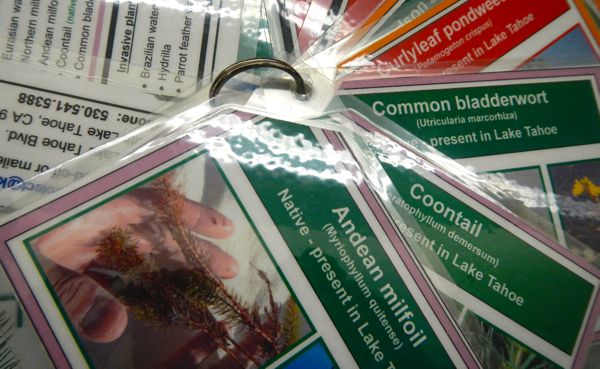
Laminated cards provided by the League help volunteer scientists identify invasive plants. Photo/LTN

Laminated cards provided by the League help volunteer scientists identify invasive and native plants. Photo/LTN

If people don’t know what an agency is doing, then it is hard to recruit more volunteers. And if people don’t know about a problem, they can’t volunteer to help fix it.

Patterson illustrated this point by explaining how beaches in the Lake Tahoe Basin are often littered with trash after July 4. But until the League used numbers to fully illustrate the extent of the problem, people were ho-hum about the issue, and solutions were not sought.

In 2014, from 5 percent of the shoreline, the following were collected July 5:

• 2,260 pounds of trash

• 3,000 cigarette butts

• 1,200 cans

• 800 bottles.

“We identified a significant issue. We need cigarette disposal canisters,” Patterson said. “We hope to get the message out before July 4 so we have a different outcome this year.”

While citizen science or volunteer monitoring has been around for more than a century, it hasn’t always been widely used in the basin. The League only three years ago started the Tahoe Pipe Keepers and two years ago began Eyes on the Lake. Patterson said citizen scientists are important for “gathering quality data to answer questions to make a change as a community.”

It all starts with observing a problem or situation and then asking questions. This evolves into doing research, then setting goals and objectives – figuring out potential outcomes, getting buy-in from others, setting up quality assurances, getting volunteers, sharing results, constantly tweaking things to stay relevant and engaged, and then taking action to solve the original problem. This is the process the League went through in establishing its programs.

With 45 pipe keepers trained, 20 of the more than 100 pipes in the basin being monitored, 1,191 samples collected and analyzed, and more than 1,000 photos-videos taken, Patterson calls the program a success.

On top of that the Desert Research Institute and Tahoe Resource Conservation District have come on as partners. The agencies have looked at the League’s data, compared it to its own and see relevance in what the League is doing – so much so that the League is sharing its findings for the real scientists to incorporate the data into their work.

Patterson said the key to maintaining success and interest for the volunteers is to provide different levels of participation. In the Pipe Keepers case this meant not having everyone have to go out to a drain in the middle of the night in the middle of a downpour. It also means providing tools so volunteers don’t have out-of-pocket expenses, making reporting easy – aka, available online, and always feeding the workers.

—–

Notes:

Future brown bag lunches at Lake Tahoe Community College’s board room:

• April 15, noon-1:30pm – Dealing with Drought: Stewardship Practices at Sierra-at-Tahoe

• May 20, noon-1:30pm – The Bike’s Impact on Tahoe’s Economy

• June 17, noon-1:30pm – Legal Rights and Issues for Pedestrians and Bicyclists

• June 24, noon-1:30pm – Law Enforcement Strategies to Improve Pedestrian and Cyclist Safety.


Calif. drought — worries, conservation increase

By Adam Nagourney, New York Times

LOS ANGELES — The rainy season drove into California in December with wet and windy promise: soaking rain, snow, dark gray skies and a flash of hope that the drought that has scorched this region had run its course. And then came January — with record high temperatures and record low rainfall.

And now, as the end of the official rainy season approaches — this state gets 90 percent of its water from December through April, most of it in December and January — California is facing a punishing fourth year of drought. Temperatures in Southern California soared to record-high levels over the weekend, approaching 100 degrees in some places. Reservoirs are low. Landscapes are parched and blighted with fields of dead or dormant orange trees. And the Sierra Nevada snowpack, which is counted on to provide 30 percent of the state’s water supply as it melts through early summer, is at its second-lowest level on record.

The federal government has warned farmers for the second year in a row that it would not be providing any water from its Central Valley Project reservoir system. Any hope climatologists had that California would be rescued again by a wet El Niño winter weather system is fading with the arrival of spring.

State regulators voted Tuesday to impose a new round of water conservation rules, including sharp restrictions on landscape watering and orders to restaurants not to serve water to customers unless asked. Farmers said they anticipated leaving as much as one million acres fallow, nearly twice the area that went unplanted last year.

Read the whole story


Trial of ex-LTBMU chief’s accused murderer begins

By Peter Hecht, Sacramento Bee

In 1990, when his father was about to remarry, Andy Harris’ grandmother took him aside and told him there was something he should know about his stepmother-to-be.

Four years earlier, the grandmother told him, Colleen Ann Batten had been tried for murder in the shotgun killing of her first husband, James Batten. It was a sensational murder mystery, played out in 1986 in a Placerville courtroom as a trial headline in the local Mountain Democrat asked the question, “Colleen Batten – murderess or martyr?”

The jury found her not guilty. Andy Harris, now 51 and an attorney in Grass Valley, said he questioned his father, Robert Edward “Bob” Harris, a U.S. Forest Service supervisor, avid baseball umpire, traveler and conservationist. He said his dad had known Colleen as a high school teenager in Oakland and that they had reunited decades later.

Bob Harris told his son that Colleen had a “hard life,” that the shooting of her husband was “unfortunate.” But he said he cherished her and was determined to marry her. “He said, ‘I love her, and I want to provide for her.’ That was basically his response,” Andy Harris said. “That was about as much as he wanted to talk about it.”

Now Colleen Ann Harris – the former Colleen Batten – is facing a second murder trial for the shotgun killing of another husband.

Read the whole story


SLT solidifies end of commercial air service

By Kathryn Reed

A significant chapter in Lake Tahoe Airport’s history came to a close Tuesday when the City Council unanimously agreed to give up the FAA certificate that allows commercial air service.

Aircraft carrying high rollers and celebrities for the annual golf tournament will still be regular fixtures at Lake Tahoe Airport – and some of those planes are substantial in size. The decision also isn’t likely to be noticeable to pilots or the general public.

Formally called the Federal Aviation Regulation Part 139 Certificate, this is what the feds require for commercial service to be allowed at airports. Inspections are done annually to ensure an airport meets the specifications. Files and logs kept by the fixed based operator are looked at; the runway and taxiways have to be the correct slope; the pavement must be in a certain condition, as well as markings, lighting, and signage; rescue and firefighting equipment are analyzed, as are personnel training records. The fuel farm and mobile fueler’s fire suppression equipment is also checked.

And while no one from the FAA is going to continue to do these inspections, the city intends to maintain the airport as if it had the 139 certificate. According to Michael Golden, who runs Mountain West Aviation – the fixed base operation, this is something pilots like because it means the airport is run at a higher standard than other facilities.

If the day comes that the city wants to have commercial service, it still could. It means filling out FAA paperwork and having an airline lined up. More significantly it could mean a $15 million investment – in today’s dollars – to bring the runway up to specifications for certain types of aircraft. It’s also possible that depending on the airline and plane used, that type of capital outlay would not be needed.

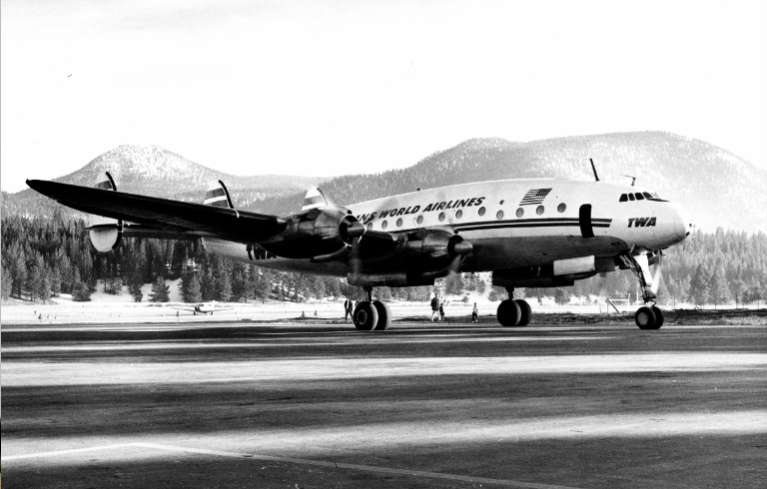
TWA was one of several airlines that used to fly into Lake Tahoe Airport. Photo/Del Laine

TWA was one of several airlines that used to fly into Lake Tahoe Airport. Photo/Del Laine

It was pointed out that rules can change and there is no guarantee the city would have the means or ability to jump through whatever new hoops the FAA erects.

And the figure above doesn’t include the couple million dollars the terminal would likely need to bring it up to national Transportation Security Administration (TSA) regs.

The city’s certificate has been in the inactive status because no commercial flights have come in for 14 years.

The reality the elected were faced with on March 17 was that the last commercial flight in and out of the South Lake Tahoe airport was in 2001. This was long after the peak in 1978 of almost 300,000 enplanements. When the city embarked on updating the master plan, which was required after a settlement agreement expired in 2012, the future of the airport had to be decided.

Last summer the council at the time voted to have the airport become a general aviation facility without commercial service. This week’s vote solidified that decision. It also will keep the airport subsidy to $354,000 a year. It was expected to increase nearly another $120,000 based on changes to the training for firefighters. (At the peak, the city was subsidizing the airport with $600,000 a year from the general fund.)

Fire Chief Jeff Meston told the council training will still occur – but onsite, instead of offsite as the feds now mandate.

Another issue the city will have to tackle is replacing the 30-plus-year-old vehicle used specifically for fighting an airplane fire. They cost almost $1 million.

The staff report says, “Without a letter of intent from an air carrier, it’s unlikely that the FAA would participate in funding a new (Aircraft Rescue and Fire Fighting) vehicle.”