TRPA approves Liberty electrical line upgrade

By Kathryn Reed

KINGS BEACH – Construction on a multi-million electrical upgrade of Liberty Utilities lines in the North Shore-Truckee area is expected to start this summer.

There was a brief tense moment Thursday morning at the Tahoe Regional Planning Agency Governing Board when it looked like the project was not going to be approved.

Board member Clem Shute said there was no way he could approve the environmental documents that included phase three of the project because there was too much ambiguity in the language. Liberty reluctantly agreed issues regarding that phase could be handled at a later date.

With that compromise, the board unanimously approved the environmental document that affected phases one and two.

The U.S. Forest Service was waiting for the TRPA decision before the final record of decision was signed. That will be the last hurdle before the project can break ground.

“The poles and wiring are on order,” Kathy Carter, spokeswoman for the utility company, told Lake Tahoe News. The request for proposal is out and a contract will soon be signed with a contractor. Phase one is estimated to cost $18 million.

Three people spoke at the April 23 meeting at the North Tahoe Events Center in Kings Beach. All live near where some of the construction will take place. Two of the three seemed to recently become aware of the project even though it has been discussed for four years and there have been multiple public meetings.

Neal Carney, representing the North Tahoe Citizens Action Alliance, questioned why undergrounding was not occurring – especially near neighborhoods.

Mike Smart, president of Liberty Utilities, told the board, “The thing with undergrounding is that it is more reliable, but it’s about eight times as expensive.”

He also explained how having a high voltage facility underground is problematic in snow country because it can be hard to get to the infrastructure needing repairs. Plus, it takes specialized crews to work on that type of equipment; crews Liberty does not employ.

Smart also acknowledged that all ratepayers will be paying for the improvements. Liberty will go the California Public Utility Commission upon completion of the project and ask for a rate increase. Liberty provides power to the entire California side of the Lake Tahoe Basin, Truckee, Alpine County and other places in Northern California.

The first phase is designed to have enough infrastructure in place that it could be used this winter even if all the work is not finished, according to Carter.

“This is for winter peaking issues,” Smart explained. Snowmaking at ski resorts and the influx of people to the basin make winter demand higher than any other time of year.

The last time Liberty hit its peak was the evening of Dec. 30, 2012. Smart said had more resorts being making snow or if the proposed gondola linking Squaw Valley and Alpine Meadows were a reality, the peak would have been hit this past winter.

At peak times the diesel generators at the Kings Beach substation kick in. It’s also possible for the power to go out because the system is stressed.

According to Liberty, the 625 and 650 power lines are some of the oldest in California, built in 1971 and 1959, respectively.

Upgrading the 650 line that runs along Highway 267 from Truckee to Kings Beach and several substations will occur in phase one. Phase two is upgrading the Northstar and Kings Beach substations. That will begin based on when the demand triggers this to be done. Phase three involves the 625 power line along Highway 28 from Tahoe City to Kings Beach. The start date is also contingent upon loads. The CPUC must approve the initiation of phases two and three even though it has already signed off on the entire project.

When all the work is done the lines and substations will have been upgraded from 60 kilovolt to 120kV.



LTWC breaks ground on new facility

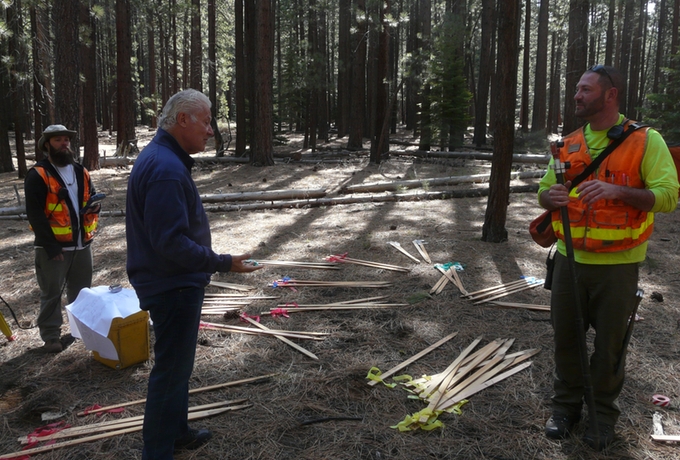
Mayor Hal Cole, center, surveys the work that started April 10 at Lake Tahoe Wildlife Care's new home. Photo/Tom Millham

Mayor Hal Cole, center, surveys the work that started April 10 at Lake Tahoe Wildlife Care’s new home. Photo/Tom Millham

The Tahoe Regional Planning Agency on April 23 approved the permit for the new home of the Lake Tahoe Wildlife Care facility.

Preliminary work like cleaning up the lot started earlier this month on the new home for Lake Tahoe Wildlife Care.

Turner and Associates employees surveyed the property and placed stakes showing the outlines of the buildings and parking areas as well as the centerlines of the roadways. The general contractor of the project and South Lake Tahoe Mayor Hal Cole were on hand.

Then, about an hour later, Ed Cook Tree Service showed up to begin removing the trees that were on the ground after decades of being blown over from wind, snow, rain and fire.

The new location is for the nonprofit organization which has a mission to raise, rehabilitate and release orphaned and injured wild birds and animals in and around the Lake Tahoe Basin.

After 37 years of running the organization out of our home, Cheryl, my wife, and I will soon be located on the corner of Al Tahoe Boulevard and Pioneer Trail on 27 acres. The new location will have more cages, larger cages and be state-of-the-art. It will give the organization more room to care for more wildlife for many years to come.

— Tom Millham, Lake Tahoe Wildlife Care treasurer


Travel insurance a prerequisite for worry free vacation

By Lee Traupel, Huffington Post

Every traveler begins her journey with a complex web of connections, coupled with dreams of blue skies, unlimited horizons, fair weather and unlimited upgrades.

But, as in everything in life, risk and reward live together and in this complex fine print driven world we all live and travel in the “devil truly is in the details.”

You are out there in the wilds ready to re-enact your favorite Bear Gryll’s survival technique and you hear the dreaded words: “your luggage did not make it…..”

Or, worse, “we have no idea what kind of fungus this is and we may need to put you in quarantine for a few days…”

But to practical discussion. Many will tell you traveling without travel insurance has too much risk and not enough reward.

Read the whole story


Opinion: Tahoe — a continual work in progress

Lake Tahoe's natural beauty is not reflected in the South Shore ad campaign. Photo/Kathryn Reed

Lake Tahoe’s natural beauty is not reflected in the South Shore ad campaign. Photo/Kathryn Reed

By Kathryn Reed

Park City is being held up as the latest poster child of tourism for the South Shore to emulate.

The theme of the ninth annual South Shore Tourism Forum was economic and community revitalization. Instead of a to-do list for the South Shore it was more of a tutorial on what the Utah resort community has done.

Lake Tahoe South Shore Chamber of Commerce, Lake Tahoe Visitors Authority and North Lake Tahoe Resort Association employees and members traveled to Park City in April 2014 to learn what that ski town has done to be successful. Ever since then there has been a litany of dog-and-pony shows to tout how great Park City is.

Tuesday afternoon was another chance for about 150 people to hear the same story that has been repeated multiple times since the excursion. Only this time it was two Park City officials who did much of the talking. This was after a lengthy video was shown of their town when the Tahoe brigade was there.

Ken Fisher, recreation manager, and Jonathan Weidenhamer, economic development manager, were the Park City officials who came west for the two-hour event at Lake Tahoe Resort Hotel on April 21.

Park City is an old mining town that in the 1950s was practically a ghost town with boarded up businesses on Main Street. Now it embraces that history which is evident by walking through the downtown.

One of the more revealing comments from the duo was prompted by a question from Ty Polastri with Lake Tahoe Bicycle Coalition. He asked what authentic elements they saw on the South Shore.

An awkward pause and chuckle ensued.

Heavenly Village has been full of people all winter even without snow. Photo/LTN file

Heavenly Village has been full of people all winter even without snow. Photo/LTN file

“I think the authentic experience is the vibrancy, the people,” Fisher said. “I love that you have a campground on the main street. And obviously the lake.”

But he admitted he would not publicly say what he would rather see the campground land used for.

They were both most impressed with how Heavenly Mountain Resort’s gondola starts from the center of Heavenly Village. What they’d like to see is the energy of the village carried all the way to the lake.

The problem, they didn’t have to point out, is that it’s like walking or driving through a ghetto near the state line going from Highway 50 to the lake.

They smirked at the names of some of the hotels that reflect a bygone era, and scooted by how some of those lodging establishments look.

Then they commented on how their recreation center is a true community gathering place. That isn’t true of South Lake Tahoe’s or even Kahle in Stateline. They did have good things to say about the operators of the city owned ice rink.

It was the 2002 Salt Lake City Olympics that spurred revitalization. (Winter is Park City’s main season, unlike Lake Tahoe where summer dominates.)

But what was lacking in the presentation was how Tahoe – any of the shores – could capture a bigger piece of the winter market.

Leading up to those 2002 Games and afterward Park City taxpayers approved a slew of bonds that primarily fund recreation and arts. There are restaurant taxes, higher property taxes for second homeowners, and additional sales tax beyond what the state mandates.

Taxes for the "right" reason will get voter approval. Photo/LTN file

Taxes for the “right” reason will get voter approval. Photo/LTN file

Todd Poth with Getaway Reno-Tahoe said how the South Shore isn’t about to tax itself to have what Park City has. It has a ton of public art, free public transit and embraces its mining history. It has a performing arts center and other venues for people to gather.

But the reality is people on the South Shore will tax themselves. Just look at the $55 million Lake Tahoe Community College bond that was passed last fall and the $64.5 million Lake Tahoe Unified School District bond voters approved a few years ago. Those are for facilities. Voters approved Measure S for recreation. South Lake Tahoe voters approved an increase in hotel and sales taxes.

This community has demonstrated it will pay for what it believes in.

Douglas County Board of Commissioners this month gave direction to staff to come back in June with ordinances that would raise nearly $4 million a year. This money would be used on the South Shore Vision and in the valley. The dollars could be leveraged to obtain grants so the total pot of money to invest in the county is even greater.

A 2.5 percent utility operator fee (natural gas, electricity, landlines, and a portion of cell phones), 0.05 percent fuel tax and 0.25 sales tax are likely to be approved this summer. State law allows the county to implement all of these taxes by ordinance without going to the voters.

Douglas County is moving forward with the South Shore Vision. Rendering/Design Worshop

Douglas County is moving forward with the South Shore Vision. Rendering/Design Worshop

“Figure out your vision. What’s the prize? I think you can build a better place if you figure out what it is,” Weidenhamer said. “Doing nothing is a terrible choice.”

He admitted it will be hard and that some people will be mad, but that is a side effect of progress and change.

The problem is that the South Shore has not figured out what it wants to be. Instead of looking inward for self-reflection, for authenticity to grow upon the reasons we all moved here or stay here, the community looks elsewhere for answers.

Plenty of consultants have come through with ideas. Pretty drawings have been composed of what the area could be. The same “leaders” trot out the same ideas and yet nothing changes. At some point one has to question whether it’s ineffective leadership that is stalling progress, or perhaps the wrong ideas are being presented, or perhaps the will of the people is being ignored. Or maybe it’s the rules that are in place – like being the only place in the country that has tourist accommodation units and commercial floor area as commodities – that are hindering forward movement.

It’s pretty evident by anyone who travels elsewhere that the South Shore is tired looking and that there is no “there there” – as in no soul, no wow factor (other than the lake), no defining event or visual that says Tahoe. There is the lake, but it’s been pointed out for years that the body of water has not been marketed as well is should have been or could be. Access points are not well marked. Think about visiting Tahoe for the first time. Would you know how to get to the beach? Lakeview Commons in South Lake Tahoe and Tahoe Commons in Tahoe City are the only obvious places. A vast swath of the shoreline is visible on the West Shore but it’s rocky and every “private” sign on all the docks is not welcoming.

We have this incredible jewel, but it’s like a museum piece that is locked behind a gated wall. Bringing the lake to the forefront may be our answer.

This is the 2014 ad campaign which is similar to 2015's. Photo/Duncan Shannon

This is the 2014 ad campaign which is similar to 2015’s. Photo/Duncan-Channon

Lake Tahoe Visitors Authority is trying to do just that with its summer 2015 ad campaign even though it is continuing to keep with the comic book-like characters instead of the true natural environmental that is so stunning. And, of course, gaming is still part of the mix. And it should be. But maybe it’s time for the marketers to emphasize the natural beauty of the lake – not a caricature of it – (have you seen the ads for Colorado and Montana?) – that also touts recreation, and then have separate gaming ads with a bit of that scenery. Because, really, no gaming destination is as beautiful as Lake Tahoe.

Or maybe the current ad campaign reflects the South Shore perfectly – colorful, a bit schizophrenic, without a true focus and a message the masses can’t understand. LTVA’s summer campaign message is “Summer rules your face”.


Passage of Nev. tax hikes bittersweet for Dems

By Kyle Roerink, Las Vegas Sun

CARSON CITY — For Democratic Sen. Tick Segerblom, Tuesday yielded a victory five sessions in the making.

Senate lawmakers passed into the Assembly a tax measure, SB 252, that’s backed by GOP Gov. Brian Sandoval that would annually raise $430 million to fund education and other programs.

The rub for Segerblom, though, was that his party didn’t have its name on the legislation.

Segerblom, a Las Vegas lawmaker serving in his fifth legislative term, and his colleagues have championed tax increases in every session since 2007. But despite holding a majority in both chambers of the Legislature, the Democrats’ efforts did little to provide new revenues for education. During Segerblom’s time in office, both parties have fought to fill the budget shortfalls posed by the recession and raise more money for government.

Segerblom applauded Republicans on the floor for “biting the bullet on taxes” and blamed them for not calling to do so sooner.

Read the whole story


South Shore bike trails, ball fields may expand

By Kathryn Reed

A multi-pronged approach is being taken to speed up the process of laying down the Greenway Bike Trail on the South Shore as well as improve other recreation amenities and the connection between areas.

California Tahoe Conservancy, the lead agency in the Meyers to Stateline trail, is working with South Lake Tahoe and Lake Tahoe Community College in a potential land swap that would have the government bodies owning more contiguous acreage and put a stream environmental zone into state ownership.

The college board on Tuesday night had a study session about possibly being a partner in applying for a state grant that could bring $2 million to town to help build a chunk of the bike path that follows the old Caltrans right-of-way that the Conservancy acquired in 2000. Also discussed was the future of the community ball field.

The Active Transportation Program (ATP) is a combo of state and federal dollars that the state is administering. To receive the grant it’s imperative to approach the proposal as a team and have a chunk of cash to assist with the project.

The Conservancy has $1 million to put toward the project beyond the work that will be done this summer. (The trail from Herbert Avenue to the edge of Bijou Meadow at Glenwood Way will break ground next month.)

The city and college would also each need to put in about $1 million. A commitment, though, from the electeds still needs to be obtained. The city and LTCC each has a subcommittee of two members working the trails issue as well as the community ball field.

Sue Rae Irelan, who has been spearheading the Greenway trail for the CTC for years, told the college board that even if the South Shore is awarded the grant, it’s possible to turn it down, so the college is not committed to spending money until it accepts the state money. The deadline to apply for the grant is late May.

At the April 21 meeting the college board was lukewarm in agreeing to pursue the conversation.

In Measure F, the voter approved facilities bond from 2014, there is money for trails. Any bond money must only be used for improvements on land the college owns. LTCC, with the multimillion-dollar donation for the university center, has even more cash for this bike project if the board decides it’s a worthy project.

The next phase of the Greenway – that the grant would help pay for – goes from Glenwood Way to Al Tahoe Boulevard. This brings the trail right to the college, to the community ball field and the path on Al Tahoe.

The city is contemplating going after a separate ATP grant to further the South Tahoe Middle School connectivity plan. This would provide a trail along Al Tahoe to Johnson Boulevard. This would hook up with the Greenway.

Part of all the discussion is the future of what is a community ball field that has become the more exclusive use of the college for its soccer program. The field was built with Measure S money, the recreation bond. Two other fields were supposed to have been built.

The college and city are talking about building another field adjacent to the current one as well as a smaller practice field. It’s estimated a second field, on land the city owns, would cost about $1 million.

It will be at the college board’s May meeting that a vote likely will be taken on whether to prepare a letter of support for the grant, whether to exchange property, allocate bond money to the bike trail project, and finalize plans for the future of the current ball field and construction of a new one.

CTC officials will be making a presentation to the City Council on May 5. At that same meeting the council is scheduled to hear about the grant proposal. The CTC board is likely to receive an update on the Greenway at its April 30 meeting.


Religion complicates Calif. vaccine debate

By Jeremy B. White, Sacramento Bee

Nick Johansen arrived at a Capitol hearing on vaccinations last week carrying a Bible.

Johansen, who said he hasn’t yet decided whether to vaccinate his 10-month-old daughter Savannah, argued government shouldn’t impose a reverence for science over his faith in God.

Senate Bill 277, a bitterly contested California bill eliminating the state’s personal belief exemption for vaccines, doesn’t apply just to parents who believe they are dangerous. It also would eliminate parents’ ability to skip vaccinations for religious reasons.

In what Johansen described as an affirmation of his faith, his daughter has overcome severe medical issues. He considers her survival miraculous and warned SB 277 would harm devout Californians like him.

Read the whole story


Calif., N.Y. rethinking higher ed, feds lag behind

By Nick Anderson, Washington Post

In its first few years, the Obama administration played a major role in higher education as the nation’s economy was foundering. The expansion of Pell grants for students in financial need, the provision of billions of dollars in stimulus funding for university research and other purposes, an overhaul of federal student loans to put the government at the center of lending — these and other measures enacted in 2009 and 2010 showed that Washington was thinking big.

Now, it seems, it is the states that are expansive. Or at least some of them. That’s a takeaway from recent interviews with higher ed leaders from the Empire State and the Golden State.

Nancy L. Zimpher, chancellor of the State University of New York, is promoting a new goal for a system that grants 93,000 degrees a year. She wants SUNY to award 150,000 degrees a year by 2020.

With 460,000 students from the community college level to doctoral programs, SUNY is a key player in public higher education. President Obama in August 2013 launched a significant initiative at one its campuses, choosing the University at Buffalo as the backdrop for a speech announcing that the federal government would rate colleges on measures of value and access. More than a year and a half later, the federal ratings plan is inching forward slowly. Some college leaders wonder whether it will ever happen.

Read the whole story


Tahoe lodging officials ramp up guest services

By Kathryn Reed

Walking in they didn’t say much. They were timid, shy and apprehensive. They didn’t want to say the wrong thing.

When English isn’t your first language it’s easy to feel intimidated about speaking to others who have spoken it their entire lives. But not communicating can be detrimental in the work environment for the employee, consumer and business owner.

Communication with hotel staff can make the difference between having an experience worth writing a good or bad review. Interaction with staff, especially bosses, can be the difference between becoming a supervisor or staying in a dead-end job.

Housekeeping staff on the South Shore are better equipped to communicate with guests after a three-day course. Photo/Provided

Housekeeping staff on the South Shore are better equipped to communicate with guests after a three-day course. Photo/Pat Leonard-Heffner

Twenty-four housekeepers from four South Lake Tahoe properties last week were immersed in a three-day session at Lake Tahoe Community College to become more proficient at English.

“We got to take them from zero to 100. We got to gain their trust and get them excited about learning English, to feel valued, important and smart,” instructor Ronna Timpa told Lake Tahoe News.

Timpa, who is based in Las Vegas, has been doing this type of work for 24 years.

“When employees feel valued by their company, they are more likely to give better guest service and give better service over all,” Timpa said. “It’s likely the room is going to be little bit cleaner, they are going to go out of the way to help guests.”

The 24 hours of instruction came about from the South Lake Tahoe Lodging Association wanting to do something so frontline staff could better interact with guests and staff. Conversations with Lake Tahoe Community College started. Coursework for credit would take too long to put together, so that’s how it became a community education offering.

The lodging association and individual properties paid for the training.

“It helps me as a property by helping the consumer. If the consumer, our guests can communicate with our staff, if they are able to say ‘Hi, how are you?’, make good eye contact, that is good service and that is what puts hotels above other hotels,” Jerry Bindel, who runs Lakeland Village, told Lake Tahoe News. “A guest doesn’t want to have to fight to communicate the things they need. They want to say they need this and we give them what they like.”

Internally, Bindel knows better communication will come from housekeeping being able to tell maintenance what is needed and to hear what the front desk has to say.

The lodging group has been talking for a few years about doing something like this, but knew it would take an outside entity. The college was the logical party to take this on.

Guest services had been taught before through LTCC, but that was to people who spoke English as their first language. This is the first time to teach front line staff whose native tongue is Spanish. They were taught phrases pertinent to the industry – how to understand basic requests and what possible responses could be.

It was also an opportunity to learn how to interact with people, to be more outgoing. What they learned are life skills, not just work skills.

“This was training that they need for life. They learned how to communicate with customers, co-workers and bosses,” Timpa said. “We talked about their job now, their job in the future and how to get there.”

Another component of this training that is still to be developed is to have supervisors be taught some basic business skills like writing appropriate emails and how to deal with problems involving guests and co-workers.

Ultimately, Bindel foresees about the half the staffs of most lodging properties going through these trainings.


Wild horse advocates disagree on contraceptives

By Scott Sonner, AP

United in their belief wild horses should remain free to roam public rangeland across the West, groups working to protect the mustangs are increasingly at odds over whether contraception should play a role in the decades-old dispute over efforts to reign in the natural size of the herds.

The American Wild Horse Preservation Campaign — made up of more than 60 groups, including the Humane Society of the United States, Animal Welfare Institute and In Defense of Animals — has been willing to accept treating mares with the anti-fertility drug PZP as a more humane alternative to gathering and shipping mustangs to costly holding facilities.

“The use of birth control, in the form of the PZP vaccine, was recommended by the National Academy of Sciences and is in line with public opinion and taxpayer interests,” campaign spokeswoman Deniz Bolbol said.

Leaders of two dissenting groups who recently won a court order blocking a roundup in Nevada are harshly critical of the national coalition, accusing some members of abandoning the mustangs’ best interests.

The New York-based Friends of Animals and San Francisco-based Protect Mustangs say recent studies show use of the contraceptive, which keeps the horses from reproducing for two years, is having an unnatural impact on the herds’ social structure.

U.S. District Judge Larry Hicks in Reno agreed in February when he blocked a roundup based partly on BLM’s reliance on a 5-year-old study that largely ignores newer data suggesting contraception prompts some mares unable to become pregnant to leave in search of stallions in other bands.

“We champion the herd’s freedom and will prevent special interest groups from using them as pharmaceutical lab rats for drug research,” Protect Mustangs executive director Anne Novak said.

Friends of Animals President Pricilla Feral stepped up the criticism last month.

“They may want to stick their head in the sand and use this as a fundraising opportunity, but the harsh reality for wild horses is that research shows PZP has long-term detrimental effects on wild horses,” she said.

The Humane Society has the patent on PZP, and Feral and others argue they benefit financially from its use.

Holly Hazard, senior vice president of the Humane Society of the United States, said internal dissent is nothing new but acknowledged the “tone and tenor is ramping up.” She said the claim her group pushes PZP to raise money is “ludicrous.”

“We have been working with PZP for 20 years,” she said. “We believe it’s the best hope for getting the wild horse management challenges under control.”

The BLM estimates there are 49,209 wild horses and burros roaming free in 10 western states — half in Nevada. The agency maintains that’s nearly twice as many as the range can sustain. It reported in February there were 48,335 animals in holding facilities with a total capacity of 50,209.

Hazard said the groups share the same “pure vision of what we’d like to see — which would be horses remaining on the range, untouched by man.”

“But if the only argument you can make is they should be left free on the range, I say that they are not now and will not ever be — at least in the reasonable future,” she said. “We want a solution. We don’t want to rattle our saber toward a victory that will never come.”