Pioneering boat inspections benefit Tahoe

By Christopher Kilian

After nine years and 51,000 inspections, Lake Tahoe’s boat inspection program has become a national model for preventing aquatic invasive species (AIS) from sneaking into the lake and wreaking environmental havoc.

The program by the Tahoe Resource Conservation District (Tahoe RCD) and the Tahoe Regional Planning Agency (TRPA) has used research to pioneer innovative ways to decontaminate boats quickly and thoroughly. Program officials have consulted with boat mechanics to develop the best procedures and resources, and they are working with one manufacturer on engine designs that will facilitate decontamination in the future.

Stopping invaders

TRPA and Tahoe RCD launched the Watercraft Inspection Program in 2008 to minimize the risk of aquatic invasive species becoming established at Lake Tahoe. Understanding that watercraft play a significant role in spreading AIS, and notably the quagga and zebra mussel, the purpose of the program was to intercept these risks before they entered Lake Tahoe.

The 100th Meridian Initiative and Pacific States Marine Fisheries Commission provided the official training for Tahoe’s original inspection team leaders. Inspections were introduced to the boating public at launch ramps around Lake Tahoe. Any vessel found to be harboring AIS had few options at the time. Other lakes might turn away potential risks, but the goal of the Tahoe program was to grant access to all watercraft.

From bleach to heat

The solution was decontaminations, a process that would allow access to all vessels that failed the inspection and were at high risk of infesting Lake Tahoe. At the time, science showed that adult mussels could be eradicated by exposure to high concentrations of bleach. And so the advent of Tahoe’s decontamination program was born.

Spray bottles of bleach were used on areas of a watercraft deemed by the inspection process to be at high risk of transporting or harboring mussel larvae, called veligers, that are invisible to the naked eye. This process, although proven, had its drawbacks. Bleach could not be used everywhere, and in this concentration is harmful to carpeting, upholstery, and aluminum.

An inspector uses a pressure washer to decontaminate a boat before it is launched in Tahoe. Photo/Corey Rich

An inspector uses a pressure washer to decontaminate a boat before it is launched in Tahoe. Photo/Corey Rich

New techniques discovered

Other drawbacks were difficulties in achieving exposure times, removing bleach after application so it would not enter the lake, and an inability to be used in raw-water siphoning systems.

In 2009, scientists discovered that hot water was a suitable method for exterminating mussel veligers and other species. With an exposure time of just 10 seconds, adult quagga mussels will die when exposed to 140-degree water.

The Tahoe program purchased portable pressure washer units to improve the effectiveness of high-risk decontaminations and eliminate chemicals from the process. A small crew of Tahoe RCD and TRPA staff were responsible for performing every decontamination. Machines, equipment, and containment mats were transported to Tahoe marinas to perform these decontaminations, and took anywhere from one to four hours to complete. It was at this point that our knowledge of the complexity of watercraft began to blossom.

The Watercraft Inspection Program harnessed the knowledge of local boat mechanics, industry professionals, and marina operators and wrote what became known as “The Boat Book.”

This was a resource meant to expound upon the limited information previously understood about watercraft. Manufacturers of pumps, impellers, engines, and other marine parts were contacted to ensure that the process of flushing these components with hot water would be safe for vessels.

During the research and consulting process, it became obvious that the risks posed by watercraft lay much deeper than the outer hull and engine compartment. Watercraft have an intricate network of areas for discretely transporting potentially threatening AIS, explaining why they are one of the top carriers of AIS. 

Process continually improved

Over the years, continuous research led to many more decontaminations. The program looked to science, statistics, and data analysis, as well as an ever-growing knowledge of the mechanics of watercraft, to eliminate some risk factors and absorb others. Decontamination procedures were vetted through local boat mechanics, including those that specialize in pleasure boats, race boats, and wooden boats.

Rigorous protocols were designed to effectively inspect and decontaminate, preventing the spread of AIS without having to decontaminate every vessel entering Lake Tahoe.

Through an outreach campaign, boaters were encouraged to arrive “Clean, Drain, and Dry” in order to pass the inspection.

Inspection sites were moved to improve boater convenience as they entered the basin and alleviate congestion at the launch ramps.

The decontamination equipment was heavily modified and evolved from a simple pressure washer to a unique and purpose-built machine that was quicker, safer, more effective, and capable of accommodating even the most obscure vessel. Through these processes, decontaminations became much quicker and less frequent. And Tahoe’s inspection program is now one of the nation’s most protective.

Chris Kilian is the operations coordinator for the watercraft inspection program for the Tahoe Resource Conservation District. This article first appeared in Tahoe In Depth.





Opinion: LTN making changes in 2016

By Kathryn Reed

Looking back on some of the headlines from 2015 I’m extremely proud and grateful to live here: Amgen women cyclists and other sporting events, local athletes excelling, businesses reinvesting in the area, environmental improvements, the artists and authors who share their world with us.

Looking back on others I’m embarrassed, saddened and just shake my head: the ones about political recalls, censure of an elected official, crime, deaths, lawsuits, companies treating employees shabbily.

Together, though, they represent our life in the Lake Tahoe Basin and beyond. The frivolity and the complexity of topics will never change; which is probably good, otherwise life might be boring.

People often ask why Lake Tahoe News doesn’t write more positive stories, why it’s always negative. My reply – there is no good or bad news, there is just news. We merely seek the truth of whatever the topic.

There are times as a publication we have plotted out special series like we did in 2015 with stories about the city of South Lake Tahoe turning 50. In 2016 we have a couple other special topics in the works. The first will commence at the end of the month. While it is not Tahoe-centric, it is a topic that is bound to resonate with many Lake Tahoe News readers.

Not all stories on LTN generate comments, but most do. We welcome the dialogue. For the most part we like the conversation. We understand there are plenty of reasons to remain anonymous while commenting.

However, starting today we are going to be more rigid with what is allowed to be posted. One of my favorite phrases is: “You can disagree without being disagreeable.” It’s time for the commenters to embrace that sentiment as well. Attack the idea, not the person. Then try to come up with a solution. Elevate the discussion; don’t let it devolve into childish rhetoric. If you can’t play nice, you will be banned from commenting. It’s that simple. If you aren’t using a valid email address, your comments won’t get posted. For all the people who claim we will be limiting your rights in regards to the First Amendment, you’re wrong – study the Constitution a bit more.

The goal is to make Lake Tahoe News more inviting, a place that welcomes diverse points of view without the threat of being demeaned and ridiculed. Disagree all you want among yourselves, just do it without the name calling. Be constructive, be passionate, pick apart flaws in reasoning, express why you agree or disagree — just don’t make it personal.

The biggest change is it is now going to cost people to comment. For $100 a year people may make as many comments as they like. Or you may choose to pay $10 for unlimited comments for that one month. A number of people already subscribe to Lake Tahoe News. Whatever the amount you’ve paid will continue to get you unlimited comments on an annual basis as long as you renew your subscription each year.

The pay-for-comment policy will take effect Feb. 1. This gives you time to subscribe. You may do so online. If cash or check is more to your liking, send them to: Lake Tahoe News, PO Box 13406, South Lake Tahoe, CA 96151. Please make checks payable to Lake Tahoe News. This paid subscriber form must also be filled out.

Becoming a paid subscriber, though, will not give you license to be abusive with your comments. Bullies will be banned — no matter the amount you’ve paid.

And with that, I wish you all a wonderful 2016.

Kathryn Reed is publisher of Lake Tahoe News.


Close call with avalanche a scary lesson

By Benjamin Spillman, Reno Gazette-Journal

There are a lot of reasons Jason Layh shouldn’t have been caught in a Sierra Nevada avalanche late last year.

For starters the range is known for it’s heavy, stable snowpack even in big years, let alone during the fourth consecutive year of drought and meager snow.

And Layh is an experienced, knowledgeable skier who understands the danger of avalanche terrain and skis accordingly.

But none of that mattered in December 2014 when he and three friends headed to Castle Peak north of Truckee to make turns following a few days of fresh snowfall.


But the rewards of backcountry skiing come with risk, as Layh and his group were about to be reminded.

Read the whole story


Gaming regulators monitoring Adelson Review-Journal buy

By Howard Stutz, Las Vegas Review-Journal

State gaming regulators are monitoring the issues surrounding the purchase of the Las Vegas Review-Journal by the family of Sheldon Adelson, the majority shareholder in casino giant Las Vegas Sands Corp.

Gaming Control Board Chairman A.G. Burnett cites Nevada gaming regulations and the state’s public policy covering gaming license holders in saying regulators have the right to look into the transaction.

The agency has previously questioned the outside investments of gaming license holders. On 2014, the Control Board ruled that gaming license holders couldn’t become involved in the state’s medical marijuana business because the drug remains illegal under federal law.

Read the whole story


SnowGlobe VIP tent a questionable experience

Not everyone believes the  VIP area at SnowGlobe is worth the extra money. Photo Copyright 2015 Carolyn E. Wright

Not everyone believes the VIP area at SnowGlobe is worth the extra money. Photo Copyright 2015 Carolyn E. Wright

By Kathryn Reed

It doesn’t pay to be a VIP at SnowGlobe. At least that was the opinion of some who were asked about their experience.

A three-day general admission pass with shuttle costs $249. Three-day VIP was $449, which also included transportation. Both sold out. Promoters of the three-day music festival in South Lake Tahoe that ends tonight wouldn’t provide the number of tickets sold.

Most people are too busy enjoying the music to worry about the VIP area. Photo Copyright 2015 Carolyn E. Wright

Most people are too busy enjoying the music to worry about the VIP area. Photo Copyright 2015 Carolyn E. Wright

VIP tickets also come with an express line for entrance into the festival, an exclusive lounge, premium view of the main stage, viewing platforms, access to experiential art installations, daily tastings from on-site food vendors, and the opportunity for artist meet and greets, according to the website.

Several people in the VIP area on Dec. 30 told Lake Tahoe News they didn’t believe they were getting their money’s worth and said what was promised was not delivered.

Julia Scheibe, left, doesn't like the changes to this year's VIP perks. Photo Copyright 2015 Carolyn E. Wright

Julia Scheibe, left, doesn’t like the changes to this year’s VIP perks. Photo Copyright 2015 Carolyn E. Wright

“Last year it was double the size, there was better lighting, it was elevated, you could look around. There was a bigger patio,” Julia Scheibe of San Francisco told Lake Tahoe News. “I’m sitting here wondering what I paid for.”

The seat is one thing she paid for. The free warming tents don’t have seating, nor do the two concert tents.

The VIP area is also less crowded. This in turn meant the line at the bar was shorter.

Nick Arbelaez and Stephanie Shamo believe the VIP tent is a quiet spot from the masses. Photo Copyright 2015 Carolyn E. Wright

Nick Arbelaez and Stephanie Shamo enjoy the less crowded spot. Photo Copyright 2015 Carolyn E. Wright

For Nick Arbelaez and Stephanie Shamo of South Lake Tahoe they liked the privacy of the tent – being away from the drugs, fights and crowds, as they put it.

Getting out of the below freezing temperatures (it’s supposed be a low of 8 degrees tonight) was attractive to Ethan Polte and Brittany Fletcher of South Lake Tahoe. The couple had not planned to attend SnowGlobe, but Polte received the two VIP passes as a tip while waiting tables at the Driftwood Café.

Rob Garza keeps his fans warm by creating danceable music. Photo Copyright 2015 Carolyn E. Wright

Rob Garza keeps his fans warm by creating danceable music. Photo Copyright 2015 Carolyn E. Wright

But this isn’t the only venue to get warm. The Igloo Tent in particular with its low ceiling and dancing festivalgoers made it toasty inside. Wall-to-wall people in the two warming tents also provided natural heat beyond the limited heat that was blown in.

Those braving the elements found warmth huddling together in a grove of hammocks. Nearby was a fire art installation that cast off warmth.

Khloe Layo has a front row seat from the VIP tent to the main stage. Photo Copyright 2015 Carolyn E. Wright

Khloe Layo has an unobstructed view from the VIP tent to the main stage. Photo Copyright 2015 Carolyn E. Wright

This was Khloe Layo’s first experience at SnowGlobe and in a VIP area at any concert. Sitting at one of the three windows she had a direct view to the main stage. It was hard to tell who was on stage, though the music can be heard without any problem. There are no monitors or screens, however, to see what is going on at any of the three stages.

Layo said the best part was having bathrooms out back and not having to wait. What frustrated her was at the entrance she and the other VIP’ers were supposed to have their own line to speed up the process. Instead they were with the throngs of concertgoers.

Cozy hammocks are one way to beat the chill. Photo Copyright 2015 Carolyn E. Wright

Cozy hammocks are one way to beat the chill. Photo Copyright 2015 Carolyn E. Wright

One couple from the Bay Area thought they’d be paying extra to have bathrooms beyond regular port-a-potties. Wrong. What they got was a corral of these bathrooms that were not shared with the masses, which meant no lines. They also couldn’t believe how slick the ground was. It wasn’t just the snow. The entranceway and the path to the bathrooms each have a slab of what appears to be metal flooring that is painted. It’s hard to have stable footing on it in wet conditions.

Food was also an expectation of some. Two empty silver serving dishes were next to the bar. When a worker was asked if any food had been served the response at 6:50pm was, “Not yet today.” The event started at 2:30pm.

The VIP area was moved this year to be almost directly behind the main stage. Last year it was on the far side of the field and at a right angle to the stage. There was also a large elevated outdoor area in 2014. This year the crowd penned in at the VIP area was at the same level as the throng of general admission ticket holders.

SnowGlobe officials did not answer Lake Tahoe News’ questions about the VIP area.


Calif. test scores tied to attendance, not proficiency

By Sharon Noguchi, San Jose Mercury News

For more than a decade, the release of federal scores indicating California public school students’ progress — or lack of it — has incited alarm, anxiety and anguish among educators.

But when those marks were ever so quietly posted this month, barely anyone noticed. And it seemed few cared. For the first time in years, California schools met federal standards — but only because the yardstick had been replaced with an easier-to-meet measurement.

It’s the sign that the federal No Child Left Behind law, an effort to hold schools accountable for students’ failure to learn, has lost its muscle a year before it expires. That retreat enrages reformers like former state Sen. Gloria Romero of Los Angeles. “There is an effort to minimize, whitewash and scrub the file so that parents don’t have information,” she said. “If you can kill the data, you can’t have the reform.”

Read the whole story


Water content of Sierra snow above average

By Kathryn Reed

PHILLIPS STATION – The Sierra snowpack is 400 percent better than it was a year ago.

The measurement taken today in the field near the road leading to Sierra-at-Tahoe has the snow depth at 54.7 inches and the water content 16.3 inches, making it 136 percent of average.

In December 2014 those numbers were 21.3 inches of snow, the equivalent of 4 inches of water and 33 percent of average.

“The problem we’ve had in the past years is it starts out OK and then it shuts off,” Frank Gehrke with the California Department of Water Resources said of the storms.

Frank Gehrke takes a reading on the water content on Dec. 30 near Sierra-at-Tahoe. Photo/Kathryn Reed

Frank Gehrke takes a reading on the water content on Dec. 30 near Sierra-at-Tahoe. Photo/Kathryn Reed

Dec. 30 was the first of five manual snow surveys for the season. And while it was encouraging that there was snow on the ground compared to April when it was a dry field that Gov. Jerry Brown walked through to highlight the dire drought conditions, there is no guarantee the snow will keep falling. It was so bad last spring that the May survey didn’t even happen because it was bone dry.

This location near Echo Summit is doing better than the statewide average of 10.2 inches of water, or 105 percent of the Dec. 30 average.

Gehrke noted the light, powdery snow he was trudging through is fabulous for skiing, but it’s not the kind of white stuff that interests hydrological officials. They want more Sierra cement, with more water than air in the snow.

When asked about the forecast, Gehrke in his usual pragmatic demeanor said, “Those are just predictions.”

He noted that the full effect of the El Nino would be felt in the latter part of the winter.

The key for reservoir storage is for the moisture to come in the form of snow and not rain. This is so the spring runoff will fill those holding basins that provide drinking and irrigation water for municipalities and farmers throughout California. The snowpack in normal years supplies about 30 percent of California’s water needs.

The main reservoirs after four years of drought are well below normal for this time of year. Lake Oroville has 1 million acre-feet, which is 29 percent of its 3.5 million acre-foot capacity and 47 percent of its historical average on Dec. 30. Last year it was at 62 percent average. Lake Shasta has 1.4 million acre-feet, 31 percent of its 4.55 million acre-foot capacity and 51 percent of its historical average. In December 2014 it was 41 percent of its total capacity and 66 percent of the Dec. 30 average.


Homewood resort’s makeover delayed — again

By Kathryn Reed

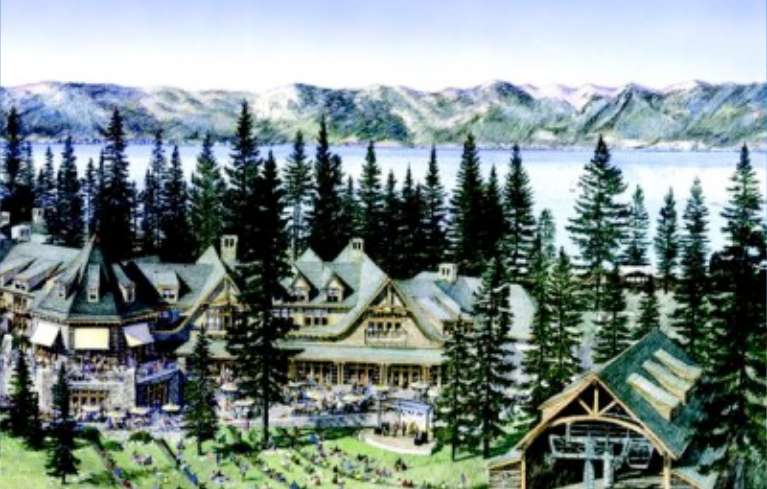
A court decision this month most likely will delay for a year the ground breaking of Homewood Mountain Resort’s slopeside hotel. Owners were slated to begin construction in summer 2016 on the hotel that is almost a replica of the old Tahoe Tavern.

San Francisco-based JMA Ventures owns the West Shore ski area. For years it has wanted to turn the area into a destination that would welcome guests year round.

When the Tahoe Regional Planning Agency approved the project in 2011, JMA expected to spend about $500 million to build a boutique hotel, condos, townhomes, grocery store, restaurant, retail spa and pool. The latter being on-mountain and open to the public.

Ongoing litigation keeps stalling the project.

Homewood owners remain committed to developing the West Shore resort.

Homewood owners remain committed to developing the West Shore resort.

“What surprised us, quite candidly, is the court focused on this particular issue. It’s not a straightforward issue. The question is what impact does Homewood have on an evacuation by adding a couple hundred units,” Art Chapman, principal of JMA, told Lake Tahoe News. “You would think on the surface it would be easy to analyze, but there are so many variables.”

Among other things the factors to consider include the size of the wildfire, if it occurs on a weekday in shoulder season or a holiday, and which way the wind is blowing.

In the next few weeks Chapman expects his team to decide whether to comply with the court order or to appeal it.

It was California Clean Energy Committee that appealed the decision allowing Homewood to move forward. The Third District Court of Appeals on Dec. 22 ruled in favor of Homewood in five of the six issues. Most had something to do with energy consumption. The evacuation challenge was a couple sentences in the appeal.

This energy committee is based in Davis. Attorney Eugene Wilson appears to be the sole member of the committee.

The three judges sent the case back to Placer County Superior Court. If JMA wants to comply with the appellate court, it would mean getting Placer County to create an addendum to the environment impact report regarding evacuation plans, there would be a 30-day comment period and then the court would need to sign off on it. This would likely be a faster course of action than appealing the decision.

The evacuation issue involves CEQA, which would not affect any of the Tahoe Regional Planning Agency permits. However, until the current matter is resolved it is impossible for Placer County to issue building permits.

Chapman called the decision ironic because he said the project has components in it to make the area safer in regards to fire. Those don’t happen until the project is built. They include facilities at the base that would allow people to shelter in place, snowmaking guns turned into fire hoses, and water shuttles at the West Shore Café (which JMA owns) to get people to safety.

A different lawsuit was settled a while ago that reduced the number of units by 13 to a total of just less than 300. The overall square footage, though, on the 1,200-acre parcel will remain the same. That settlement also calls for monitoring traffic for 20 years – twice as long as originally proposed, and notifying neighbors when snowmaking will occur because of the sound involved.


Studying climate change through the sounds of nature

By Leath Tonino, Outside

Soundscape ecologist Bernie Krause has recorded jaguars in the Amazon, ice in Antarctica, insects in Zimbabwe, rainstorms in Borneo, and orcas in the Pacific. The 77-year-old began studying nature’s sounds at age 30, later earning a Ph.D. in creative arts. (This was after two successful decades as a musician and producer.)

He has since traveled to the world’s most remote areas to create an audio library that began as an inventory of the intricate symphonies unique to each ecosystem but has become a way to document biodiversity and, most recently, loss.

Krause’s archive now consists of 5,000-plus hours of what he calls “whole habitat” field recordings. To get them, he sets up a wind-protected microphone on a tripod, plugs it into a handheld recorder, and captures everything that occurs. More than half of the 3,700 habitats represented in the archive—from Yellowstone to Australia to his own backyard in Glen Ellen—are now either totally silent or severely diminished because of human activities like mining, logging, poaching, real estate development, airplane traffic, warfare, and climate change.

Read the whole story


Study: Drought threatens 58 mil. trees in Calif.

By Kurtis Alexander, San Francisco Chronicle

Beneath the canopy of snow that recently blanketed California’s mountainsides are vast swaths of forest struggling to survive the drought.

A study released Monday by the Carnegie Institution for Science counts as many as 58 million trees statewide experiencing severe water loss, whose ruin would not only turn massive stands of pristine green to ugly brown but upset vital watersheds and wildlife.

The research, published in the Proceedings of the National Academy of Sciences, follows a U.S. Forest Service report last spring that identified 12 million trees killed by drought but left questions about how many more might wither.

“Our maps reveal much wider, much larger-scale impacts on our forest than the dead trees would tell in themselves,” saidGreg Asner, an ecologist at Stanford University who led the new study. “What we found are large sections of forest at high risk of mortality if drought persists after the El Niño.”

Read the whole story