Antique show on quest to put Tahoe on TV

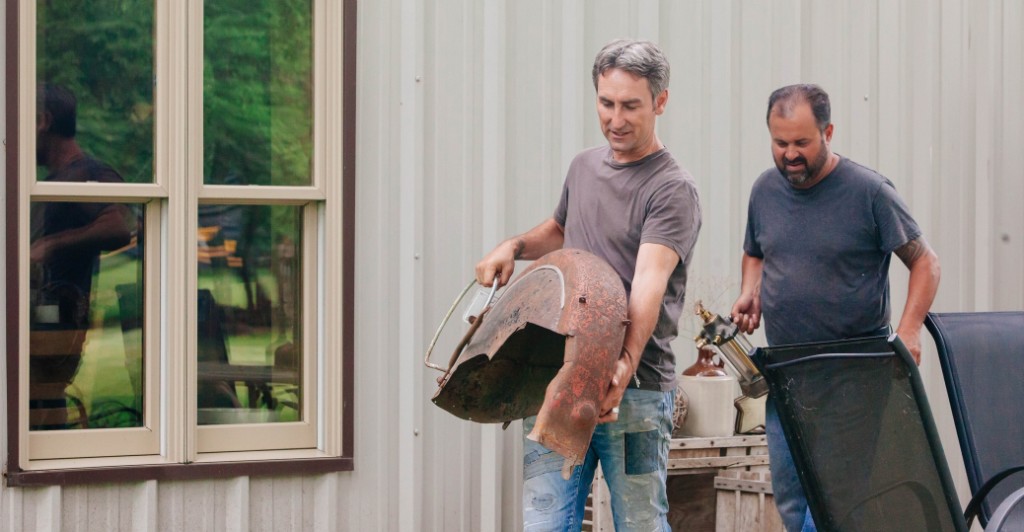
Mike Wolfe and Frank Fritz haul their find back to their vehicle. Photo/American Pickers

Mike Wolfe and Frank Fritz haul their find back to their vehicle. Photo/American Pickers

By Kathryn Reed

“American Pickers” has been on TV for nearly a decade and not a single episode has featured someone from the Tahoe-Reno area. That might change.

This show that airs on the History Channel is labeled a documentary, but it’s also part reality show.

Mike Wolfe and Frank Fritz scour people’s collections – most of them unrefined – to see if it might have value. They are considered pickers, and they call themselves antique archaeologists.

Wolfe says his fascination with junk started at age 4. Fritz started his own collections as a kid. Together, the friends have been traveling throughout the United States for 20 years looking for treasures.

They find the old items that no one is using and often refurbish them after buying the goods from the owner. Negotiations for the price are often done on camera.

On the show they delve a bit into the historical significance of their treasures.

It’s as though nothing is off limits. They have found motorcycles, classic cars, bicycles, one-of-a-kind memorabilia, old musical equipment, vintage clothing, military items and early firefighting equipment. Toys is one category they really like.

Producers were in the area in 2014, but to no avail. They are trying again to find someone who might have just the right something for Wolfe and Fritz to analyze. Filming is set to begin in March.

A spokeswoman for the show said there is a process for how it all unfolds, but she wouldn’t give Lake Tahoe News the specifics. She said the show is authentic and nothing is preplanned.

—–

Notes:

·      “American Pickers” airs Wednesdays on the History Channel.

·      To have a collection reviewed, email your name, phone number, address and description of the collection and photos to americanpickers@cineflix.com.


Calif. bill would give access to police misconduct records

By Vivian Ho, San Francisco Chronicle

Records detailing police misconduct and serious use of force, long kept confidential, could become public in California if legislation announced Friday is passed into law.

State Sen. Mark Leno, seeking to tighten accountability amid a national conversation over police shootings and a push for law enforcement reform in San Francisco, introduced a bill that would roll back a 1978 law and subsequent Supreme Court rulings that prompted cities to close police disciplinary cases to the media and the public.


It’s the second time Leno has pushed to restore such access, but stopping the bill will be a top priority for police unions, who argue that accountability can be achieved without violating officers’ privacy.

Read the whole story


Will Burning Man’s extra $3M go to the arts?

By Jenny Kane, Reno Gazette-Journal

Burning Man could pull in nearly $3 million more in revenue this year, based on projected ticket sales.

And so far, the arts nonprofit is on track.

As controversial as Burning Man’s new $1,200 da Vinci tickets were, they did not have a difficult time of selling during Wednesday’s sale.

The first 500 da Vinci tickets, a new tier of tickets that are three times the cost of the main tickets, were sold out as of Thursday morning, according to Burning Man spokeswoman Megan Miller. An additional 4,900 $990 pre-sale tickets, which were $800 last year, also were sold out by Thursday morning.

Read the whole story


EDC detectives revisiting decades-old murders

By Kathryn Reed

Carol Andersen lived in Stateline, went to Whittell High School and hung out at Regan Beach. She is buried at Happy Homestead Cemetery.

What makes her story different from other people at the South Lake Tahoe graveyard is that she was murdered and the person responsible has never been caught. Her body was found alongside a road in the South Shore on July 1, 1979.

Hers is one of more than 60 cold cases the El Dorado County District Attorney’s Office is reexamining.

“We don’t forget murder victims in this county. It doesn’t matter if it happened last week or 30 years ago, we have an obligation to do what we can to solve those cases,” District Attorney Vern Pierson told Lake Tahoe News.

El Dorado has a higher number of cold cases compared to most counties its size and even compared to larger areas.

Andersen’s case has been made into a webisode that is posted on the DA’s Facebook page. About eight months ago the department started filming reenactments of cases in an attempt to remind people about the crime and try to trigger memories in order to garner new information.

The four-minute long films are paid for with Proposition 69 money that is collected from criminal penalties. A new one comes out each month.

Even though none of them has led to an arrest, leads are coming in on the various cases that have been profiled.

“Those are some of the toughest cases we have,” Pierson said. “We’ve gotten good leads we are following up on. These cases take years. Tips are leading to a lot of other stuff. Every time we put one out we get a bunch of phone calls.”

While DNA has been around for years, certain aspects of the technology have been refined which can provide new clues for investigators. Technology also is helpful with databases providing a wealth of information that is more immediate.

“Even back in 1991 when Jaycee Dugard was abducted some of those databases were not available back then,” Pierson noted in reference to the youngster who was abducted from a bus stop in Meyers and was found alive in 2009.

All of this is an extension of the Cold Case Task Force that was formalized a few years ago with the DA’s Office, South Lake Tahoe Police Department and El Dorado County Sheriff’s Department. Investigators scour reams of paperwork and other evidence that has been collected.

Pierson credits their work with getting convictions in the Richard Swanson and Joseph Michael Nissensohn cases. Both were murder cases in South Lake Tahoe.


Nevada the national foreclosure leader

By Eli Segall, Las Vegas Sun

Nevada’s housing market started the year on a familiar note, with one of the highest foreclosure rates in the country.

One in every 603 homes statewide received a foreclosure-related filing in January, up 30 percent from December and about 1.5 percent from January 2015, RealtyTrac reported Feb. 19.

Nevada, which last year posted the fourth-highest foreclosure rate in the country, was No. 2 in January.

Read the whole story


Deer Valley hotel combines comfort, elegance

Goldener Hirsch at the base of Deer Valley has communal seating throughout. Photo/Kathryn Reed

Goldener Hirsch has communal seating throughout the property. Photo/Kathryn Reed

Publisher’s note: This is one in a series of stories about Park City, Utah.

By Susan Wood

PARK CITY – If a hotel property is only as good as its leadership, then Goldener Hirsch would medal in guest services.

But it’s also about teamwork at this hotel that is steps from Deer Valley, the ski area that has been rated No. 1 in the United States for multiple years.

There’s a distinct reason why this 20-room boutique hotel prides itself on attention to detail and being true to its heritage. It’s owned by a family with a background in the golden experience – the Eccles lineage, with Spencer as its patriarch, and daughter, Hope, as the president.

Spencer Fox Eccles, known as Spence to his employees, is a prominent financier and philanthropist in Salt Lake City. Beyond serving on several boards including the National Chamber of Commerce, Alta Ski Corporation, National Parks Foundation and the U.S. Ski and Snowboard Association, he was one of three people to steer the 2002 Salt Lake Olympic Organizing Committee. Because of his undaunted work, he was appointed as mayor of the Olympic Village during the Games and received the Pierre de Coubertin medal from the International Olympic Committee, the Olympic movement’s highest honor.

Goldener Hirsch is walking distance to the slopes at Deer Valley. Photo/Kathryn Reed

Goldener Hirsch is walking distance to the slopes at Deer Valley. Photo/Kathryn Reed

Just visit Utah Olympic Park’s swimming pool used by freestyle aerialists, and see whose name is mounted on a welcome sign. As a University of Utah student, Eccles earned all-American honors in 1957 and was regarded as one of the top amateur ski racers in the nation.

Guests to his hotel in Silver Lake Village, which is walking distance to Deer Valley’s slopes, will notice his stamp of excellence channeled through his employees and the establishment at every turn. Nothing but excellence will do. And Eccles takes striving for perfection to new levels, and meaningful accolades have rewarded him. The hotel gained recent recognition as the No. 2 small hotel in North America by Condé Nast Traveler magazine.

At first glance, the Austrian influence can be found on all floors of this hotel that opened in 1989. The imported, ornate décor is so tasteful and authentic, it feels like one just stepped into a “Sound of Music” production. This is not off base, according to regular Doug Whitney of Park City, who was enjoying the après ski experience at the bar one recent evening with his buddies and sister.

A yodeler used to visit the hotel to sing in the bar in Julie Andrews’s style. There are long alpenhorns on the wall in the bar and the lobby seating area. Upon seeing these unusual specimens, a few guests couldn’t resist chanting “Ricola” to signify the cough drop commercials. It’s a European feast for the eyes throughout the hotel, with sleds and antique bureaus sprinkling the floors, and antlers and horse harnesses dotting the walls. Even the heavy wooden room doors emulate a European castle experience, complete with an oversized key that guests leave at the front desk when they depart the building.

Cocktails and breakfast are served by a fireplace. Photo/Kathryn Reed

Cocktails and breakfast are served by a fireplace. Photo/Kathryn Reed

But first and foremost, it’s the atmosphere that makes this place on Royal Street special. It’s quiet, relaxed, yet amenity filled – with indoor and outdoor hot tubs, and among other things, a fine dining restaurant that even staffers in nearby retailer establishments recommend to their customers. Chef Ryan Burnham, who several years ago worked at Sunnyside in Tahoe City, makes meals to savor.

Dave, the concierge, serves as the consummate host. He and his fellow employees make the experience seem as though you were visiting long-lost European relatives. This guy could move mountains. As a Jersey boy, “fuggetaboutit” means he’ll take care of every whim. He’s quick to start a fire in a guest room or run an errand, even pick up dinner downtown.

And speaking of offerings, the hotel keeps its tradition of the finest in things from providing Aveda products in the bathrooms to better than average ingredients in the bar. Mimosas mentioned on the “specials” board are not made with the cheapest Champagne. They’re made with Gloria Ferrer brut. Come time for breakfast, the whole wheat pancakes are smothered with syrup from Vermont, the connoisseur’s home state of the sweet stuff.

Glance over as you sip your coffee or juice, and you’ll see your skis put out by the staff to beckon you to the slopes. At the end of the day, the turn down staff tucks you in with chocolate mints and a forecast from the National Weather Service. It’s hard to decide whether to stay in the hotel’s comfy seating areas for a game of Backgammon or go out to Deer Valley’s pristine slopes to let the two planks carve perfect turns. (Deer Valley doesn’t allow snowboarders.)

Rooms at Goldener Hirsch are spacious and comfortable. Photo/Kathryn Reed

Rooms at Goldener Hirsch are spacious and comfortable. Photo/Kathryn Reed

“The spirit and camaraderie is authentic,” said Whitney, who’s frequented Goldener Hirsch since 1992. He even recalls a time when much of the staff spoke German. (Note: this Goldener Hirsch bears no ownership relation to the one in Salzburg, Austria.)

Goldener Hirsch stands for “golden stag” – hence the Deer Valley reference.

Still, American ingenuity and lifestyle provide flair to this European experience. Walk into the bar after a day of skiing, and you could hear jazz in the background. Jazz, drinks, good food and off-the-charts comfort – life is good at the Goldener Hirsch.


Park City cuisine — from ordinary to exquisite

Publisher’s note: This is one in a series of stories about Park City, Utah.

By Kathryn Reed

PARK CITY – With a ski-in distillery, food as satisfying as high-end big city restaurants, along with casual hangouts, it would be hard to be hungry or thirsty in Park City. It’s also easy to leave with a larger waistline and much thinner wallet.

The Farm at the Canyons Village is all about locally sourced food (within 200 miles) that has been raised sustainably and is prepared from scratch.

The open kitchen allows diners to see the organized chaos in motion – with sous chefs keeping an eye on multiple pans, taking pinches of herbs to season the dishes and churning out savory meals to eager diners. Manual Rozehmal took over executive chef duties last fall.
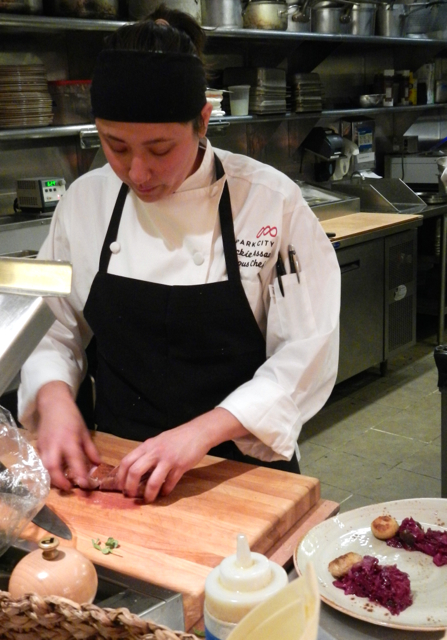
Sous chef Jackie Assaad at The Farm plates an entree. Photo/Kathryn Reed

Sous chef Jackie Assaad at The Farm plates an entree. Photo/Kathryn Reed

The menu is divided into small and large plates, with two of the large plates being vegetarian.

Sharing a variety of small plates did not leave enough room to finish the entrees.

The cheese is made in house with cows milk and the honey is local. It’s so soft and light it almost seems whipped. The apple and Brussels sprouts come with toasted pine nuts, Gold Creek Parmesan, kale and a lemon mustard dressing. Fortunately the dressing was not overbearing, but instead added a delectable tanginess. The roasted beets and honey is refreshing. It includes whipped honey ricotta, toasted walnuts, frisée, and pickled mustard seeds. The ricotta is spread on the bottom, is light and not overpowering.

JT, the waiter, is delightful and patient with answering questions about the menu and the area – as well as keeping the wine glasses full.

The herbed Spätzle pays homage to the chef’s German roots. In many ways it is like a fancy mac and cheese. This ensemble had Emmenthaler, truffle, caramelized onions, crispy shallots and black chanterelles. It was so incredibly rich and satisfying; fabulous comfort food on a winter night.

The Sugar House herb brined tomahawk pork chop comes from a farm outside of Salt Lake City. It is served with savoy cabbage, cannellini beans, tomato concasse and basil. Seasoned perfectly, pieces sliced easily off the bone.

Choices for wine are plentiful, with selections from throughout the world. The Honig Cabernet was a nice pairing with all the food on the table.

Part of The Farm restaurant is in an umbrella bar. Photo/Kathryn Reed

Part of The Farm restaurant is in an umbrella bar. Photo/Kathryn Reed

While eating in the umbrella section is unique and it allows diners to see the snowcats on the hill after dark, it is chilly, at least sitting right next to the window. Being uncomfortable with cold toes throughout a meal should be reserved for true outdoor dining.

Vail Resorts operates this eatery, so those who’ve skied where there are umbrella bars will understand what this was like. There is interior seating, which walking through had an ideal temperature.

Finding the Farm was also a bit difficult even for the Uber driver. No signs point to it in the dark. It’s behind the Grand Summit in Canyons Village, less than a 15-minute drive from the heart of Park City. When skiing this side of Park City it’s easy to find it as it sits almost directly across from the Red Pine Gondola.

Doughnuts for dessert at Troll Hallen at Stein Eriksen Lodge are delightful. Photo/Kathryn Reed

Doughnuts for dessert at Troll Hallen at Stein Eriksen Lodge are delightful. Photo/Kathryn Reed

Stein Eriksen Lodge has two choices for dining – Glitretind is more high-end and described as being like a three-hour experience, whereas Troll Hallen is more casual, with what the establishment calls lighter choices. Troll Hallen’s “lighter choice” for a vegetarian was mac and cheese. Fortunately it was possible to order the mushroom risotto (also not light) off the Glitretind menu. It was rich and cooked exquisitely, but a salad or soup should have been ordered first because it wasn’t enough to be an entrée.

The scallops, perfectly tender in the middle, were some of the best ever, according to an aficionado of this shellfish delicacy.

The extensive wine list on the one hand is a connoisseur’s dream; on the other hand it’s a bit overwhelming. And it’s pricey – with a half bottle of Cab running about $100.

Dessert was a delightful twist on breakfast – doughnuts. Only these are Korean sweet potato doughnuts with sesame chocolate sauce, pickled Asian pear, and miso-shiso ice cream. They are worth saving room for.

Breakfast at Stein comes in two forms. For those staying the night, the buffet is included. It is much more robust than most “free” breakfasts, as well as a higher quality – like the maple encrusted bacon. It’s also possible to order off the menu.

Sitting at a window looking out onto the slopes of Deer Valley one doesn’t want to linger too long because the corduroy is getting skied off.

Ryan Burnham, chef at Goldener Hirsch, has no trouble catering to diner's food preferences. Photo/Kathryn Reed

Ryan Burnham, chef at Goldener Hirsch, has no trouble catering to diner’s food preferences. Photo/Kathryn Reed

The mountains call to Ryan Burnham, chef at Goldener Hirsch. He worked at Sunnyside in Tahoe City from 1999-2000, left for the flatlands, and is now in his fourth winter at this restaurant in Park City.

“You have to cook in the vein of the restaurant and listen to the clientele. The owners here are awesome. It’s a beautiful location, family run, and I have a ton of leeway,” Burnham told Lake Tahoe News.

While the restaurant has overtones of its Austrian roots, Burnham has flexibility with some of the dishes, while the classics like wiener schnitzel are not to be altered. Even though offerings for a vegetarian are limited, Burnham welcomes the challenge to please diners with different diets. He didn’t disappoint. He assembled a plate full of the accompaniments for the meat-fish entrees that became an entrée for a vegetarian.

The mushroom salad is the perfect start to dinner at Goldener Hirsch. Photo/Kathryn Reed

The mushroom salad is the perfect start to dinner at Goldener Hirsch. Photo/Kathryn Reed

Starting the dinner was incredible – warm mushroom salad with Humboldt fog chevre, hazelnuts and Solara sherry. It was out of this world. The pungent cheese, sliced nearly paper thin and placed at the bottom blended well with the wild mushrooms and frisée greens. It was hard to share it. This with a soup would be an ideal meal for those not wanting meat.

The steelhead trout with potato-leek rosti, Swiss chard and preserved tomato nage was perfectly stacked so a bit of the fish and potato could be put on the fork together. While the trout isn’t local, it was fresh.

The Prisoner’s red blend was a fantastic complement to all the dishes, but the $160 for the bottle is about four times what it retails for.

Sticking with tradition, apple strudel is available. It’s not too sweet, which was great. But even better was the chef’s recommendation of the sticky toffee pudding. Don’t leave without having it.

A soft pretzel with mustard is a perfect after ski snack. Photo/Kathryn Reed

A soft pretzel with mustard is a satisfying after ski snack. Photo/Kathryn Reed

Goldener offers an après ski menu – ranging from a Bavarian soft pretzel (yummy) to cheese fondue. Several European beers are available on tap and in bottles.

Breakfast is complementary for guests. An array of cold items – homemade pastries and fruit are on the bar. Hot items are made to order, including eggs, pancakes and oatmeal.

Most of the hotels in Park City have a restaurant associated with it, which makes it nice so travelers don’t have to leave. But they are also destinations for others. At the Goldener Hirsch, with only 20 rooms, the restaurant survives because of people dining there who are not guests.

Even the Park City Marriott has a restaurant and bar. What was nice about coming back to the hotel after a day on the slopes, though, were the hot cocoa and fresh baked cookies available on the first floor by the cushy couches and fireplace. The day started with breakfast upstairs – the choice of hot (eggs and meat) or cold (cereal, fruit, yogurt).

Miners Camp is Park City ski resort's newest dining option. Photo/Kathryn Reed

Miners Camp is Park City ski resort’s newest dining option. Photo/Kathryn Reed

Skiers are presented with several food options at Park City and Deer Valley. Miner’s Camp is Park City’s newest edition. A vegetarian even has choices from the soups to grilled skewers to pizzas. Utah lamb Miner’s pie, part of the Mediterranean station, isn’t something any California resort is going to offer. The three cheese Miner’s potatoes are worth the threat of clogged arteries. The vegetable Moroccan stew is seasoned so well it’s hard to believe this is ski resort food.

Park City (including the former Canyons resort) has eateries scattered about the mountain.

Empire Canyon Lodge offers upscale dining choices. Photo/Kathryn Reed

Empire Canyon Lodge offers upscale dining choices. Photo/Kathryn Reed

Deer Valley’s choices are at several base lodges. The prices are comparable to the Vail Resorts’ owned Park City or slightly less. A main difference is the lodges all seem like a lodge and not a fancy cafeteria. Wood is everywhere. It feels authentic.

The smell of a wood fire fills the Empire Canyon Lodge at Deer Valley. A pint of beer is only $6.50, and most on tap are from the Wasatch mountains. From the specialty grill people may order items like grilled venison, catfish tacos, and fresh made fettuccine. Burgers and fries are at the traditional grill.

Chips, salsa and margarita are the perfect apres ski mix at Baja Cantina. Photo/Kathryn Reed

Chips, salsa and margarita are the perfect apres ski mix at Baja Cantina. Photo/Kathryn Reed

A 42-year local recommended Baja Cantina for margaritas after the ski day. Situated at the base of Park City ski resort, it was a good choice. The restaurant has been around for 31 years. The margaritas – especially with Grand Marnier – are tasty, and the perfect libation with a basket of chips and salsa.

Lights beckon people to Main Street Pizza and Noodle. Photo/Kathryn Reed

Lights beckon people to Main Street Pizza and Noodle. Photo/Kathryn Reed

A plethora of dining choices are available along Main Street in Park City. Music spills forth from some, others offer windows for passersby to get a peak inside, and most have menus out front. Casual and simple were on order this particular night. Main Street Pizza and Noodle fit that description.

It has a super casual ambiance – with diners placing their orders at a counter and then having servers bring it to the table. The openness allows for conversations to carry and loudness to create a bit of a party atmosphere.

Being able to get half orders of pasta – all of those dishes sounded wonderful – and various size pizzas make sharing easy. “Noodle” in the name of the restaurant is a bit of a misnomer if one is thinking an Asian influence.

What left a sour taste was the automatic 12 percent tip, especially for two people, in an era when restaurants are starting to do away with tipping and the fact a server didn’t even take our order. The food was good, but the price was a little more than casual dining.

Another night of low key dining was take-out from Park City Chinese and Thai. Fortunately Dave, the concierge from Goldener Hirsch Inn, did the driving so it was more like delivery.

Menu offerings were pretty standard fare – but the flavor and spiciness – especially on the kung pao tofu – was fabulous. It was great to have leftovers – especially when the vegetable entrees are only $10.

The Salt Lake City 2002 Olympics, Park City officials told Lake Tahoe News, might have been the only time in Utah’s history that state officials didn’t enforce the state’s liquor laws. The need for a membership or to pay a cover charge to get an alcoholic drink in Utah disappeared in 2009.

However, some quirky regulations still exist. Bars-restaurants cannot have a happy hour price for drinks. All prices must be the same throughout the day and be posted.

Royal Street Cafe won awards for these drinks. Photo/Kathryn Reed

Royal Street Cafe won awards for these drinks. Photo/Kathryn Reed

At the Royal Street Café adjacent to the Silver Lake Lodge at Deer Valley the waiter warns that a second round of drinks will require ordering food – even if it’s the cheapest thing on the menu. He smiled as he said this was the state law, acknowledging it was a bit quirky in 2016.

And while the RSC St. Germain Cocktail – winner of the 2009 Park City Cocktail Contest, and RSC Blueberry Mojito – winner in 2007, were both delightful concoctions, one was plenty to wind down with after a day of skiing. They were equally as pretty as they were delicious.

This eating while drinking law might also have had something to do with the St. Regis serving rosemary oil infused popcorn and a crunchy trail mix like bowl of goodies along with cocktails. It meant a second round could be ordered without the need to look at the food menu.

The 7452 Bloody Mary at St. Regis is worth the ride. Photo/Kathryn Reed

The 7452 Bloody Mary at St. Regis is worth the ride to the top. Photo/Kathryn Reed

The St. Regis in New York is the birthplace of the bloody Mary, so it was essential to have one overlooking the slopes of Deer Valley. The 7452 Mary (named for the elevation) is only available at Deer Valley, whereas the others are available at every St. Regis. The base for the bloodies is the same throughout the world. This one is topped off with a wasabi and celery espuma, cayenne pepper and black lava salt. It also comes with a stick filled with Worcestershire sauce and Tabasco for the imbiber to regulate the heat. The vodka comes from the High West Distillery in town.

It is definitely the way to start the ski day or a good reason to take a break. Sitting in a chair with a modern gas fireplace directly behind and the slopes of Deer Valley in the front, it was hard not to be relaxed. Outdoor seating is available, but flurries and 20-degree temps didn’t make that appealing.

A funicular whisks people to the on-mountain hotel. Skiers and riders can have staff at the bottom take their equipment to the top, which is then waiting outside ready for them to hit the slopes which are just steps from the restaurant.

While staying at the high-priced resorts might be out of reach for many people, their bars and restaurants are open to those who are sleeping elsewhere. And the eateries don’t all come with prices that correspond to what a room night costs.

Marshmallows for s'mores at the Montage in a variety of flavors. Photo/Kathryn Reed

Marshmallows for s’mores at the Montage come in an assortment of flavors. Photo/Kathryn Reed

The Montage is like a classic mountain lodge, the interior grandeur reminiscent of the Ahwahnee at Yosemite. Comfy seating surrounds a fireplace. Farther down is a bar, but the best views of the mountains are reserved for those in the dining room or sitting outside.

Those outside are bundled up, surrounding the fire pit as they roast marshmallows for s’mores. No signs said this was for guests only. The flavored marshmallows – in particular the peppermint – are quite tasty.

Down the hall is the much more casual Burgers and Bourbon restaurant. A wall of windows at least 12-feet high look out on the area near the base of the Empire lift at Deer Valley. A structure left over from when this was a bustling mining town in the 1800s sits on its side, not far up the slope. It toppled over in spring 2015 and officials have yet to be able to do anything with it.

As with most places, plenty of outside seating is available. But when the wind chill makes it feel like single digits, the inside warmth is the logical choice.

It would be surprising if a bourbon-Scotch-whiskey drinker couldn’t be satisfied here. Several varietals of whiskey from the local distillery are available.
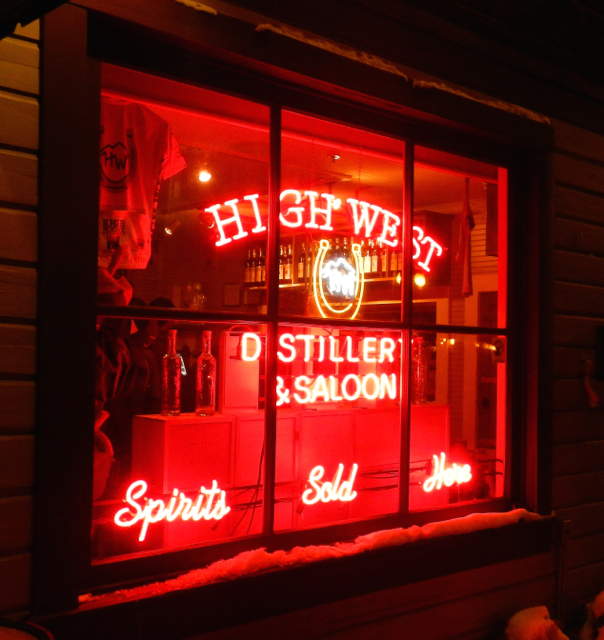
High West Distillery makes a variety of whiskeys and vodkas. Photo/Kathryn Reed

High West Distillery makes a variety of whiskeys and vodkas. Photo/Kathryn Reed

High West Distillery is on Park Avenue in the heart of Park City. At the end of the day it’s possible to come down Park City’s Quittin Time run and be right at the watering hole.

Opened in 2007, is has garnered quite a following based on the lines – one for the bar, the other for the restaurant. Built in 1914, the building is listed on the National Historic Register. Upstairs is the bar and off to the side is the aptly named parlor, ideal for sampling a flight of the high-octane liquid.

The quick-talking Chris Dorsey explains how bourbon has nothing to do with Kentucky, a bit of history, the aging process and other subtleties.

The flight consists of American Prairie, Double Rye, Rendezvous Rye and Campfire. A sip of water is recommended in between the alcohol. It’s an experience to enjoy even if this isn’t your usual drink of choice. And it’s a wonderful way to warm the insides before wandering off to further explore Park City.


Clinton edges out Sanders to win Nev. caucuses

Precinct No. 35, representing Glenbrook, caucuses on Feb. 20 at Whittell High School. Photo/LTN

Precinct No. 35, representing Glenbrook, caucuses on Feb. 20 at Whittell High School. Photo/LTN

By Lisa Lerer and Ken Thomas, AP

Hillary Clinton edged out Bernie Sanders on Saturday in Nevada’s caucuses, capitalizing on a more diverse Democratic electorate to propel her to a crucial win in her presidential bid.

In Nevada, thousands packed schools, casinos and hotels to vote, including scores of first-time caucus-goers who favored Sanders. The state party said more than 31,000 registered online to participate.

A Whittell High School in Stateline more than 200 people showed up to caucus. They were then broken up into precincts.

“It was especially crazy because they didn’t have a computer system to check in,” one Tahoe participant told Lake Tahoe News. “We had 21 people in our precinct No. 36 that is Skyland, Cave Rock, Hidden Woods. Bernie supporters needed at least six to be viable in our group, but there were only four or five supporters after the first alignment, so our two precinct votes went for Hillary.”

Clinton on Twitter said, “To everyone who turned out in every corner of Nevada with determination and heart: This is your win. Thank you.”

Sanders, who called to congratulate Clinton, said he was proud of his campaign, which turned a 25-point polling deficit into a close election.

“I am also proud of the fact that we have brought many working people and young people into the political process and believe that we have the wind at our back as we head toward Super Tuesday,” he said.

Clinton prevailed in the third contest of the primary campaign with the backing of women, union workers, minorities, moderates and voters who are certain that the former secretary of state will have a better shot at winning in November, according to entrance polls.

Marvin Teske, a 53-year-old security guard at a Reno casino, said he worried that Sanders would have trouble beating the Republican nominee in the fall. The Vermont senator largely appeals to white liberals, a relatively narrow swath of the Democratic Party.

“As far as being too far left, I agree with a lot of the stuff he has to say. But the problem I have is that all the stuff he is promising is never going to happen,” Teske said. “I’ve always liked Hillary.”

The Clinton victory in Nevada underscored the challenge for Sanders as the campaign shifts to Southern states, including South Carolina on Feb. 27. Polling shows minority voters, a crucial bloc of the Democratic electorate, heavily favoring Clinton.

After three contests, Clinton has a narrow win in Iowa, a double-digit loss in New Hampshire and now momentum from Nevada that should attract the support of many of the Democratic superdelegates. She has won over a number of the 714 superdelegates as both candidates push toward the 2,383 needed to win the party nod.

Clinton’s win in Nevada means she will pick up most of the state’s delegates. With 35 at stake, Clinton will gain at least 18. Sanders will pick up at least 14.

Three delegates remain to be allocated, based on votes in the congressional districts.

Clinton installed staff on the ground last spring, but Sanders’ message of combating income inequality appeared to resonate in a state where many voters are still struggling to rebound after years of double-digit unemployment.

Entrance polls of voters found that a third said the economy was their major concern, while a quarter cited income inequality — the centerpiece of the Sanders’ campaign.

“If Ronald Reagan can smash the American Dream from right field, then Bernie can build it back up from left field,” said Dale Quale, a 60-year-old unemployed former slot machine technician who estimated that he had made 800 phones calls for the Vermont senator before the caucus.

Whites were split between the two candidates. Sanders did well with self-identified independents and two-thirds of those participating in a caucus for the first time.

The candidates spent their final hours before the caucuses furiously trying to drive up turnout among their supporters.

Clinton almost crossed paths with Sanders at Harrah’s casino Saturday morning less than an hour before the caucuses began. Sanders slipped into an employee cafeteria to shake hands with workers. About 10 minutes later, Clinton came in to do the same.

The polling survey was conducted for AP and the television networks by Edison Research.

Lake Tahoe News contributed to this report as did Associated Press writer Nicholas Riccardi.


Timothy Roger Stoll — 1938-2016

Timothy Stoll

Timothy Stoll

Timothy Roger Stoll died suddenly of galloping pneumonia on Feb. 12, 2016. He was  77.

Dr. Stoll, an icon of the Tahoe area, practiced dentistry for more than 50 years in South Lake Tahoe and Minden.

He was born June 16, 1938. While a young boy vacationing with his family in Zephyr Cove in the 1940s and ’50s, he vowed he would make Lake Tahoe his home. Upon graduation from the College of Physicians and Surgeons in San Francisco in 1965, Dr. Stoll came to Tahoe and met with the oldest dentist practicing in the community, Dr. Knudsen. He had limited funds to start a dental practice, so he asked how to start. Dr. Knudsen advised him to “just open your doors and buy your equipment as patients pay their bills.”

Fifty years later, Dr. Stoll was respected among his colleagues and admired with a large following of devoted patients. He put his heart and soul into his dental practice and his level of dentistry was praised by dentists from around the world. He was proficient in all aspects of dentistry, periodontics and cosmetic reconstruction. When his grandson, Talon, asked his grandfather what he liked best about his job, he responded, “I like helping people.”

A perpetual storyteller, he had a large repertoire of jokes ready for anyone who would listen. His capacity for laughter and fun knew no bounds. In addition to making people laugh, he was always ready to lend a helping hand to his family, friends, members of the community, and even the wildlife surrounding his home.

Dr. Stoll’s passion for wildlife and the wilderness led him to a life as an avid sportsman. He loved horsemanship, fly fishing, camping, scuba diving, deep sea fishing, skiing, boating, snowmobiling and shooting, and spent much of his free time in Colorado, Nevada, Wyoming, Alaska and the Caribbean. He obtained his instrument rated pilot’s license, which allowed him greater access to the places he loved to go.

No matter how successful Dr. Stoll was in his professional life he was the humblest of men. His golden rule was to always treat everyone fairly and with respect.

Dr. Stoll loved to rise before the sun, feed his horses, stoke a fire, and quietly immerse himself in a wonderful book. He loved the sweet silence of the morning and was the epitome of the saying, “still waters run deep.”

Dr. Stoll is survived by his wife of 45 years, Phil; children Paul Stoll, Heidi Stoll, Ellery Stoll, Kari Testa, and Marina Ellery; nine grandchildren; and sister Susan Barnes.

A memorial Services will be on Feb. 27 at 11am at Edgewood Tahoe Golf Course in Stateline.

In lieu of flowers the family requests donations be made to Calvary Chapel, P.O. Box 17671, South Lake Tahoe, CA 96151.


Hwy. 89 closure a good thing for sightseers

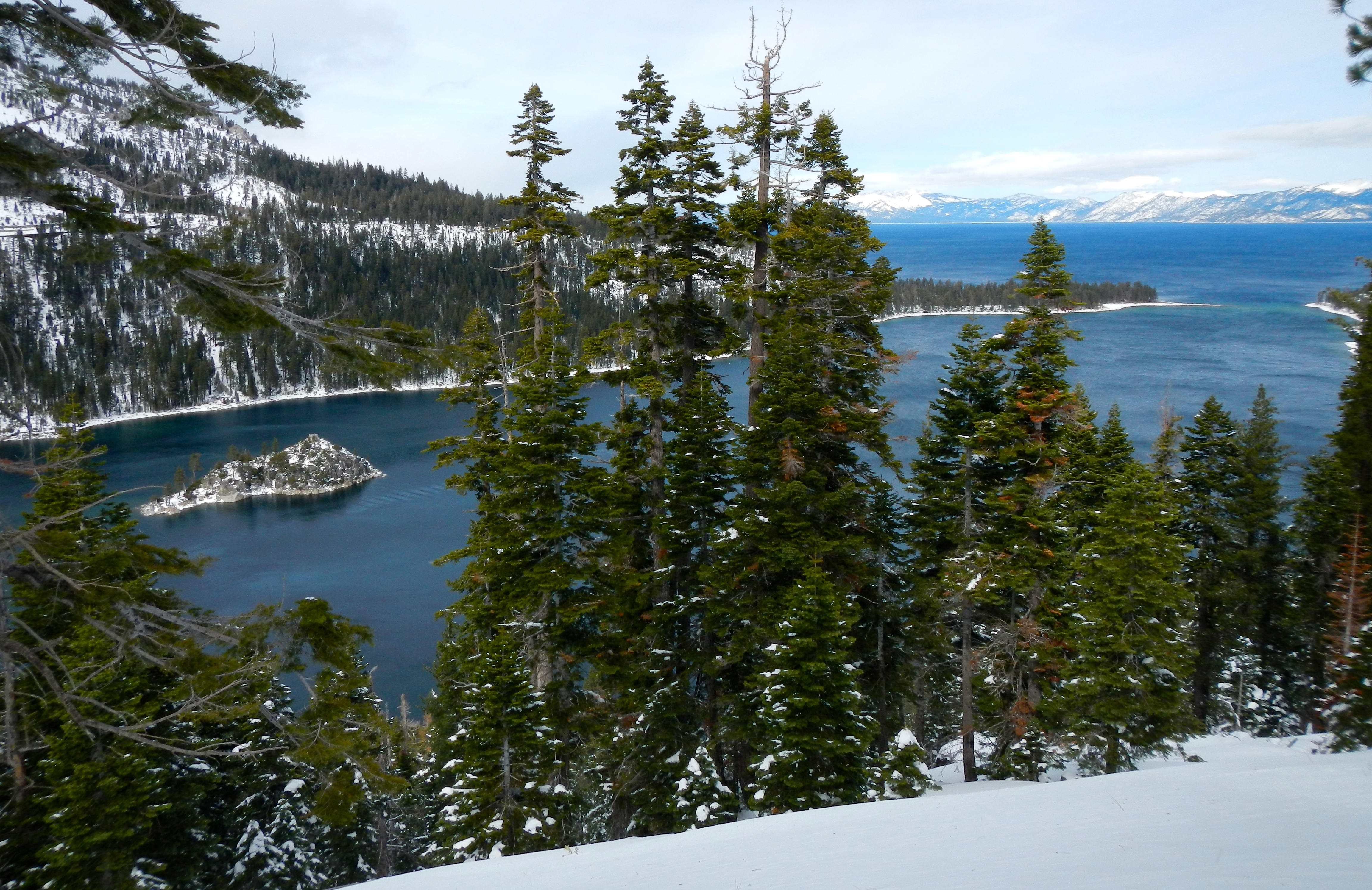
Emerald Bay appears even more dazzling when not whizzing by in a car. Photo/Kathryn Reed

Emerald Bay appears even more dazzling when not whizzing by in a car. Photo/Kathryn Reed

By Kathryn Reed

For more than 100 years automobiles have been subjected to the whims of Mother Nature when it comes to being able to drive around Emerald Bay on Highway 89.

For the past few winters the closures have been minimal because the snow was close to nonexistent. This year, though, it seems like every storm brings multiple days of impassable roadway.

“I’m told from our maintenance supervisor and superintendent up there that this is actually quite normal for an active winter season like we’re having. They’ve both been working up there going on 30 years,” Steve Nelson, spokesman for Caltrans, told Lake Tahoe News.

Snow on the afternoon of Feb. 19 covers Highway 89 north of Bayview Campground. Photo/Kathryn Reed

Snow on the afternoon of Feb. 19 covers Highway 89 north of Bayview Campground. Photo/Kathryn Reed

On Friday, most of the pavement from the gate at Emerald Bay Campground to the lookout at the Vista Point across from the Bayview Trailhead was clear of snow. But instead of vehicles on the road, a couple dozen people were out walking on it.

Being able to walk – or snowshoe and cross country ski – this stretch of highway is rare. That’s why when the opportunity presents itself it’s worth doing. It’s not a long trek, but is one with such incredible views.

Normally eyes are focused on driving that narrow stretch where the private Cascade Lake is on one side and Emerald Bay is on the other. On foot it’s even more impressive – both the natural beauty and the engineering feat to build the road.

Other than the two sanctioned bike rides around the lake and the marathon events, being on the road without a vehicle can be dangerous.

xxx

It’s rare to be able to safely walk on Highway 89. Photo/Kathryn Reed

A dirt road was first built in 1913 around Emerald Bay. It was a tourist attraction at the time for steamers to bring people into the bay to watch as dynamite blew up giant granite boulders that would fly more than 100 feet into the air. For decades the road was never opened in the winter.

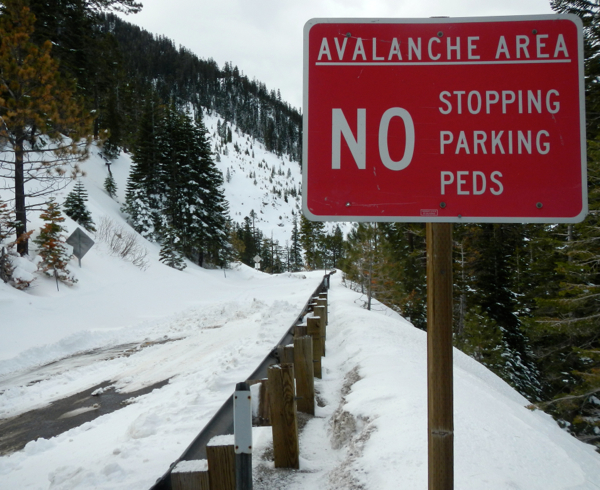
This section of roadway is still dicey. No avalanche control is allowed in the area, unlike other stretches of state highways in and around the basin.

Landslides and avalanches are what keep the road closed. Clearing it of snow usually isn’t an issue.

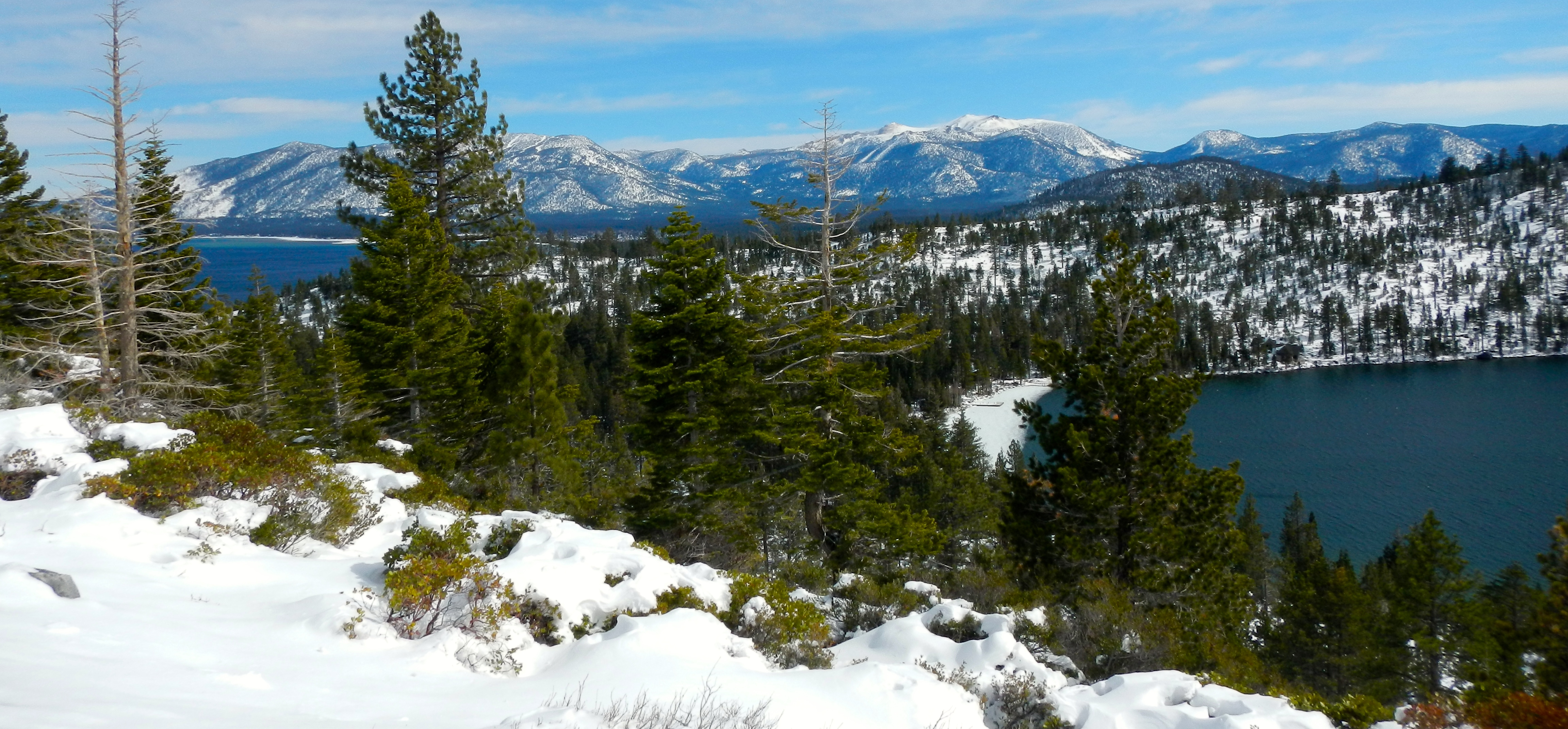
Cascade Lake in the foreground, with Lake Tahoe in the distance. Photo/Kathryn Reed

Cascade Lake in the foreground, with Lake Tahoe in the distance. Photo/Kathryn Reed

“There are as many as 15 active slide zones in that four-mile stretch of the highway and no way for us to control it like we do on Highway 50 due to the terrain, so for the safety of the traveling public, we have to close it until the snow has settled and we can go in and clear it all off,” Nelson said on Feb. 19.

Caltrans drivers in a grader and blower were working in tandem on Friday, with the hopes of being able to have the highway open today. To know for sure, click on the state icon on the home page of Lake Tahoe News.