Police arrests plummet across California

By James Queally, Kate Mather and Cindy Chang, Los Angeles Times
 
In 2013, something changed on the streets of Los Angeles. Police officers began making fewer arrests. The following year, the Los Angeles Police Department’s arrest numbers dipped even lower and continued to fall, dropping by 25 percent from 2013 to 2015.

The statewide numbers are just as striking: Police recorded the lowest number of arrests in nearly 50 years, according to the California attorney general’s office, with about 1.1 million arrests in 2015 compared with 1.5 million in 2006.

It is unclear why officers are making fewer arrests. Some in law enforcement cite diminished manpower and changes in deployment strategies. Others say officers have lost motivation in the face of increased scrutiny — from the public as well as their supervisors.

Read the whole story


Travel ban could cost $18B in U.S. tourism

By Bart Jansen, USA Today

President Trump’s temporary travel ban and an inhospitable political climate could punch an $18 billion hole in U.S. tourism by international visitors over the next two years, projections by travel analysts show.

Foreign tourism is a $250 billion-a-year business in the United States, and Trump’s original and revised executive orders temporarily banning travel from six majority-Muslim countries — put on hold by federal courts — have dampened interest worldwide in visiting the U.S., travel and tourism executives told USA Today.

“The U.S. has put an unwelcome mat at our front door,” said Henry Harteveldt, president of Atmosphere Research Group, which conducts travel research.

Read the whole story


Tahoe girls earn Div. 1 college hockey scholarships

Katie Sonntag, left, and Leah Marino pave the way for girls hockey in South Tahoe. Photo Copyright 2017 Carolyn E. Wright

By Susan Wood

If Katie Sonntag, 17, and Leah Marino, 16, were to hear “you hit like a girl,” that would be a big compliment in the world of sports.

These are no ordinary teenagers playing hockey. The local girls, who grew up and practiced their skills at the South Lake Tahoe Ice Arena, each scored Division 1 NCAA scholarships to play hockey back East.

Leah Marino, left, and Katie Sonntag grew up at the South Lake Tahoe Ice Arena. Photo Copyright 2017 Carolyn E. Wright

Profound indeed.

First, South Lake Tahoe is the land of skiers and boarders.

Second, it’s quite an achievement for anyone wanting to play a higher level of sports.

Third, they’re girls – unheard of to expect in most towns.

Leah Marino flies down the ice in South Lake Tahoe. Photo Copyright 2017 Carolyn E. Wright

When she’s done with high school, Marino will accept a full-ride scholarship at Robert Morris University in Pittsburgh – the home state of her parents.

Sonntag will attend Union College in Schenectady, N.Y. – one state over from Vermont where she was born and 45 minutes from relatives.

Their parents sometimes joke about whether they should have just stayed where they were given their daughters’ inevitable return to the East to achieve their hockey goals. After all, the duo has found it necessary to attend hockey academies in far flung places to be seen and hone their skill sets. Sonntag attends the Pursuit of Excellence hockey school in Kelowna, B.C., between her studies. Marino plans to spend six months at the North American Hockey Academy in Stowe, Vt.

“She can get more ice time there. Girls hockey is not a sport that’s readily available (at venues),” Leah’s father, Jim Marino, said, while joining his daughter on the ice at the South Lake Tahoe rink. He recalled how his family would make eight- to 10-hour round trips to San Jose from September to June to nurture his daughter’s hockey passion.

The two girls hit the ice last month when they came home for a break. It’s a good, familiar place to unwind as a family, given Marino coached hockey and Katie’s dad, Pete Sonntag, plays hockey when he’s not running Heavenly Mountain Resort.

Katie Sonntag is happy to be a role model for girls like her younger sister. Photo Copyright 2017 Carolyn E. Wright

If not for their family moves to Lake Tahoe, perhaps the two girls wouldn’t have met — gaining a friendship as solid as the puck they slap.

One could argue the teens’ achievements involve a destiny built on lifelong dreams of going to college and playing hockey.

“I think it was always a ‘what if.’ There are a lot of girls who would just stop (playing). We both knew what we wanted and pushed each other toward it,” Marino told Lake Tahoe News.

And there lies the dynamics of women in sport.

“It’s always been a dream of ours to play hockey,” Sonntag said.

Marino nodded, adding: “For women, college hockey is the NHL. There’s no equivalent.”

Katie Sonntag, left, and Leah Marino met at the South Lake Tahoe Ice Arena. Photo Copyright 2017 Carolyn E. Wright

Sonntag would also like to major in physics; Marino in sports medicine. Sonntag has a head start with the physics of manipulating a hard round object on a slick surface. She picked up the puck, tapped it a few times, then slapped it for fun at the glass barrier square in front of her father watching across the rink.

It was a thing of beauty. The two girls glided on the ice, practicing drills with an uncanny natural ability.

Being on this oval was like being on their home ice. As it should have been. Marino and Sonntag have spent many long hours through their childhoods at that ice arena, giving up traditional teenage girls’ pursuits along the way. Boys make up one of those pastimes.

“It’ll be my first time at prom this year,” Marino said.

Sonntag admitted to never having attended a school dance and essentially skipped the high school football games.

Leah Marino knows how to control the puck. Photo Copyright 2017 Carolyn E. Wright

The two girls began skating at about age 7 and started playing hockey shortly thereafter. When the Sonntags moved to Tahoe with Katie, Marino – a winger – was the only girl competing in the six various hockey leagues at the rink, she recalled. 

It was meant to be the duo would become close, supportive friends. Hockey isn’t necessarily a girls’ sport, so when Sonntag, a longtime center, excelled to becoming a captain of one of the leagues the boys weren’t thrilled.

“Now they look up to us,” Marino added of gaining the collegiate honor.

Sonntag hopes the boys they know won’t be the only ones looking up to the groundbreaking females. They’re the first from Tahoe to seize the D1 scholarships for the sport.

Katie Sonntag shows her agility on the ice. Photo Copyright 2017 Carolyn E. Wright

“Where we come from (in the Northeast), it’s not as big a deal, but it’s pretty crazy here,” Marino said.

Both girls want to be inspirational to young girls everywhere in pursuit of their dreams.

“I’d like them to know they can make it and can move away from home to get it,” Marino said.

 Sonntag is starting with support of her 12-year-old sister, Charlotte, who the older sibling admits “she’ll be better than me.”

“I want her to have the same opportunities I have,” Sonntag told Lake Tahoe News. “I’m humbled and honored by my opportunities.”

So maybe it takes a little brush with humility mixed with the drive to succeed to be a winner.

Leah Marino is used to putting the puck into the net. Photo Copyright 2017 Carolyn E. Wright

To achieve a D1 NCAA college scholarship, a student must maintain at least a 3.0 grade point average and undergo a strict protocol in the recruitment process.

Among the three NCAA categories, Division 1 schools generally have the biggest student bodies, manage the largest athletic budgets and offer the most generous number of scholarships. With nearly 350 colleges and universities in its membership, Division 1 schools field more than 6,000 athletic teams, providing opportunities for more than 170,000 student-athletes to compete in NCAA sports each year.

Getting there is no easy accomplishment. It takes a lot of hard work, talent and dedication. 

“It’s incredible what they have accomplished. It’s just nearly impossible to get there – NCAA D1. Think about it, only 35 Division 1 women’s teams, say 27 players per team, some 945 spots total. Of all the women hockey players across both the U.S. and Canada, Tahoe girls take two of them. From our small town, well, that’s the stuff of fiction,” Van Oleson, who owns Tahoe Sports and Entertainment, told Lake Tahoe News. The company operates the ice arena, so an emotionally-charged Oleson has watched Marino and Sonntag for years.

“These girls are pioneers, groundbreakers (who) have paved a way and made it clear what a girl from Tahoe can do,” Oleson said.



Brown lobbying for taxes, fees to fix Calif. roads

By Christopher Cadelago, Sacramento Bee
 
When Gov. Jerry Brown campaigned for his sales and income tax increase five years ago, he appealed to statewide voters by arguing it would cost them just “one penny more” for their cappuccinos.

In the Bay Area trying to build support for his $5.2 billion road-funding package, Brown acknowledged Thursday that convincing the Legislature to raise fees and taxes on motorists was more akin to feeding them green vegetables than sweet confections.

Brown and the leaders announced the deal Wednesday in Sacramento, setting off a political struggle to pass it in the Legislature. The plan would raise gas taxes and user fees on motorists, costing California drivers about $10 more per month, depending on the value of their cars and the miles they travel.

Read the whole story


Scientists warn enormous floods may be more likely

By Krista Langlois, High Country News

In the late 1980s, a Japanese scientist named Koji Minoura stumbled on a medieval poem that described a tsunami so large it had swept away a castle and killed a thousand people. Intrigued, Minoura and his team began looking for paleontological evidence of the tsunami beneath rice paddies, and discovered not one but three massive, earthquake-triggered waves that had wracked the Sendai coast over the past three thousand years.

In a 2001 paper, Minoura concluded that the possibility of another tsunami was significant. But Tokyo Electric Power was slow to respond to the science, leaving the Fukushima Daiichi nuclear power plant unprepared for the 15-meter wave that inundated it in 2011. The wave resulted in a $188 billion natural disaster. More than 20,000 people died.

Earlier this year, when a spillway at the nation’s tallest dam in Oroville nearly buckled under the pressure of record rainfall, the consequences of under-estimating flood risks were brought into sharp relief. Dams aren’t built to withstand every curveball nature can throw — only the weather events that engineers deem most likely to occur within the dam’s lifespan. When many Western dams were built in the mid-20th century, the best science to determine such probabilities came from historical records and stream gauges.

Read the whole story


Tahoe’s mad hatter is back

By Melissa Siig, Moonshine Ink

Look around your mudroom or closet or living room. How many hats do you have? If you are like most people, you have a lot. Trucker hats, baseball hats, flat billed hats, you name it — you most likely have one or two or three. And you probably have room for more.

That’s what Tahoe’s newest hat company, We the Trees, is banking on. Started in 2015 by bigtruck founder Kelsen Thompson, We the Trees takes a mindful approach to headwear. Thompson’s goal with his latest endeavor is to help people connect to nature and express themselves, and for him to get back into the business he loves.

Thompson, 35, grew up in Tahoe City and graduated from North Tahoe High School in 2000. He learned to sew from his mother, whom he calls an incredible seamstress, and the first thing he made was a bag for his ice skates. He created his first hat in high school, hand stitching a small truck on the front. One day while he was talking on the phone, Thompson’s father, who owned a garbage company advertised simply as a “guy with a big truck,” doodled the image of the now iconic bigtruck logo, which features a truck with the bed lifted up — exactly as he would park it in their driveway. Thompson trademarked the logo in 2000.

Read the whole story


Sierra water content 183% of average

It wasn’t that long ago that there was no water under the Tahoe Keys pier. Photo/Kathryn Reed

By Kathryn Reed

The snow — it won’t stop. For people living in the Sierra it’s becoming the winter that won’t end. For water users downstream, it means the spigot won’t be turned off during the dry summer months.

Under snowy grey skies on Thursday the snow survey near Sierra-at-Tahoe revealed water content of 46.1 inches. This is 183 percent of the average of 25.2 inches for the Phillips Station location.

This was a dramatically different scenario compared to two years ago when Gov. Jerry Brown attended the reading and there was barren ground.

“This is an extremely good year from the snowpack standpoint,” Frank Gehrke, who does the snow surveys near Echo Summit for the state Department of Water Resources, said March 30. He said this year’s snowpack ranks in the upper quarter of historic snowpacks.

Even so, the governor’s emergency drought declaration is still in effect. There are parts of California that still have not fully recovered from the drought.

Statewide, the water equivalent is 45.8 inches or 164 percent of average for this date. This is the highest level since 2011.

Water content is what the depth of water would be if the entire snowpack melted instantaneously.  

It’s normal for this final measurement of the season to be the deepest of the four that are taken throughout the winter. This was true this year – increasing from 6 inches to 28 to 43.5.

But that escalation was not found during the drought years, which severely impacted the municipalities and farms that depend on the runoff.

As the snow begins to melt, flooding may be the next problem — locally and downstream.


Outdoors firms in battle over public lands

By Stuart Leavenworth, McClatchy

Two generations ago, they were often written off as a bunch of hippies making backpacks and climbing gear for niche markets. But in recent decades, companies such as Patagonia and REI have become consumer powerhouses and political players, increasingly eager to influence decisions over public lands.

A sign of that clout came this year, when the outdoor industry decided to pull its twice-yearly trade show from Salt Lake City, where it been based since 1996. The shows injected tens of millions of dollars into the Utah economy, but industry leaders decided to pull out after Gov. Gary Herbert and other Utah Republicans started lobbying President Trump to roll back the Bears Ears National Monument, a 1.35-million-acre conservation area in south Utah that Native Americans and environmentalists have championed for years.

Made up of 1,200 companies, the Outdoor Industry Association is based in Boulder, Colo., with an outreach office in Washington, D.C. The group estimates that consumers spend about $120 billion on outdoor recreation products each year, ranging from apparel to tents, bicycles and camping gear.

Read the whole story


Ski town housing crisis not unique to Tahoe

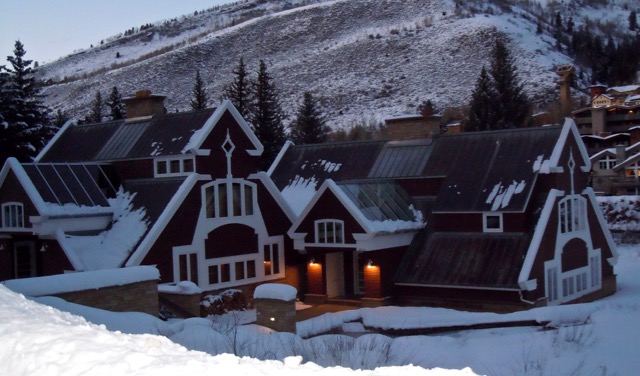
Some ski towns like Vail have mega houses that are seldom used. Photo/LTN

By Megan Michelson, Powder
 
Take a drive through any ski town, and chances are you’ll find a lot of dark houses. Fancy homes where nobody lives, million dollar crash pads where the lights shine just a few times a year.

In Mammoth, it’s not just ski bums and twentysomethings who can’t find places to live. Cops, teachers, and nurses are struggling, too. According to a recent Mammoth housing study, 52 percent of homes are empty most of the year—used intermittently by vacationers. Of properties in the full-time rental pool, less than 2 percent are vacant, meaning if you want to score an apartment, you better call within minutes of the ad being posted and be prepared to compete.

The same thing is happening in ski towns across the country: Not only is housing overpriced, but it’s practically impossible to find. In Tahoe, 76 percent of locals fork over more than the nationally recommended 30 percent of their income on housing and the wait time for affordable units can take up to two years.

Read the whole story


LTUSD working hard on STHS accreditation

By Kathryn Reed

“The problem with the status is something we are taking very seriously.”

Those are the words of Bob Grant about accreditation at South Tahoe High School. Grant is essentially second in charge of Lake Tahoe Unified School District,

The district office and staff at STHS are focusing much of their attention on getting the school off probationary status and to be accredited without any blemishes.

The board received an update on accreditation on March 28, nearly two months after the district found out the appeal had been denied.

Only one parent was in the audience. He sat there for hours, then was told because he didn’t fill out a form to talk he would not be allowed to do so.

Officials from the Western Association of Schools and Colleges will be back next school year to make another report. They could remove the probation, add another year to the two-year probation or withhold accreditation.

It was about a year ago that STHS learned it received the two-year probationary accreditation. The district believes there were procedural flaws involving the visiting committee. That is what the appeal was based on.

It was stressed that the probationary status has no impact on colleges at this point because STHS is still fully accredited.

It will not be a full assessment this next go-round. Instead the review team will analyze whether the district has made strides to improve upon the weaknesses that were identified by the WASC group as well as what the school said needed addressing.

Grant said it is important to figure out why something wasn’t being done or wasn’t working and then work on how to fix the problem.

To monitor things locally, a task force has been put together of staff, administrators, parents and students.

“They said we didn’t have enough data,” Grant said. “We need to create tests to gather data.”

With Common Core being the rule of the land these days, students are only tested by the state as juniors.

Teachers at STHS are working collaboratively to design tests so all students in Common Core classes are judged in the same way.

When it comes to accountability, live pacing guides are going to become the norm. This is to ensure teachers of the same subject are at the same place throughout the semester so it’s easy to tell the standards have been taught.

Board member Angela Swanson asked if the probationary status would limit the pool of principal candidates. The answer was no. Chad Houck has the job until the end of the school year. The thinking is that the pieces will be in place for the start of the next school year so a new principal can step in and take over the leadership and see the accreditation process to a better outcome.