Tips for traveling with four-legged family members

By Janet Fullwood, Sacramento Bee

As Americans set out on their summer getaways, millions grapple with the same question: What to do with the dog?

Last fall’s flap over Mitt Romney’s Irish setter traveling in a crate atop the family station wagon raised awareness of how not to travel with a pet, but it also made a point: Dogs are part of the family. And increasingly, they’re going on vacation with us.

A recent survey by Destination Analysts and DogTrekker.com found that 41 percent of leisure travelers who own dogs have traveled with a canine co-pilot in the past two years. Many more said they would do so if it weren’t for confusion over dog-friendly policies, frustration over exorbitant fees and difficulty finding things to do with four-legged family members at the destination.

No bones about it, travel with tail-waggers, like travel with young children, has its challenges – getting Rowdy to settle down in new environments, for one. As I’ve learned in my role as editor of the website that commissioned the dog-travel survey, plotting a successful trip takes more than just punching a destination into your GPS and jumping into the car with your four-legged friend.

Research and advance planning are key.

Read the whole story


Stand-up paddlers promoting vegan diet

By Sparks Tribune

On Aug. 31, Kings Beach resident John Merryfield and a group of extreme stand-up paddlers will embark on a stand-up paddle circumnavigating Lake Tahoe to promote the Vegan One Day project, a challenge for everyone to adopt a vegan diet (no meat, dairy or eggs) for at least one day of the year.

To highlight the challenge, a group of extreme stand-up paddlers will complete the entire 72 mile trek in one day, paddling all day and all night powered by a vegan diet and a commitment to create a better world. Merryfield says the intense physical and psychological strain of the 72 mile paddle in one day is nothing compared to the extremely cruel conditions endured by animals on factory farms.

The group will paddle at night along the eastern shore under a full moon, greet sunrise near Emerald Bay and hope to return to Kings Beach by dusk. Merryfield is confident that paddle will inspire others to see that a whole foods diet is a celebration of life.

A community, vegan pot luck is scheduled on the beach in Kings Beach on Aug. 31 at 6pm as the paddlers embark on their journey. To learn more about the Vegan One Day project, go online and take the pledge to go vegan for one day.


Farmers skeptical of Delta tunnel plan

By Norimitsu Onishi, New York Times

COURTLAND — On the last Sunday of July, this small town in the Sacramento River’s Delta takes a pause from the peak of the pear harvest season by holding its annual pear fair. A pear run, a pear parade, a pear pie eating contest and a pear fair queen are as much a part of life’s rhythm here as the pruning, picking and packing of pears.

More than 1,000 miles of rivers and sloughs lace the 500,000-acre Delta, where reclaimed islands are ringed by aging levees. More Photos »

But not far from the booths offering baskets of the fruit, and pear drinks and pear sausage, there were hints this summer that something was ruffling Courtland. At the same booth where a handwritten sign advertised “Pear oatmeal cookies, 2 for $3,” there were pointed political messages like this one: “Build the tunnel. Kill the Delta.”

Just a few days earlier, state and federal officials announced plans to build twin 35-mile tunnels that would tap water from the Sacramento River at intake stations here. Like highways with no exits, the $14 billion giant pipelines would run under the Delta in a straight line and deliver the water to aqueducts that feed water to large corporate farms and densely populated regions in Central and Southern California.

Supporters say the pipelines will improve the environment of an increasingly fragile Delta by replacing the pumps that now suck water directly from the southern Delta. More than anything else, backers — led by Gov. Jerry Brown, who failed in his bid to build a similar project in his first term as governor three decades ago — say the tunnels will secure a supply of water to California’s most economically vital areas.

But opponents, including elected officials and farmers from this area, say the tunnels will reduce the amount of fresh water in the Delta and cause irreparable damage to fish and farmland by raising the level of salt water. Much of the Delta is classified as prime farmland and produced about $800 million in agricultural products in 2009, but the output is dwarfed by counties to the south, whose agricultural production totaled about $25 billion.

More than 1,000 miles of rivers and sloughs lace the 500,000-acre Delta, where 57 major reclaimed islands are ringed by more than 1,100 miles of aging levees. Here in the upper Delta, the least urbanized area of the region, small towns invariably described as sleepy dot winding levee roads. There are family-owned general stores and no chain stores. Old Victorian houses belonging to farm owners can be seen from the levees, as well as encampments for the migrant workers during harvest. Vestiges of ethnic groups that built the levees or farmed the Delta can be found in this area’s fading Chinatowns and Japantowns, reinforcing the impression of an earlier time.

Read the whole story


State lawmakers condemn parks officials

By Kevin Yamamura, Sacramento Bee

In their first examination of state accounting problems, California lawmakers condemned parks officials Thursday for hiding nearly $54 million from budget writers.

The revelation has damaged the integrity of state government and its budget process, lawmakers from both parties said at an Assembly budget subcommittee hearing.

“Many of us here today feel betrayed,” said Assemblyman Bob Blumenfield, D–Woodland Hills, chairman of the Assembly Budget Committee. “It’s our constitutional duty as state legislators to craft the state budget. And the credibility of this year’s budget has been tarnished.”

Officials from the Department of Finance and state controller’s office told legislators they will install new cross-checks to verify that figures for 560-plus special funds are consistent across their different sets of books. Previously, state departments were largely responsible for keeping their own special fund accounting in order.

Finance Director Ana Matosantos testified that her department has found no other instances where departments purposely shielded funds in the way that parks officials apparently had for years.

In a quick audit released last week, the Finance Department found $268.5 million of accounting errors, both positive and negative, in a special fund universe that spent $33.4 billion in 2010-11. The errors netted $196.7 million more in state accounts than finance officials knew about in late 2011 as they crafted Gov. Jerry Brown’s January budget.

Read the whole story


Doctor to talk about da Vinci machine in Carson City

Gary Willen, doctor with Tahoe Women’s Care, is scheduled to speak Aug. 22 from 6 to 7pm at Carson City Community Center (801 East Carson St.).

With Barton Health’s da Vinci Surgical System, Willen is able to perform complex hysterectomies and other urologic and gynecologic procedures.

Lecture attendees will learn how da Vinci procedures can address complex hysterectomies and other gynecologic procedures through robotic assisted surgery. And learn how the da Vinci Surgical System may be the most effective, least invasive treatment option. Through tiny, 1-2 cm incisions, surgeons can operate with greater precision and control, minimizing the pain and risk associated with large incisions while increasing the likelihood of a fast recovery and excellent clinical outcomes.


Full school backpacks donated to Bijou school

The start of a new school year can be challenging for children.

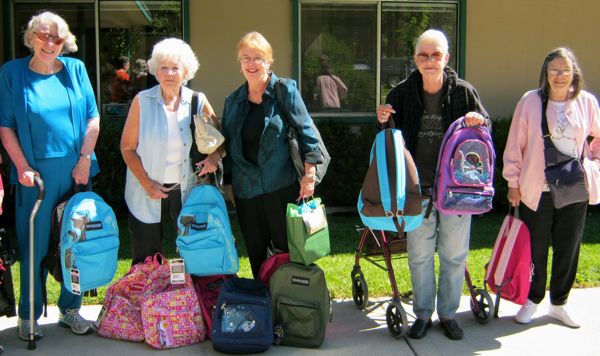
But thanks to residents at Kelly Ridge, an ABHOW community in South Lake Tahoe, some elementary school students will return to class with backpacks filled with school supplies.

This is the third year Kelly Ridge residents have filled about 20 new backpacks with items such as pencils, pens, crayons, paper, scissors and rulers. The backpacks will be delivered to Bijou Community School students.

Kelly Ridge residents filled backpacks for Bijou students. Photo/Provided

Residents will add notes of encouragement to the backpacks, giving the students an extra push to start the school year.

“A lot of kids don’t have extra things,” says Mary Burke, who formulated the idea for the backpack project along with Florence Roach. “I love kids, and I can’t stand to see some of them do without.

“I have grandchildren, and I knew they start each school year with a new backpack, so the idea just came up.”

In the past, the backpacks were simply dropped off at the school. This year, Shanks says she hopes residents will be able to give the backpacks to students in person.


Cops want to question man about shooting in S. Tahoe

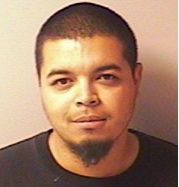
South Lake Tahoe police officers want to question Agustin Bautista in regards to the Friday night drive-by shooting in the Al Tahoe neighborhood.

As Lake Tahoe News first reported, shots were fired Aug. 10 into a house and vehicle on Nevada Avenue. No one was injured.

In the course of this investigation, police have located weapons and a black Dodge Charger. What type of weapons and how many were taken are not being disclosed. Nor are officers saying where the weapons were found or who they belong to  or what the significance of confiscating them is. Nor is it known if the gun used in the drive-by is one that is now in police custody.

Agustin Bautista

Police also aren’t saying anything about Bautista other than “he is a person of interest”.

Anyone with information about Bautista’s whereabouts or the shooting is asked to call (530) 542.6100 or Lake Tahoe Secret Witness at (530) 541.6800.

— Lake Tahoe News staff report


Tahoe Tails — Adoptable Pets in South Lake Tahoe

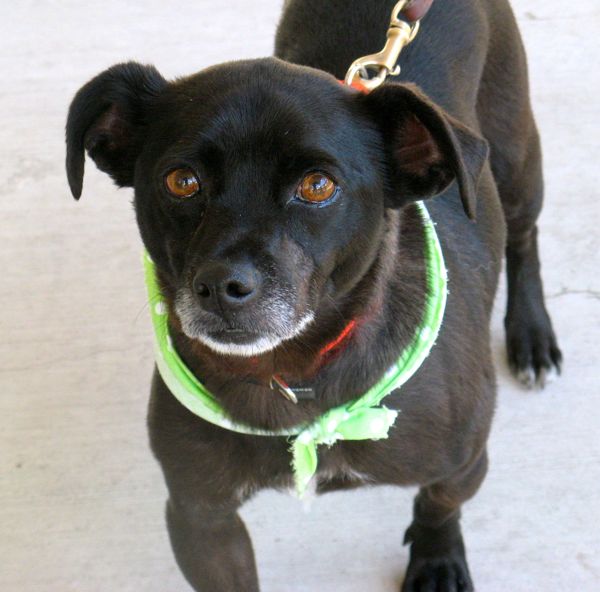
Dean has been at the shelter for several months, and we can’t figure out why.

He is a very good natured Jack Russell/Chihuahua (maybe) mix, 6 years old, who likes other dogs.

He came to the shelter because his owner didn’t want him anymore. He’s affectionate and walks nicely on the leash. Dean caught the eye of a shelter benefactor who has paid his adoption fee, so all he needs is a great new owner to adopt him.

Dean is neutered, microchipped, and vaccinated. He is at the El Dorado County Animal Services shelter in Meyers, along with many other dogs and cats who are waiting for their new homes. Go online to see photos and description of all pets at the shelter.

Call (530) 573.7925 for directions, hours, and other information on adopting a pet.

For spay-neuter assistance for South Tahoe residents, go online.

— Karen Kuentz


60-mile mountain bike ride between the shores of Tahoe

Are you ready for an all day Tahoe single track epic? Start your training and mark your calendars for Sept. 2. Rose to Toads is a 60-plus mile ride showcasing some of the best trails linking Tahoe’s North Shore from Mount Rose down to the Lake Tahoe’s South Shore ending on Mr. Toads Wild Ride.

This is a TAMBA member’s only ride that is limited to 75 people.

For more information about the mountain bike group and how to become a member, go online.


Opinion: Comparing sports to politics

By Thomas Sowell

It has long seemed to me that there is far more rationality in sports, and in commentaries on sports, than there is in politics and in commentaries on politics. What has puzzled me is why this is so, when what happens in politics has far more serious effects on people’s lives.

To take one common example, there are many people who believe that if the market fails, the government should step in. But, if Robinson Cano strikes out, does anyone suggest that the Yankees should send in a pinch hitter for him on his next time at bat?

Thomas Sowell

Everyone understands that a pinch hitter can also strike out, and is less likely than Cano to get a hit or a home run. But the very possibility that the government can fail when it steps in to substitute for a failing market seldom occurs to many people. Even among some economists, “market failure” is a magic phrase that implies a need for government intervention.

We could argue about the empirical evidence as to when government pinch-hitting is better or worse. But there is seldom even an argument at all in some quarters, where government intervention follows market failure as the night follows the day.

Milton Friedman once pointed out, “A system established largely to prevent bank panics produced the most severe banking panic in American history.” Many other examples could be cited where government intervention made a bad situation worse.

But most discussions of the role of government never even reach the point of looking for empirical evidence. Today, for example, there is much gnashing of teeth in the media because Democrats and Republicans can’t seem to get together to create a bipartisan plan for government intervention to solve our current economic problems.

Those who cry out that the government should “do something” never even ask for data on what has actually happened when the government did something, compared to what actually happened when the government did nothing. That could be a very enlightening trip through the archives.

Sports statistics are kept in a much more rational way than statistics about political issues. Have you ever seen statistics on what percentage of the home runs over the years have been hit by batters hitting in the .320s versus batters hitting in the .280s or the .340s? Not very likely.

Such statistics would make no sense, because different batters are in these brackets from one year to the next. You wouldn’t be comparing people, you would be comparing abstractions and mistaking those abstractions for people.

But, in politics and in commentaries on political issues, people talk incessantly about how “the top one percent” of income earners are getting more money or how the “bottom 20 percent” are falling behind. Yet the turnover in income brackets over a decade is at least as great as the turnover in batting average brackets.

In the course of a decade, the top 400 income earners include a couple of thousand people. The income received by the top 400 (as a statistical bracket) has risen, both absolutely and as a share of all income, even while the average income of the average person who was in that bracket at a given time has fallen by large amounts. How can this be? The short answer is turnover.

Turnover in sports creates no such confusion.

If players A, B and C all have batting averages in the .320s this year and, put together, they hit 100 home runs, while players X, Y and Z all have batting averages in the .320s next year, and together they hit 120 home runs, we could say that .320s hitters were increasing the number of home runs they hit. But A, B and C could easily be hitting less than 100 home runs next year.

It all depends on whether you are talking about what is happening in statistical brackets or what is happening to actual flesh-and-blood individuals who were in those brackets at one time but not another time. We understand that when we talk about sports statistics. But not when we talk about statistics on political issues like income differences.

Do our IQs just drop spontaneously when we turn to politics? Or are there many people in politics and the media with vested interests in misstating issues, and lots of experience in doing so? I think it is the latter, especially during an election year.

Thomas Sowell is a senior fellow at the Hoover Institute and author of “The Housing Boom and Bust”.