Opinion: Delta tunnels would be a boondoggle

By John Garamendi

California’s aging water infrastructure is insufficient for our present and future needs. Unfortunately, the current Bay Delta Conservation Plan (BDCP) and its two massive tunnels is a destructive $25 billion boondoggle that won’t solve the problem.

California can solve its water needs and end the water wars that pit north vs. south and water exporters vs. environmentalists – but not with the BDCP.

John Garamendi

John Garamendi

California needs a comprehensive water plan that generates new water and is focused on six priorities:

1) New water storage infrastructure,

2) Water conservation,

3) Water recycling,

4) Fixing the Delta with levee improvements, habitat restoration, and a right sized conveyance,

5) A science-driven process,

6) The protection of existing water rights.

If the BDCP moves forward, two tunnels will be constructed near Sacramento with the capacity to move 15,000 cubic feet per second.

To accommodate this massive plumbing project, we would sacrifice prime agricultural land, destroy legacy Delta communities, and potentially suck our Delta dry.

At a minimum cost of $24.5 billion, it’s extraordinarily expensive for California taxpayers and water ratepayers.

Delta farmers, fishermen and recreation businesses would see their livelihoods destroyed to benefit powerful corporate agribusinesses operating on desert lands in part of the San Joaquin Valley.

We need to develop surface and underground water storage systems. Sites Reservoir north of Sacramento could be built and Los Vaqueros reservoir could be expanded at an estimated cost of $4.8 billion creating the capacity to store 1.9 million acre feet of water and providing up to 700,000 acre feet of water to use each year.

The San Louis dam could be repaired and expanded as could Shasta Dam. New reservoirs could be built at Los Banos Grandes and other off stream sites throughout the Central Valley. The underground aquifers of the Central Valley offer enormous storage when used in a conjunctive management system.

The quickest and cheapest new water source is conservation. The California Department of Water Resources estimates that robust conservation efforts in urban water use could save 1 million acre-feet of water each year by investing $530 million.

In addition to urban conservation, we must also look to agricultural water users to conserve water. California’s $40 billion agricultural economy needs a sustainable water supply and the technology already exists to conserve 3 million acre-feet of water each year at a cost of $1.2 billion over 10 years.

Each year, 3.5 million acre-feet of treated water is dumped into the Pacific Ocean by cities in the Los Angeles Basin. How foolish to pump water 500 miles, clean it, use it once, clean it to a higher standard than the day it arrives, and dump it in the ocean. One million acre-feet could be recycled and stored in the underground aquifers in Southern California at a cost of $1.3 billion. Similar projects must be done in Northern California. Desalination of ocean water can also add to our supplies.

With adequate investment and implementation, urban and agriculture conservation, recycling programs and new storage could create approximately 5.7 million acre feet of new water to use each year at a projected cost of $7.8 billion.

Any plan that doesn’t include levee improvements in the Delta is a plan awaiting disaster. The BDCP will spend $25 billion, but not one dime to secure the Delta levee system that is necessary for delivering half of the anticipated water supply. How foolish and short sighted. The key Delta levees could be secured at an estimated cost of $1 billion.

The BDCP skips all of these important sources of increased water supply. It’s a $25 billion boondoggle that won’t create a single drop of new water for California.

The BDCP plan for habitat restoration is well intentioned, but too extensive and expensive. The plan calls for as much as 145,000 acres of valuable Delta farm land to be converted to wildlife habitat. Every scientific study done thus far doubts the potential of this $10 billion proposal to restore and maintain the endangered fish in the Delta, yet the BDCP moves forward as if money is no problem.

After investing in conservation, recycling, storage and Delta levees and carefully monitoring their progress, it might be necessary to construct a much smaller Delta water delivery facility.

A 3,000 cubic feet per second facility could operate year round delivering 2 million acre-feet water to the pumps in Tracy and on to the south.

Instead of destroying heritage communities and Delta farm land, this facility could use the existing 25 mile long Sacramento Deep Water Shipping Channel for water deliveries to a short 12 mile pipe connected to existing channels leading to the Tracy pumps. This could save billions of dollars while preserving the economy and communities of the Delta.

Providing a foundation for these projects is the protection of existing water rights. If we are going to build any project, these rights must be honored.

Stop the $25 billion BDCP boondoggle and use that money on water conservation, recycling, storage, fixing the Delta, a balanced habitat program, and a small Delta facility.

California could create up to 5.7 million acre-feet of new water at half the cost of the $25 billion tunnel plan, solve its water crisis, and avoid a fruitless time consuming water war. Only by embracing a comprehensive plan can we avoid this gridlock.

It’s time to move forward and ensure a reliable water supply for the entire state.

John Garamendi represents Northern California’s 3rd Congressional District. He served as a state senator, lieutenant governor, insurance commissioner and as President Bill Clinton’s deputy interior secretary.



Reno woman located unharmed

Updated: Jan. 2 8:05pm

South Lake Tahoe police at about 8pm Jan. 2 said Chantel Good of Reno had been located.

She was not injured and she had not been abducted.

—-

South Lake Tahoe police officers are looking for a missing Reno woman.

Chantel Good, 21, was reported missing on Jan. 1.

Chantel Good

According to police officials, friends said they dropped Good off in front of the Heavenly Village and have not heard from her since.

A flyer says she is 5-foot-4, was last wearing brown boots, a blue dress with a flower print and a cream-colored pullover sweater.

It is not known if there is any connection between Good and Alyssa Byrne, who went missing from the South Shore early New Year’s Day.

— Lake Tahoe News staff report


S. Tahoe man rescued from Echo Peak area

Updated: 7:05pm Jan. 2

El Dorado County search and rescue crews located an injured skier and his dog above Echo Lakes on Wednesday.

“He blew out his knee skiing Echo Peak behind Angora Lake and called his girlfriend,” sheriff’s Lt. Pete Van Arnum told Lake Tahoe News.

Peter Brumis, 36, of South Lake Tahoe and his dog were airlifted out of the area about 6pm Jan. 2.

California Highway Patrol Officer Mark Flores was lowered from the helicopter to get to Brumis. The helicopter could not land because of the remote location, steep terrain, deep snow and high avalanche conditions.

Brumis was located at an elevation of 8,400 feet in deep snow.

The helicopter then landed in the wide spot at Sawmill Road and Lake Tahoe Boulevard.

That intersection on the edge of South Lake Tahoe was being used as a staging area for law enforcement, so traffic on Wednesday night was backed up in both directions.

— Lake Tahoe News staff report


Retiring boomers may be a boon for economy

By Franco Ordonez and Casey Conley, McClatchy Newspapers

WASHINGTON — With millions of baby boomers reaching retirement age, fears are mounting of the economic impact if they follow the pattern of previous generations by curbing spending and draining Social Security and Medicare benefits.

But the 78 million boomers – born from 1946 to 1964 – have always broken the mold in terms of setting trends, and some investors and business and community leaders see their retirement as no different. They see an unprecedented, multi-billion-dollar opportunity to offer new products and services to an active demographic group that’s expected to live longer than previous generations.

When Elizabeth Reighard started her fitness training business in Myrtle Beach, S.C., four years ago, most of her students were in their mid-30s. But now her client list is made up mainly of boomers, such as Mary Smith, 58, who hired Reighard to help her “keep up with the grandkids.”

The demand for fitness trainers such as Reighard is expected to jump 24 percent over the next decade, largely because of baby boomers who want to stay healthy longer, according to the Department of Labor’s Occupational Outlook Handbook released in March.

“I’m seeing it more and more. Seniors know they have to be in better shape to have less aches and pains,” said Reighard, who’s also a boomer. “Yeah, we’re getting older, but our bodies feel good. … I look in the mirror and I might look 51, but I feel 25.”

The Census Bureau projects that Americans 65 and older will make up 19 percent of the population by 2030.

Community and business leaders in places such as the coastal towns of Myrtle Beach, Hilton Head and Bluffton, S.C., are looking to the growing retirement community to help rekindle local economies. They’re rethinking sporting and shopping developments, as well as art centers, to attract on-the-go retirees looking for an array of easily accessible activities.

On the labor front, the health care industry is the most obvious benefactor of a longer-living active community. Demand for home health aides is expected to grow 70 percent over the next decade, according to the Department of Labor.

Demand also will be high in less obvious fields, such as for architects, who will be called on to build senior-friendly communities; financial advisers, to help boomers plan their retirements; recreation workers, who’ll lead boomer-tailored excursions; and job trainers, who’ll teach the new workers called on to replace retirees.

“It’s only in Washington that 100 million people are viewed as an unaffordable cost and financial burden,” said Jody Holtzman, a senior vice president at AARP. “In the private sector, 100 million people are called a market and an opportunity.”

Concern about a drain on entitlements from retiring baby boomers has increased as talks intensify over avoiding the fiscal cliff. Boomers have been depicted as the elephant in the room. The Congressional Budget Office warned in June of a shortfall for entitlement programs, as aging boomers would consume a “significant and sustained” share of benefits from Social Security, Medicare and long-term-care services financed by Medicaid, the health care program for the poor.

Those projections fail to take into account that boomers are expected to work longer and they’ve never followed in the footsteps of previous generations, said Matt Thornhill, an author of “Boomer Consumer,” a book that examines marketing to the baby boomer generation.

Boomers have broken the mold during each stage of their lives, Thornhill said. When they were hungry babies and busy parents needed practical ways to feed them, Gerber put strained peas in a jar and became a billion-dollar company. The parents of boomers moved their families out to the suburbs and bought fancy homes stocked with modern appliances. Much of it was paid for with credit cards, which previously didn’t exist.

“We became the generation of consumption and personal gratification,” Thornhill said. “Boomers are not going to spend at all like the prior generations did at 65. They’re going to spend at boomer levels. And there’s millions more of them.”

Jeet Singh, who helped develop e-commerce software used by online retailers such as Best Buy and J. Crew, said retirees hadn’t been treated with respect in terms of offering them well-designed high-quality products that meet their needs without announcing their ages.

“You just can’t fight the numbers,” said Singh, a co-founder of Redstar Ventures and previously Art Technology Group. “All these people are out there. They have needs. Whether it’s what they eat, what they buy, where they shop, how they vacation. And I’m not even talking about health care, which is in itself a massive market.”

In Myrtle Beach, community leaders see opportunity in boomers’ wealth and desire for independent lifestyles. The 65 and older population in Horry County grew 56 percent from 2000 to 2010 and it now makes up 17 percent of the county, according to census data. Brad Dean, the head of the Myrtle Beach Area Chamber of Commerce, expects a “tidal wave” of boomers coming to t for the weather, the beach and an array of sporting and entertainment activities.

He said boomers were the leading purchasers of homes after the real estate crash.

“We think we’re on the cusp of a large influx of baby boomers,” Dean said. “But already, in the last 18 months, we’ve seen a steady number of baby boomers either relocating to the market or reinvesting in the market. They’re one of the few generations who had enough wealth to be able to do that.”

A year ago, Myrtle Beach financial manager Aaron Slatton got two or three calls a week from retirees. Now the owner of Grand Strand Retirement Solutions receives two or three calls a day from boomers seeking advice on how to stretch their retirement savings.

Jennifer Jones-Poore, a co-owner of Express Watersports in Myrtle Beach, said that about half of her off-season customers were boomers who wanted to scuba-dive, parasail or kayak.

“It’s encouraging when you have a 65-year-old come in here and he can out-swim you,” she said.

The town of Hilton Head Island has no official plan or tactics in place to attract boomers, but Mayor Drew Laughlin is exploring ways to stoke the community’s struggling arts hub and bring a University of South Carolina Beaufort satellite campus to the island. He said retirees wanted cultural and educational amenities in addition to sandy beaches, golf and tennis.

The nearby town of Bluffton has grown more than 800 percent in the past decade, largely from empty nesters and retirees. William Court, of Court Atkins Architects, is among the local architects who are designing custom-built, high-end homes for retirees. Many of the new homes are one story, but others may be designed with elevators and wider doors to accommodate wheelchairs.

People want to know, “ ‘How can I stay in this house as long as possible? What things can we do in the design process that will make this house more accessible … for the long term?’” he said.

Twenty percent of Beaufort County, which encompasses Hilton Head and Bluffton, is 65 or older. Their population grew 76 percent from 2000 to 2010.

Sam Farber created Oxo Good Grips in 1990 when he noticed that his wife had trouble holding kitchen tools because of arthritis, according to the company’s history. Farber saw a business opportunity in creating more comfortable cooking tools. Oxo now makes more than 850 products that appeal across generations.

Holtzman of AARP likes to share that story when he’s trying to inspire new entrepreneurs. He’s met with hundreds of venture capitalists, encouraging them to ask one additional question when entrepreneurs approach them seeking startup money: “What’s your 50-plus plan?”

“The one question a startup doesn’t want to get from its board of directors is this one: ‘Why did you leave money on the table by ignoring a market of 100 million people with $3.5 trillion to spend?’ there are” he said.


Environmental group wants to stop N. Shore biomass project

For now, the biomass facility on the North Shore is stalled.

Two weeks after the Placer County Planning Commission approved the conditional use permit and certified the final environmental impact report, the Center for Biological Diversity filed an appeal.

The appeal will be on before the Board of Supervisors by the end of March.

The environmental group believes greenhouse emissions from the project could harm the forest.

— Lake Tahoe News staff report


Brown readjusts his stand on the environment vs. business

By Michael J. Mishak, Los Angeles Times

SACRAMENTO — When Gov. Jerry Brown spoke to a crowd of beaming environmentalists and renewable energy advocates at the launch of a solar farm last year, he turned heads by praising another form of fuel: oil.

It was a surprising pivot from the man credited with helping to usher in the modern environmental movement as California’s governor nearly four decades ago.

Back then, Brown enacted the nation’s first energy-efficiency standards, signed strict anti-smog laws and blocked offshore drilling. But in his return engagement as California’s chief executive, he has eased key regulations for oil companies, capped wildfire liability for timber companies and relaxed the state’s landmark environmental law.

That strain of pragmatism has run throughout Brown’s current governorship — and flummoxed many allies — and nowhere is it more apparent than on the issue of the environment.

As the state forges ahead with an ambitious program to combat global warming by penalizing major polluters, Brown has said he also wants to unshackle development and create jobs by overhauling California’s signature environmental law. And although he signed legislation requiring the state to get a third of its power from renewable energy sources, he is supporting the oil industry’s push for more drilling.

Brown’s spokesman, Gil Duran, compared the approach to that of President Obama, who has touted what he calls an “all of the above” energy strategy.

“You have to pursue renewable energy — and California is leading the way — but you also have to have balance and common sense,” Duran said.

Business leaders say Brown’s moves are those of a chief executive who knows how to spur growth in a sluggish economy. Oil companies, timber firms and other business interests typically friendly to Republicans rewarded the Democratic governor’s efforts by donating millions of dollars to his successful fall campaign to raise taxes.

Environmentalists say Brown’s actions undercut his own efforts to dramatically reduce greenhouse gas emissions over the next decade and imperil the state’s standing as a leader on climate change.

“He likes renewable energy. We think that’s great,” said Kathryn Phillips, director of Sierra Club California. “But it makes no sense for somebody who cares as much about greenhouse gas reduction as he does to be bending to the will of the oil industry or bending to the will of a private massive clear-cutter.”

In 2011, when the oil industry complained that environmental scrutiny had slowed the permitting of drilling projects, the governor fired his top two regulators and appointed replacements who agreed to speed approvals. He said the regulators had needlessly held up routine permits, and the projects represented jobs and revenue.

Brown also pushed hard for legislation to limit the legal liability of timber companies in cases of wildfires caused by their practices.

Echoing the timber industry’s concerns, the administration said the bill would prevent prosecutors from seeking “excessive damages” — payouts several times larger than the value of the damaged land. Federal authorities said the measure could make it more difficult to secure money to pay for recovery from destructive blazes.

In a nod to conservationists, the bill Brown ultimately signed also imposed a 1% tax on lumber sales to fund restoration efforts and oversight of the industry.

“He’s balancing the practical needs of California with his philosophy on finding alternative sources of energy,” said Allan Zaremberg, president of the California Chamber of Commerce. “Whether you agree with him or not, he’s trying to find that balance.”

Activists and industry both are preparing for key fights this year.

Hoping to boost the state’s economy, Brown has signaled his desire to loosen the California Environmental Quality Act — the same law he used as attorney general to pressure cities and counties to comply with the global warming law.

The measure requires developers to go through a lengthy public process detailing their projects’ potential environmental effects and how those would be mitigated. Business groups have long complained that activists, labor unions — even corporate competitors — abuse the law by filing frivolous lawsuits to delay and kill development.

In 2011 Brown heard their call and signed bills to help a football stadium proposed for downtown Los Angeles and other major projects avoid drawn-out CEQA litigation. “There are too many damn regulations,” he said at a signing ceremony.

Brown, who as Oakland mayor tried to have the city’s downtown exempted from CEQA, wants to further limit environmental challenges to projects such as California’s high-speed rail system.

“CEQA is the safety net for the air we breathe and the water we drink,” said Kassie Siegel, a lawyer for the Center for Biological Diversity. “If CEQA exemptions are a way for people to make a quick buck, we’ll all regret them in the end.”

Environmental groups and the energy industry are also concerned about the administration’s proposed rules for hydraulic fracturing, or “fracking,” a controversial drilling process that could help unlock billions of barrels of oil buried deep in California shale.

Although recently drafted regulations would require energy companies to disclose for the first time what chemicals they pump underground to break apart rock and release crude, the proposed rules would also allow firms to claim trade secrets and withhold information they consider proprietary.

Environmentalists and public health advocates have raised safety questions over the hundreds of chemicals that are typically used — many of them known carcinogens. And they fear the trade-secret provision could undermine the presumed intent of the regulations: disclosure.

Oil companies say the technology is safe and argue that such a clause is necessary to protect their competitive advantage.

Speaking to reporters after the November election, Brown said his actions would be guided by a simple question: “Do we have the right rules in place?”

“We are going to calibrate our regulations,” he said, “to ensure that they encourage jobs as well as protect other aspects of public interest such as environment, health and good working conditions.”


Workers struggle to cope as pay gap grows

By Rich Miller and Michelle Jamrisko, Bloomberg

Rising income inequality is starting to hit home for many American households as they run short of places to reach for a few extra bucks.

As the gap between the rich and poor widened over the last three decades, families at the bottom found ways to deal with the squeeze on earnings. Housewives joined the workforce. Husbands took second jobs and labored longer hours. Homeowners tapped into the rising value of their properties to borrow money to spend.

Those strategies finally may have run their course as women’s participation in the labor force has peaked and the bursting of the house-price bubble has left many Americans underwater on their mortgages.

The result has been a downsizing of expectations. By almost two to one — 64 percent to 33 percent — Americans say the U.S. no longer offers everyone an equal chance to get ahead, according to the latest Bloomberg National Poll. The lack of faith is especially pronounced among those making less than $50,000 a year, with close to three-quarters in the Dec. 6-9 survey saying the economy is unfair.

Read the whole story


Peak near Yosemite likely to be named for Olympic skier

By Michael Doyle, McClatchy Newspapers

WASHINGTON – Congress stretched the rules a bit by naming a Yosemite National Park-area mountain after the late Olympic star and longtime Mono County Supervisor Andrea Lawrence. And most everyone is cool with that.

Within days, President Obama is expected to sign the legislation designating a 12,240-foot peak near Yosemite and the Inyo National Forest as “Mount Andrea Lawrence.” The legislation that passed the House of Representatives and the Senate also happens to shed light on how politics and bureaucracy can sometimes compete in the naming of the American landscape.

“Conflict in naming geographic features (was), in fact, a serious detriment to the orderly process of exploring and settling this country,” the U.S. Board on Geographic Names noted in one extensive report.

Established in 1890, the U.S. Board on Geographic Names usually handles the official naming of natural features such as lakes, peaks and valleys. Sometimes, as with Congress designating Mount Andrea Lawrence, the board is bypassed.

Sometimes, the board’s own work gets surprisingly provocative.

Currently, for instance, the board is considering a proposal to designate two unnamed Arizona peaks as “Bosom Peaks.” The proponent explained to officials that “to a motorist driving Highway 64, they resemble exactly what the name proposes.”

In Northern California’s Placer County, an African American rancher wants to rename “Coon Creek” as “Hidden Falls Creek” to shed racist connotations.

Florida residents are haggling over whether a barrier island should be called San Pablo Island or the more patriotically commemorative “Veterans Island.”

In November, board meeting minutes show, officials discussed proposals to strip the name “squaw,” which Native Americans consider derogatory, from a number of Oregon natural features. Unanimously, board members also rejected a proposal to rename Mill Branch in North Carolina’s Ashe County as “Hippie Creek.”

Besides considering name changes, the board sets policies that lawmakers can sidestep. One board policy is that a person must be deceased for at least five years before a commemorative naming proposal will be considered. Another policy discourages naming features in designated wilderness areas unless an “overriding need” can be demonstrated.

Congress, though, can also take matters into its own hands; particularly, as with the Mount Andrea Lawrence proposal renaming, when the honoree is locally renowned.

“Her passion and achievements were both larger than life, which is why I cannot think of a more fitting tribute than to name this majestic peak in her honor,” declared Sen. Barbara Boxer, D-Calif.

An alpine ski racer in the 1948, 1952 and 1956 Winter Olympics, Lawrence earned two gold medals and eventual election to the U.S. National Ski Hall of Fame before moving to Mono County on the east side of the Sierra Nevada. She was active in environmental protection efforts and served 16 years on the county’s Board of Supervisors, establishing along the way the Friends of Mammoth and the Andrea Lawrence Institute for Mountains and Rivers.

Lawrence died March 31, 2009, at age 76.

By the usual standards of the U.S. Board on Geographic Names, advocates would wait until March 2014 before proposing the name. Instead, in April 2010, Boxer joined with Rep. Howard “Buck” McKeon, R-Santa Clarita, in introducing the Andrea Lawrence bill.

Wendy Sugimura, former mayor of Mammoth Lakes, said last week that “while not everyone agreed with Andrea, particularly on a political level,” the naming of a mountain peak after her was appropriate because “she was responsible for so much preservation of the Mono County heritage.”

Congress formally sent the bill to the White House on Monday, starting a 10-day clock for Obama to sign it.


Ski report: Take the whole week off to ski

Most passes are no longer blacked out. Enjoy the excellent conditions.

Here is the Jan. 2 ski report.

— Curtis Fong


Opinion: Time to take action to prevent cervical cancer

By Kelly Shanahan

It doesn’t have the pink ribbons and 5K runs of October (breast cancer awareness month), but January is just as important: it is cervical health awareness month. More than 12,000 women will be diagnosed with cervical cancer in 2013 and 4,000 will die.

This statistic is especially tragic because cervical cancer is a preventable disease. Ninety-nine percent of cervical cancer is caused by a sexually transmitted virus, the human papilloma virus, better known as HPV. HPV is a large family of viruses, with about 100 members. Some types of HPV cause common warts, others genital warts, and one particular branch of the HPV family — high risk HPV — actually causes cancer — cervical, vaginal, anal and even mouth and throat cancers.

While cervical cancer is the best know, and obviously can only affect women, approximately 30 percent of oral cancers are caused by HPV, and this affects men and women. HPV is spread by skin-to-skin contact. It can infect anyone who has had any type of sexual or intimate encounter; it does not require exchange of bodily fluids.

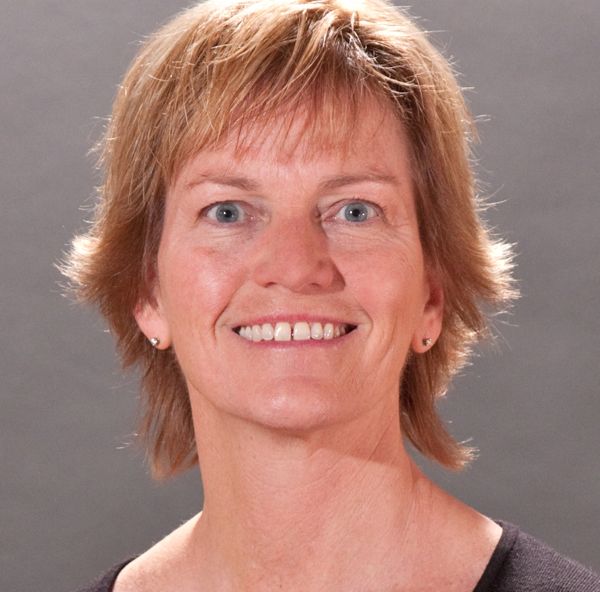
Kelly Shanahan

HPV can be contracted with one sexual encounter, remain dormant and only be detected years later. Because the strains of HPV that cause cervical cancer are different than the ones that cause visible warts, HPV can unknowingly be passed to a sexual partner.

It is estimated that 70 percent of people will come in contact with HPV during their life. When we are young, the immune system is stronger and may be able to completely eliminate the virus from the body — until a new partner brings a new strain of HPV into the picture. The older we are, the less likely it is that HPV will be eliminated completely. This is the reason that HPV testing is recommended at the time of a pap smear for women over 30.

Use of a condom 100 percent of the time with 100 percent of sexual acts — vaginal, anal, oral or even contact with the genitals without what we think of as intercourse (I call this “close to sex”) — can decrease the odds of contracting HPV. One study showed that using condoms correctly with every sexual act could lower the HPV infection rate by 70 percent. But because HPV can infect areas that are not covered by condoms, condoms do not completely protect against HPV.

There is a vaccine available that if given before any type of sexual or intimate activity can protect against the two types of HPV that cause 90 percent of genital warts and the two types that cause 70 percent of cervical cancer. This vaccine, called Gardasil, is recommended for girls and boys and the first dose ideally is given between 11 and 12 years of age. Just think about it: if every young girl and young boy in this country were vaccinated prior to ever having sex, we would eliminate 70 percent of cervical cancer in one generation.

The Gardasil vaccine is a series of three shots given over the course of six months. It is covered by most insurance plans and many health departments and school districts offer it for low or no cost. Even if you have already had sex, the vaccine can be given up to age 26 — again to females and males. If someone has been sexually active already, there is a chance that exposure to one type of HPV covered by the vaccine may have already happened. If this is the case, the vaccine will not prevent problems caused by that strain, but odds are you haven’t been exposed to all four strains so the vaccine can still provide great benefit.

For women, pap smears are the best way to screen for cervical cancer. The goal is to find abnormal cell changes — and monitor or treat them — before cancer develops. Because we understand much more about cervical cancer and how it develops — again 99 percent is caused by sexually transmitted high risk HPV — guidelines for pap smears have changed in recent years. A pap smear may not be necessary for every woman every year, but a visit to your gynecologist annually is still recommended. As I tell my patients, “your job is to show up every year and my job is to figure out what you need.”

So this January, let’s pay attention to what we can’t see — the cervix — and remember to vaccinate early (girls and boys), get your pap smear regularly and have an HPV test when recommended by your doctor.

Together we can eliminate cervical cancer.

Kelly Shanahan is a board certified gynecologist who has been serving the women of Lake Tahoe and the Carson Valley for 19 years. She offers HPV vaccination, pap smears, management of abnormal pap smears and counseling to help you learn how best to decrease your risk of HPV and other STDs. The mother of a teenaged daughter, she is committed to trying to wipe out HPV in her daughter’s lifetime. Call (530) 542.4961 or (775) 782.7300 to schedule your appointment.