Boy Scouts ask members detailed questions about gays

By Kirk Johnson, New York Times

The Boy Scouts of America is reaching out to parents and scouts as it decides whether to continue or rescind the group’s ban on gay members and leaders. Surveys went out in recent days to 1.1 million scouts and their families around the nation.

The questionnaire goes far beyond a simple yes or no, gays in or gays out. Even sleeping arrangements are addressed.

Should gay and straight scouts, for example, be allowed to share a tent on a camping trip? What role should faith play in scouting, if a church sponsoring a local scout troop has taken a position on the inclusion or exclusion of gays and lesbians in its congregation? Does the scout oath, with its language about staying “morally straight,” declare a value about sexual orientation or just a general, admirable code of conduct?

The Boy Scouts said in January that it was considering lifting the ban and allowing local sponsoring organizations to decide membership policies for themselves, but then quickly changed course and said that leaders needed more time and would take up the issue at the national annual meeting in May.

The survey offers possible outcomes should the Boy Scouts decide to keep or change its policy. Some address the widespread fear that the scouting movement could fracture or face an exodus no matter what it does.

“If the Boy Scouts of America makes a decision on this policy that disagrees with your own view, will you continue to participate in the Boy Scouts, or will you leave the organization?” one of questions says. The suggested answers, fittingly, read like responses to a course on map reading: “I believe I can find a way to continue” is one choice. “I do not believe I can find a way to continue” and “I have not yet made up my mind,” are the others.

A spokesman for the Scouts, Deron Smith, said the answers to the survey would be provided to national leaders before the May meeting. A second round of surveys, he wrote in an e-mail, will be sent soon to about 325,000 people in scouting alumni groups, including members of the National Eagle Scout Association. The survey was developed by a third-party research provider, North Star Opinion Research, with assistance from volunteers and professionals, Mr. Smith said, with “diverse viewpoints.”

“No specific weights have been assigned to any particular element, and the report will be reviewed as a whole,” Smith said.

Some polling experts said the population being sampled — those with a connection to scouting, in the past or present — could create a bias in the findings, since people generally tend to support the status quo of voluntary institutions they are involved with. That could perhaps tilt the results toward keeping the ban on gays if change is perceived as a threat to the organization.

But Christopher P. Borick, director of the Muhlenberg College Institute of Public Opinion, who has two sons in the Scouts, said he thought the wording of the questions seemed relatively neutral and not intended, as he put it, “to provide a certain outcome.”

Borick said that as a scouting father, he is strongly opposed to the ban on gays and hopes to see it lifted. He said that what the survey appears to be looking for is less what course to take than what impact a change, or a continuation of the status quo, might have.

Some questions, for example, address freedom of religious expression. The Scouts organization says that more than 70 percent of all Scout units are chartered by faith-based organizations.

“A troop is chartered by an organization that does not believe homosexuality is wrong and allows gays to be ministers,” one question reads. “The youth minister traditionally serves as the Scoutmaster. The congregation hires a youth minister who is gay. Is it acceptable or unacceptable for this youth minister to serve as the Scoutmaster?”

Another question takes on that same issue from a different perspective.

“David, a Boy Scout, believes that homosexuality is wrong. His troop is chartered to a church where the doctrine of that faith also teaches that homosexuality is wrong. Steve, an openly gay youth, applies to be a member. Is it acceptable or unacceptable for this troop to deny Steve membership in their troop?”

Respondents are asked to provide their opinions on a scale ranging from totally acceptable to totally unacceptable.

But even before May’s national meeting, some donors are already voting about the membership issue — with their wallets.

Last fall, for example, the United Way of Greater Cleveland announced that it would no longer make grants to the Scoutreach program — which works with urban and rural boys — because the ban on gays was in conflict with the organization’s diversity and inclusion policy.

Since then, about $200,000 in donations to the Cleveland United Way has evaporated, a spokeswoman said. But in a reflection of divided local opinion, a $20,000 increase in donor-directed contributions to the Boy Scouts arrived as well — an 11 percent increase from the previous year.

The money question is widespread, as families pledge to withhold further donations or increase them depending on how things go.

“I made a modest $50 donation to Friends of Scouting this year,” Susan Buchanan, the mother of a 16-year-old scout in Bethesda, Md., wrote in a letter to her local scout council. “I am prepared to quadruple that donation as soon as the ban on gays is lifted.”


Thieves snag copper from USFS Tahoe sites

By Kathryn Reed

Copper thieves have hit the South Shore again; this time U.S. Forest Service structures.

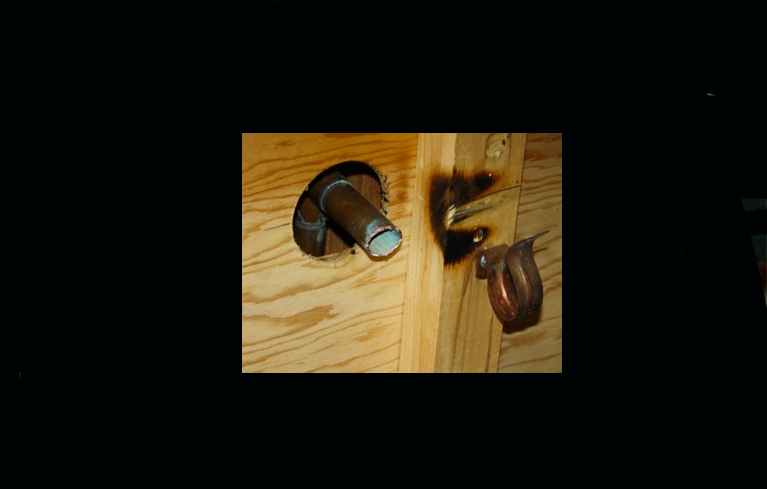
USFS spokeswoman Cheva Heck told Lake Tahoe News the thieves caused “extensive damage in order to get to the copper.” She said it could cost as much as $200,000 to make the repairs at the Kiva picnic area, Fallen Leaf Campground, and Pope and Baldwin beaches.

The goal is to repair the damage by Memorial Day – the normal time the seasonal areas open for the summer.

Damage done by copper thieves to a USFS bathroom on the South Shore. Photo/USFS

Damage done by copper thieves to a USFS bathroom on the South Shore. Photo/USFS

The damage was discovered in the last several weeks.

Thieves this winter have also made off with copper pipes from Camp Concord, and Emerald Bay and D.L. Bliss state parks.

No one has been arrested in any of the heists and authorities have not identified any suspects.

The Forest Service is working with El Dorado County sheriff’s detectives to track down the culprits.

The violations, which include damaging and removing government property, carry the standard criminal penalty of fines of up to $5,000 and six months in jail for each charge. The Forest Service said it could also pursue civil penalties aimed at recovering the cost of repairing the facilities.

Some of the sites had been recently renovated. Non-copper plumbing will be used when the fixes are made.

The copper plumbing is targeted because the pipes can fetch cash at scrap metal yards that will buy it.

Anyone with information may anonymously call Secret Witness Program at (530) 541.6800 or USFS law enforcement at (530) 545.9853.


Vonn wins downhill title; Sullivan has best season in 5 years

By USSA

LENZERHEIDE, Switzerland – Lindsey Vonn (Vail) won a record 17th Audi FIS Alpine World Cup globe and record sixth straight downhill title after fog forced officials to cancel the final men’s and women’s downhills on Wednesday.

Vonn won three of seven World Cup downhills this season and missed two due to injury following her super G crash at World Champs. March 13 cemented the U.S. Ski Team’s win of the women’s downhill standings by 457 points over the Swiss thanks to nine U.S. podiums from five different women.

The 17th title breaks the women’s record of 16 she previously shared with Annemarie Moser-Proell. Only Ingemar Stenmark has more with 19.

Stacey Cook (Mammoth Lakes) finished fourth behind Slovenia’s Tina Maze and Germany’s Maria Hoefl-Riesch. Julia Mancuso (Squaw Valley) ended up ninth, Alice McKinnis (Glenwood Springs, Colo.) 10, Leanne Smith (North Conway, N.H.) 12 and Laurenne Ross (Bend, Ore.) 16.

Marco Sullivan

Marco Sullivan

Marco Sullivan (Squaw Valley) finished 14th in the World Cup downhill standings, his best season since 2008 and the top finish for U.S. men. Norwegian Aksel Lund Svindal took the men’s downhill title, his second of the season. Travis Ganong (Squaw Valley) had his career best downhill season with an 18th finish.


El Dorado County looks to tighten mental health privacy issues

El Dorado County Board of Supervisors on March 12 authorized staff to look at different options to house the county’s mental health program.

In addition to exploring renewal options for its space at 670 Placerville Drive, facilities staff will consider lease options for the Victory Mine Building in Diamond Springs.

County Health and Human Services Agency Director Daniel Nielson has expressed concerns about the future of mental health program in the existing facility in regards to being able to meet privacy requirements of the Health Insurance Portability and Accountability Act, as well has accessibility standards under the Americans with Disabilities Act.

Most of the funding for the Mental Health Division is provided by state and federal sources. This funding may be jeopardized by continuing to operate in a facility that cannot meet accessibility and privacy standards for clients.

County facilities manager Russ Fackrell also noted that the market for commercial office space has significantly changed since the county began leasing the current location nearly six years ago.

 — Lake Tahoe News staff report


Bob Bender — 1938-2013

Dr. Bob, as he was known to so many, died March 8 after a long battle with cancer. He was 74.

Robert I. Bender was born Sept. 20, 1938, in Downey to Blaine and Helen Bender. Bob grew up in Temple City with his siblings Darryl and Cheryl.

He graduated from Whittier College with his bachelor’s degree and went on to receive his medical doctorate at UC Irvine College of Medicine. He served four years in the U.S. Air Force as a captain and flight surgeon.

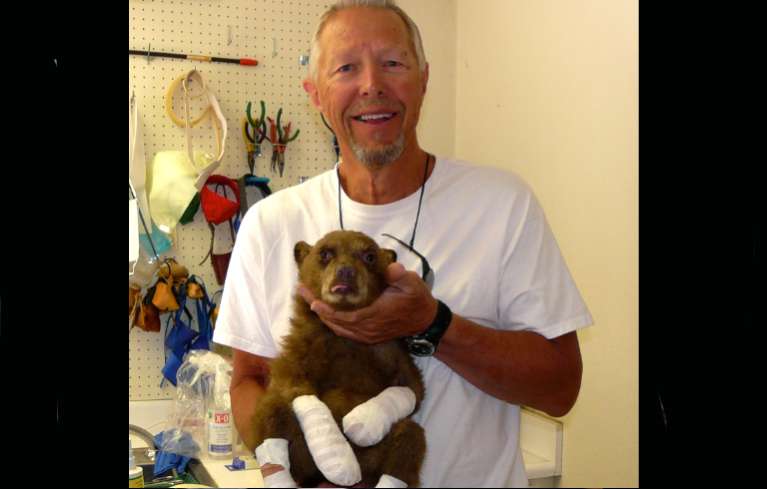
Bob Bender with L'il Smokey at Lake Tahoe Wildlife Care. Photo/Provided

Bob Bender with Li’l Smokey at Lake Tahoe Wildlife Care. Photo/Provided

Bob practiced medicine in Whittier and La Habra.

In 2007, he left Diamond Bar and moved to his vacation home in South Lake Tahoe after retiring from medicine. A former owner of Camp Richardson Marina, Bob has been a long-time member of this community.

On Feb. 27, 1971, Bob performed his first wedding as a minister. It was for his sister, Cheryl, and Tom Millham.

The Millhams operate Lake Tahoe Wildlife Care. Bob was a part of LTWC since the inception, helping with medical situations whenever he was available.

Bob is survived by his wife, Robin; daughter Samantha; son Robert Spencer; son Randy and daughter-in-law Yolanda; daughter Tiffani Calvert and son-in-law Chris; daughter Kari Deol and son-in-law Steven; sister Cheryl Millham and brother-in-law Tom; and brother Darryl and sister-in-law Beverly; seven grandchildren, four nieces and one nephew.

A loving husband, father, friend and physician, Bob will be truly missed by all who knew him.

A memorial service is planned for March 23 at 12:30pm at Calvary Chapel Chino Hills, 4201 Eucalyptus, Chino. An open house will be in South Lake Tahoe in April. Details to follow.

In lieu of flowers, a special fund has been set up for Samantha, 16, and Spencer, 13, at: Dr. Bob Bender Memorial Fund, c/o El Dorado Savings Bank, 942 Emerald Bay Road, South Lake Tahoe, CA 96150.


Sierra heating things up with salsa contest

Do you have what it takes to win Sierra-at-Tahoe’s salsa contest?

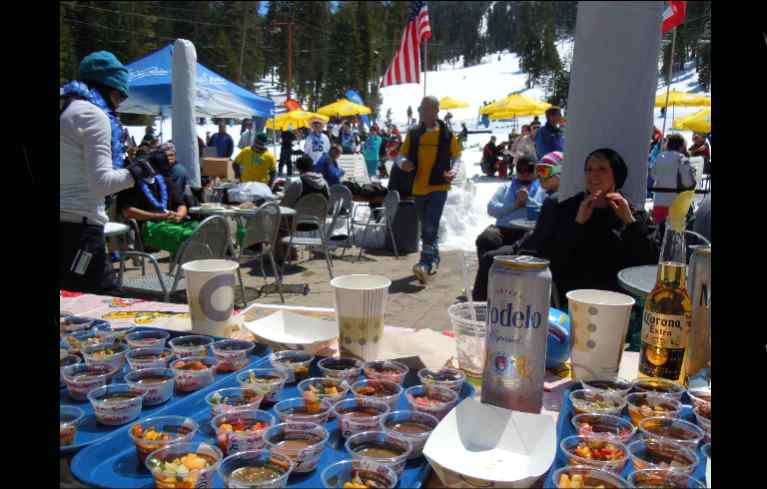
Salsa judging -- it's serious business. Photo/LTN file

Salsa judging — it’s serious business. Photo/LTN file

Lake Tahoe News Publisher Kathryn Reed will be the judge. OK, one of the judges.

The March 24 event returns to the West Bowl, with the whole area turning into a fiesta of sorts.

Anyone wanting to compete must have their concoction turned in to the Baja Grill by 10am that Sunday. Winners must be present to win. Bring at least 2 cups of either a spicy or fruity salsa.

And if you bring a copy of your recipe, it might be featured on Lake Tahoe News.


Truckee police arrest burglary suspects

Two suspects in the February and early March residential and vehicle burglaries in Truckee have been arrested.

Truckee police officers on March 9 served several search warrants related to the burglaries. Officers contacted Anthony Torres, 19. He allegedly had a large amount of crystal methamphetamine and U.S. currency on him. Torres was arrested on charges of possession of controlled substances for sale. Additional charges related to the original burglaries and gang affiliation were later added.

On March 12, officers located a second suspect in the burglaries, 19-year-old Sergio Sanchez. Sanchez attempted to flee by hiding in a vehicle driven by his girlfriend, Sabrina Kantlehner, 18. Officers detained Kantlehner and subsequently found Sanchez in the rear of the vehicle.

Sanchez reportedly had crystal methamphetamine and an air-soft pistol in the vehicle with him. Sanchez was arrested on charges of possession of a controlled substances for sale and attempted burglary from the earlier case.

Kantlehner was arrested on charges of aiding and abetting a known felon when she tried to hide Sanchez during his escape.

 — Lake Tahoe News staff report


Ski report: Hot, hot, hot

ski report logoSpring has arrived a bit early. Wear plenty of sunscreen and lip balm.

Here is the March 13ski report.

— Curtis Fong


Snippets about Lake Tahoe

phish• Phish is going to play at Harveys Outdoor Concert Series July 30-31.

A photo from SnowGlobe 2012 is in Time magazine featuring Baauer and story about their “Harlem Shake” craze.

• The Knot lists the most expensive places to get married. No. 18 is the Sacramento-Reno-Tahoe area at $30,458.

• For the 2013-14 ski season, a Squaw Valley-Alpine Meadows pass can also include Mammoth Mountain, Snowbird and Whistler Blackcomb. Alta, Aspen/Snowmass, and Jackson Hole were already part of the deal and will remain so.

• Nevada Highway Patrol is warning that scam artists are making calls soliciting money and using that department’s name. The NHP does not allow anyone to make calls soliciting money on its behalf nor does it solicit money in this manner.


South Lake Tahoe council wants environmental study of loop road

By Kathryn Reed

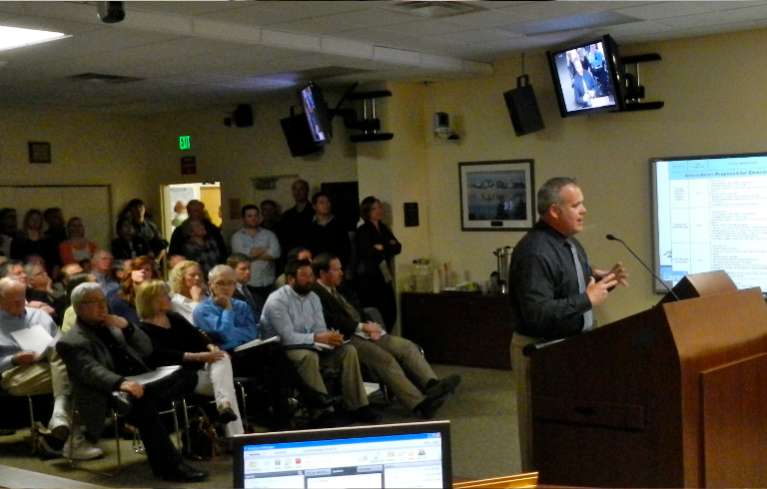
Will a loop road beyond what exists today ever be built is a question to be answered on another day. What the South Lake Tahoe City Council on Tuesday night decided is that the environmental process needs to move forward.

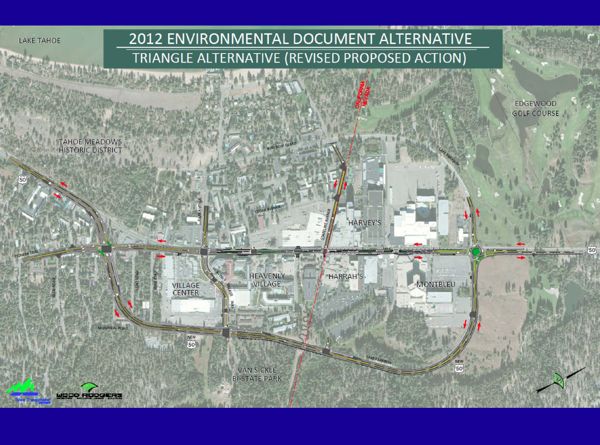
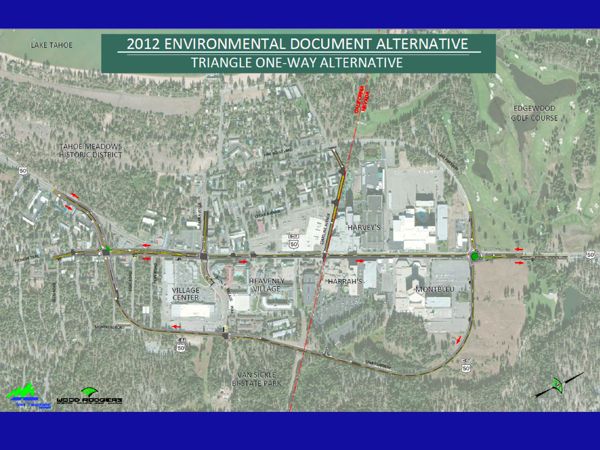
After four hours of input from the community, the project engineer, the financial consultant and the council, the vote was 4-1, with Councilwoman Angela Swanson the dissenter, to take it to the next level. The motion was to recommend to the Tahoe Transportation District board members that at their April meeting when they are expected to vote on what to include in the EIR-EIS that they include the following alternatives: the two triangle proposals, no action, and a fourth to be determined by the TTD board that is not the proposal that they first talked about. Transit is also to be incorporated into one of the alternatives.

Swanson wanted the TTD suggestions to be studied plus the 2004 alternative A to provide more variety.

Loop road project manager Mark Rayback talks Mach 12 to the South Lake Tahoe City Council. Photo/Kathryn Reed

Loop road project manager Mark Rayback talks March 12 to the South Lake Tahoe City Council. Photo/Kathryn Reed

She is the city’s rep on the TTD board. Swanson assured everyone she would vote the conscious of the council at the TTD meeting.

While the council recognizes the need for change, they aren’t convinced the loop road is the change that is needed. But they also don’t believe now is the time to stop progress.

They worry about how businesses that are barely hanging on will be able to endure three-plus years of construction, how deliveries will be made to existing businesses if the front and back of centers change, if people will bypass Heavenly Village if the highway no longer takes them directly in front of it, and if this is the best idea for the city.

Mayor Tom Davis is tired of consultants saying X number of dollars will come to town if the council builds something and then the city winds up in debt over unrealized promises.

For more than 30 years people have talked about having Highway 50 go behind all the Stateline casinos or on one side and making the current highway a city street that would be narrowed, have a reduced speed limit and be able to be closed off for events.

(The TTD presentation will be on the city’s website. It includes historical alignments that have been studied, the ones TTD staff favors, along with information about the economic study that was done.)

The proposed preferred alternative by Tahoe Transportation District staff.

The proposed preferred alternative by Tahoe Transportation District staff.

It’s estimated it could take up to two years for the final environmental documents to be done. Through that process there will be more opportunities for public input.

Of the 23 people who spoke March 12, 11 were in favor of a loop road, eight against the project and four took no distinct position. In the latter category is Tahoe Crescent Partners, owners of the Village Center.

Mark Rayback, project engineer with Wood Rogers, said it’s possible an all-season bridge could be built to cross over Highway 50, if it goes on the mountain side, to take people to Van Sickle Bi-State Park.

It’s possible Stateline Avenue could be three lanes by using the right-of-way that exists. This way during special events the traffic could be two lanes in the direction with the most vehicles.

The second triangle proposed route.

The second triangle proposed route.

Vision. That is the word that was used the most.

Many speakers embraced wikeable, a word coined by City Manager Nancy Kerry at last week’s economic forum. It’s walkable and bikeable all at the same time. That is one vision.

Complete streets. This would bring sidewalks, lighting and landscaping.

Community. It would better erase the state line, thus tying the South Shore together, with the goal of creating a place for locals that tourists want to visit.

Environment. It would reduce traffic congestion, increase air quality, retain the same number of streets (so nothing more is being paved, it would just be repurposed).

A big vision goes beyond talking about the highway, but looking at four to five blocks deep at what the “tourist district” could evolve into.

Having signs telling people where things are, allowing easy crossing of the roads, transit that is reliable and better access to the lake are all components of the vision.