Feds: Nev. mental hospital has ‘systemic’ problems

By Phillip Reese and Cynthia Hubert, Sacramento Bee

Federal investigators said Wednesday that a Nevada state psychiatric hospital under scrutiny for busing roughly 1,500 patients to other states in recent years “failed to provide an appropriate safe discharge plan for patients.”

The report from the Centers for Medicare & Medicaid Services lays out multiple instances in which Rawson-Neal Psychiatric Hospital in Las Vegas did not meet conditions for federal funding. Many of the deficiencies noted in the report relate to James Flavy Coy Brown, a homeless, schizophrenic man bused to Sacramento in February without family or shelter waiting for him.

The hospital, in response to the report, laid out a detailed corrective plan of action to address the shortcomings. CMS will study that plan to determine if it is adequate. If not, the facility could lose Medicare funding.

“The review process is just starting,” said CMS spokesman Daniel Hersh. “It won’t be instant.”

The report found that the hospital “failed to ensure a comprehensive discharge plan was implemented” and that it “failed to identify patients who were likely to suffer adverse health consequences upon discharge without an adequate discharge plan.”

“The cumulative effect of these systemic practices resulted in the failure of the facility to deliver statutory mandated care to patients,” the report said.

In their response, Rawson-Neal officials said the hospital has implemented “a 100 percent review” of every discharge to another state by two medical staff members and the hospital’s administrator. They also said they had reviewed and updated all discharge and medication consent policies.

CMS is one of several organizations investigating Rawson-Neal in the wake of a Bee investigation into the hospital’s discharge practices. Others include an independent accreditation organization and the cities of Los Angeles and San Francisco.


Scammers calling Placer County residents

In the latest telephone scam, callers are now identifying themselves as law enforcement officials.

Real law enforcement is warning citizens to be extra cautious when anyone calls asking for money.

Recently, some local residents have received phones calls from someone claiming to be a Placer County sheriff’s official. They were told there was money owed to them and they were asked to wire money to release the funds. The caller then gives a phone number to call and verify that the caller is indeed a member of law enforcement. The number given should always be verified through other resources and do not take the caller’s word for it.

Detectives advise to never give money or information to anyone you don’t know.

A law enforcement official would never call and ask you to wire money.

If you question the legitimacy of a deputy or detective, call the non-emergency line, (530) 886.5375 to verify if a deputy or detective works at PCSO.


Ironman swim change will affect Tahoe event

By Michael Buteau, Bloomberg

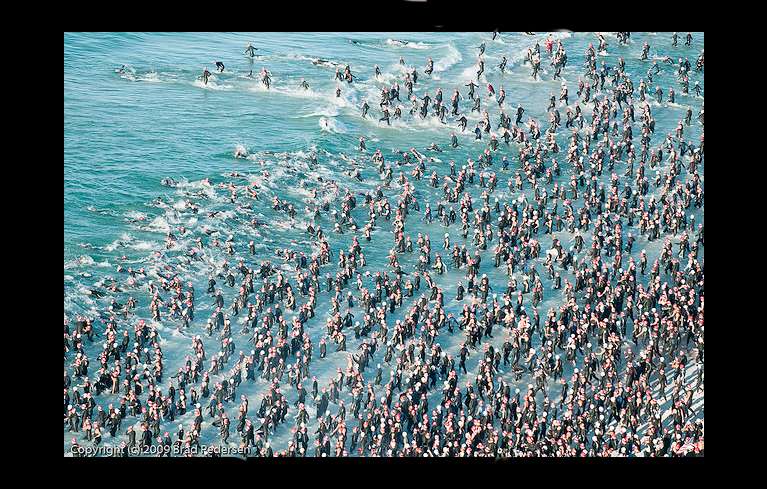
World Triathlon Corp., the owner of the sport’s Ironman-branded events, is making changes to the swim portion of select races after an increase in competitor deaths in recent years.

Events in Coeur d’Alene, Idaho; Lake Placid, N.Y.; and Mont-Tremblant, Quebec, will no longer feature a mass swim start format, eliminating a long-standing Ironman tradition. Athletes at those races will either enter the water in a continuous stream through an access point, with their time starting when they cross a timing mat, or in staggered waves based on their age group.

Ironman is making changes to swim starts. Photo/Brad Pederson

Ironman is making changes to swim starts. Photo/Brad Pederson

The changes come two months after Ross Ehlinger, a 46-year-old man from Austin died during the swim portion of the Escape from Alcatraz Triathlon and nine months after Andy Naylor, a 43-year-old member of the Hong Kong Police Force, died near the conclusion of the 2.4-mile swim portion of the New York City Ironman. In 2011, two competitors died during the swim portion of the Olympic-distance New York City Triathlon.

All North American Ironman events will also include a pre-race, in-water warm-up when possible. In addition, if the water temperature is below 52 degrees or above 88 on race day, the swim portion will be canceled or shortened, World Triathlon said in a statement May 9.

The Coeur d’Alene and Lake Placid races will feature the rolling start process, while Mont-Tremblant will begin in age-group waves entering the water every five minutes.

Events in Lake Tahoe (Sept. 22) and Panama City, Fla., will alter their mass swim start, with seeding into corrals based on the competitor’s estimated swim finish time.

USA Triathlon, the governing body for the sport in the U.S., released a study in October that found 30 of 43 athlete fatalities in triathlons from 2003 through 2011 happened during the swim portion. The study found most triathlon-related deaths were caused by sudden cardiac incidents and that course conditions didn’t play a role.

All swim courses will now include numbered buoys to assist in locating and helping distressed swimmers. Anchored rafts, as well as an increased number of rescue boats, kayaks and in-water personnel, will be included along the courses. Competitors who use the rafts to rest won’t be disqualified, World Triathlon said.

The swim changes will also include educating athletes about reducing anxiety, including pre-race screening for potential health issues, pre-race training and race-week preparation.


Gaming win mixed in Lake Tahoe, up in Nevada

North Shore casinos raked in the cash in March compared to their South Shore counterparts.

While gaming revenue throughout Nevada was up 7 percent statewide in March compared to a year ago, it was not consistent.

Stateline casinos reported a 10.9 percent drop, while North Lake Tahoe casino revenue was up 15.4 percent. In Washoe County, revenues were up 9.5 percent, while they were down 2 percent in Carson City.

The state Gaming Control Board released the numbers Friday. Throughout the state $914.8 million was collected by casinos.

— Lake Tahoe News staff report


Genoa devotes day to wildfire awareness

Learn about “Living with Fire,” how to “Reduce the Fuel and Reduce the Risk,” about “Fire Hurts, Red Cross Helps” and other fire safety programs during Wildfire Awareness Day in Genoa.

Representatives from emergency response agencies and organizations will be distributing free information and

speaking with the public. Several types of emergency response vehicles will be on-site, including engines, water trucks, brush trucks, jeeps and more. Children can participate in interactive games, the Ember House, learning to evacuate a building in the Smoke Trailer and a photo opportunity with Smokey Bear and Sparky the fire dog.

Visitors will also have the chance to see the rescue dogs used by Douglas County Search and Rescue.

The free event is May 18 from 11am-3pm at Mormon Station State Historic Park in Genoa.


Snippets about Lake Tahoe

tahoe best friends• Tahoe Best Friends is offering free puppy socialization on Tuesday’s from 7:15-8:15pm through May 28. Dogs must be 10 weeks to 4 months, have their second round of vaccinations, including Bordetella. RSVP to (530) 542. 2336. Bring shot records. TBF is at 2197 Ruth Ave., South Lake Tahoe.

• The seventh International Sierra Nevada Guitar Festival at Lake Tahoe is Aug. 21-25 in Incline Village. More info and registration is online.

• Liberty Utilities is having an open house May 21 from 5-7pm at the North Tahoe Events Center, 8318 North Lake Blvd., Kings Beach.

• Eastern Sierra Land Trust has hired South Lake Tahoe’s Kay Ogden to be executive director. Odgen has been associate director of the Sierra Nevada Alliance.

• Adrian Ballinger of Lake Tahoe is on an expedition to Everest. Listen hear to his interview with KCRA-TV. Ballinger runs Alpenglow Expeditions out of Olympic Valley. Follow the group’s progress on this blog.


Pieces coming together for portion of hole near Stateline to be filled in this summer

By Kathryn Reed

Stateline Ventures – that’s the name of the company that will be building the next phase of the convention center project.

Bill Owens of Owens Financial foreclosed on the remaining parcels May 9 and formed the new company. It is not known who the other partners in that company are.

Owens Financial has title to the bulk of the properties on the nearly 11-acre site near the state line that at one time was to be a convention center, two hotels, retail and open space.

The building permits from the city and Tahoe Regional Planning Agency expire in July if nothing is done. That is a big reason Owens wants to proceed this summer with something. That something is retail that would go along Highway 50 and a much larger McP’s restaurant than what exists today.

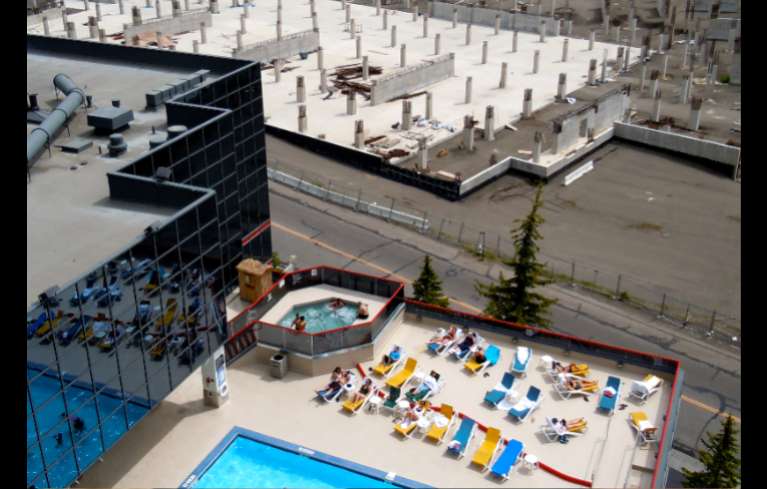
Guests at Harveys may have something other than concrete and rebar to look at later this summer. Photo/LTN file

Guests at Harveys may have something other than concrete and rebar to look at later this summer. Photo/LTN file

The footprint cannot change, nor the main intent of the buildings. But it can be built in more phases than were originally planned for, which is what is being proposed. The type of lodging in terms of it being timeshares, condos, fractional ownership or traditional hotel would be up to the developer.

City Manager Nancy Kerry said the design elements would be different because everything is not being built at once.

While South Lake Tahoe officials have yet to sign off on any work to be done on the infamous hole near Stateline, a lighting designer sent out a press release last month stating they have started work on the project.

“We’re thrilled to have commenced work on Phase II of the Chateau at the Village project, working in partnership with Lee Harris, owner of Light + Space of Reno,” Jim Sultan, senior lighting designer and project manager of Studio Lux, said in the April 24 press release. “Phase II encompasses the completion of the underground parking garage, construction of the shells of retail spaces and the signature restaurant McP’s Pub, and outdoor public spaces and walkways alongside Stateline Avenue and Highway 50.”

Kerry this week told the council that staff received a detailed letter last week from Owens’ people regarding what is planned for the six parcels. Staff as of Tuesday was still going through the documents.

The Studio Lux press release says, “The lighting design will incorporate cutting edge lamp and optical technology to illuminate the project’s facades, walkways and public spaces, featuring LED light sources that exceed current lighting and California LEED compliances. Chateau at the Village will weave lighting within its timber frame and stone construction to artfully accent the project’s striking facades while providing a continuous illumination for pedestrian walkways. Architectural and decorative lighting will also play a key role in Phase III of the project, consisting of vacation-share condominiums, a restaurant with two bars and a hotel with a grand lobby that evokes the style of traditional ski lodges.”

Before any of that happens, the Planning Commission must give its approval. The commissioners’ regular meeting was Thursday. It’s likely a special meeting will be called for May 23. If the applicant can’t make that date, it would have to be in June based on the commissioners’ availability.

The City Council has said it wants to sign off on everything involving this project. June 11 is the only date that group is planning to meet next month. A special meeting could be called just for this project.

It is not a slam-dunk that the council will say yes. A road that used to go through what is now rebar and concrete still belongs to the city so that has to be abandoned. Had the former developer, who went bankrupt, consolidated the parcels as is customary in these types of projects, that road would not be an issue today. There could be other items the council will need to approve even though permits are in hand.

And at that June meeting the city will likely be without in-house legal counsel because the current attorney will have left, the new one doesn’t start until July and the second in charge is likely to be on leave.


Editorial: Adapting to climate’s new normal

Publisher’s note: This editorial is from the May 5, 2013, Sacramento Bee.

No doubt, it is gearing up to be a dry, ugly summer.

It’s just early May, but fires have erupted around the state, most notably in Ventura County. Folsom Reservoir, normally brimming with water at this time of year, is at two-thirds its capacity. And it won’t get help from the remaining snowpack, which, according to the state’s latest and last snow survey, is at 17 percent of normal.

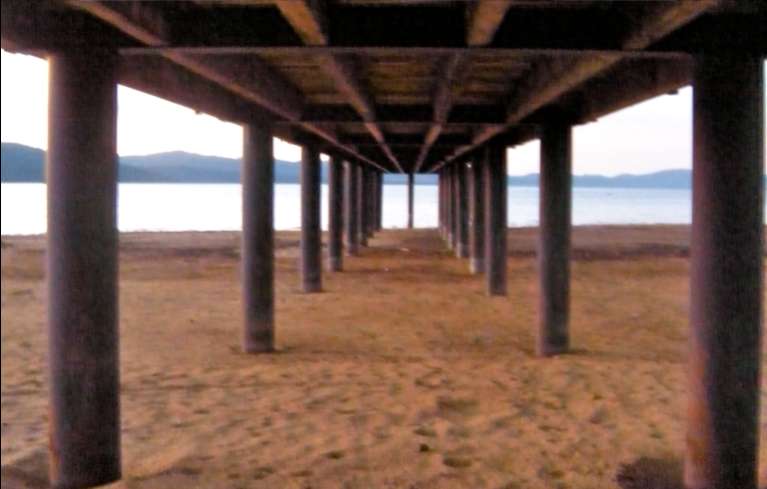
It was possible to walk under the Tahoe Keys pier in November 2009. Photo/LTN file

It was possible to walk under the Tahoe Keys pier in November 2009. Photo/LTN file

But of course, that’s the problem. Climate change has changed the norm, creating a “new normal” that is far from easy to predict. All we know is that the bulk of reputable scientists tell us to prepare for extremes. By this, they mean extreme events far beyond what is “normal” in a state known for its disastrous wildfires, droughts, floods and mudslides.

Earlier this year, the U.S. Global Change Research Program released a draft of its Climate Assessment Report. It noted that the Southwestern United States, including California, has heated up markedly in recent decades.

“The period since 1950 has been hotter than any comparable period in at least 600 years,” the report stated, citing more than 10 studies. It also cited research concluding that human-caused temperature increases and drought have killed trees and increased both the frequency and size of wildfires in the region.

Climate models – not absolute proof, but the best tools available for forecasting the future – show that annual average temperatures in the Southwest are projected to rise 2 to 6 degrees Fahrenheit by 2041-70 even if global emissions of greenhouse gases are substantially reduced. The Climate Assessment Report warns that the Southwest should prepare for decreased snowpack and stream flows, meaning reduced water for cities, agriculture and fisheries. It predicts serious impacts on high-value crops, stronger flood events and more extreme high tides. And it warns that, with 90 percent of the Southwest’s population living in urban areas, heat waves will claim an ever-higher toll, partly because of the way hard-scaped cities amplify heat, known as the “heat-island effect.”

California has been a leader in reducing greenhouse gases through cleaner cars, energy efficiency, conservation and a state law requiring a reduction in emissions. But adaptation has to be an equal part of the strategy. Overall, and especially on the local and regional level, public officials aren’t taking seriously the need to prepare their communities for the kind of extreme events that are inevitable with a changing climate.

These extremes – and the responses to them – vary on where Californians live. In the Central Valley, authorities must prepare communities for flooding evacuations and protracted heat waves that are particularly brutal, especially for the elderly and infirm. In coastal areas, sea level rise is projected to increase, and flooding and erosion are already occurring in places where houses were built too close to the water, or too close to cliffs.

In Southern California and the foothills, wildfires are the primary threat, and as the photo above shows, the unrestrained construction of suburban homes in wildfire zones complicates the task of first responders.

California has developed a “climate change adaptation strategy” that is thoughtful and comprehensive, including a tool called “Cal-Adapt” that allows local officials to better understand projected impacts to their communities.

Local leaders need to read this report and take the threats seriously. To adapt to a changing climate, cities and counties will have to be proactive in planning for more extreme floods, droughts and fires, even if means changing their general plans that were developed under the “old normal.”


Hospital billing inconsistent throughout U.S.

By Chad Terhune and Ben Poston, Los Angeles Times

New Medicare data reveal wildly varying charges among the nation’s hospitals for 100 of the most common in-patient treatments and procedures, calling into question medical billing practices just as U.S. officials try to rein in rising costs.

The escalating price of medical care may complicate the rollout of the new federal healthcare law, which is designed to make health insurance affordable for millions of uninsured Americans next year. And federal officials said they hope the data will encourage more price competition and make consumers better healthcare shoppers.

In the Los Angeles area, for instance, one hospital’s average price for knee and hip replacements in 2011 was as high as $223,373. That’s seven times as much as the lowest charge of $32,022 in the Southland.

The average hospital charge for treating pneumonia ranged from $17,000 to nearly $70,000 in the L.A. area.

“We want to shine a much brighter light on practices that don’t seem to make sense to us,” said Jonathan Blum, deputy administrator for the Centers for Medicare and Medicaid Services. “We do not see any business reason for why there is so much variation in the data.”

Hospitals said they support efforts to simplify an overly complex medical billing system and arm consumers with more information. The California Hospital Association agreed, but warned that the newly available federal data “may confuse patients as well as the public.” (Note: Search Tahoe in the data for comparisons of Barton Memorial Hospital and Carson Regional Medical Center.)

Health-policy experts called the government’s move to release prices from more than 3,000 U.S. hospitals unprecedented in its scope, and they said it could accelerate related efforts to pry more detailed cost information from health insurers and other medical providers.

Many employers and consumers still struggle to unravel the closely guarded secrets of medical pricing even though they are being asked to shell out ever-increasing amounts for care.

Medicare and private insurers pay only a fraction of these billed charges disclosed by the government. Regardless of the bills, Medicare pays standardized amounts for specific conditions, and insurers negotiate lower rates.

Nonetheless, experts say the actual amounts insurers and consumers pay follow a similar pattern of wildly divergent prices with little correlation to the quality of patient care or the underlying costs.

“This is evidence of an incredibly dysfunctional and arbitrary pricing system in healthcare,” said Renee Hsia, an assistant professor of emergency medicine at UC San Francisco who studies these cost variations. “It affects us all because the insured pay for this through their premiums and the uninsured face the sticker price. People are really being hurt by this.”

Critics say hospitals benefit from inflating these listed prices because some health insurers still peg their reimbursement to a percentage of full charges. They also say hospitals gain from higher charges by taking credit for writing off larger amounts for low-income and uninsured patients.

“There’s an incentive to have your charge as high as possible,” said Ateev Mehrotra, a policy analyst for Santa Monica-based Rand Corp.

The American Hospital Association said it supports efforts at greater transparency and noted that more than 40 states, including California, already require or encourage pricing information to be reported publicly.

“The complex and bewildering interplay among charges, rates, bills and payments across dozens of payers, public and private, does not serve any stakeholder well, including hospitals,” said Rich Umbdenstock, chief executive of the hospital trade group.

Researchers have documented for years some of the surprising variations in medical costs across the country and within the same city. But this move by Medicare marked the first time so much data on the topic were released directly to the public.

There are valid reasons for some disparity in costs, researchers say, such as geographic differences in the cost of living and wages or the fact that teaching hospitals bear additional costs. Some hospitals also treat a higher percentage of low-income or sicker patients.

In Wednesday’s data, two Southern California hospitals held the dubious distinction of billing the highest amounts nationwide for a joint replacement surgery without complications.

Monterey Park Hospital charged $223,373 on average, and Centinela Hospital Medical Center in Inglewood billed $220,881.

In contrast, L.A. County Harbor/UCLA Medical Center posted the lowest local rate — charging $32,022 for new artificial hips and knees.

Officials at Monterey Park couldn’t be reached. A spokesman for Prime Healthcare’s Centinela Hospital said the higher rate reflects “a sicker and older patient population” compared with other area hospitals.

Similar price disparities were seen in the treatment of simple pneumonia in the Southland. Providence Holy Cross Medical Center in Mission Hills billed $69,574, on average, for treating pneumonia without complications, federal data show. At the low end, L.A. County/USC Medical Center billed $19,852, on average, for that illness, and Citrus Valley Medical Center charged $17,174.

As policyholders’ deductibles have risen and they have more of their own money at stake, insurers have introduced new online tools enabling members to get a range of prices among network providers. But consumer advocates still see significant resistance among hospitals and insurers to disclose detailed information.

“Everybody in the industry is so scared about what it would mean if all the pricing information was available,” said Suzanne Delbanco, executive director of Catalyst for Payment Reform, an employer-backed group in San Francisco pushing for more healthcare transparency. “Medicare is sending a message that American consumers have a right to know what’s driving up their healthcare costs.”


Nev. bill would tax lift tickets, outdoor concerts

By Anjeanette Damon, Las Vegas Sun

CARSON CITY — The Legislature’s attempt to craft an entertainment tax in 2003 read a little bit like the children’s story of the hen who couldn’t persuade her barnyard animal friends to help her gather and grow grain for the winter.

Lawmakers then considered a proposal by the Nevada Taxpayers Association to tax admissions to nearly every form of entertainment and recreation.

But when it came time to write the bill, a common refrain was sounded by many targeted for the tax.

“Not I!” said the movie theaters.

“Not I!” said the Las Vegas Motor Speedway.

“Not I!” said the baseball parks, bowling alleys, golf courses, hula dancers and strip clubs.

A bill in the Nevada Legislature would have meant the 2011 Miranda Lambert concert at Harveys would have cost even more. Photo/LTN file

A bill in the Nevada Legislature, if passed, would inflate ticket prices at Harveys Outdoor Concert Series. Photo/LTN file

Now, as the state climbs its way out of a recession that depleted funding for education and other services, Assembly Speaker Marilyn Kirkpatrick has a message for the naysayers: You gotta pay the tax.

On Wednesday, Kirkpatrick released a sweeping entertainment and admissions tax proposal — the centerpiece of her effort to clean up a Nevada tax code rife with exemptions and haphazardly applied interpretations.

The measure, Assembly Bill 498, would eliminate the two-tiered live entertainment tax, which levies a 5 percent rate on large concert venues and a 10 percent rate on smaller venues and exempts everything from the Las Vegas Motor Speedway to outdoor concerts.

The new Nevada Entertainment and Admissions Tax would levy a flat 8 percent tax on any venue that charges an admission fee or requires a minimum purchase of food, alcohol or merchandise for admittance. The venue would remit the tax to the state but likely charge the ticket purchaser the amount.

And, most important to Kirkpatrick, the exemptions would be eliminated.

Movies would be taxed. Strip clubs, nightclubs and brothels that charge an entry fee would be taxed. Fitness centers, boating clubs, ski resorts, swimming pools and bowling alleys would be taxed.

How much revenue would be generated? Kirkpatrick isn’t sure yet.

“It’s a policy that gets rid of exemptions,” she said. “It’s about the policy, not about the money. It’s about collecting what we set out to collect in 2003.

“Everything’s in.”

The measure also would give tax collectors investigatory power to make sure venues are paying what they owe.

But Kirkpatrick’s approach to cleaning up the tax by including such activities as movies and fitness clubs is likely to hit a wall of Republican opposition.

Early in the session, Republicans, including Assembly Minority Leader Pat Hickey, spoke favorably of closing tax loopholes and eliminating exemptions.

Those same Republicans say Kirkpatrick’s actual bill goes too far.

“This goes beyond cleaning up the exemptions,” said Sen. Ben Kieckhefer, R-Reno. “This expands the policy from a live entertainment tax to an admissions tax on new activities.

“These are things that families save up to do with their kids.”

Hickey said he continues to support eliminating exemptions from the live entertainment tax for such things as outdoor concerts and the Las Vegas Motor Speedway, but he’s uncomfortable with the broad scope of Kirkpatrick’s bill.

“There are certainly some good elements,” Hickey said. “However, there are certainly elements of it that are clearly a new tax, whether it’s on movies or golf or gym visits.

“There are elements that are new taxes that Republicans in the Assembly are opposed to.”

A spokeswoman for Gov. Brian Sandoval said he opposes the measure.

Kirkpatrick’s measure is clearly aimed at increasing the portion of the entertainment tax paid by nongaming venues. As it stands, the state’s casino industry pays $125 million a year while nongaming venues pay $11 million.

That’s not to say gaming won’t be affected by the changes. The rate for larger venues would increase while the rate for smaller venues would decrease. And nightclubs on casino properties — some owned by the casinos and some not — would be responsible for the tax.

Kirkpatrick described it as an “across-the-board” cleaning-up of the statute.

Not all exemptions are eliminated. A specific group of nonprofit organizations — 501(c)3 groups — are exempt, as well as venues with fewer than 50 seats. Governmental organizations — including college sporting events — are also exempt.

Still, the “Not I’s” have begun.

Formally, industry lobbyists are taking a neutral approach to the bill. But in background conversations, they attack the premise of taxing gyms, movies, golf and other activities that aren’t necessarily “live entertainment.”

Tom Clark, a lobbyist for Burning Man, said the organization does not yet have a formal position on the bill. But he noted that the event — a counterculture festival in the Black Rock Desert that draws 50,000 attendees — is already contending with efforts from the federal government and county governments to increase fees.

“It’s important to note that we have to take all that into consideration,” Clark said.

Clark stopped short of threatening to take the event elsewhere — a threat he made earlier in the session.

Kirkpatrick has been known to offer tax naysayers a U-Haul out of state.

The bill’s first hearing will be Tuesday.

In 2003, when lawmakers first crafted the entertainment tax, the debate turned ugly when consumers realized the potential effect on their pocketbooks. Harsh letters were written; petitions were signed.

Kirkpatrick, however, argued that consumers spend discretionary income on such things as golf games and ski passes.

“So you choose whether or not you play golf. It’s discretionary,” she said. “It’s not the everyday person who can afford to go skiing.”

As for those ugly emails and petitions that may be coming her way?

“I’m willing to take it,” she said. “I wouldn’t have put it out there if I couldn’t do it.”