Lecture focuses on composting at home

Composting: From Garbage to Garden will focus on building your own compost and how to use it.

The lecture is July 22 at 5:30pm at Lake Tahoe Community College.

Green Thumb is a series of talks and demonstrations on gardening in Tahoe, presented by the Lake Tahoe Master Gardeners. All lectures are free and open to the public. Novice and experienced gardeners welcome.


Group looking for regional sports hall of famers

Nominees for the Reno Tahoe International Sports Hall of Fame are being sought.

Th Reno Tahoe Winter Games Coalition criteria are that the person was born and raised in the Reno-Tahoe area, spent a considerable amount of training time here or competed for a Northern Nevada college or university. Nominees should be retired, but coaches and administrators can still be active. Sports pioneers also can be considered.

Send nominations to halloffame@renotahoewintergames.org.


Recipe contest emphasizes using seasonal produce

Savor the Season is a recipe contest for Northern Nevada residents.

Western Nevada College Specialty Crop Institute and NevadaGrown – Home Means Delicious are sponsoring the monthly event.

Go online to learn about locally-grown, seasonal fruits, vegetables and other foods, and submit a favorite recipe utilizing one – or all – of the foods for a chance to win.

The campaign is designed to educate the community about the benefits of eating locally and seasonally.


Questioning if plastic bag ban reduces litter

By Paul Gabrielsen, Santa Cruz Sentinel

An employee gathering carts from a sunny parking lot of a Santa Cruz Safeway said shoppers are warming up to the city’s new ban on single-use plastic bags. But some still miss the bags’ convenience.

“Wrong thing to do,” said a middle-aged man of the ban.

“But they’re killing the innocent turtles,” his wife said, adding that in Europe, reusable bags are a way of life.

The couple’s disagreement is typical of the strong feelings evoked by plastic bag bans, which seem to delight environmentalists but aggravate many retailers and consumers. While there is some evidence that the bans have reduced litter on city streets and beaches, ambiguities in the data seem certain to fuel further heated debate.

San Francisco led California’s war on plastic, banning bags at large grocery stores and chain drugstores in 2007. But litter surveys in the city, covering the first two years after the ban went into effect, painted a foggy picture.

Surveyors assessed more than 100 randomly selected sites in the city each year, counting every piece of litter in an area half the length of a city block. In 2007, before the ban was introduced, plastic bags amounted to 0.5 percent of large litter. By 2009, the percentage climbed to about 1.5 percent. And during the same period, the average amount of litter stayed about the same.

The city hasn’t collected any litter data since the 2009 survey, said Guillermo Rodriguez, a spokesman for the city’s environment department.

The ban was expanded to all retailers in July 2012 and will continue to expand to all restaurants this year. San Francisco plans to do another litter survey to see whether the new scope of the ban makes a measurable impact.

San Jose has already seen that impact. The city’s 2012 bag ban immediately covered all retailers. Last December, San Jose presented results of litter surveys in city creeks, streets and storm drains. Surveys after the bag ban in 2012 found 89 percent fewer bags in storm drains, 60 percent fewer in creeks and 59 percent fewer on city streets, compared with surveys before the bag ban. Plastic bags made up 8 percent of total creek litter in 2011 and 4 percent in 2012.

A 2012 survey of Bay Area storm drains found that “other plastics,” not including plastic bags, made up about 50 percent of storm drain trash. Paper, Styrofoam and drink containers together made up another 30 percent.

But the bags also show up in marine litter, making up about 15 percent of trash in the deep reaches of Monterey Bay. The Monterey Bay Aquarium Research Institute reported finding plastic bags in water nearly 2½ miles deep, according to a paper published online in May in the journal Deep Sea Research.

Closer to the ocean surface, concern for the bags’ impact on marine life stems from the fact that ocean-borne plastic bags look similar to jellyfish, which sea turtles love to eat.

Whether the bans are preventing bags from reaching the ocean is hard to measure, but surveys of litter on Monterey Bay beaches provide the best available picture.

Santa Cruz-based Save Our Shores promotes weekly cleanups around Santa Cruz and Monterey counties and collects trash data from many of these events. On average, volunteers pick up only six bags at each event, down from a high of 65 in 2008.

The number of bags collected per cleanup has dropped in the past two years because of four bans that took effect in 2012, said Save Our Shores executive director Laura Kasa. The four bans covered unincorporated Santa Cruz County and the cities of Watsonville, Monterey and San Jose.

The latter ban matters because of the volume of tourist traffic coming “over the hill” to Santa Cruz beaches, said Kasa, who also credits the shift in public perception toward plastic bags in the region. “In Santa Cruz it’s become the trend to be green and to bring your own reusable bags and not use plastic bags,” she said.

Save Our Shores program manager Brad Hunt pointed out that Monterey County has not yet implemented a bag ban, which affects Save Our Shores’ average cleanup numbers. “It could go down to one bag per cleanup after Monterey County implements theirs,” Hunt said, “but we won’t know that until a year or two down the road.”

Opponents of plastic bag bans point out that bags make up a small fraction of litter. “You’re talking about such a small amount to begin with that you wouldn’t notice any change,” said Stephen Joseph of the Save the Plastic Bag Coalition, whose members include plastic-bag manufacturers and retailers.

Joseph said political leaders have exaggerated the problem. He disputes claims by Oakland-based Save the Bay that a million plastic bags enter San Francisco Bay each year. In 16 years of living in the city, Joseph said, he never saw one bag in the bay.

“It’s a hoax,” he said, adding:

“There’s obviously plastic bag litter. Anyone who’s never seen a plastic bag flying around is blind. But that does not justify all the exaggeration.”
Cyclist, skateboarder injured in S. Tahoe collision

A bicyclist and skateboarder from South Lake Tahoe were injured Wednesday when they collided near Stateline.

Steven Magelssen, 20, was unconscious when police and paramedics arrived at Highway 50 and Heavenly Village Way at 8:30pm July 17. Officers said Magelssen, who was on the bike, regained consciousness and lost it a few times before he was airlifted to Renown Medical Center in Reno.

Pablo Bobadilla, 23, was taken to Barton Memorial Hospital with cuts and abrasions.

South Tahoe police said Magelssen was at fault because he ran the red light and violated the right-of-way of a pedestrian in a marked crosswalk.

Magelssen was riding his bicycle in the center left turn lane of Highway 50, approaching a red traffic signal at Heavenly Village Way. Bobadilla was on his skateboard in the company of other pedestrians while attempting to cross the highway in a marked crosswalk. Bobadilla was crossing from the corner of Tahoe Tom’s gas station toward the south side of the intersection. The traffic signal was directing pedestrians to cross at that time.

Magelssen, according to police, failed to stop at the red traffic signal holding westbound traffic and the left turn lane. As he was turning left against the red left turn arrow from Highway 50 to southbound Heavenly Village Way, he collided with Bobadilla in the crosswalk.

— Lake Tahoe News staff report


Nevada has money for water pollution projects

The Nevada Division of Environmental Protection has nearly $1.25 million in federal funding available to provide grant assistance for projects that prevent or control nonpoint source water pollution, the leading cause of water quality impairment in Nevada.

Nonpoint source water pollution occurs when rain, snowmelt and irrigation water flows over developed or disturbed land, carrying with it contaminants including oil, sediment, pesticides, bacteria and nutrients.

All proposals must follow the guidelines for application outlined in the request for proposals, which is available for download online. State, local and tribal governments, nonprofit organizations and educational institutions are eligible to apply. A nonfederal match (cash and/or in-kind) of at least 50 percent of the total project cost is required.

Proposals will be accepted between 8am July 19 and 5pm Sept. 6.


Time to give blood in South Lake Tahoe

BloodSource is having a blood drive Aug. 5 in South Lake Tahoe from noon-6pm.

Walk-ins are welcome.

Blood drive participants will receive a parking validation for the Lake Tahoe Resort Hotel parking lot at the blood drive check in.

Donors must weigh at least 110 pounds, be at least 17 years old (16 with a signed BloodSource Parental consent form) and be generally healthy. There is no upper age limit for blood donations. Donors must bring a photo ID and should drink plenty of fluids before donating.

For more information, contact Dan Kerr at (775) 781.5343.


Artist’s troubles grow as he tries to rebuild

By Kathryn Reed

South Lake Tahoe would like Peter Darvas to start with a new canvas. Darvas would rather work with the outline he has.

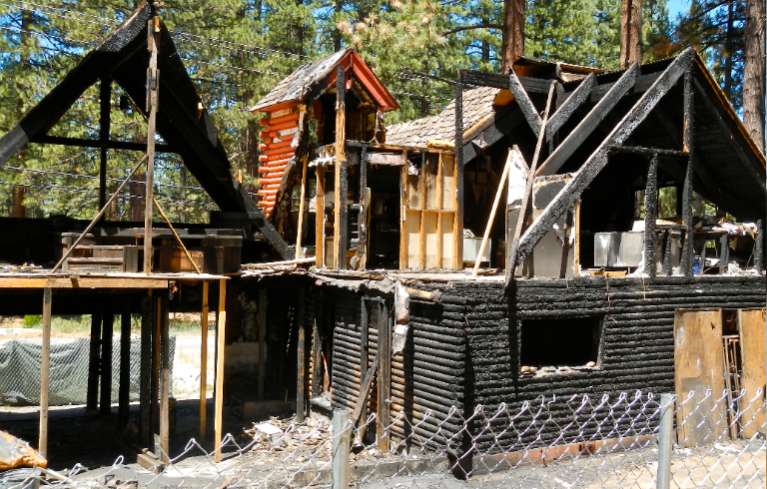
In September 2012, Darvas’ sprawling house on Pioneer Trail and April Drive was destroyed by fire. Flames also engulfed the house next door on April.

Today the neighbors have a foundation poured. This new construction is in stark contrast to the destruction left by the fire that is so evident at the Darvas site.

Darvas told Lake Tahoe News that on Tuesday he was going to submit plans to the city for how he wants to resurrect his home and studio.

A 6-foot cyclone fence surrounds the remains of Peter Darvas' house that was destroyed by fire in September 2012. Photo/LTN

A 6-foot cyclone fence surrounds the remains of Peter Darvas’ house that was destroyed by fire in September 2012. Photo/LTN

“I believe a large percentage of the structure can be salvaged,” Darvas said.

He has been slowly taking down some of the structure. Another dumpster was dropped off Tuesday afternoon.

The city has sent him letters wanting more to come down faster.

The South Lake Tahoe artist was before the City Council on July 16 asking for leniency in regards to his delinquent South Tahoe Refuse bill. He owes $2,700.

Mayor Tom Davis begged his colleagues to give the man 45 more days. When they voted against him, Davis called it “sad.” Councilman Hal Cole abstained because he lives across the street from Darvas. Councilwomen Angela Swanson, JoAnn Conner and Brooke Laine voted to proceed with the filing with the county tax office that the Planning Commission had already approved on a 4-0 vote.

The money isn’t just from the past 10 months. As STR President Jeff Tillman told the council July 16, this total is the accumulation of years of unpaid garbage bills. That is why the majority on the council could not grant an exception or extension to Darvas.

Darvas told Lake Tahoe News, “I’m not the most timely or responsible person when it comes to crossing T’s and dotting I’s. I operate in a different reality.”

Darvas told the council he has retained an attorney to go after his insurance company to get cash. Until that happens, he said he has no money to pay his debts. He thought 30 days would be enough time to get the insurance issue worked out.

He has not created enough new art at the studio near Nepheles to pay his bills.

Darvas and the city have had run-ins for years regarding the clutter at his place. In January 2012, he was sparring with the council regarding an abatement fine.

With the vote by the council, the county can place a lien against his property so STR gets what it is owed.


Letter: Sell S. Tahoe’s parking kiosks to Reno

To the community,

As I read in the Reno Gazette Journal about Reno’s decision effective July 12, 2013, to cancel their paid parking kiosk contract with Reno-based Curb System, it suddenly occurred to me that this could be a golden opportunity for South Lake Tahoe. After more than two years of system failures, citation abatements and citizens’ complaints, Reno is now shopping for a new provider for their pay-to-park services. Bingo!

While many may disagree, I consider our city manager, Nancy Kerry, imaginative and she is known to be an effective negotiator. It would not be at all surprising to learn that she has already been on the phone with Reno’s city manager, Andrew Clinger, negotiating to sell SLT’s 30 never-been-used and almost-never-been-used parking kiosks. Could this be the silver lining to the dark cloud saga of South Lake Tahoe’s paid parking kiosks and residential permit parking program?

Peggy Bourland-Madison, South Lake Tahoe

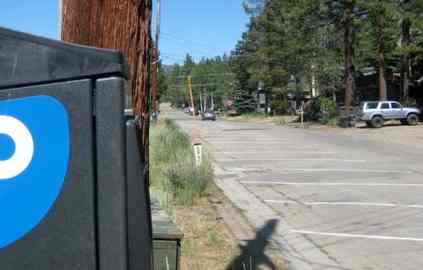
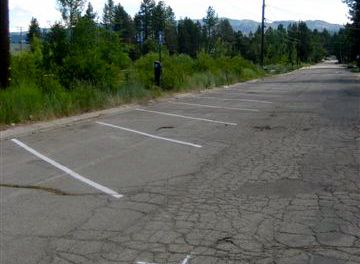
Paradise Avenue on July 16 at 4pm.

Paradise Avenue on July 16 at 4pm.

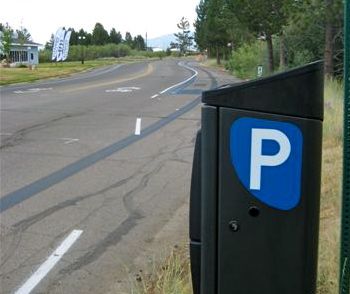
Venice Drive on July 15 at 4pm; approximately 80 paid spaces.

Venice Drive on July 15 at 4pm; approximately 80 paid spaces.

Paradise Avenue on July 11 at 10am;  45 spaces available for paid parking. Photos/

Paradise Avenue on July 11 at 10am; 45 spaces available for paid parking. Photos/Peggy Bourland-Madison


S. Tahoe basketball tourney features 19 teams

The 29th annual South Tahoe Girls Basketball Jamboree is June 18-20.

The 19 teams will each play five games.

South Tahoe girls play Sonora High School at 8am on Thursday in the Blue Gym at South Tahoe High. Their second game against Live Oak from Morgan Hill and is at 11:20am in the Blue Gym.

Admission is free.

As the schedule unfolds, it will be posted online.