Crews go to great lengths to save Rim Fire big trees

By Diana Marcum, Los Angeles Times

YOSEMITE NATIONAL PARK — Each afternoon the fire’s thunderous plume rose.

At night, helicopter crews at the Crane Flat lookout watched a line of orange burning across the horizon. The line kept drawing closer.

By the last week of August, every effort to halt the Rim fire before it moved deeper into the national park had failed. The blaze now had a clear path to the Tuolumne and Merced groves of giant sequoia, and the Rockefeller grove, one of the last stands of giant sugar pine untouched by logging.

On Aug. 30, a Friday, a group of firefighters gathered at the lookout to launch a risky plan to protect some of Earth’s oldest and largest living organisms.

Even Ben Jacobs, the division commander, was nervous.

Jacobs, 55, had fought wildfires and managed prescribed burns at Sequoia Kings Canyon National Park. But he had seen crews take chances earlier in the week trying to save family camps and businesses. If they’d gambled for buildings, what would they do for living giants?

He also worried that if crews lost control of the backfires they were about to ignite, flames could spread for miles, even as far as the Merced River, west of the park’s famous valley.

“Listen,” he said. “Nobody wants to be the guy who burned down Yosemite.”

Read the whole story


Tahoe Tails — Adoptable Pets in South Lake Tahoe

Winston

Winston

Winston is a 5-year-old, 12-pound poodle who does not shed. He is playful and fun, and loves to play with people and other dogs.

He will chase cats who run, but he doesn’t know what to do when he catches up to them. He would be fine around confident cats.

Winston has been in shelters since May, and was transferred to Tahoe to change his luck. He likes car rides and going for walks, and is crate trained and house trained.

Winston is neutered, microchipped, and vaccinated. He is at the El Dorado County Animal Services shelter in Meyers, along with many other dogs and cats who are waiting for their new homes.

Go online to see photos and descriptions of all pets at the shelter.

Call (530) 573.7925 for directions, hours, and other information on adopting a pet.

— Karen Kuentz


Contentious Sierra land battle ends

By Jane Braxton Little, Sacramento Bee

SUSANVILLE – Dyer Mountain, the site of a planned, controversial four-season resort near Lake Almanor since 1999, is instead heading toward a future of timber production and harvesting.

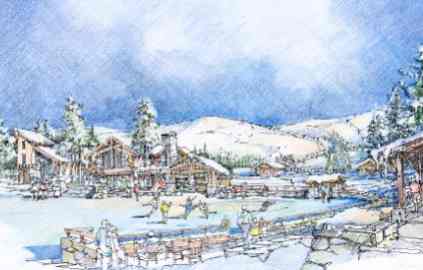
This is a rendering of what Dyer Mountain was going to become. Art/Vita Planning & Landscape Architecture

This is a rendering of what Dyer Mountain was going to become. Artwork/Vita Planning & Landscape Architecture

Federal Bankruptcy Judge Thomas E. Carlson approved the sale of 7,000 acres proposed for development to Sierra Pacific Industries, an Anderson-based forest products company.

Once the sale has been completed, SPI will acquire the land near Westwood for $17.2 million, according to bankruptcy court documents.

Mark Pawlicki, an SPI spokesman, said the timber company has no interest in pursuing the proposed development, which included ski facilities, golf courses, 600,000 square feet of commercial space and more than 4,000 residential units.

The Dyer Mountain project is one of the most contentious and protracted land use battles in the Sierra Nevada.

Read the whole story


Ironman veterans win inaugural Lake Tahoe event

An Australian and a Swede won the inaugural Ironman Lake Tahoe on Sunday.

Chris McDonald earned his sixth Ironman crown with a finish time of 8:55:14, while Asa Lundstrom earned her second title with a time of 9:58:53. Both the men’s and women’s pro races were not determined until late in the race.

While the day started in the dark and finished in the dark for some, it wasn’t snowing or raining like the day before. The route did impact motorists, with it taking some people three hours to get from Zephyr Cove to Truckee because of road closures and congestion.

Cyclists pedal hard during the inaugural Lake Tahoe Ironman on Sept. 22. Photo/Kathryn Reed

Cyclists pedal hard during the inaugural Lake Tahoe Ironman on Sept. 22. Photo/Kathryn Reed

In the men’s race, emerging out of the settled mist on Lake Tahoe, Romain Guillaume (FRA), Joe Gambles (AUS), Paul Ambrose (AUS), Maik Twelsiek (GER) and Matt Lieto (USA) came out of the water within 13 seconds of each other.

On the bike, Twelsiek took control of the men’s race as he forged his way to the lead late in the first half of the bike. Gambles appeared content to shadow Twelsiek until McDonald (AUS) and Guillaume forced the pace. Coming into transition, Twelsiek carried a tentative 1:30 advantage over McDonald, while Gambles slipped to well over six minutes off the leaders pace over the late miles of the bike.

Hitting the run, Twelsiek looked strong and held the lead throughout the first 13 miles, however the German succumbed to McDonald’s relentless pressure from behind just before mile 14. Twelsiek hung on to second with his 8:57:53 clocking, while Gambles finished third with his 9:02:55 clocking.

In the women’s race, veteran Dede Griesbauer (USA) celebrated her 42nd birthday by dominating the swim and carried a 4:50 advantage over Catriona Morrison (GBR) and over six minutes on Angela Naeth (CAN), Jeanne Collonge (FRA), and Lundstrom (SWE).

Griesbauer relinquished the lead to Lundstrom after 25 miles, with Morrison, Naeth and Collonge biking strong and closing the gap to the front of the race. The field jockeyed for position behind Lundstrom throughout the remainder of the race but it was Lundstrom who dismounted her bike first, with Collonge following her into T2 a half minute back, while Naeth found herself coming off the bike in third in her first Ironman, 4:12 off the leaders pace.

Lundstrom initially built up over a two minute advantage over Collonge in this first three miles but the lead didn’t last long as Collonge ran her way into the lead at five miles. The battle between the two waged on for the remainder of the run that saw Collonge’s lead expand at one point to over two minutes. Lundstrom’s perseverance proved to be her asset as she clawed her way back to the front of the race, and had eliminated all but 20 seconds as the women’s race reached 24 miles. Collonge surrendered the lead to Lundstrom in the final mile of the run, and went on to claim the victory. Coming into the finish line chute in second, Collonge finished with a 9:59:43 time, just 51 seconds short of the win. Closing the podium was Morrison with her 10:03:38 finish time.

The race included a two-loop, 2.4-mile swim in Lake Tahoe at King’s Beach. Athletes went through a lakeside transition before starting a two-loop 112-mile bike course that traveled along the lake into Tahoe City before following the Truckee River past Squaw Valley and into the town of Truckee. From there, the course turned south back toward Lake Tahoe, had a short loop in Martis Camp, continued past Northstar and climbed to Brockway Summit. After a descent back down to Kings Beach, athletes completed a second loop, and then a final, flat 17 miles to finish the bike course at Squaw Valley. With a transition at Squaw, runners proceeded along the Truckee River bike path into Tahoe City, and continued south along the shores of Lake Tahoe to a turnaround in Homewood and finishing at the Village at Squaw Valley.

The event offered a total professional prize purse of $75,000 and 50 coveted slots to the 2014 Ironman World Championship, taking place on Oct. 11 in Hawaii.

— Lake Tahoe News staff report


Community food garden proposed for Bijou park

By Kathryn Reed

Anyone who has tried to grow produce in the Lake Tahoe Basin has at least one story of failure to tell. But if gardening advocates have their way, more positive stories are about to be told.

“The whole purpose is to teach how to grow in an alpine environment,” Gerri Grego told the South Lake Tahoe City Council last week.

Grego and other members of the Lake Tahoe Sustainability Collaborative want to turn a 30-foot-by-80-foot plot of land in Bijou Community Park into a community food garden.

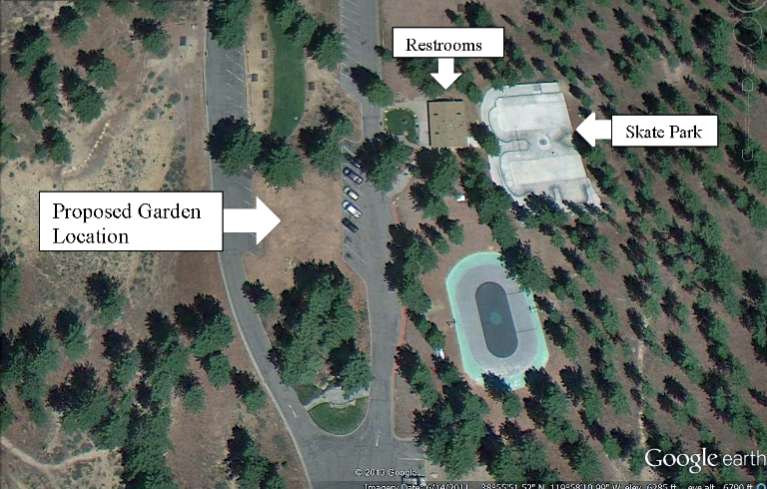
Proposed location for a community garden in Bijou Community Park. Photo illustration/Provided

Proposed location for a community garden in Bijou Community Park. Photo illustration/Provided

While the council embraced the idea, it did not want to give the go-ahead when there is no policy on the books for how non-government groups can use the city’s land.

Peter Fink, who is on the city’s Parks and Recreation Commission, said that group is in the process of devising such a policy that would then be approved by staff. It’s expected to be completed at the commission’s October meeting.

The commission did approve a trial run for the food garden at its September meeting, but that is on hold for now.

The council directed the sustainability collaborative to go back to the parks commission once the public use policy is completed. Then the parks commissioners will rehear the proposal.

Grego said she didn’t want the agreement entered into until April 1 to give her group the time needed to get insurance and other details settled. The goal is all the paperwork will be done by the spring so planting would begin next season along with 2014 being the first harvest.

The garden is proposed to go between the circle of roads before the snack shack.

Brian Hirdman, a certified permaculture design consultant, is working with the group.

“A garden is needed in Tahoe to demonstrate how you can grow food here,” Hirdman told the council Sept. 17. “The location is perfect because it is a central location.”

The plants will be in containers, so no digging is involved. And no permanent structures will be built. Water for the drip irrigation system will be paid for by the collaborative. Minimal temporary signs will be installed.

It will be an organic garden – meaning no pesticides or herbicides.

To begin with, the food would be given to low-income people in town through various charities. As the harvest grows, the distribution will grow to include alternative food sources, Barton Memorial Hospital, schools and restaurants.

Rebecca Bryson, who is part of the collaborative, said the group is working with the schools when it comes to nutrition standards. She pointed out how studies show kids who are involved with knowing where their food comes from tend to eat more healthy foods.

Throughout the growing season the goal is to teach people how they could have a garden in their yard or develop a garden for particular neighborhoods.

Hirdman also teaches at Lake Tahoe Community College. He plans to incorporate the garden into his curriculum.


Opinion: Washoe Meadows advocates making progress

By Nancy Graalman

A growing coalition of statewide and Lake Tahoe preservation interests, intensifying voices from environmental scientists and economists, and – significantly – a recent court ruling are merging to heighten skepticism over the position of California’s State Parks Department that the only way to mend the Upper Truckee River is to downgrade South Lake Tahoe’s Washoe Meadows State Park in order to expand the Lake Tahoe Golf Course and embark on a massive mechanical transformation of the river’s course.

It is becoming apparent that the dysfunction within State Parks during the past decade of the restoration project’s conception and promotion calls into question the validity of the process and the promised outcomes. The state Legislature’s emergency intervention within the Parks Department in the summer of 2012; the appointment of a new director; the August 2012 passage of AB1478 and its impact on parks administration; changes in thePark Commission composition; and, the recent introduction of the independent Parks Forward Commission point toward many years of ill-conceived and unrestrained ventures.
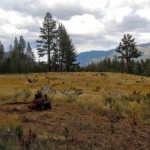
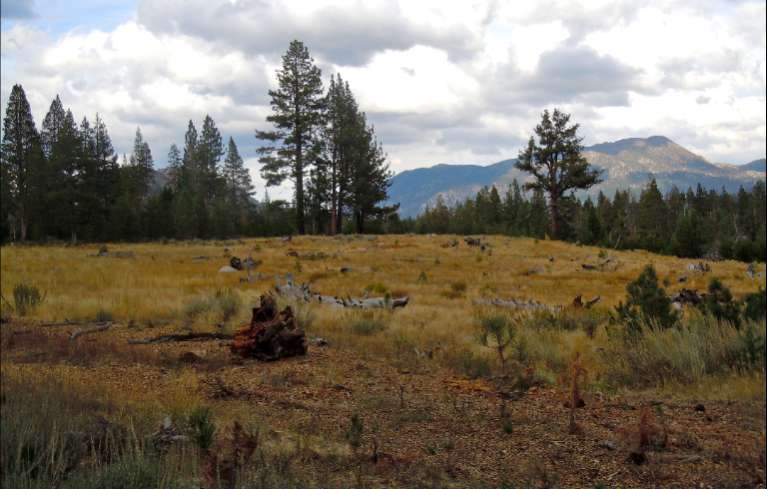
Washoe Meadows State Park on the South Shore. Photo/LTN file

Washoe Meadows State Park on the South Shore. Photo/LTN file

This disorder was recognized by Alameda County Superior Court Judge Evelio Grillo last month when he ruled that State Parks and the Park Commission failed to act with accountability and transparency and failed to comply with California’s CEQA laws when the Commission approved the Upper Truckee Restoration Project and Golf Course Reconfiguration Project in October 2011. He found that the Washoe Meadows Community’s November 2011 lawsuit charging substantive mitigation and EIR deficiencies by Parks undoubtedly caused the department’s quick procedural backtrack and the Commission’s January 2012 re-vote on the project. Judge Grillo declared that even a single point in the suit was a “significant issue,” and awarded Washoe Meadows Community a portion of the legal fees for proving State Parks’ violations.

According to Lynne Paulson, leader of the Washoe Meadows Community, “Our second suit is now proceeding to seek full accountability for the EIR’s deficiencies and the horrible precedent set by Parks’ decision to downgrade Washoe Meadows State Park. Such a move to strip a state park of its protected status renders all California parks vulnerable if the land becomes attractive for development or for-profit reasons.”

The nearly 700-acre park – which includes forest woodlands, meadows and world-renowned, rare boglike wetlands called Fens — was purchased by the state in 1984 at a taxpayer cost of more than $11 million in today’s dollars. Its natural resources were guaranteed protection by state statue with added defense through its designation as a state park.

The Washoe Meadows Community leads the campaign to promote an alternative to parks’ plan to expand the golf course east of the Upper Truckee into the heart of Washoe Meadows, but groups such as the Tahoe Area Sierra Club, and its prominent chair Bob Anderson, are also sounding the alarm over the project’s ecological and administrative miscalculations.

In addition, internationally respected scientists in diverse fields voice concerns that the State is ignoring warnings that the vast excavation and earth-moving project (some 300,000 cubic feet of dirt would be required to sculpt new golf holes along the river) and the subsequent course maintenance demands could result in unintended, permanent consequences for Lake Tahoe clarity, the spawning streams and fisheries, and Washoe Meadows’ historic Fens.

The EIR accepted by the state even predicts — but dismisses as “temporary” — 15 to 20 years of increased sediment in the river flow due to construction impact.

The eminent scientist Charles Goldman, emeritus professor at UC Davis, said, “I was one of the scientists in the 1972 TRPA meetings reviewing a development proposal in what is now Washoe Meadows State Park, and I was dismayed then to learn that a golf course was proposed for this sensitive riparian area. Fortunately, reason and outrage at the proposal won the day. Water quality is particularly threatened by a golf course not only because of fertilizers and other chemicals but also because of the necessity for irrigation. I urge today’s agencies to only approve an alternative that protects rather than harms the health of the lake and not approve an alternative which has the potential for so many negative impacts.”

Of the imposition of a golf course into Washoe Meadows, wetlands authority Robert Qualls of the University of Nevada, Reno said, “There will always be risks associated with the application of fertilizer in areas with a high water table such as exists to support the fens, and there is a risk of flushing of nutrients during floods. There would also the loss of the nutrient uptake by the more than 1,600 trees that would be removed for the course. The cumulative effect of numerous piecemeal changes can result in a major impairment of water resources and interfere with the productivity and water quality of aquatic ecosystems.”

State Parks has relied on outdated economic and recreational models that favor for-profit concessionaires in its assertion that only a “traditional” golf course replacement will provide sustained revenue for parks, its Lake Valley Recreation Area, and the surrounding South Lake Tahoe region. Conversely, Washoe Meadows Community and its allies – highlighted by the leadership of El Dorado County Supervisor Norma Santiago – have advanced innovative alternatives developed by independent specialists that reflect contemporary conservation practices and future financial and social trends.

The coalition’s intent remains to work with State Parks to restore the Upper Truckee, preserve Washoe Meadows as defined by statute, and propel South Lake Tahoe’s future as a sport and recreation destination for all Californians.

Nancy Graalman is director of Defense of Place.



Park City wins legal round involving Vail Resorts

By Christopher Smart, Salt Lake Tribune

Park City Mountain Resort won the latest round in its legal fight with Talisker Land Holdings LLC Wednesday and can argue that it had “first right of refusal” to buy ski terrain adjacent to the historic mining town that is now the subject of a lease dispute.

Summit County’s 3rd District Judge Ryan Harris ruled in favor of PCMR’s motion to broaden its 2011 complaint against Talisker. PCMR now can contend in court hearings that, according to its lease with Talisker, it had the “first right of refusal” to buy the land that is now being sought by Vail Resorts Inc.

The ruling is the latest development in the lawsuit PCMR filed in March 2012 against Talisker after the Canadian-based company informed PCMR that it had failed to meet an April 30, 2011, lease extension deadline on the ski terrain.

According to PCMR’s attorney Alan Sullivan, Talisker’s agreement with Vail that allows the Colorado-based resort corporation to seek control of 3,700 acres of ski terrain adjacent to Park City violates the 1971 lease agreement between PCMR and United Park City Mines, which was purchased by Talisker.

Read the whole story


More logging in national forests approved by House

By Richard Simon, Los Angeles Times

WASHINGTON — In response to fires that have ravaged the West this year, the House on Friday approved a bill that would expand logging in national forests despite a White House veto threat.

The measure, which would impose limits on environmental reviews to speed timber-cutting projects, was approved by the Republican-controlled House, 244-173, on a largely party-line vote.

The bill would more than double timber harvest levels nationwide to roughly 6 billion board feet of timber for sale each year, up from the average of 2.5 billion board feet sold annually in recent years.

It would significantly affect California with its 18 national forests that take in more than 20 million acres. About 5 million acres of California forest are suitable for harvest. Currently, about 22,000 acres are logged in the state, a number that would likely increase if the measure became law.

Read the whole story


Roger Ramseier — 1936-2013

By Robert D. Dávila, Sacramento Bee

Roger Ramseier, a former Aerojet president who led the aerospace and defense contractor amid major industry downsizing after the end of the Cold War, died Sept. 13 of complications related to prostate cancer, his family said. He was 77.

Mr. Ramseier, who grew up in Sacramento, spent his entire career at Aerojet, a maker of rocket engines and missile propulsion systems based in Rancho Cordova. He started after graduating in 1959 from UC Berkeley – where he played football under legendary coach Pappy Waldorf – and climbed the ranks with a reputation as a visionary leader who approached problems head on.

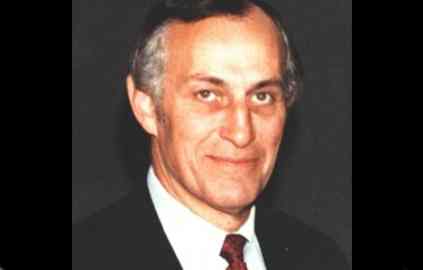
Roger Ramseier

Roger Ramseier

In 1978, Mr. Ramseier was named head of Aerojet’s liquid rocket division, which was facing possible closure after shutting down production of Titan rocket engines as the space shuttle program was gearing up. Convinced that the United States needed more than one way to get satellites into space, he joined other Aerojet executives in lobbying Washington officials for a space shuttle companion vehicle. After the 1986 Challenger explosion temporarily halted shuttle flights, Aerojet was ready to provide NASA with rockets to launch satellites.

Mr. Ramseier moved to Carnelian Bay after retiring from Aerojet in 1997 and was a past president of Tahoe City Rotary Club. He enjoyed family gatherings, traveling, skiing in the Sierra Nevada and taking friends out on Lake Tahoe in his boat.

Read the whole story


Fallen Leaf Lake plan gets USFS green light

A five-year project to improve the Fallen Leaf Lake area could begin next spring.

Approval for the U.S. Forest Service Lake Tahoe Basin Management Unit upgrades came last week.

The project includes improving the Fallen Leaf Lake trail system, while reducing congestion and user conflict. Some of the user created trails will be eliminated. Upgrades and new trails are included in the plans.

The bridge over Fallen Leaf Lake dam will be replaced with one that meets today’s building codes and standards. This includes making it easier for cyclists to cross.

Parking would be expanded and improved, too.

People have through October to appeal the decision.

For more information about the project, go online.

— Lake Tahoe News staff report