A look at the memorial being built in NY; TV special on ‘Women at Ground Zero’

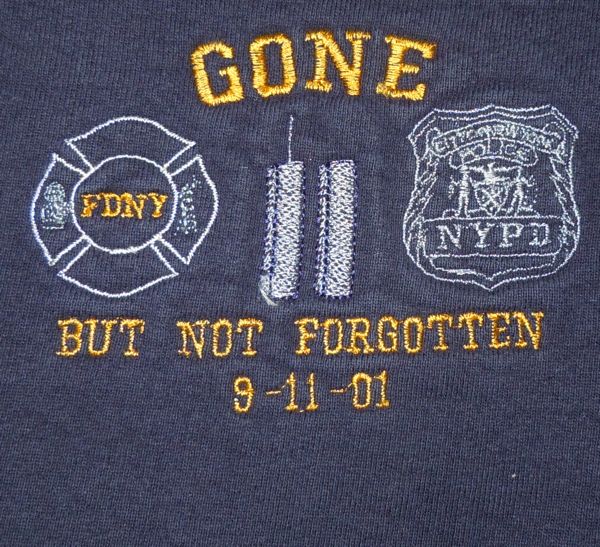
It was 10 years ago today the the twin towers of the World Trade Center in New York were destroyed.

This video explains what is being built on the site today.

Tonight at 9 on CNN is a special based on the book “Woman at Ground Zero” — 10 years later.


Opinion: Embracing art as the medium that heals

By Robert Schimmel

Do we always need tragedy or an odious event like 9/11 to make us appreciate art and what it brings to the very heart of the matter? Doesn’t art often speak louder than words or certainly more eloquently when many have no words?

Please don’t misunderstand, I believe human suffering and pain come well ahead of any art, but we are blessed when the arts aid in healing, understanding and forgiveness. Look at the amazing murals in NYC that tell endless stories and express myriad emotions about this horrific day. Each image on a vacant wall, a borough’s firehouse, or in a city park tells of emotions no one can utter because there are no words for the deep grief or the tragic memories that grow a spirit and create personal inner resolve not subject to linguistic skills.

Robert Schimmel

Robert Schimmel

Our families were robbed, our souls scarred, and our fears realized that lamentable day in September 2001. No one will forget where (s)he was that moment of the Twin Towers imminent demise to rubble and ash, and most do not want to forget for reasons of patriotism or simple, anguished loss and a desire to remember a last hug or kiss.

We must pray, accept and understand that all suffered loss of some kind if we get honest and go deep. Then, in the midst, what is it that touches us most, expresses what we cannot say, and does it without confusing words? Art. Why? Simple, you get to “read” the art and feel or relive the emotions of a moment, an event, an experience, an honor, a tradition, or whatever. And no one can say you’re wrong because there is nothing wrong with personal experience and its truth; it just is, and the doubters be damned. Art does not need to be translated; it is spoken once and heard by all. It goes to the heart of the matter and is truly “worth a thousand words,” if not more.

My sincere point and purpose are to passionately illustrate how art makes a difference we often don’t feel or even recognize until a 9/11 hits. Two and 3-D art, for example, can capture your attention at 500 yards or 5 inches and tell you more in a glance than 50 pages of the finest prose on the planet. From sculpture to architecture, murals to painted eggs, dance to gymnastic rhythms, poetry to music to choirs, et al, we must embrace the elements and artists of what keep us tuned-in and turned-on to life in all its fascinating developments and foundational building blocks we require for personal growth, not to mention our national character.

The expressive quality and talents of our artists need to be recognized and encouraged beyond the commercial scenes and not just for what they can contribute to fundraisers, etc. As a community seeking an identity, Lake Tahoe has an abundance of artists and talent waiting to be creative in ways only they can imagine. Public art and the artists’ giving hands and hearts get the presumptive nods and occasional financial grants but not nearly often enough to make them thrive and able to continue their mission of self-expression (which really turns out to be yours and mine, especially during trying times) and beautification which leads to personal healing, community identity and, ultimately, national recognition.

Should my comments bring concern that this revolves around money, I’ll just have to say you may be right because almost every activity or accomplishment has its sustenance there. Please don’t throw the baby out with the bath water, but preferably get a grip on what can make us spiritually strong, emotionally healthy, and visually pleasing as a community that will naturally attract just what we want: a sustainable future with heart, a memory, and an appreciation of God’s gifts and talents among us at all times, not just when a deplorable event occurs.

Robert Schimmel is a professional artist and teacher in South Lake Tahoe as well as host of “Lake Tahoe Art Scene” on KTHO radio on Thursdays at 5:15pm.


Grandparents earn their day of recognition

In 1970, Marian McQuade began a campaign to set aside a special day just for grandparents. In 1978, President Jimmy Carter signed a presidential proclamation, designating the first Sunday after Labor Day as National Grandparents Day.

The first official observance was Sept. 9, 1979 — and has been celebrated every year since. In honor of our nation’s grandparents, the Census Bureau presents an array of statistics about the role they play in our lives.

In 2009 there were 6.7 million children younger than 18 living with their grandparents.

The number of grandparents responsible for caring for their grandchildren for at least the past five years – 1 million.


9/11: A generation loses its innocence in a N.Y. minute

Publisher’s note: This is one in a 12-part series running from Sept. 1-12 about how Lake Tahoe is tied to 9/11.

By Stephen Ward

When you’re young, you have a peculiar way of gauging things. Some children worry about a new school because of the size or shape of a fence, or from the look of their teacher. Others might sense alarm if their dinner is overcooked or negated altogether.

Although these signals are dubious, they grant closure. They help you reduce dimensions, to understand the world around you and momentarily fend off its opacity.

9:11 logoFor me, I always judged how the day would unfold by who woke me up in the morning.

My mother was the norm; she would sit beside me and rub my back, speaking softly until I woke up. This meant today would be the new yesterday — everything is as it should be.

Being woken up by my father was a different story. He favored yanking the sheets off quickly and shouting “Morning!” relying on the startle to wake me up. This occurred less often and indicated that I had an appointment or errand to run before school. The day would be slightly different, more unpredictable.

On the morning of Sept. 11, 2001, both parents were in my room. But, unlike the other days, neither one made an effort to disrupt my sleep. I awoke to find their backs facing me on the foot of my bed, my bedroom light still off. They were just sitting there, motionless, with their eyes glued to the burning building framed within the 12-inch TV screen.

I couldn’t ask what was happening before a second plane answered my question.

I wish I could say time stood still at that point, but the opposite happened. The TV was turned off and I was told to go downstairs for breakfast. My mom, with her nurturing disposition, consoled me throughout my bowl of cereal. She told me she’d take me to school and that everything would be all right. Don’t worry, she repeated. Everything is fine.

But I already knew that wasn’t the case. I woke up myself, with both of my well-being signifiers entranced in front of me.
Stephen Ward -- 2001

Stephen Ward — 2001

Ask any teenager what it’s been like since 9/11, and you’ll probably get a descriptive before/after binary. Before, schooldays seemed shorter. Lunch tasted better and the air was less stagnant. Teachers would watch their students from afar, reclined against the school wall and talking among themselves.

Sept. 11 was a lost day. No one wanted to do anything, so everyone sat together and watched the TV or listened to the radio. Every 50 minutes, a bell rang — a signal for everyone to get up and go somewhere else to do more of the same.

The most memorable class that day was physical science. My teacher had a close friend who worked in the World Trade Center. She stopped class repeatedly to answer her phone, exchanging calls with her friend’s wife. She cried uncontrollably in front of us when her friend called and said he was alive.

Stephen Ward has lived with the aftermath of 9/11 most of his life.

Stephen Ward has lived with the aftermath of 9/11 most of his life.

From Sept. 12 onward, teachers were falconine. They stayed on the field with students during every break from class, constantly surveying the grounds. They were sentient guard towers, armed with whistles and neurosis.

I was 13 years old living in Las Vegas when the terrorist attacks transpired. According to the major news channels, my region was a potential target. Some of the hijackers met in strip clubs and casinos in Las Vegas before carrying out the attacks. Security cameras showed the perpetrators sauntering through casino floors, detached from reality with the blue, grainy haze of the recording. Like the world they left behind, they were a shadow of themselves.

I wish I could say social profiling didn’t seep into the schoolyard, but it did. Among the many topics discussed back then were sleeper cells, especially in our area. Teachers kept close watch of the Muslim students. Children with darker skin were supervised by multiple hall guards. We stopped getting the occasional hug from our teachers when we left class.

The “us versus them” mentality the nation’s leader adopted divided what was once a unified generation. By reducing dimensions, by trying to better understand the world around us, and our place in it, my peers adopted a new breed of hostility.

It carried into high school. By my sophomore year, the war against terrorism was in full motion. Many students were bloated with chauvinism. The common resolution in history and government classes was to turn the Middle East into a parking lot. This was met with overwhelming approval.

Not every teacher promoted xenophobia. My sophomore English teacher showed us documentaries about war, social unrest and the conspiracy theories surrounding the attacks. His mantra was on expanding our perspective, not polarizing our paranoia.

During the last 10 years, I’ve had quite a bit of time to reflect on what happened and, consequentially, what it means. The world I live in now is a product of an unpredictable event, one that lasted for a few hours and shifted the social axis of everyone around me. To grow up during the post-9/11 era is to grow up with a broken perception of safety, trust and acceptance.

Still, I’m convinced my English teacher had it right. Resilience is tangible, so long as my generation seeks information and awareness rather than rhetoric and scare tactics.

Nowadays, I spend more energy gauging my reaction rather than the events themselves.

Stephen Ward is a student at UNR interning for Lake Tahoe News.


Foghat in Stateline

Foghat will play at Harrah’s Lake Tahoe on Nov. 12 at 7:30pm.

Tickets are $30 — 800.786.8208.


Expect delays if driving on I-80

Because of paving operations, traffic on eastbound Interstate 80 will be restricted to one lane. Delays of 10-20 minutes can be expected.

The restrictions are as follows:

caltrans• Motorists on eastbound I-80 will be restricted to one lane from 6pm Sept. 11 to 9am Sept. 12 from Carpenter Flat Road to Cisco Grove.

• Motorists on eastbound I-80 will be restricted to one lane from 6pm Sept. 12 to 9am Sept. 13 from Carpenter Flat Road to Cisco Grove

• Sept. 12–15, motorists on eastbound I-80 will be restricted to one lane from Cisco Grove to Hampshire Rock Road from 5am-6pm.

Caltrans says the lane restrictions are necessary to facilitate paving operations on the $167 million Emigrant Gap concrete rehabilitation project.


Rain helps bring Douglas County fire to 75% containment

By Reno Gazette-Journal

7:38pm update: The Holbrook Fire in Douglas County is 75 percent contained, Sierra Front Intelligence Dispatcher Helen Frazier wrote in a news release.

Rainfall has been “helpful in cooling the fire and reducing the threat,” and official said.

6:10pm update: The Holbrook Fire in Douglas County is 40 percent contained.

“The primary structure threat has been mitigated,” Sierra Front spokeswoman Helen Frazier wrote, though the fire still poses a risk to structures on the east side.

She wrote that Nevada 208 has been reopened but is being managed by the Nevada Highway Patrol.

“Expect 10 minute delays,” she wrote.

The fire in the Topaz Ranch Estates-Holbrook Junction area has burned 150 acres. Full containment is estimated by 8am Sunday.

“Units are actively engaged in re-inforcing the perimeter and mopup operations,” she wrote.

“Fire is smoldering with a few interior hot spots. Firefighters on scene do not anticipate any significant threat at this time.”

Air tankers were released, and “excess local agency equipment is being released this evening.”

Read the whole story


Placer County supes to talk budget, redistricting

Placer County Board of Supervisors will conduct public hearings Sept. 13 on a proposed $765.8 million final budget for the 2011-12 fiscal year and on a redistricting map that could establish the boundaries of supervisor districts for the next decade.

Tuesday’s meeting is at 9am in the Board of Supervisors Chambers at the County Administrative Center, 175 Fulweiler Ave., Auburn. The public hearing on the redistricting map is scheduled for 10am and the hearing on the budget is set for 11am.

During Tuesday’s budget hearing, the board will take public comment on the county’s proposed final budget and direct staff to make any necessary changes before final consideration on Sept. 27.


Modern firefighters tackle more than flames

By NPR

Fires are on the decline nationwide, but that doesn’t make a firefighters job any easier. In fact, it may be harder now. Not only are fires more complicated these days, but the scope of firefighting has changed drastically and now includes fire prevention, public education, safety inspections and more than anything, emergency medical assistance.

“Seventy percent of our calls are medical calls,” probational firefighter Jeff Taylor tells weekends on All Things Considered guest host Laura Sullivan.

Taylor works at Station 4 in Alexandria, Va. The last time he saw a structural fire — one that affects a building or structure — was four months ago. That’s thanks to better building materials and codes, as well as public awareness. According to the National Fire Protection Association, there are half as many fires as there were 30 years ago.

But Taylor and the two dozen other firefighters at Station 4 are still saving lives. They’re just doing it on a gurney. Every one of them is an emergency medical technician.

In the early ’70s, the Alexandria Fire Department incorporated the rescue squad as part of the fire department medical services. It was the first paramedic program in the country.

Capt. Tony Washington, an 18-year firefighter, has seen the profession change and evolve. He acknowledges he may have missed fighting fires five or 10 years ago, but things have changed.

Read the whole story


Movie premiere at Alpine Meadows this month

Alpine Meadows Ski Resort base lodge will host the California premiere of the Teton Gravity Research 2011 ski film “One for the Road” on Sept.23.

Doors open at 7pm, where guests can enjoy pre-show beverages at the Last Chair Bar leading up to the 8pm show.

“One for the Road” presents in HD quality the world’s most renowned and accomplished athletes who continue to challenge the definition of what is humanly possible on skis. Skiers including Sage Cattabriga–Alosa, Grete Eliassen, Dash Longe, Rachel Burks, Daron Rahlves, and many more are celebrated on the big screen while experiencing the ultimate ski road trip — immersing themselves into the culture of Japan’s powder Mecca of Hokkaido; discovering Iceland’s urban side; exploring the Balkan wonders of Macedonia and Montenegro; uncovering first descents in Pemberton, British Columbia; and hitting full-throttle lines in the perfect snow and weather of Juneau, Alaska.

Show tickets are $10.