Panel sees problems in legalizing recreational marijuana in Nevada

By Raven Jackson, Las Vegas Review-Journal

In November, Nevadans will vote on whether to legalize recreational marijuana — Question 2 would allow adults 21 years and older to possess up to 1 ounce of marijuana legally. On Saturday, a panel of experts largely argued that legalization might be a bad idea.

Earl White, former director of Weed & Seed Program, a crime and drug abuse prevention group, was one of five speakers who met Sept. 10 at the University of Phoenix Las Vegas campus. He was adamantly against legalizing marijuana for recreational use, arguing pot use lessens someone’s motivation to study or find work.

“(Nevada is) already last in education and behind in unemployment,” White said. “There is no way that legalizing marijuana is a good thing for the community.”

Read the whole story


Mountain bike program for youth in Tahoe City

The Tahoe XC Junior Mountain Riders Program is looking for riders.

The Tahoe City program provides children 7-11 with an opportunity to experience and grow in the sport of mountain biking. Weekly club rides focus on developing safe, strong, responsible riders through instruction, practice, and fun in a healthy, supportive environment.

The program runs Sept. 12-Oct. 17 and costs $50. Rides are from 4-5:30pm. Meet at Tahoe XC Trailhead. Drop-in rate is $10 per child.

Rides take place on dirt fire roads and single track trails within the Tahoe Cross Country Ski Area. Depending on age, ability and conditions, rides cover 5-10 miles, ascending and descending the fire roads and single tracks in the ski area.

Email andrews@tahoexc.org with questions.


Road Beat: An improved Toyota Tacoma

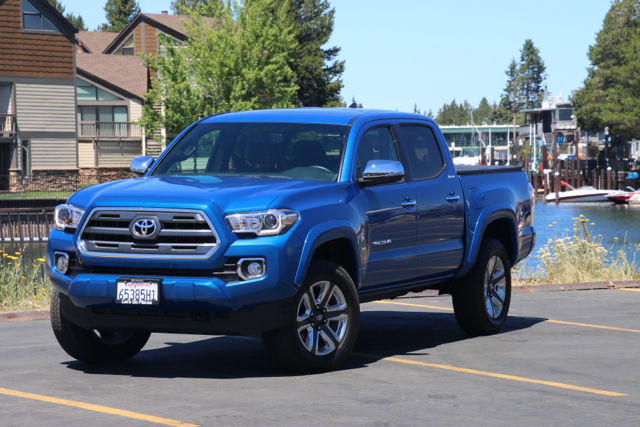
The Toyota Tacoma is designed for pavement and dirt trails. Photos/Larry Weitzman

The Toyota Tacoma is designed for pavement and dirt trails. Photos/Larry Weitzman

By Larry Weitzman

Tacoma makes the point that smaller engines don’t necessarily make the case for better fuel economy. With the new Tacoma there are two engine choices, a 2.7L DOHC, 16-valve inline four cylinder and a 3.5L DOHC, 24 valve V-6 with direct injection and a high 11.8:1 compression ratio.

The 2.7L cranks out 159 hp at a low 5,200 rpm and 180 pounds of twist at 3,800 rpm. However, the V-6 (about 750 more ccs) produces 278 hp at 6,000 rpm and 265 pounds of twist at 4,600 rpm, over 100 more hp an 85 more pounds of torque. It basically the same 3.5L V-6 found in so many Toyota and Lexus models.

So you would expect the 2.7L truck to achieve better fuel economy. In this case the EPA fuel economy numbers are virtually identical. In a 4X2, the V-6 actually gets better fuel economy with 19/24/21 city/highway/combined versus the four cylinders 19/23/21 mpg. For the 4X4 models, the V-6 returns 18/23/20 mpg, the four returned 19/22/20 mpg, effectively the same. Those numbers are for the six speed automatic tranny versions. The manual tranny actually hurts fuel economy for both engines by as much as one mpg.

Specifications  Price $27,105 to about $40,000 Engine  3.5L DOHC, 24 valve directed and port injected V-6 278 hip @ 6,000 rpm; 265 lb.-ft. of torque @ 4,600 rpm Transmission Five speed manual Six speed Manual Six speed torque converter automatic Configuration Longitudinal front engine/ rear wheel drive/four-wheel drive Dimensions Wheelbase 127.4 inches Length 212.3 inches Width 74.4 inches Height 70.6 inches Ground clearance 9.4 inches Fuel capacity 21.1 gallons Track (f/r) 63.0/63.2 inches Weight 4,480 pounds GVWR 5,600 pounds Tow Capacity 6,400 pounds (properly equipped) Steering lock to lock 3.64 turns Turning circle44.1 feet Co-efficient of drag 0.386 Performance  0-60 mph 7.48 seconds 50-70 mph 3.97 seconds 50-70 mph uphill 5.85 seconds Top speed Triple digits Fuel economy EPA rated 18/23/20 mpg city/highway/combined.  Expect 19-20 mpg in rural driving. 24-25 mpg on the highway at legal speeds.

Specifications
Price $27,105 to about $40,000
Engine
3.5L DOHC, 24 valve directed and port injected V-6 278 hip @ 6,000 rpm; 265 lb.-ft. of torque @ 4,600 rpm
Transmission
Five speed manual
Six speed Manual
Six speed torque converter automatic
Configuration
Longitudinal front engine/ rear wheel drive/four-wheel drive
Dimensions
Wheelbase 127.4 inches
Length 212.3 inches
Width 74.4 inches
Height 70.6 inches
Ground clearance 9.4 inches
Fuel capacity 21.1 gallons
Track (f/r) 63.0/63.2 inches
Weight 4,480 pounds
GVWR 5,600 pounds
Tow Capacity 6,400 pounds (properly equipped)
Steering lock to lock 3.64 turns
Turning circle44.1 feet
Co-efficient of drag 0.386
Performance
0-60 mph 7.48 seconds
50-70 mph 3.97 seconds
50-70 mph uphill 5.85 seconds
Top speed Triple digits
Fuel economy EPA rated 18/23/20 mpg city/highway/combined. Expect 19-20 mpg in rural driving. 24-25 mpg on the highway at legal speeds.

What I saying here is buying the four cylinder is false economy. Pay the premium (which runs from $1,500 to about $2,500 depending on the model) for the V-6, you will thank me later, especially for the added performance gain.

While the body is new, the chassis remains pretty much the same with a wheelbase of 128 inches a track of 63 inches, front and rear, a width of 74.6 inches and a 9.4-inch ground clearance. But the new, rugged body has grown with four more inches in length (212 inches long which is a foot longer than your full size SUV or minivan), a one-inch deeper cargo bed and it stands an inch taller at 71 inches. It looks big and you have to look twice to make sure it is not a full size truck. When you park the Tacoma in your garage, you will appreciate its actual slightly smaller size and at the same time realize it is not a full size truck.

Its new looks also come with a slightly lower co-efficient of drag at .0386, down from 0.394.

Perhaps the biggest change is the new, to the Tacoma, 3.5L V-6 down from a 4.0L V-6. Half a liter less displacement, and about 20 percent more hp and no loss in torque even with the smaller displacement. But it certainly does help fuel economy. And this is even with more curb weight of about 400 pounds. Zero to 60 mph lasted 7.45 seconds, identical to my test six years ago which used the 4.0L V-6 and was 400 pounds lighter. However, the new engine in passing performance is quicker with 50-70 mph taking 3.97 seconds and the same run up a six percent grade extended that time to 5.85 seconds. The six speed auto cog swapper was smooth and enhances performance, although it does hunt for gears a fair amount keeping the engine in the power band.

That same tranny also improves fuel economy. You have the EPA numbers above, but in real life the new Tacoma does a little better with an overall mpg of about 19-20 mpg mostly on rural, hilly byways at 55-60 mph with almost no highway driving. On the highway the Tacoma average about 25 mpg at a steady 70 mph in a two way run. On a round trip to South Lake Tahoe from Placerville the average was 20.8 mpg. My prior 4.0L truck averaged 16-17 mpg and 20 on the highway. Fuel tank is large at 21 gallons. But here’s the rub, full size V-8 trucks almost or do get the same fuel economy numbers as the Tacoma.

Part of the reason for the Tacoma’s new found fuel economy is its new taller gearing which causes some of that tranny hunting. But at 70 mph instead of spinning 2,450 rpm, it now spins at 1,850 rpm which is a huge factor in its fuel economy increase as well as the new, more efficient 3.5L V-6.

Handling is quite good, although with 3.64 turns lock to lock in the steering it takes some winding. Suspension is fairly standard full-sized truck, with double wishbones up front and a live axle in the rear with leaf springs and staggered shocks. On smoother roads the live axle doesn’t step out as a result of bumps and the Toyota tracks where you point it with little body roll. Big 265/60 series tires and great looking 18 inch alloys are fitted to this a sporty truck which already boasts a wide 63-inch track. On center steering is excellent. It’s not a sports car, it’s sporty truck. One item with respect to the steering wheel while tilt and telescoping, it is a bit too horizontal. The lower part of the wheel is much closer to the driver than the upper part. I noticed that in the new Prius too. Most trucks have the wheel on the same plane and is set 90 degrees to the steering column. The Tacoma wheel is set maybe at 75 degrees. Just a note.

Ride quality is like a pickup. It is extremely smooth on a smooth highway or road, but on more challenging pavement it is a bit jiggly. Not harsh, but somewhat unsettled. Being a 4X4, this Toyota is designed for real off road and has suspenders designed for that. Overall you get used to the jiggles which turn into giggles when off-road. But when on the interstate or Highway 50 even going into the mountains, the ride is smooth. Wind and road noise are well subdued as are the big tires quiet.

While the brakes feel strong and that this Toyota with the tow package is designed to tow up to 6,400 pounds, its brakes a rather small. Ten and three-quarters inch ventilated discs in front, and 10 inch drums in the rear. Compact cars have bigger brakes. Maybe that is a misprint in the factory specs but on the plus side, the system feels strong although I did no towing. Without the tow package the tow limit is 3,500 pounds, but in either case I would want trailer brakes. For the $650 tow pack, you don’t get bigger brakes, but a hitch, oil and fluid coolers for the engine and tranny, pin connector and trailer sway control. Of course all the basic safety acronyms are there, ABS, ESC, TC and more plus eight airbags. My Limited model also got rear sonar, backup camera, Blind spot monitor and rear cross traffic alert.

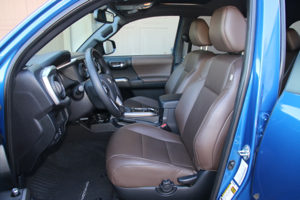
Toyota has done a number on the interior with seats swathed in gorgeous leather, more like the kind you would find on a saddle or in a tach room, soft and thick. No power seat option is offered something Toyota should think about as there is no manual seat height adjustment. But they are big and comfortable. The IP while done in quality materials, there is not much in soft touch. Instrumentation is complete with a big speedo and tach separated by a trip computer. The center stack and controls are stylish and easy to use. Nav was standard. Pricing for this maxed out fully loaded 4X4, V-6 Limited is $37,820 plus $650 for the hard, three piece tonneau cover and $650 for the tow package. In all models power windows and mirrors are standard, even cruise is standard on all but the base model. The total with the $900 for the boat from Japan is $40,020. The 4×4 option adds about $2,000. With the deeper the Tacoma has more versatility and utility than ever before.

Larry Weitzman has been into cars since he was 5 years old. At 8 he could recite from memory the hp of every car made in the U.S. He has put in thousands of laps on racetracks all over the Western United States.


Fire near Donner Ski Ranch stomped out

Crews in Truckee have a handle on a quarter acre fire burning west of Donner Ski Ranch.

Air tankers and helicopters made drops on the fire to contain it before crews could get a hose line around it on Monday afternoon. Air tankers are being released and the helicopter will be soon.

Crews will be on scene for the rest of the day mopping up.

The cause is under investigation, however, it is likely the Sept. 12 fire started from a campfire that was not put out well enough, officials said.

— Lake Tahoe News staff report


TCPUD may change golf course operations

Tahoe City Public Utility District’s board is considering taking over operations of the golf course and contracting out the food and beverage component.

For the past five years Duncan Golf Management has run the Tahoe City Golf Course.

TCPUD believe existing staff along with Bob Bonino, golf course manager, can run the facility.

The golf course in recent years has expanded to include a winter sports park, bocce ball and this winter an ice rink will be installed.

The board meeting is Sept. 16 at 8:30am at the district office. If the board approves the changes, they would take effect Nov. 1.

— Lake Tahoe News staff report


Lukins Brothers — pioneers in SLT water biz

By Kathryn Reed

STATELINE – Lukins Brothers is more than a water company. It’s a family. It’s a way of life. It’s a part of Lake Tahoe’s history as well as its future.

And despite the name, a woman runs it.

No matter what Jenn Lukins’ title is, she is the face and voice of the South Shore water purveyor. It is very much a family operation, just like it was when it started in the 1940s.

But much has changed in the intervening years. Lukins talked about the history and life today concerning her company during a Soroptimist International of South Lake Tahoe meeting; she also delved into the history of water on the South Shore.

It wasn’t that her great-grandpa Lloyd Lukins intentionally set out to get into the water business. He had a well, neighbors needed water, and he started selling to them.

At one time the family owned several acres on the outskirts of Camp Richardson on both sides of Highway 89. His family lived in what is now Evans Restaurant. Lukins Resort was a thriving enterprise. The cabins people would rent still exist – they are the little white ones used by a Christian youth group in the summer.

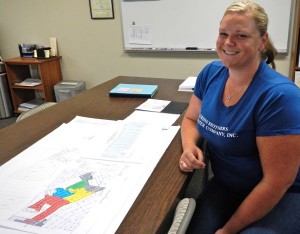
Jenn Lukins is carrying on the family tradition of working for the South Lake Tahoe water company. Photo/LTN file

Jenn Lukins is carrying on the family tradition of working for the South Lake Tahoe water company. Photo/LTN file

Lloyd Lukins decided to start subdividing the land in the mid-1940s, selling the land with water.

In 1953, the state awarded Lukins Brothers a certificate to provide water to the 20 seasonal customers. Today the water company has 974 customers; of which more than 80 percent are full-time residents.

Something that Lloyd Lukins did that turned heads at the time was to put in 4-inch waterlines instead of the three-quarter inch that were the norm then. He was a visionary.

Lukins is not the oldest water company in South Lake Tahoe – that distinction goes to Lakeside Park, which started in 1904. It still operates near the state line.

In the early years there were also Globins, Tahoe Sierra, Martin Family, Tahoe Paradise and Tahoe Keys water systems.

South Tahoe Public Utility District started in 1950 as a sewer company with a pump on Ski Run Boulevard. Septic tanks were used prior to that. Now septic tanks are illegal in the Lake Tahoe Basin.

In the next decade South Tahoe PUD bought the Globin water company, and then many of the others.

Today water on the California side of the South Shore either comes from Lukins, STPUD, Tahoe Keys or Lakeside. STPUD still handles all the sewer.

What has changed the most are all the regulations from the state and feds. For Lukins, the California Public Utilities Commission and state Water Resources Control Board are the two big overseers. They control rate increases, water quality, regulate water flow for fires and other aspects of the business. The overriding issues are health and safety for customers.

Contaminants in the water are something Lloyd Lukins didn’t have to contend with, but are an every day worry for his great-granddaughter. PCE or tetrachloroethylene was first detected in South Lake Tahoe’s groundwater in 1989. Lukins’ wells were affected in 2014, though it’s not the only water company with PCE. The company is working to put in a filtration system, while the state continues to try to isolate the source.

PCE was a commonly used chemical in dry cleaning and automotive businesses. Lake Tahoe Laundry Works used to be at Y in the Raley’s center. That is a known source for PCE contamination right there and had originally been thought to be the source of the plumes below TJ Maxx and Classic Cue.

Climate change is another issue Jenn deals with that Lloyd never had to. While regionally the use of water is declining and aquifer is healthy, it is snowmelt that recharges the underground water. With less snow predicted for the future, at some point the availability of water could become an issue in the basin.


Snippets about Lake Tahoe

·      Boomtown in Verdi is now Best Western Plus Boomtown Casino Hotel.

·       Participating McDonald’s in Northern Nevada and Lake Tahoe are offering a free breakfast Sept. 13 from 6:30-9:30am to students in K-8 who are accompanied by an adult.

·       The American Aeronautical Foundation is offering rides on a World War II B-25 Mitchell bomber at the Carson City Airport on Sept. 14-15.The 30-minute rides are $425. The plane will be in Truckee on Sept. 17-18.

·       Here are the El Dorado-Tahoe and Sierra roadwork schedules from Caltans for the week.

·       Clint Purvance, CEO and president of Barton Health in South Lake Tahoe, has made Becker’s Hospital Review’s list of 110 physician leaders of hospitals and health systems.


Time to harvest pine nuts in Nevada

The pine nut harvest season is under way on lands managed by the Nevada Bureau of Land Management and Humboldt-Toiyabe National Forest.

The length of the pine nut harvest season varies depending on crop quality and seasonal weather conditions. It is generally September to late October when pine nuts are still available for harvest.

The BLM and U.S. Forest Service have two types of pine nut harvesting: personal use and commercial use. Personal use is the harvesting of relatively small amounts of pine nuts not intended for sale. Commercial use is when harvesters intend to sell their nuts or if they are harvesting large quantities for personal use.

Individuals may gather up to 25 pounds of nuts per season/per household without a personal use permit and at no charge. Anyone who would like to gather more than 25 pounds must contact their local BLM or Forest Service office.

Even though the general public is allowed to harvest pine nuts under personal use without obtaining a permit at one of the BLM or U.S Forest Service offices, it is recommended that individuals stop by the local office to obtain specific pine nut harvesting information. This information could include maps of good crop areas, closure information, fire restrictions, areas to avoid, and more.

Personal use harvesting is allowed anywhere that pinyon pine trees may be found on BLM managed lands. The Ely and Battle Mountain Districts have issued a total of 10 commercial permits for the collection of just over 90,000 pounds of pine nuts.

For more information on BLM commercial use,  contact Coreen Francis at 775.885.6161 or c1franci@blm.gov.


Sherman William McKissock — 1922-2016

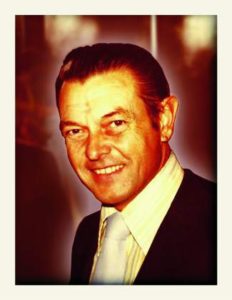
Sherman William McKissock

Sherman William McKissock

Former South Shore resident Sherman William McKissock died Aug. 29, 2016. He was 94.

Sherman was born Jan. 27, 1922, in Richmond, Ky., to Coy and Eleanor Wilcox Agee.

In his early years Sherman was raised by his grandparents in Fort Smith, Ark., and St. Louis. His mother took over his care at the age of 12 in Alameda. He was adopted by his stepfather and began his life as Sherman (Sherm) McKissock.

Sherman met his future wife, Dorothy,  in grammar school when she was 9 and he was 12. The were married for 72 years. Dorothy’s brother, Earl Peck, was Sherm’s best friend. Sherm thought of Dorothy as a pest until she turned 15. After their first date, Dorothy told her brother that Sherm “was it” and the rest is history. They became engaged and married in Baltimore during World War II in 1943.

They had six children: Lynda McDowell, Gordon McKissock (deceased), Marge Glaser, Jeanette Grubbs, Marianne Johnston and William McKissock; along with their 16 grandchildren, 19 great-grandchildren and one great-great-grandchild.

After high school Sherm went to work at a bank. He eventually became a vice president of Wells Fargo Bank.

When World War II broke out Sherm wanted to be a pilot. After taking an eye exam he found out he was color blind. The Merchant Marines accepted him. He went to the U.S. Merchant Marine Academy, Kings Point, N.Y., in the engineer program. He eventually received his 2nd engineers license. His home port was Naples, Italy. When in Okinawa his ship was targeted by kamikazes and he was one of the lucky ones to make it home. Sherm was very patriotic and had such a love for country.

In 1945 Sherm and Dorothy along with Dorothy’s brother, Earl, bought some property on Sierra Boulevard in South Lake Tahoe. The three had some cottages built and rented them out in the summer.

After the war Sherm returned to banking in the Bay Area. In 1963 the family moved from Alameda to South Lake Tahoe for him to open the first Wells Fargo bank. He was the bank manager.

He was very active in the community and was part of a task force committee to look at the pros and cons of South Tahoe becoming a city. He was active in the South Tahoe Rotary Club and the chamber of commerce, having served as president in both organizations. He sketched the first logo for the chamber which was used for many years. Sherm served on the Citizens Committee Research for the future Lake Tahoe Community College. In March 2015, Sherm received an honorary lifetime membership with the Lake Tahoe South Shore Chamber of Commerce.

Sherm was an elder in the Lake Tahoe Community Presbyterian Church and the church treasurer for many years. He was a director of the Barton Hospital board and volunteered at the hospital to stay current on the goings on at the hospital. He and Dorothy volunteered to serve at Bread & Broth for many years. Sherm loved to play golf and bridge.

In 1968 Wells Fargo asked Sherm to move to San Fernando Valley to open new branches in the area. To get his wife to leave her beloved Lake Tahoe, Sherm promised a swimming pool, but soon found heavy equipment was unable to get to the back of the new home. He took matters in his own hands and began to dig, one shovel full at a time, a pool for the family. This project took one full year (after work and weekends). He continued his community service by serving as president of the Van Nuys Chamber of Commerce in 1968 and president of the Woodland Hills Chamber of Commerce in 1971. He served as treasurer in the Woodland Hills Rotary Club and treasurer for the San Fernando Valley Industrial Association.

After retiring from Wells Fargo, Sherm returned to South Lake Tahoe in 1978 and became the manager of the South Lake Tahoe Chamber of Commerce. Eventually he was encouraged to re-enter the banking business, this time in Stateline as vice president and manager with First Interstate Bank, which eventually became Wells Fargo Bank.

After nearly 44 years in the banking business Sherman retired. While living in Stateline, Sherm became involved in politics and eventually became chairman of the Douglas County Republican Central Committee.

He was appointed to the Douglas County Board of Equalization.

Sherm and Dorothy moved from Stateline to Escondido, California in 2004 into Champagne Village at the Lawrence Welk Resort to live closer to three of their children.

In 2014, the couple moved again, this time to Minden, to be closer to their family and beloved Lake Tahoe. Sherm enjoyed the friendliness of the people of the Carson Valley and he and Dorothy became members of the Carson Valley United Methodist church.

Sherm is survived by his wife Dorothy; brothers Jim McKissock (Kathy) of El Cerrito, Harold Agee (Nel) of Richmond, Ky., and Marvin Agee of Richmond, Ky.; sister Helen Agee Hacker of Richmond, Ky; children Lynda McDowell (Robert) of Gardnerville, Marge Glaser (Steve) of Gardnerville, Jeanette Grubbs (John) of Bend, Ore., Marianne Johnston (Stan) of Escondido, and William McKissock of Round Hill;  grandchildren Kevin Kjer (Kristy) of Stateline, Kirsten Kjer Jobb of Brentwood, Karyn Kjer Clay (John) of Waimea, Hawaii, Robert McKissock of Desert Hot Springs, Ian McKissock of South Lake Tahoe, Joline McKissock Welch (Josh) of South Lake Tahoe, Jamie McKissock Spears (Ramen) of Valley Springs, Sean Glaser (Marissa) of Escondido, Alyson Glaser Ritz of Las Vegas, Heather Grubbs Smith (Robert) of Bend, Ore., Tiffany Grubbs Hernandez (Chris) of Bend, Ore., Justin Johnston (Jennifer) of Oceanside, Kylene McKissock of Truckee, Jared McKissock of Petaluma; 19 great-grandchildren; one great-great-grandchild.

Sherm was predeceased by his parents, Coy Agee and Eleanor Agee McKissock, stepfather Charles (Mac) McKissock, son Gordon McKissock and granddaughter Christy Glaser.

There will be a celebration of life on Sept. 18 from 11am-3pm at the home of daughter Marge and son-in-law Steve Glaser. RSVP to Lynda McDowell — 775.392.1234.


Opinion: Time to deny Martis Valley West

By Ellie Waller

The Martis Valley West Parcel Operating Agreement (MVOA) has become a pawn, not the final puzzle piece to protect and connect 6,000-plus acres of conservation land to the Mount Rose Wilderness. Below is a quick chronology:

2013: CREW LLC (East West Partners), Sierra Pacific Industries, Sierra Watch and Mountain Area Preservation enter an agreement (MVOA) to protect 6,000-plus acres. The MVOA did not contemplate a TRPA area plan; it was only supposed to be within the Martis Valley Community Plan boundary.

2014: A 112-unit gated luxury development is proposed as part of the Martis Valley West Parcel Specific Plan (MVWPSP). Placer County prepared this area plan for the 112.8-acre portion of the Martis Valley West Parcel (MVWP) Specific Plan located entirely within the Tahoe basin and subject to the jurisdiction of the Tahoe Regional Planning Agency. As mentioned, this was not envisioned as part of the MVOA. There was so much public outcry, the proposed area plan was suspended by the applicants and removed from the MVWPSP.

2015: A replacement proposal for the 112-unit gated luxury development is proposed by Mountainside Partners (formerly East West Partners: same development team of MVWPSP) — the Brockway Campground, a 550-unit glamping experience with just as much public outcry.

This proposal is reckless piece-meal planning disguised as a separate project. The egregious campground proposal illustrates these guys are not concerned with conservation; they just want to be paid for the east side incentives, swap designations and make money on the west side through lot sales for luxury home development, so how is this a public benefit?

“Placer County Board of Supervisors … you must vote to deny the Martis Valley West Parcel Specific Plan as proposed.”

2016: Martis Valley West Parcel Specific Plan final environmental documentation is released in May. The Tahoe Regional Planning Agency, Tahoe Area Sierra Club, League to Save Lake Tahoe, Mountain Area Preservation, Sierra Watch, hundreds of members of the public, Caltrans, CalFire, Northstar Community Service District/Fire District, North Tahoe Fire District, North Tahoe PUD, Placer County Air Pollution District, town of Truckee, and Tahoe-Truckee Airport among many others comment on final environmental impact report.

Decision makers: We have no confidence in Mountainside Partners. They have unfinished projects at Old Greenwood, Grays Crossing, Northstar and Highlands. These projects are not just planned to be phased; they are incomplete, so why do we need another development by these applicants when they cannot finish their existing projects or file bankruptcy?

June 9, 2016: Placer Planning Commission hearing. The public comes out in force, with over 200 people in attendance, with only two people in support of the project. The hearing is continued to July 7, 2016, and again over 200 community members express their disdain for an ill-conceived project with little to no support. The Planning Commission decision is 5-2 with a recommendation to deny the project.

The conservation easement is being held hostage: From the MVOA: East Parcel Purchase, Sale and Option Agreement Term Sheet page 2: “Exhibit C 3. East Parcel Scenarios: If the West Parcel does not receive initial approval. No deal on East Parcel acquisition and/or conservation easement.”

Remedies, Page 4 of MVOA: “5d. If the Conservation Group or Land Trust Partners litigate the Initial Approval at any point in the process of approval or within 120 days thereafter, the entire Agreement is automatically terminated.”

I repeat: The Martis Valley West Parcel Operating Agreement has become a pawn, not the final puzzle piece, to protect and connect 6,000-plus acres of conservation land to the Mount Rose Wilderness.

Placer County Board of Supervisors, you have/will receive written comments and hear public testimony on the inadequacy, flaws, and lack of adequate and accurate analysis of the environmental documentation on September 13 that is so compelling you must vote to deny the Martis Valley West Parcel Specific Plan as proposed.

Ellie Waller is a Tahoe Vista resident.