Daily habits to reduce chronic pain

By Sherellen Gerhart

More than 100 million Americans are living with chronic pain. That’s more than the number of Americans affected by cancer, heart disease, and diabetes combined. A person with chronic pain is three to four times more likely to dealing with depression as well.

Sherellen Gerhart

Chronic pain can last for weeks, months – even years. Sometimes chronic pain is caused by an injury, infection, or an ongoing condition like arthritis or cancer. Not managing chronic pain can lead to deepening depression, poor sleep, agitation, and loss of concentration.

Keep in mind, if you are living with chronic pain, you can find relief. There are many solutions available that can help you live a happier, healthier life – despite your pain. For starters, try these strategies:

  • Get out of bed. Although it may be tempting to go on bed rest while you’re in pain, staying active daily will help keep your body – and mind – in better shape. Avoid movements that makes pain worse, but try low-impact activities that minimize the risk for further injury. Your doctor can suggest the safest activities for you.
  • Relax. Certain relaxation techniques, such as meditation or breathing exercises, have proven to be helpful in managing chronic pain. Plus, going to your own “happy place” can distract you from any physical pain. The American Chronic Pain Association (theacpa.org) offers a relaxation guide, or try downloading a guided imagery app to your smartphone.
  • Take the right medication for your pain. Nonsteroidal anti-inflammatory drugs (NSAIDs), such as ibuprofen, and acetaminophen, can be purchased over-the-counter and relieve muscular and bone pain. But some people, especially older adults with certain diagnosis, cannot take NSAIDs because of specific risks. Be sure to get get guidance from your health care provider as to appropriate dosing and use.
  • Antidepressants may help control pain as well as any emotional toll you may be experiencing. Muscle relaxants, another prescribed option, are often used to reduce pain caused by muscle spasms. Talk with your doctor about what the best fit for you.
  • Try yoga. Yoga can be key in preventing or even reversing the mental effects of chronic pain. Depression or anxiety caused by chronic pain can lead to loss in brain tissue, which can then lead to memory impairment and emotional problems. Research shows that regular yoga practice has the opposite effect on the brain – a major reason to roll out your mat.
  • Feed your body good food. Certain foods can fight inflammation, make your bones stronger, and therefore help alleviate your pain. The best foods for arthritic pain, for example, include fish, soy, and olive oil because they contain anti-inflammatory properties like omega-3 fatty acids. Plus, a healthy diet can help life your spirits.

In addition to these strategies, be sure to talk with your doctor about self-care solutions that are tailored to your own chronic pain.

Sherellen Gerhart is a physician board certified in internal medicine, palliative and hospice medicine, and geriatric medicine. She oversees Barton Palliative Care and provides support, consultation, and education for patients and their families.
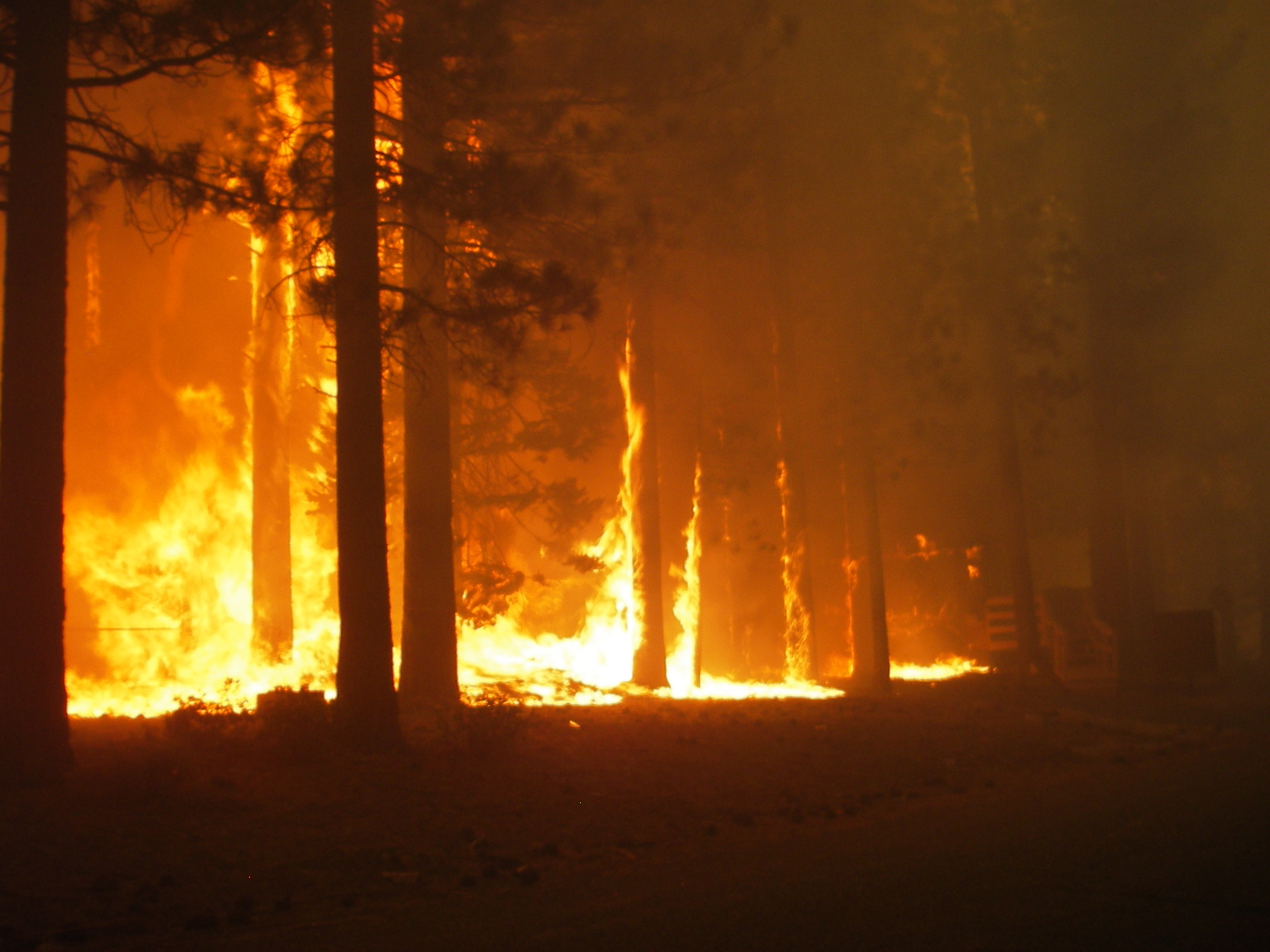

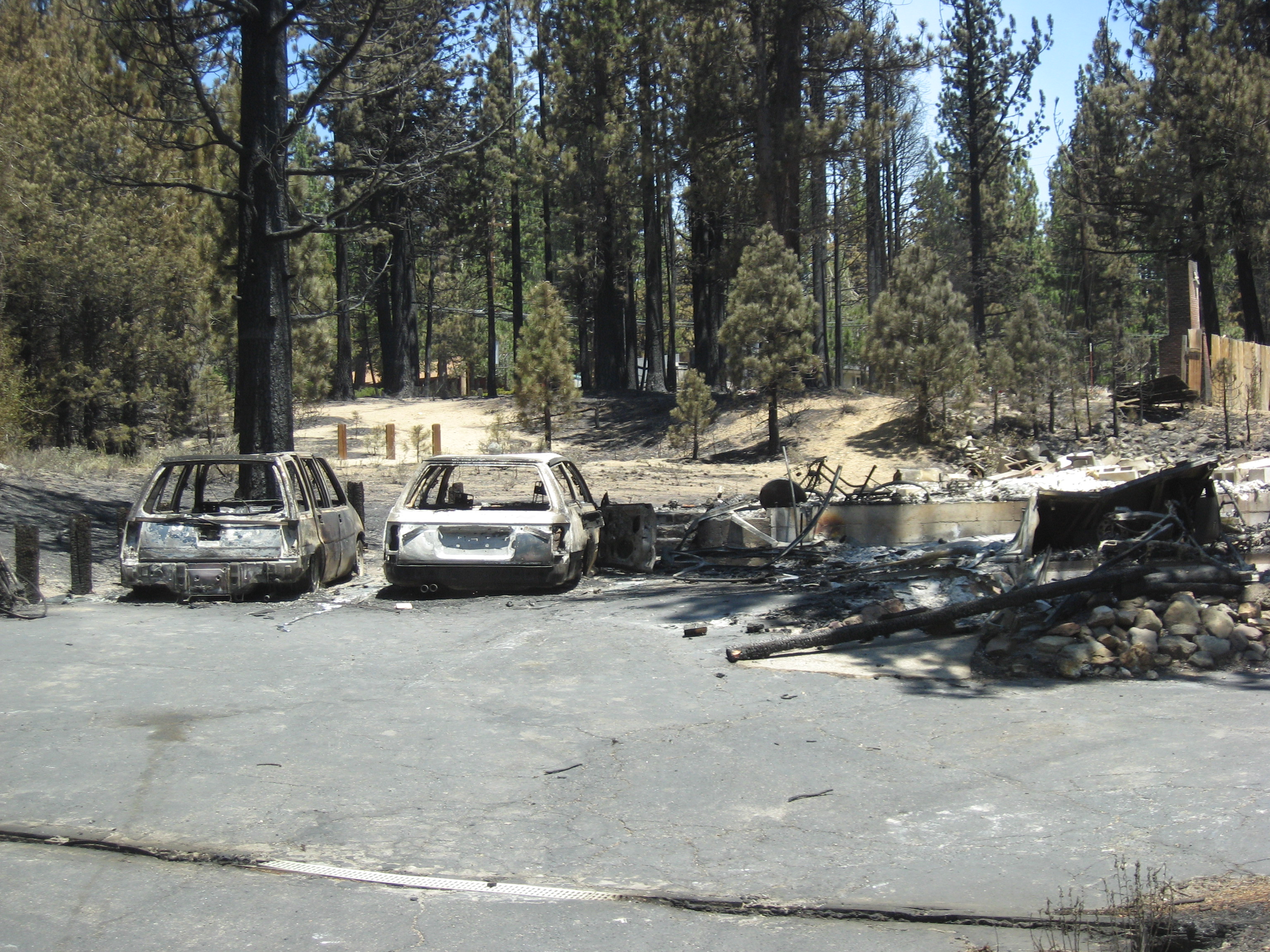


Lake Valley: Angora Fire — a helpless feeling

Publisher’s note: Lake Tahoe News this month has been running several stories leading up to today’s 10th anniversary of the June 24, 2007, Angora Fire.

The Angora Fire spreads rapidly through the forest. Photo/LVFPD

By Kathryn Reed

“In the firehouse it was a quiet, somber mood. Everyone was really tired and we were all really sad. It was our local fire district. We were wishing we could have done more, but knew it was totally out of our control. It was a helpless feeling.” – Capt. Mike Mosca, Lake Valley Fire Protection District

Mosca wasn’t supposed to work on June 24, 2007. He was camping with his family at Fallen Leaf Lake.

He and then Battalion Chief Joe MacAvoy had been mountain biking at Scott’s Lake that morning. Siren, after siren wailed in the not so far distance. Coming down the trail into Meyers they saw the plume of smoke. It was black. Structures were on fire. The two had never pedaled as fast as they did that Sunday afternoon.

Mosca was dropped off at the station, while MacAvoy secured Mosca’s family.

But there was no time for MacAvoy to save his own house from the destructive Angora Fire.

“The first two engines in Angora got to a vantage point to see the fire. They called the battalion chief to evacuate this neighborhood,” Mosca said.

Mosca had only been a captain for a few months at that point. That day he was an engineer – meaning he was driving the fire truck. Making the sharp left on Lake Tahoe Boulevard at Angora Creek it was impossible to see anything.

The sky was orange for days and nights as the Angora Fire raged. Photo/LVFPD

“Trees were torching up like Christmas trees. You could hardly see the road,” Mosca told Lake Tahoe News. “By Coyote Lane and Eagle Ridge you could hear the fire. It was like a freight train. Already houses were on fire. Spot fires thrown by the houses on fire exceeded our span of control. There was nothing we really could do.

“We got the engine out of those streets and pulled back to station 5 near Boulder Mountain to see what the fire was doing. When we saw it making a run through the neighborhood above Lake Tahoe Boulevard we went in to see what houses we could save.”

Most of the 254 houses that burned that day did so in the first eight hours.

Air suppression that first afternoon wasn’t possible because the winds were so high.

“When it’s that hot and intense and crowning the radiant heat is so intense you can’t get within several hundred feet of the fire front because it will just burn you up,” Mosca said.

Those who fought the fire that day were wondering how many people died, and how many they might know. After all, this was a locals’ neighborhood, with most houses occupied by full-time residents.

The remains after the flames moved on from the neighborhood. Photo/LVFPD

Miraculously no people died, though some animals perished. In fact, there were only minor injuries to firefighters. People for the most part obeyed orders from law enforcement to evacuate. Friends called friends. It was a community looking out for one another.

“It was amazing what law enforcement did. They knew where the disabled and elderly in the community were and they got them out,” Mosca recalled. “And they didn’t have safety gear. They were in summer street clothes.”

The fire was out in less than a week, having consumed about 3,100 acres – mostly U.S. Forest Service land. For the local firefighters after the first day they were no longer in control. On a fire of this size and nature the state and feds take over. The local guys are told to resume their regular duties.

“It’s hard when they come in and say ‘we have it from here and go back to your station’. But there is also the understanding they have an unlimited amount of resources and the command structure to run a giant scale event,” Mosca said.

Lake Valley firefighters on the Angora Fire in 2007. Photo/LVFPD

That didn’t mean Lake Valley, or even surrounding departments, stayed in their stations as the fire kept burning. They were in the neighborhood, especially the Lake Valley firefighters. They sifted through rubble, they listened to those who lost everything, and to those who wondered how and why their house survived.

They, too, though, were devastated.

Ten years later, about half of Lake Valley’s employees are veterans of the Angora Fire. It’s a physical and emotional memory with many lessons that are passed on.

Not long after the fire a counselor came in to do a critical incident stress debriefing. Attending was optional.

“We sat in a circle, talked about things, what we saw, what we did, what we felt,” Mosca said. “Guys cried, some were quiet.

“One of the things the counselor said when we were in the group is one of the biggest problems is with our job we go in and we fix things. People call us because they are having a really bad day and we fix it.  When we get a call and there is nothing we can do it is hard to deal with.”

About half of the two dozen Lake Valley employees live in Meyers or South Lake Tahoe. They hear the tone and they go to work. They did it that Sunday and they keep doing it, never knowing if it will be the next Angora.


Opinion: Employers will have to juggle generations

By Matt Stewart, Las Vegas Sun

There’s a new generation in town, and it’s one that employers better get ready for, because it’s 23 million strong and will be flooding the workforce by the end of the decade.

Meet Generation Z, confidence-filled youths who don’t want to miss a thing, have the shortest attention span of any generation and aren’t quite as open as their millennial predecessors, from whom they learned that not everything needs to be shared online.

If you try to treat those in Generation Z — born in the mid- to late-’90s, mostly to Generation X parents — like you treated millennials — born in the early ’80s to mid-’90s, mostly to baby boomer parents — it will backfire on you. This generation is unique.

Read the whole story


Secrets of a canine mind

By Jeffrey Kluger, Time
 
 Odds are you don’t look forward to spending time in a magnetic resonance imager–and with good reason. The clanging, coffin-like machine seems purpose-built for sensory assault. But you’re not Ninja, a 3-year-old pit-bull mix, who trots into a lab at Emory University in Atlanta, catches a glimpse of the MRI in which she’ll spend her morning and leaps happily onto the table.

Ninja is one of the few dogs in the world that have been trained to sit utterly still in an MRI (the little bits of hot dog she gets as rewards help) so that neuroscientist Gregory Berns can peer into her brain as it works. “What’s it like to be a dog?” Berns asks, a question that is both the focus of his work and the thrust of his next book. “No one can know with certainty. But I think our dogs are experiencing things very much the way we do.”

 That is what we want to believe. Our love affair with dogs has been going on for 15,000 years, and there’s no sign that it’s flagging. About 44 percent of families in the U.S. include at least one dog, meaning a canine population of up to 80 million.

Most of the time, we give our dogs very good lives. We fancy that they understand us, and maybe they do: come home sad and they’ll nuzzle your hand. They don’t have language, but they communicate volumes–with their eyes, with their barks, with their entire expressive bodies.

Read the whole story


Reno airport getting first luxury lounge

By Jason Hidalgo, Reno Gazette-Journal

Travelers waiting for a flight in the Biggest Little City’s airport will be getting an extra option for passing the time this winter.

MAG USA, a subsidiary of the Manchester Airport Group, will be building its fourth Escape Lounge in the United States at Reno-Tahoe International Airport.

The U.K.-based airport group plans to invest more than $1 million on the 1,700-square-foot space after being awarded the contract for the lounge by the Reno-Tahoe Airport Authority. MAG USA also has Escape Lounge facilities in Minneapolis-St. Paul International Airport, Oakland International Airport and Bradley International Airport near Hartford.

Read the whole story


Sex offender at-large after cutting ankle bracelet

Alexander Paul Childs

A registered sex offender who was last living in Meyers is wanted by El Dorado County sheriff’s deputies.

Alexander Paul Childs, 25, reportedly cut off his ankle monitoring device.

He had told people that he wanted to go to Sacramento.

Childs was convicted in 2012 of lewd or lascivious acts with a child under the age of 14.

He is 5-feet-7, 140 pounds, brown hair, with hazel eyes.

— Lake Tahoe News staff report


Nev. OKs pari-mutuel betting on nontraditional events

By Thomas Moore, Las Vegas Sun

Bettors in Nevada can now place pari-mutuel bets on events like e-sports tournaments, the World Series of Poker and the NBA draft after the Nevada Gaming Commission today unanimously approved changes to rules for wagering on nontraditional events.

Bettors previously could place nonpari-mutuel bets on “other events,” defined as events “other than traditional sporting events, horse, or greyhound races.”

Read the whole story


Harrah’s-Harveys to charge for parking

A two buck tip for the valet at Harrah’s Lake Tahoe or Harveys is no longer enough for parking at the Stateline casinos.

Starting June 30 the two Caesars Entertainment properties will charge $20 for self-parking and $25 for valet during special events and peak holidays.

The MGM properties in Las Vegas were the first to charge; implementing the policy in early 2016. Last November Caesars Entertainment announced it was going to institute paid parking at its Southern Nevada properties.

“Our priority is to ensure that our hotel guests, local residents and Total Rewards loyalty members have an improved parking experience,” Bob Morse, president of hospitality at Caesars Entertainment, said in a press release last year. “Guests who stay, game and shop at our resorts have said that parking spaces and valet services have become increasingly scarce, so we believe that implementing a paid parking program while also investing in LED parking guidance systems will help address these issues.”

The overflow of concert-goers for the Harveys summer concerts is what led Hard Rock and MontBleu to charge people last summer.

In Tahoe, Caesars Total Rewards loyalty members rated platinum and above may self-park or use valet for free.

— Lake Tahoe News staff report


Snippets about Lake Tahoe

·      Beginning June 24-25, Squaw Valley will be open for skiing and riding from 8:30am to 2pm. These hours will remain for July 1-4. After July 4, Squaw Valley plans to operate on Saturdays as long as the snow lasts. Weather and conditions permitting, the resort will run lifts from 8:30am-12:30pm. 

·      Ronnie Milsap will be at TJ’s Corral at the Carson Valley Inn on Aug. 26.

·      Lake Tahoe was named one of the top small towns by U.S. News; the whole basin is considered a small town.

·      The Reno Mini Maker Faire is July 8, 10am-5pm at Idlewild Park.

·      Incline Village Mountain Golf Course is having Nine & Wine events starting June 29. For more info, go online.


Money, leadership stall Kahle Drive’s future

By Kathryn Reed

STATELINE – Kahle Drive is an auto repair shop’s dream. It’s that bad.

Douglas County owns this Stateline road, but it’s Oliver Park General Improvement District that is responsible for maintaining it and the other neighborhood streets.

The five-member board that operates the GID plans to fix the potholes, but the problem is the entire road needs to be overhauled. Like so many streets that were created in the basin decades ago, they were never designed to a high caliber or intended to be used year-round with the level of today’s traffic.

About a dozen residents attended an OPGID board meeting June 21 to voice their frustration. Some believe all the trucks going down the road to build the lakefront Tahoe Beach Club, the multi-million-dollar luxury housing development, have contributed to the road degradation because they drive through the potholes, which makes them larger.

Tom Castaneda and Bob Mecay bought the 19-acre parcel in 2002 for about $12.6 million. At that time 155 mobile homes occupied most of the land that sits between Rabe Meadow and the University of Nevada 4-H Camp.

They have a vested interest in wanting the road to be nice; it would help sales. After all, the goal is for people to move into the first 46 units in about a year.

Potholes mar the entrance to the Tahoe Beach Club construction site on Kahle Drive. Photo/Kathryn Reed

Tahoe Beach Club was part of a group in 2014 that had Design Workshop come up with preliminary plans to make Kahle Drive a complete street. This would include sidewalks, curbs, gutters, undergrounding the utilities (electric, cable, telephone), lighting and bike lanes.

Tahoe Beach Club is not a member of the OPGID, however, the owners help pay for the maintenance of Kahle Drive. Along with Lakeside Inn, they are the largest contributors. Mecay and Castenada own a 39-unit apartment complex in the area that is part of OPGID.

Leadership and money are missing from the equation in order to move the complete street idea forward. While Oliver Park was part of the discussions about redesigning the entire street, the board members are all new since then and don’t have any institutional knowledge.

Mecay and Castenada brought consultant Steve Teshara to the meeting to talk about the complete street proposal. He repeatedly urged the OPGID board to have a bigger community meeting to get other players involved to move the project forward, and added that the district needs to decide if it wants to be the lead agency on this.

Most residents at the meeting just wanted the potholes fixed. The board at its July meeting is expected to have an agenda item regarding a future meeting to discuss the bigger road project.

The only enthusiasm for the larger project was from Teshara, Mecay and Castenada. It’s obvious why Mecay and Castenda want a beautiful gateway to their lakefront development.

For Lakeside Inn, the plan is to redevelop the corner of Highway 50 and Kahle Drive. (The current building is the sales office for Tahoe Beach Club.) The hotel-casino wants that intersection to be a gateway to Stateline with expansion of their holdings going there.

For the residents, they may get squeezed into paying for a nice road that benefits two commercial entities. Though, they would have a nice road to drive on.

Oliver Park GID’s responsibility is just roads; maintenance includes snow removal. Other than Kahle Drive, no one at Wednesday’s meeting had any complaints about the streets. And if the road becomes more than it is today, all that improved infrastructure would be OPGID’s responsibility — at least as things stand now. It is assessments to property owners that pay for the road maintenance.

Kahle Drive shows up in the five-year transportation plan for Douglas County that was approved by the commissioners in March. It’s under the Rehabilitation and Reconstruction Program. The estimated cost to turn it into a complete street is $2.283 million. No time line was given and the county’s share was listed as “undetermined.”

Under comments in the document, it says, “Reconstruct road with cost sharing from the Beach Club project. Redevelopement (sic) District area may be a source of funding. Chairperson [Nancy] McDermid to write a letter to assistant DA Zach Wadle about desolving (sic) Oliver Park GID.”

Dissolution was not discussed this week.

“This is not our road to maintain. Oliver Park GID is responsible but to our knowledge they have not been able to come up with a funding source. The county has met with the Beach Club and Oliver Park to discuss options last year, but that is about as far as it has gotten at this time,” Melissa Blosser, spokeswoman for Douglas County, told Lake Tahoe News.

No one from the county was at the meeting.

In January 2016, the county created a redevelopment area that includes Kahle. The hope is that some of the money collected through tax increment could be used to fund the Kahle Drive project. However, that cash will take years to accumulate and right now the powers that be want to spend it on the Stateline entertainment venue. Estimates are the redevelopment agency through the tax increment would collect $47.2 million in 30 years.

With how things move in the basin, this complete street could be a decade away at best.