Calif. firm ordered to stop tapping Sierra springs

By Scott Smith, AP

FRESNO — Armed with evidence captured by surveillance cameras, California regulators have ordered a business to stop tapping Sierra Nevada spring water that is later bottled and sold in stores, officials said.

It would be the first such action taken this year against a commercial water bottling business under tight drought restrictions, said Kathy Mrowka, enforcement manager of the state Water Resources Control Board.

Sugar Pine Spring Water in the foothills of Tuolumne County also faces fines of nearly $225,000 for collecting and trucking the water to commercial bottling companies for two years despite notices to stop, according to the proposed sanctions by the state Water Resources Control Board.

With California in its fourth year of historic drought, residents are being told to cut back, and thousands of farmers and other users such as Sugar Pine have been notified they must stop using waters as streams and rivers run dry.

The state earlier this year proposed a $1.5 million fine against the Byron-Bethany Irrigation District east of the San Francisco Bay Area, accusing it of taking water despite similar drought restrictions. The district is challenging the case.

Springs tapped by Sugar Pine feed into the Tuolumne River watershed and drain into New Don Pedro Reservoir. The city of San Francisco and farmers in Turlock and Oakdale irrigation districts rely on the watershed, the complaint says.

Sugar Pine was launched in the early 1990s and holds junior water rights, which have been curtailed in 2014 and 2015 because of the drought.

Scott Fahey, the owner of the company, continued to divert a total of 22 acre feet of water over 170 days in the past two years after being notified no water was available under his rights, the complaint says.

One acre-foot is the volume of water sufficient to cover an acre of land to a depth of one foot, enough water to sustain a typical California household of four for one year.

The company pumps water captured from four springs to a transfer station before it is trucked to commercial bottling firms, the complaint says. The bottling firms are not identified in a complaint and Mrowka declined to name them.

Fahey can challenge the state action before the measures take effect. Fahey did not respond to a call seeking comment. His attorney, William “Bart” Barringer, declined to comment in an email, saying he anticipates a hearing before the state water board.

Officials say Fahey has refused requests to show state inspectors his operations behind locked gates on a remote road. Investigators said they mounted surveillance cameras outside the gates, capturing tanker trucks traffic. They also reported seeing tanker trucks rumble past them during a 90-minute visit in July to the site.

Despite opposition from residents, Crystal Geyser Water Co. plans to tap an aquifer at the base of Mount Shasta. Residents fear it would deplete nearby wells and the aquifer, which feeds headwaters of the Sacramento River.

State regulations didn’t intervene because groundwater monitoring in the state is years from implementation, said Tim Moran, a state water board spokesman.

Tuolumne County springs are considered surface water and within the state’s jurisdiction, he said.


Opinion: Presidential debates steeped in history

By Matthew Dallek

The first Republican presidential debate was a veritable blockbuster, with 24 million viewers tuning in last month. Its sequel next week at the Reagan Presidential Library in California may attract even more viewers. Why were so many Americans in this age of digital communications willing to watch 10 men on a debate stage making mostly canned remarks, charges, and countercharges?

The question has no simple answers, but a good start is to think of presidential debates as a modern civic rite rather than simply as an exercise in internecine warfare. We now take debates for granted, but the spectacle of candidates sparring verbally with each other as equals in pursuit of your support is a radically egalitarian concept.

The era of the modern presidential debate dates back to the mid-20th century. In 1948, Republicans Harold Stassen and Thomas Dewey squared off over whether the Communist Party ought to be outlawed. Democrats Estes Kefauver and Adlai Stevenson debated in the primary in 1956, a sleepy encounter featuring few fireworks. The Kennedy-Nixon 1960 general election debates became the most famous example of how debates supposedly can seal the candidates’ fates before the electorate (since Nixon sweated so much), although there is little data showing that debates sway many voters’ minds on Election Day. Ever since 1976, when Gerald Ford and Jimmy Carter sparred on stage, debates have been the required staple of our presidential campaigns, a tradition replicated and emulated in many other countries as well.

But debates were stitched into the DNA of American public life long before they assumed this role in presidential campaigns. Broadly defined, debates have been central to Americans’ own definition of what it means to live in a modern democracy. The nation was established and shaped as a result of big debates about the proper distribution of power between empire and colonies, between federation and states, and between the sovereign and the individual. The Constitutional Convention was a debate about the future of slavery in the republic, states’ rights, and the mechanics and principles of democratic elections. The Federalist Papers offered impassioned arguments by James Madison and Alexander Hamilton for the live debates that took place in most states over whether to ratify the new constitution.

Debates were instrumental in resolving crucial issues. Historian Todd Estes has described the Jay Treaty debate (whether to establish commercial links with England) in the mid-1790s as an argument pitched to the public, pitting Federalists against Jeffersonians in public rallies and on the floor of Congress. In the 19th century, debates in Congress, in the partisan press, and in town halls were how Americans hashed out deep-seated differences over such vexing questions as the Bank of the United States, territorial expansion, and the federal government’s role in national infrastructure.

Over time, debates replaced violent means of settling our differences, such as pistol duels and full-fledged battles.

There’s also this: American debates are distinctive for their blend of boisterous theater and genuine substance. This uneasy combination – coarse words and high-minded policy disputes – makes politics inspirational, accessible, and offensive to many Americans, all at the same time.

America’s most famous debates, pitting Abraham Lincoln against Stephen Douglas during the 1858 Illinois Senate campaign, fused bald, racist demagoguery with detailed arguments about slavery’s expansion into the western territories. The two candidates engaged in personal attacks and misrepresented each other’s positions. Lincoln declared his opposition to the rights of African-Americans to vote, sit on a jury, and seek elective office. Douglas warned that, under Lincoln, white Americans would be required, as one newspaper reported, “to eat with, ride with, go to church with, travel with, and in other ways bring Congo odor into their nostrils.”

Richard Nixon’s campaign operative Roger Stone once said, “The biggest sin in politics is to be boring.” Debates require candidates not only to defend their positions, qualifications, and vision, but also to entertain and come across as someone voters can relate to, and will like. A good debate is part philosophical symposium, part comedic theater and part popularity contest.

The first Republican debate of the 2016 campaign delivered on all counts.  Donald Trump certainly understands the demands of drama, while the exchange between Chris Christie and Rand Paul on spying, and the proper boundaries between civil liberties and a state determined to protect its people, was an entrée into a deeper debate about the proper balance between liberty and security in our post-Sept. 11 national security policies. In this sense, the first debate exemplified the seemingly contradictory, but fully complementary, strands in the American way of debates.

It’s small wonder, then, that millions of us will tune in again next week.

Matthew Dallek, an assistant professor at George Washington’s Graduate School of Political Management, is author of “The Right Moment: Ronald Reagan’s First Victory and the Decisive Turning Point in American Politics”. He wrote this for What It Means to Be American, a national conversation hosted by the Smithsonian and Zócalo Public Square.


Older, heavier Americans fuel $4 bil. knee replacement market

By John Tozzi, BloombergBusiness

Americans are getting older, and heavier—and both trends are trouble for the country’s knees.

The rate of total knee replacements almost doubled between 2000 and 2010 for Americans over 45, according to data from the Centers for Disease Control, while the average age of patients decreased by more than two years, to 66.2. The elective surgeries, which replace worn-out cartilage and bone with metal and plastic mechanical joints, became the most common inpatient hospital procedure for people over 45 in 2008. Almost 700,000 were performed in 2010.

The annual market for knee implants is roughly $4 billion in the U.S., according to estimates compiled by Bloomberg Intelligence analyst Jason McGorman. The cost of the surgery can vary wildly depending on the region or hospital. On average, it’s increased to about $16,600 in 2012, from $13,900 in 2000, in inflation-adjusted dollars, according to CDC data. Though there are risks with any surgery, including possible infections or implant failures, knee replacements are considered a highly cost-effective intervention, McGorman says, because they can allow people to continue to work and avoid disability or other expensive care.

Read the whole story


Calif. equal pay bill may be toughest in nation

By Samantha Masunaga, Los Angeles Times

California’s new Fair Pay Act, which awaits Gov. Jerry Brown’s signature, may be the nation’s most aggressive attempt yet to close the salary gap between men and women.

The bill ensures that male and female employees who perform “substantially similar” work receive equal pay, even if their job titles aren’t the same or if they work in different offices for the same employer.

That means a hotel’s female housekeepers could challenge higher wages paid to male janitors because they do similar work despite different job titles.

Read the whole story


Art contest focuses on recyclables

The Nevada Recycles is putting on a statewide recycled art contest to increase Nevadans’ awareness and interest in recycling.

Entrants must be Nevada residents and projects must be composed of used recyclable materials. Submission are due by Oct. 25.

In addition to a $200 prize to the first place class project, the Venetian and the Palazzo in Las Vegas will provide first, second and third ($250, $100, and $50, respectively) prizes in four categories: kindergarten-grade 5, grades 6-8, grades 9-12 and adult.

Materials that may be used include, but are not limited to: tires, electronics, appliances, plastic bags, bottles, batteries and aluminum cans.  Fastening materials may include tape, glue and/or string.

In 2014, Nevada’s recycling rate was 23.4%.  Based on residential and commercial sector data, Nevadans (including the influence of the tourist population) throw away about 5.5 pounds of trash, per person, per day.  That’s approximately 3 million tons of trash that goes to a landfill every year.

More information about the contest and submission guidelines is available online.


El Dorado County board of ed seeks some say in how superintendent could be disciplined

By Kathryn Reed

El Dorado County Office of Education’s board has called for a special meeting with the sole agenda item being a discussion about Superintendent Jeremy Meyers.

Meyers is an elected official, so the board does not have control over any discipline or sanctions.

“On the surface, and my reading of the Education Code and of the law we don’t have any authority to have those kinds of policies about the superintendent,” board member Heidi Weiland told Lake Tahoe News.

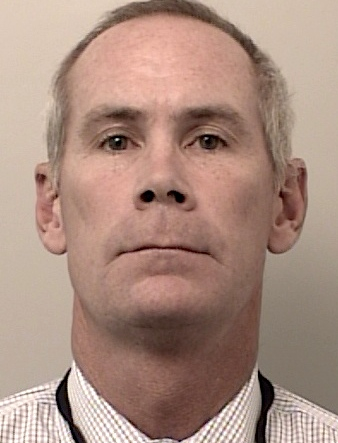
Jeremy Meyers when he was booked Aug. 22.

Jeremy Meyers when he was booked Aug. 22.

This means Meyers was allowed to continue to earn his $196,837 a year salary when he was on house arrest for five days, it means the board’s not being able to mandate he get any type of treatment or that members have oversight of it, nor can the board even discuss the situation in closed session because he is not an employee.

Because the board doesn’t meet in July, the Aug. 27 meeting was the first time the board had met since Meyers was cited June 9 by the California Highway Patrol for driving under the influence. Meyers usually attends all board meetings, but he was not at the Aug. 27 meeting. No reason was given for his absence.

It was at last week’s meeting that Weiland requested the Sept. 15 special meeting, to which her colleagues agreed, though none of them spoke to the issue.

The unadopted minutes from the Aug. 27 meeting summarize Weiland’s desire for the special meeting to have discussions include “but not limited to laws pertinent to the relationship between the elected superintendent and the elected board, the elected board’s ability to put in place systems or protections, and legal counsel as it relates to a possible conflict of interest.”

The current attorney, who works on a contract basis, works for the board and county office of ed so there is a potential conflict.

Board member Georgie Knight told Lake Tahoe News, “It needs to be very public out there what we can and cannot do. It’s important we know what our roles are and then adjust whatever that might be.”

She said if the board thought programs were being compromised or kids put at risk, then the board likely would have called for a special meeting sooner.

Board member Rich Fischer, who represents Tahoe on the board and is the vice president, did not return a phone call.

Requests to speak to Meyers are deferred to his criminal attorney.

While Meyers let the board know of his DUI shortly after it occurred, the public didn’t become aware of it until last month when he had to be booked into the El Dorado County jail in Placerville as part of his sentencing agreement.

Meyers eventually pleaded no contest to driving under the influence at just more than the legal limit. His five-day jail sentence was converted to house arrest. He is on probation and must complete court-mandated courses.

A California Highway Patrol officer found Meyers asleep in a construction zone on Highway 49 at 2:45pm June 9. He had attended a board meeting earlier that Tuesday that lasted about 15 minutes and ended at 11:59am. People who were at the meeting said he did not appear to be impaired.

Meyers’ blood alcohol level, according the CHP report, was 0.15 percent – nearly twice the legal limit. In addition to DUI, he was cited for being in possession of hydrocodone, a synthetic narcotic often prescribed for pain. It is along the lines of vicodin. That charge was later dropped when he produced the prescription.

Meyers, who is a long-distance runner, seriously hurt his foot about a year ago.

Instead of being taken directly to jail, Meyers was released to the custody of his wife. While the CHP has the authority to make that judgment call, others in law enforcement have told Lake Tahoe News it is “highly unusual” for that to have occurred.

—–

Notes:

·      The special meeting is Sept. 15 at 1pm in Placerville at the county education office.


NHP beefs up DUI patrols

The Labor Day holiday culminates the end of summer, a period known by enforcement officials as the “100 deadliest days,” as fatalities tend to increase during the summer, beginning with Memorial Day.

With impaired driving and riding as a top traffic problem for Nevada, Nevada Highway Patrol is working with other agencies to boost enforcement efforts now through Sept. 7.

Impaired driving fatalities have consistently been the most common cause of motor vehicle accidents resulting in injuries and death in Nevada, according to the NHP. In 2014, four people were killed on Nevada’s roadways over the Labor Day weekend.

To achieve the zero fatalities goal, drivers and riders are encouraged to know the law for blood alcohol levels and to abide by the following guidelines:

·         designate a sober driver before drinking;

·         use a taxi, call a sober friend or family member or use public transportation if impaired;

·         take advantage of local sober ride programs;

·         call 911 if a drunk driver is spotted on the road;

·         take the keys or assist in making other arrangements for someone who is about to drive or ride while impaired.


EDC explorers receive NRA grant

The El Dorado County Sheriff’s Office Explorer POST 457 has been awarded a grant from the NRA Foundation Grant Program — Teach Freedom.

The grants are designed to invest in the next generation of America’s leaders and support youth firearm related programs.

The money will be used to purchase supplies, equipment, and firearms, as well as provide explorers monthly gun training.

El Dorado County Sheriff’s Office Explorer POST 457 completed its first range training day in August. They were taught gun safety, basic gun handling and familiarization, and how to maintain and clean a weapon.


If Calif. levees fail, impact would be global

By Nick Stockton, MSN

California’s always been for dreamers. Dreams of gold brought the forty-niners. Easy seasons and expansive arable acreage brought farmers, dreaming of an agricultural paradise. Fame, natural beauty, and the hang-loose cultural mosaic have brought dreaming millions to the state where summer never seems to end.

The summer dream has become a nightmare drought. But the years-long dry spell isn’t what keeps engineers, economists, and state water planners awake at night. No, they worry about the network of levees at the crux of California’s plumbing—a massive freshwater confluence called the Sacramento-San Joaquin River Delta.

Most of the state’s water is drawn from the Delta, protected by levees that pretty much amount to mounds of dirt, even when compared to infrastructure that infamously failed New Orleans during Hurricane Katrina. Hurricanes don’t hit NorCal, but these levees are alarmingly susceptible to disaster. If enough were to breach—in an earthquake perhaps, or severe El Niño storm—sea water from San Francisco Bay could rush in, tainting the water supply serving two-thirds of the state. The worst-case scenario could cause up to three years of severely curtailed water for most Californians.

Even if you’re not a California dreamer, this affects you. Delta water keeps Hollywood in the movie business, Silicon Valley in the tech business, and 750,000 acres of farmland in the business of producing half of America’s veggies, fruits, and nuts. If the levees go, so goes the water for 25 million residents of the world’s seventh largest economy.

Read the whole story


Letter: TAP thankful for successful fundraiser

To the community,

On Aug. 27, Tahoe Arts Project held a Music on the Beach fundraiser at Tahoe Lakeshore Lodge and Spa. Our guests enjoyed music by Niall McGuiness, Trey Stone and John Shipley.

A huge thank you to Pat Ronan and his staff for hosting this event. Thank you to Sessions Salon, South Tahoe Stand Up Paddle, Sealed with a Kiss, Sugared, Tahoe Massage and Bodywork, McP’s, Safari Rose, Elements Day Spa, Azul Latin Kitchen, Tahoe Lakeshore Lodge, Rise Designs, Freshies and Tahoe Bowl for providing raffle prizes.

We would also like to thank everyone who attended our event and shared this special evening with us. It was so fun seeing all of you dancing on the beach. Everyone was very generous and we appreciate your support.

All funds raised will go toward our performing arts programs in the schools. Tahoe Arts Project is a nonprofit, bistate organization that sponsors an annual performing arts series in our local schools and community. If you would like to find out how you can help bring the arts into our schools, please call 530.542.3632.

Our annual membership drive has begun and you can send your tax-deductible donation to Tahoe Arts Project, P.O. Box 14281, S. Lake Tahoe, CA 96151. Thank you for doing your part to enrich the children of South Lake Tahoe.

Peggy Blowney, executive director Tahoe Arts Project