Alcohol may cause long-term memory issues

By Melinda Beck, Wall Street Journal

Here’s a sobering thought for the holidays: Chronic heavy drinking can cause insidious damage to the brain, even in people who never seem intoxicated or obviously addicted.

Experts say alcohol-related brain damage is underdiagnosed and often confused with Alzheimer’s disease, other forms of dementia or just getting older.

Now, brain imaging is revealing how long-term alcohol abuse can change the structure of the brain, shrinking gray-matter cells in areas that govern learning, memory, decision-making and social behavior, as well as damaging white-matter fibers that connect one part of the brain with others.

Long-term alcohol abuse also changes how the brain regulates emotion and anxiety and disrupts sleep systems, creating wide-ranging effects on the body. Increasingly, clinicians are diagnosing “alcohol-induced neurocognitive disorder” and “alcohol-related dementia.”

Read the whole story


Calif. test scores tied to attendance, not proficiency

By Sharon Noguchi, San Jose Mercury News

For more than a decade, the release of federal scores indicating California public school students’ progress — or lack of it — has incited alarm, anxiety and anguish among educators.

But when those marks were ever so quietly posted this month, barely anyone noticed. And it seemed few cared. For the first time in years, California schools met federal standards — but only because the yardstick had been replaced with an easier-to-meet measurement.

It’s the sign that the federal No Child Left Behind law, an effort to hold schools accountable for students’ failure to learn, has lost its muscle a year before it expires. That retreat enrages reformers like former state Sen. Gloria Romero of Los Angeles. “There is an effort to minimize, whitewash and scrub the file so that parents don’t have information,” she said. “If you can kill the data, you can’t have the reform.”

Read the whole story


Warning to stay off ice at Tahoe

During this time of year in Lake Tahoe, ice may appear thick enough to walk on, but the thickness is unreliable.

At local areas such as Lakeview Commons and Ski Run Marina, several individuals have ventured out onto the ice. This can dangerous and deadly if someone breaks through.

South Lake Tahoe firefighters warn that lake ice is most fragile in frozen areas around an open patch and along the shore; and urge people to avoid rivers and lake shorelines, where even ice that looks solid is weak.

Safety tips:

·        Ice is never 100 percent safe: the best advice is to stay off of it.

If you do venture onto the ice, remember:

·        Check the weather and avoid ice-related activities on warm or stormy days.

·        Check ice conditions with knowledgeable local individuals and obey all ice warning signs.

·        Keep away from unfamiliar paths or unknown ice, and avoid traveling on ice at night.

·        Never go onto the ice alone. A buddy may be able to rescue you or go for help if you get into difficulty.

·        Before you leave shore, inform someone of your destination and expected time of return.

·        A thermal protection buoyant suit will increase your chances of survival if you do go through the ice. If you do not have one, wear a lifejacket/personal flotation device (PFD) over an ordinary snowmobile suit or layered winter clothing.

·        Assemble a small personal safety kit, no larger than the size of a man’s wallet, to carry on your person. The kit should include a lighter, waterproof matches, or magnesium fire starter, pocketknife, compass and whistle.

·        In addition to the above safety equipment, you should also carry ice picks, an ice staff and rope. A cellular phone could also help save your life.

·        Insist that children, if they do play on ice, are always under adult supervision. Children not within arm’s reach have ventured too far.


Raley’s grocery chain sets table for the future

By Mark Glover, Sacramento Bee

West Sacramento-based Raley’s marked its 80th year with a flurry of moves that arguably made 2015 the busiest year in its history.

Significantly, the moves came during a year in which Raley’s became president and CEO Michael Teel’s company, literally.

In May, Jim and Joyce Raley Teel announced that they would transfer majority ownership to their 64-year-old son. With that, the grandson of founder Tom Raley assumed 92 percent ownership of the 12,000-employee company founded in 1935.

Foremost among the 2015 developments, Raley’s announced growth plans after a prolonged period of standing pat.


Teel acknowledged that Raley’s is positioning itself to better compete in a Northern California/Nevada marketplace that has become increasingly crowded over the past decade, with Safeway, discount grocers and Walmart Neighborhood Market stores cropping up and touting low prices.

Read the whole story


Water content of Sierra snow above average

By Kathryn Reed

PHILLIPS STATION – The Sierra snowpack is 400 percent better than it was a year ago.

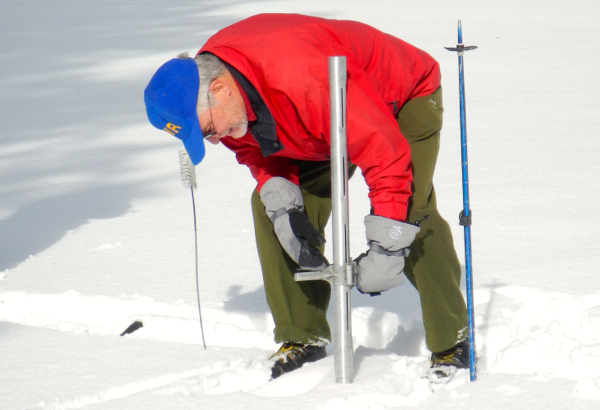
The measurement taken today in the field near the road leading to Sierra-at-Tahoe has the snow depth at 54.7 inches and the water content 16.3 inches, making it 136 percent of average.

In December 2014 those numbers were 21.3 inches of snow, the equivalent of 4 inches of water and 33 percent of average.

“The problem we’ve had in the past years is it starts out OK and then it shuts off,” Frank Gehrke with the California Department of Water Resources said of the storms.

Frank Gehrke takes a reading on the water content on Dec. 30 near Sierra-at-Tahoe. Photo/Kathryn Reed

Frank Gehrke takes a reading on the water content on Dec. 30 near Sierra-at-Tahoe. Photo/Kathryn Reed

Dec. 30 was the first of five manual snow surveys for the season. And while it was encouraging that there was snow on the ground compared to April when it was a dry field that Gov. Jerry Brown walked through to highlight the dire drought conditions, there is no guarantee the snow will keep falling. It was so bad last spring that the May survey didn’t even happen because it was bone dry.

This location near Echo Summit is doing better than the statewide average of 10.2 inches of water, or 105 percent of the Dec. 30 average.

Gehrke noted the light, powdery snow he was trudging through is fabulous for skiing, but it’s not the kind of white stuff that interests hydrological officials. They want more Sierra cement, with more water than air in the snow.

When asked about the forecast, Gehrke in his usual pragmatic demeanor said, “Those are just predictions.”

He noted that the full effect of the El Nino would be felt in the latter part of the winter.

The key for reservoir storage is for the moisture to come in the form of snow and not rain. This is so the spring runoff will fill those holding basins that provide drinking and irrigation water for municipalities and farmers throughout California. The snowpack in normal years supplies about 30 percent of California’s water needs.

The main reservoirs after four years of drought are well below normal for this time of year. Lake Oroville has 1 million acre-feet, which is 29 percent of its 3.5 million acre-foot capacity and 47 percent of its historical average on Dec. 30. Last year it was at 62 percent average. Lake Shasta has 1.4 million acre-feet, 31 percent of its 4.55 million acre-foot capacity and 51 percent of its historical average. In December 2014 it was 41 percent of its total capacity and 66 percent of the Dec. 30 average.


Reno museum to host Sierra Club fundraiser

The Toiyabe Chapter of the Sierra Club is having a fundraiser at the Nevada Museum of Art on then final night of the Tahoe: A Visual History.

There will be an optional guided tour. The evening also includes a chef’s table dinner prepared as well as entertainment by the Ghost of Mark Twain to honor the lake, the history, and current conservation efforts.

Tickets may be purchased online.


Mobile apps to elevate people’s moods

By Jeanne Nelson

Mobile applications are one of the newest methods available to help elevate your mood. If you have a smart phone or tablet, mobile applications are convenient, entertaining, and inspiring. They don’t take a lot of time and are often free of charge.

Here are some of my favorite apps that provide mood-lifting tips and entertainment. All are free to download and available on multiple phone platforms, unless otherwise noted.

Happify.  I am hooked on this app. The phone application touts “Happiness. It’s Winnable.” Happify is a sophisticated, research-based app that assesses your state of mental health and then exercises your brain as a muscle to overcome negative thoughts. The app focuses on positivity with the idea that happiness is a skill you can control and a habit you can develop. The app is free and premium features are available for an additional fee. If you don’t have a smart phone, you can also go to my.happify.com.

TZ Mood Tracker. This highly rated app monitors your emotional experience over time. Users rate themselves on six different scales: anxiety, stress, depression, brain injury, post-traumatic stress, and general well-being. Custom scales can also be added. The data gathered can uncover patterns in behavior, and provide helpful information for your health care provider. This app is only available on iOS devices (iPhones and iPads).

Breathe2Relax. Download this app and have an on-the-go tool to cope with stressful situations. Breathe2Relax offers guided breathing exercises to help manage stress, anger, anxiety, and difficult moods.

GoLantern: Lantern matches users with a one-on-one coach for expert advice. It takes a self-improvement approach to mental health combined with cognitive behavioral therapy. Lantern is primarily web-based and has a subscription fee, but also has a free, supplemental app for iOS devices.

PTSD Coach. Developed by US Department of Veteran Affairs, the PTSD Coach helps military personnel and civilians learn about and manage symptoms of PTSD (post-traumatic stress disorder­).

Optimism. Optimism and FindingOptimism.com offer a family of applications that focus on self-tracking as a tool for coping with depression, bipolar, anxiety and PTSD.

MoodRhythm.com. The hype is building for this app designed to help individuals with bipolar disorder listen to their daily rhythms and maintain balanced, healthy lives. The app actively and passively tracks daily rhythms for the user and provides valuable information back to the primary care provider. This application is currently being tested by Dr. Ellen Frank’s research team at the University of Pittsburgh and has not been released.

More apps are available or coming down the pipeline.  Search online for “top mobile apps for mental health” for additional results. Psyberguide.org is a helpful website that rates the effectiveness of apps for mental health by condition and treatment method.

Mobile apps are just one useful tool in our mental health toolkit. This technology can help improve mental health and can complement other treatments, but is not meant to replace a mental health professional or traditional treatment methods.

Jeanne Nelson is an instructor and liaison for the South Lake Tahoe Chapter of NAMI (National Alliance for Mental Illness). For more information about a workshop or support group, contact Nelson at 650.740.5776 or f2fnami@gmail.com.


Stateline casinos post gains for November

After months of declining revenue, the Stateline casinos posted a win of $14.2 million in November, an increase of 17.3 percent compared to 2014.

Statewide the numbers were good, with a spike of 7.8 percent – from $876.2 million in 2014 to $944.3 million last month.

The Nevada Gaming Control Board released the figures Dec. 30.

— Lake Tahoe News staff report


Ski rental business booming

By Sharokina Shams, KCRA-TV

Just in case you needed another sign that things are looking up in the Sierra this winter, you might need to visit some ski shops – and not just the mountain stores near the resorts, but the ones in Sacramento.

The stores are serving thousands of customers, renting and selling ski equipment at a feverish pace and working to repair and tune gear almost constantly.

If you are a customer, that means you may have to plan ahead to get the gear you need before your ski trip or be willing to wait, especially for rentals.

Read the whole story


Pot advocates settle on 2016 initiative

By Steven Greenhut, San Diego Union Tribune

SACRAMENTO — The Attorney General’s Office has been so inundated with marijuana legalization measures that it’s been hard to separate the wheat from the chaff – or the stems from the buds, to use a more appropriate analogy. It costs less than the average price of an ounce of the stuff to file a statewide initiative, so it’s been unclear which ones might emerge with enough financial backing to get on the ballot and maybe even win approval.

That has all changed. In November, former Facebook President Sean Parker backed something called the Adult Use of Marijuana Act. Parker is a billionaire who has said he will dedicate millions to the effort. The proposal also earned the backing of Lt. Gov. Gavin Newsom, the 2018 gubernatorial candidate who headed the state’s blue-ribbon commission on marijuana.

The basics, per California NORML (National Organization for the Reform of Marijuana Laws): “(1) allow adults 21 years and older to possess up to one ounce of marijuana and cultivate up to six plants for personal use; (2) regulate and tax the production, manufacture, and sale of marijuana for adult use; and (3) rewrite criminal penalties so as to reduce the most common marijuana felonies to misdemeanors and allow prior offenders to petition for reduced charges.”

South Lake Tahoe resident Steve Kubby, a Proposition 215 activist, recently stated in an email that he will “hold my nose and support this initiative” provided it eliminates the warrantless-search provision, a provision that treats open containers of marijuana in the same way that open containers of alcohol are treated, jail time for possessing more than an ounce of marijuana or more than six plans, and a requirement that those convicted of marijuana offenses register for five years as drug offenders.

Read the whole story