

Opinion: Transportation a conundrum in Tahoe


By Joanne Marchetta
This past summer was Lake Tahoe’s busiest tourist season in recent memory. With the economy rebounding and major population growth projected for nearby metropolitan areas, this summer is also a harbinger of change. We must be prepared to meet the challenges of increased visitation in the future.
Lake Tahoe has growth caps. But Reno, Sacramento, the Bay Area, and other nearby cities are all expected to continue growing over the next 20 years, putting millions more people within a day’s drive of Lake Tahoe. If those projections prove accurate, we can expect to see many more people visiting Lake Tahoe for its world-class scenery and recreation.
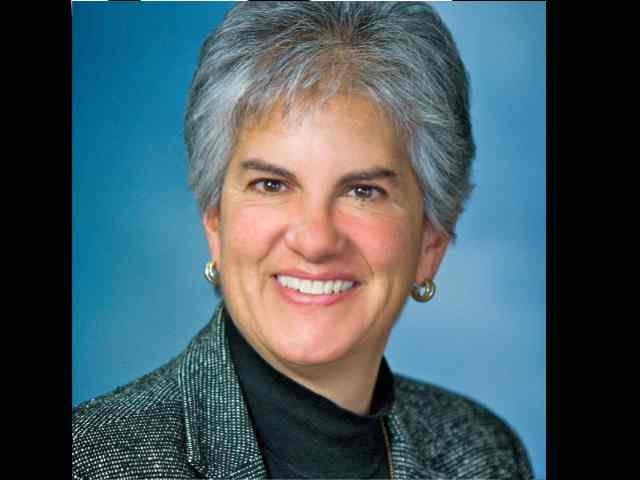
Joann Marchetta
Tourism sustains Lake Tahoe’s businesses, economy, and communities. But visitation to our rural area also poses challenges for our environment, limited infrastructure, and public services.
Residents know that every tourism season the highways around Lake Tahoe become congested with vehicles. As hundreds of thousands of people travel here, we see increased demand for access to our favorite recreation sites, creating challenges for parking, travel, and, ultimately, the well-being of our treasured natural resources.
We must continuously confront the question of how to keep people from loving Lake Tahoe to death, ensuring that it remains healthy while also ensuring it remains available for people to enjoy, particularly since approximately 90 percent of the Tahoe basin is publicly-owned land.
More than a century ago, the federal government decided not to make Lake Tahoe a national park, so we cannot simply put up a gate and limit entry to the Tahoe basin. It is imperative for us to be prepared to meet the challenges of increased tourism, and improving our transportation system is a critical part of that work.
A water quality improvement project Caltrans completed this autumn illustrates some of the competing needs we must balance to improve our highway corridors. This important project reduces erosion and stormwater pollution along seven miles of Highway 89. But the improvements also eliminated some roadside dirt parking areas that people have long used to access popular backcountry skiing on the West Shore.
That loss of parking created an outcry among backcountry skiers. The Tahoe basin offers world-class backcountry skiing, but while the sport has grown, parking and access to popular peaks have become increasingly challenging.
To make up for the lost parking, Caltrans and TRPA approved a project revision to create a 25-by-180 foot paved pullout. California State Parks announced it will plow the visitor center parking lot at D.L. Bliss State Park to provide winter parking. For longer-term solutions, TRPA, skiers, and land management agencies are partnering to have a comprehensive conversation about ways to improve access to skiing locations.
Reducing stormwater pollution is and will remain a top priority because fine sediment from roads and developed areas is the leading cause of the decline in Lake Tahoe’s famed clarity. But we believe that by working together those needs can be better balanced with the needs for summer and winter recreation access.
Fortunately, as we face these challenges, we are again updating our Regional Transportation Plan and taking steps to improve our transportation system.
The 2012 Regional Plan lays out the vision and incentives to make our community centers walkable and bikeable so people can get to work, school, stores, transit centers, and recreation areas without getting in a car. We’re seeing progress on that front with new multi-use trails and new sidewalks and bike lanes on roads in our communities.
This summer, El Dorado County completed a shared use trail linking South Lake Tahoe and Meyers. And California recently awarded nearly $9 million in active transportation grant funding for the South Tahoe Greenway Shared Use Trail, Al Tahoe Boulevard Safety and Mobility Enhancement Project, and Fanny Bridge/State Route 89 Community Revitalization Project – projects that will make our communities more pedestrian and bicycle friendly.
Our ongoing highway corridor planning process is identifying projects and strategies to improve transit service and recreation access around Lake Tahoe so more people can get where they want to go without getting in a car.
We won’t solve Lake Tahoe’s transportation needs and environmental challenges by building bigger roads to handle more traffic. To maintain quality of life and recreation experiences at Lake Tahoe, we need a comprehensive transportation system with vastly improved travel options: More options to and from the Tahoe Basin, regular transit service between our communities and recreation destinations, and walkable and bikeable town centers. That’s just the sort of system we’re working hard to develop. While we are making progress, it is time to double-down and come together around comprehensive funding and transit solutions to manage our growing number of visitors. Please join us in the effort and support transportation and transit funding in your community.
Joanne Marchetta is executive director of the Tahoe Regional Planning Agency.

I have observed this community for over 12 years If this community is going to be welcoming to visitors , and it must be in order to survive, there have to be some changes in the thinking and culture of this community.
1. The community generally sees the visitor in a negative light It’s not uncommon to think of increasing the TOT whenever additional funds are needed. It’s not uncommon to breathe a sigh of relief when the tourist season Is over. It is not uncommon to think of the visitors as polluters. Yet, look at how businesses and local individuals wanting to work suffer doing shoulder seasons. Visitors come here precisely for what every local sees here: unmatched beauty. This beauty belongs to the nation and the world.
2. The pollution is not so much caused by increased visitors but due to unprepared infrastructure of this community to receive visitors. We are preparing this community to be walk bike friendly. That’s great but people come here by cars. They drive around and around looking for a place to park so that they can participate in the walk bike friendly community The best way to keep the cars off the road is to Put the cars in jails known as parking structures built throughout the basin. This could significantly decrease hydrocarbons in the basin. Yet this community hates parking structures. Another infrastructure weakness is lack of preparation for Stormwater run offs. Lake Tahoe Boulevard does not have curb and gutters throughout. I know that this problem is chipped away at valiantly but a lot more is needed and soon. Ask the pipe keepers of the League how much pollution goes directly into the lake through over 150 pipes that end up at the lake.
3. Many in the basin see development as a problem but it is actually the solution. The main reason for this is the fact that it is a truism of real estate that properties do not remain stable. They will deteriorate unless improvements are made. I do not mean that there be Helter skelter developments but well thought out properly vetted by the agencies can lead to an improved community and in fact decrease the pollution reaching the lake.
4. This community Seems not to be able to evaluate the risk reward ratio well because there is some bad science and common myths around about what’s the right thing to do. The Angora fire exposed some myths about how to protect your space.
But we are fortunate to have visionaries who will help transform this community. For some reason they are women. In the public sector Joanne Marchetta, Nancy Kerry and Patty Kouyoumdjian and in the private sector Darcie Goodman Collins, Amy Berry, B Gorman and Carol Chapman. More power to you all.
“We won’t solve Lake Tahoe’s transportation needs and environmental challenges by building bigger roads”
Agreed. So what is the point of the fanny bridge and loop road?
MEL..”I have observed this community for over 12 years….”
There have to be changes in the culture.
This community seems not to be able to evaluate the risk reward ratio well
This community hates parking garages
Another weakness is storm water run off and the list goes on about the unattractive problems WE as a community have.
We are fortunate to have VISIONARIES that will help TRANSFORM this community.
If the aforementioned ‘ladies’ are transformative VISIONARIES
GOD HELP US ALL
“come together around comprehensive funding” = bureaucrat’s way of stating TAX INCREASE
“Lake Tahoe has growth caps. But Reno, Sacramento, the Bay Area, and other nearby cities are all expected to continue growing over the next 20 years, putting millions more people within a day’s drive of Lake Tahoe. If those projections prove accurate, we can expect to see many more people visiting Lake Tahoe for its world-class scenery and recreation.”
Throughout the past 15-years that I’ve lived in SLT I’ve heard countless local people say that the tourists should be kept at Stateline. Those local individuals wanting visitors to SLT to congregate mainly in that tourist core hub area better figure out a way for those visitors to easily cross back and forth across the street (Highway 50) so they can readily spend their money at the various shops while simultaneously supporting the City.
No one is ever going to take TRPA”s plans for future transportation needs seriously as long as they keep banging the drum of walkable/ bikable Town Centers. The first time it snows, current paths are buried until spring. How’s that bike/walk path connecting SLT and Meyers looking today? How about the walking paths in Meyers? Tried to walk there lately?
I am convinced that the walkable Town Centers idea is directly connected to grants and has little to do with TRPA being concerned with clearing paths for walking & biking.
Isee +1
Joanne… I will support your ideas as soon as you make an effort to get transportation service to Meyers.. Until then .. I will not take anything you write seriously..
Agree with Nic and others. Fanny Bridge and the Loop Road projects build bigger roads. Can’t have it both ways, TRPA.
MONORAIL
MONORAIL
MONORAIL
MONORAIL
MONORAIL
from Meyers, to the airport, to the Y, down the center of the highway, Keys blvd., Al Tahoe, Lakeview Commons, Timber Cove, Ski Run, and Downtown….
$100.00 says that old Joann has never rode Blue Go and never will.
she is just a Government Yahoo trying to keep her job.
Really Isee? I’m all for it. Walkable bikable, sign me up.
Isee,
The nonmotorized pathways in the city of South Lake Tahoe that have been resurfaced have had snow removal for years.
Elie,
I agree, if we are right, hmmmmm.
A nogo (oh yeah, I forgot, it is bluego) employee had an idea, send a bus from the Y transit center when the current bus on the route is to late on the scheduled Y departure time. Relatively easy fix for getting people out of autos.
Ever wonder why the local police acquired at least 4 motorcycles lately? Maybe because of the gridlock.