

Historic Hotel del Coronado a modern-day attraction


By Lisa Huard
CORONADO — California’s Travel and Tourism Commission predicts the number of visitors to California will increase by nearly 3 percent this year. It’s anticipated that visitors will spend about $92 billion on food, lodging and other expenses.
That would be a 5 percent increase from 2009, with many of these individuals coming to California from Europe and Canada.
It’s amazing talking to visitors, especially from out of the United States, to hear their expectations about what California has to offer. Recently a Soroptimist from Denmark visited the Lake Tahoe Basin. She couldn’t comprehend how big just California is.
She thought she could do day trips to San Francisco, Death Valley and Yosemite. We have such opportunities that we should all spend more time traveling in California and really seeing what it has to offer. Keeping dollars in Lake Tahoe isn’t such a bad idea either.
Tahoe-ites live in a beautiful place and we love to visit other unique locations. One region I highly recommend is the San Diego area. There is an incredible amount to do throughout the county. This includes theme parks such as Sea World, LegoLand, San Diego Zoo, to beautiful beaches, Old Town, and my favorite, Coronado Island.
As a teacher and aficionado of knowledge I can see that this “island” is in fact a peninsula. So who made a mistake?
Discovering the island
I consider myself lucky to live in Tahoe and even luckier as my closest friends have a home on Coronado Island. Once you arrive, put on your walking shoes or grab a bike, and just enjoy. This resort destination has a lot to see and to learn about. On this particular visit I wanted to learn more about the history of the area, its development as a resort community and what there is to do.
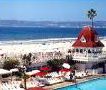
Hotel del Coronado
In a short period of time, Coronado has gone from an island that was separated from shore by a small channel known as the Spanish Bight to a peninsula of some of the most expensive property in the state. It’s filled with swanky hotels, lovely eateries, shops and a community of year-round residents and vacationers from all over the world.
How did of this all come about? It was during the 17th century that Spanish explorer Sebastian Vizcaino discovered a group of islands 17 miles off the coast of Southern California. He named them Las Yslas Coronadas, which translated means the crowned islands. Explorers did little with the beach until the 19th century. At that time it became a safe harbor by whalers to build hide-houses to live in as they worked.
Once Mexico gained its independence from Spain in 1821, massive land grants were provided in the state. With vast land grants came the great rancheros and haciendas of the time.
In 1846, Don Pedro Carrillo was the lucky guy whom was granted the island in the Port of San Diego. He owned this property for a short amount of time and flipped it for $1,000 to Bezer Simmons who was an American captain of a trading ship.
The island then changed hands several times during the next 39 years until it was purchased by Elisha S. Babcock Jr., Hampton L. Story, and Jacob Gruendike for $110,000. Babcock then invited Heber Ingle and Josephus Collett to become investors. In 1886 this group of men organized the Coronado Beach Company. They are to this day considered the founding fathers of Coronado Island.
Becoming a resort area
The group of investors envisioned a resort community on the beach like no other; a destination resort that would have visitors from all over the world. The island was quickly divided into lots, railroad tracks were laid, and infrastructure developed. They would move visitors by land and by water as they also created the San Diego and Coronado Ferry Company in 1886.
Babcock and Story were businessmen who knew how to spin information to their financial benefit. They even leaked their own news story about a proposed hotel on Coronado Island. This new hotel would be the focal point of tourism in the area.
The divided parcels ranged in price from $500- $1,600 and on the day of the auction they sold 350 lots totaling $110,000 ; their original purchase price of the entire peninsula.
Today, the amount they paid for the entire island would be equivalent to one-eighth of the least expensive home I found on the Island.
The investors began to concentrate on the design and construction of the new hotel. The Beach Company hired James and Watson Reid as the architects of the Hotel del Coronado. Work began almost immediately. The Hotel del Coronado was completed in early 1888 and officially opened its doors to the public on Feb. 19 that year.
As construction of the Hotel Del began, Coronado Island moved forward in establishing itself as a year-round community. It had its first school session in January 1887 and was located in the walled tent area on Seventh Street until construction of the first schoolhouse was completed the following year. A boating club, athletic club and baseball club soon followed.
It was in July 1889 that John D. Spreckels (Spreckels of sugar plantation in Hawaii and shipping fame Spreckels) became an investor in the Coronado Beach Company, buying out Hampton L. Story’s interest. Spreckels continued to buy controlling interest in the company over the next three years and became the sole proprietor of the Hotel del Coronado. He also established the famous Tent City and the sale of North Island to the U.S. government in 1917.

Hotel Del's Tent City
Hotel del Coronado became one of California’s most popular destinations. The resort community further increased the number of visitors with the rise of Tent City. Just imagine, a beautiful beach, incredible weather, and then a makeshift city out of white tents at the foot of the Hotel Del for summer fun. This was the perfect destination for the middle class who might have found the cost of leisure in Tent City more within their means than the Hotel Del at the time. Swimming facilities, carnival booths, a Ferris wheel, a children’s bull fight, sailing, all sorts of activities for the entire family brought visitors galore from around the world between 1900 and 1939.
The tents are now replaced with quarter-share condos that flank the property of the Hotel Del. The white Victorian-style architecture still attracts people by the droves year-round. The Coronado lifestyle is one you can own, even if it’s just temporarily, throughout the year.
Retaining its history
To this day, Coronado Island continues to host special events, famous people, and is a display for aviation wonders. It was here that early experiments in aviation occurred. This now “Navy town” is one of the great aviation arenas in the world. In 1911, famed aviator Glenn Curtiss found the area ideal for experimenting with his newly developed seaplane. He leased the land for three years from Sprekels. With much diligence, Curtiss performed the first successful U.S. seaplane flight and the first amphibian flight in the world. Curtiss also opened and operated the first U.S. military flying school.
And it was on North Island that several other aviation firsts occurred; the first nonstop coast-to-coast flight in 1922, the first mid-air refueling flight in 1923, and the departure of Charles Lindbergh in 1927.
This island setting is also well known to moviemakers. Through the years many films were made in Coronado and on North Island, including “Some Like It Hot”, “Dive Bombers”, and “Hellcats of the Navy”. Coronado Island was even nicknamed the Emerald City because the author of “The Wonderful Wizard of Oz” used to winter here and he loved the fairyland-type atmosphere of the tents along the beach. I can just hear those munchkins now.
North Island was originally a joint Army/Navy base when the government bought the land from John Spreckels for $5 million. The Army then vacated its portion of the island in 1935 and the entire area then became Navy property. Today’s Navy’s post is a training facility for the Navy Seals. It’s pretty interesting when you grab an early morning cup of coffee, walk down to the beach to watch the dolphins playing in the water and instead comes up on a Navy Seal and I’m talking about the kind with two legs.
So how does an island morph into a peninsula? Well, you sell land to the government for the purpose of training your Army and Navy personnel, get the Army Corps of Engineers to fill in the body of water separating North Island from Coronado to allow for more construction, and there you have it; a peninsula. Coronado Island still sounds better than Coronado Peninsula.
Modern conveniences
Again, there is so much to see and do while on the Island. What could be better than grabbing the bikes, heading to Clayton’s Mexican Takeout on Orange and 10th, and heading to the sand in frontage of the Hotel Del to sit and eat your egg burrito at the shore? Well, let me see.
Add in sitting on the clean sand, watching the waves and the lighthouse at Point Loma and then over your head is the sight and sound of two F14 Tomcats cracking through the sky on approach just practically over your head. Sitting with my friends, Glenn said, “That’s the sound of freedom.” Great saying for a great sight.
The attractions of the island are numerous. There’s the Hotel Del Coronado, Museum of History and Art, Coronado Playhouse with six productions a year, Art in the Park which happens at Spreckels Park the first and third Sunday of each month, Coronado Ferry Landing which will hook you up with restaurants and shops. You can attend concerts in the park, and take tours galore highlighting both on and off island sights. You can even take a Gondola Tour that cruises the canals and waterways of the Coronado Cays in Venetian style, catch the Old Town Trolley, or take the Ferry to the Gaslamp Quarter.
To find out how you can begin your island adventure, start by contacting the visitor center or the Coronado Chamber of Commerce.

What a lovely story.
No offense but ? THAT’S JUST ONE BIG TOURIST TRAP,been there done that.
Give us our quite, nude coves of sun shine,bottle good wine, a float device.No traffic,late night grilling, late night clubs.
That Disney World attraction can stay in the concrete jungle.
You want city travel deals ,go travel.com.
Almost forgot the main point.
“Coronado as one of the most expensive places to reside in the United States”.
So if your headed to Gouge town, bring plenty cash.