Dugard case should be a wake-up call

Publisher’s note: This editorial is from the July 11, 2010, Reno Gazette-Journal.

The kidnapping of 11-year-old Jaycee Dugard off of a street in South Lake Tahoe in 1991 turned the young girl’s world upside down.

It affected the lives of her parents, her friends and family over the next 18 years until she was discovered living as a captive, and a mother, in the San Francisco Bay area.

And now it’s cost the taxpayers of cash-strapped California $20 million in a settlement of a claim filed by Dugard’s family that argued that state officials failed to supervise her alleged kidnapper.

Read the whole story


Opinion: $20 mil. Dugard payment covers up truth

By Bruce Maiman, Sacramento Bee

The decision last week by the California Legislature to approve a settlement for Jaycee Lee Dugard is costing us way more than $20 million.

Kidnapped near her Tahoe-area home in 1991, authorities say that Dugard, then 11 years old, was imprisoned in the Antioch home of Phillip and Nancy Garrido for nearly two decades. Phillip Garrido confessed to kidnapping and raping Dugard, although both Garridos have pleaded not guilty to numerous charges.

Without question, what Jaycee Dugard endured is beyond comprehension, but it should be patently obvious that California taxpayers weren’t responsible for what happened to her. It’s not our fault she was kidnapped, brutalized, raped and enslaved. Yet we’re paying the fine.

Read the whole story


Homewood resident, FOWS board member sounds off

Dear Publisher,

On July 7, Mr. Dave Tirman, senior vice president for JMA Ventures, wrote a rebuttal to an article written by Mr. Tom Rosenberg in the Sacramento Bee on July 4 regarding Homewood Mountain Resort (HMR). It was inappropriate for Dave Tirman to mention Friends of the West Shore in his rebuttal. Friends had nothing to do with the article and members first saw it when published by the Sacramento Bee.

As Tom Rosenberg has stated, he is not a member of Friends and does not represent Friends. Friends has over 300 members, so the only comments attributable to Friends are from a board member specifically writing or speaking on behalf of Friends [not as an individual] or from our letterhead or website.

Dave Tirman’s last comment is misleading that “certain members of Friends of the West Shore are resorting to misinformation and distortion of fact to further their agenda”.

Friends relies primarily on information from HMR’s or Tahoe Regional Planning Agency’s website or official written documents. Because of its size and complexity, clarification on certain aspects of the proposed resort has been necessary, including confusion over the measurement of total height and the number of units to be included in the project. These items were clarified at the May 27 TRPA meeting. In particular, TRPA advised that under the EIR/EIS analysis, the project includes 349 units, not the 316 as noted in the presentation by JMA, the project developer. Also, Friends appreciated that Dave Tirman attended the Friends community meeting on July 2 and, at the request of Friends, spoke to the group and provided information and clarification on the HMR project.

Friends supports a revitalized HMR that is smaller in size and scope, with a much reduced number of units. Some concerns noted by members of West Shore communities regarding this project:

1. Density, size and scope of the project are not compatible with the long-time character and scale of the neighborhood or the West Shore.

2. What is the impact on wetlands, watersheds and any development on raw, vacant land, especially the Fawn St. wetland area and the steep hillside slopes of the mountain.

3. Potential traffic congestion from 349 units (number of bedrooms undisclosed) could easily result in 300–500 cars, not including service and employee vehicles or boats and trailers. The proximity of the resort to Highway 89 could cause a backup on the highway during peak activity.

4. What is the availability of water and the impact on the aquifer level of other nearby communities. Who pays for any required new water and sewage infrastructure? What will be the impact of the Truckee River Operating Agreement?

5. To what extent is the project economically feasible and sustainable over a long period of time? Can the West Shore homeowner/rental base absorb such a high density project?

Friends is trying to obtain accurate information about the HMR project to disseminate to residents of the West Shore so they can evaluate the extent of this development but the information changes frequently and is sometimes incomplete. Therefore, full disclosure and understanding of the project details is important and Friends asks the public to refer to the HMR or TRPA websites for available facts and clarification. We also look forward to the release of the draft EIR/EIS for further details. We are aware that there many divergent views on the size and scope of the proposed resort but Friends is hopeful, through community meetings and communication with JMA Ventures, that the development process can be respectful of all opinions and result in a development that satisfies the needs and concerns of the West Shore Community and HMR, a resort that everyone can appreciate and accept.

Judith Tornese, West Shore homeowner and board member of Friends of the West Shore

PS: Friends of the West Shore is a Lake Tahoe, non-partisan community organization established to help preserve and enhance the character, scale and historical significance of the West Shore. It is a resource to the community and uses the collaborative efforts of the residents to make a positive impact on the West Shore neighborhoods.


South Tahoe responds to county’s redevelopment letter

cityPublisher’s note: This July 9, 2010, letter from South Lake Tahoe City Manager Dave Jinkens to Michael Applegarth, in El Dorado County’s administrative office, is reprinted with permission. It relates this story.

Michael:

As you requested, I am forwarding a copy of the attached letter from the Board of Supervisors to the City Council today.

I had the opportunity to discuss the letter this morning with the City Attorney/Agency Counsel, Mr. Enright and with the Director of Redevelopment and Housing, Mr. Palazzo. We will be carefully reviewing the County of Los Angeles v. Glendora Redevelopment Project decision. As you know, however, the City of South Lake Tahoe is in the California Court of Appeal, 3rd Appellate District, a different District than in the Glendora Case. Of course, the Glendora opinion is still important and significant, and it must be carefully evaluated. I know you know as well that South Lake Tahoe and Glendora are two very different cities in very differing environmental, social, and economic settings, and I suspect that the factual situation regarding their redevelopment proposal is different as well from the case in South Lake Tahoe.

The City Attorney needs some time to review the Glendora Case, and he will do so within the next few days along with your letter. We will then bring the matter to the City Council for review and direction. A few questions arise regarding your letter that would help us in our review and in any City response.

1. What specific parcels is the County proposing to be removed from the RDA Plan?

2. How does the County see the exemption of it from the Teeter Plan working in relationship to RDA Project No. 2? How broad are you looking at the hold harmless agreement?

I should also mention that on June 7, 2010 (referenced below) I directed a letter to the County Administrative Officer requesting further meetings. I received no response to my request and had we done so we could have been well on the way toward addressing outstanding issues. I note as well that on May 18, 2010 I directed an electronic mail communication to Supervisor Santiago in part requesting dialogue with her. Finally, on March 24, 2010 I directed to your Special Counsel Ms. Miller recounting our previous discussion at the Airport in our RDA Conference Room and suggesting more discussion on projects of mutual benefit we discussed such as a Green Business park at the Airport and Lakeview Commons Project. I received no reply to these communications as well.

Thank you for contacting me in regard to this important matter. I assure you that we will be responding within a reasonable period of time. I always appreciate hearing from you.

Sincerely,

Dave Jinkens, city manager and executive director South Tahoe Redevelopment Agency


Wondering why California is still in a drought

Publisher’s note: This editorial first ran June 26, 2010, in the Pasadena Star-News.

Hey, governor, it’s time you came clean and declared California’s drought to be over. Because it is. To do anything else would be dishonest.

See, the numbers don’t lie. From October through April, the state experienced above-average rainfall – 105percent, according to Sacramento’s own Department of Water Resources. This past season was different than the three previous seasons, when the state was experiencing lower-than-average rainfall: 76 percent, 72percent and 62percent for water years 2009, 2008 and 2007, respectively.

But we haven’t heard the governor, nor the Metropolitan Water District, nor its member agencies, say that the three-year drought is over, even though the numbers bear that out.

In fact, they’ve kept the pressure on in order to press for continued water conservation. We’re all for continued water conservation. We’re all for reducing the amount of water we waste running the tap or overwatering our lawns. But we think we can still save water even after a wet year.

Read the whole story


Nevada needs to focus on economic diversity

Publisher’s note: This is an editorial from the July 2, 2010, Las Vegas Sun.

Economic development and diversification in Nevada have for decades been largely ineffective.

The problem over the past decade is that for every nongaming job created by economic development initiatives, dozens more jobs in the gaming industry were created with the opening of megaresorts such as Wynn Las Vegas, Encore, Palazzo and CityCenter.

State statistics show that despite all the talk and money spent on economic diversification in Nevada, the economy is less diversified as gaming’s domination has actually grown.

About 305,000 Nevadans were employed in the leisure and hospitality sector through May — equaling 27.2 percent of the state’s 1.123 million jobs.

With the near-decimation of the construction and real estate development industries, that percentage is up from 26.4 percent of the state’s workers employed in leisure and hospitality in May 2006.

Read the whole story


Community deserves truth from Hot August Night officials

Publisher’s note: This editorial is from the July 8, 2010, Reno Gazette-Journal.

The reluctance of Hot August Nights officials to talk about the future of the 25-year-old event in the Truckee Meadows with just weeks until this year’s festivities get under way is understandable.

However, the issue no longer is whether the celebration of classic cars and rock ‘n’ roll will stay here even as it expands its horizons to South Lake Tahoe and Long Beach, Calif. It’s about honesty and the nonprofit organization’s relationships with its long-time supporters in the Reno-Sparks area and the hundreds of volunteers who have made the event a success.

Read the whole story


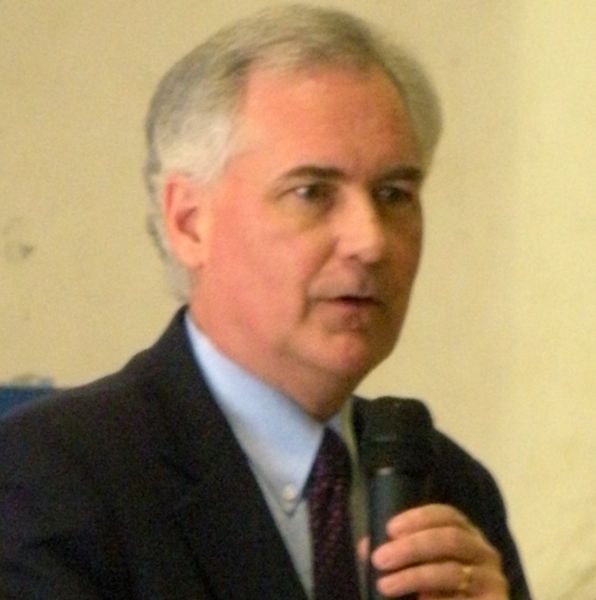
McClintock releases survey results from congressional district

To the community,

Support for the Auburn Dam, concern about record spending by the federal government and a desire for more local control highlight the results of a constituent survey conducted by my staff.

This district-wide survey’s results echo what I have heard in 20 town hall meetings and from countless letters, emails and phone calls over the last year and a half. Simply put, many Americans are dissatisfied with the direction of the country and with excessive government growth.

Tom McClintock

Tom McClintock

Highlights from the survey include:

70 percent say taxes are too high;

81 percent are opposed to more federal government bailouts;

67 percent believe the government takeover of health care will lead to higher prices and shortages;

16 percent support an energy tax to combat global warming;

85 percent believe illegal immigration is an urgent problem;

77 percent believe the country is on the wrong track.

Full survey results can be read at www.mcclintock.house.gov.

Methodology:

This survey was conducted through U.S. mail, with survey forms being mailed to 147,066 voting constituent households. The survey was mailed on March 10 and responses were accepted through April 23, resulting in 14,124 responses. It is important to note that this survey was not designed to function as a public opinion poll, but rather as an accurate depiction of the policy preferences and concerns of voting constituents in the Fourth Congressional District. As such, methodological measures were not employed to offset word and question ordering effects, nor have results been weighted to reflect regional population or demographic quotas. Nonetheless, received responses were generally in line with the geographic distribution of the district’s population, with a deviation of approximately 5 percent or less.

Rep. Tom McClintock


Developer sets record straight about Homewood

Publisher’s note: The Sacramento Bee article was reprinted in Lake Tahoe News on July 7, 2010.

Dear Publisher,

On July 4th, the Sac Bee published an opinion piece written by Mr. Tom Rosenberg entitled “Mega‐resort could harm Tahoe”. The viewpoint was unfortunately filled with factual error. Please note that on April 6, 2010, JMA Ventures [owner of Homewood Mountain Resort] met at length with Mr. Rosenberg at Homewood as Mr. Rosenberg had made it clear that he wanted to get his facts straight.

The article states that Tahoe’s West Shore consists of single-family homes and extends from about 15 miles south of Tahoe city to Rubicon Bay. The article fails to mention that the West Shore is also home to a number of commercial businesses, hotels, restaurants, marinas, two ski resorts [Granlibakken & Homewood Mountain Resort] and other resort properties, grocers, a museum, a post office, a community center, etc. all served from a major state highway. Also worth noting is that the majority of single family homes on the West Shore are second, vacation homes.

Mr. Rosenberg’s column references a 700-acre planned development at Chambers Landing on the West Shore in the 1960s by the Perini Corporation and attempts to draw a direct parallel between the Perini plan and the Homewood ski area master plan. A critical, key difference that Mr. Rosenberg neglected to note was that the Perini development was planned on raw, previously undeveloped land.

The Homewood plan is primarily a redevelopment of the two existing base areas, which are currently covered with asphalt parking and existing ski related facilities.

Mr. Rosenberg labels the Homewood ski lodge a “high rise”. The Homewood master plan includes a total of six mixed use buildings at the existing north base area and three residential buildings at the south base. Four of the six north base buildings are two stories in height while the other two, which include the lodge/hotel and day skier facility, are four stories tall. The two-story structures are located along the state highway whereas the four story buildings are set back over 250 feet from the highway. The south base buildings are all two and three story in height. The day lodge at the mid‐mountain is predominantly a single story structure.

The article incorrectly states that there will be 405 condos and transient accommodations. In fact, the Homewood master plan includes 241 residential units plus a 75-room hotel to be built in phases over time. In addition, the master plan provides for 13 workforce housing apartments. The article cites a “commercial center”, leading one to believe that some kind of mall or shopping center is planned. The proposed Homewood plan includes 15,000 square feet of retail space designed for three or four neighborhood oriented retail shops including a grocer, an ice cream parlor, and a hardware store.

The article goes on to state that the “developer proposes a clubhouse for condo owners and hotel guests and a 14,000 square foot restaurant on mountain” leading the reader to believe that there will be a private club plus a 14,000 square foot restaurant. In fact, the master plan proposal includes one public day-use lodge with public restroom facilities at a mid‐mountain location. Existing mid‐mountain shacks and structures will be replaced by the new public day lodge. The proposed facility also includes a public, community swimming pool for use during the summer months.

The article erroneously states that in the future, families will “ski down to an asphalt base, with a proposed lodge far above existing height limits, and 28 acres of condominiums”. The proposed master plan removes the existing base area asphalt parking lots and relocates the majority of parking underground. The existing asphalt parking areas will be replaced by a landscaped pedestrian village with a winter ice skating pond and overnight accommodations. The proposed north base project area consists of 16.4 acres of mixed uses including pedestrian walkways, landscaping, lodging, workforce housing, and the neighborhood retail shops. The south base proposal includes 6.6 acres of land restoration, residential, and the removal of all asphalt parking.

The article also states that the “project threatens water runoff from the Mount Ellis watershed”. The Homewood watershed consists of three streams, none of which intersect the proposed north base area or mid‐mountain. Only one of the three streams is located within the redevelopment area at the south base. This stream, known as “Homewood” or “Ellis” creek, will have its stream bank restored at the south base as a part of an ongoing land restoration project, which to‐date has included over 240,000 square feet of restoration since 2006. Beyond the restoration work completed to‐date, the proposed master plan includes an additional 250,000‐500,000 square feet of restoration work on mountain and at the base areas; a fact notably missing from the article. Also missing was mention of the $650K matching grant from the California State Department of Water Resources to Homewood in 2009 to study and implement land restoration methodology designed to help further minimize sediment runoff into the Lake Tahoe watershed.

Mr. Rosenberg claims that the proposed Homewood redevelopment “contradicts sound planning and accepted policy that mandates environmental protection”.

Tell that to the U.S. Green Building Council, a leader in the promotion of sustainable building and planning, who officially notified Homewood that the proposed master plan submittal is on course for a Gold Level certification in the Leadership in Energy and Environmental Design (LEED) for Neighborhood Development program; a program with emphasis on sound planning principles, environmental protection, and transit/pedestrian oriented master planning.

While it is fully expected and in fact healthy for there to be a divergence of viewpoint about the proposed Homewood master plan, it is highly unfortunate that some, such as Mr. Rosenberg and certain members of the Friends of the West Shore, are resorting to misinformation and distortion of fact to further their agenda.

David Tirman, executive vice president JMA Ventures



Opinion: Homewood mega-development could hurt Tahoe

By Tom Rosenberg, Sacramento Bee

Some 40 years ago, the Perini Corp., a major national builder headquartered in Massachusetts, purchased the Chambers Landing resort on Tahoe’s west shore.

“Lake Tahoe is a place of unmatched beauty,” John Perini told neighboring homeowners, “We intend to develop Chambers Landing into a premier resort.”

Tahoe’s west shore, located in Placer County, consists of single-family homes and extends about 15 miles south from Tahoe City to Rubicon Bay. Perini bought 700 acres zoned prime recreational and residential, and a half-interest in what is now the Homewood ski area.

Read the whole story